

C0050 on 2006-2010 Hummer H3: Right Rear Wheel Speed Sensor Circuit Fault Causes and Fixes
On a 2006-2010 Hummer H3, code C0050 is almost always a failed right rear wheel speed sensor. The sensor is inexpensive ($20-$60) and can be replaced separately from the hub, but it often breaks during removal due to a rust ridge forming in the axle housing. DIY difficulty is 2/5 if it comes out easily, 4/5 if it breaks and requires extraction.
- Code C0050 on a 2006-2010 H3 means there is a fault with the right rear wheel speed sensor circuit.
- This will disable your ABS and StabiliTrak/Traction Control systems.
- The most likely cause is a failed sensor, which is notorious for breaking inside the axle housing during removal.
- Be prepared to extract a broken sensor using a drill and screw method, and clean the sensor bore before installing the new part.
- Ensure you use an ABS-capable scan tool for accurate diagnosis.
What's Unique About the 2006-2010 Hummer H3
Unlike many other GM trucks and SUVs of the era where the rear wheel speed sensor is integrated into the hub assembly, the 2006-2010 Hummer H3 uses a separate, individually replaceable sensor. This sensor presses into the rear axle housing to read a toothed reluctor ring on the axle shaft. While this makes the part itself cheaper, the sensor is notoriously difficult to remove after years of exposure to heat and corrosion. A rust ridge often forms inside the sensor bore, causing the plastic sensor to break off inside the axle housing during replacement attempts.
Symptoms You May Notice
- ABS warning light illuminated on the dashboard
- "Service Traction Control" or "Service StabiliTrak System" message displayed
- Traction Control and/or StabiliTrak warning light illuminated
- ABS system does not activate during hard braking (wheels may lock up)
- Traction control does not activate on slippery surfaces (wheels may spin)
- In some cases, the brake system may feel like it's pulsing or fighting you at low speeds.
- Replacing the wheel hub assembly. On the H3, the rear sensor is separate from the hub. Replacing the hub will not fix a C0050 code.
- Replacing the wrong sensor. The code is specific to the right rear (passenger side) wheel. Confirm the location before starting the repair.
- Using a non-ABS capable scan tool. Many inexpensive code readers will not detect chassis codes like C0050, leading to confusion when the ABS light is on but no codes are found.
Most Likely Causes
- Failed Right Rear Wheel Speed Sensor 🔴 High Probability The sensor is exposed to significant heat, moisture, and road debris at the axle, leading to internal failure over time. The plastic housing becomes brittle and is prone to seizing in the axle housing due to a rust ridge that forms in the bore, making it extremely likely to break upon removal.
How to confirm: Using an ABS-capable scan tool, monitor the live data for all four wheel speed sensors while driving. The right rear sensor will likely show 0 MPH or an erratic signal compared to the other three. A basic OBD-II scanner may not read chassis codes like C0050.
Typical fix: Replace the right rear wheel speed sensor. This involves removing a single T30 Torx bolt and attempting to pull the sensor out. If it breaks, the remaining plastic piece must be carefully extracted. A common method is to drill a small pilot hole into the plastic, thread in a coarse screw (like a drywall screw), and use pliers to pull it out. The rust ridge inside the bore must be scraped or sanded out before installing the new sensor.
Est. part cost: $20-$70 - Damaged Wiring or Corroded Connector 🟡 Medium Probability The wiring harness runs along the frame and axle, where it is exposed to moisture, road salt, and potential physical damage from road debris or off-roading. The connector itself can also fill with water and corrode.
How to confirm: Visually inspect the wiring harness from the sensor up to the main connector on the frame for any breaks, chafing, or corrosion. Unplug the connectors and check for corroded or bent pins. Use a multimeter to check for continuity and shorts to ground/power.
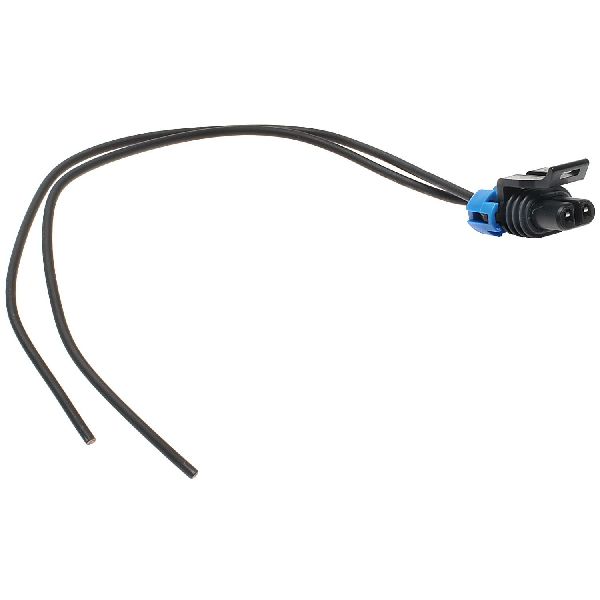
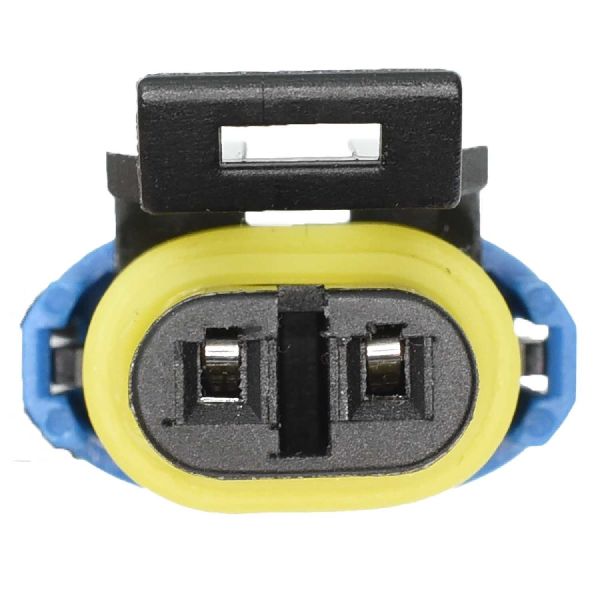
Typical fix: Repair the damaged section of wire with solder and heat shrink tubing. Clean or replace the connector pigtail if it is corroded. The Dorman 970-041 is a replacement harness assembly.
Est. part cost: $10-$40 - Damaged or Debris-Covered Tone Ring ⚪ Low Probability
How to confirm: This is harder to confirm without disassembly. After removing the sensor, you can use a small inspection camera or a flashlight to look through the sensor hole. Rotate the axle and inspect the toothed reluctor ring for missing teeth, heavy rust, or metallic debris. Be careful not to drop anything into the axle housing.
Typical fix: Requires pulling the axle shaft to clean or replace the tone ring. This is a more involved repair and is less common on the H3 than on its platform mates that use a different hub design.
Est. part cost: $20-$50 for the ring, but significant labor.
Rare But Worth Checking
- Faulty Electronic Brake Control Module (EBCM): This is rare. Before condemning the expensive EBCM, all other possibilities (sensor, wiring, tone ring) must be exhaustively ruled out. A diagnostic check for power and ground at the sensor connector can help determine if the EBCM is providing the necessary voltage. An EBCM failure often, but not always, presents with multiple wheel speed sensor codes or communication faults.
Diagnosis Steps
- Connect an ABS-capable scan tool to the OBD-II port.
- Confirm that C0050 is the active or stored code. Note any other codes, as they can provide additional diagnostic clues.
- View the live data stream for all four wheel speed sensors.
- Drive the vehicle slowly (or spin the wheel with the vehicle safely raised) and observe the speed readings. The Right Rear (RR) sensor should read differently (e.g., 0 mph) or not at all compared to the others.
- Raise and safely support the rear of the vehicle.
- Locate the right rear wheel speed sensor on the rear axle housing, inboard of the brake assembly. Inspect the wiring harness leading from the sensor for any visible damage, chafing, or corrosion.
- Follow the harness to the connector on the frame rail. Disconnect and inspect the connector pins for corrosion or damage.
- If the wiring looks good, apply rust penetrant to the base of the sensor and let it soak. Remove the T30 Torx bolt.
- Gently try to wiggle the sensor back and forth with pliers to break it free. Do not pull on the wires.
- If the sensor comes out intact, clean the bore thoroughly with a screwdriver, pick, or rolled-up sandpaper to remove the rust ridge that caused it to stick. Apply a small amount of silicone paste to the new sensor's O-ring to aid future removal and install the new sensor.
- If the sensor breaks, carefully drill a small pilot hole into the center of the remaining plastic piece. Thread a coarse screw into the hole and use pliers or a slide hammer to pull the broken piece out. Use a pick and vacuum to remove any remaining plastic bits, being extremely careful not to damage the tone ring inside the axle.
- After replacement, clear the codes with the scan tool and perform a road test to ensure the warning lights do not return and the ABS system functions correctly.
Parts You'll Likely Need
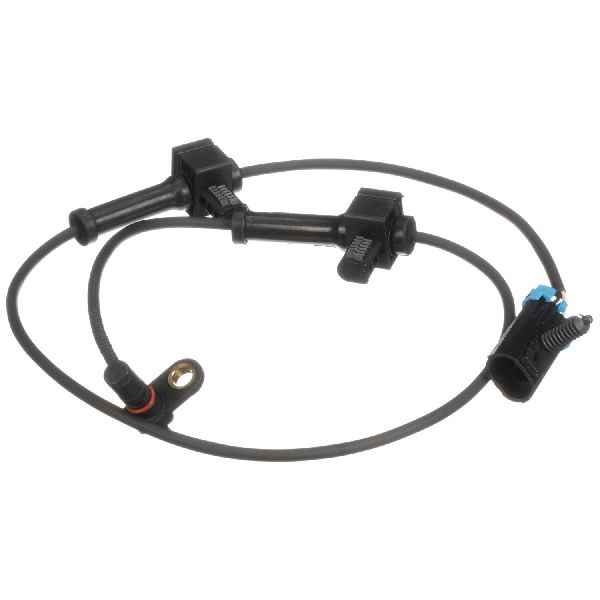
- Rear ABS Wheel Speed Sensor
(OEM #15127335)— This is the most common failure point for a C0050 code. It is a standalone part on the H3. The sensor is the same for the left and right rear sides.
Trusted brands: ACDelco (GM OE), Standard Motor Products (SMP), Dorman (970-041, often sold as a harness assembly), NGK/NTK
OEM price range: $40-$70
Aftermarket price range: $20-$50
Related Codes That Often Appear With This One
- C0045 — C0045 is the code for the left rear wheel speed sensor. It's common for both rear sensors to fail around the same time due to age and similar exposure to the elements.
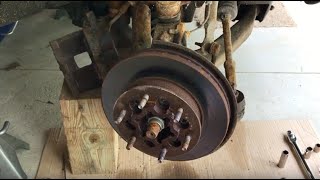
- C0040 — C0040 is the corresponding code for the front right wheel speed sensor. 🎬 Watch: How to replace the front speed sensor and hub assembly. It's not uncommon for multiple sensors to fail around the same time due to age, or for a separate issue to exist on another wheel.
- U1000 — A Class 2 Data Link Malfunction code can sometimes appear alongside a C0050, potentially indicating a broader electrical or module communication issue.
Technical Service Bulletins (TSBs) & Recalls
- While no TSB is specific to the H3's C0050 code, GM TSB #PIC5428G is relevant to its platform mates (Colorado/Canyon). It discusses how ferrous debris accumulating on the magnetic encoder ring of the wheel bearing can cause codes C0035-C0050. While the H3 uses a different tone ring setup, this highlights a common diagnostic path for these codes within the GM truck family.
Platform-Specific Known Issues
- The rear ABS sensor is notorious for seizing in the axle housing due to a rust ridge that forms in the bore. It frequently breaks upon removal, turning a simple repair into a more complex extraction process.
- Owner forums are filled with accounts of this specific failure, with many users sharing tips on extraction, such as using a drywall screw to pull out the broken plastic piece.
Documented NHTSA Reports
While C0050 is a standard code for the right rear wheel speed sensor on the Hummer H3, it is important to note how other manufacturers utilize this code. For instance, NHTSA ODI #10763888 describes a case where a Chevrolet HHR was diagnosed with C0050, which the dealership identified as a faulty Power Steering Control Module (PSCM) requiring a steering column replacement. Additionally, on some Jeep models, an owner reported in NHTSA ODI #11693418 that C0050-00 appeared when the rear brake pads, rotors, and adapter plate needed replacement. Another technician noted in NHTSA ODI #11649367 that the code can be set alongside C2227 when extra brake fluid is required to return caliper piston contact to the brake pad after service, disabling the ABS and supporting systems.
Mechanic-Grade Diagnostic Values
- Wheel Speed Sensor Current Output — expected: A toggling signal between 4-8 mA (low) and 12-16 mA (high) as the wheel is spun slowly.. Failure: A reading below 4 mA, above 8 mA for the low side, or below 12 mA, above 16 mA for the high side indicates a faulty sensor.
- WSS 12v Reference and Signal Circuit Resistance to Ground — expected: Infinite resistance (OL on multimeter).. Failure: Any reading less than infinite indicates a short to ground in the harness or EBCM.
- WSS Harness Continuity — expected: Less than 2.0 ohms.. Failure: A reading higher than 2.0 ohms indicates high resistance or an open in the wiring between the EBCM and sensor connector.
- WSS 12v Reference and Signal Circuit Voltage to Ground (EBCM disconnected) — expected: Less than 1.0 volt with key ON.. Failure: A reading greater than 1.0 volt indicates a short to voltage in the harness.
Hidden / Shadow Codes Worth Checking
- C0050 0F: Indicates the EBCM has detected an erratic signal from the wheel speed sensor. This is often caused by a failing sensor, intermittent wiring connection, or debris on the tone ring. (see via Requires a professional scan tool (like the GM Tech2/GDS2) capable of reading GM-specific symptom bytes.)
- C0050 18: Indicates the signal amplitude from the sensor is too low or missing. This can be caused by a large air gap between the sensor and tone ring, a damaged tone ring, or an open circuit in the wiring. (see via Requires a professional scan tool (like the GM Tech2/GDS2) capable of reading GM-specific symptom bytes.)
- C0050 5A: Indicates the signal from the sensor is not plausible when compared to other wheel speed sensors. This can point to a damaged or cracked tone ring on the axle shaft. (see via Requires a professional scan tool (like the GM Tech2/GDS2) capable of reading GM-specific symptom bytes.)
- C0050 06: Indicates the EBCM has detected low voltage or an open in the wheel speed sensor circuit. (see via Requires a professional scan tool (like the GM Tech2/GDS2) capable of reading GM-specific symptom bytes.)
Wiring & Ground Locations
- EBCM — In the engine compartment, mounted on the ABS hydraulic unit to the left of the master cylinder.. The EBCM provides power to the wheel speed sensor and interprets its signal. All wiring for the sensor circuit terminates here.
- G105 — On the left inner front wheel well, located behind the battery.. This is a primary ground point for the Electronic Brake Control Module (EBCM). A poor connection here can cause various ABS faults, including erratic module behavior.
- J110 — A splice pack located in the main body harness, approximately 3 inches (7.5 cm) away from the EBCM connector.. This splice connects multiple ground circuits for the brake system. Corrosion or a loose connection within this splice can cause intermittent ground issues for the EBCM.
- RR WSS Circuit at EBCM — The Right Rear Wheel Speed Sensor uses two pins at the EBCM connector: a 12-volt reference circuit and a signal circuit.. These specific pins must be tested for voltage, ground, and continuity when diagnosing a C0050 that is not resolved by a sensor replacement. Service manuals provide pin numbers for testing.
OEM Part Supersession History
15127335→15127335— No supersession found.
Heads up: This part number appears to be stable throughout the 2006-2010 model years with no major revisions noted.
Diagnostic Flowchart
Used vs. New Parts: Buying Guide for This Vehicle
When a used part is the smart pick: A used wiring harness pigtail from a junkyard is a good option if the connector is clean and the plastic is not brittle. A used EBCM can be a cost-effective alternative to a new one, but may require VIN programming by a dealer or specialist with a Tech2 scanner.
Donor-vehicle mileage cap: roughly under 150000 miles for the part to have meaningful remaining life.
What to inspect on the donor part:
- For a wiring pigtail, inspect for any signs of corrosion (green or white powder) on the pins.
- Ensure the connector's locking tab is intact and the plastic is not cracked or brittle.
- For a used EBCM, inspect the main connector port for any bent, pushed-in, or corroded pins.
OEM-only on this vehicle (don't cheap out):
- Wheel Speed Sensor. Due to the high failure rate of this part and the low cost of a new quality aftermarket unit ($20-$50), installing a used sensor with unknown remaining life is not a cost-effective repair.
Aftermarket brands forum-validated for this vehicle:
- ACDelco (GM Original Equipment)
- Standard Motor Products (SMP)
- NGK/NTK
Real Owner Stories
Aggregated from forums and TSBs cited above. Mileages and costs reflect what owners reported in those sources.
2007 Hummer H3 — 90198 miles
Symptoms: The ABS and Traction Control warning lights came on, and a scan revealed multiple trouble codes, including C0050.
What fixed it: Another owner with similar symptoms reported: 'Removed the bolt that holds the sensor into the rear axle and while removing the sensor, it broke, flush with the axle housing. I had to chip away at it, scrape off a rust ridge... Then inserted a screw into it and popped it out.' The original poster found their wiring was broken.
Cost: $53.99
Source hint: hummerforums.com - ABS Failed, etc. - Page 4
Hummer H3
Symptoms: Needed to replace the rear ABS sensor due to an ABS/Traction Control system fault.
What fixed it: The owner broke the sensor flush with the axle housing during removal. They had to chip away at a rust ridge inside the bore and then used a screw threaded into the broken plastic piece to pop it out.
Source hint: HummerForums.com - 'Rear abs sensor replacement' thread
Cross-Manufacturer Reference — Chevrolet Silverado 1500
Symptoms: ABS and Traction Control lights illuminated. A diagnostic scan at an independent mechanic revealed a long list of codes including C0035, C0040, and C0050.
What fixed it: As reported in NHTSA ODI #11228687, the vehicle was not immediately repaired after the initial diagnosis at the independent shop and was later taken to a dealership for further evaluation.
Source hint: NHTSA ODI #11228687
Related OBD-II Codes
Frequently Asked Questions
Why is the right rear ABS sensor on my Hummer H3 so likely to break when I try to remove it?
My right rear ABS sensor broke off flush with the axle. How can I get the broken piece out?
What tool do I need to remove the bolt for the C0050 wheel speed sensor?
How can I confirm the sensor is bad before I try to replace it and risk breaking it?
Does the Chevrolet Colorado have the same C0050 problem as my H3?
I found a wiring harness replacement, Dorman 970-041. Is this for the H3?
Does GM TSB #PIC5428G apply to my Hummer H3 for code C0050?
Helpful Videos
We Have This Part in Stock


The information in this article is provided for general reference and educational purposes only. Vehicle specifications, procedures, and part compatibility can vary by production date, trim level, and region. Always consult your vehicle's factory service manual and verify part numbers before purchasing or performing repairs. Safety-critical components such as airbags, seat belts, and braking systems should be installed by a qualified professional.
- Hummer H3:
- 🎬 Helpful Videos
- 🛍️ Shop This Part
- What's Unique About the 2006-2010 Hummer H3
- Symptoms You May Notice
- Most Likely Causes
- Rare But Worth Checking
- Diagnosis Steps
- Parts You'll Likely Need
- Related Codes That Often Appear With This One
- Technical Service Bulletins (TSBs) & Recalls
- Platform-Specific Known Issues
- Documented NHTSA Reports
- Mechanic-Grade Diagnostic Values
- Hidden / Shadow Codes Worth Checking
- Wiring & Ground Locations
- OEM Part Supersession History
- Diagnostic Flowchart
- Used vs. New Parts: Buying Guide for This Vehicle
- Real Owner Stories
- 2007 Hummer H3 — 90198 miles
- Hummer H3
- Cross-Manufacturer Reference — Chevrolet Silverado 1500
- Related OBD-II Codes
- Frequently Asked Questions
- 🎟️ Get 5% Off