

OBD-II Code C0131: ABS Pressure Circuit Malfunction
What C0131 means, why it triggers, and how to fix it
- Code C0131 indicates a failure in the brake pressure sensor circuit, immediately disabling your vehicle's ABS and electronic stability control (ESC).
- On most modern GM, BMW, and Vauxhall vehicles, the pressure sensor is permanently sealed inside the ABS module, requiring a full module repair or replacement.
- Save $500 to $1,500 by using a $150-$300 mail-in ABS module rebuilding service instead of buying a new dealer part that requires expensive reprogramming.
- Before replacing any expensive parts, use a multimeter to verify the EBCM ground connection has less than 0.5 ohms of resistance, as corrosion here frequently triggers false C0131 codes.
- Never drive aggressively with a C0131 code active; without ESC and ABS, your risk of a fatal single-vehicle rollover or skidding crash increases by up to 50%.
What Does C0131 Mean?

Code C0131 means the Electronic Brake Control Module (EBCM) detects a fault in the brake pressure sensor circuit. This sensor measures exactly how hard you press the brake pedal—critical data required for the ABS and stability control systems to intervene correctly during a skid. When this circuit fails, the vehicle disables these safety systems as a fail-safe measure.
Technical definition: The SAE/ISO definition is "ABS Pressure Circuit Malfunction." The EBCM triggers this code when the brake pressure sensor's signal falls outside the acceptable 0.12V to 3.2V range, remains static during pedal application, or contradicts data from the brake pedal position switch.
Can I Drive With C0131?
Yes, But With Caution. You can drive the vehicle, but do so with extreme caution. Your primary hydraulic brakes function normally, but the Anti-lock Braking (ABS) and Electronic Stability Control (ESC) systems are completely disabled. Driving without ESC increases the risk of fatal single-vehicle crashes by up to 50%. Increase your following distance and avoid highway speeds in rain, snow, or icy conditions until the system is repaired.
Common Causes

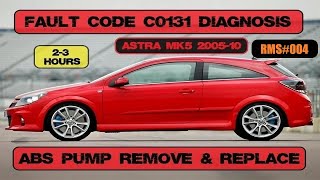
- Faulty EBCM / ABS Module (Internal Sensor Failure) (Very Common) — On modern GM, BMW, and Vauxhall models, the brake pressure sensor is permanently integrated into the ABS module or Brake Pressure Modulator Valve (BPMV). Internal failure of this non-serviceable sensor requires repairing or replacing the entire module assembly. 🎬 Watch: Diagnosing and solving C0131 on a Vauxhall Astra.
- Failed Brake Pressure Sensor (External) (Common) — On vehicles equipped with a standalone sensor mounted directly on the master cylinder, the sensor itself fails over time, sending erratic, static, or zero-voltage signals to the EBCM.
- Poor EBCM Ground Connection (Common) — The EBCM requires a solid chassis ground to process low-voltage sensor signals accurately. Corrosion or looseness at this ground point creates high electrical resistance, causing erratic module behavior and triggering false C0131 codes. 🎬 See how to identify and fix common EBCM grounding issues.
- Wiring Harness or Connector Damage (Less Common) — Road debris, extreme heat, or chafing damages the wiring harness connecting the ABS module to the sensor. Corroded pins or moisture intrusion at the connector also interrupt the 5V reference or signal wires.
- Failing Brake Light Switch (Less Common) — The EBCM compares the brake switch signal with the pressure sensor reading. If the pressure sensor detects braking but the brake light switch reports the pedal is released, the logic mismatch triggers C0131.
- Low System Voltage (Rare) — The ABS module requires at least 10 volts to run self-diagnostics. A weak battery or failing alternator drops system voltage below this threshold, triggering spurious communication and sensor codes.
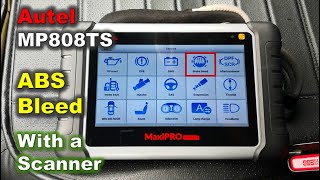
- Air in the Brake Hydraulic System (Rare) — If the brake system was recently serviced and improperly bled, trapped air creates a spongy pedal. This causes implausible pressure readings during braking, triggering the code. 🎬 Learn how to use a scan tool to bleed ABS brakes.
Symptoms

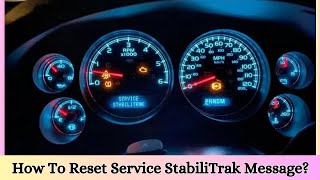
- ABS and Stability Control Lights On — The ABS, Traction Control, and 'Service StabiliTrak' (or ESC Off) warning lights illuminate permanently on the dashboard.
- Disabled Safety Systems — ABS and stability control are completely offline. Wheels lock up during hard braking, and the vehicle easily loses traction on wet or icy surfaces.
- Abnormal Brake Pedal Feel — The brake pedal feels unusually hard or soft. Intermittent electrical faults sometimes cause a stuttering or pulsation sensation during normal braking.
- Inoperative Brake Lights — If the root cause is a failed brake pedal position sensor (which shares data with the EBCM), the brake lights fail to illuminate or stay stuck on.
Diagnostic Flowchart

Tap your situation to follow the diagnostic path that matches what you're seeing on this code.
Common Fixes & Costs
- Repair EBCM/ABS Module (Mail-in Service) — Parts: $150-$300, Labor: $100-$250, ~2.0 hr book time (Intermediate)
- Replace EBCM/ABS Module
— Parts: $600-$1500, Labor: $200-$400, ~2.5 hr book time
(Professional)
Chevrolet Silverado (2007-2013): OEM ACDelco 84078739 (Alt: Dorman 599-700 (Remanufactured))
BMW 3-Series E46 (1998-2006): OEM BMW 34522460484 (Alt: Bosch (OEM supplier)) - Replace Brake Pressure Sensor (External) — Parts: $50-$150, Labor: $100-$200, ~1.5 hr book time (Intermediate)
- Repair Wiring or Ground Connection — Parts: $10-$30, Labor: $100-$200, ~1.5 hr book time (Intermediate)
- Replace Brake Light Switch
— Parts: $15-$50, Labor: $50-$100, ~0.8 hr book time
(DIY)
Chevrolet Silverado (2007-2011): OEM ACDelco D1586H (Alt: Standard Motor Products SLS458)
Used vs. New Parts: Buying Guide
When a used part is worth it: A used ABS module from a low-mileage donor vehicle is cost-effective for older cars where new parts are discontinued. However, mail-in repair of your original unit is almost always a better choice to avoid programming fees.
Donor-vehicle mileage cap: roughly under 100000 miles for the part to have meaningful remaining life.
Donor quality checklist:
- Verify the donor vehicle was not scrapped for a similar brake system failure.
- Match the part number exactly; slight variations lead to incompatibility.
- Purchase from a supplier offering at least a 90-day warranty.
Decision logic:
- If A mail-in repair service is available for your specific module → Choose repair. It costs $150-$300 and completely avoids dealer programming fees.
- If Vehicle is older and budget is the primary concern → Buy a tested used part, but factor in $100-$200 for professional VIN programming.
- If The part is for a newer vehicle and long-term reliability is paramount → Buy a new OEM or remanufactured unit from a trusted brand.
Warranty tradeoff: Used parts offer 30-90 day warranties. Mail-in repairs frequently offer 1-year to lifetime warranties. New OEM parts carry a 1-2 year manufacturer warranty.
Worst-case if a used part fails: $300-$600 if a used part is faulty or fails programming, covering repeat labor and sourcing another part.
What Happens If You Wait — Timeline
- Immediate: Code C0131 sets. The ABS, Traction Control, and Stability Control warning lights illuminate, immediately disabling these safety systems. (MPG impact: 0%% · Added cost: $0)
- 0-3 months: Driving without ABS/ESC significantly increases the chance of a loss-of-control accident, especially during emergency maneuvers or on wet roads. (MPG impact: 0%% · Added cost: $500 - $10,000+ (insurance deductible and collision repairs))
- Long-term (Specific GM HD Trucks Only): On vehicles affected by GM recall N222375270, the faulty pressure sensor leaks brake fluid into its electrical connector, causing a short circuit and potential underhood fire. (MPG impact: 0%% · Added cost: Total vehicle loss)
Cost of Not Fixing It
- Immediate: ABS, Traction Control, and Stability Control systems are disabled. This significantly increases the risk of skidding and loss of control in emergency braking situations. (Added cost: N/A)
- Ongoing: Increased risk of a collision. The cost of an at-fault accident (deductible, repairs, premium hikes) far exceeds the repair cost. (Added cost: $500 - $10,000+)
- Long-term: On specific GM HD trucks under recall, a leaking pressure sensor short circuits and poses an underhood fire risk, even when parked. (Added cost: Total vehicle loss)
Diagnosis Steps
- Read Codes and Check TSBs
Use an ABS-capable OBD-II scanner to confirm C0131. Document any accompanying C-codes or U-codes. Immediately search for Technical Service Bulletins (TSBs) for your specific VIN, as manufacturers frequently issue known fixes for this code.
Tools: ABS-capable OBD-II Scanner, Internet access (Beginner) - Test Brake Light Switch Functionality
Have a helper watch the brake lights while you press the pedal. They must illuminate instantly and turn off without delay. A flickering or dead brake light indicates a faulty switch, which must be replaced before diagnosing the pressure sensor.
Tools: Helper (Beginner) - Inspect EBCM Ground Connection
Locate the primary EBCM ground wire on the chassis. Disconnect it and measure resistance to the negative battery terminal using a multimeter. If resistance exceeds 0.5 ohms, clean the chassis contact and terminal with a wire brush until shiny, then reconnect.
Tools: Multimeter, Wire brush, Socket set (Intermediate) - Analyze Live Sensor Data
Access the live data stream on an advanced scan tool. Monitor the 'Brake Pressure Sensor' PID. With the pedal released, it should read ~0.2V. As you press the pedal, voltage must increase smoothly. A reading stuck at 0V or 5V confirms a hard circuit fault.
Tools: Advanced Scan Tool (Advanced) - Back-Probe the Sensor/Module Connector
Using a wiring diagram, identify the 5V reference, ground, and signal wires at the EBCM connector. Back-probe with a multimeter while the key is ON. Verify 5V power and solid ground. If power/ground are good but the signal wire is dead or stuck at 5V, the sensor or module has failed internally.
Tools: Multimeter, Wiring diagram, Back-probe kit (Advanced) - Isolate and Condemn the Component
If live data is incorrect but wiring, power, and ground tests pass, the component housing the sensor is dead. Replace external sensors directly. For internal sensors, remove the entire ABS module/BPMV for repair or replacement.
Tools: Basic hand tools (Professional)
When This Code Triggers (Freeze-Frame Conditions)
- Ignition Status: ON (The system self-test runs continuously while the ignition is on.)
- System Voltage: > 10.0 Volts (The EBCM requires sufficient voltage to run diagnostics and operate correctly.)
- Vehicle Speed: > 10 mph (16 km/h) (Plausibility checks compare sensor readings against actual vehicle movement.)
- Brake Pedal Status: Applied / Released (Triggers if the pressure sensor signal remains static during pedal application or contradicts the brake switch.)
Related Codes
- C0277 — Brake Pedal Position (BPP) Sensor Circuit. The EBCM compares signals from both sensors. If the BPP sensor voltage is erratic on a scan tool, C0277 is the root cause triggering C0131.
- C0161 — ABS/TCS Brake Switch Circuit. If the brake switch signal fails, the EBCM cannot verify the pressure sensor reading. Diagnose inoperative brake lights and fix C0161 first.
- U0121 — Lost Communication with ABS Module. Indicates a total power, ground, or data loss to the module. Diagnose the power/ground circuits before condemning the module for a C0131.
- C0131 5A — Plausibility Failure (Saab/GM). Indicates the sensor's reading contradicts the vehicle's rate of deceleration. Points directly to an internal logic failure requiring module replacement or scan tool calibration.
Climate & Environmental Factors
- High Humidity / Road Salt (Rust Belt): Accelerates corrosion at the EBCM chassis ground. This increases electrical resistance, drops the operating voltage, and triggers false C0131 codes. Connectors also suffer from moisture intrusion and pin corrosion.
- Extreme Cold: Drops a weak battery's voltage below the 10V threshold required by the EBCM to run self-diagnostics, causing spurious communication and sensor codes.
How to Talk to a Mechanic About This Code
Say this: "I have an ABS light on, and my scanner shows a C0131 code. Before quoting a full module replacement, please test the EBCM ground connection for resistance and check the live voltage data from the brake pressure sensor."
This signals you understand the common, cheaper failure points. It directs the technician to perform specific diagnostic steps rather than immediately defaulting to a $1,500 module replacement.
Avoid saying:
- My ABS light is on, can you fix it?
- Just do whatever it takes to get the light off.
- I think I need a new ABS computer.
Questions to ask before authorizing the repair:
- What was the brake pressure sensor's voltage reading on the scan tool, both with the pedal released and fully depressed?
- Did you test the EBCM ground, and what was the resistance in ohms?
- Have you confirmed the brake light switch is functioning correctly?
- If you recommend module replacement, will you install a remanufactured unit or allow me to use a mail-in repair service for my original module?
Where to Take It: Dealer vs Independent vs Chain
- Dealer:
Recommended only if the vehicle is under warranty or subject to a specific recall. Otherwise, a highly costly option.
Best for: Vehicles under warranty, Recall-related repairs (e.g., GM HD truck fire risk), Complex programming on newer German vehicles
Downsides: Highest labor rates, Defaults to expensive module replacement instead of exploring repair options. (Typical cost: +50% vs. baseline) - Independent Shop:
Best fit for most vehicles. Vet the shop by asking if they are equipped for ABS diagnostics and module programming.
Best for: Out-of-warranty vehicles where cost is a factor, Shops willing to use cost-saving options like mail-in module repairs.
Downsides: Ensure they have a professional scan tool capable of ABS live data, automated bleeding, and VIN programming. (Typical cost: +0% vs. baseline) - Chain Shop:
AVOID. This code requires diagnostic depth and specialized tools beyond what chain shops handle.
Best for: Simple maintenance like oil changes or tire rotations.
Downsides: Technicians lack specialized training for complex electronic diagnostics., Not equipped with advanced scan tools needed for ABS module programming or automated bleeding. (Typical cost: -10% vs. baseline)
When to Walk Away From the Repair
If the estimated repair cost exceeds 40-50% of the car's private-party value, pause and consider your options.
- Car worth $4000, fix is $2200: Walk away. The repair cost is over 50% of the car's value. Put this money toward a replacement vehicle.
- Car worth $15000, fix is $750: Fix it. The cost to repair the ABS module is well below the threshold and restores a critical safety feature.
- Car worth $3500, fix is $1500: Borderline. At 43% of the vehicle's value, get a second opinion. If a cheaper fix like a mail-in repair isn't possible, it's time to sell.
What Scan Tool You Need for This Code
Minimum: A scanner that reads/clears ABS fault codes and displays live sensor data.
A standard $20 engine code reader cannot communicate with the ABS module to see 'C' (Chassis) codes. Diagnosing C0131 requires viewing live voltage data from the brake pressure sensor.
Budget: BlueDriver Pro (~$99) — Reads and clears ABS codes and displays live data for the brake pressure sensor on its smartphone app for most major brands. Confirms if the sensor signal is dead or erratic.
Mid-range: Foxwell NT510 Elite (~$180) — Provides full-system diagnostics and bi-directional control. Crucially, it performs the 'automated bleed' function necessary after replacing the ABS hydraulic unit.
Professional: Autel MaxiCOM MK808S (~$450) — Offers extensive bi-directional controls, the critical ABS bleed function, sensor calibrations, and module programming capabilities.
Rent vs buy: Auto parts store loaner tools read ABS codes but rarely perform live data or bi-directional bleed functions. Buying a capable mid-range scanner is mandatory for an advanced DIYer tackling this code.
How to Clear the Code After You Fix It
- Use an ABS-capable OBD-II scan tool to clear the fault code.
- Perform the automated brake bleed procedure with the scan tool if the hydraulic unit was replaced.
- Perform a Brake Pressure Sensor Calibration if required by the manufacturer (e.g., Corvette, Saab).
Drive cycle (~15 minutes): A current DTC clears once the diagnostic runs and passes during the next ignition cycle. A short test drive involving several braking events confirms the fix.
Readiness monitors affected: Not applicable to emissions readiness monitors.
Watch out for:
- Disconnecting the battery will not clear a C-code from the EBCM memory.
- The code returns immediately if the root cause (e.g., bad module, wiring short) is not fixed.
- Failing to calibrate a new sensor or module on GM vehicles prevents the code from clearing.
Will This Fail Emissions / State Inspection?
No — by itself this code doesn't fail OBD inspection (but it can keep readiness monitors from setting, which causes a separate fail).
- California: An illuminated ABS warning light fails the mandatory safety inspection, preventing registration renewal.
- New York: An illuminated ABS warning light is grounds for failing the annual safety inspection.
- Texas: An illuminated ABS warning light will NOT cause a failure of the state safety inspection. The inspector checks service brakes, but ABS is not a pass/fail item.
Most Commonly Affected Vehicles
- Chevrolet / GMC Silverado, Sierra, Tahoe, Yukon, Suburban (2007-2018) — The brake pressure sensor is integrated into the Brake Pressure Modulator Valve (BPMV). This is a leading cause for the 'Service StabiliTrak' message, requiring full BPMV replacement.
- Chevrolet Spark (2013-2020) — The integrated pressure sensor in the ABS module fails frequently. TSB PIC5704G applies, requiring a full module replacement.
- Chevrolet Corvette (1997-2008) — Prone to EBCM failure. On C5 and C6 models, a faulty Brake Pedal Position Sensor also causes C0131, requiring recalibration with a Tech 2 scan tool after replacement.
- BMW 3-Series (E46), 5-Series (E39), X5 (E53) (1998-2006) — The Bosch 5.7 or ATE MK60 ABS control module is a frequent failure point due to broken internal connections. Mail-in repair services are the standard, cost-effective solution.
- Vauxhall / Opel Astra H, Zafira B (2004-2014) — Internal failure of the ABS pump/module assembly is highly documented. Rebuilding the original unit is the preferred fix to avoid programming costs.
- Saab 9-3, 9-5 (2003-2011) — Logs C0131 with a '5A' subtype (Not Plausible). This points to a logic failure where the sensor's reading contradicts vehicle deceleration, requiring EBCM replacement or calibration.
Manufacturer-Specific Notes
- General Motors (Chevrolet, GMC, Cadillac): TSB PIC5704G warns that failing to remove protective shipping plugs from a new Brake Pressure Modulator Valve (BPMV) blocks the sensor port, causing a stuck 5V reading and an immediate C0131 code.
- General Motors (Medium Duty Trucks): Safety Recalls N222375270 and N242482680 apply to 2019-2024 Silverado 4500HD/5500HD/6500HD trucks. The sensor leaks fluid, causing a short circuit and fire risk. Park outdoors until repaired.
- Chevrolet Corvette: On C5/C6 Corvettes, replacing the Brake Pedal Position Sensor requires a dealer-level scan tool (Tech 2) to 'relearn' the new sensor's home position before the C0131 code will clear.
- Saab: Sets C0131 with a '5A' subtype (Not Plausible). This requires a 'Brake Pressure Sensor Calibration' procedure using a capable scan tool before condemning the module.
Real Owner Stories
2011 Chevrolet Silverado 2500HD with 'Service StabiliTrak'
Owner reported a permanent C0131-01 code alongside 'Service StabiliTrak' messages. They searched for a replaceable brake pressure switch near the master cylinder but found nothing.
Outcome: A technician confirmed the truck had the 'JL4' active brake control package, meaning the sensor is permanently sealed inside the Brake Pressure Modulator Valve (BPMV). The fix required replacing the entire BPMV assembly.
Lesson: On GM trucks, check your RPO codes in the glove box. If you have JL4, the pressure sensor is internal to the ABS module and cannot be replaced separately.
C5 Corvette with intermittent C0131 after header installation
After installing exhaust headers—which required dislodging the steering column—the owner received an intermittent C0131 code and 'Active Handling Inop' message.
Outcome: The Brake Pedal Position Sensor was accidentally damaged with a pry bar during the header install. Replacing the $15 switch and performing a 'Brake Pedal Position Sensor Relearn' with a Tech 2 scan tool permanently cleared the code.
Lesson: A damaged Brake Pedal Position Sensor triggers C0131. Always verify brake light function, and remember that modern GM vehicles require a scan tool calibration after replacing this switch.
2010 Vauxhall Astra H with permanent C0131
The ABS and ESP lights illuminated permanently, failing the UK MOT safety inspection due to a C0131 'pressure sensor circuit malfunction'.
Outcome: Instead of paying dealer prices for a new unit, the owner removed the ABS module and sent it to a specialist rebuilder. Reinstalling the repaired unit cleared the code without requiring software programming.
Lesson: For well-known module failures, a mail-in repair service is highly cost-effective, reliable, and bypasses the need for expensive dealer programming.
How to Prevent This Code From Triggering
- Flush brake fluid every 2-3 years (Every 2-3 years or 30,000 miles) — Brake fluid absorbs moisture over time. This moisture corrodes the delicate internal sensors and solenoids of the ABS module, leading to premature failure. Regular flushing keeps the fluid dry.
- Clean and protect EBCM ground connection (Every 3 years, or when working in the area) — The main EBCM ground strap to the chassis fails frequently due to rust. Cleaning this connection and applying dielectric grease prevents the high electrical resistance that triggers module malfunctions.
- Maintain a fully charged battery (Annually) — The EBCM requires a stable power supply above 10V. A weak battery causes voltage drops during engine cranking that trigger spurious C0131 codes.
Frequently Asked Questions
What are common misdiagnosis mistakes for C0131?
Mechanics often replace the expensive ABS module without checking the EBCM ground wire or brake light switch first. Always verify the ground resistance is under 0.5 ohms. Also, check for TSBs, as known issues like GM shipping plugs cause immediate repeat failures.
Why did C0131 appear immediately after replacing the ABS module?
On many GM vehicles, new Brake Pressure Modulator Valves (BPMV) ship with protective plugs. If left installed, they block the sensor port, causing a stuck 5V reading and an instant C0131 code. Remove the module and extract the plugs.
Can low brake fluid cause code C0131?
No. Low brake fluid triggers a red dashboard 'BRAKE' light via the fluid level sensor. C0131 is strictly an electrical circuit fault related to the pressure sensor.
Can I just replace the brake pressure sensor?
It depends on the vehicle model. On most modern GM, BMW, and Vauxhall cars, the sensor is permanently sealed inside the ABS module, requiring full module replacement. On older makes, it is a standalone, replaceable part on the master cylinder.
Is it safe to drive with code C0131?
Your primary hydraulic brakes function normally, but ABS and stability control are disabled. This significantly increases the risk of skidding during emergency stops or on wet roads. Drive cautiously and increase following distance until repaired.
Why is the repair so expensive?
The sensor is often integrated into the Electronic Brake Control Module (EBCM), meaning the entire computer must be replaced. A new OEM module costs $600 to $1,500, plus labor for installation, automated brake bleeding, and VIN programming.
What is an EBCM mail-in repair service?
Instead of buying a new module, you remove your broken EBCM and mail it to a specialized rebuilder. They repair the internal sensor circuit for $150-$300 and return it. This saves hundreds of dollars and avoids expensive dealer reprogramming.
Key Takeaways
- Code C0131 indicates a failure in the brake pressure sensor circuit, immediately disabling your vehicle's ABS and electronic stability control (ESC).
- On most modern GM, BMW, and Vauxhall vehicles, the pressure sensor is permanently sealed inside the ABS module, requiring a full module repair or replacement.
- Save $500 to $1,500 by using a $150-$300 mail-in ABS module rebuilding service instead of buying a new dealer part that requires expensive reprogramming.
- Before replacing any expensive parts, use a multimeter to verify the EBCM ground connection has less than 0.5 ohms of resistance, as corrosion here frequently triggers false C0131 codes.
- Never drive aggressively with a C0131 code active; without ESC and ABS, your risk of a fatal single-vehicle rollover or skidding crash increases by up to 50%.
Helpful Videos

The information in this article is provided for general reference and educational purposes only. Vehicle specifications, procedures, and part compatibility can vary by production date, trim level, and region. Always consult your vehicle's factory service manual and verify part numbers before purchasing or performing repairs. Safety-critical components such as airbags, seat belts, and braking systems should be installed by a qualified professional.
- 🎬 Helpful Videos
- What Does C0131 Mean?
- Can I Drive With C0131?
- Common Causes
- Symptoms
- Diagnostic Flowchart
- Common Fixes & Costs
- Used vs. New Parts: Buying Guide
- What Happens If You Wait — Timeline
- Cost of Not Fixing It
- Diagnosis Steps
- When This Code Triggers (Freeze-Frame Conditions)
- Related Codes
- Climate & Environmental Factors
- How to Talk to a Mechanic About This Code
- Where to Take It: Dealer vs Independent vs Chain
- When to Walk Away From the Repair
- What Scan Tool You Need for This Code
- How to Clear the Code After You Fix It
- Will This Fail Emissions / State Inspection?
- Most Commonly Affected Vehicles
- Manufacturer-Specific Notes
- Real Owner Stories
- 2011 Chevrolet Silverado 2500HD with 'Service StabiliTrak'
- C5 Corvette with intermittent C0131 after header installation
- 2010 Vauxhall Astra H with permanent C0131
- How to Prevent This Code From Triggering
- Frequently Asked Questions
- What are common misdiagnosis mistakes for C0131?
- Why did C0131 appear immediately after replacing the ABS module?
- Can low brake fluid cause code C0131?
- Can I just replace the brake pressure sensor?
- Is it safe to drive with code C0131?
- Why is the repair so expensive?
- What is an EBCM mail-in repair service?
- Key Takeaways
- 🎟️ Get 5% Off