

C0050 on 2006-2012 Ford Fusion: Right Rear Wheel Speed Sensor Fault Causes and Fixes
This code means there's a fault in the right rear wheel speed sensor circuit, which disables your ABS and traction control. The most common fix is replacing the sensor itself, an affordable part. However, the issue can also be damaged wiring, a corroded connector, or a faulty wheel hub bearing assembly with an integrated magnetic tone ring.
- C0050 means the right rear wheel speed signal has been lost, disabling ABS and traction control.
- The most likely cause is a failed ABS sensor, which is a straightforward DIY replacement for many.
- Always inspect the wiring harness for damage or corrosion, especially near the sensor connector, before replacing parts.
- If the sensor and wiring are good, the issue may be the wheel hub bearing's integrated tone ring, which would require replacing the entire hub assembly.
- Use a scanner that can read ABS live data to confirm which wheel is faulting before beginning repairs.
What's Unique About the 2006-2012 Ford Fusion
For the first-generation Ford Fusion, which shares its CD3 platform with the Mercury Milan and Lincoln MKZ/Zephyr, the C0050 code points to a failure in the right rear wheel speed circuit. This can stem from three main sources: the sensor, the wiring, or the wheel bearing's integrated tone ring. Unlike some other vehicles where the bearing is the primary culprit, on the Fusion, a failed sensor is a very common cause. The sensor's wiring harness is also a known weak point, running from the wheel well into the cabin behind the rear seat, making it susceptible to damage or corrosion over its long path. The connector behind the rear seat bolster is a frequent point of failure due to moisture intrusion.
Symptoms You May Notice
- ABS warning light is on
- Traction control or stability control (AdvanceTrac) warning light is on
- ABS system does not activate during hard braking (wheels may lock and skid)
- Traction control does not activate during acceleration on slippery surfaces
- Brake warning light may also be illuminated
- Replacing the wheel speed sensor when the actual fault is a broken or corroded wire a few inches up the harness.
- Replacing the wheel hub bearing when it is only a faulty sensor.
- Replacing the ABS module when the cause is a simple wiring or sensor issue.
- Overlooking a corroded harness connector located behind the rear seat bolster.
Most Likely Causes
- Failed Right Rear Wheel Speed Sensor 🔴 High Probability The sensor is an exposed electronic component subject to road salt, water, and debris, leading to internal failure over time. It is the most frequently replaced component for this code on the Fusion platform.
How to confirm: Use a scan tool to monitor live data from all four wheel speed sensors while driving. If the right rear sensor shows 0 MPH or an erratic reading while the others read correctly, the sensor is the likely fault. Resistance testing can also be performed; a healthy sensor will have a specific resistance value, whereas a failed one may be open or shorted.
Typical fix: Replace the right rear ABS wheel speed sensor. The sensor is held to the steering knuckle by a single 8mm or 10mm bolt.
Est. part cost: $45-$85 - Damaged Wiring or Connector 🟡 Medium Probability The wiring harness runs from the wheel well, along the suspension, and through the body into the rear passenger compartment, exposing it to potential damage from road debris, improper jacking, or corrosion. A Ford TSB for a later model (SSM 44504) highlights that hidden corrosion can occur inside the wire's insulation within a few inches of the sensor connector, causing an intermittent signal. This issue is also common on the 2006-2012 models.
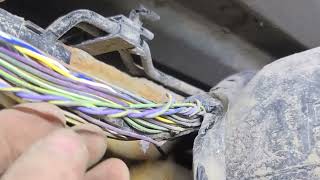
How to confirm: Visually inspect the entire length of the harness for cuts, abrasions, or pinch points. Unplug the connector at the sensor and inside the cabin (behind the rear passenger-side seat bolster) to check for green or white corrosion on the pins. Perform a continuity test on the wires between the sensor connector and the ABS module connector to check for opens or shorts.
Typical fix: If corrosion is found in the connector, clean it or replace the pigtail. If a wire is broken or corroded, splice in a new section of wire using solder and heat-shrink tubing for a durable, weather-resistant repair.
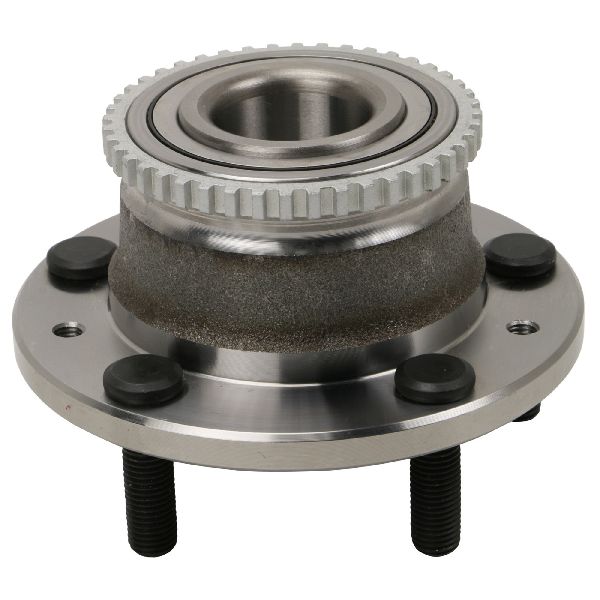
Est. part cost: $15-$40 for a pigtail connector - Failed Rear Wheel Hub Bearing Assembly ⚪ Low Probability The magnetic tone ring (encoder) that the ABS sensor reads is integrated into the wheel hub bearing assembly. This ring can crack, get covered in metallic debris, or the bearing itself can develop excessive play, which increases the air gap and disrupts the sensor's signal. This often occurs after a bearing replacement if a low-quality part was used or if it was damaged during installation.
How to confirm: With the sensor removed, use a light to visually inspect the tone ring through the sensor hole for cracks, rust, or debris. Also, check for any play or roughness in the wheel bearing by trying to wiggle the wheel (at 12 and 6 o'clock) and spinning it by hand. A humming or grinding noise while driving that changes with speed is also a classic sign of a bad wheel bearing.
Typical fix: Replace the rear wheel hub and bearing assembly. For FWD models, this is a bolt-on assembly.
Est. part cost: $70-$150
Rare But Worth Checking
- Failed ABS Control Module: This is very rare. Before condemning the expensive ABS module, exhaust all other possibilities by thoroughly testing the sensor, wiring, and hub assembly. A failure here would typically set codes for multiple wheels or communication codes (U-codes) and would require sending the module for professional repair or replacement and programming.
Diagnosis Steps
- Connect an OBD-II scanner capable of reading ABS codes to confirm C0050 is the primary fault.
- Use the scanner's live data function to view the wheel speed from all four sensors while driving. Confirm that the Right Rear (RR) sensor reads 0 MPH or shows erratic values compared to the others.
- Safely raise and support the vehicle. Remove the right rear wheel.
- Visually inspect the ABS sensor (bolted to the knuckle) and its wiring harness for any obvious signs of damage, such as cuts, melting, or corrosion.
- Remove the 8mm or 10mm bolt holding the sensor and gently wiggle/pry the sensor out of the knuckle. They can become seized with rust.
- Inspect the sensor tip and the magnetic tone ring inside the hub for metallic debris, rust, or physical damage. Clean the area if necessary.
- Trace the wiring harness from the sensor, through the wheel well, and into the vehicle cabin. Remove the rear passenger-side seat cushion and side bolster to access the electrical connector. Disconnect it and inspect both ends for corrosion or pushed-out pins.
- If no visual faults are found, use a multimeter to test the resistance of the sensor itself (if specs are available) or test for voltage and ground at the harness connector.
- If the sensor and wiring test good, the fault likely lies with the tone ring on the wheel hub bearing assembly, which will require replacement.
Parts You'll Likely Need
- Rear ABS Wheel Speed Sensor
(OEM #AE5Z-2C182-A)— This is the most common failure point for code C0050. The sensor is an exposed electronic component that wears out over time.
Trusted brands: Motorcraft, Delphi, Dorman, SKP, NTK
OEM price range: $60-$90
Aftermarket price range: $40-$75 - Rear Wheel Hub Bearing Assembly (FWD)
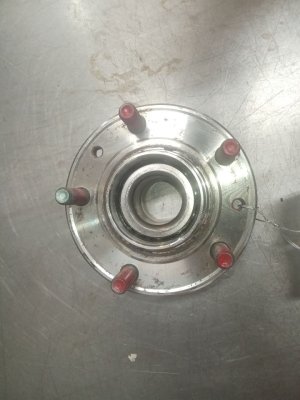
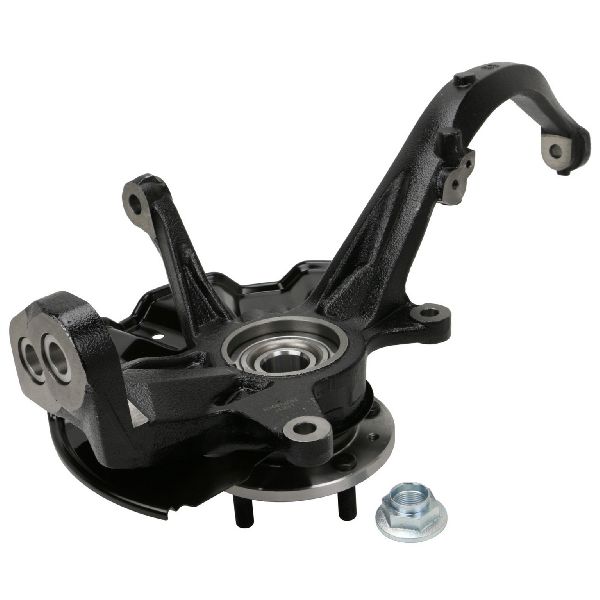
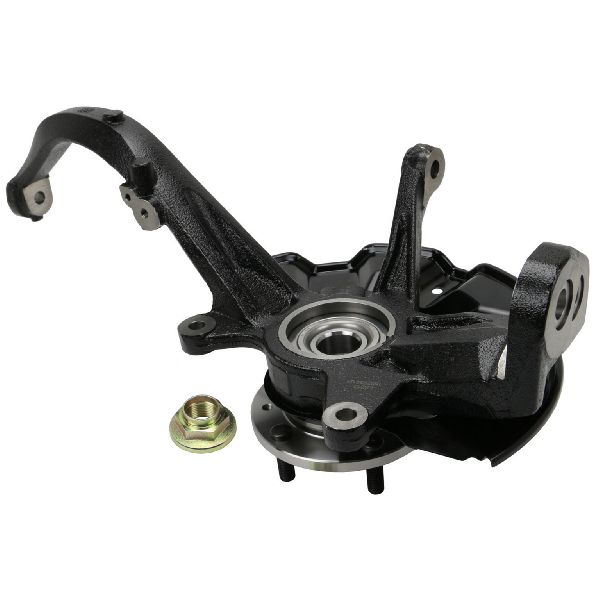
(OEM #BE5Z-1104-A)— This part is needed if the integrated magnetic tone ring is damaged or if the bearing has failed, causing excessive play that disrupts the sensor signal.
Trusted brands: Motorcraft, Timken, SKF, MOOG, Duralast
OEM price range: $120-$180
Aftermarket price range: $70-$150 - ABS Wheel Speed Sensor Connector Pigtail — Needed if the connector at the sensor is damaged or corroded beyond cleaning. Splicing in a new pigtail is often easier than repairing the old connector.
Trusted brands: Dorman, Motorcraft
OEM price range: $25-$45
Aftermarket price range: $15-$30
Related Codes That Often Appear With This One
- C0037 — This is the code for the Left Rear Wheel Speed Sensor. It's common to see codes for other wheels if there is a systemic issue like a faulty ABS module or widespread wiring corrosion.
- U0415 — This code indicates 'Invalid Data Received From Anti-Lock Brake System Control Module'. It often appears as a secondary code because other modules (like power steering or stability control) rely on the ABS module for wheel speed data, and they set a fault when that data is missing or corrupt.
- C0050-5A — This is a more specific version of the code indicating 'Signal Plausibility Failure'. It means the signal from the right rear sensor doesn't make sense compared to other vehicle sensors, often pointing directly to a damaged tone ring on the hub bearing.
Technical Service Bulletins (TSBs) & Recalls
- SSM 44504 (for 2013-2014 Fusion): While for the next generation, this TSB is highly relevant. It notes that an ABS light with wheel speed sensor codes can be caused by hidden corrosion or cuts in the wiring 1-3 inches from the sensor connector, even if the harness looks fine externally. This is a known failure pattern on the 2006-2012 models as well.
Platform-Specific Known Issues
- Wiring Harness Connector Location: A key diagnostic step is to check the harness connector located inside the car. To access it, you must remove the rear seat bottom cushion and then the passenger-side rear seat side bolster. The connector is often found clipped to the body behind this panel. This location can trap moisture, leading to corrosion.
Mechanic-Grade Diagnostic Values
- Rear Wheel Speed Sensor Resistance — expected: 850-1350 Ohms. Failure: A reading of infinity (Open Loop) or close to zero (short circuit). Readings significantly outside the expected range also indicate a fault.
- Rear Wheel Speed Sensor AC Voltage Output — expected: Greater than 0.25 Volts AC, increasing with wheel speed. Failure: No AC voltage is produced when the wheel is spun by hand, indicating a dead sensor or a problem with the magnetic encoder ring.
Scan Tool Commands That Help
- Ford IDS (Integrated Diagnostic System): ABS Module Self-Test — After a repair, running the self-test can confirm the fix and help clear stubborn codes. It can also be used to retrieve manufacturer-specific codes not visible on standard OBD-II scanners.
- Ford IDS (Integrated Diagnostic System): Module Programming (PMI) — This is required only if the entire ABS control module is replaced. It involves downloading the as-built data from the old module (if possible) and programming it into the new one to ensure compatibility with the vehicle's options (like AdvanceTrac).
Wiring & Ground Locations
- Battery Junction Box (BJB) — Under the hood, next to the battery.. For 2010-2012 models, this box contains Fuse #8 (40A, ABS Pump) and Fuse #10 (30A, ABS Valve). A loss of power here would typically set multiple codes, but they are a primary check for any ABS issue.
- G104 — On the right front of the engine compartment.. This is a primary ground point for the ABS module on 2010+ models. A loose or corroded ground here can cause erratic behavior and various ABS codes, including C0050.
- ABS Module Connector (C135) — At the ABS Hydraulic Control Unit (HCU) in the engine compartment, on the driver's side.. This is the main connector for the ABS module. Testing for continuity of the right rear sensor wires should be done between this connector and the sensor connector in the cabin to isolate a wiring fault. A wiring diagram is required to identify the specific pins for the right rear sensor.
Real Owner Repair Stories
- Reddit user r/AskMechanics (2010 Ford Fusion SEL 3.0 V6 AWD) — ABS light on, traction control light flashing, feels like wheels are fighting each other when turning.
❌ Tried (didn't work) Replacing the right rear ABS speed sensor., Replacing both rear ABS speed sensors with new parts.
✅ What actually fixed it The user reported the issue started immediately after replacing the right rear wheel bearing. The combination of codes for both rear sensors (C1165, C1236, C1235, C1175) after trying multiple new sensors strongly implies the replacement wheel bearing's magnetic encoder ring was faulty, damaged during installation, or incompatible, sending garbage signals that the ABS module could not interpret. The final fix would be to replace the recently installed wheel bearing with a high-quality, OEM-spec part.
OEM Part Supersession History
6E5C-2C186-AB→AE5Z-2C182-A— Standard part number evolution and potential design revision by Ford.
Heads up: AE5Z-2C182-A is the correct service part for the entire 2006-2012 range, replacing earlier numbers.
Model Year Variations Within This Range
- 2006-2009: These pre-facelift models may have a different ABS module part number. For example, a 2009 model without AdvanceTrac uses a 3-circuit ABS module (like 6E5Z-2C215-AA), while models with AdvanceTrac use a 4-circuit module (like 9E5Z-2C215-AA). This is critical if diagnosing a rare module failure.
- 2010-2012: The facelift models received updated electronics. The ABS module part number for these years is typically AE5Z-2C219-G (non-hybrid). The fuse locations in the under-hood fuse box are also specific to these years.
Diagnostic Flowchart
Other Known Issues on This Vehicle
Issues unrelated to this code that are worth knowing about as an owner of this generation:
- Automatic Transmission Harsh/Delayed Shifting (6F35) 🔴 High — Common, especially on 2010-2012 models. Can manifest as shift flares (especially 2-3), hard downshifts, or delayed engagement. (Ref: Multiple TSBs exist. A common underlying cause can be a failing electronic throttle body misreporting data to the transmission control module.)
- Electronic Throttle Body Failure 🔴 High — Widespread on 2010-2012 models, causing stalling, surging, or entering 'limp mode'. Often throws codes P2111 or P2112. (Ref: Ford initiated Customer Satisfaction Program 13N03, extending warranty coverage on the throttle body.)
- Power Steering Assist Failure (EPAS) 🔴 High — Common on 2010-2012 models, resulting in a sudden loss of power steering, making the wheel very difficult to turn at low speeds. (Ref: Subject of safety recall 15S18, which involved a software update to the PSCM or replacement of the steering gear if fault codes were present.)
- Swollen/Delaminated Lug Nuts 🟡 Low — Extremely common across many Ford models of this era. The chrome cap on the lug nut swells and deforms, making the factory lug wrench unusable.
- Transmission Fluid Leak at Half-Shaft Seal 🟠 Medium — A common source of transmission fluid leaks is the driver-side axle seal, which can lead to low fluid levels and subsequent shifting problems if not addressed.
Used vs. New Parts: Buying Guide for This Vehicle
When a used part is the smart pick: A used wiring harness pigtail from a junkyard is a viable option if the connector is damaged and you can find a clean donor car from a dry climate. For the ABS sensor or wheel hub, new aftermarket parts are so affordable that buying used is generally not recommended due to the unknown remaining lifespan.
Donor-vehicle mileage cap: roughly under 80000 miles for the part to have meaningful remaining life.
What to inspect on the donor part:
- For a wiring pigtail, inspect for any signs of corrosion (green or white powder) on the pins.
- Check that the plastic connector body is not brittle or cracked and that the locking tab is intact.
- Ensure you get at least 6-8 inches of wire to make splicing easier.
OEM-only on this vehicle (don't cheap out):
- ABS Control Module/HCU: While rare to fail, if replacement is needed, a remanufactured OEM unit or a professionally rebuilt original unit is strongly advised. Aftermarket modules can have programming and compatibility issues with Ford's AdvanceTrac system.
Aftermarket brands forum-validated for this vehicle:
- Wheel Hub Bearings: Timken, SKF, MOOG
- ABS Sensors: Motorcraft (OEM), Delphi, NTK, SKP
Brands owners have reported issues with on this vehicle:
- Unbranded, 'white-box' wheel hub assemblies. A poor-quality magnetic encoder ring on a cheap hub is a common cause of repeat ABS sensor codes after a bearing replacement.
Real Owner Stories
Aggregated from forums and TSBs cited above. Mileages and costs reflect what owners reported in those sources.
2006-2012 Ford Fusion
Symptoms: ABS Light and Traction Control Light On
What fixed it: The owner sought advice for the ABS and Traction Control lights being illuminated, which is commonly resolved by replacing the right rear wheel speed sensor or repairing the harness.
Source hint: FordFusion.net - ABS Light and Traction Control Light On
2013-2014 Ford Fusion
Symptoms: ABS light with wheel speed sensor codes caused by hidden corrosion or cuts in the wiring 1-3 inches from the sensor connector.
What fixed it: Repairing the wiring harness near the sensor connector where hidden corrosion occurs.
Source hint: SSM 44504 (for 2013-2014 Fusion)
Related OBD-II Codes
Frequently Asked Questions
Does Ford TSB SSM 44504 apply to my 2006-2012 Fusion?
Where is the right rear ABS wiring connector located on the 2006-2012 Fusion?
Can I just replace the ABS sensor to fix C0050, or do I need a whole hub assembly?
Will a C0050 code affect my AdvanceTrac system?
Are there any other common issues I should look out for while fixing this on my 2010-2012 Fusion?
Is the Mercury Milan affected by the same C0050 issues as the Fusion?
Helpful Videos
Used OEM Parts in Stock

New Aftermarket Parts Available



The information in this article is provided for general reference and educational purposes only. Vehicle specifications, procedures, and part compatibility can vary by production date, trim level, and region. Always consult your vehicle's factory service manual and verify part numbers before purchasing or performing repairs. Safety-critical components such as airbags, seat belts, and braking systems should be installed by a qualified professional.
- Ford Fusion:
- 🎬 Helpful Videos
- 🛍️ Shop This Part
- What's Unique About the 2006-2012 Ford Fusion
- Symptoms You May Notice
- Most Likely Causes
- Rare But Worth Checking
- Diagnosis Steps
- Parts You'll Likely Need
- Related Codes That Often Appear With This One
- Technical Service Bulletins (TSBs) & Recalls
- Platform-Specific Known Issues
- Mechanic-Grade Diagnostic Values
- Scan Tool Commands That Help
- Wiring & Ground Locations
- Real Owner Repair Stories
- OEM Part Supersession History
- Model Year Variations Within This Range
- Diagnostic Flowchart
- Other Known Issues on This Vehicle
- Used vs. New Parts: Buying Guide for This Vehicle
- Real Owner Stories
- 2006-2012 Ford Fusion
- 2013-2014 Ford Fusion
- Related OBD-II Codes
- Frequently Asked Questions
- 🎟️ Get 5% Off