

C0040 on 2003-2024 Chevrolet Express: Right Front Wheel Speed Sensor Causes and Fixes
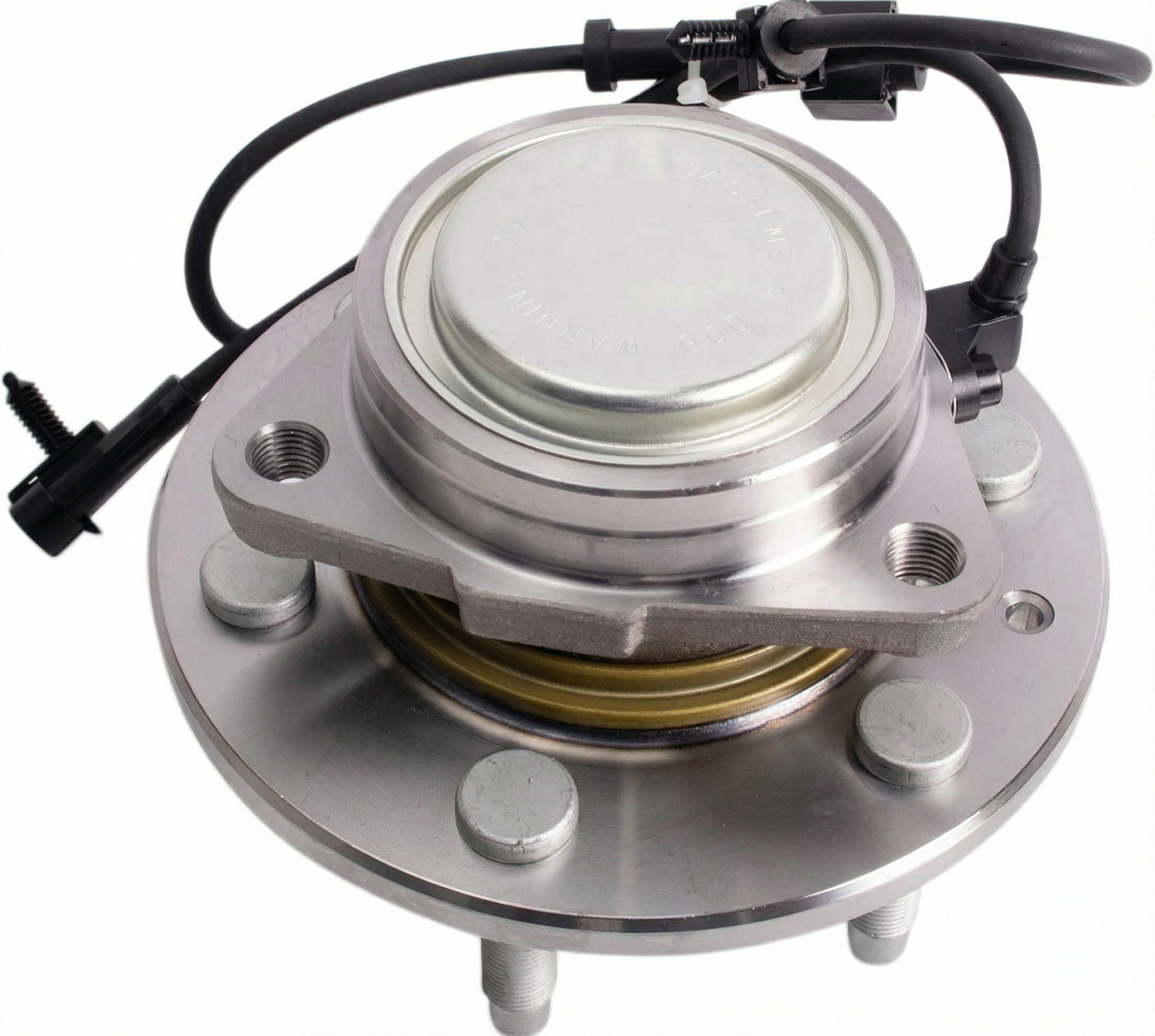
On a 2003-2024 Chevy Express, code C0040 points to a problem with the right front wheel speed sensor circuit. The most common fixes are repairing the wiring harness that leads to the sensor or replacing the entire wheel hub assembly, which includes the sensor. This is a very common issue on GM trucks and vans of this era.
- Code C0040 on a Chevy Express means there's a fault in the right front wheel speed sensor circuit.
- The ABS, traction control, and stability control systems will be disabled, so drive with extra caution.
- Before buying an expensive new wheel hub, always inspect the wiring harness between the hub and the frame for damage, as this is a very common and cheaper fix.
- A scan tool that can read ABS live data is the most effective tool for diagnosis, as it lets you see the speed signal from each wheel in real-time.
What's Unique About the 2003-2024 Chevrolet Express
The Chevrolet Express has been a workhorse van for decades, built on a single, long-running platform from 2003-2024. Its use in commercial and heavy-duty applications means it's often exposed to harsh conditions. This makes the wiring harness for the wheel speed sensor particularly vulnerable to damage from road debris, corrosion from salt and water, and simple wear and tear from constant suspension and steering movement. This wiring failure is a widely recognized weak point on these vans and their platform mates, like the GMC Savana.
Symptoms You May Notice
- ABS warning light is on
- Traction control or stability control (StabiliTrak) light is on
- "Service StabiliTrak" or similar message on the driver information center
- ABS system may not activate during hard braking
- Unwanted ABS activation or brake pedal pulsing at low speeds
- In some rare cases involving wiring shorts, other seemingly unrelated electrical issues or warning lights may appear.
- Replacing the expensive wheel hub assembly when the actual problem is a simple, inexpensive break in the wiring harness leading to it.
- Replacing the EBCM before thoroughly testing the sensor circuit and hub assembly.
- Assuming the sensor itself is bad when the underlying cause is a worn wheel bearing causing excessive play.
Most Likely Causes
- Damaged Wheel Speed Sensor Wiring Harness 🔴 High Probability The harness is exposed and flexes continuously with steering and suspension movement, leading to frayed wires, broken connections, or corrosion inside the insulation over time. This is a well-known and very common issue on GM trucks and vans.
How to confirm: Visually inspect the entire length of the harness from the wheel hub to the frame connector for signs of chafing, breaks, or corrosion. Wiggle the harness while monitoring live sensor data on a scan tool. A common failure point is right at the connector plug or where the wire is secured to the suspension. A tell-tale sign of an internal wire break is if the plastic sheathing stretches like a rubber band when pulled.
Typical fix: Repair the damaged section of wire or, more reliably, replace the short harness pigtail. The Dorman 970-040 is a common aftermarket replacement pigtail for many GM vehicles, though fitment for the Express specifically should be verified.
Est. part cost: $20-$50 - Failed Wheel Speed Sensor / Hub Assembly 🔴 High Probability On the Express, the wheel speed sensor is integrated into the wheel hub assembly. The sensor itself can fail internally, or a failing wheel bearing can introduce wobble, which damages the sensor or its magnetic encoder ring. Heavy loads and high mileage common for these vans contribute to bearing wear.
How to confirm: Use a scan tool with live data to monitor the right front wheel speed while driving. If the reading is zero, erratic, or doesn't match the other wheels, and the wiring is confirmed to be good, the hub/sensor assembly is faulty. Also, check for physical play in the wheel bearing; end play should not exceed 0.005 inches.
Typical fix: Replace the entire right front wheel hub assembly.
Est. part cost: $150-$400 - Debris or Corrosion on Magnetic Encoder Ring 🟡 Medium Probability As work vehicles often operating in dirty or snowy environments, metallic debris (like rust flakes from the brakes) can accumulate on the magnetic ring inside the hub that the sensor reads, disrupting the signal.
How to confirm: Requires removal of the hub to inspect the magnetic ring for damage or contamination. Sometimes visible through the sensor mounting hole after the sensor is removed (if it were separate).
Typical fix: Cleaning the encoder ring may work temporarily, but the contamination is often a symptom of a failing wheel bearing seal, making hub replacement the correct long-term fix.
Est. part cost: $0 (if cleaning) or $150-$400 (for hub replacement)
Rare But Worth Checking
- Water Intrusion in EBCM Connector: A GM Technical Service Bulletin (TSB #PIT5499B) on a similar truck platform notes that water getting into the main Electronic Brake Control Module connector can cause C0040 and other ABS codes. It's worth checking the EBCM connector for green corrosion if other causes are ruled out.
- Faulty Electronic Brake Control Module (EBCM): This is an unlikely cause. The control module itself can fail, but this should only be considered after all sensor, wiring, and hub issues have been definitively ruled out. It will often be accompanied by multiple wheel speed sensor codes (e.g., C0035, C0040, C0055) simultaneously.
Diagnosis Steps
- Read the codes with an ABS-capable OBD2 scanner to confirm C0040 is present. Note any sub-codes (e.g., 02, 05, 0F) as they can pinpoint the circuit fault type.
- Use the scanner's live data feature to monitor the wheel speed from all four sensors while driving slowly. Confirm that the Right Front sensor reads 0 mph or is erratic compared to the others.
- Raise and secure the front of the vehicle. Thoroughly inspect the wheel speed sensor wiring harness from the back of the hub, along the control arm, and up to the connector on the frame. Look for any signs of damage, chafing, melting, or corrosion. Pay close attention to tight bends and attachment points.
- Check the wheel hub for any play or roughness by grabbing the tire at 12 and 6 o'clock and trying to rock it. Excessive play indicates a bad wheel bearing, which requires hub replacement.
- If the wiring looks good, disconnect the harness and inspect the connector pins for corrosion or damage. Use a multimeter to test the harness for continuity and for shorts to ground or power from the wheel end to the EBCM connector.
- If the wiring and connections are confirmed to be good, the fault is most likely the wheel speed sensor itself, which is integrated into the hub. At this point, replacing the right front wheel hub assembly is the next logical step.
- If the problem persists after replacing the hub, re-check the wiring harness. If the harness is good, inspect the EBCM connector for water intrusion or corrosion before suspecting a faulty EBCM. [TSB #PIT5499B]
Parts You'll Likely Need
- Right Front Wheel Hub and Bearing Assembly
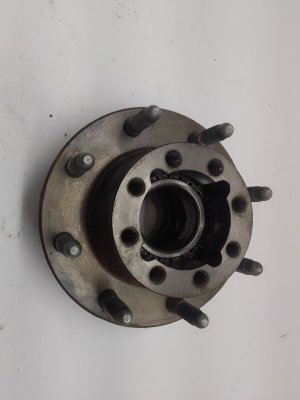
(OEM #ACDelco FW411 (GM 25998147) is a common part number for 2003-2014 RWD models. Verify by VIN.)— This is the most common fix because the sensor is integrated into the hub. A failure of either the sensor or the bearing requires replacing the whole unit.
Trusted brands: ACDelco, MOOG, Timken, Dorman, SKF
OEM price range: $250-$400
Aftermarket price range: $150-$250 - ABS Wheel Speed Sensor Harness Pigtail
(OEM #GM 10340314 (cross-references to Dorman 970-040, though vehicle-specific verification is crucial).)— If the problem is isolated to a damaged connector or a break in the wire near the hub, replacing this short harness section is a cost-effective repair.
Trusted brands: Dorman, ACDelco
OEM price range: $40-$60
Aftermarket price range: $20-$40
Related Codes That Often Appear With This One
- C0035 — Code for the Left Front Wheel Speed Sensor. Seeing both codes together could point to a common problem affecting both sides, like a wiring harness issue near the EBCM, or a faulty EBCM itself.
- U0121 — Lost Communication With Anti-Lock Brake System (ABS) Control Module. This indicates a broader network problem and could appear alongside C0040 if the EBCM is failing or has a bad connection, possibly due to water intrusion as noted in TSB #PIT5499B.
Technical Service Bulletins (TSBs) & Recalls
- PIE0533A: Mentions C0040 in relation to wheel speed sensor issues.
- PIT5499B: Links C0040 to potential water intrusion in the EBCM connector.
- PIC-5992-A: Connects C0040 to a damaged wheel speed sensor harness.
Platform-Specific Known Issues
- A GM TSB for a similar model (PIC-5992-A) highlights that the ABS lamp with code C0040 is often caused by a damaged wheel speed sensor harness, instructing technicians to inspect and repair the wiring.
- An owner of a 2006 van with over 300,000 miles fixed recurring C0040 issues by finally replacing the sensor pigtail harnesses, suggesting the connectors or internal wiring fatigue over time even without visible damage.
- A TSB for another GM model (PIT5499B) warns that water intrusion into the EBCM connector can trigger a host of ABS codes, including C0040, and advises inspecting the connector if the cause is not obvious.
Mechanic-Grade Diagnostic Values
- Wheel Speed Sensor Resistance — expected: 850 - 1350 Ohms across the sensor's two pins.. Failure: A reading outside this range indicates a faulty sensor.
- Wheel Speed Sensor AC Voltage Output — expected: At least 100mV AC (0.1V AC) or greater when spinning the wheel by hand.. Failure: No voltage or voltage below this threshold indicates a failed sensor or a problem with the tone ring.
- Wheel Hub Bearing End Play — expected: Less than 0.005 inches.. Failure: End play exceeding 0.005 inches indicates a worn wheel bearing, which requires hub replacement.
- Hub-to-Knuckle Bolt Torque — expected: Approximately 133 ft-lbs.. Failure: N/A
- Caliper Bracket Bolt Torque — expected: Approximately 80 ft-lbs.. Failure: N/A
- Lug Nut Torque — expected: 140 ft-lbs.. Failure: N/A
Hidden / Shadow Codes Worth Checking
- C0040 02: Indicates the ABS module has detected a short to ground in the right front wheel speed sensor circuit. (see via Requires an advanced scan tool (like a GM Tech 2 or GDS2) capable of reading manufacturer-specific symptom bytes.)
- C0040 05: Indicates the ABS module has detected a short to power or an open circuit in the right front wheel speed sensor circuit. (see via Requires an advanced scan tool capable of reading manufacturer-specific symptom bytes.)
- C0040 0F: Indicates the ABS module has detected an erratic signal from the right front wheel speed sensor. This often points to a wiring issue, debris on the sensor, or a failing bearing causing wobble. (see via Requires an advanced scan tool capable of reading manufacturer-specific symptom bytes.)
- C0040 18: Indicates the ABS module has detected the signal amplitude from the sensor is below the minimum threshold (i.e., a missing or very weak signal). (see via Requires an advanced scan tool capable of reading manufacturer-specific symptom bytes.)
Scan Tool Commands That Help
- GDS2/Tech2/Advanced Scan Tool: Live Data Graphing - Wheel Speed Sensors — This is the primary diagnostic step. Drive the vehicle slowly in a straight line and compare the graph for the right front sensor to the other three. A flat line at zero, erratic spikes, or a line that doesn't match the others confirms a problem in the RF circuit.
- GDS2/Tech2/Advanced Scan Tool: Clear ABS DTCs — After a repair is performed, this function is used to clear the C0040 code and extinguish the ABS light. A test drive is required to confirm the light does not return.
Wiring & Ground Locations
- G103 / G104 — G103 is often located at the rear of the left engine head. G104 is often in the engine compartment, on the right strut tower, near the EBCM. Locations can vary slightly by year and engine.. The Electronic Brake Control Module (EBCM) and other critical modules rely on these grounds. A loose or corroded ground at G103 or G104 can cause numerous seemingly unrelated electrical issues, including ABS faults like C0040. A GM service bulletin regarding other codes specifically calls out checking the integrity of these grounds.
- EBCM Connector — The Electronic Brake Control Module is typically mounted to the ABS hydraulic block in the engine compartment, often on the driver's side frame rail.. This is the main connection point for all wheel speed sensors. Testing for voltage, ground, and continuity should be done at this connector's pins to isolate a wiring fault from a sensor fault. TSB #PIT5499B also warns of water intrusion here causing C0040.
Real Owner Repair Stories
- YouTube channel 'Cars and Service' (2012 Chevrolet Impala (similar GM platform)) — ABS light on, code C0040. Light would sometimes flicker when turning the steering wheel.
❌ Tried (didn't work) A previous mechanic had already replaced the entire right front wheel hub assembly, but the code and problem persisted.
✅ What actually fixed it The wiring in the pigtail harness leading to the sensor was broken internally, even though it looked fine from the outside. The technician diagnosed this by pulling on the wires and noticing one stretched like a rubber band. Splicing in a new section of wire fixed the problem permanently. - SureTrack Community Fix (2006 Chevrolet Express G3500 6.0L) — ABS light on with codes C0040 and C0045 (Left Rear).
✅ What actually fixed it Diagnosis found two separate issues. For C0040, the wheel bearing was noisy and end play exceeded the 0.005" spec, requiring replacement of the right front hub assembly. For C0045, the wiring harness for the left rear sensor had broken wires inside the insulation, which was found by manipulating the harness while checking for voltage. This required a harness repair.
Model Year Variations Within This Range
- 2003: A safety recall (NHTSA #03V160000) was issued for some 2003 models for a missing wheel bearing assembly retaining nut, which could cause the hub to separate from the vehicle. While not directly causing C0040, it's a critical check for any 2003 model undergoing front hub service.
Diagnostic Flowchart
Other Known Issues on This Vehicle
Issues unrelated to this code that are worth knowing about as an owner of this generation:
- Fuel Level Sensor Failure 🟠 Medium — Very common across all model years. The fuel gauge will read empty or erratically, often triggering codes like P0462 or P0463. (Ref: TSB #20-NA-188 addresses this issue for some 2020 models, requiring replacement of the left side fuel tank level sensor.)
- Peeling White Paint 🟡 Low — Extremely common on white-painted vans, particularly from the 2000s and early 2010s. The paint delaminates from the primer in large sheets. (Ref: No recall was ever issued, but it is a widely documented factory paint issue.)
- 4L60E/4L65E Transmission Failures 🔴 High — Common in earlier models equipped with this transmission. Issues include failure of the 3-4 clutch pack (loss of 3rd/4th gear), a broken sun shell (no reverse, no 2nd gear), and hard 1-2 shifts due to a worn TCC regulator valve.
- HVAC Blend Door Actuator Failure 🟠 Medium — Common failure causing inability to control air temperature or direction. The plastic gears inside the actuator strip out. Replacement can be labor-intensive.
- Intake Manifold Gasket Leaks 🔴 High — A known issue on the V8 engines, leading to coolant or oil leaks. An internal coolant leak can cause catastrophic engine damage if not addressed.
- Damaged Rear Tail Light Wiring 🟡 Low — The wiring harness for the tail lights can be damaged from loading and unloading cargo, causing lights to fail.
Used vs. New Parts: Buying Guide for This Vehicle
When a used part is the smart pick: For this repair, using a used part is generally not recommended. The primary failure components are the bearing and the sensor's wiring, both of which are wear items. A used hub assembly from a junkyard has unknown mileage and wear, and you risk having to do the job twice.
Donor-vehicle mileage cap: roughly under 30000 miles for the part to have meaningful remaining life.
What to inspect on the donor part:
- If considering a used part, verify the donor vehicle has very low mileage.
- Check for any signs of corrosion or damage to the ABS sensor wire and connector.
- Spin the hub by hand; it should be completely smooth with no noise or grinding.
- There should be absolutely zero play or wobble in the bearing.
OEM-only on this vehicle (don't cheap out):
- While not strictly 'OEM-only', using a high-quality, reputable brand for the wheel hub assembly is critical for a heavy-duty vehicle like the Express. Cheap, unbranded parts are known to fail prematurely, sometimes within a few thousand miles.
Aftermarket brands forum-validated for this vehicle:
- Timken
- SKF
- ACDelco (OEM supplier)
- MOOG (though some users note a decline in quality compared to older parts)
- National
Brands owners have reported issues with on this vehicle:
- Unbranded, 'white box' parts from online marketplaces should be avoided. While the initial cost is low, forum users and mechanics report high failure rates, especially with the integrated ABS sensor not working correctly out of the box.
Real Owner Stories
Aggregated from forums and TSBs cited above. Mileages and costs reflect what owners reported in those sources.
2006 Chevrolet Express — 300000 miles
Symptoms: Recurring C0040 issues and ABS warning lights.
What fixed it: Replacing the sensor pigtail harnesses, as the connectors and internal wiring had fatigued over time.
Source hint: vehicle_specific_issues
2007 Chevrolet Express
Symptoms: Simultaneous codes C0035, C0040, and C0055.
What fixed it: Diagnosis suggested the EBCM was the likely culprit rather than individual sensors.
Source hint: https://www.2carpros.com/questions/2007-chevrolet-express-codes-c0035-c0040-and-c0055
2003-2014 Chevrolet Silverado (Platform Mate) — ~125000 miles
Symptoms: C0040 Right Front Wheel Speed Sensor Circuit Malfunction; ABS light on.
What fixed it: Repairing a broken wire found inside the insulation of the wiring harness.
Source hint: https://www.thetruckstop.us/forum/threads/c0040-right-front-wheel-speed-sensor-circuit-malfunction.28313/
Related OBD-II Codes
Frequently Asked Questions
My 2006 Chevrolet Express has recurring C0040 codes even after checking the sensor. Is there a specific part recommended for the wiring?
Does TSB PIT5499B apply to my Chevrolet Express if I have multiple ABS codes including C0040?
I see a TSB PIC-5992-A mentioned for GM trucks; does this explain why my ABS light is on?
Can a bad wheel bearing on my Express cause the C0040 code?
My Express is showing C0040 along with C0035 and C0055. Is it likely all three sensors failed at once?
Helpful Videos

We Have This Part in Stock


The information in this article is provided for general reference and educational purposes only. Vehicle specifications, procedures, and part compatibility can vary by production date, trim level, and region. Always consult your vehicle's factory service manual and verify part numbers before purchasing or performing repairs. Safety-critical components such as airbags, seat belts, and braking systems should be installed by a qualified professional.
- Chevrolet Express:
- 🎬 Helpful Videos
- 🛍️ Shop This Part
- What's Unique About the 2003-2024 Chevrolet Express
- Symptoms You May Notice
- Most Likely Causes
- Rare But Worth Checking
- Diagnosis Steps
- Parts You'll Likely Need
- Related Codes That Often Appear With This One
- Technical Service Bulletins (TSBs) & Recalls
- Platform-Specific Known Issues
- Mechanic-Grade Diagnostic Values
- Hidden / Shadow Codes Worth Checking
- Scan Tool Commands That Help
- Wiring & Ground Locations
- Real Owner Repair Stories
- Model Year Variations Within This Range
- Diagnostic Flowchart
- Other Known Issues on This Vehicle
- Used vs. New Parts: Buying Guide for This Vehicle
- Real Owner Stories
- 2006 Chevrolet Express — 300000 miles
- 2007 Chevrolet Express
- 2003-2014 Chevrolet Silverado (Platform Mate) — ~125000 miles
- Related OBD-II Codes
- Frequently Asked Questions
- 🎟️ Get 5% Off