

C0035 on 2011-2014 Hyundai Sonata: Front Wheel Speed Sensor Fault Causes and Fixes
Code C0035 on a 2011-2014 Sonata indicates a fault in the Front Left Wheel Speed Sensor circuit. The most common fix is replacing the failed sensor. Aftermarket parts cost around $30-$70, while OEM is over $200. DIY replacement is possible for those with some experience. Before replacing, inspect the wiring harness for damage, a common secondary cause.
- C0035 on a YF Sonata means there is a problem with the Front Left wheel speed sensor circuit, and a Hyundai-capable scan tool is best for confirmation.
- The most likely cause is a failed sensor, followed closely by damaged wiring along the strut.
- Driving with this code is possible, but your ABS and stability control will not work, which is a significant safety risk.
- Aftermarket sensors are significantly cheaper than OEM and are a viable option for this repair.
- Before ordering parts, perform a thorough visual and electrical inspection of the wiring and connector for the front left sensor, as a simple wiring repair could solve the problem.
What's Unique About the 2011-2014 Hyundai Sonata
The sixth-generation (YF) Sonata is generally reliable, but like many vehicles from this era, its wheel speed sensors are exposed to the elements, making them susceptible to damage and corrosion over time. For this platform, the magnetic tone ring is integrated into the wheel bearing/hub assembly's seal, meaning it cannot be serviced separately. If the tone ring is the cause, the entire hub assembly must be replaced. While there isn't a specific TSB for code C0035, Hyundai has issued recalls for the ABS module on related models from this period due to risks of electrical shorts, highlighting the importance of maintaining the entire brake control system.
Symptoms You May Notice
- ABS warning light is illuminated
- Electronic Stability Control (ESC) or Traction Control (TCS) warning light is illuminated
- ABS system may not activate during hard braking, leading to skidding
- Traction control may not function correctly on slippery surfaces
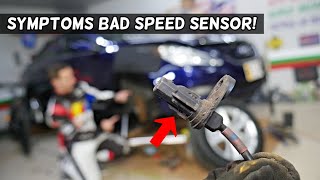
- Cruise control may be disabled 🎬 Watch: Common symptoms of a failing Hyundai wheel speed sensor
- Replacing the wrong side wheel speed sensor due to using a generic code reader. A Hyundai-specific scan is needed to confirm C0035 is the Front Left side.
- Replacing the sensor when the actual fault is a break or chafe in the wiring harness further up the line.
Most Likely Causes
- Faulty Front Left Wheel Speed Sensor 🔴 High Probability The sensor is located in the harsh environment of the wheel well, exposed to water, salt, and debris, which can cause internal failure or corrosion of the connector pins over time.
How to confirm: Use a scan tool to monitor live data from the front left wheel speed sensor while driving. If the reading is zero or erratic while other wheels report speed, the sensor has likely failed. You can also test the sensor's internal resistance with a multimeter; a healthy sensor should read between 1000-1500 Ohms. An open circuit (infinite resistance) or short (near zero resistance) indicates failure.
Typical fix: Replace the faulty front left wheel speed sensor assembly.
Est. part cost: $30-$250 - Damaged Wiring or Connector 🟡 Medium Probability The wiring harness runs down the suspension strut to the wheel hub and can be damaged by road debris, improper servicing, or repeated flexing from steering and suspension movement. Chafing on suspension components or the plastic wheel well liner can occur.
How to confirm: Visually inspect the entire length of the sensor's wiring harness for breaks, chafing, or corrosion. Pay close attention to the connector at the sensor and where the harness clips to the chassis. Perform a continuity test on the wires between the sensor connector and the ABS module connector to find hidden breaks.
Typical fix: Repair the damaged section of wire or replace the connector pigtail. In severe cases, the entire sensor harness may need replacement.
Est. part cost: $10-$50 - Damaged or Contaminated Tone Ring (Magnetic Encoder) ⚪ Low Probability On the YF Sonata, the tone ring is a magnetic encoder integrated into the seal of the wheel bearing/hub assembly. It can be damaged during other repairs (like axle or bearing replacement) or become contaminated with metallic debris from a failing bearing, disrupting the signal.
How to confirm: Visually inspect the seal on the inboard side of the wheel bearing/hub assembly for physical damage or heavy contamination with metallic grit. Ensure there is no excessive play in the wheel bearing (a 'wobble' when shaking the tire at 12 and 6 o'clock), as this indicates bearing failure which will corrupt the sensor reading.
Typical fix: The entire front wheel hub and bearing assembly must be replaced. The magnetic encoder is not a separate part.
Est. part cost: $150-$350
Rare But Worth Checking
- Faulty ABS Control Module: This is the least likely cause and should only be considered after thoroughly ruling out the sensor, wiring, and tone ring/bearing. Other ABS-related codes are often present when the module is failing. A professional diagnosis with an advanced scan tool is needed to confirm module failure.
Diagnosis Steps
- Connect an OBD-II scanner capable of reading Hyundai-specific ABS codes to confirm C0035 (Front Left Wheel Speed Sensor Circuit Malfunction).
- Use the scanner's live data function to monitor the speed of all four wheels while driving. The Front Left sensor will likely show a speed of 0 mph or an erratic reading compared to the others.
- Raise and secure the vehicle. Visually inspect the front left sensor and its wiring harness for any obvious signs of damage, such as cut wires, corrosion in the connector, or chafing against the strut or frame.
- Check the wheel bearing for any play by grabbing the tire at the 12 and 6 o'clock positions and attempting to rock it. Any significant movement indicates a bad bearing, which contains the tone ring.
- If no visual faults are found, disconnect the sensor and use a multimeter set to Ohms to test its internal resistance. A reading between 1000-1500 Ohms is typical for a good sensor. An open or shorted reading indicates a bad sensor. 🎬 See how to test which ABS sensor is bad
- If the sensor tests good, check for voltage (typically 5V reference or 12V) and ground at the sensor's connector (harness side) with the key on. This verifies the integrity of the circuit back to the ABS module.
- If wiring and sensor are confirmed good, the issue is likely with the magnetic encoder in the wheel bearing or, rarely, the ABS module itself, which may require professional diagnosis.
Parts You'll Likely Need
- Front Left Wheel Speed Sensor
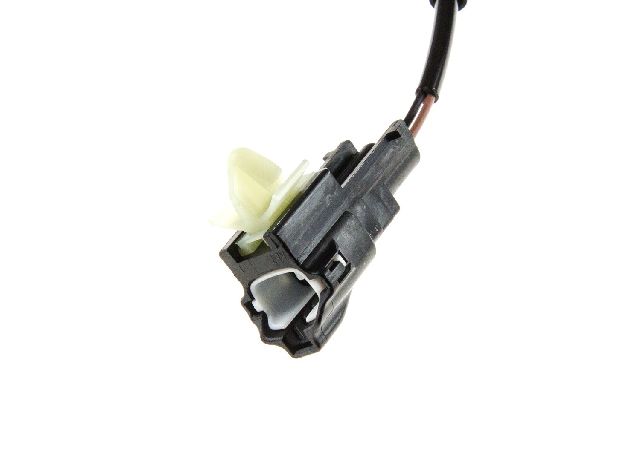
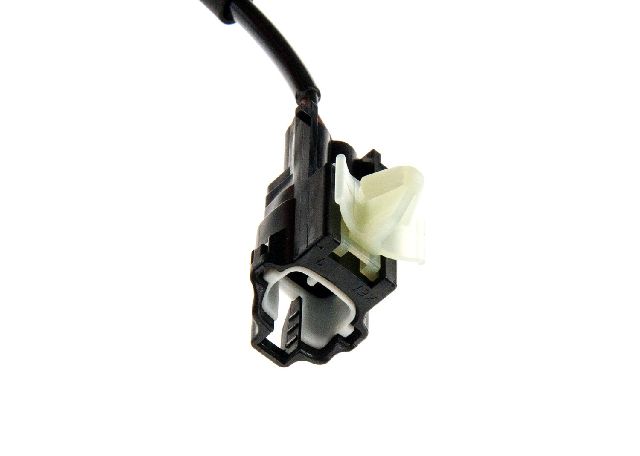
(OEM #59810-3S300)— This is the sensor indicated by code C0035 for this vehicle. It is the most common failure point for this code.
Trusted brands: Hyundai (OEM), Mando, Standard Motor Products (ALS2091), Delphi (SS20313)
OEM price range: $210-$370
Aftermarket price range: $30-$80 - Front Wheel Hub and Bearing Assembly
(OEM #51750-3V000)— Required if the magnetic encoder ring (integrated into the bearing seal) is damaged or if the bearing itself has failed, causing an erratic signal.
Trusted brands: Hyundai (OEM), MOOG (512437), Timken, DuraGo
OEM price range: $170-$240
Aftermarket price range: $70-$150
Platform-Specific Known Issues
- While not directly for code C0035, Hyundai has issued recalls (e.g., NHTSA Campaign 24V125000, Recall 251) for the ABS module on various models of this era, including the 2011-2015 Sonata Hybrid, due to an electrical short risk that could lead to a fire. This underscores a known sensitivity in the ABS electronics.
- Owner experiences on forums frequently point to the wiring harness being the culprit, even when the sensor appears to be the obvious cause. A user on hyundai-forums.com reported finding a broken wire inside the insulation near the strut mount after replacing the sensor did not fix the C0035 code.
Mechanic-Grade Diagnostic Values
- Wheel Speed Sensor Type — expected: Active (Hall-effect/magneto-resistive), 2-wire sensor. Produces a digital square wave signal.. Failure: N/A. This identifies the correct test procedure (voltage/scope test, not resistance).
- Sensor Connector Voltage (Harness Side) — expected: 4.5V - 5.5V reference voltage on one pin and ground on the other, with key on, engine off.. Failure: Voltage below 4.0V or no voltage indicates a problem with the wiring or the ABS module's supply circuit.
- Sensor Signal (Backprobed at sensor) — expected: A digital square wave that alternates between two voltage levels (e.g., ~0.7V and ~1.4V) as the wheel is spun. The frequency of the wave should increase with wheel speed. An oscilloscope is required to view this.. Failure: A flat line, no signal, or a distorted/erratic waveform indicates a faulty sensor or a damaged tone ring.
Hidden / Shadow Codes Worth Checking
- C0035 06: Left Front Wheel Speed Sensor Circuit Low Voltage/Open. This points directly to a wiring break or disconnection. (see via Hyundai GDS (Global Diagnostic System) or other advanced, dealer-level scan tools.)
- C0035 0F: Left Front Wheel Speed Sensor Circuit Signal Erratic. This suggests an intermittent connection, a damaged tone ring, or a failing sensor. (see via Hyundai GDS (Global Diagnostic System) or other advanced, dealer-level scan tools.)
- C0035 18: Left Front Wheel Speed Sensor Circuit Low Signal Amplitude. This can indicate an excessive air gap between the sensor and tone ring or a weak sensor. (see via Hyundai GDS (Global Diagnostic System) or other advanced, dealer-level scan tools.)
- C0035 5A: Left Front Wheel Speed Sensor Circuit Not Plausible. The signal does not match what is expected by the module, which could be caused by a failing wheel bearing or damaged tone ring. (see via Hyundai GDS (Global Diagnostic System) or other advanced, dealer-level scan tools.)
Scan Tool Commands That Help
- Hyundai GDS (or equivalent advanced scanner): Live Data - Wheel Speed Sensors — This is the primary diagnostic function. It allows the technician to view the speed reported by all four sensors in real-time while driving or spinning the wheels by hand. A faulty LF sensor will read 0 or show erratic data compared to the other three.
- Hyundai GDS (or equivalent advanced scanner): Variant Coding — This function is required ONLY if the ABS control module (HECU) is replaced. The new module must be coded with the vehicle's VIN and specific options (e.g., engine size, suspension type) to function correctly.
Wiring & Ground Locations
- ABS Control Module (HECU) — Located in the engine bay, on the driver's side, below the brake fluid reservoir. It is an aluminum block with brake lines and a large electrical connector attached.. This is the destination for the wheel speed sensor signal. The wiring from the sensor terminates at this module's main connector. A fault here is rare but possible.
- ABS Module Connector — The large, multi-pin connector that plugs into the ABS Control Module.. This is the endpoint for testing continuity of the wheel speed sensor wiring from the wheel well. Corrosion or loose pins here can cause the C0035 code.
- Main Ground Points (General) — Multiple ground points exist. Key chassis grounds are typically located on the inner fenders in the engine bay and under the dashboard near the kick panels. A wiring diagram is needed to trace the specific ground for the ABS module.. A poor ground for the ABS module can cause a variety of erratic electrical issues, including phantom sensor codes. This should be checked if sensor and wiring tests are inconclusive.
Real Owner Repair Stories
- hyundai-forums.com user (2012 Hyundai Sonata) — ABS and ESC warning lights on, code C0035 present.
❌ Tried (didn't work) Replacing the front left wheel speed sensor.
✅ What actually fixed it The user found a broken wire inside the insulation of the sensor harness, near where it mounts to the suspension strut. Repairing the broken wire resolved the code. - YouTube video by 'Reggie Curtis' (Not specified, but general diagnosis for C0035) — ABS light on, code C0035.
✅ What actually fixed it The sensor connector's retaining clip was broken, allowing the connector to become unplugged. Simply plugging the connector back in and securing it with a zip tie fixed the issue.
OEM Part Supersession History
59810-3S300→N/A - This remains the current OEM part number.— N/A
Heads up: Hyundai and Kia may use the same part number. The part may come in a red Kia box or a blue Hyundai box, but it is the same component.
Model Year Variations Within This Range
- 2011-2014: The ABS module (HECU) part number can vary based on whether the vehicle has the standard or sport-tuned suspension. If replacing the module, it is critical to match the part number exactly or have it programmed for the correct vehicle configuration.
Diagnostic Flowchart
Other Known Issues on This Vehicle
Issues unrelated to this code that are worth knowing about as an owner of this generation:
- Theta II Engine Seizing and Failure 🔴 High — Widespread issue affecting millions of 2.0L Turbo and 2.4L GDI engines. Led to massive recalls (e.g., NHTSA 17V-226), class-action lawsuits, and lifetime warranty extensions for the engine short block for original and subsequent owners. (Ref: NHTSA Recall 15V-568, 17V-226, Hyundai Recall 162)
- MDPS Steering Coupler Degradation 🟠 Medium — Extremely common. The flexible rubber coupler in the electronic power steering column wears out, causing a distinct clicking or clunking noise when turning the steering wheel. Typically occurs between 50,000 and 100,000 miles. (Ref: Hyundai TSB 17-ST-002 extended the warranty to 10 years/100,000 miles for this specific part (P/N 56315-2K000-FFF).)
- Transmission Shift Cable Detachment 🔴 High — Common enough to trigger a large-scale recall. The cable can detach from the shift lever, causing the gear indicator to be incorrect and creating a rollaway risk if the vehicle is not actually in Park. (Ref: NHTSA Recall 14V-434, Hyundai Recall 123.)
- Front Seat Belt Linkage Detachment 🔴 High — A serious safety issue that prompted a recall. The front seat belt linkages could detach from the anchor pretensioners, failing in a crash. (Ref: NHTSA Recall 17V-152, Hyundai Recall 160.)
- Leaking High-Pressure Fuel Pipe 🔴 High — This issue primarily affected vehicles that had their engines replaced under the Theta II recall. The fuel pipe may have been damaged or improperly torqued during the engine replacement, leading to a fuel leak and fire risk. (Ref: NHTSA Recall 20V-121 (replaced by 22V-600), Hyundai Recall 227.)
Used vs. New Parts: Buying Guide for This Vehicle
When a used part is the smart pick: A used wiring harness pigtail from a junkyard can be a cost-effective solution if only the connector is damaged. A used ABS module can also be an option, but it is critical to understand it will require professional reprogramming (variant coding) to work in your vehicle. Buying a used sensor or wheel hub assembly is generally not recommended due to wear and unknown remaining lifespan.
Donor-vehicle mileage cap: roughly under 50000 miles for the part to have meaningful remaining life.
What to inspect on the donor part:
- For a wiring pigtail, inspect for any signs of corrosion on the pins, brittle plastic, or cuts in the wires.
- For an ABS module, ensure the donor vehicle was not in a major front-end collision and that the connector pins are straight and clean.
- Check the donor vehicle's VIN to ensure it had similar options (e.g., suspension type) to your own.
OEM-only on this vehicle (don't cheap out):
- ABS Control Module (HECU) - While used is an option, aftermarket modules are not available. A new OEM or a properly reprogrammed used OEM module are the only reliable choices.
Aftermarket brands forum-validated for this vehicle:
- Mando (often the Original Equipment supplier for Hyundai)
- Standard Motor Products (SMP)
- Delphi
- MOOG (for wheel hub assemblies)
- Timken (for wheel hub assemblies)
Brands owners have reported issues with on this vehicle:
- Ultra-cheap, unbranded sensors from online marketplaces often have high failure rates and may not meet the required signal specifications, leading to the code returning.
Real Owner Stories
Aggregated from forums and TSBs cited above. Mileages and costs reflect what owners reported in those sources.
2011 Sonata GLS
Symptoms: ABS light stayed illuminated and the brake pedal pulsed unnaturally during an abrupt stop at a red light despite no ice or gravel being present.
What fixed it: Replaced both front sensors after a scan tool confirmed codes C0035 and C0040.
Source hint: owner_reports - 2011 Sonata GLS
2012 Sonata
Symptoms: ABS and ESC warning lights were illuminated. The owner initially suspected a faulty sensor.
What fixed it: Found a broken wire inside the insulation of the wiring harness near the strut mount.
Source hint: hyundai-forums.com thread titled 'ABS/ESC lights on, code C0035'
Related OBD-II Codes
Frequently Asked Questions
Is there a recall for the ABS system on my 2011-2014 Hyundai Sonata that might cause code C0035?
Can I just replace the magnetic tone ring on my YF Sonata's front left wheel?
What is the typical resistance for a healthy front left wheel speed sensor on this model?
Why is my cruise control disabled when the ABS light is on for code C0035?
Is the C0035 code related to the common steering clunking noise in these Sonatas?
Could my engine replacement under the Theta II recall have caused this ABS issue?
Helpful Videos
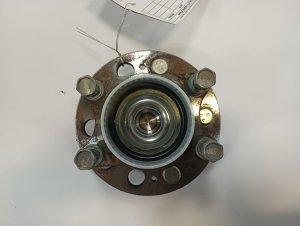
Used OEM Parts in Stock


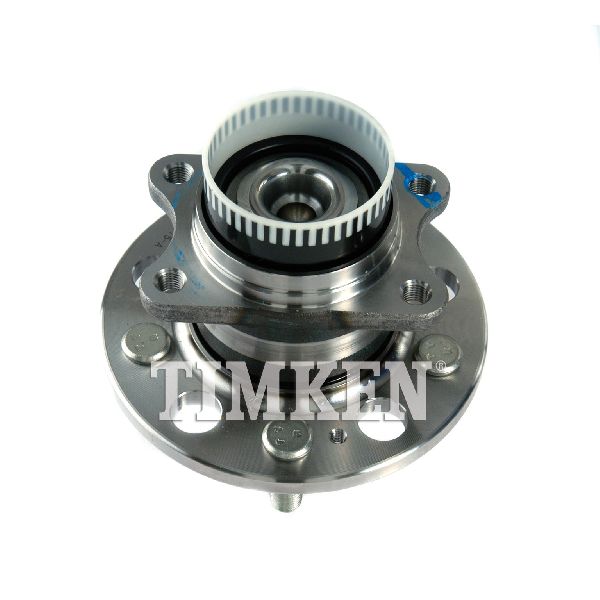
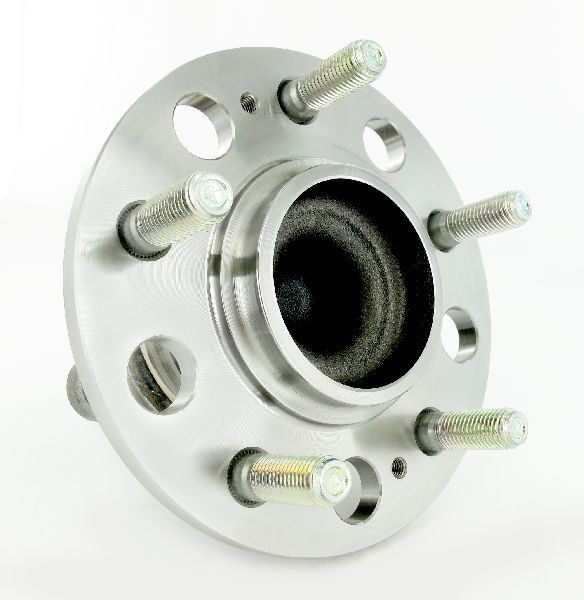
New Aftermarket Parts Available


The information in this article is provided for general reference and educational purposes only. Vehicle specifications, procedures, and part compatibility can vary by production date, trim level, and region. Always consult your vehicle's factory service manual and verify part numbers before purchasing or performing repairs. Safety-critical components such as airbags, seat belts, and braking systems should be installed by a qualified professional.
- Hyundai Sonata:
- 🎬 Helpful Videos
- 🛍️ Shop This Part
- What's Unique About the 2011-2014 Hyundai Sonata
- Symptoms You May Notice
- Most Likely Causes
- Rare But Worth Checking
- Diagnosis Steps
- Parts You'll Likely Need
- Platform-Specific Known Issues
- Mechanic-Grade Diagnostic Values
- Hidden / Shadow Codes Worth Checking
- Scan Tool Commands That Help
- Wiring & Ground Locations
- Real Owner Repair Stories
- OEM Part Supersession History
- Model Year Variations Within This Range
- Diagnostic Flowchart
- Other Known Issues on This Vehicle
- Used vs. New Parts: Buying Guide for This Vehicle
- Real Owner Stories
- 2011 Sonata GLS
- 2012 Sonata
- Related OBD-II Codes
- Frequently Asked Questions
- 🎟️ Get 5% Off