

2022-2024 Ram 1500 5.7L eTorque 8HP75 Transmission: Problems, Identification, and Used Replacement
Identify the correct DFR 8-speed automatic for your 4x4 mild-hybrid Ram, understand common failures like TCM leaks and TBV sticking, and learn when to swap in a used OEM unit.
- You must verify the transmission is the correct DFR variant for a 4x4 5.7L eTorque truck, as it is not interchangeable with non-eTorque or 2WD models.
- A used replacement transmission's internal computer (TCM) is VIN-locked and MUST be reprogrammed to your truck's VIN at the time of installation using a professional scan tool.
- Before replacing, check if your truck is eligible for Safety Recall 24V-413 (valve body) or TSB 21-001-23 (software update), as these may fix the issue for free or low cost.
- Critical installation steps include flushing the cooler lines, fully seating the torque converter in three stages, and using only Mopar 8&9 Speed ATF or certified ZF Lifeguard 8 fluid.
- A common failure point is the external thermal bypass valve (TBV); it is highly recommended to replace this part during any transmission swap to prevent future overheating.
Identifying the Correct 8HP75 eTorque Transmission


The automatic transmission in 2022-2024 Ram 1500 trucks with the 5.7L Hemi eTorque V8 and four-wheel drive (4x4) is a specific variant of the ZF 8HP75 family, often identified by the Mopar sales code DFR. This 8-speed unit is engineered specifically for the 48-volt mild-hybrid eTorque system (sales option code EZL) and is not interchangeable with transmissions from non-hybrid trucks.
How to Verify on Your Truck
Before ordering a replacement, it is critical to confirm your truck has this exact transmission. Mismatched units will not work due to physical and electronic differences.
- Engine System: Confirm your truck has the 5.7L Hemi V8 with the eTorque system. Check the 8th digit of your Vehicle Identification Number (VIN) to confirm. The eTorque system replaces the traditional alternator with a belt-driven motor-generator unit on top of the engine.
- Drivetrain: Verify the truck is a 4x4 model, which will have a transfer case attached to the rear of the transmission.
- Body Style: This transmission is for the newer "DT" body style Ram 1500, which uses a 6-lug wheel bolt pattern. It does not fit the "Classic" (DS) body style with 5-lug wheels.
- ID Tag Location: Look for a white barcode sticker or a metal plate on the driver's side of the transmission case, near the rear bottom just above the oil pan. This tag contains the specific Mopar part number or a 10-digit ZF parts list number.
Part Numbers and Identification Codes
These codes help confirm you are looking at the correct unit:
| Mopar Part Number | 68550344AA |
| Transmission Family | ZF 8HP75 |
| Common Names | 875RE, TorqueFlite 8HP75 |
| ZF Parts List Number | Typically begins with 1102 010 |
Warning: This transmission only fits 4x4 models with the 5.7L Hemi eTorque engine. It is not compatible with 2WD models, non-eTorque (12-volt) trucks, or other vehicles like the Ram 2500, Jeep Wagoneer, or Charger/Challenger. Differences in the bellhousing, torque converter pilot depth, tailhousing, and internal computer programming make them non-interchangeable.
Common Failure Symptoms

A failing 8HP75 transmission can present several symptoms. Some may be fixed with software updates, while others indicate a need for replacement.
- Sudden Loss of Power or Park: A severe symptom where the transmission may unexpectedly lose control, linked to a known recall.
- Rough or Erratic Shifting: The truck may hunt for gears, hesitate, or shift harshly, especially at low speeds, during 3-2 and 2-1 downshifts, 🎬 See how to reset shifting adaptives at home or when coasting in Tow/Haul mode.
- Check Engine Light: A code such as P0735 (Incorrect Gear Ratio) may be stored in the computer.
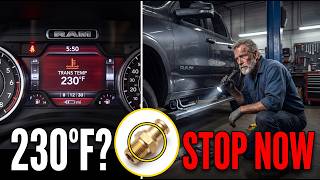
- Transmission Overheating: Fluid temperatures consistently rising above 200°F-210°F+ can signal a problem with the cooling system or thermal bypass valve. 🎬 Watch: How to install a thermal bypass upgrade
- Stalling or Hesitation: The engine may stall when coming to a stop or lag during acceleration due to complex communication issues between the engine, the 48V hybrid system, and the transmission.
Diagnostic Flowchart
Known Issues, Recalls, and Service Bulletins
Several documented issues exist for this transmission. Always check with a Ram dealer using your VIN to see which recalls or updates apply to your truck.
Safety Recall 24V-413 (Stellantis ID 56B / 63B)
This critical safety recall affects some 2023-2024 Ram 1500 models. An insufficient weld between the internal Transmission Control Module (TCM) cover and baseplate can allow fluid to leak onto electrical components. This can cause a sudden loss of transmission control, motive power, or prevent the transmission from shifting into Park, increasing the risk of a crash or rollaway. The remedy is a complete replacement of the transmission valve body and control unit, performed by a dealer free of charge.
TSB 21-001-23: TCM Software Update
This Technical Service Bulletin (which supersedes 21-034-22) applies to 2022 Ram 1500 trucks built on or before September 28, 2022, with the 5.7L eTorque engine. It addresses customer complaints of rough shifting, gear hunting, a check engine light for code P0735, bumps or hesitation at low speeds, or a coast-down "bump" in Tow/Haul mode. The fix is to reprogram the TCM with updated software calibration, which a dealer or qualified shop can perform.
Thermal Bypass Valve (TBV) Failure
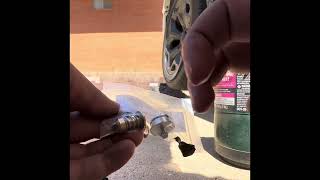
A common issue across all years is the failure of the external transmission thermal bypass valve. This small internal thermostat frequently sticks closed, preventing fluid from flowing to the transmission cooler. This leads to overheating, causing temperatures to exceed 210°F, which can damage internal components over time. The valve assembly should be inspected and, if necessary, replaced. Some owners opt to install an aftermarket thermal bypass delete kit to prevent future failures.
What Fails at Every Mileage Band
Pro Tip: The mileage bands below describe the typical condition of used replacement units at that mileage. The checklists provided are critical steps to perform WHILE INSTALLING the purchased transmission, not general maintenance for your current truck.
Under 60,000 Miles
Transmissions in this range are generally in excellent mechanical shape. Failures are usually electronic or defect-related. Common issues include software glitches causing rough shifting (addressed by TSB 21-001-23), eTorque system faults leading to stalling, or valve body/TCM failures (like Recall 24V-413). In rare cases, catastrophic failure occurs due to manufacturing defects, such as a plastic cap left on a fluid port blocking circulation.
- ✓Do during install (required): Replace transmission pan with integrated filter and new gasket.
- ✓Do during install (required): Flush transmission cooler and lines to remove any debris from the previous unit's failure.
- ✓Do during install (recommended): Replace the external Thermal Bypass Valve (TBV) assembly to prevent future overheating issues, a known common problem.
- ✓Do during install (recommended): Inspect transmission mounts for wear or cracking and replace if necessary.
- ✓Cheap insurance while the engine is out: Replace front pump seal (torque converter seal) and rear transfer case adapter seal.
60,000 - 100,000 Miles
At this stage, early signs of internal wear appear if the fluid has never been changed. You may see slipping, delayed engagement, or harsh shifts. Torque converter issues, such as shudder or worn bearings causing a whining noise, become more common. Solenoids and valve bodies can stick due to fluid breakdown, and external seals may begin to harden and leak.
- ✓Do during install (required): Perform all items from the 'Under 60K' band.
- ✓Do during install (required): Perform a full transmission fluid and filter service. At this mileage, the original fluid's protective qualities are diminished.
- ✓Do during install (recommended): Replace the mechatronic sealing sleeve (electrical connector sleeve) to prevent future leaks, as they are known to harden by this mileage.
- ✓Do during install (recommended): Inspect and consider replacing the transfer case fluid.
- ✓Cheap insurance while the engine is out: Replace all external seals.
100,000 - 150,000 Miles
Units in this range carry a higher risk if maintenance history is unknown. There is an increased likelihood of internal hard part failure, such as the 'A' clutch pressure plate cracking or the 'E' clutch hub splines stripping. Valve body wear becomes more pronounced, leading to hydraulic pressure leaks and persistent shift quality problems. Complete transmission failure is possible if the fluid has never been changed.
- ✓Do during install (required): Perform all items from the '60-100K' band.
- ✓Do during install (required): A used transmission in this mileage range is a higher risk. A buyer should strongly consider having it inspected or partially rebuilt by a specialist before installation, focusing on known failure points like the A/D/E clutch packs and valve body.
- ✓Do during install (recommended): Replace all external seals, the pan/filter, mechatronic sleeve, and the thermal bypass valve during the swap.
Over 150,000 Miles
Transmissions over 150,000 miles are nearing general end-of-life wear, especially with poor maintenance history. Failures can include major internal components like clutch packs, drums, and the torque converter. Even with maintenance, the risk of electronic and mechanical failure increases significantly.
- ✓Do during install (required): A used transmission with over 150,000 miles should be considered a core for rebuilding rather than a direct plug-and-play unit. The risk of imminent failure is very high.
- ✓Do during install (required): If installation is attempted, a complete refresh is critical: replace the pan/filter, all external seals, mechatronic sleeve, thermal bypass valve, and install a new torque converter.
Real Owner Experiences
Here is what real Ram owners have reported regarding their 8-speed transmissions, including failures, maintenance, and costs.
| Source | Mileage | What Happened | Cost |
|---|---|---|---|
| RamForum.com | ~5,000 and 15,000 miles | A 2022 Rebel with eTorque experienced engine shutdown while driving. The dealer could not duplicate the issue, and the owner traded the truck in at a loss rather than wait for a third occurrence. | Owner took a $3,000 loss on trade-in. |
| RamForum.com | 20,000 miles | A 2022 Rebel with eTorque had rough downshifting (4-3-2-1). The dealer reset the TCM, replaced the valve body, and ultimately replaced the entire transmission, but the issue persisted, though less noticeably. | Warranty |
| RamForum.com | 7,223 miles | A 2022 5.7L eTorque experienced a cascading electrical failure starting with the battery saver notice and ending with loss of power steering before shutting down completely. The issue was diagnosed as a failed eTorque battery pack. | Warranty |
| RamForum.com | 59,000 miles | Dealer replaced the transmission under warranty after a 3-week diagnostic process. | $0 (Warranty) |
| 100,000 km (62,000 miles) | Owner followed ZF's recommendation and changed the fluid and filter. This is a common interval cited by owners who follow the transmission manufacturer's advice over the vehicle manufacturer's "lifetime" claim. | N/A | |
| RamForum.com | 62,000 miles | Owner performed a preventative fluid and pan/filter change. The old fluid was dark, and the owner felt the transmission shifted much better afterward. | $650 for a kit (pan, 10 quarts fluid, gasket) plus $250 for labor. |
| RamForum.com | 83,000 miles | Owner performed a preventative fluid and filter change on an 8HP70 transmission. While no issues were present, the owner reported noticeably better shifting post-service. | ~$150 (DIY with aftermarket parts) |
| 107,000 miles | Replaced with a rebuilt unit at an independent shop. | $1,200 (aftermarket warranty paid the rest of the $11,000+ bill). | |
| Next Gen Drivetrain | 121,000 miles | An owner of a Ram with an 8-speed transmission who performed partial fluid changes every 20k miles and a pan/filter change at 100k reported the transmission was shifting perfectly. | N/A (Report on longevity with maintenance) |
| RamForum.com | 127,000 miles | A new owner of a 2019 Ram 1500 with no record of transmission service noted the truck drove flawlessly but was seeking advice on whether to service it late. The consensus is that servicing is still beneficial. | N/A (Preventative inquiry) |
| 180,000 miles | An owner of a vehicle with a ZF 8HP inquired about performing a first fluid change at this high mileage. The official ZF document recommends a change at 150,000 km (approx. 93,000 miles), suggesting this unit was long overdue. | N/A | |
| MotorBiscuit | 200,000 miles | An owner of a 5th-gen Ram 1500 reported no transmission issues despite heavy towing and never changing the transmission fluid, though this is explicitly not recommended by ZF. | N/A |
| 235,000 miles | Seeking advice on options. Shop suspected solenoid failure but was hesitant to service a high-mileage, unserviced unit. | Not specified. (Quoted $5,500 independent, $8,000 dealer) | |
| 322,000 miles | A 2016 Ram 1500 owner reported the original ZF 8-speed transmission was still shifting as well as it did when new, highlighting the potential for extreme longevity. | N/A | |
| RamForum.com | Not specified | A forum member provided a detailed cost breakdown for a hypothetical rebuild, estimating around $4,000 for a basic rebuild without major hard part damage. | Not specified. |
Repair or Replace?
When facing transmission trouble, you must decide whether to repair your current unit or replace it entirely. Here is how the economics break down.
When Repair Makes Sense
- Rough shifting, gear hunting, hesitation: This is the first step for any shifting issue. It is a software-only fix where a dealer or capable shop reprograms the TCM (TSB 21-001-23). Typical repair cost is $150 - $350. Always perform this before considering mechanical repairs.
- Thermal Bypass Valve (TBV) Failure: If the transmission is consistently overheating but otherwise shifts fine, replacing the stock TBV or installing an aftermarket bypass kit is a cost-effective preventative repair. The part itself is relatively inexpensive, and labor is minimal as the transmission does not need to be removed. Typical repair cost is $250 - $500.
- TCM/Valve Body Failure (Recall 24V-413): If the vehicle is a 2023-2024 model, first check if the VIN is covered by the recall for a free replacement. If not covered, but symptoms point to a valve body or solenoid issue (harsh shifts, delayed engagement), replacing the Mechatronic/valve body unit can resolve the issue without a full transmission replacement. This is only viable if the rest of the transmission's internal clutches and hard parts are in good condition. Typical repair cost is $800 - $1,800.
When Replacement is Smarter
Replacement is the better option when catastrophic internal damage has occurred. This includes broken hard parts, widespread clutch failure (indicated by multiple gear ratio error codes and significant metal in the pan), or damage from a cracked oil pump due to improper torque converter installation. In these cases, the cost of a full rebuild often meets or exceeds the price of a replacement unit.
Replacement Cost Estimates
The cost to replace a Ram 1500 transmission varies based on the type of replacement unit. These estimates do not include taxes or potential additional shop fees.
| Part Type | Estimated Cost (Part Only) |
|---|---|
| New OEM (Mopar P/N 68550344AA) | $2,800 - $3,500 + core |
| Remanufactured OEM | $2,800 - $4,500 + core |
| Used OEM (Low Mileage) | $1,000 - $2,500 |
| Installation Labor (5-9 hours) | $750 - $1,500 |
Pro Tip: New and remanufactured transmissions from the dealer often require a significant core charge (up to $2,500) that is refunded when you return your old transmission.
Freight & Delivery Reality

If you are ordering a used or remanufactured 8HP75 transmission online, you must understand how it ships. This is a heavy industrial part, not a standard package.
- Size and Weight: The transmission assembly weighs approximately 260 lbs and measures roughly 36" x 26" x 28" before crating.
- Shipping Method: It ships as Less-Than-Truckload (LTL) freight strapped to a wooden pallet. It will NOT arrive via standard parcel services like UPS Ground or FedEx Home Delivery.
- Delivery Requirements: You must have a commercial loading dock, a forklift, or request a truck with a liftgate service to lower the pallet to the ground.
- Inspect Before Signing: When the freight driver arrives, inspect the transmission immediately. Check for a cracked bellhousing, broken electrical sensors, or a crushed plastic oil pan. If it is damaged, note it on the delivery receipt before signing.
- Pre-Purchase Verification: A reputable seller will conduct a verification interview before shipping. They will ask you to confirm the 8th digit of your VIN, verify it is a 4x4 model with 6-lug wheels, and check that your original part number matches Mopar P/N 68550344AA or ZF 1102 010.
Installation: Critical Steps and Common Mistakes

Installing this transmission is an advanced job with a DIY difficulty rating of Advanced/Expert. Key steps must be followed to avoid immediate damage and ensure proper function.
Required Parts & Consumables
- Transmission Fluid: You must purchase approximately 10 quarts of Mopar 8&9 Speed ATF (Part# 68218925AB) or a certified ZF Lifeguard 8 equivalent. Using generic multi-vehicle ATF can cause severe damage.
- Oil Pan & Filter: The filter is integrated into the plastic oil pan. It is mandatory to install a new pan assembly (Mopar P/N 68225344AA, Dorman 265-850F, or equivalent) with a new gasket.
- Seals: Replace the front torque converter seal (pump input shaft seal) and the rear transfer case adapter seal.
- Cooler Flush: Use a professional aerosol transmission cooler flush (e.g., Lubegard Kooler Kleen) to clean the lines of any debris from the previous failure.
Special Tools & Programming
The internal TCM is physically integrated into the internal valve body (Mechatronic unit) and is locked to the original donor vehicle's VIN. The replacement transmission will not function until it is reprogrammed.
- Scan Tool: A dealer-level tool (wiTECH 2.0) or a highly capable aftermarket scan tool (such as AlfaOBD or a high-end Autel) is required to write the VIN and perform the TCM adaptive relearn (Quick Learn / Static Adaptation).
- SGW Bypass Cable: On 2018 and newer Ram trucks, a Secure Gateway Module (SGW) bypass cable must be plugged into the harness under the dashboard to allow aftermarket scan tools to write data for VIN programming.
- Fluid Pump: The transmission has no dipstick tube and must be filled through a side plug using a fluid transfer pump.
- Other Tools: Heavy-duty transmission jack, infrared thermometer or scan tool to monitor fluid temperature, extensive socket set with swivels, and a torque wrench.
Warning: The vehicle will not start or will enter a limited "limp-in mode" if the used transmission's VIN is not reprogrammed to match the truck. This programming must be done at the time of installation; you cannot drive the truck to a shop to have it done later.
Installation Gotchas
- Torque Converter Seating: The torque converter must drop or click into place three distinct times. If it is not fully seated, tightening the bellhousing bolts will crack the internal oil pump, destroying the transmission instantly.
- Fluid Fill Temperature Window: The final fluid level check must be done with the engine running, the transmission in Park, the truck perfectly level, and the transmission fluid temperature strictly between 30°C and 50°C (86°F to 122°F).
- Cooler Flush: Do not skip flushing the cooler. Failing to flush the cooler lines will wash metallic debris from the previous failure into the new valve body, ruining the solenoids.
- Aftermarket Pans: Cheap aftermarket aluminum pans can be too shallow internally, putting physical pressure on the internal parking pawl mechanism and preventing the truck from shifting into Park.
- Dowel Pins: Ensure alignment dowel pins are present on the engine block before mating the transmission to prevent vibration and damage.
Questions to Ask Your Installer
If you are hiring a shop to install a used transmission, ask them these questions to ensure they know what they are doing:
- Have you confirmed this used/reman unit is the correct DFR code for an eTorque 4x4?
- Do you have an SGW bypass cable and a scan tool like wiTECH 2.0 or AlfaOBD to perform the VIN programming and TCM Quick Learn procedure?
- Will you be flushing the transmission cooler and lines completely before installing the replacement unit?
- How will you verify the torque converter is fully seated in all three stages before mating the transmission to the engine?
- What brand of Mopar 8&9 Speed ATF or ZF Lifeguard 8 fluid will you be using?
- Will you be inspecting or proactively replacing the thermal bypass valve (TBV) during the installation?
- How will you monitor the fluid temperature to ensure it is in the 86°F-122°F window during the final fluid level check?
Frequently Asked Questions (FAQ)
Can I use a transmission from a non-eTorque Ram 1500?
No. The eTorque (DFR) and non-eTorque (DFV) transmissions have different torque converters, bellhousings, and software calibrations. They are not interchangeable.
Does a used transmission need to be programmed?
Yes, absolutely. The internal Transmission Control Module (TCM) is VIN-locked. It must be reprogrammed to your truck's VIN using a capable scan tool and an SGW bypass cable before it will operate correctly.
What fluid does the 8HP75 transmission use?
It requires Mopar 8&9 Speed ATF (Part# 68218925AB) or a fluid certified to the ZF Lifeguard 8 specification. Do not use generic multi-vehicle ATF.
Why won't my truck shift into Park after installing a new pan?
This is a known issue with some low-quality aftermarket aluminum pans. If the pan's internal depth is too shallow, it can press against the parking mechanism. Using a quality OEM or trusted aftermarket pan (like Dorman 265-850F) is recommended to avoid this problem.
What is included with a used 8HP75 transmission?
A standard used assembly includes the transmission case, all internally lubricated parts, the 4x4 extension/tail housing, the oil pan with integrated filter, and the torque converter. It does NOT include external sensors, the external thermal bypass valve, wiring harnesses, shifter cables, the flexplate, cooler lines, or the transfer case.
How long does the ZF 8HP75 transmission last?
The ZF 8HP75 is a robust transmission capable of lasting well over 200,000 miles. However, achieving this longevity requires maintenance. While Ram markets the fluid as "lifetime," the transmission manufacturer (ZF) recommends a fluid and filter service every 50,000 to 75,000 miles (or 150,000 km / 93,000 miles at the absolute maximum). Units that are not serviced are prone to failure starting around 100,000 miles.
Helpful Videos
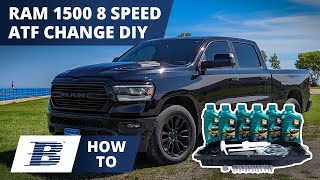
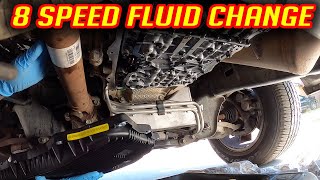
Technical Specifications
OEM Part Numbers: 68550344AA
Mopar Sales Code: DFR; Transmission Family: ZF 8HP75; Common Names: 875RE, TorqueFlite 8HP75; ZF Parts List Number Prefix: 1102 010; Engine Compatibility: 5.7L Hemi V8 with eTorque (EZL); Drivetrain: 4x4; Body Style: DT (6-lug wheels); Fluid Type: Mopar 8&9 Speed ATF (P/N 68218925AB) or ZF Lifeguard 8
We Have This Part in Stock


The information in this article is provided for general reference and educational purposes only. Vehicle specifications, procedures, and part compatibility can vary by production date, trim level, and region. Always consult your vehicle's factory service manual and verify part numbers before purchasing or performing repairs. Safety-critical components such as airbags, seat belts, and braking systems should be installed by a qualified professional.
- Ram 1500:
- 🎬 Helpful Videos
- 🛍️ Shop This Part
- Identifying the Correct 8HP75 eTorque Transmission
- How to Verify on Your Truck
- Part Numbers and Identification Codes
- Common Failure Symptoms
- Diagnostic Flowchart
- Known Issues, Recalls, and Service Bulletins
- Safety Recall 24V-413 (Stellantis ID 56B / 63B)
- TSB 21-001-23: TCM Software Update
- Thermal Bypass Valve (TBV) Failure
- What Fails at Every Mileage Band
- Under 60,000 Miles
- 60,000 - 100,000 Miles
- 100,000 - 150,000 Miles
- Over 150,000 Miles
- Real Owner Experiences
- Repair or Replace?
- When Repair Makes Sense
- When Replacement is Smarter
- Replacement Cost Estimates
- Freight & Delivery Reality
- Installation: Critical Steps and Common Mistakes
- Required Parts & Consumables
- Special Tools & Programming
- Installation Gotchas
- Questions to Ask Your Installer
- Frequently Asked Questions (FAQ)
- 🎟️ Get 5% Off