

2014-2019 Nissan Frontier 4.0L RE5R05A: Problems, Identification, and Used Replacement
Identify the correct 4x2 V6 transmission, understand what causes the Strawberry Milkshake of Death, and learn when to replace it with a quality used OEM unit.
- If your original transmission failed from coolant contamination (SMOD), you must replace the radiator and flush the cooler lines to prevent immediate failure of the replacement unit.
- Before purchasing, verify you have a 4x2 V6 model and match the ID tag codes (ending in 3GX1A or 61X4A) to avoid costly fitment errors with 4x4 or other Nissan models.
- Always use genuine Nissan Matic-S ATF; using incorrect fluid is a primary cause of torque converter shudder and can lead to internal damage.
- After installation, a TCM adaptive relearn procedure using a professional scan tool is required to ensure smooth shifting and proper operation.
- Fault codes P1757 or P1759 often indicate a repairable TCM circuit failure, which can be fixed for a fraction of the cost of a full transmission replacement.
Part Identification: Confirming You Have the Correct RE5R05A

The automatic transmission in the 2014-2019 Nissan Frontier with the 4.0L V6 engine is known as the RE5R05A (also called the JR507E or JR509E by its manufacturer, Jatco). However, this article specifically covers the variant for two-wheel drive (4x2 or RWD) models only. Ordering the wrong version is a common and costly mistake.
Due to major differences in internal components, bellhousing bolt patterns, and electronic programming, this transmission is NOT interchangeable with other Nissan models, even if they use the same RE5R05A family. Do not use a transmission from:
- 4x4 (four-wheel drive) Nissan Frontiers
- 4-cylinder (QR25DE) Nissan Frontiers
- V8 (VK56DE) models
- Nissan Titan, Pathfinder, Armada, or Xterra models
How to Verify Fitment on Your Truck
Follow these steps to ensure you are buying the correct unit for your vehicle:
- Confirm Drivetrain: Your truck must be a 4x2 (rear-wheel drive). Look underneath; if you do not see a front driveshaft or a transfer case behind the transmission, it is a 4x2.
- Check the VIN: The 4th digit of your Vehicle Identification Number (VIN) should be 'A' for the Frontier platform.
- Locate the ID Tag: Find the metal identification tag on the passenger's side (right side) of the transmission case, just above the oil pan rail. The stamped code should end in 3GX1A or 61X4A. You may also see part numbers 31020-3GX1A or 31020-61X4A.
Common Failure Symptoms

A failing RE5R05A transmission will typically show one or more of these signs:
- Harsh shifting, jerking, or delayed gear engagement.
- Slipping between gears, where the engine RPMs flare up without an increase in speed.
- Vehicle entering "limp mode," where it gets stuck in a single gear (often 3rd or 4th).
- The Check Engine Light is on, with diagnostic trouble codes (DTCs) related to the transmission, such as P1757 or P1759.
- A grinding or whining noise from the transmission area.
- Overheating, which can be monitored on the dashboard temperature gauge or with a scan tool.
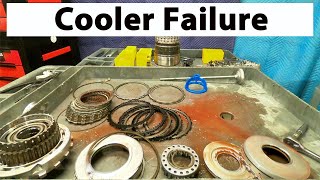
- The "Strawberry Milkshake of Death" (SMOD): a pink, milky fluid found in the radiator, indicating coolant has mixed with the transmission fluid. 🎬 Watch: How cooler failure causes this transmission damage
Diagnostic Flowchart
Known Issues, TSBs, and Recalls

While this transmission is generally durable, it has a few well-documented weak points. No recalls have been issued for the 2014-2019 model years for these specific issues, but technical service bulletins (TSBs) exist.
Severe: "Strawberry Milkshake of Death" (SMOD)
This is the most infamous issue affecting the RE5R05A family. It happens when the internal wall of the radiator, which separates engine coolant from the transmission fluid cooler, cracks. This allows the two fluids to mix. The resulting pink, sludgy mixture quickly destroys the transmission's rubber seals, clutches, and internal electronics.
- Affected Years: This was a major problem for 2005-2010 Nissan Frontier, Xterra, and Pathfinder models. While Nissan reportedly fixed the radiator design by 2011, any vehicle that has not had its radiator replaced could still be at risk. It is rare on 2014-2019 models, but still a risk if replacing a unit that failed due to SMOD.
- Source: NHTSA opened defect petitions (DP10003 and DP12-004) to investigate this issue, though it did not result in a recall. Nissan issued TSB NTB12-001 and extended the radiator warranty for older affected model years.
Warning: If your original transmission failed due to SMOD, you MUST replace the radiator and completely flush the cooler lines. Do not reuse the contaminated radiator, as it will immediately destroy the replacement transmission.
Severe: TCM & Solenoid Circuit Failure (Codes P1757, P1759)
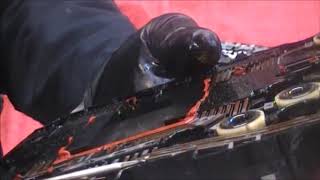
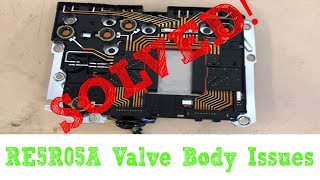
These trouble codes point to a failure in the front brake solenoid circuit, which is located inside the Transmission Control Module (TCM). The TCM, also known as the valve body, is located inside the transmission oil pan. The issue is often a cracked solder joint on the TCM's internal circuit board or broken connection pins where the solenoid attaches to the board. When this happens, the transmission may go into a fail-safe or "limp" mode. The fix is to replace the entire valve body/TCM assembly or have a specialist repair the circuit board.
Moderate: Torque Converter Shudder
A shudder or vibration felt during light acceleration, especially as the torque converter locks up, is a common complaint across the RE5R05A family. This is often caused by worn-out transmission fluid or the use of incorrect fluid. Using only genuine Nissan Matic-S ATF is critical to prevent this issue.
Minor: EVAP Code P0456 (Check Engine Light)
While not a transmission problem, a Check Engine Light for code P0456 (EVAP Very Small Leak) is common on 2014-2019 Frontiers. Per Nissan TSB NTB17-082b, this is often caused by a failed O-ring on the EVAP vent control valve. Because it triggers the light, it is often discovered during diagnosis for other transmission-related symptoms.
What Fails at Every Mileage Band
Pro Tip: The mileage bands below describe what typically fails on USED replacement units at these mileages. The checklists provided are critical steps to perform WHILE INSTALLING the purchased transmission, not general maintenance for your current vehicle.
Under 60,000 Miles
While rare at this mileage, the primary catastrophic failure is SMOD, where a breach in the radiator's internal transmission cooler contaminates the ATF with coolant. This causes rubber seals and clutch friction material to break down, leading to complete transmission failure. Some owner reports mention intermittent shifting issues or slipping that may be resolved with a TCM software update or could be early signs of fluid contamination or low fluid levels.
- ✓Do during install (required): Mandatory Cooler Line Flush to remove any debris from the previous unit. Mandatory Radiator Inspection: If the original transmission failed from SMOD, the radiator MUST be replaced, not just flushed.
- ✓Do during install (recommended): Fluid & Filter Service. Install a new internal filter/strainer, pan gasket, and fill with genuine Nissan Matic-S ATF. Consider a preventative radiator replacement or bypassing the internal cooler with an external one even if SMOD hasn't occurred.
- ✓Cheap insurance while the engine is out: Replace the front pump/torque converter seal and the rear output/driveshaft seal as cheap insurance while the unit is out.
60,000 - 100,000 Miles
The risk of SMOD remains the most significant concern if the original radiator is still in use. The failure is due to a design flaw in the radiator's integrated cooler, not the transmission itself. Torque converter shudder or shifting issues may begin to appear, often linked to aging fluid that has lost its lubricating properties. Internal TCM/solenoid failures can occur, sometimes triggered by coolant contamination or simply age, leading to harsh shifts or being stuck in gear.
- ✓Do during install (required): All required items from the Under 60k band apply.
- ✓Do during install (recommended): Strongly Consider Radiator Replacement. If installing a used transmission with this mileage, it is highly advisable to replace the radiator as a preventative measure against SMOD, regardless of the old unit's failure mode.
- ✓Cheap insurance while the engine is out: Inspect the transmission mount for cracks or wear and replace if necessary.
100,000 - 150,000 Miles
Wear-related issues become more common. As the transmission ages, internal sealing rings can wear, causing pressure losses that lead to harsh or slipping shifts, particularly the 1-2 shift. Torque converter shudder and failure become more prevalent, especially if fluid service has been neglected. SMOD remains a threat if the radiator has never been replaced. Note that camshaft and crankshaft position sensor failures can mimic transmission problems by causing stalling or erratic engine behavior, so proper diagnosis is key.
- ✓Do during install (required): Radiator replacement is almost mandatory at this stage.
- ✓Do during install (recommended): Consider a Remanufactured Torque Converter. Given the mileage, installing a new or remanufactured torque converter with the used transmission is a wise investment to prevent shudder and future failure.
- ✓Cheap insurance while the engine is out: Check the flexplate for cracks around the crankshaft bolts before installation. Inspect the U-joints for any play and replace if needed.
Over 150,000 Miles
At this high mileage, general wear and tear is the main enemy. Internal seals, clutches, and solenoids are all nearing the end of their expected life. If the transmission has survived this long, it's likely the radiator was replaced or an external cooler was added, or it has benefited from regular fluid changes. Failures are typically from cumulative wear leading to pressure loss, slipping, or torque converter failure, rather than a single catastrophic event (assuming SMOD was avoided).
- ✓Do during install (required): All required items from previous bands apply.
- ✓Do during install (recommended): A lower-mileage used unit is strongly preferred. Installing a transmission with over 150,000 miles is a significant gamble unless its service history is impeccably documented.
- ✓Cheap insurance while the engine is out: Assume a full rebuild is on the horizon. A high-mileage used unit should be considered a temporary solution. A professional rebuild of the existing core may be a more durable long-term option.
Real Owner Experiences
| Source | Mileage | What Happened | Cost |
|---|---|---|---|
| YouTube/Forum Discussions | 2014-2015 models | A 2014 Frontier owner reported the transmission intermittently shifting into neutral when a downshift was expected. Rumors suggest this could be due to low transmission fluid. | Not specified, but a TCM update was required for a similar issue on a 2020 model. |
| Reddit r/nissanfrontier | 77,000 | A 2014 Frontier owner experienced jerky movements and a one-time overheating incident that was resolved with a radiator flush. The transmission issue was intermittent. | Not specified. |
| Forum Discussion | 98,000 | A 2007 Frontier required a transmission replacement. There were no signs of SMOD, but corrosion was found in the valve body, possibly from the vehicle sitting for long periods. | Not specified, but noted as 'not fun'. |
| Tri-City Transmission Case Study | 116,742 | A 2006 Frontier required a transmission replacement due to SMOD (coolant contamination from the radiator). The owner was surprised by the failure on a well-maintained truck. | Over $4,000. |
| Reddit r/nissanfrontier | 130,000 | A 2017 Frontier began jerking when shifting. The owner had never serviced the transmission fluid. The issue was later diagnosed as a faulty camshaft sensor after the check engine light came on. | Cost of a sensor replacement. |
| CarKiller Forum | 147,000 | Owner of a 2011 Frontier reported shaking at idle and in park, suspecting a torque converter issue, though shifting felt mostly okay. | Not specified. |
| Forum Discussion | 225,000 | An Infiniti Q45 (which uses the RE5R05A) had its first transmission problem at 225,000 miles. | Not specified. |
| Reddit r/nissanfrontier | 220,000 | A 2015 Frontier is running well at this mileage, with the owner contrasting it to a Silverado that had a transmission failure at 115k. | N/A |
| Reddit r/nissanfrontier | 276,865 | A 2015 Frontier owner reports having never serviced the transmission fluid and the truck is still running. | N/A |
| BobIsTheOilGuy Forum | 420,000 | An owner reports having 420,000 miles on an RE5R05A transmission, calling it 'bullet proof'. | N/A |
| YouTube - Nissan P1757 Transmission in Limp Mode money saving fix | Unknown | Dealer quoted $1,700 to replace the valve body/TCM. An independent transmission shop quoted $4,000 for a complete replacement. Diagnosed and found a broken solder joint on the TCM for the front brake solenoid. Repaired the connection by re-soldering it. | Under $150. |
| Reddit - r/nissanfrontier | Unknown | The user was quoted a price by a shop for a torque converter replacement. | Around $6,000 for a torque converter replacement. |
| Reddit - r/askcarguys | ~175,000 | The transmission was failing (slipping, over-revving). The user was weighing options. | User anticipates a cost of $3,000 - $5,000 or more for a rebuilt/replaced transmission. |
| FIXD | Varies | Data survey of owner-reported repairs. | 16% of 2014 Frontier owners surveyed reported spending over $500 for transmission repairs in 2022. |
Repair or Replace?
Deciding whether to repair your existing transmission or replace it entirely depends on the specific failure mode and the overall condition of the unit.
When Repair Makes Sense
- TCM Solenoid Circuit Failures (Codes P1757 / P1759): This repair makes sense when the transmission fluid is clean and the failure is isolated to the TCM's internal lead frame or a solenoid connection. A repair can cost between $150 and $500. It is often misdiagnosed as a catastrophic failure requiring full replacement. A remanufactured valve body with the integrated TCM can be purchased for around $300-$800.
- Torque Converter Shudder or Failure: If the failure is only the torque converter and it has not sent debris throughout the transmission, a repair can cost between $800 and $2,000. A replacement torque converter part costs between $200 and $350, but labor is significant as the transmission must be removed (estimated between $400 and $1,500). This is only viable if there is no related internal damage.
- Valve Body Issues (Harsh Shifting, No Shift): When the main transmission case and gearsets are healthy, a valve body repair costs between $500 and $1,200. A valve body shift correction kit can be bought for under $300, and a remanufactured valve body (with solenoids, without TCM) can be found for as low as $236. Professional installation and a fluid change would be additional.
When Replacement is Smarter
Replacement is the smarter, and often only, option in cases of SMOD (Strawberry Milkshake of Death) where coolant has contaminated all internal components, causing widespread failure of clutches and electronics. It is also necessary when there is significant internal mechanical damage, such as cracked gears or a destroyed front pump, which would make a rebuild more expensive than a quality used or remanufactured unit. Given that a full replacement with a remanufactured unit can cost between $3,500 and $7,000 installed, this decision must be weighed against the vehicle's overall condition and value.
Questions to Ask Your Installer
- If my original transmission failed from coolant contamination (SMOD), is the quoted price inclusive of a new radiator and a thorough cooler line flush?
- Does the replacement unit come with a tested, working TCM, or will you need to swap my original TCM/valve body into the new unit?
- If a TCM swap is not performed, does your shop have the appropriate scan tool (like Nissan CONSULT) to perform the required adaptive relearn procedure?
- Can you confirm the donor vehicle for this used transmission was a 4x2 V6 Frontier and not a 4x4, Titan, or Xterra?
- What is the warranty on the replacement unit (parts and labor), and what does it cover?
- Will you be using Nissan Matic-S fluid for the installation?
- How do you verify the torque converter is fully seated before installation to prevent pump damage?
Replacement Cost Estimates
Costs can vary significantly based on your location and the shop you choose. The following estimates are for the transmission assembly itself and related labor.
| Part or Service | Estimated Cost (USD) | Notes |
|---|---|---|
| New OEM | $6,000 - $7,700+ | Brand new from a Nissan dealer. Often not a cost-effective option for older vehicles. |
| Remanufactured OEM | $2,695 - $4,250 | Rebuilt by a specialized facility with updated parts to correct factory flaws. Often includes a warranty. |
| Used OEM | $850 - $1,600 | A direct replacement from a recycled vehicle. Price depends on mileage and condition. |
| Installation Labor | $750 - $1,600 | Reputable shops typically charge for 5 to 9 hours of labor for a replacement. |
Installation & Programming Essentials

Replacing this transmission is an advanced job with a DIY difficulty rating of Advanced/Expert. If you are not an experienced technician, it is best left to a professional. Key steps and considerations are outlined below.
Required Tools
- Heavy-duty transmission jack
- Torque wrench
- Fluid pump and fill adapter / charge pipe tool
- Scan tool capable of reading real-time transmission fluid temperature and performing adaptive relearns (like Nissan CONSULT)
Required Consumables
- Nissan Matic-S ATF (approx. 10.9 to 12 quarts for full dry fill)
- Transmission Filter Kit (internal filter/strainer and new pan gasket)
- Torque Converter / Front Pump Seal
- Transmission Cooler Flush aerosol
Key Installation Steps & "Gotchas"
Warning: The torque converter must be fully seated into the transmission's front pump. You should feel it drop into place two or three distinct times as you rotate it. Failure to do this will crack the front pump gear as soon as the engine is bolted to the transmission, instantly ruining the new unit.
- Torque Converter Seating: The torque converter must be fully seated into the transmission's front pump. You should feel it drop into place two or three distinct times as you rotate it. Failure to do this will crack the front pump gear as soon as the engine is bolted to the transmission, instantly ruining the new unit.
- Bellhousing Dowel Pins: Make sure the two alignment dowel pins are present on the engine block before installing the transmission. If they are stuck in the old transmission, it can cause misalignment and rapid wear.
- Cooler Line Flush: Always flush the transmission cooler lines with an approved flushing agent to remove any metal debris or contaminated fluid from the old transmission. Skipping this allows old debris to contaminate the new valve body.
Pro Tip: Do not use standard red cotton shop rags when cleaning transmission components. Tiny fibers can break off and clog the small passages in the solenoids and valve body, leading to shifting problems. This is sometimes called "Red Death." Use only lint-free cloths.
Fluid Requirements & Fill Procedure
This transmission is extremely sensitive to fluid type. Use only Nissan Matic-S ATF or a fluid that explicitly meets this specification. Using a generic multi-vehicle fluid can cause torque converter shudder and harsh shifting.
This transmission does not have a traditional dipstick on some models. The fluid level must be checked via a port on the bottom of the pan. The procedure involves filling from the bottom until fluid trickles out, starting the engine, and then checking the level again once the fluid temperature is between 104°F and 176°F.
Programming and Relearn Procedure
The TCM is integrated into the valve body inside the transmission pan. Because it learns and adapts to your driving style, a procedure is required after installation. Swapping a unit from a different model will cause CAN communication failures (such as code U1000) and shifting issues.
- Option 1 (Recommended): Perform a TCM Adaptive Relearn procedure using a compatible professional-grade scan tool. This resets the adaptive shift strategies and ensures smooth operation.
- Option 2 (If Original TCM Works): Carefully swap the original working valve body and TCM assembly from your old transmission into the replacement unit. This avoids the need for electronic programming but should only be done if the original TCM is known to be good.
Freight & Delivery Reality

When ordering a used RE5R05A transmission, understand that it will not arrive in a standard cardboard box via regular parcel service. This assembly weighs approximately 212 lbs and measures roughly 49" x 21" x 20" before crating. It ships as LTL (Less Than Truckload) freight on a wooden pallet.
Because of its size and weight, delivery requires a freight truck equipped with a liftgate if you are having it delivered to a residential address or a shop without a loading dock. Always inspect the transmission thoroughly while it is still on the pallet and before signing the delivery receipt. Check for any physical damage to the bellhousing, oil pan, or tailhousing that may have occurred during transit.
Frequently Asked Questions (FAQ)
Can I use a transmission from a 4x4 Frontier or an Xterra?
No. The 4x4 version of the RE5R05A has a different tailhousing and output shaft to accommodate a transfer case. A transmission from an Xterra, Titan, or other Nissan model will have different programming and will not communicate correctly with your truck's computer, leading to error codes and severe shifting issues.
Do I have to replace my radiator when I replace the transmission?
You absolutely must replace the radiator if the old transmission failed from coolant contamination (SMOD). If the transmission failed for another reason, it is not strictly required, but it is highly recommended as a preventative measure, especially on higher-mileage vehicles.
What happens if I use the wrong transmission fluid?
Using fluid other than Nissan Matic-S (or a certified equivalent) will likely cause torque converter shudder, harsh shifting, and can lead to premature wear of internal components. The cost savings on fluid are not worth the risk of damaging the transmission.
What is included when I buy a used RE5R05A transmission?
According to standard auto recycler guidelines, a used transmission includes the main case, all internally lubricated parts, the tail housing, oil pan, torque converter, valve body, and internal solenoids. It typically does NOT include external sensors, wiring harnesses beyond the integral connector, the shifter, linkage, cables, flexplate, or transmission cooler lines.
Do I need to program the transmission after installing it?
Yes. The Transmission Control Module (TCM) is integrated into the valve body and contains adaptive shift strategies. You must perform a TCM adaptive relearn procedure using a professional scan tool (like Nissan CONSULT) to ensure smooth shifting. Alternatively, you can swap your original, working valve body/TCM into the replacement unit to avoid programming.
Helpful Videos

Technical Specifications
OEM Part Numbers: 31020-3GX1A 31020-61X4A
Name: RE5R05A / JR507E / JR509E; Application: 2014-2019 Nissan Frontier; Engine: 4.0L V6; Drivetrain: 4x2 (RWD) Only; ID Tag Suffixes: 3GX1A, 61X4A; Required Fluid: Nissan Matic-S ATF; Dry Fill Capacity: Approx. 10.9 to 12 quarts; Weight: Approx. 212 lbs; Shipping Dimensions: Approx. 49" x 21" x 20"
We Have This Part in Stock


The information in this article is provided for general reference and educational purposes only. Vehicle specifications, procedures, and part compatibility can vary by production date, trim level, and region. Always consult your vehicle's factory service manual and verify part numbers before purchasing or performing repairs. Safety-critical components such as airbags, seat belts, and braking systems should be installed by a qualified professional.
- Nissan Frontier:
- 🎬 Helpful Videos
- 🛍️ Shop This Part
- Part Identification: Confirming You Have the Correct RE5R05A
- How to Verify Fitment on Your Truck
- Common Failure Symptoms
- Diagnostic Flowchart
- Known Issues, TSBs, and Recalls
- Severe: "Strawberry Milkshake of Death" (SMOD)
- Severe: TCM & Solenoid Circuit Failure (Codes P1757, P1759)
- Moderate: Torque Converter Shudder
- Minor: EVAP Code P0456 (Check Engine Light)
- What Fails at Every Mileage Band
- Under 60,000 Miles
- 60,000 - 100,000 Miles
- 100,000 - 150,000 Miles
- Over 150,000 Miles
- Real Owner Experiences
- Repair or Replace?
- When Repair Makes Sense
- When Replacement is Smarter
- Questions to Ask Your Installer
- Replacement Cost Estimates
- Installation & Programming Essentials
- Required Tools
- Required Consumables
- Key Installation Steps & "Gotchas"
- Fluid Requirements & Fill Procedure
- Programming and Relearn Procedure
- Freight & Delivery Reality
- Frequently Asked Questions (FAQ)
- 🎟️ Get 5% Off