

2019-2025 Nissan Altima 2.5L CVT: Problems, Identification, and Used Replacement
Identify Jatco CVT8 failure symptoms, learn when to repair versus replace, and know exactly what to look for when buying a used RE0F10D transmission assembly.
- A replacement CVT is NOT plug-and-play; it requires mandatory 'Write IP Characteristics' programming with a professional scan tool to prevent immediate failure.
- Verify fitment for a 2.5L FWD Altima (codes RE0F10D/JF016E), as it is not interchangeable with AWD, 2.0L Turbo, or other Nissan models.
- Use only Genuine Nissan CVT Fluid NS-3 (999MP-NS300P) and completely flush the transmission cooler and lines to remove old debris before installation.
- Due to widespread premature failures, replacement is often a better long-term solution than repair, especially if symptoms include severe shuddering or codes like P17F0/P17F1.
Is This the Right Transmission for Your Altima?


The 2019-2025 Nissan Altima with the 2.5L engine uses a specific Continuously Variable Transmission (CVT) known as the Jatco CVT8. A CVT doesn't have traditional fixed gears; instead, it uses a belt and pulley system to provide smooth acceleration and improve fuel efficiency. [3, 42] The specific variant for this Altima is identified by the codes RE0F10D or JF016E.
This transmission assembly is designed only for Altimas that meet these exact criteria:
| Model Years | 2019, 2020, 2021, 2022, 2023, 2024, 2025 |
| Engine | 2.5L 4-Cylinder (Engine Code: PR25DD) |
| Drivetrain | Front-Wheel Drive (FWD) only |
How to Confirm Fitment
Before buying a replacement, you must verify it's the correct unit for your car. Check the following:
| Vehicle Identification Number (VIN) | Check the 8th digit of your car's VIN. It should be 'A' or 'D' (not 'C' or '3'). |
| Transmission ID Code | Look for a metal stamp on the top of the main case where it meets the bellhousing, or a QR code sticker on the transmission range switch (inhibitor switch near where the shift linkage connects). This should read RE0F10D or JF016E. |
Warning: This transmission is not interchangeable with other models. It will NOT fit All-Wheel Drive (AWD) Altimas or those with the 2.0L VC-Turbo engine, which use a different transmission (RE0F10H / JF017E). It also will not fit other Nissan vehicles like the Rogue, Rogue Sport, or Sentra due to differences in the bellhousing bolt patterns, mounting brackets, wiring harness pinouts, and final-drive gear ratios.
Common Failure Symptoms

Nissan CVTs have a known history of issues, and the 2019-2025 Altima is no exception. [3] Widespread owner complaints and class-action lawsuits highlight problems like premature failure, often before 100,000 miles. 🎬 Watch: Common Nissan Altima transmission and engine problems to watch for [3, 26] Key symptoms that point to a failing transmission include:
- Shuddering and Jerking: The car may shake or jerk violently, especially when accelerating from a stop or at low speeds. [3, 11]
- Hesitation or Loss of Power: A noticeable delay or sudden loss of power when you press the gas pedal, which can be dangerous when merging or accelerating. [3, 13]
- Whining or Humming Noises: Unusual whining, humming, or grinding sounds that change with engine speed often indicate internal wear. [11]
- Overheating: The transmission can overheat, causing the vehicle to enter a "limp mode" with drastically reduced power to prevent further damage. [3, 11, 41]
- Check Engine Light: The failure is often accompanied by specific Diagnostic Trouble Codes (DTCs). Common codes include P17F0, P17F1, P0746, P0776, P0841, and P0965, which often point to severe internal problems. [1, 4]
Diagnostic Flowchart
Known Issues, Recalls, and Service Bulletins
Nissan has issued several documents related to this transmission and associated systems. If your vehicle shows symptoms, a dealer can check if these apply.
CVT Shudder and Internal Damage (Severe)
| Issue | Severe shuddering, hesitation, and diagnostic codes P0746, P0776, P0841, P0965, P17F0, or P17F1. [4, 17] |
| Affected Years | 2019-2021 Altima. |
| Document | Technical Service Bulletin (TSB) #NTB22-021 (NHTSA ID #10212012). [4, 17] |
| Remedy | The TSB instructs technicians to inspect the internal steel belt and pulley faces for damage. [24] If scuffing or wear is found, the entire transmission assembly must be replaced. [24] |
Torque Converter Solenoid Fault
| Issue | A software issue could falsely trigger trouble codes P0742 and/or P187E. |
| Affected Years | 2020 Altima (2.5L models). |
| Document | TSB #NTB19-116a (NHTSA ID #10177213). |
| Remedy | A Transmission Control Module (TCM) software update is required to optimize clutch engagement logic and prevent false DTC triggers. |
Whining or Humming Noises
| Issue | Whining or humming noises during operation. |
| Affected Years | 2019 onward. |
| Document | TSB #NTB12-103f. |
| Remedy | Software updates or component replacement depending on the severity of the internal wear. |
Brake Switch Bracket Roll-Away Risk (Recall)
| Issue | This issue was not directly related to the transmission but affected the brake system on some Altimas. |
| Affected Years | Select 2019 Altima models. |
| Document | Recall #19V654000. |
| Remedy | The recall involved replacing the brake pedal assembly. |
Backup Camera Display (Recall)
| Issue | The backup camera display could be adjusted to be no longer visible and would retain that setting, increasing the risk of an accident. [2, 12, 16] |
| Affected Years | 2018-2019 Altima. [2, 7] |
| Document | Recall #19V654000. [2, 7] |
| Remedy | Nissan dealers will update the backup camera software free of charge. [2] |
Replacement Cost Estimates

Replacing a failed CVT is a significant expense. Costs vary based on the type of part, location, and shop labor rates. Here are some general estimates:
| Part or Service | Estimated Cost (USD) |
|---|---|
| New OEM Assembly | $3,500 - $6,400 [26] |
| Remanufactured Assembly | $2,800 - $4,100 [5, 10, 21] |
| Used (Recycled OEM) Assembly | $650 - $1,500 [9] |
| Shop Labor for Installation | $900 - $1,800 (6.0 to 10.0 hours) |
| TCM Programming/Calibration | $150 - $400 [8] |
Repair or Replace?
When faced with transmission issues, deciding whether to repair specific components or replace the entire assembly depends heavily on the symptoms and diagnostic codes.
- When Repair Makes Sense: If your transmission is experiencing minor leaks from pans or seals, a repair is highly cost-effective ($200 - $500). If symptoms are caused by TCM software glitches, a dealer update ($150 - $300) is the logical first step. If diagnostic codes point specifically to a solenoid or the valve body (e.g., P0965) and a physical inspection of the fluid reveals no significant metal debris, a valve body replacement ($1,200 - $2,500) makes sense.
- When Replacement is Smarter: Replacement is necessary when the internal steel belt or pulleys are damaged. This is often indicated by severe shuddering, whining, and diagnostic trouble codes like P17F0 or P17F1. Once the fluid is contaminated with a significant amount of metal shavings from the belt and pulleys, a simple valve body repair will not solve the problem, as the debris will destroy the new components. In these common failure scenarios, a complete replacement with a used, remanufactured, or new unit is the only viable long-term solution.
What Fails at Every Mileage Band
Pro Tip: The mileage bands below describe what to expect from used replacement units of that mileage. The checklists provided are critical steps to perform WHILE INSTALLING the purchased transmission, not maintenance advice for your current failing engine.
Under 60,000 Miles
While less common, failures do occur in this range. Known issues include sudden loss of power or hesitation (sometimes intermittent), complete transmission failure requiring replacement, shuddering and jerking when accelerating, valve body failure, and overheating which can trigger a "CVT Malfunction" warning and lead to limp mode.
- ✓Do during install (required): Perform all mandatory programming and relearn procedures ('Write IP Characteristics').
- ✓Do during install (required): Thoroughly flush the transmission cooler and lines to remove any potential debris from the previous unit.
- ✓Do during install (required): Use only Genuine Nissan NS-3 CVT fluid.
- ✓Do during install (recommended): Replace the external cartridge filter and internal pan strainer/filter.
- ✓Do during install (recommended): Replace all required seals (axle, torque converter) and the pan gasket.
60,000 - 100,000 Miles
Premature failure is commonly reported in this range, well below the expected lifespan of a traditional automatic transmission. Shuddering, hesitation, and sudden loss of power become more frequent. Whining noises that increase with speed and overheating in hot climates or heavy traffic are also prevalent.
- ✓Do during install (required): All items from the 'Under 60K' band apply.
- ✓Do during install (recommended): Inspect and consider replacing external transmission sensors that are being transferred from the old unit, as their lifespan may be limited.
- ✓Cheap insurance while the engine is out: Strongly consider replacing the torque converter, as it has been subjected to the same mileage and potential fluid degradation.
100,000 - 150,000 Miles
There is an increased likelihood of complete failure if the fluid has not been changed regularly. Worn internal components like the steel belt and pulleys are more common. Symptoms like shudder, hesitation, and noise are often signs of irreversible internal wear at this mileage.
- ✓Do during install (required): All items from the previous bands apply.
- ✓Do during install (recommended): It is highly advisable to install a new or remanufactured external transmission cooler rather than just flushing the old one, as trapped debris can be difficult to fully remove and may contaminate the replacement transmission.
- ✓Cheap insurance while the engine is out: At this mileage, replacement of the torque converter is essential 'insurance' as it is a major wear item.
Over 150,000 Miles
Failure is highly probable if the unit is still original and has not been meticulously maintained. Most owner reports of reaching this mileage involve either a previously replaced transmission or extremely diligent fluid service.
- ✓Do during install (required): Assume all wear items are at the end of their life. A lower-mileage used unit is a significantly better investment than a high-mileage one.
- ✓Do during install (recommended): Mandatory replacement of the torque converter and external cooler is recommended.
- ✓Cheap insurance while the engine is out: Carefully inspect the engine flexplate for cracks or damage from the previous failing transmission.
Real Owner Experiences
| Source | Mileage | What Happened | Cost |
|---|---|---|---|
| Lemon Law Help | 17,500 | A 2020 Altima experienced complete transmission failure. The dealership confirmed it was an issue they see with these CVTs and the car was at the dealer for over a month for a replacement. | $0 (Warranty) |
| CarComplaints.com | 32,000 | Owner bought the car used at 32k miles and soon after experienced intermittent stalling/hesitation when accelerating. The issue became more frequent and eventually led to a 'CVT MALFUNCTION' alert on the freeway. The dealer diagnosed it as needing a total transmission replacement. | $5,500 |
| Just shy of 50,000 | A 2019 AWD Altima owner reported the car going limp and getting very hot after 20 minutes of driving. After a year of complaints, the dealer diagnosed a failed valve body in the transmission and replaced it under warranty. | Warranty | |
| 60,000 | A 2019 Altima experienced a sudden loss of acceleration and displayed a CVT warning. The car would barely move. The owner noted multiple transmission and electrical codes were present. | Not specified | |
| 71,000 | Owner of a 2019 Altima S reports the CVT is holding up very well, noting they had the fluid changed at 60,000 miles. | N/A (Preventative Maintenance) | |
| 91,000 | Transmission died, received a quote from Nissan for replacement. | $5,800 Quote | |
| YouTube Comment | 95,000 | A 2022 Sentra owner performed a fluid and filter change, showing significant metal shavings and debris on the pan magnets and in the old filters. | DIY Parts Cost |
| YouTube Comment | 121,000 | Owner of a 2020 Mitsubishi Outlander (also uses a Jatco CVT) reports no issues but is fanatical about maintenance, changing CVT fluid every 15,000 miles (half the recommended interval). | N/A (Preventative Maintenance) |
| 122,000 | A 2013 Altima owner reported having the transmission replaced under an extended warranty sometime before this mileage. The total cost without warranty would have been around $4,000. | $100 (deductible) | |
| 169,000 | Seeking advice on whether to replace the transmission. | $4,000 Quote | |
| 173,000 | Owner of a 2013 Altima with a V6 engine reports the original CVT is still working despite no fluid changes, but admits it has many 'quirks' that are likely transmission-related. | N/A | |
| 207,000 | A 2015 Altima that never had a transmission service reached this mileage before being retired/replaced. | N/A | |
| JD Power / Owner Data | 250,000-300,000 | Some Altimas can reach this mileage, but it requires proper maintenance according to the manufacturer's schedule. | N/A |
| N/A | Owner was preemptively researching costs due to known CVT issues. | $3,500 - $5,000 Quote |
Essential Information for Installation
This is a complex job intended for professional technicians or expert-level DIYers with the right tools. The installation requires an engine support bar/bracket, a transmission jack, and a professional-grade diagnostic scan tool (Nissan CONSULT-III Plus or equivalent J2534 programming device).
What's Included in a Used Assembly
A used transmission assembly from a recycler typically includes the transmission case, internal valve body, shift and pressure control solenoids, oil pan, and the torque converter. It does not include external electronic sensors, the external wiring harness, the Transmission Control Module (TCM), shifter linkage and cables, the engine flexplate/flywheel, or external fluid cooler lines. These parts must be transferred from your old unit.
Warning: Mandatory Programming Required! This transmission is NOT a "plug-and-play" part. The valve body inside every CVT is unique and has its flow characteristics recorded at the factory. This data must be written to your vehicle's existing TCM after installation. Skipping this step will cause severe driveability issues and quickly destroy the replacement transmission. [26, 32]
Key Installation Steps & 'Gotchas'
- Programming: The process is called "Write IP Characteristics" (EEPROM programming). It requires a professional-grade scan tool. Following the data write, several relearn procedures are necessary, including Clutch Point Learning and Select Learning. [26, 32, 33]
- Fluid: Use only Genuine Nissan CVT Fluid NS-3 (OEM Part Number: 999MP-NS300P). Using any other type of fluid will cause damage.
- Cooler Flush: The transmission cooler and lines must be thoroughly flushed with CVT cooler flush solvent to remove metal debris from the old, failed unit. Failure to do so will contaminate and ruin the replacement transmission.
- Torque Converter: Ensure the torque converter is fully seated onto the input shaft and oil pump gears (you should feel three distinct "clicks" or drops as it engages). If it's not fully seated, it will crush the internal oil pump gear when the engine is bolted on.
- Subframe Removal: The entire front subframe (engine cradle) must be lowered to get the transmission out of the vehicle from the bottom. An engine support bar is required to hold the engine in place during this process. [29]
- Fluid Level Check: This CVT has no traditional dipstick. The fluid level must be checked through an overflow tube system with the engine idling in Park and the fluid temperature strictly between 95°F and 113°F (35°C to 45°C), requiring a scan tool to monitor the temperature.
Pro Tip: Always replace consumable parts during the swap. This includes the internal oil pan strainer, external cartridge filter, oil pan gasket, torque converter input shaft seal (front pump seal), and axle/driveshaft seals to prevent leaks and ensure longevity.
Common Buyer Mistakes to Avoid
- Using Non-OEM or Incorrect Fluid: Using generic multi-vehicle or NS-2 fluid instead of genuine Nissan NS-3 fluid causes immediate belt slippage and failure.
- Treating it as Plug-and-Play: Skipping the mandatory 'Write IP Characteristics' calibration procedure leads to erratic shifting, judder codes, and rapid belt destruction.
- Neglecting the External Cartridge Filter: Forgetting to replace the external cartridge filter hidden behind the cooler/warmer assembly.
- Reusing Stretched Torque Converter Bolts: Reusing old bolts can lead to them backing out under vibration, ruining the flexplate.
- Not Flushing the Cooler: Failing to flush the cooler lines allows old metal debris to contaminate and destroy the replacement unit.
- Underestimating the Job: Attempting this complex swap without proper equipment, lift clearance, or professional programming tools.
Freight and Delivery Reality

When ordering a used transmission assembly, it will not arrive in a standard cardboard box. This unit weighs approximately 200 lbs and measures roughly 33" x 28" x 25" before crating. It ships as LTL (Less-Than-Truckload) freight on a wooden pallet. If you are having it delivered to a residential address or a shop without a loading dock or forklift, you must request a liftgate service so the driver can safely lower the pallet to the ground.
Always inspect the transmission thoroughly while the delivery driver is present. Check for any physical damage to the bellhousing, oil pan, or electrical connectors before signing the delivery receipt. A reputable seller will also conduct a pre-purchase verification interview to ensure you are buying the correct FWD 2.5L unit for your specific VIN.
Questions to Ask Your Installer
Before handing over your vehicle, ensure your mechanic is prepared for this specific job by asking:
- Have you confirmed this is a FWD 2.5L transmission (RE0F10D) and not for an AWD or 2.0L Turbo model?
- Do you have a Nissan-specific scan tool (like CONSULT-III) or a high-level J2534 device to perform the mandatory 'Write IP Characteristics' calibration for the replacement transmission's valve body?
- Does your quote include the cost of flushing the transmission cooler and lines completely to remove debris from the old unit?
- Will you be replacing the external cartridge filter, pan strainer, axle seals, and torque converter seal?
- What specific brand and type of fluid will you be using? (It must be Genuine Nissan CVT Fluid NS-3).
- How will you verify the correct fluid level using the temperature-specific overflow procedure?
- Does the price for the replacement unit include a warranty, and what are the terms for parts and labor?
Frequently Asked Questions (FAQ)
Can I use a cheaper CVT fluid instead of Nissan NS-3?
No. Using anything other than genuine Nissan NS-3 fluid (OEM Part Number: 999MP-NS300P) is a common and costly mistake. Incorrect fluid will cause immediate performance problems, belt slippage, and lead to rapid failure of the transmission.
Do I really need to program the transmission?
Yes, programming is absolutely mandatory. [26, 32] Every CVT valve body has unique factory calibration data. This data must be written to your car's computer (TCM) so it knows the exact hydraulic properties of the replacement unit. Skipping this step will result in harsh shifting, shuddering, and will destroy the transmission belt and pulleys.
Is the transmission from an AWD Altima the same?
No. The FWD and AWD transmissions are different parts and do not interchange. You must use a transmission from a vehicle with the same drivetrain as yours.
Why do so many of these transmissions fail?
Failures are often attributed to design flaws, including issues with overheating, premature fluid breakdown, and wear on the internal belt and pulleys. [3, 11] These issues have been the subject of numerous complaints and lawsuits. [3]
What parts are NOT included with a used transmission assembly?
A used assembly generally excludes external electronic sensors, the external wiring harness, the Transmission Control Module (TCM), shifter linkage and cables, the engine flexplate/flywheel, and external fluid cooler lines. You will need to transfer these from your original transmission.
How do I check the fluid level on this transmission?
This transmission does not have a traditional dipstick. The fluid level must be checked via an overflow tube system while the engine is idling in Park. Crucially, the fluid temperature must be strictly between 95°F and 113°F (35°C to 45°C) during the check, which requires a diagnostic scan tool to monitor.
Helpful Videos

Technical Specifications
OEM Part Numbers: 999MP-NS300P (Fluid)
Model Years: 2019, 2020, 2021, 2022, 2023, 2024, 2025; Engine: 2.5L 4-Cylinder (PR25DD); Drivetrain: Front-Wheel Drive (FWD); Transmission Type: Jatco CVT8; Transmission Codes: RE0F10D, JF016E; Required Fluid: Genuine Nissan CVT Fluid NS-3; VIN 8th Digit: 'A' or 'D'
We Have This Part in Stock
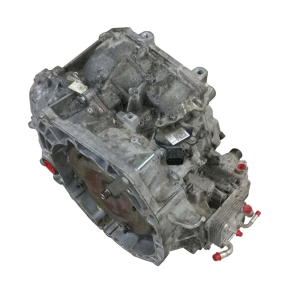

The information in this article is provided for general reference and educational purposes only. Vehicle specifications, procedures, and part compatibility can vary by production date, trim level, and region. Always consult your vehicle's factory service manual and verify part numbers before purchasing or performing repairs. Safety-critical components such as airbags, seat belts, and braking systems should be installed by a qualified professional.
- Nissan Altima:
- 🎬 Helpful Videos
- 🛍️ Shop This Part
- Is This the Right Transmission for Your Altima?
- How to Confirm Fitment
- Common Failure Symptoms
- Diagnostic Flowchart
- Known Issues, Recalls, and Service Bulletins
- CVT Shudder and Internal Damage (Severe)
- Torque Converter Solenoid Fault
- Whining or Humming Noises
- Brake Switch Bracket Roll-Away Risk (Recall)
- Backup Camera Display (Recall)
- Replacement Cost Estimates
- Repair or Replace?
- What Fails at Every Mileage Band
- Under 60,000 Miles
- 60,000 - 100,000 Miles
- 100,000 - 150,000 Miles
- Over 150,000 Miles
- Real Owner Experiences
- Essential Information for Installation
- What's Included in a Used Assembly
- Key Installation Steps & 'Gotchas'
- Common Buyer Mistakes to Avoid
- Freight and Delivery Reality
- Questions to Ask Your Installer
- Frequently Asked Questions (FAQ)
- 🎟️ Get 5% Off