

2016-2023 CX-9 & 2019-2021 CX-5 2.5L Turbo Transmission: Problems, Identification, and Used Replacement
Identify the correct SKYACTIV-Drive unit, understand common failures like torque converter chirp, and learn when to replace it with a used OEM transmission.
- You must match the exact transmission code (GW6AX-EL for AWD, GW6A-EL for FWD) to your vehicle; transmissions from non-turbo or other Mazda models will not fit.
- Use only genuine Mazda ATF FZ fluid (blue, part # 0000-FZ-113E-01); using any other fluid will cause severe damage and rapid failure.
- When installing a replacement, it is critical to also replace the filter, all external seals, and the external transmission cooler to prevent contamination from causing a repeat failure.
- A mandatory TCM Adaptive Relearn procedure must be performed with a scan tool after installation to ensure proper shift quality and prevent damage to the replacement unit.
- Before replacing the entire unit, investigate if the problem can be solved by a less expensive repair, such as addressing a known TSB for a faulty torque converter or oil pressure switch.
Identifying the Correct 2.5L Turbo Transmission


This guide covers the specific 6-speed automatic transmission designed for the powerful 2.5L SKYACTIV-G Turbo engine found in the 2019-2021 Mazda CX-5 and 2016-2023 Mazda CX-9. This heavy-duty unit, part of the SKYACTIV-Drive family, is engineered to handle the higher torque of the turbocharged engine. It is technically a transaxle, meaning the transmission and differential are combined in a single housing for front-wheel drive (FWD) or all-wheel drive (AWD) vehicles.
Key Identifiers
To ensure you are buying the correct replacement, you must match it to your vehicle's drivetrain. Look for the following codes, which are often found on a tag or stamped on the transmission case:
| Code / Part Number | Description |
|---|---|
| GW6AX-EL | The code for the All-Wheel Drive (AWD) version. |
| GW6A-EL | The code for the Front-Wheel Drive (FWD) version. |
| G0Y1-03-000 or G0Y1103000 | Common OEM part numbers for this transmission family. |
The most important physical difference is on the case itself. The AWD version (GW6AX-EL) has a specific machined mounting area and internal splines on the passenger side to connect the transfer case, also known as a Power Take-Off Unit (PTU). The FWD version lacks this and cannot be converted.
Warning: An FWD transmission will not work in an AWD vehicle, and vice-versa. The transfer case will not bolt up to an FWD transmission case.
Critical Fitment Differences (What Will NOT Work)
Ordering the wrong transmission is a common and costly mistake. Be aware of these key differences:
| Incompatible Transmission Type | Reason for Incompatibility |
|---|---|
| Non-Turbo 2.5L | Lighter-duty unit (codes FW6A-EL or FW6AX-EL) 🎬 Watch: Overview of the lighter-duty FW6A-EL transmission with a different bellhousing bolt pattern, smaller torque converter, fewer clutch plates, and different gear ratios. It will not physically bolt up. |
| Other Mazda Turbo Models | Transmissions from models like the Mazda3, CX-30, or CX-50 have different case shapes, mounting points, and cooling line connections that make them incompatible. |
Common Failure Symptoms
A failing transmission can show several warning signs. If you experience any of the following, it's time to have your vehicle inspected by a professional technician.
- Harsh shifting or a noticeable "shock" when accelerating from a stop.
- A distinct "chirp" noise during the 3-4 upshift.
- A whining noise that gets louder with vehicle speed, regardless of which gear you are in.
- Engine RPMs flare up between shifts, indicating the clutches are slipping.
- The "AT" (Automatic Transmission) warning light illuminates on your dashboard.
- Delayed or rough engagement when shifting into Drive or Reverse.
Confirming the Diagnosis
Before condemning the transmission, a technician should check the fluid level and condition. This requires a specific procedure, as these transmissions do not have a traditional dipstick extending into the engine bay. The fluid level must be checked using a small plastic plug on the front-left side of the case (secured by an 8mm or 10mm bolt) 🎬 Watch: Step-by-step Mazda Skyactiv transmission fluid drain and fill while the transmission is at a specific temperature (50-60°C / 122-140°F), verified with a scan tool. A professional diagnosis using a scan tool is essential to read any stored Diagnostic Trouble Codes (DTCs) that can pinpoint the exact problem.
Diagnostic Flowchart
Known Issues, TSBs, and Recalls

Several Technical Service Bulletins (TSBs) have been issued for this transmission family. A TSB is a document from the manufacturer that provides repair instructions for common problems. No major safety recalls have been issued for the transmission itself, but some powertrain-related recalls may apply.
| TSB Number | Symptom | Affected Models | Summary of Fix |
|---|---|---|---|
| TSB 05-010/16 (NHTSA ID 10186248) | Shift Shock from a Stop | Some 2016 Mazda CX-9 | Software update for the Transmission Control Module (TCM) and a strict adaptive relearn procedure. |
| TSB 05-005/23a (NHTSA ID 10246127) | Transmission 'Chirp' Noise on 3-4 Upshift | 2017–2024 CX-5 (and others) | Replace the torque converter and perform multiple fluid flushes due to contamination from a wearing clutch. |
| TSB 05-004/19-3466 (NHTSA ID 10160555) | Oil Pressure Switch Failure (Check Engine/AT lights) | 2013-2019 CX-5, 2016-2019 CX-9 | Replace failed internal oil pressure switches, accessed by removing the oil pan. |
| TSB 05-002/19-3576 (NHTSA ID 10155437) | Transmission Whining Noise | 2012-2019 Mazda models | Addresses premature wear on the central case bearing or planetary gear sets. |
Pro Tip: When discussing a problem with your dealer, mentioning the specific TSB number can help speed up the diagnostic process.
What Fails at Every Mileage Band
Pro Tip: The mileage bands below describe used replacement units of that mileage. The checklists provided are things to do WHILE INSTALLING the purchased engine or transmission, not maintenance for your current unit.
Under 60,000 Miles
While major mechanical failures are uncommon at this mileage, some issues can appear early. A "clunking" or "lurching" feeling during 2-1 downshifts at low speeds (0-20 mph) has been reported in very new vehicles, sometimes within hours of purchase. This can be related to the transmission's adaptive learning and the aggressive torque converter lock-up strategy. Surging shifts between 2nd and 3rd gear when the vehicle is cold have also been attributed to the Automatic Transmission Control Valve. Additionally, the "AT Transmission Malfunction" light can be triggered by non-transmission issues, most commonly a weak or failing battery causing low voltage.
- ✓Do during install (required): External Inspection. Carefully inspect the replacement unit for any shipping damage to the case, pan, and electrical connectors.
- ✓Do during install (required): Fluid and Filter. Drain the fluid that comes in the used unit, replace the internal transmission filter (strainer), clean the pan magnets, and refill with new, genuine Mazda ATF FZ.
- ✓Do during install (required): Cooler Flush. It is critical to flush the transmission cooler and lines to remove any potential debris from the donor vehicle.
- ✓Cheap insurance while the engine is out: Seals. Always replace the torque converter seal and both axle seals. They are inexpensive and prevent future leaks.
60,000 - 100,000 Miles
This is the range where shift quality issues may become more pronounced if maintenance has been deferred. Hard or clunky shifts, particularly when warm or after some mileage, are noted. These can sometimes be resolved with a TCM software update or an adaptive learning reset. Some owners report weird shifting behavior, like a 3-2-4 upshift pattern. Reports of complete transmission failure requiring replacement can occur in this band.
- ✓Do during install (required): Fluid and Filter Change. Do not skip this. A pan drop, filter replacement, magnet cleaning, and refill with Mazda ATF FZ is the minimum requirement.
- ✓Do during install (required): Replace Cooler/Heat Exchanger. Given the mileage and unknown history of the donor vehicle, replacing the transmission fluid cooler (heat exchanger) is highly recommended. It can trap debris that is impossible to flush completely.
- ✓Do during install (recommended): Solenoid/Valve Body Inspection. While the pan is off, visually inspect the valve body and solenoids for any obvious varnish or sludge buildup.
- ✓Cheap insurance while the engine is out: All Seals. Replace the torque converter seal, axle seals, and inspect the transfer case (AWD) input seal.
100,000 - 150,000 Miles
At this mileage, the debate over "lifetime" fluid becomes critical. Many technicians report that fluid drained for the first time over 100k miles is extremely dirty or like sludge. Failures can be more significant, such as visible wear on the oil pump bushing. Slipping can occur, and torque converter shudder can appear, which may sometimes be resolved with multiple fluid drain-and-fills.
- ✓Do during install (required): Assume Zero Maintenance History. Treat a unit in this mileage band as if it has never been serviced.
- ✓Do during install (required): Full Consumables Replacement. Mandatorily replace the fluid, filter, all external seals (torque converter, axles), and the transmission cooler/heat exchanger.
- ✓Do during install (recommended): Torque Converter. Strongly consider replacing the torque converter along with the used transmission. Debris from the donor vehicle's transmission often contaminates the converter.
- ✓Cheap insurance while the engine is out: Inspect Flexplate. With the transmission out, carefully inspect the engine's flexplate for any cracks or worn starter ring gear teeth.
Over 150,000 Miles
While many SKYACTIV transmissions can exceed this mileage with proper care, units that have followed the "lifetime fluid" philosophy may be at high risk of failure. Failures at this stage are likely to be major internal mechanical issues, such as worn clutch packs, bearing failure, or pump failure.
- ✓Do during install (required): Full Replacement Recommended. At this mileage, installing a used unit is a significant gamble. A professionally remanufactured transmission with a warranty is a much safer investment.
- ✓Do during install (required): If Installing Used. A complete replacement of all serviceable/wear items is non-negotiable. This includes the fluid, filter, all seals, the external cooler, and the torque converter.
- ✓Do during install (recommended): Budget for Failure. A buyer should understand that a used transmission with over 150,000 miles has a limited remaining service life and should budget accordingly.
Real Owner Experiences
Here is a summary of real-world issues reported by Mazda CX-5 and CX-9 owners regarding this transmission family.
| Source | Mileage | What Happened | Cost |
|---|---|---|---|
| Reddit r/CX5 | 5,000 | A 2025 CX-5 experienced audible clunking and lurching on 2-1 downshifts within 12 hours of purchase. After multiple dealer visits, Mazda USA approved a full transmission replacement under warranty. | $0 (Warranty) |
| Mazdas247 Forum | Low | Owner experienced a surging shift between 2nd and 3rd gear for 16 months. The issue was identified as the Automatic Transmission Control Valve, scheduled for replacement under warranty. | $0 (Warranty) |
| CarKiller Forum | 65,000 | A 2019 Mazda CX-9 required a complete transmission replacement. The repair was covered under warranty, but the part was on backorder for several months. | $0 (Warranty) |
| Mazda Forum | 88,000 | A 2016 CX-9 began exhibiting strange shifting, dropping from 3rd to 2nd before shifting to 4th. A dealer visit resulted in a TCM software update which reportedly made the shifting smoother. | 1 hour of labor |
| Reddit r/mazda | 91,000 | 2016.5 Mazda CX-5 AWD owner was quoted $5,810 for a replacement. | N/A |
| Reddit r/mazda | 97,000 | A 2017 CX-9 developed very hard, clunky shifts. The owner was advised that the fluid breaks down over time and a drain-and-fill might improve the condition. | N/A |
| Mazdas247 Forum | ~110,000 | Owner had the transmission fluid flushed. The technician noted the fluid was 'amongst the dirtiest he had ever seen,' suggesting it was likely the first service. | N/A (cost of a flush) |
| YouTube Teardown | 130,000 | A transmission from a 2017 CX-5 that lived a 'very hard life' was torn down. It showed wear on the pump bushing but the main gears were still good. | N/A (for analysis) |
| Reddit r/mazda | 130,000 | A CX-5 owner asked for an ATF change, but the dealer service advisor argued against it, citing the 'lifetime' fluid recommendation. | $0 (service refused by dealer) |
| Mazdas247 Forum | 154,000 | An owner of a 2009 CX-9 noted the PTU fluid was dark but not sludged, and the vehicle had extensive service records. | N/A |
| Reddit r/CX5 | 165,000 | An owner drove a 2016 CX-5 to 165k miles before trading it in for a new model. | N/A |
| 200,000+ | 2016 Mazda CX-5 owner was quoted over $7,000 for a transmission replacement at a dealership in Southern California. | N/A | |
| N/A | 2019 Mazda CX-5 torque converter issue out of warranty. Quoted $6,000 for a complete replacement. Mazda agreed to cover most of the cost for a torque converter replacement as a goodwill gesture. | $500 | |
| Kelley Blue Book | N/A | 2017 Mazda CX-9 generalized estimate for a full replacement at a dealership. | $6,430 - $6,920 |
Repair or Replace?

Deciding whether to repair your existing transmission or replace it entirely depends on the specific failure mode and the cost economics.
When Repair Makes Sense
| Condition | Typical Repair Cost | Notes |
|---|---|---|
| Torque Converter 'Chirp' or Shudder | $500 - $1,500 | Per TSB 05-005/23a, a full replacement is unnecessary if the issue is isolated to the torque converter. |
| Failed Internal Oil Pressure Switches | $400 - $800 | Per TSB 05-004/19, this repair only requires removing the oil pan, which is much cheaper than replacement. |
| Faulty Valve Body Solenoids | $500 - $1,200 | Replacing the valve body or individual solenoids is a standard repair that does not require removing the entire transmission. |
When Replacement is Smarter
Replacement with a used or remanufactured unit is the smarter choice when there is severe internal mechanical damage, such as a cracked transmission case, stripped planetary gears, or widespread damage from overheating. For high-mileage vehicles (over 150,000 miles), the cost of a comprehensive rebuild may approach that of a remanufactured unit, making replacement with a long-term warranty a more reliable and cost-effective option. Dealership quotes for replacement often range from $5,800 to over $7,000, so seeking quotes from independent shops for used or remanufactured options is highly recommended.
Questions to Ask Your Installer
- Have you definitively diagnosed the specific point of failure, or is the recommendation to replace the unit based on symptoms alone?
- Can the problem be isolated to the torque converter or valve body, and repaired separately?
- If recommending a replacement, what is the price difference between a low-mileage used unit versus a remanufactured one?
- What is the mileage and warranty on the proposed used or remanufactured transmission?
- Will you be replacing the transmission fluid heat exchanger/cooler? (CRITICAL: Reusing a contaminated cooler will cause repeat failure).
- Does your quote include replacing the torque converter seal, axle seals, and transmission filter?
- Will you be using genuine Mazda ATF FZ fluid exclusively?
- How will you perform the mandatory TCM Adaptive Relearn procedure after the installation is complete?
Replacement Cost Comparison
When replacing this transmission, you have three main options. Prices below are estimates for the part only and do not include a refundable core charge, taxes, or shipping.
| Part Type | Estimated Part Cost (USD) | Notes |
|---|---|---|
| Used OEM | $800 - $2,500 | A genuine part from a recycled vehicle. Mileage and condition vary. |
| Remanufactured OEM | $2,900 - $5,400 | Disassembled, cleaned, and rebuilt with new or updated parts to meet or exceed original specs. Often includes a warranty. |
| New OEM | $3,500 - $6,000+ | A brand new part from Mazda. This is the most expensive option. |
Labor Costs and Installation Complexity
Replacing this transmission is a major job. Shops typically quote between 8.0 and 12.0 hours of labor. With shop rates varying, you can expect to pay approximately $1,200 to $2,000 USD for installation. This job requires special tools like an engine support bar, a heavy-duty transmission jack, subframe alignment pins, an 8mm Allen wrench for the drain plug, and a diagnostic scan tool capable of reading real-time transmission fluid temperature and initiating the TCM relearn. This places the job in the advanced-to-expert category for DIY difficulty.
Warning: Torque Converter Seating is critical. When installing the torque converter onto the transmission input shaft, you must support and rotate it until it fully engages with the front pump gears. You should feel and hear three distinct 'clicks' or drops as it slides back into the case. If you attempt to bolt the transmission to the engine with the torque converter even slightly unseated, you will crack the front pump gears, instantly destroying the transmission upon engine startup.
Freight and Delivery Reality

If you are purchasing a used transmission online, understand that it will not arrive in a standard cardboard box via regular parcel service. This transmission assembly weighs approximately 215 lbs and measures roughly 32" x 24" x 24" before crating. It will ship as Less-Than-Truckload (LTL) freight strapped to a wooden pallet.
Because of its size and weight, delivery to a residential address will require a truck equipped with a liftgate. Always inspect the transmission carefully while the driver is present before signing the delivery receipt. Look for any damage to the aluminum case, the plastic oil pan, or the electrical connectors that may have occurred during transit. Prior to purchase, always perform a pre-purchase verification interview with the seller to confirm your VIN matches the exact AWD or FWD configuration you need.
Frequently Asked Questions (FAQ)
Do I need to program a replacement transmission?
Yes. After installing a used or remanufactured transmission, a procedure called TCM (Transmission Control Module) Adaptive Relearn or Initial Learning Mode must be performed. Because every transmission has unique manufacturing tolerances and clutch wear characteristics, the computer must learn the specific characteristics of the replacement unit. Skipping this step will cause harsh shifting, shift flares, or potential clutch damage. If there is a software mismatch between the replacement transmission's TCM and your vehicle's PCM (which can trigger diagnostic trouble code P163E), a dealer-level scan tool (Mazda M-MDS) or a high-end bidirectional scan tool will be required to flash the correct VIN-specific software configuration.
What fluid does this transmission use?
This transmission requires a very specific fluid: Mazda Genuine ATF FZ ONLY (OEM Part # 0000-FZ-113E-01, blue fluid). Using any other type of fluid, including universal or multi-vehicle ATFs, will cause severe clutch slippage, harsh shifting, and will ruin the replacement transmission within a few thousand miles.
Can I use a transmission from a non-turbo CX-5 or CX-9?
No. The transmission from a vehicle with the standard, non-turbocharged engine (FW6A-EL / FW6AX-EL) is a lighter-duty unit. It has a completely different bellhousing bolt pattern, a smaller torque converter, fewer internal clutch plates, and different gear ratios. It will not physically bolt up to your 2.5L Turbo engine.
Is the transfer case included with a used AWD transmission?
No. The external transfer case (also called the PTU or Power Take-Off Unit) is considered a separate component. It is not included with a used transmission assembly and must be transferred from your original unit or purchased separately. A used transmission will typically include the main case, all internally lubricated parts, the oil pan, the internal valve body with solenoids, and the torque converter.
How do I check the fluid level on this transmission?
Unlike older vehicles, there is no dipstick tube extending into the engine bay. The dipstick is a short plastic plug located very low on the front-left side of the transmission case, secured by an 8mm or 10mm bolt. To get an accurate fluid level reading, the engine must be idling in Park on level ground, and the transmission fluid temperature must be verified via a scan tool to be exactly between 50°C and 60°C (122°F to 140°F). Checking the fluid cold or too hot will result in an incorrect fill level, leading to shift hesitation or foaming.
What other parts should I replace during installation?
At a minimum, you must replace the Mazda OEM Transmission Filter/Strainer (Part # FZ01-21-500), the Torque Converter Seal (Mazda OEM Part # FZ01-19-241), both axle seals, and use a high-quality liquid silicone gasket maker (such as Mazda Silicone Gasket TB1217E) for the pan. It is also highly recommended to replace the cylindrical heat exchanger (cooler) bolted to the transmission case, as it traps fine metal powder from the original failed transmission that cannot be fully flushed out.
Helpful Videos
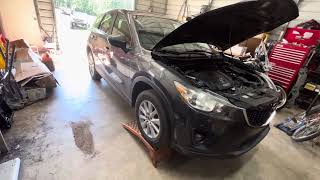

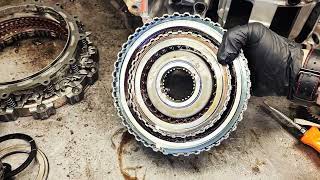
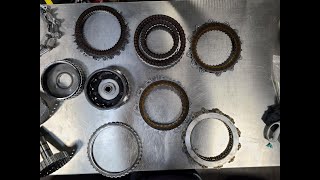
Technical Specifications
OEM Part Numbers: G0Y1-03-000 G0Y1103000
Model Codes: GW6AX-EL (AWD), GW6A-EL (FWD); Engine Compatibility: 2.5L SKYACTIV-G Turbo; Vehicle Fitment: 2019-2021 Mazda CX-5, 2016-2023 Mazda CX-9; Fluid Type: Mazda Genuine ATF FZ (Part # 0000-FZ-113E-01); Weight: Approx. 215 lbs
We Have This Part in Stock


The information in this article is provided for general reference and educational purposes only. Vehicle specifications, procedures, and part compatibility can vary by production date, trim level, and region. Always consult your vehicle's factory service manual and verify part numbers before purchasing or performing repairs. Safety-critical components such as airbags, seat belts, and braking systems should be installed by a qualified professional.
- Mazda CX-5:
- Mazda CX-9:
- 🎬 Helpful Videos
- 🛍️ Shop This Part
- Identifying the Correct 2.5L Turbo Transmission
- Key Identifiers
- Critical Fitment Differences (What Will NOT Work)
- Common Failure Symptoms
- Confirming the Diagnosis
- Diagnostic Flowchart
- Known Issues, TSBs, and Recalls
- What Fails at Every Mileage Band
- Under 60,000 Miles
- 60,000 - 100,000 Miles
- 100,000 - 150,000 Miles
- Over 150,000 Miles
- Real Owner Experiences
- Repair or Replace?
- When Repair Makes Sense
- When Replacement is Smarter
- Questions to Ask Your Installer
- Replacement Cost Comparison
- Labor Costs and Installation Complexity
- Freight and Delivery Reality
- Frequently Asked Questions (FAQ)
- 🎟️ Get 5% Off