

2020-2022 Mazda CX-30 SkyActiv-Drive Transmission: Problems, Identification, and Used Replacement
Identify the exact AWD non-cylinder deactivation unit, understand what causes torque converter failure, and learn when to replace it with a used OEM transmission.
- Before purchase, you must verify the transmission code is ET6AX-EL or FW6AX-EL and that the 8th digit of your VIN is NOT 'M'.
- A mandatory TCM adaptive relearn procedure using a dealer-level scan tool is required after installation to prevent immediate damage to the replacement unit.
- During installation, it is critical to flush the cooler and lines, replace all external seals, install a new internal filter, and proactively replace the torque converter.
- Only use genuine Mazda ATF FZ (blue) fluid; using incorrect multi-vehicle fluids will cause shifting problems and premature failure.
Identifying the Correct 2020-2022 CX-30 AWD Transmission

This guide covers the specific 6-speed automatic transmission assembly used in 2020, 2021, and 2022 Mazda CX-30 vehicles equipped with the 2.5L naturally aspirated (non-turbo) engine, all-wheel drive (AWD), and without cylinder deactivation. This technology, which shuts off some engine cylinders to save fuel, uses a different transmission variant.
Check Your VIN and Transmission Code
Before purchasing a replacement, you must verify that your vehicle requires this exact unit. Using the wrong transmission will lead to fitment and electronic compatibility issues.
| Verification Method | Required Specification |
|---|---|
| Check the 8th Digit of your VIN | The 8th character of your Vehicle Identification Number (VIN) must NOT be 'M'. A VIN with an 'M' in this position indicates the vehicle has cylinder deactivation and requires a different transmission (model EV6AX-EL). |
| Locate the Transmission ID Tag | The most reliable method is to find the barcode sticker on the top of the transmission case. It is located deep under the plastic engine air filter box and intake ducting. The code on this tag should read ET6AX-EL or FW6AX-EL. |
| Confirm Drivetrain | Ensure your vehicle is AWD by checking for the presence of a rear differential and rear axle shafts. |
Warning: Not all SkyActiv-Drive transmissions are the same. This unit is not interchangeable with transmissions from other models. Do NOT use a unit from a FWD CX-30 (ET6A-EL or EV6A-EL), a turbocharged model (GW6AX-EL), or any transmission from a Mazda3, Mazda6, CX-5, or CX-50 due to differences in the case, mounting points, and internal software calibrations.
Common Failure Symptoms

A failing transmission in the CX-30 can present several distinct symptoms. If you experience these issues, it is important to have the vehicle inspected by a qualified technician.
- Shifting Problems: This can include harsh or delayed shifts, particularly between 1st and 2nd gear, grinding noises during acceleration, or the transmission getting stuck in one gear (limp mode).
- Shuddering or Shakiness: A feeling of vibration or shaking at low speeds can indicate a problem with the torque converter or valve body.
- Warning Lights: The "AT" (Automatic Transaxle) or Check Engine light may illuminate on the dashboard.
- Unusual Noises: A distinct "chirp" noise during the 3-4 shift is a known torque converter issue. 🎬 Watch: Hear the exact 3-4 shift chirp noise Whistling or grinding sounds from under the hood can also point to a transmission problem.
- Leaking Fluid: Reddish or blueish transmission fluid found under the vehicle is a clear sign of a leak from a seal or the transmission pan. Driving with low fluid can cause severe damage.
Diagnostic Flowchart
Known Issues, TSBs, and Recalls
While generally reliable, this transmission family has a few documented issues.
Torque Converter Chirp & Fluid Contamination (TSB MC-10246127-0001)
Mazda issued a Technical Service Bulletin (TSB MC-10246127-0001) for a "chirp noise" that can occur when shifting from 3rd to 4th gear. This is caused by excessive wear of the lock-up clutch inside the torque converter, which contaminates the transmission fluid with metallic debris. This debris can then clog the valve body solenoids. While the TSB primarily targets models with cylinder deactivation, the underlying issue is relevant to the entire transmission family. The official remedy is to replace the torque converter and perform a complete system flush to remove all contaminated fluid.
Solenoid and Valve Body Failure
Symptoms like getting stuck in gear (limp mode) or highly erratic shifting can be caused by failing pressure control solenoids or a faulty valve body. In some cases, mechanics can replace individual solenoids or the entire valve body assembly without replacing the whole transmission.
Minor Shifting Irregularities
Some owners report harsh 1-2 shifts, gear hunting, or a low-speed shudder even on healthy transmissions. Often, this can be resolved by performing a TCM (Transmission Control Module) adaptive relearn procedure. This procedure clears the transmission's learned driving habits and restores factory shift patterns. Check fluid level and quality first.
Recalls
As of mid-2024, there are no widespread safety recalls specifically for the transmission assembly on 2020-2022 Mazda CX-30s. Always check for the latest recall information using your vehicle's VIN on the NHTSA website.
What Fails at Every Mileage Band
Pro Tip: The mileage bands below describe what typically fails on these transmissions at various stages of life. The checklists provided are critical steps you must take WHILE INSTALLING a used replacement unit of that mileage, not general maintenance advice for your current vehicle.
Under 60,000 Miles
Failures in this early stage are rare but documented. Premature catastrophic failure has been reported as low as 4,000 to 5,000 miles, resulting in a complete loss of drive. The most common issue is the TSB MC-10246127-0001 "chirp" noise during the 3-4 shift due to premature torque converter lock-up clutch wear. Valve body and solenoid issues causing harsh 1-2 shifts or getting stuck in gear also appear in this band.
- ✓Do during install (required): Replace all external seals (axle seals, torque converter seal, transfer case input seal).
- ✓Do during install (required): Perform a complete cooler and line flush with a professional-grade chemical cleaner to remove any potential debris from the donor vehicle.
- ✓Do during install (required): Fill with new, genuine Mazda ATF FZ (Blue Fluid) only. Do not use multi-vehicle fluid.
- ✓Do during install (required): Replace the internal transmission filter.
- ✓Do during install (required): Ensure the TCM is properly configured and an adaptive relearn is performed with a dealer-level scan tool before driving.
- ✓Do during install (recommended): Proactively replace the torque converter with a new OEM part to mitigate the risk of the known TSB issue (MC-10246127-0001) causing contamination.
60,000 - 100,000 Miles
Failures in this range are less commonly reported, suggesting units that survive the initial "infant mortality" phase are generally robust if maintained. Issues here are often related to neglected fluid. Low or contaminated fluid can cause slipping, grinding, and shifting issues. Valve body or solenoid failures can still occur. The start of wear-and-tear on related components like alternators is noted around this mileage.
- ✓Do during install (required): All items from the Under 60K band are mandatory here.
- ✓Do during install (required): A fluid drain-and-fill should have been performed around 60,000 miles. Since the history of a used unit is unknown, assume it was not. The new fluid fill during install is critical.
- ✓Do during install (recommended): Proactive replacement of the torque converter is essential cheap insurance at this mileage, as the original may have significant wear or be prone to the TSB issue.
- ✓Cheap insurance while the engine is out: Inspect and consider replacing the transmission mount, as it may have started to wear.
100,000 - 150,000 Miles
Very few owner-reported failures are documented in this mileage band, which is a strong positive indicator for the transmission's longevity. Any issues that arise are highly likely to be from fluid that has never been changed, leading to internal wear on clutches and solenoids. With proper maintenance (drain-and-fills every 60,000 to 80,000 miles), the expected service life is widely considered to be between 150,000 and 200,000 miles.
- ✓Do during install (required): All items from the 60-100K band are mandatory.
- ✓Do during install (required): Replace the torque converter. It is not worth risking installation with a 100,000+ mile torque converter given the known wear patterns and TSB.
- ✓Do during install (required): Replace the internal transmission filter and all external seals.
- ✓Do during install (recommended): Thoroughly inspect all related cooling lines and the integrated cooler for leaks or damage.
Over 150,000 Miles
No specific owner reports of transmission failure on the CX-30 were found at this mileage, though data is limited as these vehicles are still relatively new. At this stage, failure would be considered aligned with the expected end of service life for a component that has not had meticulous fluid service. Reaching this mileage is very possible, but major component wear is expected.
- ✓Do during install (required): All items from the 100-150K band are mandatory.
- ✓Do during install (recommended): A transmission with this mileage is a significant risk. Assume it is near the end of its service life. This unit should be considered only if the price is exceptionally low and the buyer is prepared for a shorter service life. A lower-mileage alternative is strongly recommended.
Real Owner Experiences
The following table details real-world transmission issues reported by Mazda CX-30 and similar SkyActiv-Drive owners.
| Source | Mileage | What Happened | Cost |
|---|---|---|---|
| CarComplaints.com | 40,000-50,000 miles | A 2020 AWD model developed a chirp at 40k miles, which progressed to severe lunging and gear hunting by 50k miles. The dealer confirmed transmission failure and replaced the entire unit under the powertrain warranty. | $0 (Warranty) |
| Reddit r/MazdaCX30 | 50,000 miles | A 2021 model suddenly refused to shift out of 1st gear and displayed multiple dashboard warnings. The dealer replaced some valves in the transmission under warranty to fix the issue. | $0 (Warranty) |
| Mazda Forum | 46,000 miles | A 2021 non-turbo model exhibited a persistent shudder from 1st to 2nd gear since new. A transmission specialist suspected a valve body problem and recommended logging the complaint with a dealer before the warranty expired. | N/A (Diagnostic) |
| Carly Community | ~78,000 miles | A 2022 model experienced transmission slipping, erratic shifting, and grinding noises. The suspected cause was low transmission oil pressure due to low fluid level or a clogged filter. | N/A (Suspected issue) |
| Reddit r/MazdaCX30 | 75,000 miles | A user with a '22 Turbo Premium Plus reported no issues at this mileage, indicating good reliability with regular use. | N/A |
| Reddit r/MazdaCX30 | 110,000 miles | Owner of a 2020 non-turbo reported the car 'looks and runs like new'. No transmission issues mentioned; only regular maintenance items like brakes, batteries, and spark plugs have been replaced. | N/A (No transmission issues) |
| Reddit r/mazda3 | 162,000 miles | An owner with a similar Skyactiv powertrain who performed drain-and-fills at 60k and 120k miles reports the transmission is in 'great shape' and is aiming for 250k+ miles. | N/A (Positive report) |
| Reddit r/MechanicAdvice | 63,000 miles | Quoted $9,500 by a Mazda Dealer for a 2020 CX-30. Replaced with a used transmission from an independent transmission mechanic instead. | $4,000 |
| Reddit r/MazdaCX30 | 32,000 miles | Had complete transmission failure on a 2024 CX-30 Preferred replaced under warranty. | $0 (Warranty) |
Repair or Replace?
When facing transmission trouble, deciding between a targeted repair and a full replacement depends on the extent of the damage.
When Repair Makes Sense
- Torque Converter Chirp / Shudder: If the issue is isolated to the torque converter (TSB MC-10246127-0001) and there is no evidence of widespread metallic debris contamination in the transmission fluid or valve body, an early-stage intervention makes sense. Typical repair costs range from $800 to $2,500.
- Solenoid & Valve Body Failure: If diagnostic trouble codes point specifically to solenoid or valve body failure and the rest of the transmission's mechanical parts are in good condition, replacing the valve body is viable. A new OEM valve body can cost around $950 for the part alone, with total repair costs typically between $1,200 and $2,500.
When Replacement is Smarter
Replacement is the smarter choice when internal mechanical failure has occurred, such as clutch pack failure or gear damage. This often results from ignoring earlier symptoms like torque converter shudder, which leads to widespread contamination of the transmission fluid with metallic debris. Once metal is circulated throughout the unit, a simple repair is insufficient. If the cost of diagnosing and attempting piecemeal repairs approaches or exceeds the cost of a quality used unit (typically $1,300 to $2,100 for the part), replacement is the more economical and reliable option.
Questions to Ask Your Installer
- Have you confirmed this used unit is an ET6AX-EL or FW6AX-EL and not from a FWD, turbo, or cylinder deactivation model?
- Will you be performing a complete, professional-grade flush of the transmission cooler and lines before installing the replacement?
- Do you have a bi-directional scan tool, like the Mazda M-MDS, to perform the necessary TCM configuration and adaptive relearn procedure post-installation?
- How will you verify the torque converter is fully seated before mating the transmission to the engine?
- What is the source and warranty on the used transmission assembly?
- Does your quote include the mandatory Mazda Genuine ATF FZ fluid, new seals (axle, torque converter), and a new internal filter?
Replacement Cost Estimates
The cost to replace a transmission varies widely based on your location and the type of replacement part you choose. The labor for this job is significant, typically estimated between 6.0 and 9.0 hours.
| Part or Service | Estimated Cost (USD) |
|---|---|
| New OEM | $6,700 - $9,500 |
| Remanufactured | $2,400 - $4,500 |
| Used OEM | $1,300 - $2,100 |
| Shop Labor to Install | $800 - $1,600 |
Installation & Programming: Critical Steps

Installing a used transmission is an advanced job with a DIY difficulty rating of Advanced/Expert. Several steps are critical to ensure the replacement unit is not damaged.
Required Tools and Consumables
This job requires specialized equipment, including an engine support bar, a transmission jack, a subframe support/jack, a fluid line disconnect tool, and a bi-directional scan tool (Mazda M-MDS or equivalent). You will also need approximately 8.0 to 9.0 quarts of Mazda Genuine ATF FZ (Blue fluid) for a full dry fill, a new internal transmission filter, high-quality RTV sealant for the pan, new axle seals, a transfer case input seal, a torque converter seal, and a professional-grade chemical cooler line flush.
Key Mechanical "Gotchas"
Warning: The torque converter must be fully seated into the transmission's oil pump before installation. You should feel it drop into place three distinct times. Failure to do this will crack the oil pump gear when the transmission is bolted to the engine.
Warning: The external transmission cooler and lines must be professionally flushed with a chemical cleaner. Skipping this step will circulate metal debris from the old, failed unit into your replacement transmission, causing it to fail quickly.
Pro Tip: Use only Mazda Genuine ATF FZ (blue) fluid. The level must be checked with the engine idling on level ground when the fluid is at exactly 50°C (122°F). The dipstick is short, made of black plastic, and secured by a 10mm bolt hidden deep under the airbox.
Pro Tip: Before installing, clean the transfer case splines and apply a light coat of grease. Ensure perfect alignment when mating it to the transmission to prevent damaging the output shaft.
Required Programming
Warning: A programming step, often called an "initial learning" or "adaptive relearn," is required after installation. Driving the vehicle without performing this step can cause harsh shifting and immediate damage to the new transmission's internal clutches. This must be done with a dealer-level bi-directional scan tool like the Mazda M-MDS.
Freight & Delivery Reality

If you are purchasing a used transmission online, understand that it will not arrive via standard parcel delivery. This assembly weighs approximately 225 lbs and measures roughly 36" x 30" x 28" before crating. It ships as LTL (Less Than Truckload) freight on a wooden pallet.
Because of its size and weight, you must ensure the delivery location can accommodate a freight truck. If delivering to a residential address or a shop without a loading dock, you must request liftgate service. Always perform a pre-purchase verification interview with the seller to confirm the exact part codes (ET6AX-EL or FW6AX-EL). Finally, when the freight carrier arrives, inspect the transmission thoroughly for any physical damage to the case, pan, or sensors before signing the delivery receipt.
Arrival Inspection for Your Used Transmission
When your used replacement transmission arrives, you must inspect it before installation. Catching a problem now saves you hours of wasted labor.
Check the Fluid Color and Smell
Mazda CX-30 transmissions use a specific fluid called ATF FZ. When new, this fluid is dyed blue. Drain a small amount of fluid from the unit to check its condition.
- Good Fluid: Blue, light brown, or slightly dark fluid is normal for a used unit.
- Bad Fluid: If the fluid is pitch black or smells like burnt toast, the internal clutches (the friction plates that change gears) are fried.
Inspect the Pan and Magnet
Remove the bottom transmission oil pan. Locate the small magnet resting inside the pan. This magnet catches loose metal inside the transmission.
- Normal Wear: A fine, dark gray paste covering the magnet is normal. This is just metal dust from everyday driving.
- Internal Damage: Look for large metal flakes, sharp shards, or brass-colored chunks. If you see metal chunks, the internal gears or bearings are broken.
Examine the Torque Converter Hub and Input Splines
The torque converter is the large, heavy metal bowl at the front of the transmission. It connects the engine to the transmission.
- Converter Hub: Look at the smooth metal tube (the hub) sticking out of the back of the torque converter. It must be perfectly smooth. If you feel deep scratches or grooves with your fingernail, it will destroy the front pump seal and cause massive fluid leaks.
- Input Splines: Look at the grooved teeth (splines) on the main shaft sticking out of the transmission. The teeth must be straight and sharp. If the teeth are twisted, flattened, or heavily rusted, the transmission will slip or fail to move the vehicle.
Frequently Asked Questions (FAQ)
Can I use a transmission from a Mazda3 or CX-5?
No. While they are all part of the SkyActiv-Drive family, transmissions from other Mazda models have different case designs, mounting brackets, and software calibrations. They will not physically fit or function correctly in a CX-30.
Do I have to use Mazda FZ transmission fluid?
Yes. Using generic "multi-vehicle" ATF is a common mistake that leads to torque converter shudder, harsh shifting, and eventual clutch failure. Only use Mazda Genuine ATF FZ, which is blue in color.
What is cylinder deactivation and how do I know if I have it?
Cylinder deactivation is a fuel-saving feature that shuts down two of the four engine cylinders under light load. The easiest way to check if your 2.5L CX-30 has it is by looking at the 8th digit of your VIN. If that digit is an 'M', your vehicle has cylinder deactivation and uses a different transmission.
What parts are typically included with a used transmission?
A used transmission assembly generally includes the case, all internal parts, the extension/tail housing, the oil pan, and the torque converter. External sensors, the external wiring harness, shifter linkage/cables, the flexplate/flywheel, and external cooler lines are typically not included and must be transferred from your original unit.
What is the expected lifespan of this transmission?
With proper maintenance, the expected service life of the Skyactiv-Drive transmission is widely considered to be between 150,000 and 200,000 miles. The single most important factor is deviating from Mazda's official "lifetime fluid" recommendation and performing a fluid drain-and-fill every 60,000 to 80,000 miles.
What special tools are required for installation?
Installing this transmission requires an engine support bar, a transmission jack, a subframe support/jack, a fluid line disconnect tool, and a bi-directional scan tool (like the Mazda M-MDS) to perform the mandatory TCM configuration and adaptive relearn.
Helpful Videos

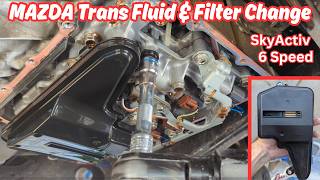

Technical Specifications
OEM Part Numbers: ET6AX-EL FW6AX-EL
Type: 6-speed automatic SkyActiv-Drive; Model Years: 2020, 2021, 2022; Vehicle: Mazda CX-30; Engine: 2.5L Naturally Aspirated (Non-Turbo); Drivetrain: All-Wheel Drive (AWD); Cylinder Deactivation: No; Required Fluid: Mazda Genuine ATF FZ (Blue); Dry Fill Capacity: 8.0 - 9.0 quarts; Weight: Approx. 225 lbs
We Have This Part in Stock



The information in this article is provided for general reference and educational purposes only. Vehicle specifications, procedures, and part compatibility can vary by production date, trim level, and region. Always consult your vehicle's factory service manual and verify part numbers before purchasing or performing repairs. Safety-critical components such as airbags, seat belts, and braking systems should be installed by a qualified professional.
- Mazda CX-30:
- 🎬 Helpful Videos
- 🛍️ Shop This Part
- Identifying the Correct 2020-2022 CX-30 AWD Transmission
- Check Your VIN and Transmission Code
- Common Failure Symptoms
- Diagnostic Flowchart
- Known Issues, TSBs, and Recalls
- Torque Converter Chirp & Fluid Contamination (TSB MC-10246127-0001)
- Solenoid and Valve Body Failure
- Minor Shifting Irregularities
- Recalls
- What Fails at Every Mileage Band
- Under 60,000 Miles
- 60,000 - 100,000 Miles
- 100,000 - 150,000 Miles
- Over 150,000 Miles
- Real Owner Experiences
- Repair or Replace?
- When Repair Makes Sense
- When Replacement is Smarter
- Questions to Ask Your Installer
- Replacement Cost Estimates
- Installation & Programming: Critical Steps
- Required Tools and Consumables
- Key Mechanical "Gotchas"
- Required Programming
- Freight & Delivery Reality
- Arrival Inspection for Your Used Transmission
- Check the Fluid Color and Smell
- Inspect the Pan and Magnet
- Examine the Torque Converter Hub and Input Splines
- Frequently Asked Questions (FAQ)
- 🎟️ Get 5% Off