

2013 Kia Soul 1.6L A6GF1 Transmission: Problems, Identification, and Used Replacement
Identify the correct non-ISG 6-speed automatic, understand common P0711 and solenoid failures, and learn when to swap in a used OEM replacement.
- Verify you have the A6GF1 for the 1.6L non-ISG engine using your VIN and part number 45000-26114, as other Soul transmissions are incompatible.
- After installing a replacement unit, the TCM's adaptive values must be reset and a relearn procedure performed with a professional scan tool to prevent severe shifting issues.
- Common failures include the transmission fluid temperature sensor (P0711) and solenoids (P0741), which can often be repaired for less than the cost of a full replacement.
- Always use genuine Hyundai/Kia SP-IV ATF and flush the transmission cooler lines during installation to prevent premature failure of the replacement unit.
Identifying the Correct Transmission for Your 2013 Kia Soul


The 2013 Kia Soul with a 1.6L engine uses a 6-speed automatic transaxle from the A6GF1 family. [27] This transmission was part of a new generation of compact, in-house designs by Hyundai/Kia. [13, 27] It is critical to correctly identify this unit before purchasing a replacement, as it is not interchangeable with other transmissions offered in the Soul lineup.
Follow these steps to confirm your vehicle requires this specific assembly:
- Confirm Engine Size: This transmission is only for the 1.6L GAMMA engine. The 2.0L Nu engine uses a different, larger transmission (the A6MF1) to handle its power. [21, 26]
- Check for ISG: This unit is for models without the Idle Stop & Go (ISG) feature. Look at your dashboard; if you do not have an "A-Off" button, your vehicle is a non-ISG model. ISG-equipped models have an electric oil pump and different internal wiring that make them incompatible.
- Check the VIN: The 8th digit of your Vehicle Identification Number (VIN) should be checked. It is typically '1', '2', '3', '4', or '5' to indicate the 1.6L engine for this model year. Always confirm your exact VIN with the parts yard before ordering. [14]
- Part Numbers: The OEM part number for this assembly is 45000-26114. [5, 12] A factory remanufactured unit may have the number 45000-26114R. [17, 22] The transmission model code, often found on a barcode sticker on top of the case or etched on the bellhousing, is 'NA'. [14]
Warning: A transmission from a 2.0L Kia Soul will not fit or function in a 1.6L model. [15, 21] The bellhousing pattern is different, and it is designed for a different torque capacity. Likewise, a transmission from a model with the Idle Stop & Go (ISG) system is not compatible.
Common Failure Symptoms
When the A6GF1 transmission begins to fail, you may experience one or more of the following symptoms:
- Harsh, jerky, or banging shifts, especially when cold.
- Delayed engagement when shifting from Park into Drive or Reverse. [21]
- Flaring or slipping between gears, where the engine RPMs rise without an increase in speed. [13]
- The vehicle enters "limp mode," getting stuck in a single gear (often 3rd).
- A lit Check Engine Light or Transmission Warning Light on the dashboard.
- The vehicle will not move in either Drive or Reverse.
Pro Tip: Some engine problems, like a failing crankshaft or camshaft position sensor, can cause poor shift quality that mimics a transmission failure. [13, 21] Always have the vehicle properly diagnosed before condemning the transmission.
Diagnostic Flowchart

Known Problems, Recalls, and Service Bulletins
The A6GF1 family, especially in its early years, had several well-documented issues. Always check with a dealer using your VIN for any open recalls or service campaigns.
DTC P0711: Transmission Fluid Temperature Sensor Failure
This is one of the most common failures. The Transmission Control Module (TCM) relies on this sensor to regulate shift pressures. When it fails, the TCM defaults to maximum line pressure to prevent clutch damage, resulting in harsh, banging shifts. [37] This issue will typically log diagnostic trouble codes P0711, P0712, or P0713. [25, 31] Early models had a separate sensor, but Kia later integrated it into the internal wiring harness. [25] The fix is to drop the transmission pan and valve body to replace the faulty harness/sensor assembly (OEM part number 46386-26000). [25, 37] This issue is covered by Hyundai TSB 14-AT-010 and Kia TSB TRANS 043. [25, 31]
DTC P0741 & Solenoid Failures
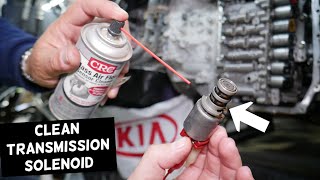
Solenoids are small electronic plungers that direct the flow of fluid inside the transmission to engage clutches and change gears. Failures of individual solenoids are common and can cause a variety of shift problems, including harsh shifts, slipping, or failure to engage a gear. [24] Technical Service Bulletin TRA051 specifically addresses DTC P0741 (Torque Converter Clutch Solenoid Performance) and advises replacing the single solenoid rather than the entire transmission. [2, 34] A revised version, TRA051R1, expands this to cover a wide range of solenoid DTCs. [3, 20]
Underdrive Pressure Plate Cracking
A severe mechanical issue involves the underdrive clutch pressure plate cracking or breaking. This can cause a complete loss of forward gears, although Reverse may still work. This is an internal failure that requires a complete transmission teardown to repair, making a used replacement assembly a more practical option.
Valve Body Wear
Over time, the aluminum bores within the valve body can wear out, causing fluid pressure to leak internally. This leads to shift flares, shudders, and delayed shifts. While aftermarket kits (such as TransGo or Sonnax) exist to re-sleeve the valve body, this is a complex job for a transmission specialist.
Fluid Sensitivity
This transmission is highly sensitive to fluid condition. Dirty fluid can clog the small passages in the valve body, causing jerks and hesitation. Regular fluid changes with the correct SP-IV fluid are mandatory to prevent this.
What Fails at Every Mileage Band
Pro Tip: The mileage bands below describe used replacement units of that mileage. The checklists are things to do WHILE INSTALLING the purchased unit, not maintenance for your current transmission.
Under 60,000 Miles
Even at low mileage, these units can experience the P0711 temperature sensor failure. Valve body wear can also begin as early as 40,000 miles, causing shift complaints. Complete failure is rare but has been reported.
- ✓Do during install (required): Perform a complete flush of the transmission cooler and lines to remove any potential debris from the donor vehicle.
- ✓Do during install (recommended): Inspect the internal wiring harness and consider replacing it with the updated part (46386-26000) if it's an early production unit to prevent future P0711 codes.
- ✓Cheap insurance while the engine is out: Replace external seals like axle seals and the front pump seal (OEM 45262-3B600) as a low-cost preventative measure.
60,000 to 100,000 Miles
This is the prime window for solenoid failures (P0741) and temperature sensor failures (P0711, P0712, P0713). The likelihood of valve body wear causing erratic shifting increases significantly.
- ✓Do during install (required): Change the transmission fluid with genuine Hyundai/Kia SP-IV ATF and replace the filter/pan gasket.
- ✓Do during install (recommended): Strongly consider replacing the internal wiring harness/temperature sensor assembly as a preventative measure. Test the resistance of all valve body solenoids while the pan is off. They should measure around 5.1 ohms (VFS) or 10-11 ohms (On/Off).
- ✓Cheap insurance while the engine is out: Replace all external seals (axle, front pump).
100,000 to 150,000+ Miles
At this stage, complete transmission failure due to internal mechanical breakdown (like underdrive pressure plate cracking) becomes more common. Torque converter clutch failure and significant valve body wear are also major risks.
- ✓Do during install (required): Replace all consumables: SP-IV fluid, filter/pan gasket, all external seals (axle, front pump).
- ✓Do during install (recommended): Given the high mileage, it is highly recommended to replace the internal wiring harness/temperature sensor assembly regardless of its current condition. Have the valve body inspected for wear and test all solenoids. Consider replacing the solenoids as a preventative measure.
- ✓Cheap insurance while the engine is out: Carefully inspect the replacement unit's torque converter for any signs of damage or leaks before installation.
Real Owner Experiences
Below are real-world reports from Kia owners experiencing transmission issues across various mileages.
| Source | Mileage | What Happened | Cost |
|---|---|---|---|
| Lemon Law Complaint | 4,300 | A 2022 Kia Soul's IVT transmission 'imploded' on the freeway, resulting in a total loss of power. The dealer found metal shavings in the fluid and replaced the transmission under warranty. | Covered by warranty. |
| 45,000 | Complete transmission failure on a 2020 Kia Soul. The owner was second owner and not covered by the 100k mile warranty. | Not specified, but part was on backorder, indicating a widespread issue. | |
| 58,000 | Complete transmission failure on a 2017 Kia Soul with no prior warning signs. The car started having trouble shifting gears the day before it failed. | Quoted $8,000 for a new transmission from the dealership (not including labor). | |
| Car Talk Community | 83,000 | Seeking advice for a P0711 code on a related A6-family transmission. | A user reported that replacement for a transmission fluid temperature sensor failure on this model could be between $600 and $1,000. |
| YourMechanic | 92,000 | Owner reported a transmission temperature sensor failure. | Not specified. |
| 120,000 | Transmission on a 2013 Kia Soul failed. The local shop found metal shavings in the fluid, confirming internal failure. | Quoted $2,600 for a used transmission installation. | |
| 202,000 | Automatic transmission on a 2013 Soul Exclaim failed. Problems were only noticed about 3 weeks before total failure. | Quoted $2,500 for a used transmission replacement. | |
| CarBuzz Forum | 266,000 | A 2013 Kia Soul owner reported having no major problems with the original engine or transmission after 266,000 miles with regular maintenance. | N/A |
Repair or Replace?
Deciding whether to repair your existing transmission or replace it with a used OEM unit depends heavily on the specific failure.
| Failure Type | Typical Repair Cost | Recommendation |
|---|---|---|
| DTC P0711 (Temp Sensor) | $150 - $350 (up to $1,000) | Repair is almost always more economical. |
| DTC P0741 (Solenoids) | $500 - $1,300+ | Repair if failure is isolated and no debris is present. |
| Valve Body Wear | $800 - $1,800 | Repair if there is no mechanical clutch debris. |
When Replacement is Smarter: Replacement is the better option when there is evidence of catastrophic internal mechanical failure, such as the underdrive pressure plate cracking. This results in significant metal debris contaminating the entire system. It is also the preferred route when multiple issues are present (e.g., valve body wear combined with solenoid codes and clutch slip). Because a used replacement installation typically costs around $2,500 to $2,600 total, it is often much cheaper than a full internal rebuild.
Questions to Ask Your Installer
- Have you confirmed this is a non-ISG A6GF1 transmission for the 1.6L engine?
- Will you be performing the mandatory TCM Adaptive Values Reset and Relearn procedure with a compatible scan tool after installation?
- Does your quote include completely flushing the transmission cooler and lines?
- What brand and type of fluid will you be using? (It must be SP-IV)
- Does the warranty on the used transmission require the replacement of external seals and the cooler?
- What is the source and mileage of the used transmission, and what is the warranty coverage?
Replacement Cost Comparison
Transmission replacement is a major expense. Prices can vary widely based on your location, the shop's labor rate, and part availability. Below are general estimates.
| Part Type | Estimated Cost (Part Only) |
|---|---|
| New OEM | $3,500+ |
| Remanufactured OEM | $2,700 - $4,200 + Core Charge. [1, 17] |
| Used OEM (Recycled) | $230 - $700+. [8, 15] |
| Installation Labor | $600 - $1,500 (5.5 to 10.0 hours). [19] |
Installation & Programming: Critical Steps

Proper installation is essential for the longevity of a replacement transmission. This is an Advanced to Expert level DIY job requiring special tools, including an engine support bar, transmission jack, torque wrench, fluid pump, and a professional scan tool with bi-directional capabilities.
What is Included in a Used Assembly
Per standard auto recycler guidelines, a used A6GF1 transmission assembly includes the transmission case, internally lubricated parts, planetary gears, clutches, bands, shafts, front plastic valve body cover (oil pan), valve body with internal solenoids, internal wiring harness, and the torque converter. It does not include external sensors, external shifter linkage/cables, the neutral safety switch, transmission cooler lines, flexplate/flywheel, or the Transmission Control Module (TCM).
Required Programming: TCM Adaptive Relearn
The Transmission Control Module (TCM) stores adaptive learning values to compensate for clutch wear over time. [16, 32] When you install a different transmission, these old values are incorrect and will cause severe shifting problems. A dealer-level scan tool must be used to reset these adaptive values. [28, 32] After the reset, a specific "relearn" drive cycle must be performed, involving a series of gentle accelerations and stops, to allow the TCM to learn the characteristics of the replacement unit. [16, 33]
Warning: Skipping the TCM adaptive reset and relearn procedure is a common mistake that will result in extremely harsh shifting, slipping, or fault codes. Many warranties on used or remanufactured units are voided if this step is not performed and documented.
Installation Gotchas & Required Parts
Warning: The torque converter must be fully seated into the transmission's front pump before installation. You should feel it drop into place three separate times (approx. 10-12mm recess depth). Failure to do this will crack the oil pump gear as soon as the bellhousing bolts are tightened.
- Subframe Alignment: Carefully align the front subframe during reinstallation to prevent steering wheel misalignment and suspension binding.
- Use the Right Fluid: This transmission requires Hyundai/Kia SP-IV (SP-4) automatic transmission fluid only. Using universal or older SP-III fluid will cause damage. A dry transmission requires approximately 7.5 to 7.7 quarts. [31]
- Flush the Cooler: It is mandatory to flush the transmission cooler lines and radiator cooler tank with transmission cooler flush solvent to remove any metal debris from the previous failed transmission. Re-using a contaminated cooler will quickly destroy the replacement unit.
- Replace Seals: Always install new axle seals and a new front pump/torque converter seal (OEM 45262-3B600) to prevent leaks. Be extremely careful not to nick or tear the rubber lips of the axle seals during CV axle installation.
- Valve Body Cover: If removing the front plastic cover, use a new gasket (OEM 45282-26100) or RTV silicone (ThreeBond 1217H).
Freight & Delivery Reality

If you are ordering a used A6GF1 transmission online, be prepared for freight delivery. This assembly weighs approximately 178 lbs and measures roughly 32" x 32" x 24" before crating. Because of its size and weight, it ships as LTL (Less-Than-Truckload) freight on a pallet—it is NOT a standard parcel delivery.
You will need to arrange for delivery to a commercial address with a forklift or loading dock, or request residential liftgate service (which often carries an extra fee). Always inspect the transmission thoroughly while it is still on the pallet and before signing the driver's delivery receipt. Check for any damage to the plastic valve body cover, broken electrical connectors, or a missing torque converter.
Arrival Inspection for Your Used Transmission
When your used A6GF1 transmission arrives, inspect it closely before you install it. Catching problems early saves you hours of wasted labor.
- Fluid Color and Smell: Drain a small amount of fluid from the unit. Smell it carefully. A strong, burnt toast smell means the internal clutches are ruined. Look at the color. Red or light brown fluid is normal. Dark black fluid means the transmission overheated.
- Pan and Magnet Inspection: Remove the bottom transmission pan. Find the small magnet sitting inside the pan. A thin layer of dark gray fuzz is normal metal wear. If you see large metal flakes, chunks, or curly metal shavings, the internal gears are broken.
- Converter Hub Condition: Look at the torque converter hub. This is the smooth metal snout that slides into the front pump of the transmission. Feel it with your fingernail. It must be perfectly smooth. Deep scratches or grooves will destroy the front seal and cause massive fluid leaks.
- Input Spline Check: Inspect the input shaft splines. These are the straight, grooved metal teeth that connect the transmission to the engine. The teeth must be straight and evenly spaced. Twisted, flattened, or chipped teeth mean the transmission suffered heavy abuse.
Frequently Asked Questions (FAQ)
What fluid does the 2013 Kia Soul 1.6L transmission use?
It exclusively uses Hyundai/Kia genuine SP-IV (also written as SP-4) ATF. Do not use multi-vehicle fluids, SP-III, or any other type, as this can lead to shift problems and internal damage. [20, 31]
Does a used transmission need to be reprogrammed?
Yes. The Transmission Control Module's (TCM) adaptive memory must be reset with a professional scan tool, and a drive cycle relearn procedure must be performed. [16, 29, 32] This allows the computer to adapt to the replacement unit's specific clutch pressures.
Will a transmission from a 2.0L Soul fit my 1.6L?
No. The 2.0L engine uses the A6MF1 transmission, which has a different bellhousing bolt pattern and is not physically or electronically compatible with the 1.6L engine's A6GF1 transmission. [21]
How do I check the transmission fluid level?
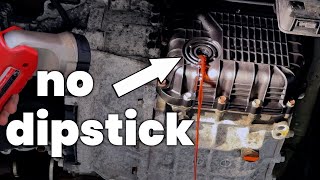
The A6GF1 does not have a traditional dipstick. The fluid level must be checked when the fluid is between 122°F and 140°F (50°C to 60°C) with the engine running and the vehicle level. [20, 31] The level is correct when a small, steady stream of fluid drips from the overflow plug on the front plastic valve body cover. [20]
What parts are included when I buy a used transmission?
A standard used assembly includes the main case, all internal gears and clutches, the valve body, internal wiring harness, and the torque converter. It does not include the external Transmission Control Module (TCM), external shift cables, or cooler lines.
Helpful Videos


Technical Specifications
OEM Part Numbers: 45000-26114 45000-26114R 46386-26000 45262-3B600 45282-26100
Family: A6GF1; Type: 6-Speed Automatic Transaxle; Engine Compatibility: 1.6L GAMMA (non-ISG); Fluid Type: Hyundai/Kia SP-IV (SP-4); Dry Fill Capacity: 7.5 to 7.7 quarts; Weight: Approx. 178 lbs; Solenoid Resistance (VFS): 5.1 ohms; Solenoid Resistance (On/Off): 10-11 ohms; Model Code: NA
We Have This Part in Stock


The information in this article is provided for general reference and educational purposes only. Vehicle specifications, procedures, and part compatibility can vary by production date, trim level, and region. Always consult your vehicle's factory service manual and verify part numbers before purchasing or performing repairs. Safety-critical components such as airbags, seat belts, and braking systems should be installed by a qualified professional.
- Kia Soul:
- 🎬 Helpful Videos
- 🛍️ Shop This Part
- Identifying the Correct Transmission for Your 2013 Kia Soul
- Common Failure Symptoms
- Diagnostic Flowchart
- Known Problems, Recalls, and Service Bulletins
- DTC P0711: Transmission Fluid Temperature Sensor Failure
- DTC P0741 & Solenoid Failures
- Underdrive Pressure Plate Cracking
- Valve Body Wear
- Fluid Sensitivity
- What Fails at Every Mileage Band
- Under 60,000 Miles
- 60,000 to 100,000 Miles
- 100,000 to 150,000+ Miles
- Real Owner Experiences
- Repair or Replace?
- Questions to Ask Your Installer
- Replacement Cost Comparison
- Installation & Programming: Critical Steps
- What is Included in a Used Assembly
- Required Programming: TCM Adaptive Relearn
- Installation Gotchas & Required Parts
- Freight & Delivery Reality
- Arrival Inspection for Your Used Transmission
- Frequently Asked Questions (FAQ)
- 🎟️ Get 5% Off