

2012-2013 Kia Soul A6MF1 Transmission: Problems, Identification, and Used Replacement
Identify the exact ISG-specific A6MF1 transmission, learn what causes harsh shifting, and discover when to replace it with a used OEM unit.
- Before buying, verify your vehicle has the Idle Stop & Go (ISG) system; this transmission (part # 45000-3BDX0) is not interchangeable with non-ISG models.
- A TCM Adaptive Value Reset and Relearn procedure using a professional bi-directional scan tool is mandatory after installation to prevent harsh shifting and premature failure.
- To prevent contamination and leaks, always flush the transmission cooler and lines and replace the front pump and axle seals when installing a replacement unit.
- Ensure the torque converter is fully seated (recessed about 0.4 inches) before bolting the transmission to the engine to avoid cracking the front pump.
- Use only Hyundai/Kia Genuine ATF SP-IV fluid; using incorrect fluid can cause severe damage.
Vehicle Fitment and Identification

The automatic transmission for the 2012-2013 Kia Soul with the 2.0L Nu engine is a specific variant of the A6MF1 6-speed automatic transaxle. Crucially, this version was designed exclusively for models equipped with Kia's Idle Stop & Go (ISG) system. The ISG system, designed to save fuel by shutting the engine off at a stop, required a unique transmission with an external electric oil pump to maintain hydraulic pressure when the engine isn't running. This unit is identified by Kia part numbers 45000-3BDX0 or the remanufactured equivalent, 45000-3BDX0R. [22]
How to Confirm Your Vehicle's Transmission
Before purchasing a replacement, it is essential to verify that your vehicle requires this specific ISG-equipped transmission. An incorrect unit will not function. Follow these verification steps:
- Check the Dashboard: Your vehicle should have an "ISG Off" or "A-Off" button on the lower left side of the dashboard.
- Look for an "Eco" Badge: ISG-equipped models typically feature an "Eco" badge on the tailgate.
- Inspect the Original Transmission: The most definitive check is to visually inspect the original transmission. Look for the external Electric Oil Pump (EOP), part number 46110-26300, bolted to the case. This pump is the key feature of the ISG-specific unit.
- Verify the VIN: The 8th digit of your Vehicle Identification Number (VIN) should be '6', which indicates the 2.0L Nu engine used with this transmission.
Warning: This transmission is not interchangeable with any other unit. It will not work in a 2012-2013 Kia Soul that was not originally equipped with the ISG system. It also does not fit 1.6L models or other Hyundai/Kia vehicles that use different versions of the A6MF1 transmission family due to major differences in the wiring harness, computer calibration, and bellhousing.
Common Failure Symptoms
When the A6MF1 transmission begins to fail, you may experience a range of symptoms. Being aware of these signs can help you diagnose the problem before it leads to a complete breakdown. [14]
- Harsh or erratic shifting [5, 12] 🎬 Watch: Diagnosing hard shifting issues on a Kia Soul
- Delayed engagement when shifting from Park into Drive or Reverse [14]
- Slipping between gears or a sudden, unexpected change in RPM [14]
- Whining, humming, or clunking noises from the transmission area [18]
- The check engine light illuminating on the dashboard [4]
- A burning smell, which can indicate overheating or burnt transmission fluid [4, 18]
Diagnostic Flowchart

Known Problems, Recalls, and Technical Service Bulletins (TSBs)
This transmission has several well-documented issues. While there are no specific recalls for the transmission assembly itself, there are related engine recalls and important TSBs to be aware of. [3, 6, 16]
Transmission Fluid Temperature (TFT) Sensor Failure
A common issue in early A6MF1 units is the failure of the TFT sensor. This sensor is part of the internal wiring harness. When it fails, it sends incorrect temperature data to the Transmission Control Module (TCM), leading to harsh shifting, delayed shifts, and other erratic behavior. Kia addressed this in Technical Service Bulletin TSB TRA 051 (NHTSA SB-10090166-5448), which outlines the procedure for replacing the sensor and harness assembly inside the front cover.
Solenoid and Valve Body Issues
Shift quality problems can also stem from failing solenoids or wear within the valve body. [35] TSB TRA 051 also covers the diagnosis and replacement of individual solenoids. Over time, especially in high-mileage units, the bores within the aluminum valve body where the solenoids and pressure regulator valves operate can wear down. [35] This wear prevents the valves from sealing properly, causing unstable hydraulic pressure and leading to shift flares, slipping, and harshness. [35]
Mandatory TCM Adaptive Value Reset
After replacing the transmission, it is mandatory to perform a TCM adaptive value reset and relearn procedure. [25, 27] This process, detailed in TSB TRA049 (REV 1), clears the old shift adaptation data learned by the TCM for the previous, failing unit. [27] Failing to perform this relearn will cause the new transmission to shift harshly and can lead to premature failure. [25]
Replacement Cost Estimates
The cost to replace a 2012-2013 Kia Soul transmission can vary significantly based on the type of replacement unit chosen. Labor costs for installation typically range from 5.5 to 8.0 hours.
| Part / Service | Estimated Cost (USD) |
|---|---|
| New (Dealer) | $3,500 - $4,500+ |
| Remanufactured (OEM) | $2,000 - $3,500 |
| Used (Recycled OEM) | $475 - $800 |
| Shop Labor to Install | $700 - $1,600 |
Installation and Programming: Critical Steps

Proper installation is critical to the longevity of a replacement transmission. Several common mistakes can cause immediate damage to the new unit. The installation requires an engine support bar, a transmission jack, a torque wrench, and an OBD2 scan tool with bi-directional capabilities (such as Kia GDS/KDS, Autel, or Launch).
Warning: The Transmission Control Module (TCM) must have its adaptive values reset and relearned after installation. This procedure requires a professional bi-directional scan tool. Skipping this step will result in poor shift quality and can quickly damage the replacement transmission. No VIN-specific programming or immobilizer re-marriage is required. [25, 27]
Key Installation Gotchas
- Torque Converter Seating: Before bolting the transmission to the engine, the torque converter must be fully seated into the front pump. When properly seated, it should be recessed about 0.4 inches (1 cm) from the bellhousing flange and spin freely by hand. Failure to do this will crack the front pump upon installation and void any warranty.
- Alignment Dowels: Verify alignment dowels are present in the engine block. Missing dowels cause misalignment, destroying the front pump seal within 100 miles.
- Cooler Line Flush: It is mandatory to flush the transmission cooler and lines with a professional solvent before installing the replacement unit. Debris from the old, failed transmission can get trapped in the cooler and will contaminate the new unit, causing immediate failure.
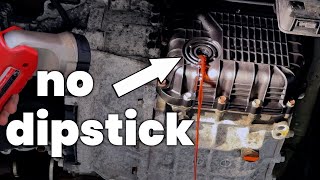
- Fluid Fill and Level Check: This transmission has no dipstick. The fluid level must be checked with the engine running, the fluid temperature between 122°F and 140°F (50°C to 60°C), and the vehicle perfectly level. [31] Fluid is added until it trickles out of the level-check plug on the front plastic cover. Use only Hyundai/Kia Genuine ATF SP-IV fluid (7.3 to 7.8 quarts total capacity). [33]
- ISG System Recalibration: After the installation is complete and the battery is reconnected, the vehicle should be left undisturbed for at least four hours. This allows the battery sensor and ISG system to perform a self-calibration.
What Fails at Every Mileage Band
Pro Tip: The mileage bands below describe the condition and expected wear of used replacement units of that mileage. The checklists provided are critical steps to perform while installing the purchased transmission, not general maintenance advice for your current vehicle.
Under 60,000 Miles
Even at low mileage, the A6MF1 can experience valve body wear, particularly in the reducing valve bores, which can occur in as few as 40,000 miles. Transmission Fluid Temperature (TFT) sensor failure is also a common early issue, causing the computer to default to high line pressure and resulting in harsh shifting. Solenoid failures can also occur early on.
- ✓Do during install (required): Replace the torque converter (front pump) seal (part number 46131-3B600 or 46131-26AS0) and both axle seals. Perform a complete transmission fluid exchange with genuine Hyundai/Kia SP-IV fluid.
- ✓Do during install (recommended): Inspect the valve body for wear if shift quality issues were present on the donor vehicle.
- ✓Cheap insurance while the engine is out: Consider proactively replacing the internal wiring harness, which includes the updated TFT sensor, as a preventative measure against a very common failure. Reseal the front cover using RTV silicone or specialized front cover gasket (part number 45282-26100).
60,000 - 100,000 Miles
In this band, slipping, hard shifting, and RPM fluctuations become more common as fluid degrades and internal wear accumulates. Internal component wear on clutches and bearings begins to be a factor, especially if the donor vehicle's maintenance was deferred.
- ✓Do during install (required): All items from the 'Under 60K' band are mandatory. A full transmission fluid flush and replacement of the filter (if serviceable) is critical. Perform the mandatory TCM Adaptive Value Reset and Relearn procedure with a capable scan tool.
- ✓Do during install (recommended): Strongly consider replacing the full solenoid set and the internal wiring harness (with TFT sensor) while the valve body is accessible.
- ✓Cheap insurance while the engine is out: Replace all accessible external seals to prevent future leaks.
100,000 - 150,000 Miles
Total transmission failure becomes a more significant risk in this range. Wear on internal hard parts like the torque converter lock-up clutch, clutch packs (especially 3-5-R and 2-6), and bearings is expected. Valve body and solenoid issues are highly likely if they haven't been addressed previously.
- ✓Do during install (required): All items from the previous bands are mandatory. A complete cooler and line flush is absolutely mandatory to remove debris from the previously failed unit.
- ✓Do during install (recommended): At this mileage, installing a used unit without a professional rebuild is a significant gamble. If proceeding, assume the unit needs a new valve body or solenoids, a new internal harness with TFT sensor, and all external seals.
- ✓Cheap insurance while the engine is out: Thoroughly inspect the flexplate for any signs of cracking or damaged teeth before mating the replacement transmission.
Over 150,000 Miles
The transmission is considered to be at or beyond its expected service life. Failures are typically due to cumulative wear of all internal components: clutches, seals, bearings, and valve body. Burning of the 3-5-R and 2-6 clutch packs is a common failure mode at high mileage, often caused by pressure loss from worn seals and valve body issues.
- ✓Do during install (required): A used transmission with over 150,000 miles should be considered a core for rebuilding, not a direct-install component.
- ✓Do during install (recommended): If installing, a complete overhaul including all clutches, steels, seals, gaskets, a remanufactured valve body, and a new torque converter is the only reliable path.
- ✓Cheap insurance while the engine is out: Replace the entire unit with a lower-mileage used assembly or a fully remanufactured transmission.
Real Owner Experiences
The expected service life of the A6MF1 transmission varies widely based on maintenance. With diligent fluid changes (every 30,000 to 60,000 miles), many owners achieve 150,000 to 200,000 miles. However, failures can occur under 100,000 miles if fluid changes are neglected. Below are real experiences and costs reported by Kia Soul owners and mechanics.
| Source | Mileage | What Happened | Cost |
|---|---|---|---|
| Gears Magazine | As low as 40,000 | Valve bodies can show substantial wear, leading to varying shift quality complaints. | N/A |
| Forum/Owner Complaint | 19,000 | An owner reported issues with the cam and CVVT assembly, which can affect shift quality and torque converter operation. | ~$2,301 |
| YouTube Repair Channel | 40,000 | A replacement transmission with 40k miles was sourced for a vehicle that had developed severe slipping and bucking. The installer noted that even at this low mileage, the torque converter seal must be replaced to prevent leaks. | N/A |
| Owner Complaint | 70,000 | While driving on the interstate, the vehicle's RPMs began fluctuating wildly, followed by a sudden redline and loss of power, indicating a significant internal transmission failure. | N/A |
| Mechanic Forum | N/A | A mechanic described a common failure pattern where a used replacement transmission shifts fine in 1st and 2nd gear but flares (goes to neutral) before shifting into 3rd. This happened with two different used units, pointing to a common wear-related issue or a compatibility problem not solved by simply resetting adaptive values. | N/A |
| YouTube Repair Channel | 112,000 | Vehicle exhibited harsh shifting due to a failed Transmission Fluid Temperature sensor (P0713 code), which was fixed by replacing the sensor. | DIY part cost |
| Owner Forum | 130,000 | Owner of a 2013 model reported no transmission issues, only a camshaft sensor replacement, which can indirectly affect transmission performance. | DIY part cost |
| Owner Complaint | 118,000 | Complete transmission failure requiring a replacement. The drained fluid was described as looking like 'burnt coffee,' indicating severe degradation and internal damage. | $3,400 |
| Owner Forum | 181,572 | A 2011 Soul (with the same 2.0L Beta II engine and likely A6MF1 family transmission) was shown in a shop for maintenance, indicating that reaching this mileage is possible. | N/A |
| Owner Forum | 266,000 | An owner reported their 2013 Soul ran fine with 266,000 miles with only regular maintenance, suggesting exceptional longevity is possible. | N/A |
| 120,000 | Owner sought advice on whether it was worth replacing the transmission on their 2013 Kia Soul. | $2,600 (Quoted) | |
| RepairSmith / CoPilot | General | A standard Kia Soul replacement cost runs around $2,000-$2,500. | $2,000 - $2,500 |
| Pride Kia of Lynn | General | Typically, a transmission replacement ranges between $1,800 and $3,400 for brand-new parts. Labor costs can be between $500 and $1,200. | $2,300 - $4,600 (total) |
Repair or Replace?
Deciding whether to repair your existing transmission or replace it entirely depends on the specific failure mode. Some issues are cost-effective to fix, while others require a full replacement.
When Repair Makes Sense
- Transmission Fluid Temperature (TFT) Sensor Failure: If diagnostics confirm the TFT sensor or internal harness is the sole issue causing shifting problems or overheating codes, repair is viable. The repair involves dropping the transmission pan and valve body to access the internal harness, which is significantly less labor than a full replacement. Typical repair costs range from $450 to $900.
- Solenoid or Valve Body Failure: If shifting issues (like harsh shifts or flares) are traced to a faulty solenoid or worn bores in the valve body, a repair can save money. A new, complete valve body with solenoids can be purchased for around $355. A general valve body replacement job can range from $800 to $1,800, making it a cost-effective repair compared to full replacement if the rest of the transmission is healthy.
When Replacement is the Smarter Choice
Replacement is the smarter choice when there is evidence of catastrophic internal mechanical failure, such as significant metal debris in the transmission pan. This indicates damage to clutches, gears, or the front pump. It is also more economical to replace the unit when the estimated cost of diagnosing and fixing multiple electronic and hydraulic issues approaches or exceeds the all-in cost of installing a warrantied used unit (approximately $2,000 to $2,600 total with labor).
Questions to Ask Your Installer
If you decide to proceed with a replacement, ask your mechanic these critical questions before the work begins:
- Have you confirmed this replacement unit is from a 2.0L with Idle Stop & Go (ISG) and matches the part number 45000-3BDX0 or 45000-3BDX0R?
- Will you be performing a complete flush of the transmission cooler and lines before installing the replacement? How do you verify it's clean?
- How do you ensure the torque converter is fully seated before mating the transmission to the engine to prevent pump damage?
- Are you replacing the front pump seal and axle seals as a preventative measure during the installation?
- Do you have the proper bi-directional scan tool (like Kia GDS/KDS) to perform the mandatory TCM Adaptive Value Reset and Relearn procedure after installation?
- Does your quote include the 7.3-7.8 quarts of the required Hyundai/Kia Genuine ATF SP-IV fluid?
- Can you provide a detailed, itemized quote that separates the cost of the transmission unit, labor, fluids, and any other required parts?
Freight & Delivery Reality

If you are purchasing a used replacement transmission online or from a distant recycler, it is important to understand how it will arrive. This transmission assembly weighs approximately 217 lbs and measures roughly 32" x 28" x 24" before crating. Because of its size and weight, it ships as LTL (Less Than Truckload) freight strapped to a pallet—it will NOT arrive as a standard parcel delivery.
When arranging delivery, ensure the destination has a loading dock or forklift. If delivering to a residential address or a small shop without a forklift, you must request a truck with a liftgate service. Always perform a pre-purchase verification interview with the seller to confirm the exact part numbers and ISG compatibility. Upon delivery, thoroughly inspect the transmission for any physical damage to the case, sensors, or plastic front cover before signing the driver's delivery receipt.
Arrival Inspection for Your Used Transmission
When your used A6MF1 transmission arrives, inspect it closely before installation to save hours of wasted labor.
- Check the fluid color and smell: Drain a small amount of fluid. Healthy fluid is red or light brown. If the fluid is pitch black or smells like burnt toast, the internal clutches (the friction plates that grip to change gears) are burned out.
- Inspect the pan and magnet: Remove the bottom transmission oil pan and check the small magnet inside. A fine, dark gray paste is normal wear. Large metal chunks or shiny silver shavings mean internal gears or bearings are broken.
- Examine the torque converter hub: Look at the torque converter (the large, heavy metal fluid coupling at the front). Check the converter hub (the smooth metal tube on the back of the converter). It must be perfectly smooth. Deep scratches or grooves will cause the front pump seal to leak.
- Check the input splines: Inspect the input shaft splines (the grooved metal teeth sticking out of the transmission). The teeth must be straight. Twisted or flattened teeth will cause the transmission to slip or fail to move the vehicle.
Frequently Asked Questions (FAQ)
Can I use a transmission from a non-ISG Soul?
No. The transmission for ISG models includes an external electric oil pump and has different wiring and programming. A non-ISG transmission will not function in an ISG-equipped vehicle.
What is included with a used transmission assembly?
A standard used assembly includes the transmission case, all internally lubricated parts, extension/tail housings, front plastic valve body cover, torque converter, transmission oil pan, and the external Electric Oil Pump (EOP). It typically does NOT include external sensors, the external wiring harness, the Transmission Control Module (TCM), shifter linkage, flexplate, or cooler lines.
Can I replace the filter during a fluid change?
No. The main transmission filter is an internal component and is not serviceable without completely disassembling the transmission case halves.
What happens if the alignment dowels are missing during installation?
If the alignment dowels between the engine block and the transmission bellhousing are missing, the transmission will not be perfectly centered. This misalignment will destroy the front pump seal, usually within the first 100 miles of driving, resulting in a massive fluid leak.
What fluid does this transmission use?
This transmission requires Hyundai/Kia Genuine ATF SP-IV fluid. Using any other type of multi-vehicle or universal ATF can cause shift problems and internal damage.
Does this transmission need to be programmed?
Yes. A "TCM Adaptive Relearn" is mandatory after installation. This is not VIN programming but a procedure to reset learned shift pressures, which must be done with a dealer-level bi-directional scan tool for the transmission to shift correctly.
Helpful Videos



Technical Specifications
OEM Part Numbers: 45000-3BDX0 45000-3BDX0R
Type: A6MF1 6-speed automatic transaxle; Vehicle Fitment: 2012-2013 Kia Soul; Engine: 2.0L Nu (VIN 8th digit '6'); Required System: Idle Stop & Go (ISG); Unique Feature: External Electric Oil Pump (EOP); EOP Part Number: 46110-26300; Fluid Type: Hyundai/Kia Genuine ATF SP-IV; Fluid Capacity: 7.3 to 7.8 quarts; Fluid Check Temperature: 122°F - 140°F (50°C - 60°C); Weight: ~217 lbs; Dimensions: ~32" x 28" x 24"
We Have This Part in Stock


The information in this article is provided for general reference and educational purposes only. Vehicle specifications, procedures, and part compatibility can vary by production date, trim level, and region. Always consult your vehicle's factory service manual and verify part numbers before purchasing or performing repairs. Safety-critical components such as airbags, seat belts, and braking systems should be installed by a qualified professional.
- Kia Soul:
- 🎬 Helpful Videos
- 🛍️ Shop This Part
- Vehicle Fitment and Identification
- How to Confirm Your Vehicle's Transmission
- Common Failure Symptoms
- Diagnostic Flowchart
- Known Problems, Recalls, and Technical Service Bulletins (TSBs)
- Transmission Fluid Temperature (TFT) Sensor Failure
- Solenoid and Valve Body Issues
- Mandatory TCM Adaptive Value Reset
- Replacement Cost Estimates
- Installation and Programming: Critical Steps
- Key Installation Gotchas
- What Fails at Every Mileage Band
- Under 60,000 Miles
- 60,000 - 100,000 Miles
- 100,000 - 150,000 Miles
- Over 150,000 Miles
- Real Owner Experiences
- Repair or Replace?
- When Repair Makes Sense
- When Replacement is the Smarter Choice
- Questions to Ask Your Installer
- Freight & Delivery Reality
- Arrival Inspection for Your Used Transmission
- Frequently Asked Questions (FAQ)
- 🎟️ Get 5% Off