

2015 Kia Optima A6MF2 Transmission: Problems, Identification, and Used Replacement
Identify the correct Korea-built A6MF2 transaxle, understand common solenoid and sensor failures, and learn when to replace it with a used OEM unit.
- You must verify the vehicle is Korea-built (VIN starts with 'K'), has the 2.4L engine (8th VIN digit '7'), and was produced after April 28, 2014 to ensure you source the correct transmission, part number 45000-3B724.
- Before replacing the entire transmission for harsh shifting, investigate less expensive repairs like a TCM software update (TSB TRA051) or replacing the internal wiring harness containing the fluid temperature sensor (TSBs 20-AT-014H, 15-AT-011).
- Proper installation of a replacement unit is critical and requires flushing the cooler, using only genuine SP-IV fluid, and performing a mandatory TCM adaptive values reset and relearn procedure to prevent immediate failure.
- For used transmissions over 100,000 miles, it is highly recommended to also replace the torque converter, all shift solenoids, and the internal wiring harness/temperature sensor assembly during the installation to prevent premature failure.
Identifying the Correct A6MF2 Transmission
Not all automatic transmissions for a 2015 Kia Optima are interchangeable. This vehicle was produced in two different countries, leading to significant differences in transmission fitment. Ordering a replacement based on the year and model alone is a common mistake that can lead to receiving an incompatible part.
This specific transmission assembly, part of the A6MF2 family, is a front-wheel-drive (FWD) transaxle designed for the 2.4L non-turbo engine. To ensure you are sourcing the correct unit for your vehicle, you must verify the following details on the car needing the repair:
- Country of Origin: The first character of the Vehicle Identification Number (VIN) must be 'K', indicating the vehicle was built in Korea.
- Engine Code: The 8th digit of the VIN must be '7', which specifies the 2.4L engine for this model year.
- Production Date: Check the sticker on the driver's side door pillar for a production date of April 28, 2014, or later.
- Part Number: The original transmission should have a barcode sticker on top of the bell housing (the area where the transmission bolts to the engine) or an etched metal case number starting with EA or FA displaying the part number 45000-3B724 (or 450003B724).
Warning: Transmissions from US-built Optimas (VIN starting with '5XX'), Optima Hybrids, or other Kia/Hyundai models like the Sonata, Sorento, or Sportage will not fit. These units have different transmission case castings, mounting points, wiring harness connectors, and internal gear ratios.
Common Failure Symptoms

A failing A6MF2 transmission often provides clear warning signs. If the Transmission Control Module (TCM) detects a serious problem, it may put the vehicle into "limp mode," where it gets stuck in a single gear to prevent further damage. Other symptoms pointing to a potential transmission failure include:
- Harsh, jerky, or delayed gear shifts.
- The engine RPM flares up between shifts, indicating slipping.
- A lit Check Engine Light, especially with transmission-specific Diagnostic Trouble Codes (DTCs).
- Failure to engage Drive or Reverse.
- A whining or buzzing noise from the front of the vehicle.
Diagnostic Flowchart
Known Issues, Recalls, and Technical Service Bulletins (TSBs)
Several documented issues exist for this transmission family. Mechanics can address many of these problems without replacing the entire transmission assembly.
Transmission Fluid Temperature Sensor Failure
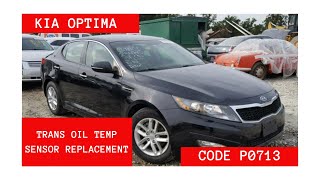
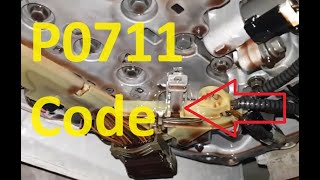
A very common issue is the failure of the internal transmission fluid temperature sensor. When the sensor fails, the TCM can't properly regulate line pressure, causing harsh shifting and potentially setting trouble codes P0711, P0712, or P0713. Kia issued Technical Service Bulletins TSB 20-AT-014H and 15-AT-011, which outline the procedure for replacing the internal wiring harness that contains the updated sensor. This repair can be done by removing the transmission's front-facing plastic valve body cover (oil pan).
Solenoid Faults
Individual shift solenoids, which control the flow of fluid to engage gears, can fail. This can trigger a variety of DTCs, including Code P2709 for Shift Control Solenoid Valve 'F' (SS-B) Fault. TSB TRA051 advises technicians to test and replace specific solenoids rather than the entire transaxle. This is also a repair that can be done with the transmission in the vehicle.
Underdrive Piston Lip Seal Wear
According to the ATSG Rebuild Manual, the underdrive piston lip seal is prone to wear. This wear causes a loss of fluid pressure, leading to slipping and eventual clutch failure. Fixing this requires rebuilding or replacing the internal lip seals.
Harsh Shifting and Software Updates
Some shifting problems are not caused by mechanical failure but by outdated software. Kia released software updates for the Transmission Control Module (TCM) to improve shift logic and correct harsh upshifts or downshifts (noted in TSB TRA051). If you experience poor shift quality, a dealer or qualified shop can check if a software update is available before condemning the transmission.
What Fails at Every Mileage Band
Pro Tip: The mileage bands below describe the condition of used replacement units of that mileage. The checklists provided are things to do WHILE INSTALLING the purchased transmission, not maintenance for your current transmission.
Under 60,000 Miles
Even low-mileage units can experience problems. Valve body bore wear can occur in as few as 40,000 miles, leading to various shift quality complaints. Defective Transmission Fluid Temperature Sensors can fail early, triggering fault codes P0711, P0712, or P0713. Sudden and complete transmission failure with no prior warning signs, although rare, has also been reported.
- ✓Do during install (required): Perform a TCM software update to ensure the latest shift logic is installed.
- ✓Do during install (required): Flush the transmission fluid cooler and lines completely to remove any potential debris from the previous unit.
- ✓Cheap insurance while the engine is out: Replace external seals like axle seals and the torque converter seal as a low-cost preventative measure.
60,000 to 100,000 Miles
At this stage, outdated transmission software can cause lurching or jerking when downshifting, with symptoms often appearing around 67,000 miles. Torque converter judder may be felt between 20-60 mph due to deteriorated transmission fluid. Axle seal seepage becomes more common, leading to slow fluid loss, and transmission fluid temperature sensor failure remains a frequent issue.
- ✓Do during install (recommended): Strongly consider replacing the internal wiring harness, which includes the failure-prone temperature sensor, as a preventative measure.
- ✓Do during install (recommended): Replace the full set of shift solenoids; they are a known failure point and are accessible during the install.
- ✓Do during install (required): Perform a full fluid exchange with genuine SP-IV fluid and update TCM software.
100,000 to 150,000 Miles
Torque converter clutch (TCC) shudder becomes more prevalent, feeling like driving over rumble strips, especially on units with deferred maintenance. Internal component wear, such as underdrive piston cracks or center support bearing failure, becomes more likely. Complete transmission failure due to accumulated wear and tear is common, especially if fluid changes have been neglected. Shift cable and external range sensor wear can also cause no-start or gear indicator mismatch issues.
- ✓Do during install (recommended): Assume the torque converter has significant wear and replace it with a new or remanufactured unit.
- ✓Do during install (recommended): Replace the internal wiring harness/temperature sensor assembly.
- ✓Cheap insurance while the engine is out: Replace all accessible external seals and the shift solenoid pack.
Over 150,000 Miles
Catastrophic internal failure is common on units that have not been maintained, often due to fluid breakdown causing clutch and bearing failure. Howling or whining noises that vary with road speed indicate significant bearing wear (e.g., center support bearing). Total loss of engagement in drive or reverse can occur due to severe internal wear or hydraulic pressure loss from worn seals or the valve body.
- ✓Do during install (recommended): At this mileage, purchasing a used transmission is a significant gamble. A professionally remanufactured unit with a warranty is strongly recommended over a high-mileage used part.
- ✓Do during install (required): If installing a used unit, replace the torque converter, all solenoids, the internal wiring harness, and all external seals as a minimum requirement.
Real Owner Experiences
The following table highlights real-world experiences from owners dealing with A6MF2 transmission issues, showing what failed and the associated costs.
| Source | Mileage | What Happened | Cost |
|---|---|---|---|
| 58,000 | Transmission failed completely with no warning signs; car had trouble shifting into gear the day before failure. | Quoted $8,000 for a new transmission from the dealer (not including labor). | |
| Gears Magazine | as low as 40,000 | Significant valve body bore wear was observed, causing inconsistent shift quality. | Repair could involve valve body replacement or re-sleeving. |
| CarParts.com | ~67,000 | Jerking and lurching during downshifts, triggering the check engine light. This was attributed to outdated TCM software. | Software update at a dealership or qualified shop. |
| UsedCarYear | 60,000-80,000 | While referencing a Santa Fe with the same transmission family, reports noted sensitivity to fluid contamination leading to failure. | Transmission replacement, potentially exceeding $3,000. |
| 109,000 | Car was running fine, then suddenly lost both forward and reverse gears without any noise or warning. The owner admitted to being on the original transmission fluid. | Likely required a full replacement or rebuild. | |
| In The Garage with CarParts.com | ~120,000+ | Torque converter shudder reported, often on vehicles that went too long between fluid services. | A fluid exchange might help, but often the torque converter requires replacement. |
| Reddit r/AskMechanics | 145,000+ | Owner was anticipating the transmission would fail soon and was quoted for a replacement. The engine had already been replaced by Kia for free. | N/A (Anticipated cost) |
| In The Garage with CarParts.com | ~150,000 | On neglected units, mechanics report finding clutch dust and metallic shavings in the pan, indicating advanced internal wear leading to failure. | Complete rebuild or replacement. |
| 198,742 | An owner of a 2015 Optima SXL Turbo reported reaching this mileage, implying good longevity is possible with proper care. | N/A (longevity report) | |
| Reddit r/askcarguys | 60,000 | Owner was quoted for a used transmission replacement. | N/A (Considering options) |
| YouTube | Not specified | Replaced the transmission fluid temperature sensor to fix hard shifting and codes P0711/P0713. The part cost about $40 from a Kia dealership. | ~$40 (DIY) |
Repair or Replace?

Deciding whether to repair your current transmission or replace it entirely depends on the specific failure and the overall health of the unit.
When Repair Makes Sense
| Condition | Typical Cost | Reasoning |
|---|---|---|
| Transmission Fluid Temperature Sensor Failure | $200 - $400 | This is a relatively inexpensive part that resolves common hard shifting issues and error codes P0711/P0713. |
| Shift Control Solenoid Valve 'F' (SS-B) Fault | $400 - $1,100 | This repair is cost-effective if the rest of the transmission is healthy, as it is much cheaper than a full replacement. |
| Outdated Transmission Software / Harsh Shifting | $100 - $250 | This should be a first step for any shifting issue, as a TCM software update can resolve problems without physical repairs. |
When Replacement is Smarter
Replacement is the smarter option when there is significant internal damage, such as worn clutches, damaged gears, or a failed torque converter, or when the cost of a rebuild approaches or exceeds the price of a quality used or remanufactured unit. If repair costs are more than half the price of a replacement, opting for a new or remanufactured transmission is often more cost-effective in the long run. This is especially true for high-mileage vehicles where multiple components may be near the end of their service life.
If you decide to replace the unit, be sure to ask your installer the following questions:
- Have you confirmed this is the correct part number (45000-3B724) for my Korea-built VIN?
- Does your quote include flushing the transmission cooler and lines completely?
- Will you be using genuine Kia/Hyundai SP-IV ATF?
- Does your shop have a bidirectional scan tool to perform the mandatory TCM adaptive values reset and relearn procedure after installation?
- Does the quoted price include replacing the front pump seal and axle seals?
- What is the mileage and warranty on the used or remanufactured transmission you are sourcing?
Replacement Cost Comparison
When replacement is necessary, buyers have several options with significantly different costs. Labor for the replacement typically ranges from $750 to $1,500 USD (estimated at 6.0 to 9.0 hours of shop labor), depending on shop rates.
| Part Type | Estimated Cost (Part Only) | Notes |
|---|---|---|
| New OEM | $3,500 - $5,800+ | Highest cost, ordered directly from a Kia dealership. May have long lead times. |
| Remanufactured OEM | $2,500 - $4,500 | Rebuilt at a factory with new wear items. Often comes with a warranty. A significant core charge is typical and refunded when the old unit is returned. |
| Used OEM | $950 - $1,600 | A direct pull from a donor vehicle. Cost-effective, but quality and lifespan depend on the donor vehicle's mileage and history. |
Freight & Delivery Reality

If you are ordering a used or remanufactured transmission online, understand that it will not arrive via standard parcel delivery. This A6MF2 transmission assembly weighs approximately 212 lbs and measures roughly 24" x 24" x 20" before crating. It ships as Less-Than-Truckload (LTL) freight strapped to a pallet.
Because of its size and weight, delivery requires a loading dock or a truck equipped with a liftgate.
Pro Tip: Always inspect the transmission for physical damage (such as cracked bell housings or broken sensor connectors) before signing the delivery receipt. A pre-purchase verification interview with the seller to confirm your VIN, engine code, and part number is an industry best practice to avoid costly return freight charges.
Installation: Critical Steps and Common Mistakes

Proper installation is crucial to the longevity of a replacement transmission. Several common but critical mistakes can cause immediate failure of the new unit. This job has an "Expert" DIY difficulty rating and requires special tools, including an engine support bar/hoist, a subframe/transmission jack, a torque wrench, and a bidirectional OBD-II scan tool.
Required Parts & Fluids
To do the job right, the following parts should be replaced along with the transmission:
- Transmission Fluid: Use only genuine Kia/Hyundai ATF SP-IV. Do not use universal or multi-vehicle fluids, as they can cause shifting problems and damage. A full flush and fill requires approximately 7.5 to 10 quarts.
- Seals: Always install a new front pump input shaft seal (torque converter seal) and new axle seals to prevent leaks.
- Cooler Flush: The transmission fluid cooler and lines must be thoroughly flushed with an approved solvent or an OEM cooler flushing kit (Part # UM013 CH060) to remove any metal debris from the previously failed unit. Skipping this step will contaminate the replacement transmission.
Essential Procedures & "Gotchas"
Warning: The torque converter must be fully seated into the transmission's front pump before installation. This is done by spinning and pushing the converter until it clicks and drops into place three distinct times. If it is not fully seated, forcing the transmission to the engine will instantly crack the internal oil pump gear, destroying the replacement unit.
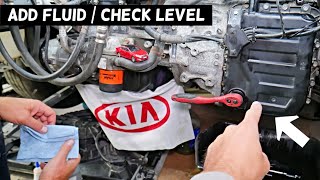
Warning: The fluid level must be checked precisely. The vehicle must be level, the engine idling in Park, and the fluid temperature between 122°F and 140°F (50°C to 60°C). The level is correct when fluid drips slowly from the level checking plug on the front plastic cover. Checking with the engine off will result in a severe underfill and cause damage.
Pro Tip: The transmission filter is a non-serviceable component located deep inside the center of the case. It cannot be changed during a standard installation. Do not attempt to remove the front plastic cover to find a serviceable filter.
Additionally, the subframe must be perfectly aligned with its alignment dowels when bolting it back to the chassis to prevent steering and alignment issues.
Required Programming After Installation
A replacement transmission cannot simply be installed and driven. The car's computer must be programmed to work with the new unit.
- TCM Adaptive Values Reset: Immediately after installation, a bidirectional OBD-II scan tool must be used to reset the TCM's adaptive memory.
- Relearn Drive Cycle: After the reset, the vehicle must be taken on a specific drive cycle involving a series of gentle accelerations, decelerations, and shifts. This allows the TCM to learn the exact hydraulic and clutch engagement characteristics of the replacement transmission.
Skipping this programming step is a critical error. It will cause severe and harsh shifting (shift shock) that can quickly lead to permanent clutch damage in the newly installed transmission.
Driveline and Engine Pairing Cautions
The A6MF2 is a large family of transmissions used in many Kia and Hyundai vehicles. Because of this, you must be very careful when buying a used replacement. A transmission from a different vehicle model will not fit your 2015 Kia Optima, even if it shares the A6MF2 name.
Front-Wheel Drive (FWD) vs. All-Wheel Drive (AWD)
The 2015 Kia Optima is strictly a Front-Wheel Drive (FWD) car. This means engine power only goes to the front wheels. However, Kia uses the A6MF2 transmission in All-Wheel Drive (AWD) SUVs like the Sportage and Sorento.
You cannot put an AWD transmission into a FWD Optima. The metal outer shell of an AWD transmission is shaped differently. It has special mounting points for a Power Transfer Unit (PTU). The PTU is an extra gearbox that sends power to the rear wheels. Because of this extra gearbox, the passenger-side axle hole on an AWD transmission will not line up with your Optima's FWD axle.
Bellhousing and Engine Constraints
The bellhousing is the wide, cone-shaped front part of the transmission. It covers the torque converter and bolts directly to the engine block. In the A6MF2 family, the bellhousing is permanently cast as one solid piece with the rest of the transmission case. You cannot unbolt it and swap it with another one.
Kia makes different A6MF2 bellhousings for different engines. The bolt holes and the cutout for the starter motor must perfectly match the engine block. A transmission built for a 2.0L Turbo engine will not bolt onto your 2.4L non-turbo engine. The starter motor will be in the wrong place, and the mounting bolts will not line up.
Frequently Asked Questions (FAQ)
Do I need to program a used transmission after installing it?
Yes, absolutely. The Transmission Control Module (TCM) adaptive values must be reset with a capable bidirectional scan tool, and a relearn drive cycle must be performed. Failure to do this will cause harsh shifting and can ruin the replacement transmission.
What transmission fluid should I use for a 2015 Kia Optima 2.4L?
You must use fluid that meets the SP-IV specification, such as Kia or Hyundai Genuine ATF SP-IV. A complete dry fill requires approximately 7.5 to 10 quarts. Using incorrect or universal fluid is a leading cause of shifting problems.
Can I use a transmission from a 2015 Optima Hybrid or a US-built model?
No. This specific application requires a transmission from a Korea-built Optima (VIN starts with 'K' and 8th digit is '7'). Transmissions from hybrid models, US-built models (VIN starts with '5XX'), or other vehicles like the Sonata are not compatible due to differences in mounting, wiring harness connectors, and internal components.
Where is the transmission filter located?
The main filter is located deep inside the center of the transmission case and is not considered a serviceable item during a routine fluid change or transmission replacement. It can only be accessed by completely splitting the transmission case in half.
What is included with a used A6MF2 transmission assembly?
A standard used assembly includes the transmission case, all internally lubricated parts, the extension/tail housing, the front-facing plastic valve body cover (oil pan), the torque converter, and the valve body. It does not include external sensors, the range position sensor/neutral safety switch, speed sensors, the external wiring harness, the TCM, shifter linkage/cables, the flexplate/flywheel, or transmission fluid cooler lines. You must transfer these external components from your original transmission.
How long does the A6MF2 transmission last?
With regular maintenance, including fluid changes every 30,000 to 60,000 miles, the A6MF2 transmission can reliably exceed 150,000 miles, with many owners reaching 200,000 miles or more. However, if fluid changes are neglected, significant failures can occur much earlier, sometimes before 100,000 miles.
What is the labor time and cost to replace this transmission?
The estimated shop labor time to replace the A6MF2 transmission in a 2015 Kia Optima is 6.0 to 9.0 hours. Depending on the shop's hourly rate, the labor cost typically ranges from $750 to $1,500 USD.
Helpful Videos





Technical Specifications
OEM Part Numbers: 45000-3B724 450003B724
Family: A6MF2; Drivetrain: Front-Wheel-Drive (FWD); Engine Compatibility: 2.4L non-turbo (VIN 8th digit '7'); Country of Origin: Korea (VIN starts with 'K'); Production Date Requirement: April 28, 2014 or later; Weight: ~212 lbs; Dimensions: ~24" x 24" x 20"; Required Fluid: Kia/Hyundai Genuine ATF SP-IV; Fluid Capacity: 7.5 to 10 quarts (dry fill)
We Have This Part in Stock


The information in this article is provided for general reference and educational purposes only. Vehicle specifications, procedures, and part compatibility can vary by production date, trim level, and region. Always consult your vehicle's factory service manual and verify part numbers before purchasing or performing repairs. Safety-critical components such as airbags, seat belts, and braking systems should be installed by a qualified professional.
- Kia Optima:
- 🎬 Helpful Videos
- 🛍️ Shop This Part
- Identifying the Correct A6MF2 Transmission
- Common Failure Symptoms
- Diagnostic Flowchart
- Known Issues, Recalls, and Technical Service Bulletins (TSBs)
- Transmission Fluid Temperature Sensor Failure
- Solenoid Faults
- Underdrive Piston Lip Seal Wear
- Harsh Shifting and Software Updates
- What Fails at Every Mileage Band
- Under 60,000 Miles
- 60,000 to 100,000 Miles
- 100,000 to 150,000 Miles
- Over 150,000 Miles
- Real Owner Experiences
- Repair or Replace?
- When Repair Makes Sense
- When Replacement is Smarter
- Replacement Cost Comparison
- Freight & Delivery Reality
- Installation: Critical Steps and Common Mistakes
- Required Parts & Fluids
- Essential Procedures & "Gotchas"
- Required Programming After Installation
- Driveline and Engine Pairing Cautions
- Front-Wheel Drive (FWD) vs. All-Wheel Drive (AWD)
- Bellhousing and Engine Constraints
- Frequently Asked Questions (FAQ)
- 🎟️ Get 5% Off