

2016 Jeep Cherokee 3.2L Transmission: Problems, Identification, and Used Replacement
Identify the exact ZF 9HP48 variant for your Cherokee, understand what causes it to fail, and learn what to look for when buying a used replacement unit.
- Verify this specific transmission (P/N 68260064AA / DFH) is correct for your vehicle by confirming the 3.2L engine, single-speed PTU (no '4-Low' button), and 3.25 axle ratio, as it is not interchangeable.
- A mandatory 'Quick Learn' procedure using a dealer-level scan tool is required after installation to prevent poor shifting and damage; this must be done after ensuring the vehicle's TCM/PCM has the latest software.
- Before installation, you must flush the transmission cooler and lines, replace all external seals (axle, torque converter), and ensure the torque converter is fully seated (three distinct clicks) to prevent immediate pump failure.
- Always use the specified Mopar ZF 8 & 9 Speed ATF (MS-90032) or equivalent; using standard ATF+4 or any other fluid will cause severe and rapid transmission damage.
Part Identification: Is This the Right Transmission?
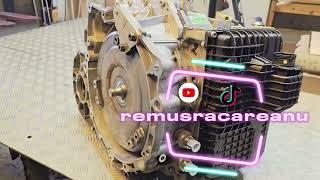
The automatic transmission in the 2016 Jeep Cherokee with the 3.2L V6 engine is the Chrysler 948TE, also known as the ZF 9HP48. This is a 9-speed transverse transaxle, meaning it is mounted sideways in the engine bay to power the front and all-wheel drive systems. This specific version is strictly configured for a single application and does not interchange with other vehicles, even those using the same transmission family.
Confirm Your Vehicle's Specifications
To ensure you are ordering the correct used transmission, verify the following on your Jeep Cherokee:
| Specification | Requirement |
|---|---|
| Engine | Must be the 3.2L V6. The 8th digit of your Vehicle Identification Number (VIN) should be an 'S'. |
| Drivetrain | Must be All-Wheel Drive (AWD) with a single-speed Power Transfer Unit (PTU), also known as Active Drive I. A key visual check is the Selec-Terrain dial inside the vehicle; it must NOT have a "4-Low" button. |
| Axle Ratio | Must be the 3.25 final drive ratio. |
| Part Number | The original transmission should have an identification tag with the part number 68260064AA or the code DFH. |
Pro Tip: The transmission identification tag is typically located on the top or front of the transmission case, often directly under the shifter cable bracket and the area where the Powertrain Control Module (PCM) is mounted.
What Does Not Interchange?
This transmission assembly is highly specific. It will NOT fit or function correctly in the following vehicles due to differences in the bellhousing (the part that bolts to the engine), gear ratios, internal electronics, and output shafts:
| Incompatible Vehicle / Configuration |
|---|
| Jeep Cherokees with the 2.4L Tigershark or 2.0L Turbo engines. |
| Models with the 2-speed PTU (Active Drive II or Active Drive Lock), which are identifiable by the "4-Low" button on the Selec-Terrain dial. |
| Front-Wheel Drive (FWD) only models. |
| Other vehicles that use the ZF 9HP48 family, such as the Chrysler 200, Honda Pilot, or Land Rover Discovery Sport. |
What is Included in a Used Assembly?
When purchasing a used 948TE assembly from a recycler, industry standards dictate what is included. The table below outlines the typical components.
| Included Components | Not Included Components |
|---|---|
| Transmission case | External sensors or wiring beyond the integral harness |
| All internally lubricated parts | Transmission Control Module (TCM) |
| Extension/tail housing | Shifter linkage or cables |
| Transmission pan | Flexplate/flywheel |
| Torque converter | Power Transfer Unit (PTU) |
| Internal valve body | External cooler lines |
Common Failure Symptoms

A failing 948TE transmission often gives clear warning signs. Many of these issues are related to software, but they can also indicate internal mechanical failure. Look for:
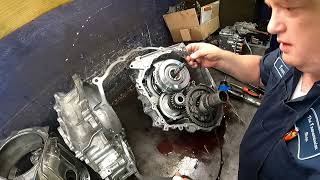
🎬 Watch: Complete 948TE transmission teardown and disassembly- Harsh, Erratic, or Delayed Shifting: The vehicle may lurch, slam into gear, or have a noticeable pause when shifting, especially in lower gears.
- Unexpected Shift to Neutral: A dangerous condition where the transmission suddenly disengages, causing a loss of power. 🎬 See: Real-world examples of dangerous shifting issues This was the subject of a major recall.
- Hesitation from a Stop: A delay between pressing the accelerator and the vehicle moving.
- Check Engine Light: The light may illuminate with transmission-specific Diagnostic Trouble Codes (DTCs), such as those for incorrect gear ratios (P0731-P0735) or torque converter clutch performance (P1DB7-00).
- Lurching or Shuddering at Speed: Can indicate problems with the torque converter or internal clutches.
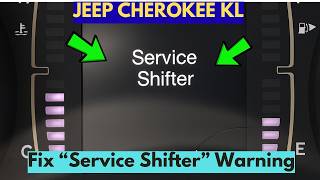
- "Service Shifter" Warning: Often accompanied by a buzzing or whining noise in reverse, pointing to regulator valve issues in the valve body or a faulty shifter bezel. 🎬 Watch: How to fix the Service Shifter warning
Diagnostic Flowchart
Known Problems, Recalls, and Technical Service Bulletins (TSBs)

The 2016 model year benefited from some earlier revisions, but it is still subject to several important software updates and potential mechanical issues. Always check with an FCA dealer using your VIN to see which recalls or TSBs apply and have been completed.
NHTSA Recall 16V-529 (Chrysler S55) - Unexpected Shift to Neutral
This recall addresses a defect where insufficient crimps in the transmission wire harness could cause the transmission to unexpectedly shift into neutral. While the primary build dates were for 2014-2015 models, it is a critical issue for the transmission family. The remedy involves a software update for the PCM and TCM, and replacement of the transaxle range sensor wire harness if fault codes are present.
NHTSA Recall 18V-332 (Chrysler U63) - Cruise Control May Not Cancel
A software issue in the Powertrain Control Module (PCM) could prevent the cruise control from disengaging, even when the driver brakes. This affects a wide range of FCA vehicles, including the 2016 Cherokee. The fix is to reprogram the PCM and TCM with updated software.
NHTSA Recall 20V-343 (W47) / 23V-302 (45A) / 26V-290 (40D) - PTU Input Spline Wear
These recalls address wear on the PTU input splines between 2014-2017. The remedy is a software update to engage rear wheels and the electronic parking brake if failure is detected. Note: This specific transmission unit is physically exempt as it is for a single-speed PTU, but the output splines should still be heavily inspected during replacement.
TSB 21-013-16 / 21-018-19 / 21-032-18 - Harsh Shifting and Delayed Engagement
These bulletins address customer complaints of poor shift quality. The primary solution is to update the Transmission Control Module (TCM) with the latest software and perform a mandatory "Quick Learn" procedure to reset the transmission's adaptive memory. This is often the first step in diagnosing any shift-related problem.
TSB 21-041-20 - Transmission Case Oil Leak
Some units could develop a fluid leak from the seam where the two halves of the transmission case are joined. This TSB provides an updated procedure for tightening the lower transmission case bolts to the correct torque specification to resolve the leak.
What Fails at Every Mileage Band
Pro Tip: The mileage bands below describe what to expect from used replacement units of that mileage. The checklists provided are things to do WHILE INSTALLING the purchased transmission, not maintenance for your current failing unit.
Under 60,000 Miles
Failures in this early band are almost exclusively software or minor electronic component issues. You will see software-related issues causing harsh shifting, hesitation, and sudden shifts to neutral. TCM failures or glitches requiring software updates are common, as are faulty transmission range sensor wire harnesses (Recall 16V-529). You may also see a "Service Shifter" warning light due to a faulty shifter bezel or harness, and regulator valve issues in the valve body causing a buzzing noise in reverse.
- ✓Do during install (required): Ensure the replacement unit and the vehicle's Powertrain Control Module (PCM) have the absolute latest software updates from the manufacturer to address known shift quality issues.
- ✓Do during install (required): Replace all standard consumables: torque converter seal, axle seals, and PTU o-ring.
- ✓Do during install (recommended): Inspect and consider replacing the shifter bezel and jumper harness if any 'Service Shifter' warnings have occurred.
60,000 - 100,000 Miles
In this band, complete transmission failures requiring replacement become more common, especially if early software updates were ignored. Shift solenoid failures leading to poor gear changes and transmission fluid leaks from pan gaskets or seals begin to appear.
- ✓Do during install (required): Thoroughly inspect the PTU input splines for wear, a known issue in the broader model years, and re-lubricate with high-temperature grease.
- ✓Do during install (recommended): Perform a transmission fluid and filter service on the replacement unit if its history is unknown. While Chrysler marketed it as 'lifetime' fluid in the US, European service intervals recommend changes every 37,000-60,000 miles.
- ✓Cheap insurance while the engine is out: Inspect and consider replacing engine and transmission mounts, as they are subject to wear and easier to access during the swap.
100,000 - 150,000 Miles
There is an increased likelihood of complete internal failure due to accumulated wear and tear, especially if the fluid has never been changed. Hard downshifts, intermittent 'Service Shifter' warnings, and transmission-related leaks from lines or seals are frequent.
- ✓Do during install (required): Carefully inspect all cooling lines and the cooler bypass valve for leaks or blockages.
- ✓Do during install (recommended): Replace the torque converter seal, axle seals, and perform a drain and fill of the transmission fluid on the replacement unit as a baseline.
- ✓Cheap insurance while the engine is out: Given the mileage, it is cheap insurance to replace the PTU-to-transmission seal and inspect the PTU itself for leaks or play.
Over 150,000 Miles
At this mileage, failures are typically due to end-of-life wear on internal components like clutches and bearings, or catastrophic failure if maintenance was deferred. Leaks from aged seals and gaskets are very common.
- ✓Do during install (required): Assume the replacement (used) unit will need a fluid service immediately.
- ✓Cheap insurance while the engine is out: This is the ideal time to replace any 'while-you're-in-there' items that are difficult to access, such as the rear main seal on the engine, transmission mounts, and potentially the PTU if any spline wear is evident.
Real Owner Experiences
| Source | Mileage | What Happened | Cost |
|---|---|---|---|
| Jeep Cherokee Forum | 14,000 | While driving on the highway, the 'Service Transmission' message and check engine light appeared. The vehicle experienced a temporary loss of power. The dealership suspected a TCM issue. | Not specified, likely warranty. |
| Jeep Cherokee Forum | 19,000 | Experienced harsh shifting and loss of power, similar to another owner at 14k miles. A software update was performed, but the issue returned within 400 miles. A second software update was then performed. | Not specified, likely warranty. |
| CarComplaints.com | 40,000 | After purchase at 35k miles, transmission problems began. The dealer diagnosed a bad transmission pump and replaced the entire transmission under the 100,000-mile powertrain warranty. | $0 (under warranty) |
| Endurance Warranty | ~60,000+ | Solenoid replacement is a moderate repair needed for shifting problems. A full rebuild or replacement for severe internal damage can cost between $5,700 and $6,300. | $300-$600 (solenoids), $5,700-$6,300 (replacement) |
| 67,000 | Owner experienced a no-shift condition with a 'Service Transmission' light and was taking it to a mechanic for diagnosis. The outcome and cost were not posted. | not specified | |
| Reddit r/MechanicAdvice | 98,000 | Total transmission failure. A dealership quoted over $10,900 for a replacement, which exceeded the warranty company's valuation of the car. | $10,908 (quoted) |
| 98,000 | Owner was fighting a warranty claim that was attempting to total the vehicle. The self-pay quote from the dealership was $13,000 ($9.5k parts, $3.4k labor) for a complete replacement. | Pending warranty appeal | |
| CARFAX Vehicle History | 150,000 | Vehicle listed for sale with 150,000 miles and 26 service records, indicating a history of maintenance. | N/A |
| Reddit r/Jeep | 155,000 | Owner reports the vehicle runs great with only basic maintenance but experiences occasional hard downshifts and a 'Service Shifter' warning. | N/A |
| CARFAX Vehicle History | 192,123 | A 2016 Trailhawk is listed for sale with over 192k miles and 33 service records, suggesting a long service life is possible with consistent maintenance. | N/A |
| not specified | Initially quoted $7,200 for a rebuild. Shopped around and found another shop to do a rebuild for $5,500. Ultimately, they opted for a used transmission with a 36k mile warranty. | $4400 |
Repair or Replace?
Deciding whether to repair your existing 948TE or replace it entirely depends heavily on the specific failure mode and the mileage of your vehicle.
When Repair Makes Sense
- Harsh, erratic shifting or delayed engagement: This is the first step for almost any shift quality complaint. A dealer software update (TCM flash) and adaptive relearn often resolves these issues, especially if no diagnostic trouble codes for mechanical failure are present. Typical repair cost: $100-$250.
- Solenoid or Valve Body Failure: If software updates do not fix the issue and codes point to specific pressure switches or solenoids, replacing the valve body or individual solenoids can be a cost-effective repair without removing the entire transmission. Typical repair cost: $400-$1,800.
- Torque Converter Failure: If the failure is isolated to the torque converter (often indicated by shuddering or specific clutch codes like P0740) and has not sent metal debris through the rest of the transmission. The transmission must still be removed to perform this repair. Typical repair cost: $1,300-$2,200.
When Replacement is the Smarter Choice
Replacement with a used or remanufactured unit is the smarter economic choice when there is evidence of major internal mechanical failure, such as metal debris in the pan, multiple gear ratio error codes, or when the vehicle has high mileage (over 150,000 miles). Given the complexity and specialized nature of the ZF 9HP, finding an independent shop with the expertise to perform a quality rebuild can be difficult. Dealership replacements with new units can be extremely expensive, with owner-reported quotes reaching $13,000.
Questions to Ask Your Installer:
- Have you confirmed the latest TCM and PCM software updates from FCA have been performed?
- Will you be performing the mandatory 'Quick Learn' adaptive relearn procedure with a wiTECH or equivalent factory-level scan tool after installation?
- Does your quote include flushing the transmission cooler and lines? Is this required for the warranty?
- What specific brand and type of fluid will you be using? (It must meet Mopar MS-90032 / ZF Lifeguard 8/9 specs).
- Does the warranty on this used/remanufactured unit cover both parts and labor?
- Have you inspected the PTU input splines for wear while the transmission is out?
- Does your quote include replacing the axle seals and torque converter seal?
Replacement Cost Estimates
The cost to replace a 948TE transmission can vary significantly based on the type of replacement unit. Labor for removal and replacement typically ranges from 7 to 10 hours.
| Part or Service | Estimated Cost (USD) |
|---|---|
| New OEM | $4,000 - $7,000 (part only) |
| Remanufactured OEM | $2,500 - $4,500 (part only) |
| Used OEM | $550 - $1,200 (part only, depending on mileage) |
| Shop Labor | $1,000 - $2,000 |
Installation and Programming Essentials

Proper installation and programming are critical for a used transmission to function correctly and avoid immediate damage. This is not a simple plug-and-play component. The DIY difficulty is rated as Advanced/Expert.
Required Parts and Tools
- Fluid: You must use Mopar ZF 8 & 9 Speed ATF or a fluid that meets the MS-90032 specification (such as ZF Lifeguard 8). Using standard ATF+4 will cause severe damage.
- Seals: Always replace the front pump (torque converter) seal, axle shaft seals, and the PTU-to-transmission O-ring.
- Cooler Flush: The transmission cooler and lines MUST be professionally flushed with an aerosol cleaner (e.g., Lubegard Kooler Kleen) to remove debris from the previously failed unit. Failure to do so often voids the part warranty.
- Special Tools: A professional-grade bi-directional scan tool (like FCA's wiTECH), an engine support bar, a subframe/transmission jack, and a special dipstick tool (Mopar P/N 10323A) are required.
- Lubrication: Clean and apply high-temperature water-resistant spline grease to the output shaft splines when mating the PTU to prevent stripping and rust.
Critical Installation Steps and "Gotchas"
Warning: Ensure the torque converter is fully seated into the transmission's front pump before installation. You should feel it drop into place three separate times (three distinct clicks/drops). Failure to do this will crack the front pump gear as soon as the transmission is bolted to the engine.
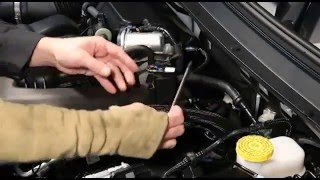
Pro Tip: This transmission does not have a traditional dipstick. The fluid level must be checked through the fill plug using the special tool (P/N 10323A) while the transmission fluid is between 122°F and 140°F (50°C to 60°C), as verified by a scan tool.
When lowering the subframe, be sure to mark alignment or use alignment dowels to prevent severe steering pull and tire wear after reassembly. Also, the cooling circuit contains a bypass valve that may need to be checked or serviced to ensure the cooler is not blocked.
Mandatory Post-Installation Programming
A "Quick Learn" procedure is not optional. This process must be performed with a dealer-level scan tool after the transmission is installed. It resets the adaptive memory cells and allows the TCM to learn the specific hydraulic and mechanical characteristics of the replacement unit. Ensure the vehicle's TCM has the latest software updates from the manufacturer before performing the relearn. Skipping this step will result in poor shift quality, harsh engagement, limp mode, or immediate internal damage.
Freight and Delivery Reality

When ordering a used 948TE transmission, understand that it will not arrive via standard parcel delivery. This assembly weighs approximately 235 lbs and measures roughly 28" x 26" x 26" before crating. It ships as LTL (Less Than Truckload) freight on a pallet.
Because of its size and weight, delivery requires a truck equipped with a liftgate if you are receiving it at a residential address or a shop without a loading dock. Always perform a pre-purchase verification interview with the seller to confirm the exact part number and fitment. Upon delivery, you must thoroughly inspect the transmission for any shipping damage before signing the driver's paperwork.
Frequently Asked Questions (FAQ)
Can I use regular ATF+4 or a generic multi-vehicle transmission fluid?
No. You must use the specified Mopar ZF 8 & 9 Speed ATF or an equivalent meeting the MS-90032 specification (like ZF Lifeguard 8). Incorrect fluid will quickly destroy the transmission.
Do I need to replace the transmission filter before installing the used unit?
No. The main transmission filter is internal and cannot be serviced without completely splitting the transmission case. The only way to protect the replacement unit is by thoroughly flushing the external cooler and lines.
What happens if I skip the "Quick Learn" procedure?
The transmission will shift poorly, may enter a "limp mode" (stuck in one gear), and will likely suffer premature internal failure. The TCM relies on this procedure to calibrate itself to the replacement transmission's specific tolerances.
My Cherokee has a '4-Low' button. Will this transmission fit?
No. A '4-Low' button indicates your vehicle has the two-speed Power Transfer Unit (Active Drive II). This requires a different transmission assembly with a different output configuration.
Does a used transmission come with the Transmission Control Module (TCM)?
No. Standard industry practice for used assemblies excludes the TCM. You will reuse your vehicle's existing TCM, which must then be updated and reprogrammed to work with the replacement transmission.
Helpful Videos

Technical Specifications
OEM Part Numbers: 68260064AA DFH
Model Name: Chrysler 948TE / ZF 9HP48; Type: 9-speed transverse transaxle; Application: 2016 Jeep Cherokee; Engine: 3.2L V6 (VIN 8th digit 'S'); Drivetrain: All-Wheel Drive (AWD) with single-speed PTU (Active Drive I); Axle Ratio: 3.25; Required Fluid: Mopar ZF 8 & 9 Speed ATF (MS-90032); Weight: ~235 lbs
We Have This Part in Stock



The information in this article is provided for general reference and educational purposes only. Vehicle specifications, procedures, and part compatibility can vary by production date, trim level, and region. Always consult your vehicle's factory service manual and verify part numbers before purchasing or performing repairs. Safety-critical components such as airbags, seat belts, and braking systems should be installed by a qualified professional.
- Jeep Cherokee:
- 🎬 Helpful Videos
- 🛍️ Shop This Part
- Part Identification: Is This the Right Transmission?
- Confirm Your Vehicle's Specifications
- What Does Not Interchange?
- What is Included in a Used Assembly?
- Common Failure Symptoms
- Diagnostic Flowchart
- Known Problems, Recalls, and Technical Service Bulletins (TSBs)
- NHTSA Recall 16V-529 (Chrysler S55) - Unexpected Shift to Neutral
- NHTSA Recall 18V-332 (Chrysler U63) - Cruise Control May Not Cancel
- NHTSA Recall 20V-343 (W47) / 23V-302 (45A) / 26V-290 (40D) - PTU Input Spline Wear
- TSB 21-013-16 / 21-018-19 / 21-032-18 - Harsh Shifting and Delayed Engagement
- TSB 21-041-20 - Transmission Case Oil Leak
- What Fails at Every Mileage Band
- Under 60,000 Miles
- 60,000 - 100,000 Miles
- 100,000 - 150,000 Miles
- Over 150,000 Miles
- Real Owner Experiences
- Repair or Replace?
- When Repair Makes Sense
- When Replacement is the Smarter Choice
- Replacement Cost Estimates
- Installation and Programming Essentials
- Required Parts and Tools
- Critical Installation Steps and "Gotchas"
- Mandatory Post-Installation Programming
- Freight and Delivery Reality
- Frequently Asked Questions (FAQ)
- 🎟️ Get 5% Off