

2018-2019 Hyundai Sonata 2.0T A8LF1 Transmission: Problems, Identification, and Used Replacement
Identify the exact A8LF1 transmission for your 2.0L Turbo Sonata, learn what causes it to fail, and discover when a used OEM replacement is the smartest fix.
- Mandatory programming of the replacement unit's unique QR code data into the vehicle's computer is required for it to shift correctly.
- This A8LF1 transmission is only for the 2018-2019 Sonata 2.0T FWD (VIN 8th digit 'B') and is not interchangeable with other Hyundai models or Sonata engines.
- If Diagnostic Trouble Codes P0731-P0736 are present, the transmission must be replaced entirely, as this indicates a severe internal failure per TSB 24-AT-002H.
- During installation, it is critical to flush the transmission cooler and lines and use only Hyundai Genuine ATF SP-IV fluid to prevent premature failure.
- Before installing, take a clear photo of the QR code sticker on the transmission case, as it will be inaccessible afterward.
Identifying the Correct Transmission

This article covers the A8LF1 (also identified by code A8F36), an 8-speed automatic transmission found in the 2016-present Hyundai lineup, but specifically calibrated for the 2018–2019 Hyundai Sonata. This specific unit is engineered exclusively for the front-wheel drive (FWD) transverse configuration equipped with the 2.0L turbocharged (2.0T) direct-injection engine.
How to Confirm Fitment on Your Vehicle
Before purchasing a replacement, verify that your Sonata requires this exact transmission. Mismatched units will not work due to differences in electronics, gear ratios, and physical mounting.
- Check the VIN: The 8th digit of your Vehicle Identification Number (VIN) must be a "B". This code designates the 2.0L Turbo engine.
- Confirm Drivetrain: This transmission is for Front-Wheel Drive (FWD) models only.
- Verify Transmission Code: Look for a barcode sticker or a metal tag on the transmission case. It should identify the model as an A8LF1.
What Will NOT Fit
The A8LF1 family is used in other Hyundai vehicles, but those versions are not interchangeable with the Sonata 2.0T unit. Do not use a transmission from:
| Source Vehicle / Engine | Reason for Incompatibility |
|---|---|
| Hyundai Palisade, Santa Fe, or Kia Telluride | Different bellhousing bolt patterns, final drive ratios, and often feature provisions for All-Wheel Drive (AWD) transfer cases. |
| Other Sonata Engines (2.4L, 1.6L Eco, 2.0L Hybrid) | Will not work with these engines. |
| 2020 and Newer Sonatas | The newer DN8 generation of the Sonata uses a completely different transmission. |
Common Failure Symptoms
A failing A8LF1 transmission often provides clear warning signs. If you experience these issues, the transmission may need to be replaced. Common symptoms include:
- Harsh or Delayed Shifting: The car may jolt, hesitate, or slam into gear when shifting.
- Gear Slipping: The engine may rev up unexpectedly without an increase in vehicle speed, as if it has momentarily shifted into neutral.
- Check Engine Light: The most definitive sign is a Check Engine Light with specific Diagnostic Trouble Codes (DTCs). Codes in the P0731-P0736 range often indicate severe internal clutch or gear ratio problems.
- Whining or Clunking Noises: Unusual sounds that change with engine speed can point to internal mechanical wear.
- Shuddering: A vibration or shudder, especially during gentle acceleration, can indicate a problem with the torque converter lock-up clutch.
Diagnostic Flowchart
Known Problems, TSBs, and Recalls

Several Technical Service Bulletins (TSBs) have been issued for this transmission family, addressing common issues. As of mid-2024, there are no specific safety recalls for the transmission itself on the 2018-2019 Sonata 2.0T, though engine-related recalls for this model do exist.
Incorrect Gear Ratio DTCs (TSB 24-AT-002H)
This is the most severe issue. If the vehicle stores DTCs such as P0731, P0732, P0733, P0734, P0735, P0736, P0729, P076F, or P0730 accompanied by slipping, it indicates a major internal failure. According to the TSB, the only remedy for this condition is to replace the entire transmission assembly.
Transmission Solenoid DTCs (TSB 22-AT-005H)
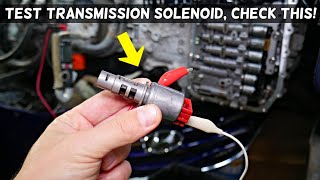
This bulletin applies to 2018-2019 Sonatas with the 2.0T engine. It addresses a Check Engine Light caused by various solenoid-related DTCs, specifically P074100, P074300, P074800, P075300, P075800, P076300, P076800, P077300, and P270900. The fix involves inspecting the wiring and potentially replacing the faulty solenoid and the internal valve body wiring harness.
Solenoid Calibration and Shift Quality (TSB TRA067 / 19-AT-010H & 20-AT-020H)
These bulletins address shift shock and the critical need for programming. When a transmission is replaced, the unique hydraulic pressure characteristics of its direct-control solenoids must be programmed into the vehicle's computer (TCU/PCM). Failure to transfer this oil pressure characteristic data can result in poor shift quality and unnecessary stress on the new unit.
"B" Clutch Drum Spline Wear
On higher-mileage units (typically over 85,000 miles), wear on the "B" clutch drum splines can occur, leading to a loss of drive gears. This is a severe internal failure that requires transmission replacement. When purchasing a used unit, opting for one with lower mileage (such as a verified 8,852-mile donor unit) is a key preventative measure.
Torque Converter Lock-Up Clutch Shudder
Across all years, neglected fluid changes can lead to a shuddering sensation from the torque converter lock-up clutch. If the lining is worn, the torque converter must be replaced.
What Fails at Every Mileage Band
Pro Tip: The mileage bands below describe what to expect from used replacement units of that mileage. The checklists provided are things to do WHILE INSTALLING the purchased unit, not maintenance for your current transmission.
Under 60,000 Miles
Low-mileage units are generally very reliable, but they can still suffer from factory calibration issues (TSB 19-AT-010H) or premature solenoid failure (TSB 22-AT-005H). Incorrect gear ratio codes (TSB 24-AT-002H) are rare but possible.
- ✓Do during install (required): Verify all TSBs have been performed on the vehicle.
- ✓Do during install (required): Perform a mandatory flush of the external transmission cooler and lines to remove any potential debris.
- ✓Do during install (required): Ensure the correct, new Hyundai Genuine ATF SP-IV fluid is used.
- ✓Cheap insurance while the engine is out: Replace external seals (axle seals, front pump/torque converter seal).
60,000 - 100,000 Miles
In this range, torque converter shudder becomes noticeable if the 60,000-mile fluid service was skipped. The likelihood of individual solenoid failure increases, and fluid degradation accelerates internal wear.
- ✓Do during install (recommended): Strongly consider replacing the torque converter if the used transmission has over 80,000 miles or if the vehicle's history is unknown.
- ✓Do during install (required): Perform a transmission fluid and filter service.
- ✓Do during install (required): Mandatory flush of the transmission cooler and lines.
- ✓Cheap insurance while the engine is out: Replace all external seals (axle, front pump) and inspect transmission mounts for wear.
100,000 - 150,000 Miles
This is where "B" Clutch Drum spline wear becomes a known mechanical failure point. Valve body wear and increased solenoid failures are also common due to deteriorating fluid.
- ✓Do during install (required): Assume the torque converter needs replacement. It is false economy to reuse a high-mileage converter.
- ✓Do during install (required): Replace the transmission filter and all external seals.
- ✓Do during install (required): Thoroughly inspect and clean all electrical connectors for the transmission harness.
Over 150,000 Miles
Beyond 150,000 miles, the primary cause of failure is cumulative wear on clutch packs, bearings, and the oil pump. Hard part failures and torque converter failures are highly likely.
- ✓Do during install (required): At this mileage, installing a used transmission is a significant gamble. If proceeding, it is critical to replace the torque converter, all seals, filter, and perform a comprehensive cooler and line flush.
- ✓Cheap insurance while the engine is out: Inspect all related components that are accessible during the job, such as engine mounts, axle shafts, and the engine's rear main seal.
Real Owner Experiences
The table below highlights real-world experiences from owners dealing with A8LF1 transmission and related drivetrain issues.
| Source | Mileage | What Happened | Cost |
|---|---|---|---|
| Reddit r/Hyundai | 37,000 | An owner of a 2018 Sonata SE reported the car entering 'limp mode' due to a failed engine sensor, which shook their confidence in the vehicle's reliability. | $800 |
| YouTube Comment | 72,000 | A 2020 Sonata (with a similar 8-speed) reportedly suffered a complete transmission failure. The owner attributed it to constant stop-and-go driving while leaving the car in Drive, leading to chronic overheating. | Not specified, implied full replacement. |
| Reddit r/Hyundai | 95,000 | An owner of a Genesis Coupe with an earlier version of the 8-speed automatic reported it never 'skipped a beat' and was sold at 95k miles. They performed a fluid service at 60k miles. | N/A |
| Reddit r/Hyundai | 123,000 | An owner of a 2015 Sonata needed a transmission replacement. | Not specified. |
| 145,000 | Owner was quoted for a full replacement by the dealer (2019 Santa Fe 2.0T). | $7,000 | |
| YouTube Comment | 146,000 | An owner of a 2015 Sonata reported having over $10,000 in various repairs but the car was still running well after an earlier engine replacement. | N/A for transmission |
| 172,000 | A 2018 Sonata owner reported a complete engine failure, which was replaced by Hyundai. The transmission was not mentioned as an issue at this mileage. | N/A for transmission | |
| YouTube (Channel: AutoLine) | N/A | Informational video discussing TSB 24-AT-002H. Video quotes typical replacement costs for incorrect ratio code failures as $3,800-$5,800 at an independent shop and $5,500-$8,000 at a dealership. | $3,800 - $8,000 |
Repair or Replace?
Deciding whether to repair your current transmission or replace it entirely depends on the specific failure codes and symptoms.
When Repair Makes Sense
- Transmission Solenoid DTCs or Valve Body Failure: If you have codes like P074100 or P074800 without severe internal failure codes, a targeted repair makes sense. A remanufactured valve body with solenoids costs $300 to $400, plus 3 to 5 hours of labor. Total typical repair cost: $700 to $1,500.
- Torque Converter Lock-Up Clutch Shudder: If the shudder is isolated to the torque converter and the transmission is otherwise healthy, you can replace just the converter. A new OEM torque converter is $200 to $300, but labor is significant (6 to 8 hours). Total typical repair cost: $800 to $1,400.
- Solenoid Calibration Issues: If shift quality is poor after a replacement, mandatory programming (Oil Pressure Characteristics Input) should be performed before assuming the unit is faulty. Typical cost: $75 to $250.
When Replacement is the Only Option
Replacement is the only recommended course of action when specific "Incorrect Gear Ratio" DTCs are present (P0731, P0732, P0733, P0734, P0735, P0736, P0729, P076F, or P0730). According to Hyundai TSB 24-AT-002H, these codes signify severe internal failure, such as clutch slip, that is not economically repairable. Replacement is also necessary for high-mileage units suffering from "B" Clutch Drum spline wear.
Questions to Ask Your Installer
- Have you confirmed this used transmission is from a 2018-2019 Sonata with the 2.0L Turbo engine, not the 2.4L, 1.6L, or Hybrid?
- How will you perform the mandatory 'Oil Pressure Characteristics Input' programming? Do you have a Hyundai GDS/KDS scan tool or equivalent to write the QR code data to the car's computer?
- Will you be taking a clear photo of the QR code sticker on the transmission case BEFORE you install it?
- What specific brand and type of fluid will you be using? (The correct answer is Hyundai Genuine ATF SP-IV).
- Does your quote include a mandatory flush of the transmission cooler and lines?
- What is your procedure for seating the torque converter to ensure the oil pump is not damaged during installation?
- Does your labor estimate include the final 'Resetting Auto T/A Values' and the adaptive learning drive cycle after the programming is complete?
Replacement Cost Estimates
The cost to replace an A8LF1 transmission varies based on the type of replacement unit. The estimates below do not include taxes or shop supply fees.
| Part or Service | Estimated Cost (USD) |
|---|---|
| New OEM | $4,000 - $5,500+ |
| Remanufactured | $2,800 - $4,000 |
| Used OEM (Salvage) | $400 - $1,200 |
| Installation Labor (6.0 to 12.0 hours) | $900 - $1,800 |
Freight, Delivery, and Pre-Purchase Verification

Buying a used transmission requires understanding how it ships and what is included. This is a heavy industrial component, not a standard parcel.
- Shipping Reality: The A8LF1 transmission assembly weighs approximately 212 lbs and measures roughly 32" x 24" x 24" before crating. It ships as LTL (Less Than Truckload) freight on a pallet.
- Delivery Requirements: Delivery will require a forklift or a truck equipped with a liftgate. You must inspect the pallet and the transmission for physical damage before signing the delivery receipt.
- What is Included: A standard used assembly includes the transmission case, all internally lubricated parts, the torque converter, internal direct-control solenoids, the internal wiring harness, and the plastic front valve body cover/oil pan.
- What is Excluded: You must transfer or purchase separately the external Transmission Control Module (TCM), shifter assembly, shifter linkage/cables, engine flexplate/flywheel, external transmission fluid cooler lines, and external sensors.
Installation & Programming: Critical Steps

Proper installation and programming are essential for the long-term reliability of a replacement A8LF1 transmission. This is not a simple plug-and-play component.
Warning: This installation is rated for Advanced to Expert DIY mechanics or professional technicians only. It requires specialized tools, including an engine support bar, a transmission jack or subframe jack, and a professional bi-directional diagnostic scan tool (Hyundai KDS / GDS Mobile or equivalent).
Programming and Calibration Requirements
A used or remanufactured A8LF1 transmission must be electronically calibrated to the vehicle. ECU or PCM remarriage is required.
- Oil Pressure Data Input: Each transmission has a unique QR code sticker (or alphanumeric code) on its case that contains its solenoid hydraulic pressure values. This data must be scanned or manually entered into the car's Transmission Control Module (TCM) using a professional scan tool.
- Adaptive Relearn: After programming, a "Resetting Auto T/A Values" procedure must be run, and the vehicle must be driven through a specific adaptive learning drive cycle to allow the transmission to learn the proper shift points.
Pro Tip: Before installing the transmission, take a clear photo of the QR code sticker on top of the case. It will be completely covered by the battery tray and intake ducting once installed.
Key Installation Steps & "Gotchas"
- Torque Converter Seating: The torque converter must be fully seated into the transmission's front pump. You must feel it click into place three times. Failure to do this before bolting the transmission to the engine block will crack the internal oil pump gear, destroying the new unit.
- Flush the Cooler: It is mandatory to professionally flush the external transmission cooler lines and radiator cooler with transmission cooler flush solvent to prevent contamination from the old failed unit.
- Use Correct Fluid: This transmission requires Hyundai Genuine ATF SP-IV. Using generic or incorrect fluid types can cause shift problems and long-term damage.
- Fluid Level Check: The fluid level must be checked via the overflow plug strictly when the Transmission Fluid Temperature (TFT) is between 50°C and 60°C (122°F to 140°F) with the engine running on a level lift.
Inspect the Drain Plug Magnet and Pan
Used transmissions are usually shipped with the fluid drained. Remove the magnetic drain plug to check for metal debris. A small amount of fine, gray paste is normal. This paste is just normal wear from the clutch plates. However, if you see large metal flakes, silver shavings, or jagged chunks, stop. This means the internal gears or bearings are destroyed, and the transmission should not be installed.
Check the Fluid Color and Smell
Catch any leftover fluid that drips out of the drain hole or cooler lines. The A8LF1 transmission uses Hyundai SP-IV-RR fluid, which is bright red when new. Used fluid will look darker, but it should still have a reddish tint. If the fluid is pitch black or smells like burnt toast, the internal clutches are burned out.
Examine the Torque Converter Hub and Input Splines
The torque converter is the large, heavy metal bowl attached to the front of the transmission. Look at the hub (the smooth metal snout sticking out of the back of the converter). It must be perfectly smooth. If it has deep scratches or grooves, it will destroy the front pump seal and cause massive fluid leaks.
Next, check the input shaft splines. These are the grooved metal teeth that connect the transmission to the torque converter. The teeth must be straight and sharp. If the splines look twisted, rusted, or ground down, the transmission will not transfer power from the engine.
Frequently Asked Questions (FAQ)
What fluid does the 2018-2019 Sonata 2.0T transmission use?
It exclusively uses Hyundai Genuine ATF SP-IV. Do not substitute this with other fluid types.
Does a used A8LF1 transmission need to be programmed?
Yes, programming is mandatory. The unique oil pressure characteristics from the QR code on the replacement unit must be written to your vehicle's computer for it to shift correctly.
Will this transmission fit my Sonata with the 2.4L engine?
No. This transmission is specifically for the 2.0L Turbo engine (VIN 8th digit 'B'). The 2.4L engine uses a different transmission.
What is the labor time to replace the A8LF1 transmission?
Professional installation typically takes between 6.0 and 12.0 hours, which translates to roughly $900 to $1,800 in labor costs depending on the shop's hourly rate.
Can I use a transmission from a Palisade or Santa Fe?
No. Even though they may use a variant of the 8-speed automatic, they have different bellhousing bolt patterns, final drive ratios, and often include provisions for an AWD transfer case that the FWD Sonata does not use.
What tools are required for the programming?
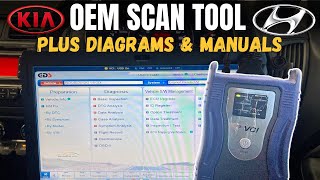
A professional bi-directional diagnostic scan tool, such as the Hyundai KDS or GDS Mobile (or a high-end equivalent), is required to input the QR code oil pressure characteristics and perform the adaptive relearn.
Helpful Videos

Technical Specifications
OEM Part Numbers: A8LF1 A8F36
Model: A8LF1; Alternate Code: A8F36; Type: 8-Speed Automatic; Drivetrain: Front-Wheel Drive (FWD); Engine Compatibility: 2.0L Turbocharged (VIN 8th digit 'B'); Application: 2018-2019 Hyundai Sonata; Weight: ~212 lbs; Fluid Type: Hyundai Genuine ATF SP-IV
We Have This Part in Stock



The information in this article is provided for general reference and educational purposes only. Vehicle specifications, procedures, and part compatibility can vary by production date, trim level, and region. Always consult your vehicle's factory service manual and verify part numbers before purchasing or performing repairs. Safety-critical components such as airbags, seat belts, and braking systems should be installed by a qualified professional.
- Hyundai Sonata:
- 🎬 Helpful Videos
- 🛍️ Shop This Part
- Identifying the Correct Transmission
- How to Confirm Fitment on Your Vehicle
- What Will NOT Fit
- Common Failure Symptoms
- Diagnostic Flowchart
- Known Problems, TSBs, and Recalls
- Incorrect Gear Ratio DTCs (TSB 24-AT-002H)
- Transmission Solenoid DTCs (TSB 22-AT-005H)
- Solenoid Calibration and Shift Quality (TSB TRA067 / 19-AT-010H & 20-AT-020H)
- "B" Clutch Drum Spline Wear
- Torque Converter Lock-Up Clutch Shudder
- What Fails at Every Mileage Band
- Under 60,000 Miles
- 60,000 - 100,000 Miles
- 100,000 - 150,000 Miles
- Over 150,000 Miles
- Real Owner Experiences
- Repair or Replace?
- When Repair Makes Sense
- When Replacement is the Only Option
- Questions to Ask Your Installer
- Replacement Cost Estimates
- Freight, Delivery, and Pre-Purchase Verification
- Installation & Programming: Critical Steps
- Programming and Calibration Requirements
- Key Installation Steps & "Gotchas"
- Inspect the Drain Plug Magnet and Pan
- Check the Fluid Color and Smell
- Examine the Torque Converter Hub and Input Splines
- Frequently Asked Questions (FAQ)
- 🎟️ Get 5% Off