

2013 Hyundai Santa Fe 2.0L Turbo: A6LF2 Transmission Problems, Identification, and Used Replacement
Identify the exact A6LF2 FWD transaxle, learn what causes shifting failures, and know when to swap in a used OEM unit.
- Before purchasing, you must verify fitment for a 2013 Santa Fe 2.0L Turbo FWD using the VIN (8th digit 'A') and OEM part numbers (45000-3BBW0 or 00268-3BBW0), as it is not compatible with AWD or other engine models.
- During installation of a replacement unit, it is mandatory to flush the transmission cooler, replace the front pump seal and axle seals, and ensure the torque converter is fully seated before bolting it to the engine to prevent immediate failure.
- After installation, a professional-grade scan tool (like Hyundai GDS) is required to reset the TCM's adaptive learning values; skipping this step will cause harsh shifting and damage the replacement transmission.
- Only use Hyundai Genuine ATF SP-IV fluid. Using any other type of fluid will cause torque converter shudder, poor shift quality, and eventual clutch failure.
- If significant metallic debris is found in the old transmission's fluid, replacement with a used or remanufactured unit is smarter than attempting a repair, as the debris indicates widespread internal damage.
Identifying the Correct A6LF2 Transmission

This article covers the A6LF2 automatic transmission assembly specifically for the 2013 Hyundai Santa Fe Sport with the 2.0L Turbo engine and Front-Wheel Drive (FWD). This 6-speed automatic is a transverse transaxle, meaning the engine and transmission are mounted sideways in the vehicle to power the front wheels. It was produced for this platform between 2009 and 2020.
Before purchasing a replacement, you must verify that your vehicle is a match. Installing the wrong transmission will result in wasted time and money.
How to Confirm Fitment on Your Vehicle:
- Check the VIN: The 8th digit of your Vehicle Identification Number (VIN) should be 'A', which designates the 2.0L Turbo engine.
- Confirm Drivetrain: Look under your vehicle. A FWD model will not have a driveshaft or a differential in the rear.
- Engine Cover: The plastic cover on top of the engine should say "Turbo" or "GDI-T".
- Part & Casting Numbers: The most reliable method is to find the identification sticker or code on the transmission case itself. Look for a barcode sticker on the top of the case, often near the shift lever. Key OEM part numbers are 45000-3BBW0 or 00268-3BBW0. An etched code on the metal case starting with "BA" also identifies this unit.
Warning: This FWD transmission will NOT fit other Santa Fe models. It is not compatible with All-Wheel Drive (AWD) versions, which have a different case casting to accommodate a transfer case. It also will not work with the 2.4L non-turbo or 3.3L V6 engines due to different bellhousings (the part that bolts to the engine) and torque converters.
Common Failure Symptoms

When the A6LF2 transmission begins to fail, it can exhibit several distinct symptoms. If you experience any of the following, it's a strong indicator that the transmission needs professional diagnosis:
- Harsh or delayed shifting between gears.
- The transmission slips, where the engine RPMs flare up without an increase in speed.
- A noticeable stutter or shudder, especially when the transmission is cold.
- The "Check Engine" light illuminates, storing fault codes related to the transmission (such as P0711, P0712, P0713, P0731-P0735, or P0741).
- Grinding, whining, or clunking noises from the front of the vehicle.
- The vehicle has difficulty moving out of first gear.
- Leaking red or brown transmission fluid under the vehicle from the oil pump seal.
- Differential creaking noises, often caused by the differential housing splines stripping.
Diagnostic Flowchart
Known Issues, Recalls, and Technical Service Bulletins (TSBs)

Several known issues affect this transmission. Referencing the official document numbers can help a technician diagnose the problem accurately.
| Issue / Document | Description |
|---|---|
| Transmission Fluid Temperature Sensor Failure (TSB 14-AT-010) | A faulty sensor can cause codes P0711, P0712, or P0713 and poor shift quality. For units built before March 2013, the sensor was separate; later models require replacing the entire internal wiring harness. |
| Shift Solenoid Circuit Faults (TSB 13-AT-008) | Electrical faults in the shift solenoids or wiring can cause erratic shifting or failure to engage gears. The remedy is to replace the faulty solenoid or harness. |
| Shifter Cable Disconnection (TSB 15-01-009) | The shifter cable can disconnect from the transmission's shift lever pin, making it impossible to select a gear. The fix is to install a supplemental E-clip. |
| Driveline Axle Shaft Fracture (NHTSA Recall 13V355000) | A safety recall for a potential fracture of the right front axle shaft, resulting in a complete loss of motive power. Though primarily affecting 2.4L models, it is relevant to the platform. |
| Internal Mechanical Issues | Early units could suffer from loosening center pinion bolts, leading to catastrophic case damage. Torque Converter Clutch (TCC) wear is also common, triggering code P0741 and releasing metallic debris. |
What Fails at Every Mileage Band
Pro Tip: The mileage bands below describe the typical condition of USED replacement units at that mileage. The checklists provided are critical steps to perform WHILE INSTALLING the purchased transmission, not general maintenance advice for your current vehicle.
Under 60,000 Miles
Even low-mileage units can have issues. Valve body bore wear causing shifting complaints can occur in as few as 40,000 miles. Front pump seals may fail prematurely. The internal wiring harness is a high-failure component, which can lead to solenoid, speed sensor, or temperature sensor codes (TSB 14-AT-010 and TSB 13-AT-008). Note that on the engine side, turbocharger failure on the 2.0T can occur between 37,000 and 62,000 miles, and brake vibration is common between 12,000 and 19,000 miles.
- ✓Do during install (required): Inspect the replacement unit's valve body for any signs of wear, regardless of mileage. Proactively replace the front pump seal (OEM Part # 46131-3B600) as it is a known weak point. Perform a full transmission fluid flush with Hyundai Genuine ATF SP-IV.
- ✓Do during install (recommended): Consider replacing the internal wiring harness, especially if the unit was built before March 2013, to prevent future sensor and solenoid issues.
- ✓Cheap insurance while the engine is out: Replace the plastic valve body cover gasket if the cover is removed for inspection.
60,000 - 100,000 Miles
In this range, delayed shifting or slipping gears may occur due to fluid degradation or failing solenoids. Center support bearing failures can become more common as the unit ages, causing a noise relative to road speed. Also, connecting rod bearing wear on the associated Theta II 2.0T engine is common in this range, which can sometimes be misdiagnosed as a transmission issue. Carbon buildup on intake valves also becomes noticeable.
- ✓Do during install (required): Mandatory transmission fluid and filter service (drain and fill). Replace all external seals, including left and right axle seals and the front pump seal.
- ✓Do during install (recommended): Inspect and consider replacing shift solenoids if any codes were present on the old unit or if shift quality was poor.
- ✓Cheap insurance while the engine is out: Inspect the center support bearing during any rebuild or deep inspection.
100,000 - 150,000 Miles
Internal clutch packs and bands can wear out, leading to slipping, flaring between shifts, or incorrect gear ratio codes (P0731-P0735). Torque converter clutch (TCC) failure is common, causing shudder or codes like P0741. General wear and tear on internal hard parts becomes much more likely. Engine failure due to the Theta II defect is also a significant risk in this mileage range.
- ✓Do during install (required): Assume the torque converter has significant wear; replacement with the transmission is highly recommended to avoid contaminating the new unit. A complete fluid flush is critical. Do not trust the condition of the existing fluid in a used unit.
- ✓Do during install (recommended): Replace the internal wiring harness and all solenoids as a preventative measure, as their service life is limited.
- ✓Cheap insurance while the engine is out: Inspect the engine for signs of the Theta II defect (oil consumption, knocking) as its failure could be imminent and affect the new transmission.
Over 150,000 Miles
Catastrophic hard part failure (gears, drums, bearings) becomes the primary concern. The oil pump may fail due to extended wear. Valve body wear is likely to be at a critical stage if it has not been addressed previously. However, with disciplined fluid changes (every 40,000-60,000 miles), the A6 transmission family has been documented to exceed 200,000 to 250,000 miles.
- ✓Do during install (required): It is absolutely essential to reset TCM adaptive values and perform the relearn procedure using a GDS scan tool.
- ✓Do during install (recommended): At this mileage, installing a used transmission without a professional rebuild is a significant gamble. A full rebuild is the recommended path.
- ✓Cheap insurance while the engine is out: If installing a used unit, replace the torque converter, all seals, all solenoids, the internal harness, and perform a chemical flush of the cooler and lines.
Real Owner Experiences
| Source | Mileage | What Happened | Cost |
|---|---|---|---|
| Gears Magazine | As few as 40,000 | Significant valve body wear was observed, leading to various shift quality complaints. | Not specified, but replacing or repairing the valve body was recommended if the fluid was clean. |
| Car Checker | 12,000-19,000 miles | Owners reported brake vibration and pulsation, a related chassis issue. | Not specified |
| Reddit r/HyundaiSantaFe | 90,000 | A user reported zero issues with their 2019 Santa Fe 2.0T, indicating that not all units will fail. | N/A |
| Gears Magazine | Not specified, but as units age | Center support bearing failures can cause a noise relative to road speed. | Requires transmission disassembly to inspect and replace. |
| 62,000-93,000 miles | One owner reported trading in their Hyundais at this interval when the warranty runs out, suggesting an expectation of potential issues. | N/A | |
| Quora | Over 100,000 | An owner noted that failure to perform religious maintenance on any vehicle, including Hyundais, leads to unacceptable costs over 100,000 miles. | Varies |
| YouTube / Fleet Records | 250,000-300,000+ | With disciplined fluid changes (every 45,000 miles), the A6 transmission family has been documented to exceed 250,000 and even 300,000 miles in fleet and rideshare use. | N/A |
| PA Auto Sales | 200,000+ | The Santa Fe model (2012-2020) is listed as capable of reaching 200,000+ miles with proper care. | N/A |
| 247,000 | The user was quoted for an engine replacement and was inquiring about potential transmission issues at the same high mileage, but the transmission had not been tested. | $6,500 |
Repair or Replace?
When facing transmission issues, you must decide whether to repair the existing unit or replace it entirely. The cost to replace a transmission varies based on the type of replacement unit, labor rates in your area, and the shop performing the work. The job is labor-intensive, typically requiring 6 to 10 hours of shop time.
| Part Type / Service | Estimated Cost (USD) |
|---|---|
| New OEM Assembly | $3,500 - $6,400+ |
| Remanufactured Assembly | $780 - $4,200 |
| Used OEM Assembly | $525 - $1,100+ |
| Professional Rebuild | $1,800 - $3,500 |
| Installation Labor | $800 - $1,650+ |
When Repair Makes Sense
| Scenario | Typical Cost | Viability |
|---|---|---|
| Transmission Fluid Temperature Sensor Failure | $300 - $600 | Makes sense when it is the only issue present. Involves replacing the internal wiring harness. |
| Shift Solenoid Circuit Faults | $200 - $500 per solenoid | Viable if only one or two solenoids are faulty and the rest of the transmission is healthy. |
| Transmission Oil Pump Leaks | $400 - $800 | Makes sense if caught early before the transmission has been run low on fluid. Requires transmission removal. |
| Torque Converter Clutch (TCC) Wear | $600 - $1,200 | Viable when shuddering or TCC codes appear but there is no widespread metallic debris in the fluid. |
When Replacement is Smarter
Replacement is the smarter option when there is catastrophic internal damage, such as from loosened center pinion bolts causing case damage, or when multiple failure modes are present (e.g., TCC wear combined with solenoid faults). It is also highly recommended if significant metallic debris is found in the transmission fluid. Metal shavings indicate widespread internal damage that will be difficult and costly to fully remedy through a rebuild. Given the relatively low cost of used units ($525 - $1,100+), replacement is often more economical than a full rebuild.
Freight & Delivery Reality

If you are ordering a used A6LF2 transmission online, it will not arrive in a cardboard box via standard mail. This is a heavy industrial component.
- Weight and Dimensions: The bare transmission assembly weighs approximately 206 lbs. Before crating or palletizing, it measures roughly 24" x 20" x 18".
- Shipping Method: It ships as Less-Than-Truckload (LTL) freight on a wooden pallet.
- Delivery Requirements: You must have a loading dock, a forklift, or request a truck with a liftgate service to lower the pallet to the ground.
- Inspect Before Signing: Always inspect the transmission case for cracks, broken sensors, or shipping damage before signing the driver's delivery receipt. Once you sign, you accept it in its current condition.
- Pre-Purchase Verification: A reputable supplier will conduct a pre-purchase verification interview. They will ask you to confirm your VIN's 8th digit is 'A', that your vehicle is FWD, and that your part numbers match (45000-3BBW0 or 00268-3BBW0).
What's Included in a Used Assembly?
When buying a used transmission from a recycler, it's important to know what parts are typically included. Based on Automotive Recyclers Association (ARA) standards, here is what you should expect:
- What's Included: The transmission case, all internally lubricated parts, the extension/tail housing, the transmission oil pan, the torque converter, the valve body, and internal solenoids.
- What's Not Included: External components are excluded. You will need to reuse your existing external sensors, input/output speed sensors, range switch/neutral safety switch, Transmission Control Module (TCM), shifter linkage/cables, flexplate/flywheel, and cooler lines.
- Note: The internal filter is not serviceable without splitting the transmission case.
Installation and Programming: Critical Steps

Proper installation is crucial for the longevity of a replacement transmission. This is considered an expert-level job requiring specialized tools like an engine support bar/hoist, a transmission jack, a subframe/cradle jack, an axle seal installation tool (e.g., 09453-3L240), and an OBD-II scan tool with Hyundai OEM-level diagnostic capabilities (GDS).
Required Parts and Fluids
Always install new seals and use the correct fluid to prevent leaks and premature failure. You will need:
- Transmission Fluid: The system has a 7.8 Liters / 8.2 Quarts total capacity. A standard service fill requires about 4.5 Liters. You must use Hyundai Genuine ATF SP-IV. Using a generic fluid will cause damage.
- Seals: Replace the front pump/torque converter input shaft seal (OEM Part # 46131-3B600) and both left and right axle seals.
- Cooler Flush: A specialized transmission cooler flush solvent to thoroughly clean the lines.
Critical "Gotchas" and Common Mistakes
Warning: Torque Converter Seating. The torque converter must be fully seated into the transmission's internal oil pump gears before the transmission is bolted to the engine. There should be a slight gap between the converter and the engine's flexplate before you install the bolts. Forcing it will instantly crack the internal oil pump, destroying the replacement transmission.
Warning: Flush the Cooler. The transmission cooler and lines must be flushed with a specialized solvent to remove any metal debris from the previous failed unit. Skipping this step will circulate contaminants through the new transmission, causing it to fail quickly.
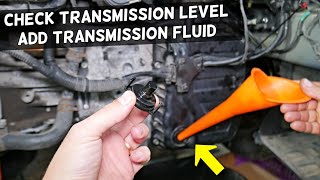
Pro Tip: No Dipstick. This transmission does not have a dipstick for checking fluid levels. The fluid level must be checked via the overflow plug on the front plastic cover at a specific fluid temperature of 50°C to 60°C (122°F to 140°F) with the engine running and the vehicle level. This requires a scan tool to monitor the fluid temperature.
- Subframe Removal: Installation requires dropping the front subframe while supporting the engine from above.
- Harness Compatibility: Ensure all electrical connectors and ground straps are clean, secure, and correctly re-attached to prevent erratic shifting.
Required Programming After Installation
After the new transmission is installed, its adaptive learning values must be reset. The TCM learns and adapts to wear patterns in the old transmission, and driving on these old values will cause harsh shift shock and potential clutch damage to a new unit. This reset cannot be done by simply disconnecting the battery. It requires a Hyundai-specific GDS scan tool or an equivalent professional-grade diagnostic tool to perform a TCM Adaptive Relearn (Reset Adaptive Values), followed by a specific relearn drive cycle.
Frequently Asked Questions (FAQ)
Can I use this FWD transmission in my AWD Santa Fe?
No. The All-Wheel Drive (AWD) model requires a transmission with a different case casting that allows a transfer case to be attached to power the rear wheels. The FWD unit lacks this provision.
What happens if I use the wrong transmission fluid?
This transmission is designed exclusively for Hyundai ATF SP-IV. Using a universal or multi-vehicle fluid will cause immediate torque converter shudder, poor shift quality, and eventual clutch failure.
Does a used transmission need to be reprogrammed?
The transmission itself does not get programmed, but the vehicle's computer (TCM) does. The TCM's adaptive memory, which has learned the characteristics of the old, worn-out transmission, must be reset using a professional scan tool to ensure proper shifting with the replacement unit.
How do I check the fluid level on the A6LF2?
There is no dipstick. You must use a scan tool to verify the transmission fluid temperature is exactly between 122°F and 140°F (50°C to 60°C). With the engine running and the vehicle level, remove the overflow plug on the front cover. Fluid should trickle out. If it doesn't, add fluid until it does.
What are the signs of torque converter failure?
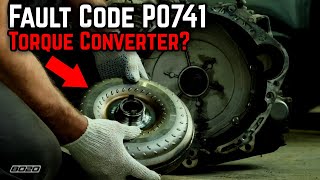
Common signs include a noticeable shudder when driving at steady speeds, the check engine light illuminating with code P0741 (Torque Converter Clutch Circuit Performance), and metallic debris found in the transmission fluid.
What questions should I ask the installer before they begin?
Always ask: Have you confirmed this is a FWD transmission (Part # 45000-3BBW0) and not for an AWD model? Will you be flushing the transmission cooler and lines completely? How do you ensure the torque converter is fully seated? Do you have a Hyundai GDS or equivalent scan tool to perform the mandatory TCM adaptive value reset? What brand of ATF SP-IV fluid will you be using? Does your quote include replacing the axle seals and the front pump seal?
Helpful Videos
Technical Specifications
OEM Part Numbers: 45000-3BBW0 00268-3BBW0
Model: A6LF2; Type: 6-speed automatic transverse transaxle; Application: 2013 Hyundai Santa Fe Sport 2.0L Turbo FWD; Production Years: 2009-2020; Fluid Type: Hyundai Genuine ATF SP-IV; Fluid Capacity: 7.8 Liters / 8.2 Quarts; Weight: Approx. 206 lbs
We Have This Part in Stock


The information in this article is provided for general reference and educational purposes only. Vehicle specifications, procedures, and part compatibility can vary by production date, trim level, and region. Always consult your vehicle's factory service manual and verify part numbers before purchasing or performing repairs. Safety-critical components such as airbags, seat belts, and braking systems should be installed by a qualified professional.
- Hyundai Santa Fe:
- 🎬 Helpful Videos
- 🛍️ Shop This Part
- Identifying the Correct A6LF2 Transmission
- How to Confirm Fitment on Your Vehicle:
- Common Failure Symptoms
- Diagnostic Flowchart
- Known Issues, Recalls, and Technical Service Bulletins (TSBs)
- What Fails at Every Mileage Band
- Under 60,000 Miles
- 60,000 - 100,000 Miles
- 100,000 - 150,000 Miles
- Over 150,000 Miles
- Real Owner Experiences
- Repair or Replace?
- When Repair Makes Sense
- When Replacement is Smarter
- Freight & Delivery Reality
- What's Included in a Used Assembly?
- Installation and Programming: Critical Steps
- Required Parts and Fluids
- Critical "Gotchas" and Common Mistakes
- Required Programming After Installation
- Frequently Asked Questions (FAQ)
- 🎟️ Get 5% Off