

2011-2012 Honda Accord 3.5L V6 Transmission (P79A / M97A): Problems, Identification, and Used Replacement
Identifying the correct 5-speed automatic for your V6 Accord, common failure points, and what to know before buying a used replacement assembly.
- Verify the transmission code is P79A or M97A; units from 2008-2010 Accords (B97A) or 4-cylinder models will not work and will cause limp mode or fail to install.
- During installation, you must use only Honda Genuine ATF-DW1 fluid, replace the external filter (P/N 25430-PLR-003), and flush the transmission cooler to prevent immediate failure.
- To prevent common post-installation issues, swap the known-good external sensors, solenoids, and pressure switches from your original transmission onto the replacement unit.
- The most common failure is torque converter shudder (DTC P0741); for used units over 60,000 miles, consider replacing the included torque converter as a preventative measure.
Identifying the Correct Transmission for Your Accord V6

The 2011-2012 Honda Accord with the 3.5L V6 engine uses a specific 5-speed automatic transaxle, which is part of the Honda H5 parallel-shaft family. This front-wheel-drive (FWD) unit is crucial for the car's performance, and finding the right replacement is key for a successful repair.
Vehicle and VIN Confirmation
Before purchasing a replacement, confirm your vehicle's details. This transmission is only for the 2011-2012 Honda Accord with the 3.5L V6 engine. You can verify this using your Vehicle Identification Number (VIN):
| VIN Digit(s) | Expected Value |
|---|---|
| 10th digit | B for 2011 or C for 2012 |
| 4th, 5th, and 6th digits | CP3 for the sedan or CS2 for the coupe |
| Drivetrain | Verify the vehicle is Front-Wheel Drive (FWD), as this unit will not fit All-Wheel Drive (AWD) models. |
Transmission Code Verification
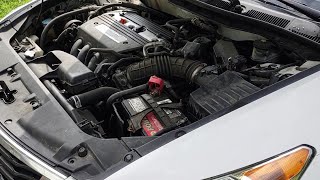
For a positive match, locate the transmission code on your car's original unit. Look for a white barcode sticker on the top or side of the transmission case, typically visible from the engine bay near the starter motor or under the air intake box. The code for this specific transmission will be either P79A or M97A.
Warning: Not all 8th Generation Accord transmissions are the same. Ordering the wrong one is a common and costly mistake. The following will NOT fit:
- 2008-2010 Accord V6 Transmissions (Code: B97A): These units have different internal gear ratios and solenoid calibrations. Installing one will cause the car's computer (PCM) to detect a gear ratio mismatch and force the car into "limp mode."
- 2013-2017 Accord V6 Transmissions: These models use a completely different 6-speed automatic.
- 4-Cylinder Accord Transmissions (Codes: M91A / B90A): These have a different bellhousing bolt pattern and will not physically bolt up to the V6 engine.
Common Failure Symptoms

A failing transmission can show several signs. If your Accord experiences the following, it may be time for a diagnosis or replacement:
- Torque Converter Shudder: A vibration or judder felt when driving at steady speeds, typically between 20 and 60 mph.
- Harsh or Delayed Shifting: The car may slam into gear or hesitate when shifting.
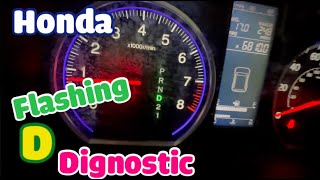
- Flashing "D" Light: The "D" on your gear indicator may start flashing, which signals a transmission-related fault code has been stored.
- Fluid Leaks: Reddish transmission fluid puddles under the car, often from failing axle seals.
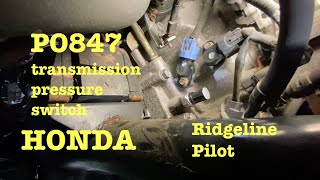
- Check Engine Light: Specific Diagnostic Trouble Codes (DTCs) like P0741 (Torque Converter Clutch Circuit), P0847 (3rd Clutch Transmission Fluid Pressure Switch), P0848, or P0962 🎬 Watch: How to diagnose a flashing D light and P0847 code point to internal or external issues.
Diagnostic Flowchart
Known Problems, Bulletins, and Recalls
This transmission has a few well-documented issues. No major safety recalls have been issued for the transmission itself, but several Technical Service Bulletins (TSBs) exist.
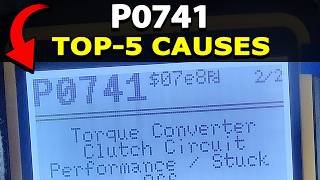
Torque Converter Clutch (TCC) Shudder / DTC P0741
This is the most common complaint. It feels like driving over a rumble strip and is caused by deteriorated transmission fluid that can't provide the correct friction for the torque converter's lock-up clutch. While Honda TSB 17-017 addresses this for later models with software updates and multiple fluid flushes, the underlying cause is often worn-out fluid. For a used unit, replacing the torque converter (which is included) and using fresh, high-quality fluid is the best remedy.
Driveshaft (Axle) Seal Leaks
Leaks from where the axles enter the transmission are common. Honda addressed this in TSB SB-101113 (NHTSA ID: 10053750). It is highly recommended to replace both the left and right axle seals with brand-new OEM seals during any transmission replacement to prevent future leaks.
Shift Solenoid and Pressure Switch Failures
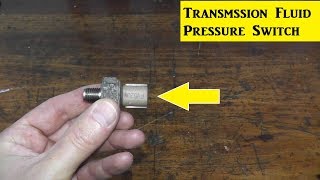
External sensors and solenoids can fail, leading to poor shift quality and fault codes like P0847 (3rd Clutch Transmission Fluid Pressure Switch). These parts are not always guaranteed to be functional with a used assembly. It is standard practice to clean and transfer the known-good solenoids and switches from your original transmission to the replacement unit.
Replacement Cost Comparison
The cost to replace the transmission can vary widely based on the type of part and local labor rates. Shop labor for this job is estimated to be between 7.0 and 12.0 hours, requiring specialized tools like an engine support bar / hoist, subframe jack / jack stands, a 36mm axle nut socket, a torque wrench, and a transmission jack.
| Part Type | Estimated Cost (Part Only) | Notes |
|---|---|---|
| New OEM | $6,000 - $9,000+ | Brand new from a Honda dealer, offering the highest quality but at a significant cost. |
| Remanufactured OEM | $3,100 - $4,700 | Rebuilt to factory specifications with new wear items and often includes a long-term warranty. |
| Used OEM | $795 - $1,300 | A functional unit taken from a donor vehicle (e.g., a 2011 Honda Accord 3.5L V6 with 124,924 miles). Mileage and condition vary. |
| Installation Labor | $900 - $1,800 | Varies by shop rate and location. A recent quote for a similar job including mounts and axles was around $3,000 total. |
Essential Information for Used Buyers

What's Included in a Used Assembly
A used transmission assembly typically includes the core internal and external components. According to ARA/URG industry standards, this includes:
- Transmission case and all internally lubricated parts (gears, shafts, clutch packs)
- Valve body
- Torque converter
- Transmission oil pan
- Extension or tail housing
What's NOT Included (And Must Be Swapped)
External components are generally not included or guaranteed. You or your mechanic must transfer these from your old transmission:
- External sensors (e.g., output shaft speed sensor, transmission range switch/neutral safety switch)
- External shift solenoids and pressure switches
- Wiring harness
- Powertrain Control Module (PCM)
- Shifter linkage/cables
- Flexplate (flywheel) and transmission fluid cooler lines
Pro Tip: Always swap the external sensors and solenoids from your original, known-good transmission onto the replacement unit. This prevents compatibility issues and is a crucial step if the replacement unit exhibits shifting problems after installation.
What Fails at Every Mileage Band
Pro Tip: The mileage bands below describe what to expect from USED REPLACEMENT UNITS of that mileage. The checklists provided are critical steps to perform WHILE INSTALLING the purchased unit, not general maintenance for your current vehicle.
Under 60,000 Miles
While total failure is uncommon at this mileage, some owners report early signs of transmission issues. Harsh or jerky downshifting, particularly from 3rd to 2nd and 2nd to 1st gear, has been noted by some owners on cars with as few as 36,000 miles. Transmission fluid leaks have been discovered on very low mileage vehicles (around 1,300 miles). Failures of external components like transmission pressure sensors can occur prematurely (e.g., at 66,000 miles), causing shifting problems.
- ✓Do during install (required): Fill with new, genuine Honda ATF-DW1 fluid. Do not reuse old fluid.
- ✓Do during install (required): Perform a complete transmission cooler flush to remove any potential contaminants.
- ✓Do during install (recommended): Even on a low-mileage unit, it is critical to replace the external inline ATF filter (Honda P/N 25430-PLR-003).
- ✓Cheap insurance while the engine is out: Install new OEM left and right axle seals and a new torque converter seal.
60,000 to 100,000 Miles
This is the mileage range where torque converter and shift quality issues become more prevalent. Torque Converter Clutch (TCC) shudder or failure, often triggering DTC P0741, is a known issue. This can feel like driving over a rumble strip. Complete transmission failure requiring a rebuild or replacement can occur. Slipping out of gear at stops, potentially caused by internal issues or coolant contamination, has been reported around 101,000 miles.
- ✓Do during install (required): Perform a PCM reset and idle/drive relearn procedure to clear old shift data.
- ✓Do during install (recommended): Strongly consider swapping the external solenoids and pressure switches from your original, known-good transmission onto the replacement unit.
- ✓Cheap insurance while the engine is out: Given the mileage, replacing the included used torque converter with a new or quality remanufactured unit is cheap insurance against the common P0741 shudder issue.
100,000 to 150,000 Miles
The risk of complete failure increases significantly in this range. Many reported failures for Honda V6 automatics occur between 100,000 and 200,000 miles. Torque converter failure (P0741) remains a primary cause of issues. This can be due to a worn clutch inside the converter, a faulty solenoid, or internal blockages from contaminated fluid. Metal shavings found in the fluid are a definitive sign of severe internal wear, often necessitating a full replacement or rebuild. Issues like popping out of gear, hard shifting, and failure to engage Drive without revving the engine indicate a transmission nearing the end of its life.
- ✓Do during install (required): Carefully inspect and consider replacing all external solenoids and pressure switches as a preventative measure, not just swapping them.
- ✓Do during install (recommended): It is highly advisable to replace the used torque converter that comes with the transmission, regardless of its appearance. The risk of a shudder developing is very high at this mileage.
- ✓Cheap insurance while the engine is out: Ensure the timing belt and water pump service has been performed on the engine, as this is a major service item due around this mileage and is easier with the transmission out of the way.
Over 150,000 Miles
Units in this mileage range are at high risk of failure. Survival past this point is highly dependent on a history of consistent fluid changes and gentle use. At this stage, failures are typically due to the cumulative wear of internal components like clutch packs, seals, and the torque converter. A transmission that has survived this long may still fail from external component issues like a bad sensor or solenoid, but internal hard-part failure is more likely. One owner of a 2000 model with 271,000 miles reported floating between gears and jerking, classic signs of a worn-out automatic transmission.
- ✓Do during install (required): Perform an exhaustive cooler and line flush.
- ✓Do during install (recommended): Replace all external solenoids and pressure switches with new OEM parts, and replace the external ATF filter (25430-PLR-003).
- ✓Cheap insurance while the engine is out: Assume the purchased unit will need significant attention. Budget for a new torque converter as a non-negotiable part of the swap, and replace all external seals (axles, torque converter).
Real Owner Experiences
The service life of the Honda H5 automatic transmission in the 2011-2012 Accord V6 is highly variable. While the J-series engine often exceeds 300,000 miles, the automatic transmission is its widely acknowledged weak point. Some analyses suggest an average lifespan around 160,000 miles before major repairs are needed. With meticulous maintenance, including frequent ATF-DW1 fluid changes every 15,000-25,000 miles and external filter replacements every 30,000-50,000 miles, a lifespan of 200,000 miles or more is possible.
| Source | Mileage | What Happened | Cost |
|---|---|---|---|
| CarComplaints.com | 3,653 miles | Owner noticed the car was not shifting to the next gear correctly, describing it as a 'little pulling situation'. | Not specified. |
| BobIsTheOilGuy Forums | 33,000 miles | Owner reported a moderately loud 'clink' or 'chick' sound from the front end when shifting from Reverse to Drive and moving forward. The car drove and shifted perfectly otherwise. | Not applicable. |
| CarComplaints.com | 36,000 miles | Owner experienced noticeable jerking on downshifts, occasional trouble catching a gear on upshifts, and slight slipping at highway speeds. A dealer inspection found no computer codes and stated the transmission was fine. | No repair performed. |
| CarComplaints.com | 80,000 miles | The owner's 2012 Accord required the transmission to be rebuilt due to slipping. | Not specified, but a rebuild is a multi-thousand dollar repair. |
| 95,000 miles | A user commented that the 5-speed automatic transmissions paired with the V6 are prone to failure. | Not applicable. | |
| 101,000 miles | An owner's 2011 Accord started slipping out of gear at red lights. A shop diagnosed coolant in the transmission and recommended replacement for over $6,000. | $6,000+ (quoted for replacement). | |
| DriveAccord.net Forums | 111,000 miles | A 2006 V6 Accord (similar transmission family) threw a P0741 code. A fluid flush did not fix it, and a shop recommended a full replacement, citing a likely worn-out converter clutch and internal blockages. | Quoted for transmission replacement. |
| 117,000 miles | Owner experienced an intermittent blinking 'D' light and P0741 code after highway driving. The issue started after a dealer transmission service. Topping off low fluid provided a temporary fix, but the issue returned, pointing to a potential internal torque converter or solenoid problem. | Ongoing diagnosis. | |
| CarKiller Forums | 136,000 miles | Owner was experiencing shuttering and gear change issues. Forum members suggested the transmission was failing. | Not Stated |
| Car Talk Community | 162,000 miles | A 1998 Accord (a predecessor with known transmission issues) required a transmission replacement. This highlights the general lifespan concerns for Honda V6 automatics of the era. | Quoted over $2,000 for replacement. |
| Car Talk Community | 190,000 miles | Owner was considering a transmission fluid change as a first step due to the high quote to fix a P0741 code. | ~$4,000 quoted. |
| 270,000 miles | Found a local shop that replaced the transmission, CV axles, and motor mounts. | $3,000 | |
| 6th Gen Accord Forums | 271,000 miles | Owner of a 2000 V6 automatic reported that the transmission was starting to fail, with floating between gears and jerking shifts. | Considering a rebuild worth $1,000-$2,400. |
| Not Stated | A little over $6,000 from one shop for a full replacement. A second shop quoted $2,500 to start with hose replacements and multiple flushes. | Not Stated | |
| Not specified, but implied high | An owner with a 2012 Accord V6 reported popping out of gear, hard shifting, and finding metal shavings in the fluid. They were considering a rebuild. | Seeking rebuild kits to DIY. |
Repair or Replace?
Deciding whether to repair your current transmission or replace it entirely depends on the specific failure mode.
- DTC P0847 / P0848 (3rd Clutch Transmission Fluid Pressure Switch Failure): Typical repair cost is $150 - $250. This is almost always a "repair" scenario. The switch is external, relatively inexpensive, and can be replaced without removing the transmission.
- External Solenoid Failure (e.g., DTC P0962): Typical repair cost is $300 - $700. If a specific external solenoid is identified as the culprit, it can be replaced individually. This is a targeted repair that does not require transmission removal.
- DTC P0741 (Torque Converter Clutch Circuit Performance / Stuck Off): Typical repair cost is $200 - $1,500+. Repair makes sense when the issue is isolated to the TCC solenoid, wiring, or requires only a fluid flush. A diagnostic check should be performed to rule out a simple electrical fault before condemning the entire torque converter or transmission.
When Replacement is Smarter: Replacement is the better option when there is evidence of major internal mechanical failure. This includes finding significant metal debris in the transmission fluid, multiple simultaneous error codes pointing to different internal components, or confirmed failure of internal hard parts like clutch packs or gears. If a transmission has been severely overheated or has widespread internal seal failure causing pressure loss, a used or remanufactured unit is often more economical and reliable than a complex and costly rebuild.
Installation Best Practices

Proper installation is critical to the life of your replacement transmission. Cutting corners can lead to immediate failure. This is an Advanced / Expert DIY job.
Required Parts and Fluids for Installation
Warning: Use only Honda Genuine ATF-DW1 fluid. Generic multi-vehicle fluids will cause shudder and shifting problems. You will need approximately 8 to 9 quarts for a complete swap/flush.
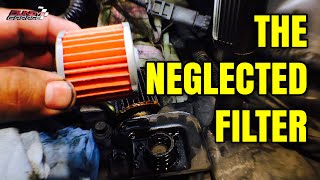
- External Filter: Always replace the external inline cartridge-style filter (Honda P/N 25430-PLR-003) located on top of the transmission case. It is highly prone to clogging and causing overheating.
- Seals: Install new Left and Right Axle (Driveshaft) Seals and a new Torque Converter Seal (input shaft seal).
- Cooler Flush: The transmission fluid cooler and lines must be professionally flushed using an aerosol or machine to remove any metal debris from the previous transmission failure.
Critical Installation Steps & 'Gotchas'
Warning: Ensure the torque converter is fully seated into the transmission's front pump (multiple clicks/drops). If not fully seated, forcing the transmission onto the engine using bellhousing bolts will break the internal oil pump.
- Proper Fluid Check Procedure: Honda fluid level must be checked with the engine turned OFF, within 60 to 90 seconds of shutting down at normal operating temperature. Checking with the engine running leads to severe underfilling or overfilling.
- Dowel Pins: Ensure alignment dowel pins between the engine and transmission are clean and in place to prevent input shaft issues.
Programming and Relearn Procedure
No VIN-specific programming or security re-marriage is required. However, performing a PCM reset / adaptive relearn procedure is highly recommended to clear old shift adaptives and calibrate the PCM/TCM to the replacement unit.
Freight and Delivery Reality

When ordering a used transmission assembly, it will not arrive in a standard cardboard box via regular mail. Verified shipping data for this exact assembly shows it weighs approximately 80 lbs and measures roughly 32" x 25" x 25" before crating. Because of its size and weight, it ships as LTL (Less Than Truckload) freight on a wooden pallet. You must ensure your delivery location can accommodate a freight truck, often requiring a liftgate service if you do not have a loading dock or forklift. Always inspect the transmission thoroughly for any shipping damage before signing the delivery receipt.
Frequently Asked Questions (FAQ)
Will a transmission from a 2010 Accord V6 fit my 2011?
No. The 2008-2010 V6 models use the B97A transmission, which has different internal gear ratios and solenoid calibrations. Your car's computer will detect this difference and put the vehicle into a reduced-power "limp mode." You must use a P79A or M97A from a 2011-2012 model.
Do I need to program this transmission?
No, you do not need to perform any VIN-specific programming or dealer-level security re-marriage. However, a PCM reset and an adaptive learning drive cycle are highly recommended to ensure the transmission shifts smoothly with your vehicle's computer.
What transmission fluid should I use?
You must use Honda Genuine ATF-DW1 automatic transmission fluid. Using generic or multi-vehicle ATF is a common mistake that leads to severe torque converter shudder, harsh shifting, and premature failure.
My replacement transmission has shifting problems. What's wrong?
First, verify that only Honda ATF-DW1 fluid was used and that the level is correct using the proper procedure (engine OFF, checked within 60-90 seconds of shutdown). If the fluid is correct, the most likely cause is a faulty external solenoid or pressure switch. Swap the original, known-working solenoids and sensors from your old transmission onto the replacement unit.
What questions should I ask my installer before the swap?
Always ask your mechanic: Have you confirmed the transmission code is P79A or M97A? Will you be performing a complete flush of the transmission cooler and lines? Will you be replacing the external inline ATF filter (Part No. 25430-PLR-003)? What brand of transmission fluid will you be using? Does your quote include replacing the axle seals and torque converter seal? Will you inspect and swap the external sensors and solenoids from my original transmission if they are in better condition? After installation, will you perform a PCM reset and the idle relearn procedure?
Helpful Videos

Technical Specifications
OEM Part Numbers: 25430-PLR-003
Model Years: 2011-2012; Engine: 3.5L V6; Transmission Codes: P79A, M97A; Transmission Family: Honda H5; Type: 5-Speed Automatic Transaxle; Drivetrain: Front-Wheel Drive (FWD); VIN Digits (4-6): CP3 (Sedan), CS2 (Coupe); VIN Digit (10): B (2011), C (2012); Incompatible Codes: B97A (2008-10 V6), M91A / B90A (4-Cylinder); Required Fluid: Honda Genuine ATF-DW1; External Filter P/N: 25430-PLR-003; Weight (Approx): 80 lbs; Dimensions (Approx): 32" x 25" x 25"
We Have This Part in Stock


The information in this article is provided for general reference and educational purposes only. Vehicle specifications, procedures, and part compatibility can vary by production date, trim level, and region. Always consult your vehicle's factory service manual and verify part numbers before purchasing or performing repairs. Safety-critical components such as airbags, seat belts, and braking systems should be installed by a qualified professional.
- Honda Accord:
- 🎬 Helpful Videos
- 🛍️ Shop This Part
- Identifying the Correct Transmission for Your Accord V6
- Vehicle and VIN Confirmation
- Transmission Code Verification
- Common Failure Symptoms
- Diagnostic Flowchart
- Known Problems, Bulletins, and Recalls
- Torque Converter Clutch (TCC) Shudder / DTC P0741
- Driveshaft (Axle) Seal Leaks
- Shift Solenoid and Pressure Switch Failures
- Replacement Cost Comparison
- Essential Information for Used Buyers
- What's Included in a Used Assembly
- What's NOT Included (And Must Be Swapped)
- What Fails at Every Mileage Band
- Under 60,000 Miles
- 60,000 to 100,000 Miles
- 100,000 to 150,000 Miles
- Over 150,000 Miles
- Real Owner Experiences
- Repair or Replace?
- Installation Best Practices
- Required Parts and Fluids for Installation
- Critical Installation Steps & 'Gotchas'
- Programming and Relearn Procedure
- Freight and Delivery Reality
- Frequently Asked Questions (FAQ)
- 🎟️ Get 5% Off