

2014 Ford Mustang 3.7L V6 6R80: Problems, Identification, and Used Replacement
Identify common lead frame failures and shifting issues on the 6R80 transmission, and learn when to swap it for a quality used OEM assembly.
- The most critical and common failure is the molded lead frame, which can cause a dangerous sudden downshift to first gear; it should be replaced preventatively on any used unit.
- A replacement 6R80 transmission must be electronically programmed to the vehicle's computer using its unique 13-digit Solenoid Strategy ID to prevent severe shifting problems.
- This specific transmission (BR3P-7000-CA/CB/CC) is not interchangeable with 6R80s from F-150s, Explorers, or V8-equipped Mustangs due to physical and electronic differences.
- Always use genuine Motorcraft MERCON LV fluid (WSS-M2C938-A); using incorrect fluid can cause shifting issues and internal damage.
- Before installing a replacement, the transmission cooler and lines must be thoroughly flushed to remove any debris from the previous unit's failure.
Part Identification & Verification

This article covers the 6-speed 6R80 automatic transmission installed in the 2014 Ford Mustang with a 3.7L V6 engine and rear-wheel drive (RWD). This specific transmission is identified by the engineering part numbers BR3P-7000-CA, BR3P-7000-CB, or BR3P-7000-CC.
To confirm you have the correct unit, check the white barcode sticker on the driver's side (left side) of the transmission case near the bellhousing. This tag contains the specific ID number your vehicle requires.
Pro Tip: Before removing the old transmission, take a clear picture of the identification tag. It contains a 12-digit Solenoid Body ID and a 13-digit Solenoid Strategy number that are critical for programming the replacement unit.
Warning: This transmission is not interchangeable with 6R80 units from other Ford vehicles like the F-150, Explorer, Expedition, Ranger, or V8-equipped Mustangs. Those versions have different bellhousing bolt patterns, tailhousing lengths, output shafts, internal electronics, and torque converters that will not work with the 3.7L V6 engine.
When buying a used replacement, a reputable auto recycler will conduct a pre-purchase verification interview. They will ask you to confirm your vehicle is a 2014 Mustang 3.7L V6 RWD and ask for the engineering part number from your white barcode sticker to guarantee an exact match.
Common Failure Symptoms

A failing 6R80 transmission can exhibit several symptoms. Many issues are linked to problems within the valve body or its electronic components. Common signs of failure include:
- A sudden, violent downshift to first gear while driving.
- Harsh or delayed shifting, especially when cold.
- The speedometer dropping to zero and the odometer displaying dashes.
- A growling or buzzing noise when shifting from Park into Drive or Reverse.
- Engine revs but the car fails to move, as if it's in neutral.
- Illuminated Malfunction Indicator Light (MIL) or wrench light on the dashboard, often with diagnostic trouble codes (DTCs) like P0720, P0722, or incorrect gear ratio codes.
- Torque converter shudder, which feels like driving over rumble strips during light acceleration.
Diagnostic Flowchart
Known Issues, Recalls, and Technical Service Bulletins (TSBs)

Several documented issues affect the 6R80 transmission in this vehicle. Understanding these can help you diagnose problems accurately.
Molded Lead Frame / Speed Sensor Failure
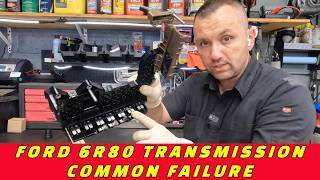
The most severe and common issue is the failure of the molded lead frame, which is an internal plastic and metal component that houses the transmission's output speed sensor (OSS). An intermittent loss of the OSS signal can cause the transmission to unexpectedly downshift into first gear, creating a significant safety risk.
| Severity | Severe |
| Affected Years | 2011-2014 |
| Official Remedy | Ford issued Safety Recall 19S07 (NHTSA ID: 19V-075) to reprogram the Powertrain Control Module (PCM). The new software prevents the transmission from downshifting to first gear if the OSS signal is lost. In some cases, the lead frame itself must be replaced (covered under TSB 13-6-8, TSB 13-2-3, TSB 16-0008, and Customer Satisfaction Program 19N01). |
Growl or Buzz Noise When Shifting
Some vehicles may make a growl or buzz noise when shifted from Park to Drive or Reverse shortly after starting the engine. This is often caused by an issue with the main control valve body separator plate.
| Severity | Moderate |
| Affected Years | 2013-2014 |
| Official Remedy | TSB 14-0134 advises replacing the main control valve body separator plate with an updated part. |
Torque Converter Whining Noise
A whining noise from the torque converter area during acceleration that disappears after the torque converter clutch locks up may occur on some vehicles.
| Severity | Moderate |
| Affected Years | 2013-2014 (specifically units built from April 1, 2012, to July 1, 2012) |
| Official Remedy | TSB 13-6-4 instructs technicians to replace the front pump seal and the torque converter. |
Fluid Leak from Bell Housing
A fluid leak originating from the bell housing area can occur on slightly older builds but is relevant to the 6R80 family.
| Severity | Minor |
| Affected Years | 2012 (specifically built 4/15/2011 to 6/8/2011) |
| Official Remedy | TSB 12-11-14 requires removing the transmission to repair or replace the front pump seal. |
What Fails at Every Mileage Band
Pro Tip: The mileage bands below describe used replacement units of that mileage. The checklists are things to do WHILE INSTALLING the purchased unit, not maintenance for your current transmission.
Under 60,000 Miles
The primary issue in this mileage range is the well-documented molded lead frame failure, which can cause a sudden, dangerous downshift to first gear at speed. Torque converter shudder can also appear even at lower mileages due to fluid breakdown or early component wear.
- ✓Do during install (required): Replace the molded lead frame with the latest updated part, regardless of its apparent condition. This is the single most critical preventative repair for this transmission.
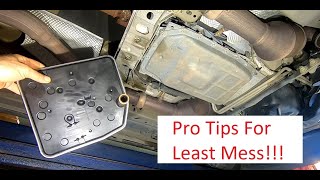
- ✓Do during install (required): Perform a full fluid exchange with new Motorcraft MERCON LV fluid and replace the transmission filter.
- ✓Cheap insurance while the engine is out: Replace the transmission pan gasket, front pump seal, and extension housing seal.
60,000 - 100,000 Miles
Molded lead frame failure remains a prominent issue in this range if not previously replaced. Torque converter shudder becomes more common, often caused by fluid that has lost its effectiveness, but it can also indicate the beginning of torque converter clutch failure. Shift flares (RPMs jumping between shifts) or harsh/delayed shifts can begin, pointing to wear within the valve body or failing solenoids.
- ✓Do during install (required): Replace the molded lead frame if there is no proof it has been done. Perform a full fluid exchange with MERCON LV and replace the filter, pan gasket, and all external seals.
- ✓Do during install (recommended): Consider replacing the torque converter with a new or quality remanufactured unit. Shudder issues are common, and replacing it during the transmission swap is far more cost-effective than doing it later. Inspect transmission cooler lines and connectors for corrosion or leaks.
100,000 - 150,000 Miles
This is the prime mileage for molded lead frame failure if the original part is still in place. Ford's extended warranty for this part was for 10 years or 150,000 miles. Valve body wear can become more pronounced. A cracked 4-5-6 (E-clutch) drum can occur, leading to incorrect gear ratio codes and slipping. Transmission cooler line connectors are known to degrade and leak in this mileage range.
- ✓Do during install (required): Replace the molded lead frame, torque converter, all external seals, and filter, and perform a full MERCON LV fluid exchange. Replace the transmission cooler line connectors.
- ✓Do during install (recommended): If budget allows, a preventative valve body rebuild with updated components (like a new separator plate and Sonnax kits) can address potential wear and prevent future shifting problems.
Over 150,000 Miles
Beyond 150,000 miles, failures are typically related to cumulative wear on internal hard parts, such as clutch packs, bushings, and drums. The molded lead frame warranty expires at 150,000 miles. General wear on the valve body and solenoids can lead to persistent shifting complaints that a fluid change alone may not fix. Assume a used unit in this band requires significant service and should be considered a "good core" for rebuilding.
- ✓Do during install (required): At a minimum, replace the torque converter, molded lead frame, filter, all seals, and cooler line connectors, and flush with MERCON LV.
- ✓Do during install (recommended): A complete rebuild is the safest option. If not rebuilding, a thorough valve body overhaul is strongly advised to ensure proper shifting and pressure control.
Real Owner Experiences
| Source | Mileage | What Happened | Cost |
|---|---|---|---|
| Ford F150 Forum | 60,000 | Owner experienced a transmission shudder that felt like driving over a rough patch of road on light acceleration. A drain and fill of the very dark and sooty Mercon LV fluid, along with a new filter, resolved the issue. | DIY cost of fluid and filter. |
| Reddit r/Mustang | ~65,000 | A 2015 V6 Mustang owner reported a water pump failure at around 65k miles. While not a transmission issue, it's a common powertrain-related failure on the 3.7L engine. | N/A |
| Ford F150 Forum | 99,000 | Owner reported a torque converter shudder. A transmission shop recommended a full rebuild, but the owner insisted on a fluid and filter change first, which completely resolved the shudder. The old fluid was noted to have some buildup on the magnets. | $350 for a fluid and filter change. |
| CarKiller Forums | 99,000 | Owner was quoted for a proactive, voluntary lead frame replacement before failure. | $900.00 |
| Ford F150 Forum | 102,000 | Owner's truck experienced sudden downshifts. The dealer updated the PCM under recall, but the problem persisted. A new lead frame was required to fix the issue, but the repair was not covered due to mileage. | $1400 |
| Ford F150 Forum | 122,000 | Owner stated, "Speed sensor sucks, the rest seems pretty good," indicating a likely lead frame failure. | N/A |
| Ford F150 Forum | 170,000 | Owner's 2014 truck started having sudden downshift issues. The dealer quoted $2500 for a new main control (valve body) assembly. The owner noted the danger of the downshift on the highway. | $2500 estimate |
| Ford F150 Forum | 203,000 | An owner who had the lead frame replaced just before 100k miles reported no further problems at 203k miles, indicating the replacement part is a durable fix. | N/A |
| 47,000 | Owner experienced symptoms of lead frame failure (revving, no movement, code P0722). A local shop, unfamiliar with the lead frame issue, diagnosed it as an internal failure and recommended a full replacement or rebuild. | $200.00 (for diagnosis) | |
| Unknown | Quoted for lead frame replacement at a dealership. | $1475.00 | |
| Ford F150 Forum | Unknown | Dealer quote for lead frame replacement, including diagnosis and labor at $210/hr. | $2200.00 |
| Ford F150 Forum | Unknown | Owner reported a final invoice for lead frame replacement. | $1082.72 |
Repair or Replace?
When facing a 6R80 transmission issue, deciding whether to repair your current unit or replace it with a used assembly depends on the specific failure and the overall health of the transmission.
When Repair Makes Sense
- Molded Lead Frame / Speed Sensor Failure (Typical Cost: $900 - $2,200): This is the most common failure. If the transmission has reasonable mileage and no other symptoms (like slipping, burnt fluid, or other error codes), replacing the lead frame is the most cost-effective solution.
- Torque Converter Whining / Front Pump Seal Leak (Typical Cost: $800 - $1,500): If the issue is isolated to a leaking seal or a noisy but otherwise functional torque converter, repair makes sense. This requires removing the transmission, so labor is a significant part of the cost.
- Main Control Valve Body / Separator Plate Issues (Typical Cost: $1,000 - $1,800): For specific shifting issues like harsh Park-to-Drive shifts addressed by TSB 14-0134. If the problem is confirmed to be the separator plate or a sticking valve, servicing the valve body can resolve the issue without a full replacement.
When Replacement is Smarter
Replacement with a low-mileage used or remanufactured unit is smarter when the transmission has very high mileage (over 150,000 miles), has suffered catastrophic internal damage (e.g., broken hard parts, significant metal debris in the pan), or exhibits multiple failure symptoms simultaneously (e.g., lead frame failure plus clutch slippage). It is also the better choice if the cost of multiple individual repairs approaches the price of a quality used unit ($600 - $1,200 plus labor).
Questions to Ask Your Installer
- Will you be programming the PCM with the transmission's 13-digit Solenoid Body Strategy ID, or swapping my original valve body?
- Do you have the scan tool (like Ford IDS or FORScan) to perform the solenoid programming and the adaptive learning relearn procedure after installation?
- Are you using genuine Motorcraft MERCON LV fluid? Can you confirm you will not use a generic multi-vehicle ATF?
- How do you ensure the torque converter is fully seated in all three stages before bolting the transmission to the engine?
- Will you be performing a complete flush of the transmission cooler and lines with a proper flushing solvent before installing the replacement unit?
- Does your quoted price include replacing the front pump seal, axle seals, and a new transmission filter?
- What warranty do you provide on your labor, and what is the parts warranty on the transmission unit itself?
Replacement Cost Estimates
The cost to replace a 6R80 transmission varies based on the type of replacement unit. These estimates do not include taxes or potential shipping charges.
| Part Type | Estimated Cost (USD) |
|---|---|
| New OEM | $4,500 - $5,500+ (Typically sold as components, not complete assemblies) |
| Remanufactured | $2,600 - $3,700 |
| Used OEM | $600 - $1,200 |
| Installation Labor | $750 - $2,000 (Estimated 5 to 10 hours) |
What's Included in a Used Assembly

When purchasing a used 6R80 transmission, it's important to know what parts are typically included per Automotive Recyclers Association (ARA) standards.
- What's Usually Included: The transmission case and all internally lubricated parts, the extension/tail housing, the transmission oil pan, the torque converter, and the molded lead frame (internal connector plate housing speed and range sensors, mounted to the valve body).
- What's Not Included: External sensors and wiring harnesses external to the case, the shifter, shift linkage, shift cables, the flexplate/flywheel, transmission fluid cooler lines, and the Powertrain Control Module (PCM). On 2012 and newer Mustangs, the transmission is controlled directly by the vehicle's engine PCM, so there is no separate TCM module inside the transmission.
Installation & Programming Essentials
Proper installation and programming are critical for the long-term function of a replacement 6R80 transmission. This is an advanced DIY project that requires special tools, including a transmission jack, fluid transfer pump, heavy-duty heat-resistant mechanics glove, an engine support bar, and a scan tool with J2534 programming capabilities or a laptop with FORScan/Ford IDS.
Required Programming
A replacement transmission must be electronically programmed to the vehicle's Powertrain Control Module (PCM). This process, known as Solenoid Strategy Programming & Adaptive Learning Relearn, involves entering the unique 13-digit Solenoid Strategy and 12-digit Solenoid Body ID from the replacement unit into the PCM using a dealer-level scan tool. Failure to perform this step will result in immediate harsh shifting, poor performance, and potential clutch damage. A Transmission Adaptive Learning Drive Cycle must also be performed after installation.
Pro Tip: To avoid reprogramming, a technician can carefully transfer the original valve body and molded lead frame assembly into the replacement transmission. However, this carries the risk of transferring a faulty component.
Installation Gotchas
- Torque Converter Seating: The torque converter must click or drop down three distinct times to fully seat into the front pump. Failure to seat fully will crack the front pump gear upon bolting the transmission to the engine.
- No Under-Hood Dipstick: Fluid must be filled and checked from underneath the vehicle via a small dipstick cap next to the hot exhaust.
- Fluid Level Check Temperature: The fluid level must be checked while the vehicle is idling, level, and with the fluid temperature between 180°F and 200°F (or 90°F - 110°F for a cold check).
- Bellhousing Dowel Pins: Ensure alignment dowel pins are in place and not corroded to prevent input shaft misalignment.
- Mandatory Cooler Flush: Debris from the old failed unit must be thoroughly flushed from the cooler lines with a professional transmission line flush solvent to prevent immediate solenoid contamination in the replacement unit.
- Required Consumables: You will need Motorcraft MERCON LV automatic transmission fluid (Spec: WSS-M2C938-A), a Motorcraft FT-188 transmission filter, a transmission pan gasket, a torque converter seal (front pump seal), and driveshaft seals.
Freight & Delivery Reality

A complete 6R80 transmission assembly is a heavy industrial part. It weighs approximately 215 lbs and measures roughly 36" x 18" x 24" before crating. Because of its size and weight, it ships as LTL (Less-Than-Truckload) freight strapped to a pallet—it will NOT arrive as a standard parcel delivery.
If you are having the transmission delivered to a residential address, you must request liftgate service, as the delivery truck will not have a loading dock to back into. When the freight carrier arrives, it is critical that you inspect the transmission and the pallet for any signs of damage or leaking fluids before signing the Bill of Lading (BOL). Signing the BOL without noting damage releases the freight company from liability.
Frequently Asked Questions (FAQ)
Do I have to program a replacement 6R80 transmission?
Yes. The vehicle's computer must be programmed with the replacement transmission's unique 13-digit Solenoid Strategy number and 12-digit Solenoid Body ID. This ensures the computer sends the correct signals for smooth shifting. Skipping this step will lead to severe shift problems and likely damage the transmission.
Can I use a 6R80 from an F-150 or a Mustang GT?
No. While they share the 6R80 name, transmissions from other models have different bellhousings that won't bolt to the 3.7L V6 engine, as well as different torque converters, tailhousing lengths, and internal programming.
What is the "molded lead frame"?
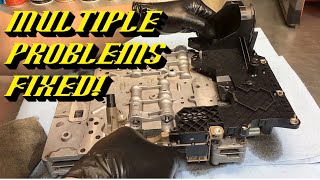
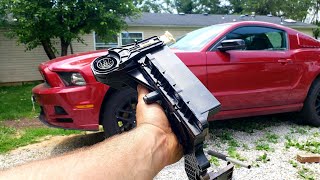
The molded lead frame is a plastic and metal component mounted to the valve body inside the transmission pan. It contains the electrical pathways and sensors—including the Output Shaft Speed (OSS) sensor—that the computer uses to control shifting. A crack or failure in this part is a primary cause of the sudden downshifting issue.
How do I check the transmission fluid level?
The fluid level must be checked from underneath the vehicle. With the engine idling, the vehicle level, and the transmission fluid hot (180°F-200°F), remove the small fill plug on the side of the transmission pan next to the exhaust. The fluid should be level with the bottom of the fill hole.
What is the expected service life of the 6R80 transmission?
The Ford 6R80 is widely regarded as a robust and durable transmission. With proper maintenance, many owners report service lives well in excess of 200,000 miles, with some reaching 250,000 to 300,000 miles without a major rebuild. The key to longevity is regular fluid and filter changes every 30,000 to 60,000 miles.
What kind of transmission fluid does the 2014 Mustang 3.7L take?
You must use genuine Motorcraft MERCON LV automatic transmission fluid (Specification: WSS-M2C938-A). Using generic multi-vehicle ATF, Mercon V, or Dexron VI can cause severe internal damage and shifting issues.
Helpful Videos
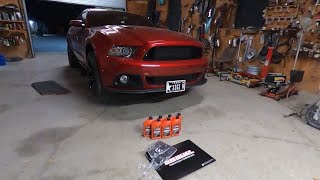
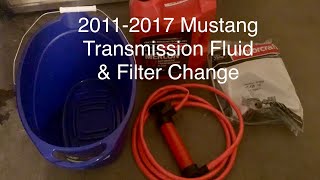
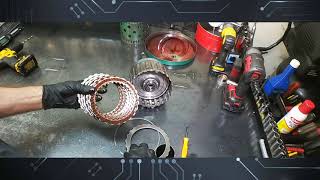
Technical Specifications
OEM Part Numbers: BR3P-7000-CA BR3P-7000-CB BR3P-7000-CC
Name: 6R80; Type: 6-Speed Automatic; Drivetrain: Rear-Wheel Drive (RWD); Engine Compatibility: 3.7L V6; Fluid Type: Motorcraft MERCON LV; Fluid Specification: WSS-M2C938-A; Weight: Approx. 215 lbs; Solenoid Body ID: 12-digit; Solenoid Strategy: 13-digit
We Have This Part in Stock


The information in this article is provided for general reference and educational purposes only. Vehicle specifications, procedures, and part compatibility can vary by production date, trim level, and region. Always consult your vehicle's factory service manual and verify part numbers before purchasing or performing repairs. Safety-critical components such as airbags, seat belts, and braking systems should be installed by a qualified professional.
- Ford Mustang:
- 🎬 Helpful Videos
- 🛍️ Shop This Part
- Part Identification & Verification
- Common Failure Symptoms
- Diagnostic Flowchart
- Known Issues, Recalls, and Technical Service Bulletins (TSBs)
- Molded Lead Frame / Speed Sensor Failure
- Growl or Buzz Noise When Shifting
- Torque Converter Whining Noise
- Fluid Leak from Bell Housing
- What Fails at Every Mileage Band
- Under 60,000 Miles
- 60,000 - 100,000 Miles
- 100,000 - 150,000 Miles
- Over 150,000 Miles
- Real Owner Experiences
- Repair or Replace?
- When Repair Makes Sense
- When Replacement is Smarter
- Questions to Ask Your Installer
- Replacement Cost Estimates
- What's Included in a Used Assembly
- Installation & Programming Essentials
- Required Programming
- Installation Gotchas
- Freight & Delivery Reality
- Frequently Asked Questions (FAQ)
- 🎟️ Get 5% Off