

2019-2020 Ford Fusion 2.0L AWD 6F35: Problems, Identification, and Used Replacement
Identifying the exact Auto Start-Stop 6-speed transmission, common failures like cracked flexplates and harsh shifts, and when to swap in a used OEM assembly.
- This specific 6F35 for the 2019-2020 Fusion 2.0L AWD with Auto Start-Stop is not interchangeable with any other model; you must verify fitment using the VIN (8th digit '9'), drivetrain (AWD), and door sticker (TR code 'W').
- Programming the replacement transmission's 13-digit Solenoid Strategy Code into the vehicle's computer is mandatory and requires a Ford-compatible scan tool to prevent immediate shifting problems and damage.
- During installation, always replace the shifter cable bushing (Recall 22V-413), the auxiliary pump supply tube (TSB 16-0111), and all external seals, and inspect the engine's flexplate for cracks (Program 22N12).
- A professional, heated, high-pressure flush of the transmission cooler and lines is essential to remove contaminants from the old unit and protect the replacement.
Identifying the Correct 6F35 Transmission

This article covers the 6-speed automatic transaxle, part of the 6F35 and 6F55 family, specifically for the 2019-2020 Ford Fusion equipped with the 2.0L Turbo engine, All-Wheel Drive (AWD), and the Automatic Start-Stop feature. This is a very specific unit, and substitutions are not possible.
How to Confirm Fitment on Your Vehicle
Before purchasing a replacement, you must verify your vehicle requires this exact transmission. Check the following on your Ford Fusion:
- VIN Check: The 8th digit of your Vehicle Identification Number (VIN) must be "9".
- Drivetrain: Your vehicle must be All-Wheel Drive (AWD). You can confirm this by checking for a rear driveshaft and differential.
- Engine Feature: Your vehicle must have the Automatic Start-Stop feature. This system shuts the engine off at a stop to save fuel.
- Door Sticker Code: On the driver's side door jamb sticker, the code under "TR" (for Transmission) should be "W".
Locating Key Identification Numbers
To be certain, you can find identifying numbers on the transmission itself. Look for a white barcode sticker on the top of the transmission case, which will have the transmission ID number (e.g., DG9P-ZA). A separate tag with the crucial 13-digit Solenoid Strategy Code is located on the side of the case near the main electrical connector.
What Will Not Fit: Interchangeability Issues
Warning: It is critical to understand that other 6F35 transmissions are not interchangeable with this specific unit. Ordering the wrong model will result in a part that cannot be installed or will not function.
- FWD vs. AWD: A transmission from a Front-Wheel Drive (FWD) Fusion lacks the necessary output splines and mounting points for the AWD system's Power Take-off Unit (PTU).
- Non-Start-Stop Models: Transmissions from Fusions without Auto Start-Stop are missing the specific machined mounting bosses and internal fluid passages required for the external electric auxiliary fluid pump.
- Other Ford Models: Units from the Ford Escape, Edge, or other models, even with a 6F35, will not work due to different casings, mounts, wiring, and computer calibration.
Diagnostic Flowchart

Common Failure Symptoms and Known Issues

If your Fusion is experiencing severe shifting problems, one of these common issues may be the cause, pointing toward a needed replacement.
Cracked Flexplate (Customer Satisfaction Program 22N12)
Warning: A cracked flexplate is a severe issue. The flexplate is a metal disc that connects the engine to the transmission's torque converter. A crack can cause a rattling or grinding noise, vibrations, a no-start condition, or a sudden loss of power while driving. Ford initiated program 22N12 for this issue on certain 2019-2020 Fusions. Always inspect the flexplate on your engine before installing a replacement transmission.
Degraded Shifter Cable Bushing (NHTSA Recall 22V-413)
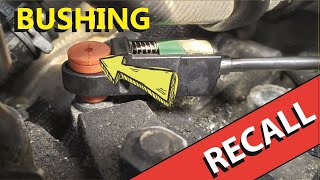
Warning: This major safety recall (Ford ID 22S43) affects 2019-2020 Fusions. The bushing that connects the shifter cable to the transmission can degrade or detach. This can cause the vehicle to be in a different gear than what the shifter indicates, including failing to engage 'Park'. This could allow the vehicle to roll away unexpectedly. The fix involves replacing the bushing with an updated part and adding a protective cap. This should be addressed on any vehicle, regardless of transmission condition.
Harsh Restart Engagement (TSB 16-0111)
This issue, related to the Auto Start-Stop system, can cause a harsh 'bang' or violent jolt when the engine restarts. It is often accompanied by diagnostic trouble code P0C27. The cause is often air getting into the auxiliary pump supply tube. The fix, outlined in Technical Service Bulletin 16-0111, is to replace the original tube with an updated version (Ford Part # DG9Z-7890-G) that contains a check ball to prevent this.
Internal Component Failures
- Case Bore Wear: A known weakness in the 6F35 family is wear in the transmission case bore for the passenger-side axle-driven sprocket bearing. This can lead to fluid leaks from the axle seal area and excessive play in the axle shaft.
- Cracked Direct Clutch Hub: Another internal failure point is a cracked direct clutch hub, which typically affects 3rd and 5th gear shifts and may cause slipping or failure to engage these gears.
What Fails at Every Mileage Band
Pro Tip: The mileage bands below describe used replacement units of that mileage. The checklists are things to do WHILE INSTALLING the purchased transmission, not maintenance for your current unit.
Under 60,000 Miles
Even low-mileage units can experience significant issues. Known failures include torque converter failure (failure to lock up, shudder, RPM flutter), premature complete transmission failure (manifesting as slipping, harsh shifting, or total loss of engagement sometimes before 20,000 miles), and leaking axle seals (specifically the left-side half shaft seal). You must also watch for shifter cable bushing degradation (NHTSA Recall 22V-413), cracked flexplates (Ford Customer Satisfaction Program 22N12), and harsh engagement on restart from the Auto Start-Stop system (TSB 16-0111).
- ✓Do during install (required): Perform a professional, heated, high-pressure flush of the transmission cooler lines to prevent contamination.
- ✓Do during install (required): Replace the shifter cable bushing with the updated part per NHTSA Recall 22V-413.
- ✓Do during install (required): Thoroughly inspect the vehicle's flexplate for cracks per Ford Program 22N12 and replace if any are found.
- ✓Do during install (required): Replace the auxiliary pump supply tube with the updated version (Ford Part # DG9Z-7890-G) to resolve TSB 16-0111.
- ✓Do during install (required): Replace all external seals on the used transmission (torque converter seal, both axle seals) before installation.
- ✓Do during install (recommended): Perform at least one drain-and-fill with fresh Motorcraft MERCON LV fluid before starting the vehicle.
60,000 - 100,000 Miles
In this mid-range, fluid breakdown becomes a major factor. Failures include complete transmission failure due to torque converter overheating and disintegration, hesitation on acceleration, and fluid breakdown causing shift solenoids to stick (leading to delayed or harsh shifts into 3rd, 5th, and reverse). Torque converter clutch wear from contaminated fluid can also cause RPM flutter at cruising speeds (35-50 mph).
- ✓Do during install (required): All mandatory items from the 'Under 60K' band apply.
- ✓Do during install (recommended): Perform a 'triple drain-and-fill' or a full machine-based fluid exchange with Motorcraft MERCON LV to replace as close to 100% of the old fluid as possible.
- ✓Do during install (recommended): Inspect the passenger-side axle output bore on the case for any signs of wear or leakage, a known family weak point.
- ✓Cheap insurance while the engine is out: Consider installing a new or remanufactured torque converter as a preventative measure, as this is the most common major failure point in this mileage range.
100,000 - 150,000+ Miles
High-mileage units that have missed Ford's 150,000-mile service interval are at extreme risk. The internal fluid filter becomes clogged from degraded fluid, starving the front pump and causing a whining noise, loss of engagement, and eventual pump failure. Worn internal seals (like on the center support) cause harsh, slamming engagements into drive or reverse. Delayed engagement into 3rd, 5th, and reverse is common due to a sticking Shift Solenoid B.
- ✓Do during install (required): All mandatory and recommended items from the '60-100K' band apply.
- ✓Do during install (required): During installation, ensure the wiring harness is in perfect condition, as heat and age can make connectors brittle.
- ✓Do during install (required): After installation, performing the Solenoid Strategy Programming and a full adaptive learning drive cycle is absolutely critical to the survival of the replacement unit.
- ✓Cheap insurance while the engine is out: Budget for a new torque converter as a non-negotiable part of the installation. A used transmission in this mileage range without verifiable service history is a very high risk.
Real Owner Experiences
| Source | Mileage | What Happened | Cost |
|---|---|---|---|
| BobIsTheOilGuy Forum | ~44,000 miles | Torque converter failed to lock up, causing RPMs to bounce at speed. The transmission still worked otherwise. Ford covered 60% of the rebuild cost despite being out of warranty by time. | Partial dealer coverage, owner paid remaining 40% of rebuild. |
| Endurance Warranty Blog / Owner Complaints | ~50,000 miles | Reports of serious transmission issues requiring full replacement at relatively low mileage. | Not specified, but full replacement costs are estimated between $5,758 and $7,538. |
| Lemon Law Firm / Consumer Databases | Under 20,000 miles | Some transmissions reportedly failed before hitting 20,000 miles, exhibiting slipping, overheating, and stalling. | A new 6F35 transmission part cost is cited around $4,000 before installation. |
| BobIsTheOilGuy Forums | 99,700 miles | Rapid transmission failure due to torque converter overheating. This occurred despite the owner performing fluid changes at 10k, 22k, 32k, 49k, and 77k miles. | ~$5,000 for a rebuilt transmission. |
| Car Talk Community | 72,000 miles | Vehicle experienced hesitation when accelerating. A Ford dealer diagnosed it as needing a complete transmission rebuild. | Quoted just under $5,900 by the dealer for a rebuild. |
| Reddit r/fordfusion | 90,000 miles | Owner experienced an 'uncomfortable jerk'. A single drain and fill resolved the issue, and the car continued to 130,000 miles without further problems reported. | Cost of a single drain and fill (DIY or shop service). |
| YouTube (Former Ford Tech 'Big Ben's Cars & Cycles') | ~120,000+ miles | Common failure pattern for units with no service history: fluid is black and grimy, clogs the internal filter, starves the pump, causing a whine and loss of movement. | Requires transmission removal to service; often leads to a full rebuild or replacement. |
| YouTube ('The Auto Station') | ~105,000 miles | Car presented with a 'growing' sound and harsh shifting. A different shop had quoted a $10,000+ replacement. A professional fluid flush with cleaner and conditioner resolved the symptoms. | $200-$300 for a professional fluid exchange service. |
| Reddit r/fordfusion | 140,000 miles | Owner performed a drain and fill and noted an immediate improvement in shift quality and smoothness, planning to continue service every 15,000 miles. | Cost of DIY drain and fill. |
| 180,000 miles | Rebuilt transmission with Transgo shift kit. | $4,500 | |
| N/A | Replaced with a remanufactured unit. | $5,000 ($3500 parts, $1500 labor) | |
| CarComplaints.com | 53,000 miles | Replaced broken transmission flexplate. | Nearly $3,000 |
Repair or Replace?
Deciding whether to repair your current 6F35 or replace it with a used unit depends on the specific failure.
When Repair Makes Sense
| Issue | Typical Cost | Recommendation / Notes |
|---|---|---|
| Cracked Flexplate (Program 22N12) | $800 - $3,000 | Repair is a no-cost option under Ford's program (up to 10 years/100k miles). Otherwise, it's cheaper than a full swap if the transmission is undamaged. |
| Degraded Shifter Cable Bushing (Recall 22V-413) | $0 (Recall) - $50 | Always perform this repair. This is a low-cost, high-severity safety issue that is free to fix under the recall. |
| Harsh 'Bang' on Restart (TSB 16-0111) | $100 - $300 | Always fix this by replacing the auxiliary pump supply tube with the updated part (DG9Z-7890-G). |
| External Fluid Leaks | $200 - $800 | If the transmission shifts perfectly and fluid is clean, replacing external seals (axle, torque converter, pan) is economical. |
When Replacement is Smarter
Replacement is the smarter choice when internal failure has occurred, such as clutch pack failure, torque converter failure that contaminates the system with metal shavings, or case bore wear. In these cases, a simple repair is often a temporary fix, as debris has likely circulated throughout the unit. A full rebuild or replacement with a quality used or remanufactured unit is the more reliable long-term solution. Used units typically run $1,500 - $2,500, while remanufactured units run $2,400 - $4,500. If the total cost of diagnosing and repairing multiple smaller issues approaches the cost of a warranted, lower-mileage used unit, replacement becomes the logical choice.
Questions to Ask Your Installer
- Have you worked on the 6F35/6F55 transmission family before, specifically in a Ford Fusion AWD with the start-stop system?
- Do you have a Ford-compatible scan tool (like Ford IDS or FORScan) to perform the mandatory Solenoid Strategy Programming and the adaptive learning drive cycle?
- Will you be performing a professional high-pressure, heated flush of the transmission cooler and lines? What is your process to guarantee all debris from the old unit is removed?
- Can you confirm you will install an updated shifter cable bushing (Recall 22S43) and the updated auxiliary pump supply tube with the check ball (TSB 16-0111 / Part # DG9Z-7890-G)?
- Will you inspect the vehicle's flexplate for cracks (per Program 22N12) before installing the replacement transmission?
- What is your procedure for verifying the torque converter is fully seated in all three 'clicks' to prevent pump damage?
- What brand and type of transmission fluid will you be using? (Should be Motorcraft MERCON LV or an equivalent licensed fluid).
- How do you verify the correct fluid level on this unit, given it has no dipstick and requires a specific temperature range?
- Does your installation quote include new axle seals and a new torque converter seal?
- What is the warranty on your labor, and how does it work with the parts warranty from the transmission supplier?
Replacement Cost Comparison
The cost to replace a 6F35 transmission varies significantly based on the type of part chosen. Labor costs are additional.
| Part Type | Estimated Price Range (Part Only) | Notes |
|---|---|---|
| New OEM | $3,500 - $7,000+ | Brand new from a Ford dealer. Highest cost but comes with a manufacturer warranty. |
| Remanufactured OEM | $2,400 - $4,500 | Professionally rebuilt to meet or exceed original specifications, often with updates to fix known flaws. Comes with a warranty. |
| Used OEM | $1,500 - $2,500 | A direct pull from a donor vehicle. Price varies with mileage and condition. Offers significant savings. |
Labor Cost
Installation is a complex job requiring 7 to 11 hours of professional labor. Expect to pay between $1,000 and $1,800 for installation, depending on shop rates. This is an Advanced / Expert DIY job.
What's Included in a Used Assembly
When purchasing a used transmission, it's important to know what parts are typically included and what must be transferred from your old unit.
Standard Inclusions (Per ARA Guidelines)
- Transmission Case and all internal parts (gears, clutches, shafts)
- Valve Body and Internal Oil Pump
- Torque Converter
- Transmission Oil Pan
- Extension/tail housing
Standard Exclusions
Warning: The following parts are almost never included and must be sourced separately or transferred from your original transmission. The electric auxiliary transmission fluid pump required for the Auto Start-Stop system is a critical component that is mounted externally and is NOT included with a standard used assembly.
- External Sensors and Wiring Harnesses
- Transmission Control Module (TCM)
- Powertrain Control Module (PCM)
- Flexplate (Flywheel)
- Power Take-off Unit (PTU / AWD Transfer Case)
- Axles, brackets, shift cables, and shifter linkage
- Transmission cooler and lines
Freight & Delivery Reality

If you are ordering a used 6F35 transmission online, it will not arrive in a regular cardboard box via standard mail. Here is what to expect:
- Size and Weight: This transmission assembly weighs approximately 248 lbs and measures roughly 33" x 28" x 25" before crating.
- Shipping Method: It ships as LTL (Less Than Truckload) freight on a wooden pallet. It is NOT a parcel.
- Delivery Requirements: Delivery requires a commercial address with a loading dock or a forklift. If delivering to a residential address or a shop without a dock, you must request liftgate service.
- Inspect Before Signing: Never sign the delivery receipt until you have fully inspected the transmission. Check the aluminum case for cracks from transit drops, and ensure external sensors and the plastic electrical connectors are not smashed.
- Pre-Purchase Verification: A reputable supplier will conduct a pre-purchase verification interview. They will ask you to confirm your VIN's 8th digit is '9', verify your vehicle is AWD, confirm the Auto Start-Stop feature, and check the 'TR' code 'W' on your door sticker.
Critical Installation and Programming Steps

Proper installation and programming are essential for the longevity and function of the replacement transmission. Failure to follow these steps will lead to immediate problems.
Special Tools Required
This is not a basic hand-tool job. You will need:
- Engine support bar or hoist
- Heavy-duty transmission jack and a subframe jack
- CV axle puller/slide hammer
- Torque wrench
- Cooler line disconnect tool (e.g., Lisle #39960)
- Ford-compatible diagnostic scan tool (Ford IDS or FORScan)
Programming is NOT Optional
This transmission requires Solenoid Strategy Programming. The unique 13-digit Solenoid Strategy Code and 7-digit Solenoid ID, found on a tag on the transmission case, must be programmed into the vehicle's Powertrain Control Module (PCM). This requires a Ford-compatible diagnostic scan tool like Ford IDS or FORScan. Skipping this step will cause violent shifting, slipping, and rapid transmission failure.
Pro Tip: Before installing the transmission, take a clear photo of the Solenoid Strategy Tag on the replacement unit. It is often difficult to access once the transmission is in the vehicle.
Installation Gotchas
- Torque Converter Seating: You must rotate and push the torque converter inward until it clicks or drops three distinct times. Forcing the bellhousing bolts without full seating will crack the internal oil pump gear.
- PTU / AWD Spline Lubrication: Clean and lubricate the intermediate shaft splines with high-temperature, water-resistant grease to prevent rust weld and stripping.
- Harness Compatibility: The wiring harness must support the electric auxiliary fluid pump for the Auto Start-Stop system. Standard non-start-stop harnesses are incompatible.
Essential Parts to Replace During Installation
To ensure a successful repair, always install the following new parts:
- Transmission Fluid: Use only Motorcraft MERCON LV automatic transmission fluid.
- Seals: Replace the torque converter seal and both front CV axle seals.
- Updated Auxiliary Pump Tube: To prevent the harsh restart issue (TSB 16-0111), install the updated supply tube with an internal check ball (Ford Part # DG9Z-7890-G).
- Cooler Flush: The transmission cooler and lines must be professionally flushed with a heated, high-pressure machine to remove any debris from the previous transmission's failure.
Frequently Asked Questions (FAQs)
Do I have to program the replacement transmission?
Yes, absolutely. The unique 13-digit Solenoid Strategy Code and 7-digit Solenoid ID from the replacement transmission must be programmed into your vehicle's computer using Ford IDS or FORScan. Skipping this step will cause severe shifting problems and damage the new unit.
Can I use a transmission from a front-wheel drive (FWD) Fusion?
No. A FWD transmission does not have the correct casing or output for the Power Take-off Unit (PTU) required for an AWD vehicle.
Is the transfer case (PTU) included with the transmission?
No. The PTU, which directs power to the rear wheels in an AWD system, is a separate component and is not included with a used transmission assembly.
How do I check the fluid level in this transmission?
This transmission does not have a traditional dipstick. The fluid level must be checked via a standpipe overflow plug on the side of the case. This procedure is complex and must be done with the engine running, vehicle level, and when the transmission fluid is at a very specific temperature (185°F to 200°F or 85°C to 93°C).
What is the expected service life of the 6F35 transmission?
Service life varies dramatically based on maintenance. While Ford suggests a 150,000-mile fluid service interval, failures are common well before that mileage, sometimes under 60,000 miles. With regular fluid changes every 30,000 to 50,000 miles using Motorcraft MERCON LV, a lifespan of 200,000 to 250,000 miles is considered achievable.
What special tools are required to install this transmission?
This is an advanced job requiring an engine support bar or hoist, a heavy-duty transmission jack, a subframe jack, a CV axle puller/slide hammer, a torque wrench, a cooler line disconnect tool (like Lisle #39960), and a Ford-compatible diagnostic scan tool.
Helpful Videos

![How to Program Ford Escape 6F35 Transmission Solenoid Strategy [Required if Replaced Transmission!]](https://img.youtube.com/vi/gKPTkzr1Hd0/mqdefault.jpg)
Technical Specifications
OEM Part Numbers: DG9Z-7890-G
Name: 6F35 6-Speed Automatic Transaxle; Years: 2019-2020; Vehicle: Ford Fusion; Engine: 2.0L Turbo (VIN 8th digit '9'); Drivetrain: All-Wheel Drive (AWD); Required Feature: Automatic Start-Stop; Door Sticker Code (TR): W; Fluid Type: Motorcraft MERCON LV; Weight (approx): 248 lbs; Dimensions (approx): 33" x 28" x 25"; Fluid Check Temperature: 185°F to 200°F (85°C to 93°C)
We Have This Part in Stock


The information in this article is provided for general reference and educational purposes only. Vehicle specifications, procedures, and part compatibility can vary by production date, trim level, and region. Always consult your vehicle's factory service manual and verify part numbers before purchasing or performing repairs. Safety-critical components such as airbags, seat belts, and braking systems should be installed by a qualified professional.
- Ford Fusion:
- 🎬 Helpful Videos
- 🛍️ Shop This Part
- Identifying the Correct 6F35 Transmission
- How to Confirm Fitment on Your Vehicle
- Locating Key Identification Numbers
- What Will Not Fit: Interchangeability Issues
- Diagnostic Flowchart
- Common Failure Symptoms and Known Issues
- Cracked Flexplate (Customer Satisfaction Program 22N12)
- Degraded Shifter Cable Bushing (NHTSA Recall 22V-413)
- Harsh Restart Engagement (TSB 16-0111)
- Internal Component Failures
- What Fails at Every Mileage Band
- Under 60,000 Miles
- 60,000 - 100,000 Miles
- 100,000 - 150,000+ Miles
- Real Owner Experiences
- Repair or Replace?
- When Repair Makes Sense
- When Replacement is Smarter
- Questions to Ask Your Installer
- Replacement Cost Comparison
- Labor Cost
- What's Included in a Used Assembly
- Standard Inclusions (Per ARA Guidelines)
- Standard Exclusions
- Freight & Delivery Reality
- Critical Installation and Programming Steps
- Special Tools Required
- Programming is NOT Optional
- Installation Gotchas
- Essential Parts to Replace During Installation
- Frequently Asked Questions (FAQs)
- 🎟️ Get 5% Off