

2022-2024 Ford Explorer 2.3L 10R60 Transmission: Problems, Identification, and Used Replacement
Identify the exact 10R60 variant for your 4x4 Explorer, understand common failures like the CDF drum slip, and learn when to swap in a used OEM assembly.
- Programming the 13-digit Solenoid Body Strategy code from the replacement unit into the vehicle's computer is mandatory for proper function.
- Verify exact fitment before purchase: 2022-2024 Explorer, 2.3L engine, 4x4/AWD, NO auto start-stop, and a 'T' under the 'TR' code on the door sticker.
- Many shifting problems are software-related; always check for and apply PCM/TCM updates before condemning the transmission.
- Only use Motorcraft Mercon® ULV fluid (spec WSS-M2C949-A); using any other fluid will cause damage.
- A heated flush of the transmission cooler and lines is a critical, non-negotiable step when installing a replacement unit.
Is This the Right Transmission for Your Explorer?


The 2022-2024 Ford Explorer equipped with the 2.3L EcoBoost engine and four-wheel drive (4x4/AWD) uses a specific version of the Ford 10R60 10-speed automatic transmission. This unit is designed for a longitudinal (rear-wheel-drive-based) layout. Correctly identifying this transmission is critical, as it does not interchange with units from other Explorer models or different Ford vehicles.
Pre-Purchase Checklist
Before purchasing a replacement, verify that your Explorer matches these exact specifications:
| Specification | Requirement |
|---|---|
| Engine | 2.3L EcoBoost 4-cylinder (not the 3.0L V6 or 3.3L V6) |
| Drivetrain | Four-wheel drive (4x4) or All-wheel drive (AWD) |
| Auto Start-Stop | The vehicle must NOT have the automatic engine stop-and-start feature. |
| Transmission Code | The driver's door jamb sticker must show a 'T' under the 'TR' code. |
Locating Your Transmission ID
You can confirm your transmission in two main ways. First, check the Safety Compliance Certification Label on your driver's side door jamb. Look for the "TR" code; if it shows the letter "T", you have a 10R60. For absolute certainty, locate the white barcode tag on the passenger side of the transmission case. The engineering number should match codes like N1MP-7000-BA or N1MP-7000-AA, and the part number may be N1MZ-7000-B.
Warning: This transmission is not interchangeable with other units that may seem similar. It will NOT fit 2WD (4x2) models, Police Package Interceptors, or Explorers with the 3.0L or 3.3L engines (which use the heavier-duty 10R80). Units from the Ford Bronco or Lincoln Aviator will also not work due to different internal calibrations, wiring, and mounting points.
Common Failure Symptoms
A failing 10R60 transmission can present several symptoms. Being aware of them can help you decide if a full replacement is necessary.
- Harsh, jerky, or erratic shifting between gears.
- Significant delays when shifting into Reverse or Drive.
- A feeling of slipping, where the engine RPMs increase but the vehicle doesn't accelerate properly.
- Grinding or whining noises coming from the transmission area.
- An illuminated Malfunction Indicator Lamp (MIL) or wrench light on the dashboard.
Pro Tip: Many shifting issues on the 10R60 are caused by software problems, not mechanical failure. Before condemning the transmission, ensure a qualified technician checks for and applies any available Powertrain Control Module (PCM) or Transmission Control Module (TCM) software updates from Ford.
Diagnostic Flowchart
Known Issues, Recalls, and Technical Service Bulletins (TSBs)

Several documented issues affect the 10R60 transmission family. Always check if these have been addressed on a used unit or if they apply to your vehicle.
CDF Clutch Drum Bushing Slip (TSB 23-2250)
Some 2020–2023 Explorer models (built on or before Dec 23, 2022) may experience harsh or delayed shifts due to a bushing moving out of place in the CDF clutch drum. This TSB supersedes previous bulletins and addresses a wide range of shift quality complaints. The fix involves inspecting the drum and potentially replacing it with an updated part (L1MZ-7H351-B) that features a machined lip to hold the bushing.
Delayed Reverse Engagement (TSB 23-2176)
Specifically for 2020–2022 Explorers with the 2.3L engine, a delay when shifting into reverse can often be fixed with a simple software update. This TSB instructs dealers to reprogram the PCM/TCM to the latest calibration.
Harsh 7-6 Downshift (TSB 22-2411 / TSB 20-2337)
For 2020–2022 Explorers built on or before August 9, 2022, a dislodged snap ring in the A-clutch can cause a harsh downshift from 7th to 6th gear. This requires removing the transmission to replace the front support assembly and A-clutch components.
Harsh/Delayed Engagements and Shifts (TSB 23-2352 / TSB 22-2102)
Affecting 2020-2023 Explorers, this issue is addressed by updating the PCM/TCM software, programming the solenoid strategy, or addressing sticking valves in the main control valve body.
Loose Bolt in Transmission (NHTSA Recall 23V-070 / Ford Recall 23S06)
A small number of 2022–2023 Explorers were recalled because a loose bolt may have been left inside the transmission case during assembly. This can prevent the parking pawl from engaging, potentially allowing the vehicle to roll away even when the shifter is in Park. Dealers inspect for the bolt and replace the entire transmission if damage is found.
Unintentional PCM Reset / Park System Damage (NHTSA Recall 23V069000 / Ford Recall 23S05)
This recall affects 2020-2022 Explorers with the 2.3L engine. An issue could cause the PCM to reset while driving, which could damage the park system components. The remedy involves a PCM software update and inspection of the parking mechanism.
Valve Body Separator Plate (NHTSA Recall 26V402 / Ford Recall 26S48)
On some 2020-2021 Explorers, the transmission valve body separator plate could restrict fluid flow, allowing the parking pawl to engage while the vehicle is in motion. This can cause severe damage to the park system. The fix involves updating software and inspecting or replacing damaged components.
What Fails at Every Mileage Band
Pro Tip: The mileage bands below describe used replacement units of that mileage. The checklists are things to do WHILE INSTALLING the purchased engine or transmission, not maintenance for your current unit.
Under 60,000 Miles
Failures in this early band are heavily skewed toward factory defects and software issues. You will commonly see software and calibration issues causing harsh or delayed shifts (addressed by TSB 23-2176 and 23-2352). Internal mechanical failures, such as the CDF Clutch Drum bushing slipping (TSB 23-2250) or a dislodged A-clutch snap ring (TSB 22-2411), also appear here. Safety recalls like the loose bolt (NHTSA 23V-070) and unintentional PCM resets (NHTSA 23V069000) are primary reasons for early replacement. Torque converter clutch shudder is another known complaint.
- ✓Do during install (required): Verify the unit has the updated CDF clutch drum if it is from a 2022 or early 2023 donor. Install a new internal transmission filter and pan gasket. Ensure all software and recalls related to the transmission are completed on the vehicle after installation.
- ✓Do during install (recommended): Replace the front pump/torque converter input shaft seal (OEM Part HL3P-7A248-AA) and rear output shaft seal as preventative maintenance.
- ✓Cheap insurance while the engine is out: Verify the fluid level is absolutely perfect. Many vehicles are delivered from the factory with low transmission fluid, causing harsh shifts.
60,000 - 100,000 Miles
In this mid-range, there is an increased likelihood of mechanical failure if early TSBs (like the CDF drum) were ignored. Valve body failure becomes much more common, potentially requiring a replacement costing several thousand dollars. Internal clutch pack failures start to show up, often indicated by burnt, dark, or foul-smelling fluid. Failures stemming from fluid breakdown also accelerate here; the factory-recommended 150,000-mile service interval is considered far too long by independent technicians.
- ✓Do during install (required): Always replace the internal filter, pan gasket, and all external seals (input, output, shifter linkage, cooler fittings). Perform a comprehensive heated flush of the transmission cooler and lines to remove any debris from the previous unit's failure.
- ✓Do during install (recommended): Strongly consider replacing the entire valve body assembly if the used transmission's history is unknown, as it is a primary failure point.
- ✓Cheap insurance while the engine is out: Replace transmission mounts if they show any signs of wear or cracking.
100,000 - 150,000+ Miles
High-mileage units face general wear-and-tear failures of clutch packs and internal bushings. Valve bodies remain a significant point of failure in this mileage range. Complete failure is very common for units that have not had regular fluid services prior to reaching 100,000 miles.
- ✓Do during install (required): At this mileage, it is critical to replace the valve body, internal filter, all seals, and perform a heated cooler flush.
- ✓Do during install (recommended): Assume the torque converter has significant wear. Replacing it with a new or quality remanufactured unit during the swap is cheap insurance against immediate failure.
- ✓Cheap insurance while the engine is out: Inspect and consider replacing the flexplate for any signs of cracking or fatigue. Inspect driveshaft U-joints and transmission mounts, as they are likely worn.
Real Owner Experiences
| Source | Mileage | What Happened | Cost |
|---|---|---|---|
| Explorer ST Forum | 35,000 | Owner reported zero issues with spirited driving. | N/A |
| Jalopnik / Forum Consensus | As low as 10,000 | Some owners experienced shifting problems shortly after purchase, requiring repairs. Experiences vary widely, with many having no issues. | Varies (often under warranty) |
| YouTube / Reddit | Not specified, but common on new or low-mileage vehicles | Many vehicles are delivered from the factory with low transmission fluid, causing harsh shifts and performance issues. Topping off the fluid (often by a quart or more) resolved the problems. | Cost of fluid and labor/time |
| 73,000 | Transmission failed on a 2020 model. Replaced with a new unit from Ford. | $5,300 | |
| 85,000 | CDF drum failed on a related 10R80 transmission. Ford covered 50% of the repair cost out of warranty. | ~$4,800 (owner's portion) | |
| Explorer ST Forum | 73,000 | Fluid looked 'spent' compared to new fluid during a drain and fill. | N/A (preventative service) |
| Explorer ST Forum | Just over 100,000 | Transmission on a 2020 Explorer ST 'imploded' and required a full rebuild. | A 'pretty penny' |
| 110,000 | Owner has been performing yearly vacuum extractions and refills of ~4L of fluid since 60k miles and reports the transmission still 'shifts great'. | Annual fluid cost | |
| Jalopnik / Forum Consensus | Well north of 100,000, even 150,000 | Some owners report reaching high mileage with no significant issues, wondering what the fuss is about, highlighting the variability in the transmission's service life. | N/A |
| Explorer ST Forum | Not Stated | Seeking replacement with a remanufactured unit. | Quoted $5,700 |
| Explorer ST Forum | Not Stated | Initially denied warranty, but Ford later agreed to replace the transmission under the powertrain warranty after escalation. Dealer quoted $7,000-$8,000 for new; independent shop quoted $5,900. | $0 (Warranty) |
| Reddit r/f150 | Not Stated | Replaced with a new transmission. Dealer quoted $13,500 for replacement. Lowest quote for a rebuild was $6,300. | $8,000 |
| Reddit r/fordexpedition | 67,000 | One user had the CDF drum repair done under warranty. Others discussing out-of-pocket costs up to ~$6,000 for TSB 23-2250. Another user quoted over $9,000 by a dealer. | $0 (Warranty) |
Repair or Replace?

Deciding whether to repair your existing 10R60 or replace it entirely depends on the specific failure mode and the overall cost.
| Failure Mode | Typical Repair Cost |
|---|---|
| Harsh/Delayed Shifts (Software or Solenoid Issue) | $200 - $800 |
| Sticking Valves in Main Control Valve Body | $800 - $2,000 |
| CDF Clutch Drum Bushing Slip (TSB 23-2250) | $4,500 - $6,500 |
When Replacement is Smarter: Replacement is the better option when catastrophic internal failure has occurred (e.g., from the loose bolt recall 23V-070), contaminating the entire unit with metal debris. It also becomes more economical when the cost of a major repair, like the CDF drum overhaul, approaches or exceeds the price of a warrantied, low-mileage used or remanufactured assembly. If multiple major components have failed (e.g., both the CDF drum and the valve body), replacement is almost always the more prudent choice.
For context, used units typically run $1,900 - $3,500, remanufactured units range from $5,700 - $8,000, and brand new OEM units cost $6,500 - $9,000+. Shop labor for the swap generally ranges from $1,050 to $2,500 (7 to 12 hours).
Essential Information for Your Mechanic
Installing a used 10R60 is an advanced job (rated Advanced/Expert for DIYers) with several critical steps that cannot be skipped. Share this information with your installer to prevent common and costly mistakes.
Programming is Not Optional
The single most important step after installation is programming the transmission's computer. Each transmission's valve body has a unique 13-digit Solenoid Body Strategy code printed on a tag on the driver's side of the case. This code must be entered into the vehicle's Powertrain Control Module (PCM) using a Ford-specific scan tool (like FDRS or a high-end equivalent with J2534 pass-thru). Failing to program the new code from the replacement transmission will result in poor shifting and potential damage. Do not enter the 12-digit ID unless prompted.
Warning: Do not reuse the solenoid strategy from the old transmission. The code is unique to the new unit. After programming, the technician must perform an Adaptive Learning Drive Cycle to allow the computer to learn the new transmission's characteristics.
Installation "Gotchas" and Best Practices
- Torque Converter: The torque converter must be fully seated into the front pump gears before the transmission is bolted to the engine. Failure to do so will crack the pump, ruining the transmission.
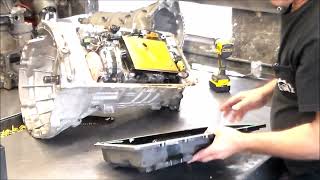
- Fragile Oil Pan: This transmission uses a plastic oil pan. Do not rest the transmission's weight on the pan during handling or installation. Torque the pan bolts strictly to 89 in-lbs in a star pattern.
- Correct Fluid: Only use Motorcraft Mercon® ULV (Ultra-Low Viscosity) fluid (Specification WSS-M2C949-A). Using any other fluid, including Mercon LV, will cause damage.
- Cooler Flush: The transmission cooler and lines must be flushed with a heated back-flush machine before connecting them to the replacement transmission. Skipping this step will circulate metal debris from the old failure into the new unit.
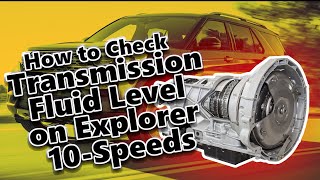
- Fluid Level Check: There is no traditional dipstick. The fluid level must be checked via a small internal mini-dipstick at the fill plug on the passenger side. This must be done while the vehicle is level, the engine is running, and the transmission fluid is between 206°F and 215°F.
- Dowel Pin Alignment: Ensure engine block-to-bellhousing dowel pins are clean and correctly installed to prevent case stress.
Questions to Ask Your Installer
- Have you confirmed this used/reman unit is from a 2.3L 4x4 Explorer without the auto start-stop feature?
- Will you be programming the 13-digit Solenoid Body Strategy code from the replacement transmission into my vehicle's computer using a Ford FDRS or equivalent J2534 tool?
- Do you have the equipment to perform a heated flush of the transmission cooler and lines before installing the new unit?
- What brand and specification of fluid will you be using? (It must be Motorcraft Mercon ULV, spec WSS-M2C949-A).
- Does your quote include replacing the front pump seal and internal filter?
- How will you verify the torque converter is fully seated before mating the transmission to the engine?
- Are you aware of the fragile plastic oil pan and the specific torque sequence (89 in-lbs)?
- What is the procedure you will use to verify the correct fluid level at the proper operating temperature (206°F - 215°F)?
Freight & Delivery Reality

If you are ordering a used 10R60 transmission online, be prepared for freight delivery. This assembly weighs approximately 265 lbs and measures roughly 36" x 28" x 26" before crating. Because of its size and weight, it ships as LTL (Less Than Truckload) freight on a pallet—it is NOT a parcel that will be dropped on your porch.
Delivery will require a liftgate service or a forklift at the destination (usually your mechanic's shop). It is an industry best practice to have a pre-purchase verification interview with the seller to confirm exact fitment codes. When the pallet arrives, always inspect the transmission for physical damage (especially the fragile plastic oil pan and electrical connectors) before signing the delivery receipt.
Frequently Asked Questions (FAQ)
What parts are included with a used 10R60?
A used transmission assembly typically includes the transmission case, all internally lubricated parts, the extension/tail housing, the valve body, the oil pan, and the torque converter. External items like sensors (unless integral to the internal harness), external wiring harnesses, the transmission control module (TCM), shifter linkage/cables, the flexplate/flywheel, and cooler lines are generally not included and must be transferred from your old unit.
Can I reuse my old transmission computer (TCM)?
Yes, you will reuse your vehicle's existing TCM/PCM. However, it must be reprogrammed with the 13-digit solenoid strategy code from the replacement transmission for it to function correctly.
What fluid does the 10R60 transmission use?
It requires Motorcraft Mercon® ULV (Ultra-Low Viscosity) Automatic Transmission Fluid, which meets Ford's WSS-M2C949-A specification. Do not use any other type of fluid, including Mercon LV.
Does this transmission have a dipstick?
No, it does not have a traditional engine-bay dipstick. The fluid level is checked through a fill plug on the passenger side of the transmission case, which has a small, integrated mini-dipstick. The procedure is complex and requires the vehicle to be level, running, and at a specific operating temperature (206°F to 215°F).
What is the expected service life of the 10R60?
The lifespan varies dramatically based on maintenance. With factory fluid intervals, failures can occur between 60,000 and 100,000 miles. A general lifespan is estimated between 80,000 and 180,000 miles. However, technicians strongly recommend ignoring Ford's 150,000-mile fluid change interval and instead changing the fluid every 30,000 to 60,000 miles to maximize longevity.
What special tools are required for installation?
Replacing this transmission requires a high-lift transmission jack with safety straps, the Ford Transmission Line Disconnect Tool (307-569), a Ford FDRS scan tool (or high-end equivalent with J2534 pass-thru) for programming, a fluid fill pump (like the Motive Products 1745 Power Fill), an engine support bar, and an accurate torque wrench.
Helpful Videos



Technical Specifications
OEM Part Numbers: N1MP-7000-BA N1MP-7000-AA N1MZ-7000-B L1MZ-7H351-B HL3P-7A248-AA
Type: 10-Speed Automatic; Model: 10R60; Layout: Longitudinal (RWD-based); Application: 2022-2024 Ford Explorer; Engine: 2.3L EcoBoost; Drivetrain: 4x4/AWD; Auto Start-Stop: Not equipped; TR Code: T; Fluid Type: Motorcraft Mercon ULV; Fluid Spec: WSS-M2C949-A; Weight: ~265 lbs
We Have This Part in Stock


The information in this article is provided for general reference and educational purposes only. Vehicle specifications, procedures, and part compatibility can vary by production date, trim level, and region. Always consult your vehicle's factory service manual and verify part numbers before purchasing or performing repairs. Safety-critical components such as airbags, seat belts, and braking systems should be installed by a qualified professional.
- Ford Explorer:
- 🎬 Helpful Videos
- 🛍️ Shop This Part
- Is This the Right Transmission for Your Explorer?
- Pre-Purchase Checklist
- Locating Your Transmission ID
- Common Failure Symptoms
- Diagnostic Flowchart
- Known Issues, Recalls, and Technical Service Bulletins (TSBs)
- CDF Clutch Drum Bushing Slip (TSB 23-2250)
- Delayed Reverse Engagement (TSB 23-2176)
- Harsh 7-6 Downshift (TSB 22-2411 / TSB 20-2337)
- Harsh/Delayed Engagements and Shifts (TSB 23-2352 / TSB 22-2102)
- Loose Bolt in Transmission (NHTSA Recall 23V-070 / Ford Recall 23S06)
- Unintentional PCM Reset / Park System Damage (NHTSA Recall 23V069000 / Ford Recall 23S05)
- Valve Body Separator Plate (NHTSA Recall 26V402 / Ford Recall 26S48)
- What Fails at Every Mileage Band
- Under 60,000 Miles
- 60,000 - 100,000 Miles
- 100,000 - 150,000+ Miles
- Real Owner Experiences
- Repair or Replace?
- Essential Information for Your Mechanic
- Programming is Not Optional
- Installation "Gotchas" and Best Practices
- Questions to Ask Your Installer
- Freight & Delivery Reality
- Frequently Asked Questions (FAQ)
- 🎟️ Get 5% Off