

2015-2018 Ford Edge 3.5L AWD 6F50/6F55: Transmission Problems, Identification, and Used Replacement
Identify the DA8P-7000-NC transaxle, understand what causes snap ring and torque converter failures, and learn when to replace it with a used OEM unit.
- Before purchase, you must verify the replacement transmission has the ID tag DA8P-7000-NC, as units from other Ford models or different Edge configurations are not interchangeable.
- Programming the replacement unit's 13-digit Solenoid Strategy Code into the vehicle's computer is mandatory; skipping this step will cause severe shifting problems and rapid failure.
- The torque converter must be seated with three distinct clicks during installation to prevent immediate and catastrophic damage to the transmission's front pump upon startup.
- During the swap, always perform the shifter cable bushing recall (22S43), inspect the engine flexplate for cracks, and flush the transmission cooler lines to remove contaminants.
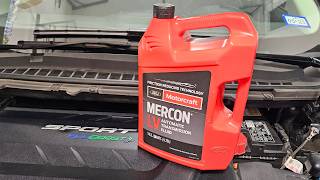
- Use only Motorcraft MERCON LV fluid and service the separate PTU (transfer case) with 75W-140 synthetic gear oil while access is easy.
Part Identification: Confirming the Correct Transmission

The transmission used in the 2015-2018 Ford Edge with the 3.5L V6 engine and All-Wheel Drive (AWD) is a 6-speed automatic transaxle from the Ford 6F family. Sources may identify it as a 6F50 or 6F55; the 6F55 is a heavy-duty version, but for replacement purposes, verifying the specific ID tag is most important. This assembly is a transaxle, meaning it combines the transmission and differential into a single unit designed for front-wheel or all-wheel drive vehicles.
Before purchasing a used unit, it is critical to confirm fitment for your specific vehicle. Mismatched transmissions can lead to installation failure, electronic incompatibility, and poor performance.
| Verification Method | Details |
|---|---|
| Vehicle Fitment | This specific transmission fits 2015-2018 Ford Edge models with the 3.5L V6 engine and All-Wheel Drive (AWD) only. |
| Identification Tag | The most reliable method is to match the ID code on the replacement unit to your original. Look for a white sticker or small metal plate on the top of the main transmission case with the code DA8P-7000-NC (or variants like DA8P-NC or DA8P7000NC). |
| VIN Check | The 8th digit of your Vehicle Identification Number (VIN) should be '8' to confirm the 3.5L V6 engine. You must also confirm the vehicle is AWD by checking for a rear differential and rear axle shafts. |
| Door Sticker | Check the driver's side door jamb sticker. Under the 'TR' code, it should be marked with a 'J' for this transmission. |
Warning: This transmission is NOT interchangeable with other models. It will not fit Front-Wheel Drive (FWD) Edge models, or those with the 2.0L or 2.7L EcoBoost engines. Despite sharing a transmission family, units from a Ford Explorer, Taurus, Flex, or Lincoln MKX will not work due to different wiring, mounting points, and internal gear ratios.
Common Failure Symptoms

A failing 6F50/6F55 transmission can present several distinct symptoms. If you experience any of the following, it may be time to have the transmission inspected by a professional.
- Harsh or delayed shifting between gears.
- A complete loss of Reverse, or loss of specific forward gears (like 3rd and 5th).
- Slipping, where the engine RPMs increase but the vehicle doesn't accelerate accordingly.
- A metallic rattling or ticking noise from the bellhousing area (the space between the engine and transmission), which could indicate a cracked flexplate.
- Sudden loss of all movement (loss of motive power), even though the engine is running.
- The gear shifter failing to select the correct gear, or the vehicle rolling while in Park.
Diagnostic Flowchart

Known Issues, Recalls, and Technical Service Bulletins (TSBs)
Several known issues and service campaigns affect this transmission and related components.
Pro Tip: When replacing the unit, it is wise to address these potential problems at the same time.
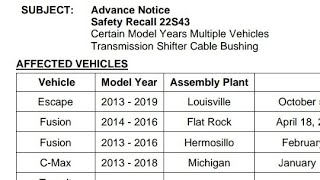
NHTSA Safety Recall 22V413000 (Ford Recall 22S43): Shifter Cable Bushing
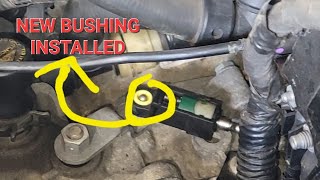
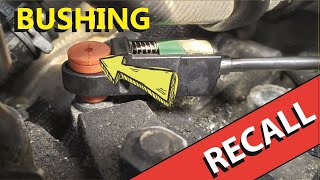
A bushing that connects the shifter cable to the transmission can wear out or detach. This severe issue can prevent the driver from selecting the intended gear. The shifter might feel like it's in Park when the transmission is actually in Neutral, creating a dangerous roll-away risk. This recall applies to all 2015-2018 Edge models. The fix involves installing an updated, heavy-duty recall bushing and a protective cap on the shift linkage.
SSM 50861: Direct Clutch Cylinder Snap Ring Failure
Some 2015-2016 models built between November 2, 2015, and February 1, 2016, may experience a sudden loss of 3rd gear, 5th gear, and Reverse. This severe failure is caused by an internal snap ring failing in the direct clutch assembly. If the original transmission failed this way, it is mandatory to perform a complete flush of the transmission cooler lines to remove metal debris before installing a replacement unit.
SSM 47398 / CSP 22N12: Cracked Engine Flexplate
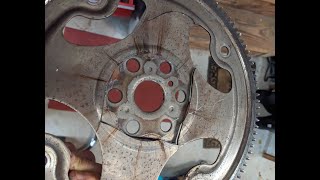
A rattling noise from the bellhousing area, especially at idle, can be caused by a cracked engine flexplate. The flexplate connects the engine to the torque converter. While the transmission is removed, the flexplate should be carefully inspected for hairline cracks around the crankshaft bolt circle. Ford issued Customer Satisfaction Program 22N12 for this moderate issue on some 2015-2018 Edge models, which covered inspection and replacement of the flexplate.
Torque Converter Stud Weld Failure & Lockup Clutch Wear
Some 2017-2018 models were subject to recalls (NHTSA 17V-427 / 17S16) for poorly welded torque converter studs, which could cause a total loss of power. The torque converter, which is included with a used assembly, should be inspected for any signs of damage or leaks before installation to prevent debris from entering the fluid.
TSS / OSS Sensor Faults
Turbine Shaft Speed (TSS) and Output Shaft Speed (OSS) sensors can fail across all years, leading to erratic shifting. Verify sensor health during installation, as replacement requires removing the internal valve body.
Pro Tip: When the transmission is out, always inspect the engine's rear main seal and the flexplate for any signs of leaks or damage. Replacing these parts during the transmission swap is inexpensive and saves significant labor later.
What Fails at Every Mileage Band
Pro Tip: The mileage bands below describe used replacement units of that mileage. The checklists are things to do WHILE INSTALLING the purchased engine (or transmission), not maintenance for your current vehicle.
Under 60,000 Miles
Even low-mileage units can be affected by factory defects. The shifter cable bushing recall (22V413000) affects all 2015-2018 models. The direct clutch cylinder snap ring failure (SSM 50861) can cause a sudden loss of 3rd, 5th, and Reverse gears on 2015-2016 models. Early torque converter issues, including stud weld failures (17V-427), can also occur.
- ✓Do during install (required): Perform the shifter cable bushing recall (22S43) fix. Install the updated bushing and protective cap.
- ✓Do during install (required): Flush the transmission cooler and lines completely to remove any potential break-in material or contaminants.
- ✓Do during install (recommended): Perform a drain and fill of the PTU (AWD transfer case) fluid with 75W-140 synthetic gear oil.
- ✓Cheap insurance while the engine is out: Replace the torque converter (front pump) seal and both axle seals. These are inexpensive parts that are difficult to access later.
60,000 - 100,000 Miles
In this range, torque converter shuddering, slipping, or lockup clutch failure becomes more common. The engine flexplate can develop cracks (SSM 47398 / CSP 22N12), causing a metallic rattle. TSS/OSS sensor faults may appear, and the original MERCON LV fluid will be significantly degraded if it was never changed.
- ✓Do during install (required): Inspect the engine flexplate for cracks while the transmission is removed. Replace if any are found.
- ✓Do during install (recommended): Consider replacing the torque converter with a quality remanufactured unit, especially if the vehicle exhibits any shudder or if the old transmission failed internally.
- ✓Cheap insurance while the engine is out: Verify the health of the TSS and OSS sensors with a diagnostic tool before installation, as they are internal.
100,000 - 150,000 Miles
Hard part failures become more likely if maintenance was deferred. Worn clutch packs, valve body issues, or pump failures are risks. The Power Transfer Unit (PTU) is highly prone to failure from fluid breakdown due to high heat. Additionally, the 3.5L V6 engine's internal water pump seal often fails around 100k miles, leaking coolant into the oil.
- ✓Do during install (required): If purchasing a used transmission in this mileage range, assume the torque converter has significant wear. It is strongly advised to pair it with a new or remanufactured torque converter.
- ✓Do during install (required): Perform a full fluid exchange (not just a drain and fill) on the transmission using the cooler lines to replace over 95% of the old fluid.
- ✓Cheap insurance while the engine is out: Given the mileage, this is the ideal time to address the engine's internal water pump and timing chain as a preventative measure, as much of the labor overlaps with the transmission R&R.
Over 150,000 Miles
Many transmissions will require a rebuild or replacement in this range due to accumulated wear on clutches, seals, and bearings. The intricate channels and solenoids in the valve body can become clogged or worn, leading to persistent shifting problems that programming cannot fix.
- ✓Do during install (recommended): A used transmission with over 150,000 miles is a significant gamble. A remanufactured unit with a warranty is a much safer investment.
- ✓Cheap insurance while the engine is out: If installing a high-mileage used unit, it is critical to replace all external seals, the torque converter, and perform an exhaustive cooler flush. Also, consider replacing the TSS/OSS sensors as cheap insurance.
Real Owner Experiences
The expected service life of the 6F50/6F55 transmission is highly dependent on maintenance. With regular fluid changes every 30,000 to 60,000 miles, a service life of 150,000 miles or more is achievable. Without regular fluid service, significant problems can arise well before 100,000 miles. Here is what real owners have experienced:
| Source | Mileage | What Happened | Cost |
|---|---|---|---|
| Verified Data | 2015-2018 | Shifter cable bushing detached, causing a no-move or rollaway situation. | Recall repair is performed free of charge by dealers. |
| Verified Data | 2015-2016 | Complete loss of Reverse, 3rd, and 5th gears due to internal snap ring failure. | Requires transmission replacement or rebuild, costing several thousand dollars. |
| Cars.com | 51,100 | Needed a total replacement after a small leak led to failure. | $7,000 |
| Ford Edge Forum | 55,000 | Owner proactively inquired about transmission service to prevent future problems. | N/A (Preventative) |
| FordTechMakuloco | 60,000 | A transmission fluid and filter change is recommended at 60,000 miles to maintain health. | $150-$400 for a fluid exchange service. |
| Ford Edge Forum | 66,000 | Diagnosed with a cracked flexplate, dealer offered to cover only $1,450 of the repair. | $6,000 - $8,000 quoted |
| CarComplaints.com | 86,500 | Diagnosed with a cracked flex plate causing a rattle. | $2,200 |
| Ford Edge Forum | 97,000 | After an initial $1,800 repair failed, the dealer quoted $8,000 for a full replacement. | $8,000 quoted |
| ok.com | 140,000 | Rough shifting with the original, degraded fluid. | N/A |
| BobIsTheOilGuy Forums | 150,000 | Experienced a torque converter clutch failure. | Required a used transmission and remanufactured torque converter. |
| Ford Edge Forum | 150,000+ | Ford's official maintenance schedule suggests a fluid change at 150k, which experts consider too long. | $3,000 - $5,500+ for rebuild/replacement. |
| Kelley Blue Book | Not specified | Transmission required replacement at six years old due to a faulty Torque Converter. | Not specified |
Replacement Cost Estimates
The cost to replace a transmission varies based on the part source and local labor rates. The estimates below are for the assembly itself and the typical installation cost.
| Item | Estimated Cost (USD) | Notes |
|---|---|---|
| Used OEM Assembly | $325 - $900 | Price varies with mileage and warranty. Sourced from a recycled vehicle. |
| Remanufactured OEM Assembly | $2,495 - $4,327 | Disassembled, inspected, and rebuilt with updated parts. Often includes a longer warranty. |
| New OEM Assembly | $6,000 - $8,800 | Brand new dealer replacement with a new unit. |
| Shop Labor | $1,200 - $2,649 | Based on an estimated 8 to 11.5 hours of labor. Does not include fluids or programming. |
Repair or Replace?
Deciding whether to repair your current transmission or replace the entire assembly depends on the specific failure.
- When Repair Makes Sense: If the issue is the shifter cable bushing (Recall 22V413000), the repair is free at a dealer, or $396 to $545 out of pocket. If the engine flexplate is cracked (SSM 47398), repair costs $1,000 to $3,000, but may be covered under CSP 22N12. If diagnostics confirm an isolated TSS/OSS sensor or solenoid fault, replacing those components ($150 to $1,000+) is viable if the rest of the transmission is healthy.
- When Replacement is Smarter: If the transmission has widespread internal damage, such as the Direct Clutch Cylinder Snap Ring Failure (SSM 50861), which causes loss of multiple gears and sends metal debris throughout the system. In such cases, a simple repair is insufficient. A remanufactured unit or a verified used unit is often a better long-term value than a complex rebuild. If a torque converter failure has contaminated the system with debris, replacement is also recommended.
Questions to Ask Your Installer
Before handing over the keys, ensure your mechanic is prepared for this specific job by asking:
- Have you confirmed the replacement unit's ID tag is DA8P-7000-NC?
- Did you photograph or write down the 13-digit Solenoid Strategy and 7-digit Solenoid Body ID from the replacement unit's case sticker before installation?
- Do you have a scan tool like Ford IDS or FORScan to program the Solenoid Strategy into the car's computer?
- Will you be performing a complete transmission cooler and line flush to remove old fluid and potential contaminants?
- Will you inspect the engine flexplate for cracks while the transmission is out?
- Do you have the correct Motorcraft MERCON LV fluid and new axle/torque converter seals?
- Will you be servicing the PTU (transfer case) fluid at the same time?
- Are you aware of the three-click procedure for seating the torque converter to avoid pump damage?
- Will you be installing the updated shifter cable recall bushing (Ford Recall 22S43) on the linkage?
Freight & Delivery Reality for Used Transmissions

If you are ordering a used transmission online, understand that it will not arrive in a standard cardboard box via regular mail. A 6F50/6F55 transmission assembly weighs approximately 218 lbs and measures roughly 24" x 24" x 46" before crating. It ships as Less-Than-Truckload (LTL) freight on a wooden pallet.
If you are having it delivered to a residential address or a shop without a loading dock, you must request a truck with a liftgate to lower the heavy pallet to the ground.
Pro Tip: Industry best practice dictates a pre-purchase verification interview with the seller to confirm the DA8P-7000-NC ID tag and exact vehicle fitment before the unit ships. Finally, always inspect the transmission for physical damage (like cracked bellhousings or broken sensor plugs) before signing the delivery driver's paperwork.
Installation Essentials and Programming

Installing this transmission is a complex job recommended for professional technicians or expert DIYers with specialized tools, including an engine support bar/fixture, a heavy-duty transmission jack, and subframe alignment pins.
What's Included in a Used Assembly
A used transmission assembly typically includes the transmission case, bellhousing, all internal lubricated parts (gears, shafts, clutch packs, bands), internal valve body, solenoid pack, transmission oil pan (side control cover), and the torque converter. It does NOT include external components like the Power Transfer Unit (PTU / AWD transfer case), external shifter linkage, brackets, selector cables, transmission mounts, external sensors, wiring harnesses not integral to the internal lead frame, the engine flexplate (flywheel), transmission fluid cooler lines, or the Transmission Control Module (TCM). These parts must be transferred from the original vehicle.
Required Programming
Warning: This transmission is NOT plug-and-play. The Powertrain Control Module (PCM) must be programmed with the specific solenoid codes from the replacement unit. Before installation, locate the 13-digit Solenoid Strategy Code and 7-digit Solenoid Body ID on a sticker on the case. Photograph it, as it will be inaccessible once installed. A professional scan tool like Ford's IDS or FORScan is required to enter these codes and perform an adaptive learning drive cycle. Skipping this step will cause immediate harsh shifting, slipping, and premature clutch failure.
Critical Installation Steps & Consumables
Warning: The torque converter must be carefully pushed and spun until it clicks backward three distinct times to fully engage the oil pump gears. Failure to fully seat it will destroy the transmission's front pump the moment the engine is started.
- Fluid and Filter: Use only Motorcraft MERCON LV automatic transmission fluid (Specification WSS-M2C938-A). Do not use generic or multi-vehicle fluids. The internal fluid filter is located deep inside the center of the case and cannot be replaced without completely splitting the transmission case halves, so flushing the system is vital. Check fluid level only when transmission fluid temperature is between 180°F and 200°F (82°C to 93°C) with the engine running and vehicle level.
- Cooler Flush: The transmission fluid cooler and lines MUST be flushed with an aerosol flush or a professional machine to remove old fluid and potential contaminants.
- PTU Service: While the transmission is out, service the Power Transfer Unit (PTU). Drain the old fluid and refill with approximately 18 fl oz of Motorcraft SAE 75W-140 Synthetic Rear Axle Lubricant. Clean and coat the PTU splines with high-temperature, water-resistant grease to prevent rusting and stripping.
- Seals and Gaskets: Always install a new torque converter seal (front pump input seal) and new axle seals.
- Hidden Bellhousing Bolt: Be aware that one bellhousing bolt is hidden by the transfer case and catalytic converter, requiring significant disassembly to reach.
Arrival Inspection: What to Check Before Installation
When your used 6F50 or 6F55 transmission arrives, inspect it closely before putting it in the vehicle. Catching problems early saves time and labor.
- Pan and Magnet Inspection: Remove the bottom transmission fluid pan. Look at the small magnet stuck to the inside of the pan. A light coating of fine, gray dust is normal. Large metal shavings, chunks, or brass-colored flakes mean the internal gears or clutches are destroyed. Do not install the unit if you find heavy metal debris.
- Fluid Color and Smell: Check the leftover fluid inside the pan or cooler lines. Healthy transmission fluid is red or pink. If the fluid is dark brown or black, the internal clutches are likely burned. Smell the fluid. A strong, burnt toast smell is a clear sign of severe overheating and internal damage.
- Converter Hub Condition: Look at the torque converter (the large, heavy metal bowl attached to the front of the transmission). Check the hub, which is the center tube sticking out of the back of the converter. The metal surface must be completely smooth. Deep scratches, grooves, or blue heat marks mean the front pump seal will leak fluid.
- Input-Spline Condition: Inspect the input shaft splines. These are the grooved metal teeth on the shaft that slides into the torque converter. The teeth must be straight and sharp. If the teeth are twisted, flattened, or chipped, the transmission will slip or fail to move the vehicle.
Frequently Asked Questions
Is this transmission the same as the one in the Ford Explorer?
No. While the Ford Explorer uses a similar 6F50/6F55 transmission, the case, wiring, and internal ratios are different. It is not a direct fit and will not work in a 2015-2018 Edge.
Do I have to program the transmission?
Yes. The unique 13-digit Solenoid Strategy and 7-digit Body ID codes from the replacement transmission must be programmed into your vehicle's computer. Skipping this critical step will cause harsh shifting, damage the clutches, and lead to premature failure.
What is the most common mistake when installing this transmission?
The most common and destructive mistake is failing to fully seat the torque converter. It must be spun and pushed until it engages the front pump with three distinct clicks. If it is not fully seated, starting the engine will instantly break the pump, ruining the replacement transmission.
What fluid does the 2015-2018 Ford Edge 3.5L transmission take?
You must use genuine Motorcraft MERCON LV automatic transmission fluid (Specification WSS-M2C938-A). Using generic multi-vehicle fluids can cause shifting issues and premature wear.
Can I replace the transmission filter without removing the transmission?
No. The transmission fluid filter is located deep inside the center of the transmission case. It cannot be replaced without completely removing the transmission from the vehicle and splitting the case halves apart.
What is the PTU and why should I service it during a transmission swap?
The PTU (Power Transfer Unit) is the transfer case that enables All-Wheel Drive (AWD). It sits bolted to the transmission. It holds a very small amount of fluid and runs extremely hot, making it prone to failure. Servicing it with 18 fl oz of 75W-140 synthetic gear oil while the transmission is out is highly recommended and much easier than doing it later.
Helpful Videos





Technical Specifications
OEM Part Numbers: DA8P-7000-NC DA8P-NC DA8P7000NC
Transmission Type: 6-Speed Automatic Transaxle; Transmission Family: Ford 6F; Models: 6F50 / 6F55 (Heavy-Duty); Vehicle Fitment: 2015-2018 Ford Edge; Engine Fitment: 3.5L V6 (VIN 8th digit '8'); Drivetrain: All-Wheel Drive (AWD); Door Jamb 'TR' Code: J; Fluid Type: Motorcraft MERCON LV; Fluid Specification: WSS-M2C938-A; PTU Fluid Type: Motorcraft SAE 75W-140 Synthetic Rear Axle Lubricant; PTU Fluid Capacity: Approx. 18 fl oz; Weight: Approx. 218 lbs; Shipping Dimensions: Approx. 24" x 24" x 46"
We Have This Part in Stock


The information in this article is provided for general reference and educational purposes only. Vehicle specifications, procedures, and part compatibility can vary by production date, trim level, and region. Always consult your vehicle's factory service manual and verify part numbers before purchasing or performing repairs. Safety-critical components such as airbags, seat belts, and braking systems should be installed by a qualified professional.
- Ford Edge:
- 🎬 Helpful Videos
- 🛍️ Shop This Part
- Part Identification: Confirming the Correct Transmission
- Common Failure Symptoms
- Diagnostic Flowchart
- Known Issues, Recalls, and Technical Service Bulletins (TSBs)
- NHTSA Safety Recall 22V413000 (Ford Recall 22S43): Shifter Cable Bushing
- SSM 50861: Direct Clutch Cylinder Snap Ring Failure
- SSM 47398 / CSP 22N12: Cracked Engine Flexplate
- Torque Converter Stud Weld Failure & Lockup Clutch Wear
- TSS / OSS Sensor Faults
- What Fails at Every Mileage Band
- Under 60,000 Miles
- 60,000 - 100,000 Miles
- 100,000 - 150,000 Miles
- Over 150,000 Miles
- Real Owner Experiences
- Replacement Cost Estimates
- Repair or Replace?
- Questions to Ask Your Installer
- Freight & Delivery Reality for Used Transmissions
- Installation Essentials and Programming
- What's Included in a Used Assembly
- Required Programming
- Critical Installation Steps & Consumables
- Arrival Inspection: What to Check Before Installation
- Frequently Asked Questions
- 🎟️ Get 5% Off