

2023-2026 Chrysler Pacifica AWD 3.6L 948TE Transmission: Problems, Identification, and Used Replacement
Identify the ZF 9HP48, understand what causes harsh shifting and failure, and learn when to replace it with a used OEM unit.
- A mandatory 'Quick Learn' adaptive relearn procedure with a professional scan tool is required after installation to prevent immediate damage to the replacement unit.
- Only use the specified Mopar ZF 8 & 9 Speed ATF (or ZF LifeguardFluid 9 equivalent); using standard ATF+4 will cause severe damage.
- Before considering replacement for harsh shifting, first have a dealer update the Transmission Control Module (TCM) software, as this is a common and low-cost fix.
- This transmission is not interchangeable with units from FWD Pacificas, Pacifica Hybrids, or other brands like Jeep, even if they are in the same ZF 9-speed family.
- Always flush the transmission cooler and lines before installing a replacement unit to prevent contamination from the old, failed transmission.
Vehicle Fitment & Part Identification

This article covers the specific 9-speed automatic transmission found in 2023, 2024, 2025, and 2026 Chrysler Pacifica minivans equipped with the 3.6L gasoline engine and All-Wheel Drive (AWD). This transmission is part of the ZF 9HP48 family, also known by its Chrysler designation 948TE. Proper identification is critical, as this unit has very specific applications.
How to Confirm This is Your Transmission
Before purchasing a replacement, verify your vehicle has the correct transmission by checking the following:
- Drivetrain: Your Pacifica MUST be an All-Wheel Drive (AWD) model. You can confirm this by looking for a rear differential and driveshaft or by checking your vehicle's original window sticker.
- Engine: It must be the 3.6L V6 gasoline engine. The 8th digit of your Vehicle Identification Number (VIN) should be a 'G' or '3'.
- Model Year: This specific unit fits 2023-2025 model years (and carries into 2026).
Locating the Transmission ID Tag
For absolute confirmation, you can find the transmission identification tag on the top/side of the transmission case. It is located directly under the shifter cable bracket and will verify the model as a 948TE (ZF 9HP48).
Warning: Critical Interchange Mismatches to Avoid
Ordering the wrong transmission is a common and costly mistake. The following units will NOT fit or function correctly:
- Front-Wheel Drive (FWD) Transmissions: The case casting, output shafts, and connections are completely different to accommodate the FWD-only drivetrain.
- Pacifica Hybrid Transmissions: Hybrid models do not use the 948TE. They are equipped with a unique continuously variable transmission called the eFlite Si-EVT.
- Transmissions from Other Brands: While other manufacturers like Jeep, Honda, Acura, and Land Rover use versions of the ZF 9-speed family, they are not interchangeable. They have different bellhousing bolt patterns to mate with other engines, unique internal programming, and different wiring harnesses.
Common Failure Symptoms

A failing 948TE transmission can show several warning signs. If you experience these symptoms, it is important to have the vehicle diagnosed by a qualified technician. Ignoring them can lead to more severe damage.
- Harsh, jerky, or delayed gear shifts, especially between 1-2, 2-3, and 4-5. 🎬 Watch: How to fix harsh, slamming gear shifts
- Hesitation or a clunking sound when accelerating or downshifting.
- A sudden feeling of slipping, where the engine RPMs increase but the vehicle doesn't accelerate accordingly.
- The vehicle enters "limp mode," where it gets stuck in a single gear (often 3rd or 4th).
- A burning smell, which can indicate overheating fluid.
- The gear selector gets stuck in Park (often setting DTC P0810).
- Illumination of the Malfunction Indicator Lamp (Check Engine Light) on the dashboard.
Diagnostic Flowchart
Known Problems, Recalls, and Technical Service Bulletins (TSBs)

The ZF 9-speed transmission family has had several issues addressed by the manufacturer over its production life. Many problems, especially with shift quality, are software-related and can be fixed with a re-program of the Transmission Control Module (TCM).
Harsh/Jerky Shifting & Hesitation (TSB 21-008-21 / TSB 21-013-16 / TSB 21-031-24)
- Issue: The most common complaint involves poor shift quality, including harsh upshifts and downshifts.
- Affected Years: All years, with various software updates released. TSB 21-008-21 and 21-013-16 specifically address models for harsh 1-2, 2-3, 3-4, or 4-5 upshifts and harsh coasting downshifts. TSB 21-031-24 provides general shift quality improvements for 2024 models.
- Remedy: Reprogram the Transmission Control Module (TCM) with the latest available software. After the flash, a mandatory "Quick Learn" procedure must be performed to allow the transmission to adapt its shift points.
Reaction Shaft Bushing Wear (TSB 21-040-25)
- Issue: This can cause severe issues with the torque converter clutch, leading to performance problems and setting diagnostic trouble code P1DB7-00.
- Affected Years: 2017-2025.
- Remedy: An updated service kit (Mopar P/N 68732959AB) must be installed to resolve the problem.
Lack of Lubrication (Customer Satisfaction Notification ZD3)
- Issue: Internal component failure due to lubrication starvation.
- Affected Years: Certain 2022 models.
- Remedy: Requires internal component replacement.
Transmission Case Oil Leak (TSB 21-036-20)
- Issue: Oil leaking from the transmission case.
- Affected Years: 2019 and newer models.
- Remedy: Tighten lower transmission bolts to updated torque specifications.
Sudden Shift to Neutral / Loss of Power (Recall S55 & U85)
- Issue: On earlier versions of this transmission family, a wiring harness issue could cause the transmission to unexpectedly shift into neutral.
- Affected Years: Primarily 2014-2015 models in other vehicle lines, but relevant to the transmission family's history. A separate recall (U85) was issued for a small number of 2018 Pacificas for an improper weld that could cause a loss of power.
- Remedy: Recall S55 involved a software reflash and, if necessary, transmission replacement. Recall U85 involved replacing the transmission.
What Fails at Every Mileage Band
Pro Tip: The mileage bands below describe used replacement units of that mileage. The checklists are things to do WHILE INSTALLING the purchased transmission, not maintenance for your current transmission.
Under 60,000 Miles
Known Failures: Even at low mileage, these units can experience harsh or jerky shifting (especially between 1st, 2nd, and 3rd gears), sudden hesitation or lurching, and delayed engagement when shifting from Park to Drive or Reverse. Software glitches causing erroneous diagnostic trouble codes (DTCs) like P0887, P061B, or P0810 are common. Internal valve body issues or clutch sticking can occur, and in rare cases, complete transmission failure requiring replacement.
- ✓Do during install (required): Ensure the latest TCM software is installed to correct shifting logic; this is the primary fix for harsh shifting.
- ✓Do during install (required): Perform the mandatory 'Quick Learn' adaptive relearn procedure.
- ✓Do during install (required): Flush the transmission cooler and lines completely to remove any debris from the previous unit.
- ✓Cheap insurance while the engine is out: Replace axle shaft seals and the torque converter input seal as a low-cost preventative measure.
60,000 - 100,000 Miles
Known Failures: There is an increased likelihood of complete transmission failure if early symptoms were ignored or improperly addressed. Failure of internal components like dog clutches can lead to a 'Stuck in Park' condition or set a P0810 code. Valve body failures and leaking seals or gaskets also become more frequent.
- ✓Do during install (recommended): Perform a transmission fluid and filter service on the replacement unit if its service history is unknown.
- ✓Do during install (recommended): Inspect and service the Power Transfer Unit (PTU) fluid for the AWD system.
- ✓Do during install (recommended): Inspect and replace transmission mounts if they show signs of wear or cracking.
- ✓Cheap insurance while the engine is out: Replace the engine's rear main seal while the transmission is out, as it is a common point for oil leaks and is easily accessible.
100,000 - 150,000 Miles
Known Failures: General wear and tear leading to total transmission failure is more common in this range, especially if the fluid has never been changed. Internal seal failure can lead to slipping or loss of gear engagement. There is an increased potential for issues related to contaminated fluid if never serviced, such as solenoid and valve body problems.
- ✓Do during install (required): If installing a used unit with over 100k miles, a fluid and filter service is not optional for ensuring longevity.
- ✓Do during install (recommended): Inspect CV joints and driveshaft hardware for wear.
- ✓Cheap insurance while the engine is out: Inspect and consider replacing the accessory drive belts, tensioner, and idler pulley if they show signs of wear.
Over 150,000 Miles
Known Failures: Transmission failure becomes a significant risk, particularly for fleet vehicles or those with a history of severe use. Component wear is expected, and the likelihood of needing a rebuild or replacement is high if not meticulously maintained.
- ✓Do during install (required): A complete fluid service for all related drivetrain components (transmission, PTU, rear differential) is critical.
- ✓Do during install (recommended): Careful inspection of all related components (mounts, cooler lines, wiring harnesses, engine's rear main seal) is essential before installation.
Real Owner Experiences
| Source | Mileage | What Happened | Cost |
|---|---|---|---|
| Carparts.com | Around 20,000 miles | Symptoms like intermittent jerking, so forceful it felt like being rear-ended, began appearing. | Not specified, but often covered under the vehicle's powertrain warranty. |
| Edmunds.com Forum | 30,000 miles | A user reported transmission issues starting at 30,000 miles, which the dealership attempted to fix multiple times with software updates without success. | Not specified, likely warranty work. |
| Reddit r/ChryslerPacifica | 19,597 miles | Owner reported a 'jerking motion' while driving, leading to the first of many dealer visits. This eventually led to a complete transmission replacement. | Not specified, warranty. |
| Reddit r/ChryslerPacifica | Under 50,000 miles | An owner of a 2019 model reported experiencing hard shifting and jerking. | N/A |
| Reddit r/ChryslerPacifica | 70,000 miles | Transmission failed after experiencing hard shifting and jerking. The owner was just outside the 60,000-mile powertrain warranty. | Not specified, but implied to be a full replacement cost as Chrysler would not assist. |
| Edmunds.com Forum | 74,477 miles | Torque converter failed, causing the transmission to be stuck in first gear. | Not specified. |
| Reddit User | 80,000 miles | Owner of a vehicle with the 948TE transmission noted that the shift from 4th to 5th gear sometimes 'bangs a little'. | N/A |
| Carparts.com | Around 130,000 miles | Total transmission failure requiring replacement is reported to happen around this mileage. | Full replacement cost. |
| Reddit r/ChryslerPacifica | 120,000 miles | An owner reported needing a new engine, but forum comments highlighted the need for regular transmission fluid changes every 50k miles to get the transmission beyond 150k miles. | N/A |
| Fleet vehicle driver report | 150,000-175,000 miles | A fleet company experiences transmission failures in their Pacificas around this mileage and often installs used units to extend the vehicle's life. | Cost of a used transmission and installation. |
| Reddit r/ChryslerPacifica | 171,000 miles | An owner of a 2018 model reported no engine or transmission issues, noting that TCM/PCM updates had been performed to help with hard shifting. | N/A |
Repair or Replace?
When facing transmission issues, deciding whether to repair your current unit or replace it entirely depends on the specific failure and the costs involved.
When Repair Makes Sense
| Issue / TSB | Typical Repair Cost | Recommendation |
|---|---|---|
| Harsh/Jerky Shifting & Hesitation (TSB 21-008-21) | $150 - $300 | This low-cost software update should always be the first step for shift quality issues. |
| Transmission Case Oil Leak (TSB 21-036-20) | $100 - $200 | This is a minor repair involving tightening bolts and should always be performed instead of replacement. |
| Internal Component Failure (Dog Clutches, sets P0810) | $1,200 - $2,200 | If diagnosed as an isolated valve body issue, replacing it is significantly cheaper than a full transmission. |
| Reaction Shaft Bushing Wear (TSB 21-040-25 / DTC P1DB7-00) | $1,500 - $2,500 | This known issue is fixed with a Mopar service kit (P/N 68732959AB) and is more economical than replacement. |
When Replacement is Smarter
Replacement with a low-mileage used or remanufactured unit is the smarter choice when the vehicle has experienced a catastrophic internal failure, such as widespread metal contamination in the fluid, a cracked case, or multiple simultaneous clutch pack failures. It is also the better option if the estimated cost for a full rebuild by a specialist ($2,500 - $4,500+) is close to or exceeds the price of a quality used unit with a warranty.
| Part Type | Estimated Price Range (Part Only) | Notes |
|---|---|---|
| New OEM | $4,500 - $7,000+ | Brand new from the manufacturer. Often not available or on backorder. |
| Remanufactured OEM | $3,300 - $5,000+ | Rebuilt by Mopar or a third party to factory specifications. Often includes a core charge of $2,000 or more. |
| Used OEM | $1,500 - $3,500 | A salvaged unit from a donor vehicle. Price depends heavily on mileage and condition. |
| Shop Labor | $975 - $1,800 | Estimated 6.5 to 11.0 hours of labor. This is a complex job requiring specialized tools. |
Freight & Delivery Reality

If you are purchasing a used 948TE transmission online, it is important to understand how it will arrive. This is a heavy industrial component, not a standard parcel.
- Size and Weight: The transmission assembly weighs approximately 240 lbs and measures roughly 30" x 34" x 30" before crating.
- Shipping Method: It will ship as Less-Than-Truckload (LTL) freight strapped to a wooden pallet. It will arrive via a large freight truck, not a standard delivery van.
- Receiving the Freight: You must have a way to unload it. If delivering to a residential address or a shop without a loading dock or forklift, you must request a truck with a liftgate service.
- Inspect Before Signing: Always inspect the transmission while the driver is present. Check for any damage to the case, broken sensors, or cracked bellhousings that may have occurred during transit. Do not sign the delivery receipt until you are satisfied the unit is undamaged.
Installation & Programming: Critical Steps

Installing this transmission is a complex job that is not recommended for DIY mechanics without significant experience and the right equipment.
Professional Installation Recommended
The procedure requires dropping the entire front subframe while supporting the engine from above. Special tools are required, including an engine support bar, subframe alignment pins, a transmission jack, and a professional-grade scan tool like wiTECH for the final programming steps.
Warning: Mandatory Post-Installation Programming
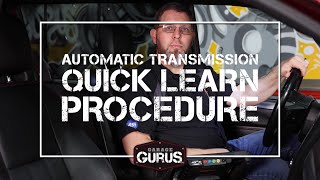
After the transmission is installed, a TCM Adaptive Relearn (also known as a "Quick Learn") procedure is absolutely required. This must be done with a compatible scan tool. Skipping this step will result in extremely harsh shifts, slipping, and can quickly lead to permanent damage to the replacement transmission.
Installation Gotchas & Pro Tips
- Torque Converter Seating: The torque converter must be fully seated into the transmission's front pump before installation. You should feel it engage in three distinct steps or "clicks." Failure to do this will crack the oil pump when the engine and transmission are bolted together.
- AWD PTU Spline Greasing: Clean, inspect, and grease the mating splines with high-temperature heavy-duty spline grease to prevent whining and stripping.
- Fluid Level Check Temperature: You must check the fluid level through the side check port using Mopar Transmission Dipstick Tool 10323A while the fluid is between 122°F and 140°F (50°C to 60°C).
- Flush Cooler Lines: Always flush the transmission cooler and lines before connecting them to the replacement unit. Failure to do so will circulate metal debris from the old, failed transmission and immediately contaminate the new one.
- Use Correct Fluid: This transmission requires a specific fluid: Mopar ZF 8 & 9 Speed ATF (Part # 68157995AB or 68218925AA) or an equivalent that meets the ZF LifeguardFluid 9 specification. Using standard ATF+4 will cause damage.
- Reuse Original TCM: If possible, reuse the Transmission Control Module from your original transmission. This can help avoid potential programming and communication issues with the vehicle. Pay close attention to all grounding straps and wiring harness connections during reassembly to prevent electronic issues.
Questions to Ask Your Installer
Before handing over your vehicle and replacement transmission, ask your mechanic these questions to ensure they know how to handle this specific unit:
- Have you confirmed this is the correct transmission for an AWD gasoline model, not FWD or Hybrid?
- Will you be flushing the transmission cooler and lines completely before installing the replacement unit?
- How do you verify the torque converter is fully seated and indexed before bolting the transmission to the engine?
- Will you be cleaning and greasing the PTU splines during installation?
- Do you have the Mopar-specific dipstick tool (10323A) to verify the fluid level at the correct operating temperature (122°F-140°F)?
- What type of fluid will you be using? (Must be Mopar ZF 8&9 Speed ATF or ZF LifeguardFluid 9)
- After installation, will you perform the mandatory TCM 'Quick Learn' adaptive relearn procedure with a professional scan tool?
- Does the quoted price include the cost of new axle seals and a torque converter input seal?
Frequently Asked Questions
What fluid does the 2023-2026 Pacifica AWD transmission use?
It requires a special synthetic fluid, Mopar ZF 8 & 9 Speed ATF (part numbers 68157995AB, 68218925AA) or a fluid meeting the ZF LifeguardFluid 9 specification. Do NOT use regular ATF+4.
Do I need to program a used transmission for a Pacifica?
Yes. At a minimum, a "Quick Learn" or adaptive relearn procedure is mandatory after installation to ensure proper shifting. If the Transmission Control Module (TCM) was also replaced, it may need to be programmed with your vehicle's VIN.
Will a transmission from a Jeep Cherokee fit my Pacifica AWD?
No. While they are in the same ZF 9HP family, the bellhousing, internal components, wiring, and software are different and not compatible.
Can I install this transmission myself?
This is considered an expert-level job. It requires dropping the vehicle's front subframe and needs several special tools, including a professional scan tool for the mandatory post-installation programming. It is not recommended for novice or DIY mechanics.
What is included with a used 948TE transmission?
A standard used assembly includes the main transmission case, all internally lubricated parts, extension and tail housings, the transmission oil pan, and the torque converter. It typically does NOT include external sensors, the TCM, shifter linkage, shift cables, engine flexplate, cooler lines, the Power Transfer Unit (PTU), or axles.
How long does the ZF 9HP48 transmission last?
The service life varies significantly based on maintenance. With regular fluid changes, a lifespan of over 200,000 miles is achievable. However, many vehicles experience transmission failure between 130,000 and 175,000 miles if the fluid is not serviced. While Chrysler has marketed the fluid as 'fill for life,' ZF recommends a fluid change after 150,000 km (approx. 93,000 miles), and many independent mechanics strongly suggest a 60,000-mile service interval.
Helpful Videos

Technical Specifications
OEM Part Numbers: 68157995AB 68218925AA 68732959AB
Chrysler Designation: 948TE; ZF Family Name: 9HP48; Type: 9-Speed Automatic; Drivetrain Application: All-Wheel Drive (AWD); Engine Application: 3.6L V6 Gasoline; Required Fluid: Mopar ZF 8 & 9 Speed ATF (ZF LifeguardFluid 9); Approximate Weight: 240 lbs
We Have This Part in Stock


The information in this article is provided for general reference and educational purposes only. Vehicle specifications, procedures, and part compatibility can vary by production date, trim level, and region. Always consult your vehicle's factory service manual and verify part numbers before purchasing or performing repairs. Safety-critical components such as airbags, seat belts, and braking systems should be installed by a qualified professional.
- Chrysler Pacifica:
- 🎬 Helpful Videos
- 🛍️ Shop This Part
- Vehicle Fitment & Part Identification
- How to Confirm This is Your Transmission
- Locating the Transmission ID Tag
- Common Failure Symptoms
- Diagnostic Flowchart
- Known Problems, Recalls, and Technical Service Bulletins (TSBs)
- Harsh/Jerky Shifting & Hesitation (TSB 21-008-21 / TSB 21-013-16 / TSB 21-031-24)
- Reaction Shaft Bushing Wear (TSB 21-040-25)
- Lack of Lubrication (Customer Satisfaction Notification ZD3)
- Transmission Case Oil Leak (TSB 21-036-20)
- Sudden Shift to Neutral / Loss of Power (Recall S55 & U85)
- What Fails at Every Mileage Band
- Under 60,000 Miles
- 60,000 - 100,000 Miles
- 100,000 - 150,000 Miles
- Over 150,000 Miles
- Real Owner Experiences
- Repair or Replace?
- When Repair Makes Sense
- When Replacement is Smarter
- Freight & Delivery Reality
- Installation & Programming: Critical Steps
- Professional Installation Recommended
- Installation Gotchas & Pro Tips
- Questions to Ask Your Installer
- Frequently Asked Questions
- 🎟️ Get 5% Off