

2013-2014 Audi A8 3.0L ZF 8HP55A Transmission: Problems, Identification, and Used Replacement
Identify the exact NCJ transmission code, understand what causes harsh shifting and mechatronic failures, and learn when replacing with a used OEM assembly is the smartest fix.
- You must match the transmission code 'NCJ' exactly; units from other Audis or A8s with different engines are not compatible.
- After installation, the replacement transmission's 'Component Protection' must be removed by an Audi dealer or specialist with online access, or the vehicle will not drive correctly.
- Despite Audi's 'lifetime fill' claim, the manufacturer ZF recommends a fluid and filter change every 50,000 to 75,000 miles to prevent common failures.
- When installing a used unit, always use the torque converter that comes with it and replace all one-time-use aluminum stretch bolts.
Identifying the Correct Transmission for Your A8


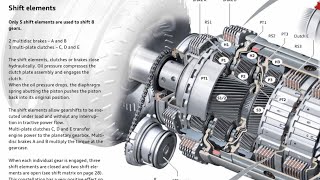
The 2013-2014 Audi A8 with the 3.0L Supercharged V6 gasoline engine uses a very specific automatic transmission. Getting the right one is critical, as other versions will not fit or function correctly. This unit is part of the ZF 8HP55A family, designed for Audi's Quattro All-Wheel Drive (AWD) system. 🎬 Watch: Complete teardown of the Audi ZF 8HP transmission The front and center differentials are built directly into the transmission housing.
Key Identifiers
To ensure you are buying the correct part, you must match the transmission code. For this specific vehicle combination, the code is NCJ.
| Family Name | ZF 8HP55A (also known as 0BK, AL551-8Q, or 8HP-55) |
| Engine Fitment | 3.0L V6 Supercharged Gasoline (Engine Code: CTUB or CGWA) |
| Drivetrain | Quattro All-Wheel Drive (AWD) |
| Transmission Code | NCJ |
Confirming Your Vehicle's Code
You can find your vehicle's transmission code in one of two places:
- Vehicle Data Sticker: Look in the spare tire well in the trunk. The sticker lists various codes for the vehicle's equipment, including a three-letter code for the transmission.
- Transmission Case: There is a stamping plate or tag on the underside of the transmission case, usually near the oil pan, that will have the code engraved on it.
Warning: Strict Code Matching is Required. The 'NCJ' code must match exactly. Transmissions from other Audi models like the A4, A5, A6, Q5, or Q7 will not work. Likewise, transmissions from A8 models with different engines (3.0L TDI diesel, 4.0T V8, 6.3L W12) have different bellhousings cast specifically for those engines, different internal programming, and are not interchangeable.
Common Failure Symptoms
When this transmission begins to fail, you may notice several symptoms. Problems can range from software glitches to internal mechanical wear. Common signs include:
🎬 See: Real-world Audi ZF-8 transmission failure analysis- Harsh or Jerky Shifting: Especially noticeable on the shift from 1st to 2nd gear when the transmission is cold.
- Warning Lights: A "Transmission Malfunction" message on the dashboard, often accompanied by the check engine light.
- Diagnostic Trouble Codes (DTCs): Specific error codes stored in the vehicle's computer, such as P074100 (Torque Converter Clutch Performance), P060A00 (Internal Control Module Monitoring), or P0750 (Shift Solenoid A).
- Limp Mode: The vehicle may enter a reduced power mode to protect the drivetrain, limiting speed and engine RPM.
- Shuddering or Vibration: A shaking feeling that can occur during acceleration or when coming to a stop as the torque converter clutch struggles to engage properly.
Diagnostic Flowchart
Known Issues, TSBs, and Recalls

While this transmission is generally robust, Audi has released Technical Service Bulletins (TSBs) to address specific known issues. A TSB is a document provided to dealers with instructions for diagnosing and repairing a known problem.
- TSB #2028985/6 - Torque Converter Clutch Performance (DTC P074100): Affecting 2011-2013 models, this issue can cause shuddering or harsh engagement. The fix is an updated software calibration for the Transmission Control Module (TCM).
- TSB #2033222/1 - Internal Control Module Monitoring (DTC P060A00): For 2011-2013 models, this fault code points to a software issue within the transmission's computer. The remedy is to update the TCM software to the latest version.
- Harsh 1-2 Shift: A widely documented issue on early ZF 8-speed units where the first shift of the day is jerky. This can often be improved with a TCM software update and a professional standstill adaptation procedure.
As of mid-2024, there are no safety recalls issued by the National Highway Traffic Safety Administration (NHTSA) that specifically target the transmission assembly itself for the 2013-2014 Audi A8. However, other recalls for these model years exist for issues like coolant valves that could affect engine electronics.
Expected Service Life and Maintenance
The ZF 8HP55A is a robust transmission, with many owners reporting well over 150,000 miles of service without major internal failure. However, its lifespan is critically dependent on maintenance. While Audi may market the fluid as a "lifetime" fill, the transmission manufacturer, ZF, recommends a fluid and filter change at intervals of 50,000 to 75,000 miles (80,000 to 120,000 km). Some sources suggest a 150,000 km (approx. 93,000 miles) interval under ideal conditions.
A commonly cited definition of "lifetime fill" by automakers is that the transmission is expected to last 100,000 miles with an acceptable rate of failure on the original fluid. With regular fluid services, a service life exceeding 200,000 miles is achievable; without them, failures often occur between 100,000 and 150,000 miles. For vehicles driven aggressively, used for towing, or primarily in stop-and-go traffic, shortening the service interval to 40,000-50,000 miles is highly recommended.
What Fails at Every Mileage Band
Pro Tip: The mileage bands below describe used replacement units of that mileage. The checklists are things to do WHILE INSTALLING the purchased transmission, not maintenance for your current transmission.
Under 60,000 Miles
Known Failures: Harsh or jerky shifts, particularly the 1-2 shift when cold, are a common complaint. This is often attributed to software calibration and adaptation rather than mechanical failure. Leaking seals, oil pan, or cooler lines can occur at any mileage but are less common on low-mileage units. Software glitches requiring a reflash or update to resolve erratic behavior are noted in TSBs for DTCs P074100 and P060A00.
- ✓Do during install (required): Reset and perform a full relearn of the transmission adaptations with an Audi-specific diagnostic tool (ODIS). Verify the latest TCM software is installed to address potential shifting issues covered by technical service bulletins.
- ✓Cheap insurance while the engine is out: While not strictly required by mileage, replacing the plastic pan/filter assembly is inexpensive insurance against future leaks and ensures a clean start for the replacement unit.
60,000 - 100,000 Miles
Known Failures: Mechatronic solenoid issues due to degraded fluid can cause erratic shifting and fault codes. Increased harshness in shifting occurs if the fluid has never been changed. Torque converter clutch shudder or slipping can trigger fault codes like P074100. Valve body cross-leaks can begin to manifest, causing pressure and gear ratio-related codes.
- ✓Do during install (required): Mandatory Fluid and Filter Service. This is the most critical service interval. If purchasing a used unit in this mileage band, assume the fluid is original unless proven otherwise. Replace the fluid, pan/filter, and pan bolts.
- ✓Do during install (recommended): Replace the torque converter input shaft seal and the rear main seal on the engine, as they are now accessible.
- ✓Cheap insurance while the engine is out: Consider replacing the mechatronic sleeve adapter seal, a common leak point that requires pan removal.
100,000 - 150,000 Miles
Known Failures: Internal clutch pack wear, particularly the 'A' and 'D' clutches, can lead to slipping, flutters in high gears (7th, 8th), and issues with reverse. Torque converter failure becomes more common, including clutch wear and, in rare cases, a broken impeller hub. Valve body and solenoid failures are more prevalent due to extended exposure to contaminated fluid. Neglected fluid leaks can lead to low fluid levels and subsequent internal failure.
- ✓Do during install (required): All items from the 60-100k band apply. Strongly consider replacing the torque converter. A used transmission in this mileage range should not be installed with its original torque converter, as converter failure is a common cause of transmission replacement and can contaminate the new unit.
- ✓Cheap insurance while the engine is out: Inspect and replace any suspect external transmission cooler lines, as the rubber sections can become brittle.
Over 150,000 Miles
Known Failures: General internal wear of multiple components (clutches, bearings, bushings) is expected. There is a higher likelihood of hard part failure (clutch assemblies, valve body) rather than just service-related issues. While many units can exceed this mileage with proper care, a transmission with over 150k miles that has not been serviced is at high risk of failure.
- ✓Do during install (required): All items from the previous bands apply. Replacement of the torque converter is mandatory.
- ✓Do during install (recommended): Consider having the unit professionally rebuilt or inspected by a transmission specialist before installation. A unit in this mileage band is a high-risk purchase; a lower-mileage alternative is strongly recommended.
Real Owner Experiences
| Source | Mileage | What Happened | Cost |
|---|---|---|---|
| BobIsTheOilGuy Forums | N/A (low) | Owner reported violent 1-2 shifts in the first few miles when the car was cold, which improved as the transmission warmed up. This occurred after a software update. | N/A |
| FCP Euro / YouTube | N/A (low to moderate) | Degraded fluid can cause hard shifting between 1st and 2nd or 2nd and 3rd, as well as slipping and hesitation. | Cost of fluid service |
| Ross-Tech Forums | 98,000 | Owner experienced a shuddering issue when coming to a stop. A VCDS scan showed a clutch adaptation value had reached its limit. A fluid and filter change was performed. | DIY cost of parts |
| AudiWorld Forums | 60,000 | After a transmission service, the transmission began slipping severely, with high revs and no propulsion, eventually entering 'failsafe' mode. The prior symptoms were those typically cured by a fluid change. | Quoted $1800-$3500 for a factory rebuilt unit. |
| YouTube | 126,000 | Owner experienced hesitation and an automatic shift out of 3rd gear under moderate throttle, indicating internal slippage. A fluid change revealed very dark, dirty fluid with significant clutch material on the pan magnets, but did not fix the issue. The failure was attributed to aggressive driving habits. | Quoted $500 for a used 60k-mile transmission, plus significant labor to install. |
| Reddit r/Audi | 108,000 | Owner experienced a hard shift from 1-2 on cold starts, which was always present, but developed into slipping when accelerating from a stop and during kick-down shifts. A fluid and filter service did not resolve the slipping. | N/A |
| AudiWorld Forums | 152,000 | An owner of a 2006 A8L reported the car was still 'going strong' at this mileage, implying the transmission was functional. | N/A |
| Reddit r/Audi | Over 150,000 | An Audi technician commented they have seen ZF8 transmissions over 150k miles with no problems, but that failures are often caused by neglected fluid leaks. | N/A |
| Reddit r/Audi | 130,000 Km | Seeking a second opinion after the dealer diagnosed a faulty mechatronic unit based on a fault code (P0750) without checking fluid levels. | Initially paid $120 for diagnostics. Dealer quoted $9,200 for mechatronic unit replacement or $27,000 for a full transmission replacement. |
| Reddit r/MechanicAdvice | Not specified | The owner was questioning the high dealer quote for a recurring issue and exploring if an outside shop could perform the repair. | $10,500 before tax for mechatronic replacement at the dealer. |
| Reddit r/Audi | 50,000 | The owner was advised to seek a quote from an independent European auto shop, as the dealer price was considered excessively high. | $12,000 for mechatronics replacement at the dealership. |
| Car Talk Community | 156,000 | The owner found a remanufactured transmission online for $2,500 and planned to have a local mechanic install it to save on labor costs. | $2,500 for the remanufactured unit plus local mechanic labor. (Dealer quoted $8,500). |
Repair or Replace?
Deciding whether to repair your existing transmission or replace it entirely depends on the specific failure mode and the economics of the repair.
| Failure Mode | Typical Repair Cost | When to Repair |
|---|---|---|
| Mechatronic Unit Failure (Software or Hardware) | $1,500 - $3,000+ (Specialist Rebuild) / $9,000+ (Dealer Replacement) | Repair makes sense when fault codes point specifically to the mechatronic unit (e.g., solenoid faults, TCM communication errors) and there is no evidence of widespread mechanical damage. |
| Torque Converter Clutch (TCC) Failure (e.g., DTC P074100) | $800 - $1,500 | This makes sense when symptoms like shuddering or specific TCC-related codes are present without other major transmission faults. The torque converter itself costs around $150-$400, but labor is significant (5-10 hours) as the transmission must be removed. |
| Software Glitches / Harsh Shifting | $150 - $500 | This is often the first and most cost-effective step for issues like harsh 1-2 shifts. A dealer or specialist can perform a software update and a standstill adaptation procedure as outlined in TSBs. |
When Replacement is Smarter: Replacement with a quality used or remanufactured unit becomes the smarter economic choice when there is evidence of catastrophic internal mechanical failure. This includes issues like grinding noises, metal debris in the fluid, multiple gear failures, or a cracked transmission case. In these scenarios, the cost of diagnosing and replacing individual hard parts (clutch packs, gear sets, oil pump) would quickly exceed the price of a complete replacement assembly.
Replacement Cost Comparison
Replacing the transmission is a significant expense. Costs vary based on the type of replacement unit, labor rates, and your location. Here are aggregated market estimates:
| Item | Estimated Cost |
|---|---|
| New OEM (Part Only) | $9,000 - $12,000+ |
| Remanufactured OEM (Part Only) | $2,500 - $10,000+ |
| Used OEM (Part Only) | $400 - $2,500 |
| Professional Installation Labor | $1,200 - $2,000 (8-10 hours) |
What's Included in a Used Assembly?
When purchasing a used transmission, it's important to know what parts are typically included. Based on standards from the Automotive Recyclers Association (ARA), you should expect the following:
- Main aluminum transmission case with all internally lubricated mechanical components (gears, shafts, clutches, and bearings)
- Torque converter
- Transmission oil pan (with integrated fluid filter)
- Internal mechatronic unit (valve body and integrated Transmission Control Module)
Parts that are almost never included and must be transferred from your old unit or purchased new include external sensors, the vehicle-side wiring harness, gear shifter assembly, cabin selector, shift cables/linkages, engine flexplate (flywheel), external transmission fluid cooler lines, and the external heat exchanger.
Pro Tip: A used assembly always includes the torque converter. It is critical to use the torque converter that comes with the replacement transmission and not reuse your old one. A failing torque converter can send metal debris through the transmission, which would quickly damage the new unit.
Installation and Programming: Critical Steps

Installing this transmission is an advanced job that requires special tools and procedures. It is not recommended for a DIY mechanic without significant experience and access to professional equipment.
Mandatory Reprogramming (Component Protection)
The most critical step after installation is programming. The mechatronic unit, which is the transmission's brain, is electronically locked to the donor vehicle's anti-theft system. This is called Component Protection.
Warning: The vehicle will not drive correctly until Component Protection is removed. This procedure requires an authorized Audi dealer or a qualified independent specialist with an ODIS diagnostic tool and a live GeKo online connection to Audi's servers. Attempting to drive the vehicle before this is done can cause damage and will result in the transmission being locked in a neutral or limp mode state.
Special Tools and Consumables
Proper installation requires several specific items:
- Special Tools: An engine support bridge or subframe support stand, a professional-grade transmission jack, Torx (T30, T40) and Triple-Square (XZN) sockets (M10, M12, M14), and an Audi-compatible diagnostic scan tool (VCDS, OBDeleven, or ODIS). A pressurized fluid filling pump with a curved hook adapter is also required to fill the transmission correctly.
- Required Consumables: Always use new ZF Lifeguard 8 automatic transmission fluid (Audi Part Number: G 060 162 A2), a new transmission filter, pan gasket, new aluminum pan bolts (one-time-use stretch bolts), a front pump/torque converter input shaft seal, transmission cooler line flush solvent, and new subframe, transmission mount, and drive axle stretch bolts.
Pro Tip: The fluid level check is extremely sensitive to temperature. It must be done with the vehicle level, the engine running in Park, and the transmission fluid strictly between 35°C and 45°C (95°F to 113°F). An incorrect fluid level is a primary cause of shifting problems after installation.
Questions to Ask Your Installer
Before handing over your vehicle, ensure your mechanic is prepared for this specific job by asking:
- Have you confirmed the transmission code on my vehicle is 'NCJ' and the replacement unit is an exact match?
- Do you have the Audi-specific ODIS diagnostic tool with an active online subscription to remove the 'Component Protection' lock on the replacement unit's TCM?
- Will you be replacing all one-time-use aluminum stretch bolts for the subframe, transmission mounts, and axles as required by the manufacturer?
- How do you plan to fully seat the new torque converter before installation to prevent damage to the front pump? (It requires three distinct clicks/drops).
- What is your procedure for filling and checking the transmission fluid level to ensure it is done at the correct temperature (35°C-45°C) with the engine running?
- Does the price for the used transmission include the matching torque converter, and will you be installing it instead of reusing my old one?
- After the Component Protection is removed, will you perform the full standstill and drive-cycle adaptation procedure to ensure smooth shifting?
Freight, Shipping, and Pre-Purchase Verification

If you are ordering a used transmission online, be prepared for freight delivery. This assembly weighs approximately 310 lbs and measures roughly 28" x 20" x 22" before crating. It ships as LTL (Less Than Truckload) freight on a pallet, not as a standard parcel. You will need a loading dock, a forklift, or a delivery truck equipped with a liftgate to unload it. Always inspect the pallet and the transmission case for physical damage before signing the delivery receipt.
Before pulling the trigger on a purchase, perform a strict pre-purchase verification:
- Confirm the 3-letter transmission code on your vehicle data sticker or transmission case plate is exactly NCJ.
- Verify your vehicle is equipped with the 3.0L V6 Supercharged gasoline engine (Engine Code: CTUB or CGWA).
- Confirm your vehicle has the Quattro All-Wheel Drive (AWD) system.
Frequently Asked Questions (FAQ)
Can I reuse my old mounting bolts?
No. The structural subframe, transmission mount, and drive axle bolts are aluminum stretch bolts designed for one-time use. They permanently stretch when torqued to specification and will not hold the correct clamping force if reused, which can lead to catastrophic failure.
Do I have to replace the torque converter?
Yes. A used transmission assembly should always be installed with the matching torque converter it came with. Your old torque converter may contain contaminated fluid and metal debris from the previous failure, which will immediately circulate into your replacement transmission and cause it to fail.
What happens if I don't get the Component Protection removed?
The transmission will not function properly. It will likely be locked in a safe or "limp" mode, may not shift out of Park, or will exhibit harsh engagement and shifting. The anti-theft system on the vehicle will prevent the transmission from fully integrating until it is officially adapted by an authorized tool with a live connection to Audi.
Is the transmission fluid really a "lifetime" fill?
No. While Audi states the fluid is a "lifetime" fill (which generally means they expect it to last around 100,000 miles), ZF, the manufacturer of the transmission, explicitly recommends changing the fluid and filter every 50,000 to 75,000 miles to ensure longevity and prevent mechatronic failures.
Can I use a transmission from an Audi A4, A5, or Q5?
No. Even if those vehicles use a ZF 8-speed transmission, you must match the exact "NCJ" code. The bellhousing bolt pattern is cast specifically for the 3.0L V6 Supercharged gasoline engine, and the internal gear ratios and TCM programming are unique to the A8 Quattro.
What is the most common mistake buyers make during installation?
Aside from failing to remove Component Protection, common mistakes include checking the transmission fluid level with the engine turned off (which causes severe fluid starvation), failing to fully seat the torque converter (three distinct drops) before bolting it to the engine, and missing the alignment dowel pins on the back of the engine block.
Helpful Videos

Technical Specifications
Family Name: ZF 8HP55A (also known as 0BK, AL551-8Q, or 8HP-55); Transmission Code: NCJ; Engine Fitment: 3.0L V6 Supercharged Gasoline; Engine Codes: CTUB or CGWA; Drivetrain: Quattro All-Wheel Drive (AWD); Weight: Approx. 310 lbs; Dimensions: Approx. 28" x 20" x 22"
We Have This Part in Stock


The information in this article is provided for general reference and educational purposes only. Vehicle specifications, procedures, and part compatibility can vary by production date, trim level, and region. Always consult your vehicle's factory service manual and verify part numbers before purchasing or performing repairs. Safety-critical components such as airbags, seat belts, and braking systems should be installed by a qualified professional.
- Audi A8:
- 🎬 Helpful Videos
- 🛍️ Shop This Part
- Identifying the Correct Transmission for Your A8
- Key Identifiers
- Confirming Your Vehicle's Code
- Common Failure Symptoms
- Diagnostic Flowchart
- Known Issues, TSBs, and Recalls
- Expected Service Life and Maintenance
- What Fails at Every Mileage Band
- Under 60,000 Miles
- 60,000 - 100,000 Miles
- 100,000 - 150,000 Miles
- Over 150,000 Miles
- Real Owner Experiences
- Repair or Replace?
- Replacement Cost Comparison
- What's Included in a Used Assembly?
- Installation and Programming: Critical Steps
- Mandatory Reprogramming (Component Protection)
- Special Tools and Consumables
- Questions to Ask Your Installer
- Freight, Shipping, and Pre-Purchase Verification
- Frequently Asked Questions (FAQ)
- 🎟️ Get 5% Off