

2006 Audi A6 3.2L Quattro ZF 6HP19A: Problems, Identification, and Used Replacement
Identify the exact 09L transmission variant, learn what causes harsh downshifts and limp mode, and discover when to replace it with a used OEM unit.
- Before purchasing, you must match the three-letter transmission code (HYR or JER) found on the transmission case or the vehicle's build sticker to ensure compatibility.
- During installation, it is mandatory to replace the Mechatronic adapter seal ('double-D' seal) and four sealing sleeves to prevent common pressure loss failures, even on low-mileage used units.
- A replacement transmission requires special programming to clear 'Component Protection' using a dealer-level ODIS tool; simply swapping the unit will result in the vehicle entering limp mode.
- Use only the correct ZF Lifeguard 6 or Lifeguard 8 fluid as specified by the TCM software; mixing fluids or using the wrong type will cause severe shifting problems and clutch damage.
- The torque converter must be fully seated in three distinct stages before bolting the transmission to the engine to avoid destroying the internal oil pump.
Identifying Your Transmission

The 2006 Audi A6 with the 3.2L V6 engine and Quattro All-Wheel Drive uses a specific variant of the ZF 6HP19A six-speed automatic transmission, also known by the Audi type code 09L. This transmission is a complex, electronically controlled unit with an integrated center differential for the Quattro system.
How to Confirm Fitment
Warning: Before purchasing a used transmission, you must verify it is the correct unit for your vehicle. An incorrect transmission will not work due to differences in electronics, gear ratios, and physical mounting.
You must verify it is the correct unit for your vehicle. An incorrect transmission will not work due to differences in electronics, gear ratios, and physical mounting.
- Check Your Drivetrain: This transmission is only for Quattro (AWD) models. Front-wheel drive (FWD) versions of the A6 use a completely different CVT (Continuously Variable Transmission) and are not compatible.
- Confirm Your Engine: This specific unit is paired with the 3.2L V6 FSI engine.
- Find the Gearbox Code: The most important step is to match the three-letter transmission code. For this vehicle, the codes are HYR or JER. You can find this code stamped on a metal identification plate on the bottom front of the transmission case near the 16-pin connector. It is also printed on the vehicle's build sticker, which is typically located in the spare tire well or inside the maintenance booklet.
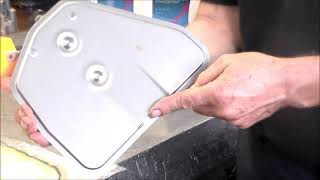
- Count the Pan Bolts: As a final check, count the number of bolts on the transmission oil pan. These units came in 13-bolt and 23-bolt pan configurations, which affects the filter and gasket kit you will need. 🎬 Watch: Step-by-step guide to changing your transmission fluid and filter
What Will Not Fit
The ZF 6HP19A family was used in other Audi vehicles from 2004 to 2011, but they are not interchangeable. Avoid transmissions from:
- Audi A4, A8, or Q7: While they may use a 6HP19A, their bellhousing patterns, internal gear ratios, and software are different.
- Audi A6 with 4.2L V8: These use a different version of the 6HP19A designed for the V8 engine and are not compatible.
- Front-Wheel Drive (FWD) Audi A6: These models are equipped with a Multitronic CVT, which is an entirely different type of transmission.
Common Failure Symptoms
A failing 6HP19A transmission can exhibit several symptoms. If you experience any of the following, it is crucial to have the vehicle diagnosed by a qualified technician.
- Harsh or jerky downshifts, especially when slowing to a stop (often the 2-1 downshift).
- Delayed or slamming engagement when shifting from Park into Drive or Reverse.
- Slipping between gears or a feeling of engine RPMs flaring without an increase in speed.
- A "hoot" or squealing noise from the torque converter area.
- Warning lights on the dashboard and the transmission entering "limp mode," where it gets stuck in a single gear (usually 3rd) to prevent further damage.
Diagnostic Flowchart
Known Issues, Service Bulletins, and Recalls

This transmission has several well-documented issues. Addressing these during a replacement can prevent future failures.
Harsh Downshifts
| Affected Models | 2004-2011 Audi A6 Quattro models. |
| TSB Numbers | TSB 2028279/3, TSB 37-15-59, TSB 12-37. |
| Symptom | The most common complaint is a rough or jerky downshift when braking to a stop. |
| Solution | The official remedy involves updating the Transmission Control Module (TCM) software and replacing the older ZF Lifeguard 6 fluid with the newer, optimized ZF Lifeguard 8 fluid (Audi P/N G 060 162 A2). The improved fluid has different friction properties that work with the new software to smooth out shifts. |
Mechatronic Unit Failures
| Affected Models | All vehicles with the 6HP19 transmission, including the 2006 A6. |
| Symptom | Pressure loss between the valve body (the hydraulic brain of the transmission) and the transmission case, leading to harsh shifts, slipping, and fault codes. |
| Solution | This is typically caused by aging rubber seals. When the valve body (Mechatronic unit) is accessed, it is critical to replace the main adapter seal (often called the "double-D" or square seal) and the four round sealing sleeves that connect it to the case. This is a common failure point that should be addressed whenever a used transmission is installed. |
Loose Internal Filter Seal
| Affected Models | 2004-2011 vehicles with the 09L transmission. |
| TSB Numbers | TSB 2013023, TPI 2028053. |
| Symptom | A loose or dislodged transmission filter seal can cause the oil pump to suck in air, leading to a sudden loss of hydraulic pressure, slipping, and fault codes 2701 or 2702. |
| Solution | Replace the transmission filter and ensure the new seal is properly and fully seated in the pump inlet. |
Torque Converter Clutch (TCC) 'Hoot' or Squeal
| Affected Models | 2004-2011 models. |
| Symptom | A distinct hooting or squealing noise during torque converter lock-up. |
| Solution | Complete fluid flush using ZF Lifeguard 8 and performing a software update and adaptation reset. |
What Fails at Every Mileage Band
Pro Tip: The mileage bands below describe what typically fails on USED REPLACEMENT units at these mileages. The checklists provided are critical steps you must take WHILE INSTALLING the purchased transmission to ensure it survives, not just maintenance for your current broken unit.
Under 60,000 Miles
Even low-mileage units can suffer from age-related seal degradation and software bugs. Early failure of the Mechatronic adapter seal ('double-D' seal) can occur, leading to pressure loss and shifting issues. Software glitches can cause hesitation or clunky shifting, often resolved by reprogramming at a dealer. Torque converter clutch issues, sometimes due to a faulty seal, can cause slipping or jolts between gears.
- ✓Do during install (required): Replace the Mechatronic adapter seal ('double-D' seal) and the four round sealing sleeves as a preventative measure, as they are known to fail early.
- ✓Do during install (recommended): Perform a full fluid and filter service with the correct ZF Lifeguard fluid.
- ✓Cheap insurance while the engine is out: Update the transmission control module (TCM) software to the latest version to address potential shifting issues.
60,000 - 100,000 Miles
The Mechatronic adapter seal is a common failure point in this range, with replacement recommended every 60,000 to 70,000 miles to prevent pressure loss and premature clutch wear. Valve body and solenoid issues begin to appear, causing harsh shifts (especially the 2-1 downshift), slipping, and fault codes. Wear on internal metal bushings can cause the control unit to increase system pressure, accelerating solenoid wear. The plastic oil pan and integrated filter can also develop leaks.
- ✓Do during install (required): Mandatory replacement of the Mechatronic adapter seal, the four sealing sleeves, and the bridge seal.
- ✓Do during install (recommended): Replace the fluid and filter/pan assembly. ZF recommends a fluid change by 100,000 km (62,000 miles) or 8 years.
- ✓Cheap insurance while the engine is out: Consider replacing the entire solenoid pack as a preventative measure to avoid future shift quality problems. In transmissions with over 80,000 km (50,000 miles), ZF's repair manual suggests replacing all clutch lining and steel disks if the unit is disassembled.
100,000 - 150,000 Miles
At this stage, solenoid failure becomes more common, leading to harsh shifts, slipping, and various fault codes. Torque converter lock-up clutch failure can cause vibrations, shuddering, and metallic debris in the fluid. Mechatronic (TCM) electronic failures can occur due to heat cycles, causing erratic behavior. Wear in the valve body hydraulic circuit can lead to pressure loss, causing slips on engagement and shuddering.
- ✓Do during install (required): Assume all seals (Mechatronic adapter, sleeves, pan gasket, input/output seals) must be replaced. Flush the transmission cooler to remove debris from the old unit.
- ✓Do during install (recommended): Strongly consider replacing the shift solenoids and the torque converter as they are at or near the end of their typical service life.
- ✓Cheap insurance while the engine is out: Replace all clutch plates and bushings if the transmission is being rebuilt.
Over 150,000 Miles
Mechanical wear becomes significant. Valve body land erosion from contaminated fluid is common after 150,000 km (93,000 miles) without service. Complete failure of clutch packs and torque converter is more likely. Engine rear cover plate leaks can also occur, which are often addressed during transmission replacement.
- ✓Do during install (required): A comprehensive rebuild is more appropriate than installing a high-mileage used unit without intervention.
- ✓Do during install (recommended): At this stage, a replacement unit should have all seals, solenoids, torque converter, and all wearable friction components and bushings replaced as a matter of course.
- ✓Cheap insurance while the engine is out: Inspect and address any engine rear cover plate leaks while the transmission is removed.
Real Owner Experiences
The following table highlights real-world experiences from Audi owners dealing with ZF 6HP19A transmission issues.
| Source | Mileage | What Happened | Cost |
|---|---|---|---|
| Car Problems Forum | 30,000 | Owner purchased a used 2007 A6 with 30k miles and experienced unspecified automatic transmission problems. | N/A |
| Edmunds Forums | 30,000+ | Owner of a 2006 model noticed jerking/slipping when accelerating from a stop. Dealer stated this was normal for the CVT, but the owner insisted it was a change in behavior since acquiring the car at 30k miles. | N/A |
| Car Talk Community | 62,262 | Replaced transmission at dealer. Quoted $6,500. | $1,000 paid |
| AudiWorld Forums | 80,000 | Experienced a "Transmission malfunction! No reverse gear" message. A P0755 shift solenoid error was diagnosed. The entire Mechatronic unit was replaced, but the issue returned a week later with new fault codes. | $3,000+ |
| BobIsTheOilGuy Forums | 80,000 | Owner of a 2005 A6 became concerned about the 'lifetime' fluid and was refused a fluid change service by both the Audi dealer and independent mechanics. | N/A |
| BobIsTheOilGuy Forums | 120,000 | Owner performed a fluid and filter change on a BMW with the same 6HP19 transmission to address rough shifting. While shifting improved after resetting adaptations, transmission slippage occurred 10,000 miles later, which was ultimately resolved by replacing the shift solenoids. | $350 in parts |
| Reddit r/Audi | 120,000 | A 2013 A6 Quattro experienced a "no reverse gear" error and multiple fault codes related to sensors, friction elements, and incorrect gear ratios, necessitating a transmission replacement. | Quoted nearly $10,000 |
| Reddit r/Audi | 130,000 Km | Dealer quoted for Mechatronic unit replacement, stating a full transmission replacement is often necessary. | Quoted $9,200 to $27,000 |
| BobIsTheOilGuy Forums | 155,000 | A 2005 A6 with original fluid began slipping and flaring just before upshifting when warm. The issue was not present in Sport mode or when cold. | Quoted ~$6,000 |
| Quora | 174,000 miles | Owner of a 2008 A6 with a Multitronic (CVT) transmission reported it as a daily driver, performing fluid changes at 120,000 km intervals. | N/A |
| Bimmerpost Forums | 205,000 | An Audi A6 with a ZF transmission had its fluid changed at this high mileage. After the service and a transmission reset, the car drove without issue. | N/A |
| AudiWorld Forums | 215,000 | Dealer quoted for a new transmission. Owner was advised by forum members to check the battery first due to multiple simultaneous electronic failure messages. | Quoted $6,000 - $8,000 |
| Reddit r/Audi | 215,000 | Owner had a 2013 A6 that ran without major issues until 175k-185k miles. The engine eventually failed at 215k miles, but the transmission's status was not specified. | N/A |
| Reddit r/Audi | Not specified | Dealer quoted for a new transmission for a DSG with no even gears. A user commented they paid $5,000 for a rebuild in 2016. | Quoted $12,000 |
Repair or Replace?
When facing transmission trouble, deciding whether to repair your current unit or replace it entirely depends on the specific failure and the overall cost.
When Repair Makes Sense
- Mechatronic Unit (TCM) / Valve Body Issues ($500 - $2,500): When symptoms are electronic or hydraulic (harsh shifts, getting stuck in gear, specific fault codes) but there is no evidence of widespread mechanical damage like metal debris in the pan. A specialist can repair or rebuild the Mechatronic unit for significantly less than a full transmission replacement.
- Torque Converter Failure ($1,000 - $2,000): If the issue is isolated to the torque converter (e.g., TCC hoot, shudder, stalling). The part itself can be $150 to $400, but labor is high (5 to 10 hours) as the transmission must be removed. It makes sense to replace if the rest of the transmission is healthy.
- Leaking Seals ($300 - $800): When the transmission is functioning correctly but losing fluid. Replacing seals like the 'double-D' adapter and sealing sleeves during any service where the pan is off is critical preventative maintenance.
When Replacement is Smarter
Replacement is the better option when the vehicle has multiple, severe symptoms like loud grinding or whining noises, significant metal debris found in the transmission pan, or a complete loss of drive. When the cost of diagnosing and repairing multiple internal failures (e.g., a bad Mechatronic unit AND a failing torque converter AND worn clutches) approaches or exceeds the price of a quality used or remanufactured unit, replacement becomes the more sensible and reliable long-term option. Given the 2006 Audi A6's market value, a total repair cost exceeding $4,000 to $5,000 often makes internal repair uneconomical compared to swapping in a verified used unit.
Questions to Ask Your Installer
- Have you confirmed the 3-letter transmission code on my car matches the replacement unit?
- Will you be replacing the torque converter seal, axle seals, and all single-use subframe bolts?
- Will you be replacing the Mechatronic adapter seal ('double-D' seal) and the four sealing sleeves inside the replacement transmission before installation?
- How will you handle the Component Protection programming? Do you have an ODIS tool for online adaptation, or will you swap my original TCM into the new unit?
- What specific brand and type of ATF will you use (e.g., ZF Lifeguard 6 or 8), and does it match the software on the TCM?
- How do you ensure the torque converter is fully seated in all three stages before bolting the transmission to the engine?
- What is your procedure for the final fluid level check to ensure it's done within the 35-45°C temperature window with the engine running?
- Does your final price include the transmission fluid, all required seals and gaskets, and the programming fee?
Replacement Cost
The cost to replace a 2006 Audi A6 transmission varies significantly based on the type of replacement unit. Labor costs are also high due to the complexity of the job.
| Part Type | Estimated Price (Part Only) |
|---|---|
| New OEM | $7,000 - $10,000+ |
| Remanufactured | $2,200 - $4,500+ |
| Used OEM | $800 - $2,400 |
| Labor Task | Estimated Cost / Hours |
|---|---|
| Shop Labor Hours | 6 to 12 hours |
| Shop Labor Cost | $900 - $2,200+ |
Essential Information for Installation

What is Included and Excluded
When buying a used replacement assembly from a professional recycler, it typically includes the transmission case, all internally lubricated parts, the integrated center differential/transfer case, the transmission oil pan, the torque converter, and the valve body/mechatronic unit. It will not include external sensors, wiring harnesses beyond the integral 16-pin connector, the shifter assembly, shift linkage, shifter cables, flexplate/flywheel, external transmission fluid cooler lines, or driveshafts.
Component Protection and Programming
Warning: This transmission cannot be simply swapped in. The Transmission Control Module (TCM), which is located inside the transmission as part of the Mechatronic unit, is electronically locked to the original car's security system. This is called "Component Protection."
After installing a used transmission, the car will go into limp mode or may not start until the Component Protection is cleared. You have two options:
- Swap the Original Mechatronic Unit: Carefully remove the entire Mechatronic/valve body assembly (which includes the TCM) from your original transmission and install it into the replacement unit. This avoids the security issue but requires extreme cleanliness and care.
- Dealer/Specialist Programming: Take the vehicle to an Audi dealership or a qualified European auto repair shop. They will use a special online tool called ODIS to connect to Audi's servers and program the replacement TCM to your vehicle's VIN. This service can cost between $300 and $500. A diagnostic scan tool is also required to reset adaptation values.
Required Parts and Fluids for Installation
To ensure a successful installation, always replace the following consumable items. You will need specific tools including a VCDS (Ross-Tech) or equivalent Audi-compatible scan tool, an ATF fluid pressure pump with an angled fill adapter, a 17mm Allen/hex socket, a Torx T-27 socket, and Triple-square (XZN) sockets.
- Transmission Fluid: Use only the specified fluid. Depending on the TCM software, this will be ZF Lifeguard 6 (G 055 005 A2) or ZF Lifeguard 8 (G 060 162 A2). Do not mix them under any circumstances.
- Filter and Pan Gasket Kit: Make sure to get the correct kit for your 13-bolt or 23-bolt pan configuration.
- Mechatronic Seals: Replace the adapter seal ('double-D' seal) and the 4 sealing sleeves.
- Torque Converter Seal: Prevents leaks from the front of the transmission.
- Subframe Bolts: The bolts for the subframe (P/N N-910-666-01) are torque-to-yield (stretch) bolts and are single-use only. They must be replaced.
- Transmission Cooler Line Flush: Essential to remove old debris.
Critical Installation Steps & "Gotchas"
Pro Tip: The final fluid level check is critical and must be done correctly. The engine must be running, the transmission must be in Park, the fluid temperature must be strictly between 35°C and 45°C, and the vehicle must be level. Opening the fill plug with the engine off will cause several quarts of fluid to pour out and leave the unit underfilled.
Warning: When installing the transmission, the torque converter must be fully seated onto the input shaft. You should feel it click or drop into place three distinct times. If it is not fully seated, bolting the transmission to the engine will crush the internal oil pump, destroying the new unit.
Additionally, the subframe cross-member must be removed to get the oil pan off. Remember that the subframe bolts are single-use stretch bolts and must be replaced.
Freight and Delivery Reality

A used ZF 6HP19A transmission is a heavy, bulky industrial component. It weighs approximately 280 lbs and measures roughly 36" x 30" x 28" before crating. Because of its size and weight, it ships as LTL (Less Than Truckload) freight strapped to a wooden pallet—it will NOT arrive via standard parcel services like UPS or FedEx Ground.
When ordering, you must specify if the delivery location is a commercial address with a forklift or loading dock. If delivering to a residential address, you must request a truck with a liftgate to lower the pallet to the ground. Always inspect the transmission thoroughly before signing the driver's delivery receipt. Check for any physical damage to the aluminum case, the plastic oil pan, or the electrical connectors that may have occurred during transit.
Frequently Asked Questions (FAQ)
Can I use a standard OBD-II scanner or VCDS to program the replacement transmission?
No. Standard scan tools and even Ross-Tech VCDS cannot remove Component Protection. This requires a connection to Audi's online servers via a dealer-level tool like ODIS (Offboard Diagnostic Information System).
What happens if I don't deal with Component Protection?
The car will display a warning on the dash, and the transmission will be locked in "limp mode," usually stuck in 3rd gear. This is a security feature and makes the car undriveable for normal use.
Do I really need to replace the subframe bolts?
Yes. These are torque-to-yield bolts (P/N N-910-666-01), meaning they are designed to permanently stretch when tightened to the correct specification. Re-using them is unsafe as they will not hold the correct torque and could fail.
Can I mix the old yellow transmission fluid with the new green fluid?
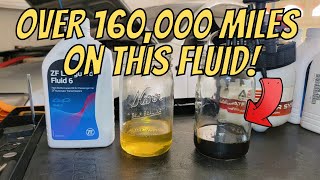
No. ZF Lifeguard 6 (yellow) and Lifeguard 8 (green) have different friction properties. Mixing them or using the wrong fluid for your TCM's software alters the friction coefficient and causes severe clutch chatter, harsh shifting, and eventual transmission failure.
Where do I find the transmission code to ensure I buy the right unit?
The 3-letter transmission code (HYR or JER for this specific model) is stamped on a metal identification plate located on the bottom front of the transmission case near the 16-pin connector. It is also printed on the vehicle's build sticker, which is usually found in the spare tire well or inside the original maintenance booklet.
Why do I need to count the transmission pan bolts?
Audi used two different oil pan designs for this transmission family: a 13-bolt configuration and a 23-bolt configuration. You must physically count the bolts on your current transmission to ensure you order the correct filter and pan gasket kit for the installation.
Helpful Videos
Technical Specifications
OEM Part Numbers: G 060 162 A2 G 055 005 A2 N-910-666-01
Name: ZF 6HP19A; Audi Type Code: 09L; Gears: 6-Speed Automatic; Drivetrain: Quattro All-Wheel Drive; Engine Compatibility: 3.2L V6 FSI; Transmission Codes: HYR, JER; Weight: ~280 lbs; Pan Configurations: 13-bolt, 23-bolt
We Have This Part in Stock


The information in this article is provided for general reference and educational purposes only. Vehicle specifications, procedures, and part compatibility can vary by production date, trim level, and region. Always consult your vehicle's factory service manual and verify part numbers before purchasing or performing repairs. Safety-critical components such as airbags, seat belts, and braking systems should be installed by a qualified professional.
- Audi A6:
- 🎬 Helpful Videos
- 🛍️ Shop This Part
- Identifying Your Transmission
- How to Confirm Fitment
- What Will Not Fit
- Common Failure Symptoms
- Diagnostic Flowchart
- Known Issues, Service Bulletins, and Recalls
- Harsh Downshifts
- Mechatronic Unit Failures
- Loose Internal Filter Seal
- Torque Converter Clutch (TCC) 'Hoot' or Squeal
- What Fails at Every Mileage Band
- Under 60,000 Miles
- 60,000 - 100,000 Miles
- 100,000 - 150,000 Miles
- Over 150,000 Miles
- Real Owner Experiences
- Repair or Replace?
- When Repair Makes Sense
- When Replacement is Smarter
- Questions to Ask Your Installer
- Replacement Cost
- Essential Information for Installation
- What is Included and Excluded
- Component Protection and Programming
- Required Parts and Fluids for Installation
- Critical Installation Steps & "Gotchas"
- Freight and Delivery Reality
- Frequently Asked Questions (FAQ)
- 🎟️ Get 5% Off