

2009-2010 Audi A4 & A5 2.0T Quattro ZF 6HP28: Problems, Identification, and Used Replacement
Identify the ZF 6HP28 (0B6) transmission, understand common Mechatronic and torque converter failures, and learn when replacing it with a used OEM unit is the smartest fix.
- A used transmission MUST be reprogrammed by a dealer or specialist with ODIS online access to remove Component Protection, or the vehicle will remain in limp mode.
- The transmission cooler and lines must be thoroughly flushed before installing a replacement unit to prevent debris from destroying the new transmission's solenoids.
- Fitment is extremely specific to 2009-2010 A4 and 2010 A5 2.0T quattro models (engine code CAEB); units from FWD, V6, 2011+, or S-tronic models are not compatible.
- Despite Audi's 'lifetime' fluid claims, the transmission manufacturer (ZF) recommends a fluid and filter service every 50,000-60,000 miles, which is mandatory when installing a used unit.
Part Identification: Is This Your Transmission?

The automatic transmission in the 2009-2010 Audi A4 and 2010 Audi A5 with the 2.0L turbocharged engine and quattro All-Wheel Drive is the ZF 6HP28. This is a 6-speed automatic transmission, also known by its Audi type code 0B6 (and identifying codes AL651-6Q). It's a longitudinal transaxle, which means the transmission, front differential, and center differential (Torsen) are all housed in one unit.
This specific assembly is designed to fit only the following models:
- 2009-2010 Audi A4 with 2.0L Turbo engine and quattro AWD
- 2010 Audi A5 with 2.0L Turbo engine and quattro AWD
Pro Tip: To be certain this is your transmission, check for the transmission code KXT or LML. You can find this three-letter code on the vehicle identification sticker, which is usually located in the spare tire well or inside your owner's maintenance booklet. The code may also be stamped on a metal tag on the underside of the transmission case itself. You should also verify your engine code is CAEB.
What It Does NOT Fit
Fitment for this transmission is very specific. A used unit will not work if your vehicle is different from the list above. Key incompatibilities include:
| Model / Drivetrain | Reason for Incompatibility |
|---|---|
| Front-Wheel Drive (FWD) models | Uses a completely different CVT (Continuously Variable Transmission). |
| V6 or Diesel engine models | Uses different variants of the 0B6 transmission that are not interchangeable. |
| 2011 and newer models | Uses an 8-speed automatic (type 0BK) which is not a direct fit. |
| S-tronic / DSG models | Uses a 7-speed dual-clutch transmission (type 0B5) which is mechanically and electronically different. |
Common Failure Symptoms

When the ZF 6HP28 transmission begins to fail, you may notice one or more of the following symptoms:
- Harsh Downshifts: A noticeable "clunk" or shudder when the vehicle slows to a stop, particularly on the 2-1 downshift.
- Shifting Flares or Slipping: The engine RPMs rise between shifts as if the transmission is briefly in neutral.
- Delayed Engagement: A long pause before the transmission engages when shifting from Park to Drive or Reverse.
- Stuck in Park: The gear selector cannot be moved out of the Park position.
- Transmission Fluid Leaks: Puddles of red or brown fluid under the car, often from the transmission oil pan gasket.
- Warning Lights: A "Gearbox Malfunction" message may appear on the instrument cluster, putting the car into "limp mode" where only certain gears are available.
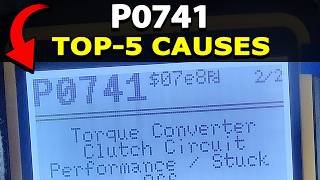
- Torque Converter Shudder: A vibration or shuddering feeling under light acceleration, which can be caused by a failing torque converter clutch. This may trigger the trouble code P0741. 🎬 Watch: How to diagnose and fix P0741 codes
Diagnostic Flowchart
Known Issues, TSBs, and Recalls

This transmission has several well-documented issues. While no safety recalls have been issued for the transmission itself, Audi has released multiple Technical Service Bulletins (TSBs) to address common complaints.
| Issue | Description & Fix | TSB Number |
|---|---|---|
| Harsh 2-1 Downshift / Shudder | A shudder or harsh shift when coming to a stop, often caused by software calibration. The fix is a TCM software update via Audi's SVM system. | 2021193/4 |
| Harsh 2-3 Shift | A harsh upshift from second to third gear. The fix is a TCM software update. | 2033065/1 |
| Transmission Pan Gasket Leak | The original gasket settles, causing pan bolts to lose torque and leak. The fix is to retorque the bolts or replace the gasket with the updated rubber-metal design. | 2013002 |
| Ignition Key Stuck / Shifter Stuck in Park | This is typically caused by a faulty microswitch in the shifter assembly, not an internal transmission failure. The fix is to inspect, adjust, or replace the microswitch. | 37-12-38 |
Mechatronic (Valve Body) and Solenoid Failure
The Mechatronic unit is the electro-hydraulic brain of the transmission, containing the TCM and various solenoids that control shifting. Over time, solenoids can wear out or become clogged with debris, leading to harsh shifts, slipping, and error codes. In many cases, the solenoids or the valve body separator plate can be replaced without replacing the entire transmission.
Warning: Debris from a failing torque converter or from not flushing the transmission cooler can quickly destroy the solenoids in a replacement transmission. Always perform a complete transmission cooler flush and install a new filter during installation.
What Fails at Every Mileage Band
Pro Tip: The mileage bands below describe what to expect from used replacement units of that mileage. The checklists provided are things to do WHILE INSTALLING the purchased transmission, not maintenance for your current broken unit.
Under 60K Miles
Transmissions in this range are generally healthy, but may exhibit software-related issues like harsh 2-1 downshifts. You might also see early signs of Mechatronic hesitation. Note that on the 2.0T engine, the PCV valve can fail around 60,000-80,000 miles, causing performance issues that mimic transmission problems.
- ✓Do during install (required): Perform a transmission fluid and filter service. While Audi may claim the fluid is 'lifetime,' the transmission manufacturer (ZF) recommends service intervals around 50,000-60,000 miles.
- ✓Do during install (recommended): Have a dealership check for and apply any available Transmission Control Module (TCM) software updates, which can resolve known shifting irregularities.
60K-100K Miles
Mechatronic and torque converter problems become more common here, especially if the initial fluid service was skipped. Symptoms include harsh shifting, shift flares, and shuddering. Internal valve body components like accumulators and solenoids begin to wear, causing hydraulic pressure loss. Torque Converter Clutch (TCC) slippage is a frequent complaint.
- ✓Do during install (required): Complete fluid and filter service with the correct ZF Lifeguard fluid.
- ✓Do during install (recommended): Replace the Mechatronic connector sleeve, the four rubber tube seals between the valve body and transmission case, and the oil pan gasket. These are inexpensive parts that are common leak points and accessible while the pan is off.
100K-150K Miles
Failures become more frequent and potentially severe. Deferred maintenance often leads to accelerated wear on internal clutches and bushings. Significant valve body erosion is likely if the unit has not been serviced. Complete torque converter failure and Mechatronic failure (causing limp mode) become primary concerns.
- ✓Do during install (required): Full fluid service, including filter, pan gasket, Mechatronic connector sleeve, and all valve body seals.
- ✓Do during install (recommended): Proactively rebuild the Mechatronic unit by replacing all solenoids and the valve body separator plate. This is a common failure point and much easier to do while the transmission is out.
- ✓Cheap insurance while the engine is out: Strongly consider replacing the torque converter. It is a major wear item, and replacing it requires removing the transmission, so doing it during the swap saves significant future labor costs.
Over 150K Miles
The risk of internal mechanical failure of hard parts like clutch packs and bushings increases significantly. Without a verifiable maintenance history, reliability is questionable. Rust on subframes and wear on suspension components also become significant concerns during removal.
- ✓Do during install (required): Assume a full service is needed. This includes fluid, filter, all Mechatronic seals, new solenoids, and a new valve body separator plate.
- ✓Do during install (recommended): A buyer should be prepared for a shorter service life and budget for a full rebuild or remanufactured unit as the next likely major expense.
- ✓Cheap insurance while the engine is out: A used transmission with this mileage should have its torque converter replaced before installation without question.
Real Owner Experiences
| Source | Mileage | What Happened | Cost |
|---|---|---|---|
| AudiWorld Forums | 40,000 | Owner of a similar platform vehicle (2002 A4 with a CVT) reported a major transmission failure that required replacement. | N/A (Warranty) |
| Audi-Sport.net | 40,000 | Owner of a 2007 A4 Multitronic had a preventative gearbox oil change performed at a dealership. | £163 (approx. $205 USD) |
| BMW 3-Series (E90 E92) Forum | 60,000+ | Owner with a similar ZF 6HP transmission had a gearbox service with Mechatronic seals performed. Shifting became smoother but was still occasionally jerky when cold. | £360 (approx. $455 USD) |
| Can Auto Performance | 60,000-80,000 | PCV valve failure is common in this range on the 3.0T engine, which can cause misfires and performance issues that might be mistaken for a transmission problem. | N/A |
| AudiWorld Forums | 110,000 | Owner with a 2011 A4 Quattro with no current issues was quoted for a preventative transmission service (drain and fill, filter, gasket). | $950 (quoted) |
| Car Talk Community | 112,876 | Owner of a 2006 A4 Quattro reported engine RPMs bouncing up and down by about 50 RPM while trying to maintain a stable speed, a classic symptom of a failing torque converter lock-up clutch. | N/A |
| Reddit r/BmwTech | 143,000 | Owner of a vehicle with a similar ZF transmission experienced hesitation between gears and was diagnosed with a failed Mechatronic unit. | $7,000 - $8,000 (quoted for replacement) |
| Reddit r/Audi | 156,000 | An owner noted their 2011 A4 was totaled at this mileage and stressed the importance of getting a pre-purchase inspection that verifies transmission maintenance history. | N/A |
| AudiWorld Forums | 262,000 | An owner with an 0B6 ZF 6-speed admitted that with no maintenance, the transmission was 'not great at this point, but it's sufficient'. | N/A |
| Quora | 328,000+ | An owner of a 2012 A4 reports the original engine and transmission are still running well, but notes the mileage is almost all highway, which is less stressful on the transmission. | N/A |
| AudiWorld Forums | Not specified | An independent shop quoted for a full torque converter replacement due to P0741 code after a fluid service did not resolve the issue. | $3,000 - $4,000 |
| Reddit r/Audi | Not specified | Owner installed a used media unit and encountered Component Protection lock. An independent specialist quoted $350-400 to remove it. | $320/hour by Audi dealer |
Repair or Replace?
Deciding whether to repair your existing transmission or replace it with a used or remanufactured unit comes down to the specific failure mode and overall economics.
When Repair Makes Sense
- Mechatronic (Valve Body) Failure / Solenoid Faults: This is often the root cause of shifting problems. A specialist can rebuild the valve body with an upgraded kit (like a Sonnax Zip kit) and replace the solenoids for significantly less than a full transmission. A valve body rebuild service can cost around $730 for the part, while a new solenoid pack is about $300-$400 plus labor. A complete remanufactured mechatronic unit ranges from $850 to $1,600 before labor. Typical total repair cost: $1,200 - $2,500.
- Torque Converter Clutch Slippage (P0741): The P0741 code is frequently caused by wear in the mechatronic valve body, not the torque converter itself. A specialist repair focusing on the valve body and TCC solenoid can cost between $1,500 and $2,500. If the torque converter is indeed faulty, a rebuilt one can be sourced for around $300 plus 8-10 hours of labor. Typical total repair cost: $1,500 - $4,000.
- Harsh Shifts / Shudder (Software Issue): If the issue matches a known TSB, a simple TCM software update at a dealer or specialist with the correct tools may resolve it. Typical repair cost: $200 - $500.
When Replacement is Smarter
Replacing the entire assembly with a tested, low-mileage used unit is often smarter when there are signs of catastrophic internal mechanical failure. This includes finding significant metal shavings in the transmission pan, multiple gear ratio error codes (not just solenoid or sensor codes), or a complete loss of drive. Given that used units typically run $450 - $1,200, this is often more economical than a full internal rebuild, which can quickly exceed $4,000 - $5,000 in specialized labor and parts.
Questions to Ask Your Installer
- Have you worked on this specific ZF 6HP28 / 0B6 transmission before?
- How will you handle the Component Protection on the internal TCM? Do you have the ODIS tool with an active online connection, or will it need to go to a dealer?
- Will you be performing a full flush of the transmission cooler and lines before installing the replacement unit?
- Does your quote include replacing all single-use aluminum stretch bolts for the crossmembers and mounts?
- Does the quote include replacing common 'while-you-are-in-there' seals, like the torque converter input seal, axle seals, and the mechatronic connector sleeve?
- How do you verify the torque converter is fully seated (3 clicks) before mating the transmission to the engine?
- What specific brand and type of fluid (ZF Lifeguard 6 or 8) will you be using to fill the new unit?
- How will you perform the final fluid level check (vehicle level, engine running, specific temperature range)?
- Will you perform a full TCM adaptive values reset after the installation?
Replacement Cost Guide
The cost to replace this transmission can vary widely based on the type of replacement unit and local labor rates. The job is labor-intensive, typically requiring 8 to 12 hours.
| Part / Service | Estimated Cost (USD) |
|---|---|
| New OEM (Dealer) | $7,000+ (part only) |
| Remanufactured OEM | $4,000 - $6,500 (part only) |
| Used OEM | $450 - $1,200 (part only) |
| Installation Labor | $1,100 - $1,800 |
Installation & Programming Essentials

What's Included in a Used Assembly
A used transmission assembly typically includes the transmission case, all internally lubricated parts, the transmission oil pan, the torque converter, and the integrated front and center differentials (Torsen). The internal Transmission Control Module (TCM), which is part of the Mechatronic unit, is also included. External sensors, the external wiring harness, shifter assembly, shift linkages/cables, the flexplate/flywheel, and transmission cooler lines are generally not included.
Programming & Calibration: Component Protection
This is the most critical part of the installation process. Audi vehicles use an anti-theft system called Component Protection. The TCM inside the transmission is electronically locked to the original car's VIN. When a used transmission is installed, this lock prevents it from working correctly, immediately putting the car in limp mode.
Warning: The vehicle will not drive correctly until Component Protection is removed. This procedure, sometimes called "re-marrying" the module, MUST be done by an Audi dealer or a qualified independent shop with a dealer-level ODIS scan tool and an active online GeKo connection to Audi's servers. This service can cost between $200 and $500.
Required Tools & Consumables
Beyond a standard professional toolset, replacing this transmission requires several special tools and parts that must be replaced.
- Special Tools: Engine support bar, heavy-duty transmission jack, Torx T27 and T40 sockets, 16mm tamperproof XZN triple-square socket, pressurized fluid fill pump with an Audi-specific adapter, and a VCDS or ODIS diagnostic scan tool.
- Required Consumables: New transmission fluid (sources differ between ZF Lifeguard 8 / G 060 162 A2 and ZF Lifeguard 6 / G 055 005 A2 — confirm with the yard before install), internal transmission filter (Part # 0B6325429), oil pan gasket (Part # 09E321371A), torque converter input shaft seal, axle output seals, transmission cooler-line flush solvent, replacement aluminum stretch bolts (for crossmember and mounts), cooler line O-rings (Part # N90666003), and a Mechatronic connector sleeve. It is also highly recommended to replace the engine's rear main seal while the transmission is out.
Critical Installation Mistakes to Avoid
To ensure a successful replacement, avoid these common and costly errors:
- Failing to Flush the Cooler: Old, contaminated fluid and metal debris in the transmission cooler and lines will be pumped directly into your replacement unit, causing immediate damage to the solenoids.
- Improperly Seating the Torque Converter: The torque converter must be carefully rotated and pushed onto the input shaft until it drops into place three distinct times. Bolting the transmission to the engine without it being fully seated will crush and crack the internal oil pump.
- Reusing Stretch Bolts: The aluminum bolts used for the subframe and mounts are designed for one-time use. Reusing them can lead to them snapping or backing out.
- Incorrect Fluid Level Check: The fluid level must be checked with the vehicle level, the engine running, and the transmission fluid at a specific temperature strictly between 30°C and 50°C (ideally 35°C-45°C), monitored with a scan tool.
- Using the Wrong Fluid: Using a generic multi-vehicle ATF instead of the specified ZF fluid can cause shifting problems and long-term damage.
- Driving Without Programming: Attempting to drive without removing Component Protection will lead to immediate limp mode.
- Ignoring Suspension Alignment: Removal of the structural aluminum X-brace and crossmember is required, which can affect front suspension alignment if the subframe shifts.
Freight & Delivery Reality

When ordering a used ZF 6HP28 transmission, it is important to understand how it will arrive. This is a heavy, bulky component that requires specialized shipping.
- Size and Weight: The assembly weighs approximately 240 lbs and measures roughly 36" x 24" x 24" before crating.
- Shipping Method: It ships as LTL (Less-Than-Truckload) freight on a pallet. It is NOT a parcel and cannot be shipped via standard ground services.
- Delivery Requirements: Delivery will require a commercial loading dock or a truck equipped with a liftgate to lower the pallet to the ground.
- Inspect Before Signing: Always inspect the transmission before signing the delivery receipt. Check for a cracked aluminum case, broken external sensors, or a crushed oil pan that may have occurred during transit.
Frequently Asked Questions (FAQ)
Can I use a transmission from a 2011 A4?
No. Starting with the 2011 model year, Audi switched to an 8-speed ZF automatic transmission (0BK) for the 2.0T quattro models. It is not a direct replacement for the 6-speed 0B6 transmission.
What is 'Component Protection'?
Component Protection is an anti-theft feature used by Audi/VW that electronically links major control modules, like the transmission controller (TCM), to the car's unique Vehicle Identification Number (VIN). If you install a used part, the system detects a mismatch and restricts the part's function until it is adapted online by a dealer or authorized specialist.
Do I really need to program a used transmission?
Yes. Due to Component Protection, the car will be in a restricted "limp mode" and will not shift properly until the used transmission's internal control module is adapted to your vehicle. This is not optional.
Is the transmission fluid 'lifetime'?
While Audi may have marketed the fluid as 'lifetime', it is not. The fluid degrades with heat and time, and failing to service it is a common cause of Mechatronic and solenoid issues. A used transmission should always be serviced with new fluid and a new filter before installation.
What fluid does the ZF 6HP28 take?
You must use the specific ZF Lifeguard fluid. However, sources differ on whether this specific unit requires ZF Lifeguard 6 (Audi G 055 005 A2) or ZF Lifeguard 8 (Audi G 060 162 A2). You must confirm the correct fluid specification with your supplier or yard before filling the unit.
Can I install this transmission myself?
This is considered an Advanced to Expert DIY job. It requires specialized tools like an engine support bar, a heavy-duty transmission jack, a 16mm tamperproof XZN triple-square socket, and a pressurized fluid fill pump. Furthermore, you will still need a dealer-level tool (ODIS) to remove Component Protection after the physical installation is complete.
Helpful Videos

Technical Specifications
OEM Part Numbers: 0B6 AL651-6Q KXT LML
Manufacturer: ZF; Model: 6HP28; Audi Type Code: 0B6; Audi Identifying Codes: AL651-6Q; Transmission Codes: KXT, LML; Gears: 6-Speed Automatic; Drivetrain: quattro All-Wheel Drive; Engine Fitment: 2.0L Turbo (CAEB); Layout: Longitudinal Transaxle; Center Differential: Torsen
We Have This Part in Stock


The information in this article is provided for general reference and educational purposes only. Vehicle specifications, procedures, and part compatibility can vary by production date, trim level, and region. Always consult your vehicle's factory service manual and verify part numbers before purchasing or performing repairs. Safety-critical components such as airbags, seat belts, and braking systems should be installed by a qualified professional.
- Audi A4:
- Audi A5:
- 🎬 Helpful Videos
- 🛍️ Shop This Part
- Part Identification: Is This Your Transmission?
- What It Does NOT Fit
- Common Failure Symptoms
- Diagnostic Flowchart
- Known Issues, TSBs, and Recalls
- Mechatronic (Valve Body) and Solenoid Failure
- What Fails at Every Mileage Band
- Under 60K Miles
- 60K-100K Miles
- 100K-150K Miles
- Over 150K Miles
- Real Owner Experiences
- Repair or Replace?
- When Repair Makes Sense
- When Replacement is Smarter
- Questions to Ask Your Installer
- Replacement Cost Guide
- Installation & Programming Essentials
- What's Included in a Used Assembly
- Programming & Calibration: Component Protection
- Required Tools & Consumables
- Critical Installation Mistakes to Avoid
- Freight & Delivery Reality
- Frequently Asked Questions (FAQ)
- 🎟️ Get 5% Off