

2016-2018 Audi A3 2.0L Quattro DQ250 Transmission: Problems, Identification, and Used Replacement
Identify the RHK transmission code, understand common mechatronic failures, and learn when to replace your failing unit with a used OEM assembly.
- You must match the three-letter transmission code RHK exactly; units from FWD A3s or other VW/Audi models are not compatible.
- The internal mechatronic unit is the most common major failure point and its replacement requires special programming (Component Protection removal) by a dealer or specialist.
- Performing a DSG fluid and filter service every 40,000 miles with the correct fluid (VW G 052 182 A2) is the most critical maintenance step to prevent premature failure.
- When installing a used transmission, it is mandatory to flush the external oil cooler and lines, use all new fluid, and replace all torque-to-yield bolts to ensure reliability.
Part Identification & Fitment

The transmission used in the 2016-2018 Audi A3 with the 2.0L turbocharged direct-injection (TFSI) engine and Quattro All-Wheel Drive is a 6-speed dual-clutch automatic known as the DQ250. This specific version is identified by the three-letter transmission code RHK. It is also part of the broader 0D9 and 02E transmission families. This code is crucial for ensuring you get the correct replacement part.
Pro Tip: You can find the RHK transmission code in two main places: on a white build sticker located in the spare tire well of the trunk, or stamped directly on the top of the transmission case itself. It may also be listed on a sticker inside your owner's service manual.
This transmission is a transaxle, meaning the transmission and front differential are housed in the same case. It is designed for a transverse (sideways) engine layout. A key component is the internal mechatronic unit, which is the electro-hydraulic "brain" that controls the clutches and gear shifts.
Warning: Not all DQ250 transmissions are the same. You must match the RHK code. Transmissions from Front-Wheel Drive (FWD) A3 models will not work, as they lack the necessary mounting points and output flange for the Quattro system's transfer case. Units from other Volkswagen Auto Group (VAG) vehicles like the VW Golf R, Audi S3, or Tiguan may look identical but have different internal gear ratios, final drive ratios, software calibrations, and mounting brackets, making them incompatible.
Common Failure Symptoms
When the DQ250 transmission begins to fail, it can show several distinct symptoms. Recognizing them early can help in diagnosing the problem correctly.
- Harsh or Jerky Shifting: The car may shift gears abruptly, especially between 2nd and 3rd gear.
- Delayed Engagement: A noticeable pause when shifting from Park into Drive or Reverse, which may worsen as the transmission warms up.
- Warning Lights: A "Gearbox Malfunction" message may appear on the dashboard, and the "PRNDS" gear selector indicator might flash.
- Limp Mode: The transmission may lock itself into a single gear (often 3rd) to prevent further damage, resulting in limited power.
- Shuddering or Vibration: A noticeable shudder, especially when accelerating from a stop, can point to wear in the internal dual-clutch packs.
- Loss of Reverse Gear: A partial or total loss of the ability to reverse is a strong indicator of mechatronic unit failure.
- Unusual Noises: Grinding or clunking sounds during gear changes can signal significant internal issues.
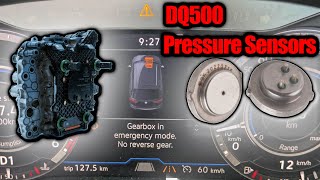
- Loss of Even Gears: A fault code P173600 for a clutch position sensor electrical error can cause the loss of gears 2, 4, and 6. 🎬 Watch: How to repair the P173600 clutch position sensor error
Diagnostic Flowchart

Known Issues, Recalls, and Technical Service Bulletins (TSBs)
This transmission family has several well-documented issues. Always check with an Audi dealer to see if a specific vehicle has had these campaigns completed.
Mechatronic Unit Failure
The most common and severe issue is the failure of the mechatronic unit. This complex component houses the Transmission Control Module (TCM) and hydraulic solenoids. Failures can be caused by faulty solenoids, sensor degradation, or internal circuit board issues. Symptoms range from jerky shifts to a complete loss of drive. The remedy is to replace solenoids, repair circuit boards, or replace the entire unit.
Campaign 34L4: Auxiliary Hydraulic Pump
Audi issued Service Action 34L4 (also referenced as TSB 2051405) for 2017-2018 A3 models. This campaign involves a software update for the Transmission Control Module (TCM) to better detect potential failure of an internal auxiliary hydraulic pump. If the updated software detects a specific fault code (P0C2900), the pump must be replaced, which requires removing and disassembling the transmission. Failure of this pump can lead to catastrophic internal damage.
Recall: Pressure Accumulator Cracking
A global recall campaign was issued for some earlier Audi models for a cracking pressure accumulator housing within the mechatronic unit. A crack causes a loss of hydraulic pressure, interrupting power transmission to the wheels, which feels like depressing the clutch on a manual car. While the recall primarily targeted models up to 2016, it highlights a known weak point in the DQ250 family.
TSB 2074802/1: Dual-Clutch End Cover Leak
This Technical Service Bulletin (also referenced as TSB 37 24 16) addresses an oil leak from the inner seal on the dual-clutch end cover. This is a known moderate-severity issue for 2016-2018 models and requires replacement of the inner oil seal.
What Fails at Every Mileage Band
Pro Tip: The mileage bands below describe what typically fails on used replacement units of that mileage. The checklists provided are things to do WHILE INSTALLING the purchased engine or transmission, not maintenance for your current unit.
Under 60,000 Miles
Though not extremely common at this mileage, early mechatronic failures can occur, sometimes just outside of warranty. Symptoms include harsh shifting, delayed engagement, flashing "PRNDS" lights, and limp mode. The transmission may also be subject to service campaigns like TSB 2051405 / Campaign 34L4 or TSB 2074802/1. Sometimes, erratic shifting is just a software glitch fixed by a TCM reset and adaptation relearn.
- ✓Do during install (required): DSG Fluid and Filter Service. This is the most critical maintenance item. Even on low-mileage units, the fluid may be old. The recommended interval is every 40,000 miles.
- ✓Do during install (recommended): Inspect Seals. Check the dual-clutch end cover seal and axle seals for any signs of leaks.
- ✓Cheap insurance while the engine is out: Software Updates. Ensure the TCM has the latest software, including any updates related to service campaigns.
60,000 - 100,000 Miles
The likelihood of mechatronic failure increases in this range, especially if the 40,000-mile service was skipped. Shuddering or vibration during low-speed acceleration often indicates wear on the clutch packs, especially in cars driven in heavy stop-and-go traffic. A fault code P173600 for a clutch position sensor can also occur, causing the loss of even-numbered gears.
- ✓Do during install (required): Complete DSG Service. If it was done at 40,000 miles, the unit is due for its second service at 80,000 miles.
- ✓Do during install (recommended): Inspect and Replace Seals. Replace the input shaft seal, axle seals, and the O-ring for the transfer case/bevel box as a preventative measure.
- ✓Cheap insurance while the engine is out: Dual-Mass Flywheel (DMF) Inspection and Check Transmission Mounts. Inspect the flywheel for excessive play or rattling noises, and check mounts for cracking.
100,000 - 150,000 Miles
Failure of the Dual-Mass Flywheel (DMF) is a common wear-related issue here, causing RPM-dependent vibration and noise. If maintenance was deferred, the clutch packs may be worn out, triggering an "adaptation learning at limit" fault code. Mechatronic failure remains a significant risk due to fluid degradation and internal wear.
- ✓Do during install (required): Full DSG Service and Seal Replacement. A comprehensive fluid and filter service is essential.
- ✓Do during install (recommended): Mechatronic Solenoid Check. A specialist may be able to test and replace individual solenoids that are prone to failure.
- ✓Cheap insurance while the engine is out: Clutch Pack & Flywheel Replacement. If purchasing a unit in this mileage band, it is wise to proactively replace the clutch packs and the dual-mass flywheel.
Over 150,000 Miles
Beyond 150,000 miles, failures are usually due to general high-mileage wear on all internal components, including clutch packs, the mechatronic unit, and internal bearings. Internal hard part failure (gear sets or bearings) becomes a higher risk.
- ✓Do during install (required): Thoroughly Flush Cooler and Lines. It is critical to flush the external transmission cooler and lines to remove any debris from the previous high-mileage unit.
- ✓Do during install (recommended): Mechatronic Unit Overhaul/Replacement. It is highly advisable to have the mechatronic unit professionally rebuilt or replaced rather than installing it as-is.
- ✓Cheap insurance while the engine is out: Assume Major Components are Near End-of-Life. Consider the transmission a core for rebuilding. Plan to replace the clutch packs, dual-mass flywheel, and all seals.
Real Owner Experiences
| Source | Mileage | What Happened | Cost |
|---|---|---|---|
| AudiForums.com | 27,000 miles | An owner reported a Mechatronic failure just after the warranty expired. | N/A |
| Reddit r/Audi | 31,000 miles | A prospective buyer found service records for a full transmission replacement due to a broken hydraulic pump. | $11,000 (by previous owner) |
| Car Forums at Edmunds.com | 36,000 miles | An owner experienced a blown transmission. | N/A |
| Audi-Sport.net | 30,000 to 45,000 miles | A number of forum posts mentioned Mechatronic failures occurring in this mileage range on earlier DSG units. | N/A |
| Volkswagen Clarksburg | 44,000 miles | A vehicle with a DQ250 experienced a pronounced shudder. A fluid/filter service and adaptive reset resolved the issue, which a non-specialist shop had misdiagnosed as needing a full transmission replacement. | $340 |
| GOLFMK7 Forum | 67,000 miles | A vehicle threw a P173600 code for a clutch position sensor electrical error, resulting in the loss of even gears and a "Gearbox in emergency mode" warning. | N/A |
| AudiWorld Forums | 68,000 miles | Dealer diagnosed a failing transmission based on a grinding noise and recommended full replacement plus a new flywheel. | $11,000+tax quoted |
| YouTube | 75,000 miles (120,000 km) | A video suggests that on some DSG variants, the clutch pack mechanism may need replacement around this mileage. | N/A |
| Reddit r/Audi | 81,000 miles (130,000 km) | Dealer quoted for mechatronic unit replacement, stating it would likely lead to needing a full transmission. Owner took it to an independent shop for a second diagnosis. | $10,000 (Mechatronic) or $27,000 (Full Transmission) quoted |
| Reddit r/Audi | 93,000 miles (150,000 km) | Owner experienced clutch slip in 1st gear with a code for 'adaptation learning at limit.' A shop determined a new clutch pack was needed. | Quoted over $2,000 after initial repairs failed |
| Car Forums at Edmunds.com | 97,000 miles | An owner reported experiencing flashing PRNDS / limp mode, which became progressively more frequent over time. Diagnosed as a Mechatronic problem. | N/A |
| FCP Euro | 100,000 to 135,000 miles | Dual-mass flywheel replacement is often needed in this range. | N/A |
| CoPilot | 150,000 - 200,000 miles | General reporting suggests that critical components like the transmission may require significant maintenance or replacement in this range. | N/A |
| YouTube | 155,000 - 186,000 miles (250,000 - 300,000 km) | One user comment suggests wet clutch packs can last this long with proper maintenance. | N/A |
| VagSpec Centre Randburg | 174,000 miles (280,000 km) | An owner reported the gearbox was still going strong at this high mileage. | N/A |
| Reddit r/GLI | N/A | Owner had a full DQ250 transmission replacement. | ~$2,500 (including labor and shipping for the part) |
Repair or Replace?

Deciding whether to repair your current transmission or replace it with a used unit depends heavily on the specific failure mode.
- Mechatronic Unit Failure: This is the most common major failure. If the rest of the transmission (clutches, gears) is in good condition, repairing or replacing just the mechatronic unit is often the most cost-effective solution. A remanufactured mechatronic unit costs between $600 and $1,500, with labor taking about 4 hours. A full repair service at a shop typically ranges from $1,500 to $3,000 (or around £1,520 in the UK).
- Dual-Clutch Pack Wear: If the vehicle shudders or slips but otherwise functions, the clutch pack may be worn. This requires removing the transmission. Parts alone cost $1,700 to $2,000, and a full replacement job can exceed $2,500. This repair makes sense only if there are no other underlying faults.
When Replacement is Smarter: Replacing the entire assembly with a used or remanufactured unit is the smarter choice when there is evidence of internal mechanical damage (like broken shift forks or gear noise) or if multiple issues are present (e.g., a bad mechatronic unit AND worn clutches). Dealerships often quote exorbitant prices for new transmissions ($11,000 to $27,000). In these cases, buying a used unit (typically $950 to $2,500) is a much more economical choice.
If you choose to replace, ask your installer these critical questions:
- Are you experienced with VW/Audi DSG transmissions, specifically the DQ250?
- Do you have the tools (VCDS/ODIS) to handle the Component Protection removal and programming?
- Will you be cloning my old mechatronic unit to the new one, or will it require online programming at a dealer?
- Does your quote include the DSG Basic Settings procedure and the adaptation drive cycle?
- What brand of DSG fluid will you use? (It must be G 052 182 A2).
- Does your quote include a new DSG filter and all required torque-to-yield stretch bolts?
- Will you flush the external transmission oil cooler and lines?
Replacement Cost Estimates
The cost to replace a transmission varies based on the type of part used and local labor rates. This is a complex job, typically requiring 7 to 12 hours of labor. Labor rates can range from $100 to over $200 per hour.
| Part Type | Estimated Cost (Part Only) |
|---|---|
| New OEM | $9,000 - $13,500+ |
| Remanufactured OEM | $2,800 - $7,000 |
| Used OEM | $950 - $2,500 |
| Labor for Installation | $1,000 - $2,400 |
Installation & Programming

Replacing this transmission is an expert-level DIY job that requires special tools and electronic programming.
Component Protection
The mechatronic unit inside the transmission is electronically locked to the original vehicle's VIN. This is an anti-theft feature called Component Protection. After installing a used transmission, the car will not operate correctly or crank until this lock is removed. This procedure must be done by an authorized Audi dealer or a specialist with online access to Audi's servers (ODIS/GEKO). Alternatively, a specialist can clone the EEPROM/Flash data from your original mechatronic unit to the replacement unit using bench tools.
Warning: The vehicle will not start or drive properly if Component Protection is active. This step is not optional. You must plan for either dealer programming or mechatronic cloning.
Required Procedures & Special Tools
Beyond programming, the installation process has several critical steps:
- Special Tools: An engine support bar, subframe alignment pins, a VAG diagnostic tool (like VCDS or ODIS), a fluid transfer pump, a DSG fluid filling adapter (VAS 6262 or equivalent), a transmission jack, and specific sockets (14mm Hex, 8mm Hex, 24mm) are required.
- Subframe Removal: The entire front subframe must be lowered to access and remove the transmission. Alignment pins must be used during reinstallation to prevent suspension misalignment.
- Bevel Box Alignment: Ensure the splines on the external transfer case (bevel box) are perfectly aligned and the O-ring is seated correctly to prevent damage or leaks.
- Fluid Service: The transmission cooler and lines must be flushed to remove any debris from the previous failure. A new DSG oil filter (Part # 02E 305 051 C) and the correct specification DSG fluid (VW G 052 182 A2) must be used. It takes approximately 5.5 to 6.0 liters for a service refill, or up to 7.3 liters for a dry fill.
- Fluid Leveling: The final fluid level must be set by filling from the bottom and letting excess drain at exactly 35°C to 45°C (95°F to 113°F), monitored with a diagnostic tool.
Warning: Incorrect fluid level will cause damage. Never start the engine or put the car in gear before filling the transmission with fluid.
- Hardware Replacement: You must use new torque-to-yield stretch bolts for the subframe, mounts, and flywheel. It is also highly recommended to replace the dual-clutch end cover seal / input shaft seal (Part # 02E 301 189 A) and axle shaft seals.
- Basic Settings & Adaptation: After installation and programming, a "DSG Basic Settings" procedure must be run with a diagnostic tool, followed by a specific gentle drive cycle to allow the new clutches and mechatronic unit to adapt fully.
Freight & Delivery Reality

If you are ordering a used DQ250 transmission online, understand that it will not arrive in a standard cardboard box. A fully assembled DQ250 weighs approximately 215 lbs and measures roughly 30" x 26" x 24" before crating. Because of this size and weight, it ships as Less-Than-Truckload (LTL) freight on a wooden pallet.
Freight delivery requires a delivery truck equipped with a liftgate to lower the pallet to the ground. When the transmission arrives, you must inspect it thoroughly before signing the delivery receipt. Check the casing for any cracks or broken sensor connectors that may have occurred during transit.
Pro Tip: Before purchasing, always perform a pre-purchase verification: confirm the 3-letter transmission code is RHK, confirm your vehicle is a Quattro (AWD) model, and confirm it has the 2.0L Turbocharged Gas (TFSI) engine.
Frequently Asked Questions (FAQ)
What parts are included with a used RHK transmission?
A used transmission assembly typically includes the transmission case, all internally lubricated parts, the internal dual-clutch pack assembly, the internal mechatronic unit (valve body and TCM), the transmission oil pan, and the front cover. It does NOT include the external transfer case (bevel box), external sensors, wiring harness, shifter linkage, cables, shifter assembly, dual-mass flywheel, starter motor, transmission oil cooler lines, or the external oil cooler.
Can I use a transmission from a FWD Audi A3?
No. The FWD transmission lacks the physical mounting points and the output flange required for the AWD Quattro system's transfer case.
Do I have to replace the transmission fluid and filter?
Yes. It is critical to use new, correct-specification DSG fluid (VW G 052 182 A2) and a new filter. Reusing old fluid or failing to flush the transmission cooler lines will introduce contaminants into your replacement transmission and cause it to fail quickly.
What is a mechatronic unit?
The mechatronic unit is the electro-hydraulic control center of the DSG transmission. It contains the Transmission Control Module (TCM), sensors, and solenoid valves that manage hydraulic pressure to shift gears and operate the dual clutches. It is the most common failure point on these transmissions.
Does the replacement transmission need to be programmed?
Yes. The internal mechatronic unit is locked to the donor vehicle's VIN via Component Protection. You must either have an authorized dealer remove the lock online using ODIS/GEKO, or have a specialist clone the data from your original mechatronic unit to the replacement unit.
How much fluid does the DQ250 transmission take?
A standard service refill requires approximately 5.5 to 6.0 liters of DSG fluid. If the transmission is completely dry (such as after a full rebuild), it can take up to 7.3 liters. The final level must be set at a specific temperature window (35°C to 45°C).
Helpful Videos
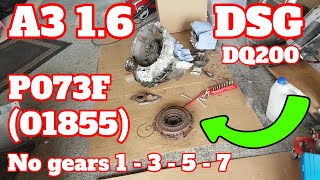
Technical Specifications
Model Years: 2016-2018; Vehicle: Audi A3 2.0L TFSI Quattro; Transmission Type: 6-Speed Dual-Clutch Automatic (Transaxle); Transmission Name: DQ250; Transmission Code: RHK; Transmission Family: 0D9, 02E; Engine Layout: Transverse; Drive Type: Quattro All-Wheel Drive; Control Unit: Internal Mechatronic; Weight: ~215 lbs; Fluid Specification: VW G 052 182 A2; Fluid Capacity (Service): 5.5 - 6.0 Liters; Fluid Capacity (Dry Fill): Up to 7.3 Liters; Filter Part Number: 02E 305 051 C; Input Shaft Seal Part Number: 02E 301 189 A
We Have This Part in Stock


The information in this article is provided for general reference and educational purposes only. Vehicle specifications, procedures, and part compatibility can vary by production date, trim level, and region. Always consult your vehicle's factory service manual and verify part numbers before purchasing or performing repairs. Safety-critical components such as airbags, seat belts, and braking systems should be installed by a qualified professional.
- Audi A3:
- 🎬 Helpful Videos
- 🛍️ Shop This Part
- Part Identification & Fitment
- Common Failure Symptoms
- Diagnostic Flowchart
- Known Issues, Recalls, and Technical Service Bulletins (TSBs)
- Mechatronic Unit Failure
- Campaign 34L4: Auxiliary Hydraulic Pump
- Recall: Pressure Accumulator Cracking
- TSB 2074802/1: Dual-Clutch End Cover Leak
- What Fails at Every Mileage Band
- Under 60,000 Miles
- 60,000 - 100,000 Miles
- 100,000 - 150,000 Miles
- Over 150,000 Miles
- Real Owner Experiences
- Repair or Replace?
- Replacement Cost Estimates
- Installation & Programming
- Component Protection
- Required Procedures & Special Tools
- Freight & Delivery Reality
- Frequently Asked Questions (FAQ)
- 🎟️ Get 5% Off