

A Guide to the Starter Solenoid for 1955-1956 Studebaker E11 Trucks
Everything you need to know about diagnosing and replacing the starter solenoid on your classic Studebaker E11.
- Verify if your truck has a 6-volt or 12-volt electrical system before ordering a new solenoid.
- A single loud 'click' when turning the key is the most common sign of a failing starter solenoid.
- Replacing the solenoid is a straightforward DIY task that requires basic hand tools.
- Always disconnect the battery before beginning work on the starting system.
Understanding Starter Solenoid Failure in a Classic Truck
The starter solenoid is a critical part of your Studebaker E11's starting system. Due to its age and function, it's a common point of failure. The internal contacts can wear out or corrode, and the electromagnetic coil can fail. When this happens, your truck will fail to start, potentially leaving you stranded. The most common symptom is a loud 'click' from the engine bay when you turn the key, but the engine doesn't crank. It's important to distinguish this from the rapid clicking of a dead battery.
Common Symptoms of a Bad Starter Solenoid
- Single Loud Click, No Crank: You turn the key and hear one distinct click, but the starter motor does not spin. This usually means the solenoid is receiving power but failing to transmit it to the starter.
- No Sound at All: You turn the key and nothing happens. If your battery and ignition switch are good, the solenoid may have failed completely.
- Intermittent Starting: The truck starts fine sometimes, but at other times it fails to crank. This indicates the solenoid's internal contacts are worn and making an inconsistent connection.
- Starter Stays Engaged: After the engine starts, the starter motor continues to run. This is a serious issue caused by the solenoid sticking in the 'on' position and can quickly damage the starter.
6-Volt vs. 12-Volt Systems
A critical detail for 1955-1956 Studebakers is the electrical system's voltage. Many 1955 models used a 6-volt system, while 1956 models began the transition to 12-volts. However, many older trucks have been converted to 12-volt systems over the years. You must verify your truck's voltage and purchase a solenoid that matches. Installing a 6V solenoid in a 12V system will burn it out quickly, and a 12V solenoid in a 6V system may not function correctly.
Choosing the Right Aftermarket Solenoid
Original Equipment (OEM) starter solenoids for a 1955-1956 Studebaker are no longer manufactured. Your options are New Old Stock (NOS), a used original part, or a new aftermarket part. While NOS parts are an option, they can be difficult to find and expensive. New aftermarket parts are readily available and offer a practical solution.
Standard Ignition is a well-known brand that produces replacement solenoids for vintage vehicles. Their parts are generally considered a reliable stock replacement. When shopping, focus on ensuring the part has the correct voltage and terminal configuration for your specific truck.
Pro Tip: Before replacing the solenoid, clean all your electrical connections, especially the battery terminals and ground straps. A poor connection can mimic the symptoms of a bad solenoid. A fully charged and healthy battery is also essential for proper diagnosis.
Cost of a New Aftermarket Starter Solenoid (1955-1956 Studebaker E11)
| Part Type | Estimated Cost |
|---|---|
| New Aftermarket (Standard Ignition) | $32.78 - $70.77 |
| Shop Labor | $60 - $120 |
Frequently Asked Questions (FAQ)
Can I replace the starter solenoid myself?
Yes, this is a very feasible DIY job for most owners. The solenoid is typically mounted on the fender wall or directly on the starter motor. The process involves disconnecting the battery, labeling and removing a few electrical wires, and unbolting the old solenoid. Basic hand tools are all that's required.
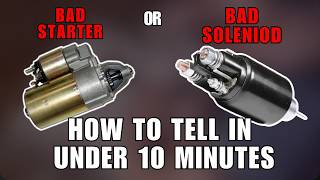
Is it the starter or the solenoid that's bad? 🎬 Watch this video to learn how to tell if your starter or solenoid is bad.
A single, loud click usually points to the solenoid. Rapid, repeated clicking often points to a weak battery or a bad starter motor. If the solenoid is fender-mounted, you can carefully bypass it by touching a screwdriver between the two large terminals; if the starter cranks, the solenoid is likely the problem. This is dangerous and can create sparks; proceed with extreme caution.
Are there any recalls for the Studebaker E11 starter solenoid?
No, there are no official NHTSA recalls or Technical Service Bulletins (TSBs) on record for the starter solenoid on the 1955-1956 Studebaker E11. This is expected for a vehicle of this age.
What tools do I need to replace the solenoid?
You will typically need a basic set of wrenches or a socket set to remove the electrical connections and mounting bolts. It is also helpful to have a wire brush for cleaning connections and some masking tape or a marker to label the wires before you remove them.
Helpful Videos
Technical Specifications
Voltage: 6V or 12V (must match vehicle system), Terminal Count: Typically 3 or 4 terminals. Mounting style can be on the starter motor or remote (fender-mounted).
We Have This Part in Stock


The information in this article is provided for general reference and educational purposes only. Vehicle specifications, procedures, and part compatibility can vary by production date, trim level, and region. Always consult your vehicle's factory service manual and verify part numbers before purchasing or performing repairs. Safety-critical components such as airbags, seat belts, and braking systems should be installed by a qualified professional.