

U3003 on 2013-2020 Ford Fusion: Battery Voltage Fault Causes and Fixes
On a 2013-2020 Ford Fusion, code U3003 almost always means the 12V battery is weak or failing. If you've replaced the battery but the code persists, the Battery Management System (BMS) likely needs to be reset, a critical step on this vehicle. Before replacing any modules, fully test the battery, check connections, and verify charging system output.
- U3003 means there's a battery voltage problem, and the most likely culprit is the 12V battery itself.
- Always perform a load test on the battery; a simple voltage check isn't enough.
- If you replace the battery on a 2013-2020 Fusion, you MUST reset the Battery Management System (BMS) or the new battery will be undercharged and fail prematurely.
- Before replacing any expensive modules, check the battery, charging system, and battery connections first.
What's Unique About the 2013-2020 Ford Fusion

The 2013-2020 Ford Fusion uses a Battery Management System (BMS) to monitor the battery's health and control the charging rate. This system is the key to understanding the U3003 code. When replacing the battery, it is mandatory to perform a BMS reset procedure. If this step is skipped, the system will continue to charge the new battery as if it were the old, degraded one, leading to undercharging, a short battery life, and the return of the U3003 code.
Generation note: The 2013-2020 model years cover the entire second generation of the Ford Fusion (codename CD391, on the CD4 platform). The electrical systems, including the Battery Management System (BMS), are consistent across this generation, so the causes and fixes apply to all vehicles in this range.
Symptoms You May Notice
- "System off to save Battery" message on the infotainment screen.
- Check charging system warning light.
- Slow or sluggish engine cranking.
- Intermittent warning lights on the dashboard (Airbag, ABS, etc.).
- Dimming of interior or exterior lights.
- Power windows, locks, or sunroof operating slower than usual.
- Radio or SYNC system randomly resetting or losing settings.
- Auto Start-Stop feature becomes unavailable.
- Replacing individual electronic modules (like the ABS or Airbag module) that are logging the U3003 code. The module is usually reporting the problem correctly, it is not the cause of it.
Most Likely Causes

- Weak or Failing 12V Battery 🔴 High Probability Modern vehicles like the Fusion have a high electrical demand even when parked (parasitic draw), which can wear out batteries in 3-5 years. The original Motorcraft batteries are not known for exceptional longevity.
How to confirm: Perform a load test on the battery. A simple voltage check is insufficient. A healthy battery should read ~12.4-12.6V at rest and must not drop below 9.6V during engine cranking. Most auto parts stores will perform this test for free.
Typical fix: Replace the 12V battery. It is critical to also perform the BMS reset procedure immediately after installation.
Est. part cost: $150-$300 - Battery Management System (BMS) Not Reset 🔴 High Probability This is a required procedural step after battery replacement that is often missed by DIYers and even some shops. The system is designed to adapt to an aging battery, and without a reset, it will undercharge a new one.
How to confirm: This is a procedural issue. If the battery was recently replaced and this code appeared, a missed BMS reset is the most likely cause. A capable scan tool (like FORScan) can check the battery's 'age' parameter in the BMS.
Typical fix: Perform the BMS reset. This can be done with a scan tool (FORScan, Snap-on, etc.) or via a manual sequence. The manual method is: 1) Turn ignition ON (engine off). 2) Flash high beams 5 times. 3) Press brake pedal 3 times. 4) The battery light on the dash should flash 3 times to confirm the reset. Alternatively, letting the vehicle sit undisturbed for 8 hours may also trigger a system relearn.
Est. part cost: $0 - Failing Alternator 🟡 Medium Probability The alternator is a standard wear item and can fail, especially at higher mileage.
How to confirm: With the engine running, measure the voltage at the battery terminals. It should be stable, between 13.8 and 14.5 volts. If it's below 13.5V, fluctuating wildly, or excessively high, the alternator is likely failing.
Typical fix: Replace the alternator.
Est. part cost: $250-$500 - Loose or Corroded Battery Terminals/Grounds ⚪ Low Probability
How to confirm: Visually inspect the battery terminals for white or blue-green corrosion. Wiggle the terminals to ensure they are tight. Follow the main negative cable from the battery to the chassis and ensure the connection point is clean and secure.
Typical fix: Clean the battery terminals and cable ends with a wire brush. Tighten all connections.
Est. part cost: $5-$10
Rare But Worth Checking
- Parasitic Electrical Draw: A module may not be 'sleeping' correctly when the car is off, slowly draining the battery. A Reddit user noted a TSB for a parasitic draw related to the seat adjustment module on some Fusions. Another known cause on Ford platforms is a faulty Gateway Module (V-CAN) that intermittently wakes up other modules, causing a significant draw. Diagnosis requires a multimeter to perform a parasitic draw test by pulling fuses. 🎬 Watch: How to find a parasitic drain using a multimeter.
- Faulty BMS Sensor: The BMS sensor itself, located on the negative or positive battery terminal, can fail. This sensor measures the battery's state of charge and health. If it provides incorrect data, the charging system will behave erratically. The sensor is often integrated with the battery cable but can sometimes be replaced separately.
Diagnosis Steps

- Read the full Diagnostic Trouble Code (DTC), including the two-digit suffix (e.g., :16 or :17) to confirm if the issue is low or high voltage.
- Perform a professional load test on the 12V battery. A voltage reading alone is not enough. The battery must be tested under load. Replace if it fails, ensuring the replacement is a similar AGM type.
- If the battery is replaced, you MUST perform the Battery Management System (BMS) reset. Confirm the procedure for your specific model year, either with a scan tool or the manual high-beam/brake-pedal sequence.
- With the engine running, check the alternator output at the battery terminals. Voltage should be steady between 13.8V and 14.5V. If not, diagnose the charging system.
- Inspect and clean the battery terminals and the main chassis ground connection. Ensure they are tight and free of corrosion.
- If the battery and charging system are good, but the battery continues to die, perform a parasitic draw test with a multimeter to find a component that is staying on after the vehicle is shut off.
Parts You'll Likely Need
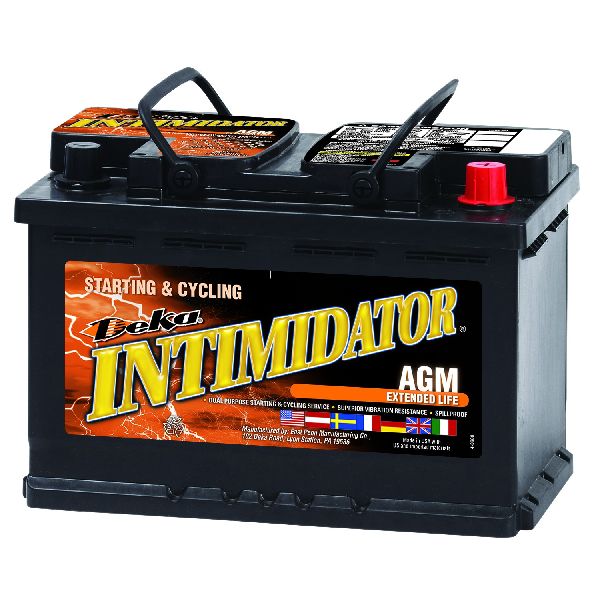
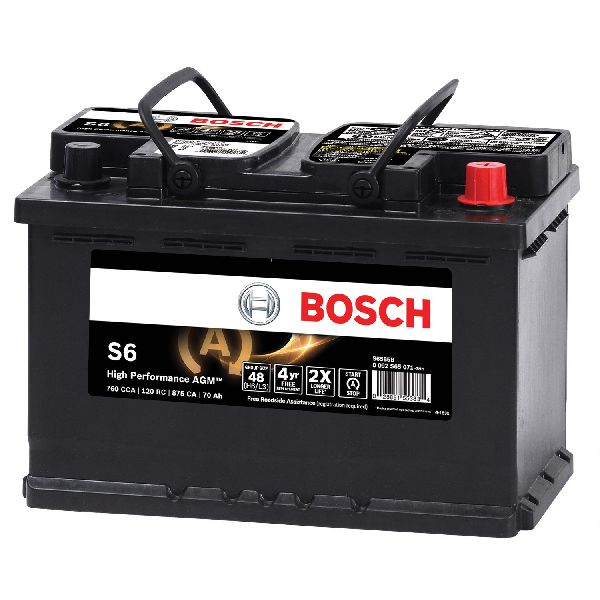
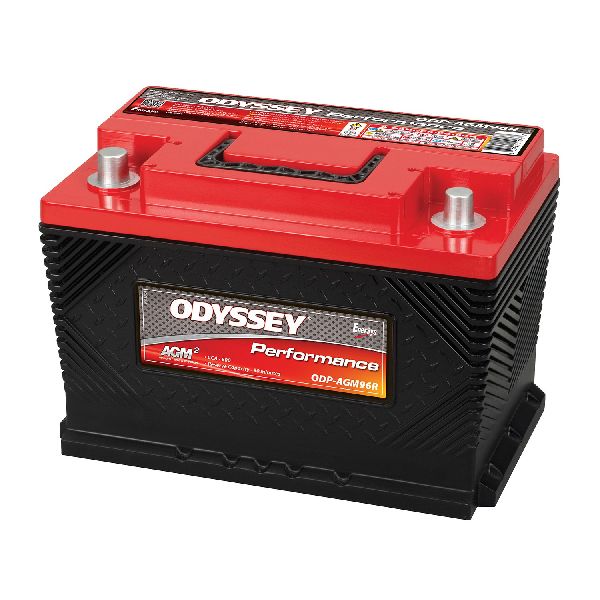
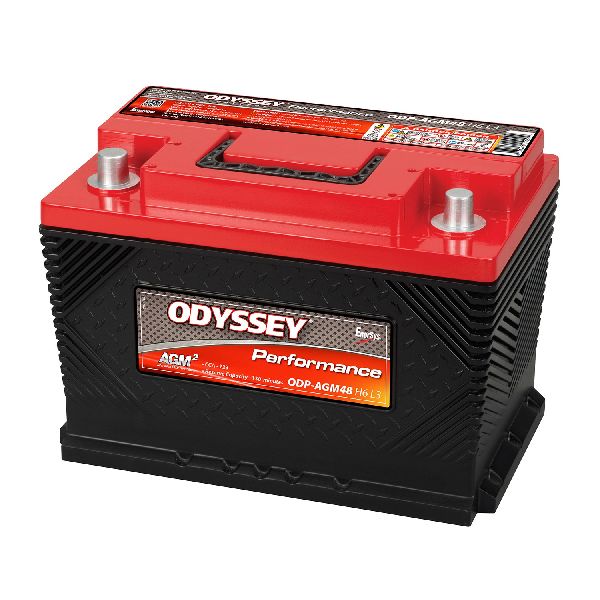
- 12V AGM Battery
(OEM #BAGM-48H6-760 (Common upgrade size))— This is the most common cause of the U3003 code. The complex electronics in the Fusion are highly sensitive to battery voltage.
Trusted brands: Motorcraft, Interstate, DieHard, Duralast
OEM price range: $200-$300
Aftermarket price range: $150-$250 - Battery Management System (BMS) Sensor
(OEM #BT4Z-14B357-C, H1BZ-10C679-D (Verify by VIN))— In rare cases, the sensor that monitors the battery's state can fail, leading to improper charging and voltage codes. It is located on one of the battery terminals.
Trusted brands: Ford/Motorcraft, Dorman, Standard Motor Products
OEM price range: $50-$100
Aftermarket price range: $40-$70
Related Codes That Often Appear With This One
- U3003:16 — This is the most common variant of the code, specifically indicating 'Circuit Voltage Below Threshold'. It confirms the issue is low voltage.
- U3003:17 — This variant means 'Circuit Voltage Above Threshold' and may be set after a jump-start attempt or if the alternator is failing and overcharging the system.
Technical Service Bulletins (TSBs) & Recalls
- SSM 50154: Notes that on various Ford models, DTC U3003:16 can be set in various modules due to a low state of charge, and that the root cause (battery/charging) should be addressed before replacing modules.
- TSB Bulletin #SSM 46076: Notes that vehicles may exhibit a MIL with DTC P0137 in the PCM and U3003 in the Battery Energy Control Module (BECM) memory due to low battery voltage, and advises performing battery diagnostic tests.
Mechanic-Grade Diagnostic Values
- ABS Module Supply Voltage (DTC U3003:16 Trigger) — expected: 10V to 17.8V. Failure: Voltage below 10V will set the code.
- Audio DSP Module Supply Voltage (DTC U3003:16 Trigger) — expected: >10V. Failure: Voltage below 10V for at least 10 seconds will set the code.
- Charging System Voltage (Engine Running) — expected: 13.8V to 14.5V. Failure: Voltage below 13.5V or above 15.0V indicates a charging system fault.
- Battery Voltage (Cranking) — expected: Should not drop below 9.6V. Failure: A drop below 9.6V during cranking indicates a weak battery.
- ABS Module Ground Circuit Resistance — expected: < 5 ohms. Failure: Resistance greater than 5 ohms between the ABS module connector harness-side ground pins and chassis ground indicates a bad ground.
- Normal Parasitic Draw (after modules sleep) — expected: 20-50 mA. Failure: A sustained draw over 50-80 mA after the vehicle has been off for at least 40 minutes indicates a parasitic drain.
Scan Tool Commands That Help

- FORScan: BMS Reset — This function must be used after replacing the 12V battery to inform the Body Control Module (BCM) that a new battery is installed, which resets the battery age and charging strategy.
- FORScan: Read 'Battery State of Charge' PID (BATT_SOC) — Use this live data PID to monitor the battery's state of charge as reported by the BCM. This helps diagnose if the battery is being properly charged and maintained. A consistently low SOC (e.g., below 75-80%) can indicate a charging problem or a failing battery.
- Ford IDS / High-End Scan Tools: BCM - Battery Monitoring System Reset — This is the dealer-level equivalent of the FORScan command, used to reset the battery parameters after replacement to prevent overcharging or undercharging the new battery.
Wiring & Ground Locations
- G100, G101, G102 — Located on the left front of the engine compartment.. These are primary engine bay ground points. A loose or corroded connection here can affect the entire charging system and various modules, causing voltage-related codes like U3003.
- G103 — Located on the right rear of the engine compartment.. Another critical chassis ground. Poor contact at this point can lead to intermittent voltage drops and communication errors between modules.
- G104, G105, G106 — Located on the right side of the engine compartment.. These grounds serve various components in the engine bay. Verifying they are clean and tight is a key step when diagnosing any electrical fault.
- BCM Connector C2280B — Located at the Body Control Module (BCM), typically on the lower driver's side of the dash.. The BCM controls the Battery Management System. Pinpoint tests for voltage supply and communication lines for the BMS often involve checking specific pins at this connector. For example, on some models, power inputs are on pins 17, 21, and 22.
Real Owner Repair Stories
- Reddit user in r/fordfusion (2017 Ford Fusion Titanium) — Code U3003:16-08 (low battery voltage) present. Battery voltage was measured at 12.2V after sitting, and 14.5V when running.
❌ Tried (didn't work) Initially just replacing the battery without a BMS reset.
✅ What actually fixed it The user was advised that the root cause was failing to perform a BMS reset after the new battery was installed. Another user in the same thread confirmed they went through two batteries before discovering the BMS reset procedure was mandatory. - Ford Truck Enthusiasts forum user (2018 Ford F-150 (platform shares BMS logic with Fusion)) — Silent U3003 code found in the PSCM (Power Steering Control Module) using FORScan. No check engine light, but vehicle had short-trip driving habits.
❌ Tried (didn't work) Observing the code without action.
✅ What actually fixed it The user replaced the original, weak battery with a higher quality AGM battery and performed a BMS reset using FORScan. This resolved the issue. The consensus was that the OEM batteries fail prematurely.
OEM Part Supersession History
BT4Z-14B357-C→H1BZ-10C679-D— Part number update and potential design revision for the BMS sensor.
Heads up: Always verify the correct part number by VIN. While they may look similar, different sensors are used for vehicles with and without the Auto Start-Stop feature.
Model Year Variations Within This Range
- 2013-2014: Early model years of the second generation are reported by some sources to be more prone to minor electrical problems and glitches, which could contribute to or be confused with U3003 symptoms.
- 2017-2020: The 2017 model year introduced a mid-cycle refresh with updated styling and technology (like SYNC 3). While the core BMS logic remained the same, software updates for the BCM and other modules may have been released to address issues like parasitic draws, which are not applicable to earlier years.
Diagnostic Flowchart
Other Known Issues on This Vehicle
Issues unrelated to this code that are worth knowing about as an owner of this generation:
- EcoBoost Engine Coolant Intrusion 🔴 High — Common on 1.5L and 2.0L EcoBoost engines. A design flaw in the engine block can allow coolant to leak into the cylinders, causing misfires, rough running, and eventual engine failure. (Ref: TSB 19-2346 (2.0L), TSB 20-2100 (1.5L))
- Degraded Shifter Cable Bushing 🟠 Medium — Widespread issue where the bushing on the transmission shifter cable fails, preventing the driver from changing gears or causing the vehicle to be in a different gear than indicated. This can lead to a rollaway risk if the vehicle is not actually in Park. (Ref: Recalls 18S20, 19S16, 22S43)
- Corroding Steering Gear Motor Bolts 🔴 High — Affects 2013-2016 models primarily in regions that use road salt. Corrosion can cause the steering gear motor bolts to fracture, resulting in a loss of power steering assist. (Ref: Recall 19S26)
- Harsh or Delayed Automatic Transmission Shifting 🟠 Medium — A significant number of owners report issues with the 6F35 automatic transmission, including rough shifts and delays. Fixes can range from software updates to valve body replacement or a full rebuild.
- Swollen/Delaminated Lug Nuts 🟡 Low — Extremely common across many Ford models. The two-piece lug nuts have a chrome cap that swells and deforms over time, making it impossible to use the factory lug wrench to remove a wheel.
Used vs. New Parts: Buying Guide for This Vehicle
When a used part is the smart pick: For this specific code, using used parts is generally not recommended. The primary fix is a new 12V battery, which should never be bought used. A used alternator is a possibility but carries significant risk of premature failure. A used BMS sensor from a junkyard is a low-cost option if the OEM part is back-ordered, but its remaining lifespan is unknown.
Donor-vehicle mileage cap: roughly under 60000 miles for the part to have meaningful remaining life.
What to inspect on the donor part:
- For an alternator: Check for smooth, quiet bearing rotation with no grinding or roughness. Ensure the pulley is not damaged.
- For a BMS sensor/cable: Inspect for any corrosion on the terminals, cuts in the wiring insulation, or physical damage to the sensor housing.
- Verify the donor vehicle was not in a front-end collision that could have damaged electrical components.
OEM-only on this vehicle (don't cheap out):
- 12V Battery: Always buy new from a reputable brand. A used battery is never a good value.
- BMS Sensor: While aftermarket options exist, the OEM Ford/Motorcraft sensor is recommended for best compatibility with the BCM software.
Aftermarket brands forum-validated for this vehicle:
- Battery: Interstate, DieHard, Duralast (AGM models)
- Alternator: Denso (often the OEM supplier), Bosch
Brands owners have reported issues with on this vehicle:
- Avoid off-brand, no-name alternators and electrical sensors from online marketplaces, as their quality control and longevity are often poor.
Real Owner Stories
Aggregated from forums and TSBs cited above. Mileages and costs reflect what owners reported in those sources.
2014 Ford Fusion
Symptoms: The 'System off to save Battery' message appeared on the screen, accompanied by a U3003 trouble code.
What fixed it: The owner replaced the old battery with a new AGM-type battery and then successfully performed the manual BMS reset using the headlight flash and brake press sequence.
Source hint: fordfusionforum.com
Ford Fusion (multiple model years)
Symptoms: After replacing the 12V battery, the U3003 code appeared or returned shortly after.
What fixed it: The consensus fix among multiple owners was to perform the Battery Management System (BMS) reset. Some used a scan tool like FORScan, while others used the manual high-beam/brake-pedal procedure.
Source hint: Reddit (r/fordfusion)
Ford Fusion Owner
Symptoms: An owner reported a complex series of electrical errors including U3003-16 and U3003-17 (battery voltage circuit below and above threshold), along with a deactivated electric park brake and lost communication with the restraints control module.
What fixed it: NHTSA ODI #11571126 documents these multiple voltage-related errors occurring simultaneously, reinforcing the need to check the central battery and charging system health.
Source hint: NHTSA ODI #11571126
Ford Fusion Owner
Symptoms: A vehicle exhibited multiple module codes including U3003:13 in the PSCM and U3003:16 in both the BECM and BCM.
What fixed it: NHTSA ODI #10937177 notes these widespread voltage codes across the Power Steering Control Module, Battery Energy Control Module, and Body Control Module, often appearing after the manufacturer's 36k mile coverage period.
Source hint: NHTSA ODI #10937177
Related OBD-II Codes
Frequently Asked Questions
I just replaced the battery in my Fusion and now I have a U3003 code. What did I do wrong?
How can I perform the BMS reset on my 2014 Fusion without a special scan tool?
My dashboard screen says 'System off to save Battery'. Is this related to code U3003?
My code reader shows U3003:16. What does the ':16' mean and is there a TSB for it?
Can I just use a voltmeter to check if my Fusion's battery is the problem?
My Auto Start-Stop feature has stopped working. Could this be related to the U3003 code?
Does this battery and BMS issue also affect the Lincoln MKZ?
Helpful Videos
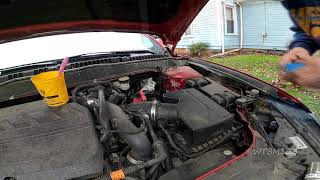


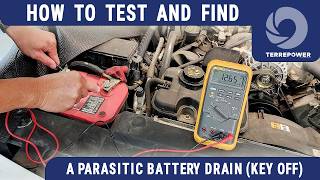
Used OEM Parts in Stock

New Aftermarket Parts Available


The information in this article is provided for general reference and educational purposes only. Vehicle specifications, procedures, and part compatibility can vary by production date, trim level, and region. Always consult your vehicle's factory service manual and verify part numbers before purchasing or performing repairs. Safety-critical components such as airbags, seat belts, and braking systems should be installed by a qualified professional.
- Ford Fusion:
- 🎬 Helpful Videos
- 🛍️ Shop This Part
- What's Unique About the 2013-2020 Ford Fusion
- Symptoms You May Notice
- Most Likely Causes
- Rare But Worth Checking
- Diagnosis Steps
- Parts You'll Likely Need
- Related Codes That Often Appear With This One
- Technical Service Bulletins (TSBs) & Recalls
- Mechanic-Grade Diagnostic Values
- Scan Tool Commands That Help
- Wiring & Ground Locations
- Real Owner Repair Stories
- OEM Part Supersession History
- Model Year Variations Within This Range
- Diagnostic Flowchart
- Other Known Issues on This Vehicle
- Used vs. New Parts: Buying Guide for This Vehicle
- Real Owner Stories
- 2014 Ford Fusion
- Ford Fusion (multiple model years)
- Ford Fusion Owner
- Ford Fusion Owner
- Related OBD-II Codes
- Frequently Asked Questions
- 🎟️ Get 5% Off