

U3000 on 2017-2024 Chrysler Pacifica: Control Module Fault Causes and Fixes
On a 2017-2024 Chrysler Pacifica, a U3000 code is rarely a single module failure. It's most often caused by a weak battery (main or auxiliary) or a faulty CAN bus star connector behind the glove box. Always test both batteries and check the star connector before replacing any expensive modules.
- Do not immediately replace the module that logged the U3000 code. The problem is almost always network-related.
- Your first and most important diagnostic step is to load test BOTH the main and auxiliary batteries. Voltage instability is a top cause of this code.
- If batteries are good, the CAN bus star connector behind the glove box is the next most likely culprit. Check for loose connections.
- Ask a dealer to check for any available software updates (TSBs) for the PCM or TCM, as this can be a simple, non-hardware fix.
- Driving the vehicle is unsafe as critical systems like the shifter and power steering can fail without warning.
What's Unique About the 2017-2024 Chrysler Pacifica
The Pacifica relies on a complex network architecture with numerous electronic modules. This platform is particularly sensitive to two main issues that can trigger a cascade of communication faults, including U3000. First, models with the Engine Stop-Start (ESS) system use a dual-battery setup; a failing auxiliary battery is a very common source of voltage instability that causes widespread electronic gremlins. Second, Chrysler uses 'star connectors' as hubs for the CAN bus network, and the one located behind the glove box is a known failure point due to poor pin connections, leading to intermittent but severe communication breakdowns.
Symptoms You May Notice
- Check Engine Light is on
- Multiple other warning lights may illuminate (ABS, Traction Control, Airbag)
- "Service Shifter" message on the instrument cluster
- Vehicle may not shift out of Park or may get stuck in a single gear
- Loss of power steering assist
- Instrument cluster gauges behaving erratically or going blank
- Vehicle may stall or fail to start
- Unresponsive electronic features (radio, climate control, etc.)
- Replacing the module that stored the U3000 code without diagnosing the network. For example, replacing the ABS module or gear shifter module when the actual fault is the star connector or a weak battery.
- Replacing the Powertrain Control Module (PCM) when the issue is a simple software update or a wiring fault.
Most Likely Causes
- Weak or Failing Main/Auxiliary Battery 🔴 High Probability The dual-battery system for the Engine Stop-Start (ESS) feature is a known source of complex electrical issues. A failing auxiliary battery (Group Size AUX14) can cause system-wide voltage drops, leading to communication errors between modules.
How to confirm: Perform a load test on both the main 12V battery and the smaller auxiliary battery. Voltage should be above 12.4V at rest. Many auto parts stores can test these for free. A failing auxiliary battery is a very common culprit for a host of electronic issues, often with a lifespan of only 3-4 years.
Typical fix: Replace the weak or failing battery. If the auxiliary battery is at fault, it's recommended to replace it. Some owners disconnect it to prevent further issues, but this will disable the ESS system.
Est. part cost: $150-$350 - Faulty CAN Bus Star Connector 🔴 High Probability The star connector (Part No. 68321746AA), which acts as a central hub for module communication, is known to suffer from poor pin retention. This creates loose connections that interrupt the CAN bus network, especially when hitting bumps or with temperature changes.
How to confirm: With the vehicle acting up, try tapping firmly on the dashboard above the glove box or slamming the glove box door. If this temporarily resolves the issue, it strongly points to the star connector. A technician can confirm by accessing the connector (located behind the glove box) and testing the CAN network signals with an oscilloscope while wiggling the connector's wires.
Typical fix: Replace the faulty star connector. The OEM part number is 68321746AA. In some cases, simply cleaning the contacts and ensuring a secure connection may work temporarily, but replacement is the permanent solution.
Est. part cost: $25-$80 - Module Software Update Required 🟡 Medium Probability Chrysler has released several Technical Service Bulletins (TSBs) to address communication-related DTCs by updating the software of various modules, most notably the Transmission Control Module (TCM).
How to confirm: A Chrysler dealership or a well-equipped independent shop can check your vehicle's VIN against their database for any open TSBs related to communication codes. TSB 21-008-21 is a key example for 2017 models, addressing harsh shifts and codes like U0103 by flashing the TCM.
Typical fix: The relevant module (e.g., TCM, PCM) must be reprogrammed (flashed) with the latest software version. This is typically a dealer-only procedure.
Est. part cost: $0-$250
Rare But Worth Checking
- Broken CAN Bus Wiring: While less common than the star connector issue, a break or short in the CAN bus wiring harness at a different location can isolate a single module, causing communication loss. This was documented in one case causing a loss of power steering.
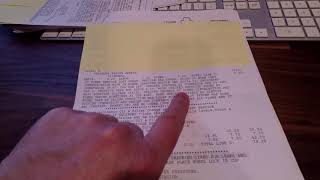
- Loose Main Power or Ground Connection: A loose connection at a primary power distribution point can cause intermittent voltage drops to multiple modules. One owner of a 2018 Pacifica Hybrid traced multiple U-codes, including U11C5 and U0074, to a loose 12V connection at the power distribution post, 🎬 Watch: Troubleshooting common electrical issues on the Pacifica Hybrid. which was causing the entire 12V system to drop out intermittently.
- Internal Module Failure: While the U3000 code means 'Internal Module Failure', it's more likely that a network issue is the cause. A true internal failure of a module like the BCM, ABS, or PCM should only be suspected after all battery, wiring, star connector, and software issues have been ruled out.
Diagnosis Steps
- Perform a full vehicle scan with an advanced, manufacturer-capable scan tool to see which modules are storing U3000 or other communication codes.
- CRITICAL FIRST STEP: Thoroughly test both the main 12V battery and the auxiliary battery (if equipped with ESS). Low voltage is the most common cause of network communication faults.
- Check for any available Technical Service Bulletins (TSBs) related to your vehicle's symptoms or stored codes. A software update may be the required fix. TSB 21-008-21 is a prime example.
- Access the CAN bus star connector located behind the glove box. With the vehicle running, carefully wiggle the wires connected to it. If this action causes the symptoms to appear or disappear, the star connector (Part No. 68321746AA) or its terminals are faulty.
- If the star connector seems okay, a technician should use an oscilloscope to check for proper CAN bus signal (square waves, biasing at 2.5V) at the OBD-II port and at the star connector to identify signal degradation or corruption.
- Inspect the wiring and connectors for any module that is consistently offline. Pay close attention to power, ground, and the two CAN bus wires.
- Inspect main power and ground distribution points for loose connections, as documented in at least one owner's repair of a Pacifica Hybrid.
- Only after confirming the batteries, star connector, software, and wiring are all good should you consider replacing the module that is setting the U3000 code.
Parts You'll Likely Need
- Auxiliary Battery (ESS Battery)
(OEM #Group Size AUX14 (e.g., Mopar, Weize YTX14-BS))— A failing auxiliary battery is a primary cause of voltage instability, which triggers numerous communication fault codes on this platform.
Trusted brands: Mopar, Duralast, DieHard, Weize
OEM price range: $150-$250
Aftermarket price range: $50-$200 - CAN Bus Star Connector
(OEM #68321746AA (20-way, green))— This central communication hub is a known weak point, with poor pin connections causing intermittent network failure.
Trusted brands: Mopar, Dorman
OEM price range: $30-$50
Aftermarket price range: $20-$40
Related Codes That Often Appear With This One
- U0103 — Lost Communication With Electric Gear Shift Module. This often appears when the CAN bus star connector is failing, as the shifter is on that network. TSB 21-008-21 also addresses this code via a software update.
- U0418 — Implausible Data Received From Brake System Control Module. This is frequently linked to low voltage from a failing auxiliary battery.
- U0073 — Control Module Communication Bus A Off. This is a general code indicating the CAN bus has shut down, often seen alongside many other U-codes when the star connector fails.
Technical Service Bulletins (TSBs) & Recalls
- 21-008-21: Flash: Transmission Control Module (TCM) Updates. Addresses harsh shifting and DTCs including P0732, P0887, and U0103.
- 21-042-18: Flash: Electronic Brake Booster Module (EBBM) Updates. For PHEV models, addresses internal performance codes.
- NHTSA Recall 23V-010 / Warranty Extension D-23-07: Addresses internal transmission wiring shorts on PHEV models causing sudden shutdown.
Platform-Specific Known Issues
- A faulty CAN bus star connector behind the glove box is a well-documented issue causing intermittent loss of communication across the high-speed CAN-C network.
- Failure of the auxiliary battery in models with Engine Stop-Start (ESS) is known to cause widespread and difficult-to-diagnose electrical problems, including multiple U-codes.
- While the U3000 code is often a network issue on Chrysler platforms, it is worth noting that in other manufacturers, such as in NHTSA ODI Investigation #PE14030, this code has been documented alongside electric power steering failures where the dealer may replace the entire electronic power steering system.
Mechanic-Grade Diagnostic Values
- CAN C Bus Resistance — expected: ~60 Ohms. Failure: A reading of ~120 Ohms indicates one of the two termination resistors is offline. A reading of 0 Ohms indicates a short between the CAN High and CAN Low wires. An open circuit (infinity) indicates a break in the wiring.
- CAN C Bus Voltage (Idle/Recessive State) — expected: Both CAN High and CAN Low wires should show approximately 2.5V.. Failure: A bias voltage resting near zero or floating high indicates a network fault, such as a short to ground or a bad module pulling the voltage down.
- CAN C Bus Voltage (Active/Dominant State) — expected: CAN High (CAN C+) should toggle from 2.5V up to ~3.5V. CAN Low (CAN C-) should toggle from 2.5V down to ~1.5V.. Failure: Waveforms that do not reach these peak/trough voltages, or that are noisy and distorted, indicate signal integrity issues, often caused by poor connections (like the star connector) or a failing module.
Scan Tool Commands That Help
- Advanced Scan Tool (e.g., Autel, Snap-on, wiTECH): IBS (Intelligent Battery Sensor) Reset / Battery Replacement Reset — After replacing the main or auxiliary battery. This procedure resets the battery's state-of-charge and state-of-health parameters in the Body Control Module (BCM), ensuring the charging system works correctly and clears persistent warnings like 'Start/Stop Unavailable'. Some sources suggest disconnecting both battery negatives for 15-20 minutes can also force a reset.
Wiring & Ground Locations
- Star Connector (CAN-C Hub) — Located behind the glove box, typically clipped to a plastic support bracket. The glove box must be opened and dropped down by releasing its side retaining arm and tabs.. This is the central connection point for the high-speed CAN-C network. A failure here due to poor pin retention or internal solder joint cracks will cause a catastrophic loss of communication between critical modules like the PCM, TCM, ABS, and shifter, triggering a flood of U-codes.
- G102 / G103 — Located on the left side (driver's side) of the engine compartment, typically on the shock tower or inner fender structure.. These are primary engine and chassis ground points. Corrosion or a loose connection at these locations can create floating grounds, causing unstable voltage for multiple modules, including the PCM and TIPM (fuse box), leading to network communication errors.
- Power Distribution Post (Hybrid Models) — Under the hood, a main 12V distribution point where multiple circuits connect.. On at least one 2018 Pacifica Hybrid, a loose nut on this post (specifically connection D8118A) caused intermittent voltage drops to the entire 12V system, resulting in CAN bus off codes (U0074) and other communication faults.
Real Owner Repair Stories
- YouTube user 'Our Not So Normal Life' (2018 Chrysler Pacifica Hybrid) — Vehicle would intermittently lose all power, dashboard lights would flicker, and it would fail to start. Multiple communication codes were stored, including U11C5 (Lost Communication with On-Board Charging Module) and U0074 (Dedicated Powertrain CAN Bus Off).
❌ Tried (didn't work) Initial diagnosis was inconclusive.
✅ What actually fixed it A technician found a loose connection at a 12V power distribution post under the hood (identified as 'D8118A connection' on the invoice). Tightening this connection restored consistent 12V power and resolved all communication codes. - YouTube user 'Pine Hollow Auto Diagnostics' (2017 Chrysler Pacifica) — Instrument panel chiming, multiple warning lights, electronic shifter going into neutral, and intermittent no-shift conditions. A flood of communication codes would appear and disappear.
❌ Tried (didn't work) Using a multimeter for diagnosis, which only shows average voltage and misses the high-speed data corruption.
✅ What actually fixed it Using an oscilloscope, the technician identified corrupted CAN bus waveforms. The issue was traced to the star connector behind the glove box. Wiggling the connector would cause the network to fail and recover. Replacing the star connector (Part No. 68321746AA) provided a permanent fix.
OEM Part Supersession History
68321746AA→68321746AA (current as of early 2026)— This part number remains the standard replacement for the 20-way green star connector.
Heads up: While the part number has not been superseded, some newer Stellantis models have moved to a smaller 13-way connector (68230877AA). These are not interchangeable. The Pacifica in this year range uses the 20-way green connector.
Model Year Variations Within This Range
- 2017-2024: The location of the star connector behind the glove box is consistent across the 2017-2024 Pacifica and the related Chrysler Voyager (2020-2021). While there was a model refresh in 2021, the fundamental CAN-C architecture and the common failure points (battery system, star connector) appear to remain the same for the purpose of this diagnosis.
Diagnostic Flowchart
Other Known Issues on This Vehicle
Issues unrelated to this code that are worth knowing about as an owner of this generation:
- ZF 9-Speed Automatic Transmission Problems 🔴 High — Common across early model years (2017-2020), manifesting as harsh shifting, hesitation, or sudden limp mode. (Ref: Multiple software update TSBs (e.g., 21-008-21) have been issued to improve shift quality.)
- Hybrid Powertrain Failure (PHEV Models) 🔴 High — A significant number of 2017-2023 hybrids have experienced sudden shutdowns due to internal transmission wiring shorts. (Ref: NHTSA Recall 23V-010 and warranty extension D-23-07 (10 years/unlimited miles) address this issue.)
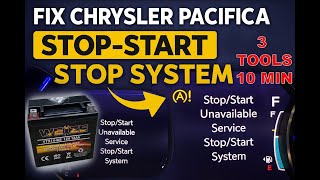
- Engine Stop-Start (ESS) System Faults 🟠 Medium — Frequently caused by a failing auxiliary battery, leading to a "Start/Stop Unavailable" message and other electrical gremlins. Battery life is often 3-4 years.
- Uconnect Infotainment System Glitches 🟡 Low — Owners report issues like the screen freezing, rebooting, or becoming unresponsive. (Ref: Various software updates have been released to address stability.)
- Sliding Door Malfunctions 🟠 Medium — Power sliding doors may fail to open, close, or get stuck, often due to wiring harness or module issues.
Used vs. New Parts: Buying Guide for This Vehicle
When a used part is the smart pick: For this specific repair, using used parts is generally not recommended. However, if sourcing a wiring harness pigtail for a damaged connector (other than the star connector itself), a used part from a junkyard is a viable and cost-effective option.
Donor-vehicle mileage cap: roughly under 80000 miles for the part to have meaningful remaining life.
What to inspect on the donor part:
- For wiring pigtails, inspect for any signs of corrosion on the pins.
- Ensure the wires are not brittle, cracked, or previously repaired.
- Verify the locking tabs on the connector are intact and not broken.
OEM-only on this vehicle (don't cheap out):
- Star Connector (68321746AA): Given that this part fails due to internal defects (poor pin retention, cracked solder joints), a used part has a high probability of having the same issue or failing soon. The cost of a new OEM part is low enough that it is not worth the risk and labor of installing a used one.
- Control Modules (PCM, BCM, TCM): All major control modules on this platform are VIN-programmed and part of the vehicle's security system. A used module will not function without being reprogrammed by a dealer or a specialized service, which often negates any cost savings.
Aftermarket brands forum-validated for this vehicle:
- Auxiliary Battery: Weize (specifically model YTX14-BS) is frequently mentioned in DIY videos and forums as a cost-effective and reliable alternative to the OEM battery.
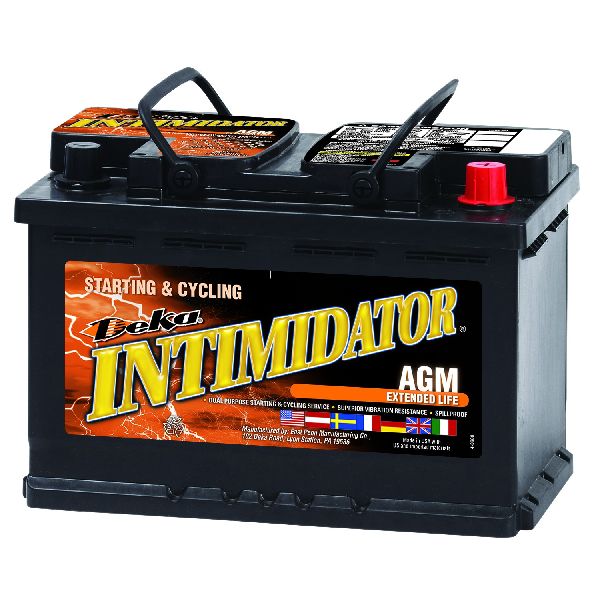
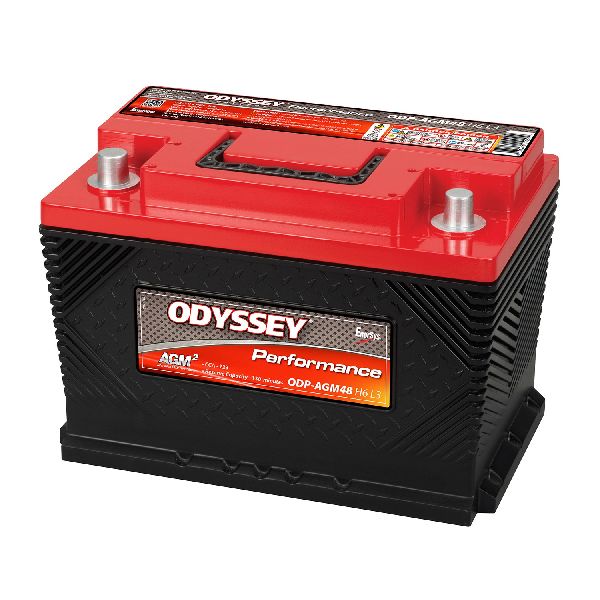
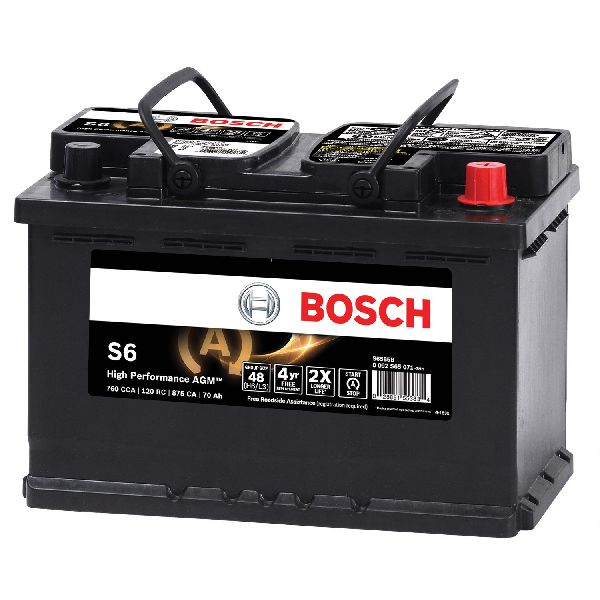
- Main Battery: Duralast, DieHard, and other major auto parts store brands are generally considered reliable replacements.
Brands owners have reported issues with on this vehicle:
- Star Connector: While Dorman is listed as an alternative, forum consensus strongly favors using the genuine Mopar part (68321746AA) to ensure proper fit and avoid introducing another variable into a complex network problem.
Real Owner Stories
Aggregated from forums and TSBs cited above. Mileages and costs reflect what owners reported in those sources.
2018 Chrysler Pacifica Hybrid
Symptoms: Multiple U-codes and electrical communication errors.
What fixed it: Traced to a loose 12V connection at the main power and ground distribution points.
Source hint: https://www.youtube.com/watch?v=N9loFR4cYH8 - Owner video detailing the diagnosis of multiple U-codes on a 2018 Hybrid
2017 Chrysler Pacifica 3.6L V6
Symptoms: Harsh shifting and communication codes including U0103.
What fixed it: Transmission Control Module (TCM) software flash per TSB 21-008-21.
Source hint: TSB 21-008-21
Related OBD-II Codes
Frequently Asked Questions
My 2017 Pacifica is shifting harshly and showing communication codes; is there a specific update for this?
Can a bad auxiliary battery cause the U3000 code and other electrical errors?
I heard there is a common wiring hub that fails; what is the part number?
My Pacifica Hybrid suddenly shut down; is this related to a known recall?
Where is the star connector located if I want to check for loose connections?
Is there a software update for the Electronic Brake Booster on the Hybrid models?
Helpful Videos
Used OEM Parts in Stock
New Aftermarket Parts Available


The information in this article is provided for general reference and educational purposes only. Vehicle specifications, procedures, and part compatibility can vary by production date, trim level, and region. Always consult your vehicle's factory service manual and verify part numbers before purchasing or performing repairs. Safety-critical components such as airbags, seat belts, and braking systems should be installed by a qualified professional.
- Chrysler Pacifica:
- 🎬 Helpful Videos
- 🛍️ Shop This Part
- What's Unique About the 2017-2024 Chrysler Pacifica
- Symptoms You May Notice
- Most Likely Causes
- Rare But Worth Checking
- Diagnosis Steps
- Parts You'll Likely Need
- Related Codes That Often Appear With This One
- Technical Service Bulletins (TSBs) & Recalls
- Platform-Specific Known Issues
- Mechanic-Grade Diagnostic Values
- Scan Tool Commands That Help
- Wiring & Ground Locations
- Real Owner Repair Stories
- OEM Part Supersession History
- Model Year Variations Within This Range
- Diagnostic Flowchart
- Other Known Issues on This Vehicle
- Used vs. New Parts: Buying Guide for This Vehicle
- Real Owner Stories
- 2018 Chrysler Pacifica Hybrid
- 2017 Chrysler Pacifica 3.6L V6
- Related OBD-II Codes
- Frequently Asked Questions
- 🎟️ Get 5% Off