

U2101 on 2012-2024 Mazda CX-5: Control Module Configuration Incompatible Fixes
Code U2101 on a Mazda CX-5 almost always means a control module, most commonly the ABS module, has been replaced but not programmed to the vehicle. The fix is not another part; it requires a dealer or specialized shop to program the module to your car's VIN.
- U2101 is a programming issue, not a broken part. Do not buy more parts if you see this code after a module was just replaced.
- The most common trigger on a CX-5 is replacing the ABS control module without performing the mandatory programming procedure.
- A basic OBD-II scanner cannot fix this. You need a Mazda dealer or a well-equipped independent shop with professional-grade tools.
- Driving with this code is possible, but unsafe, as your ABS and stability control systems will be offline.
What's Unique About the 2012-2024 Mazda CX-5
On the Mazda CX-5, this code is most frequently triggered after replacing the ABS (Anti-lock Brake System) control module. Modern CX-5 models heavily integrate the ABS module with safety systems like Dynamic Stability Control (DSC), Traction Control (TCS), and advanced driver-assistance systems (ADAS) like Smart City Brake Support (SCBS). A replacement ABS module, whether new or used, is not plug-and-play; it must be electronically configured with the vehicle's unique 'As-Built' data to function. This process is mandatory for the module to be recognized by and communicate with the other modules on the CAN network.
Generation note: This guide covers both the first generation (2012-2017, KE) and second generation (2017-2024, KF) Mazda CX-5. While the principle is the same for both, the issue is more pronounced on the second-gen models due to their more complex integration of advanced driver-assistance systems (ADAS) that rely on the ABS module. The core issue of requiring module programming after replacement is consistent across all modern Mazdas sharing this platform.
Symptoms You May Notice
- ABS warning light is on
- Traction Control (TCS) or Dynamic Stability Control (DSC) warning light is on (icon of a car with squiggly lines)
- Warning messages for disabled systems like 'Smart Brake Support (SBS) Malfunction' or 'Mazda Radar Cruise Control (MRCC) Disabled' (on equipped models)
- Inability to clear the code with a basic OBD-II scanner
- Brake system warning light may also be illuminated
- Audible warning chimes or beeping noises without accompanying dashboard lights in some instances (as noted in related manufacturer systems in NHTSA ODI #11581420)
- Replacing the new module again, assuming it is defective.
- Attempting to diagnose individual ABS, TCS, or DSC faults (like wheel speed sensors) when the root cause is the module's configuration.
- Clearing the codes with a basic scanner, which will not resolve the underlying configuration mismatch.
Most Likely Causes
- Replaced ABS Control Module Not Programmed 🔴 High Probability The ABS module is a common failure point, and many owners or shops install a new or used replacement without realizing it requires VIN-specific programming to communicate with the rest of the car's systems. A used module will have the wrong configuration from the donor car, and a new one will be blank; both scenarios will trigger U2101.
How to confirm: Confirm if the ABS module was recently replaced. Use a high-level scan tool to check for communication with the ABS module and verify its configuration status. The presence of U2101 immediately after an ABS module swap is definitive. The tool may show a mismatched VIN or blank configuration fields.
Typical fix: Perform a 'Programmable Module Installation' (PMI) using Mazda's MDARS software or a compatible professional-grade scan tool to write the vehicle's 'As-Built' data to the new module. This is a software/labor procedure.
Est. part cost: $0 - Other Replaced Control Module Not Programmed 🟡 Medium Probability Like the ABS module, other key modules such as the Powertrain Control Module (PCM), Instrument Panel Cluster (IPC), or even the audio/infotainment module (ACM) require programming upon replacement. This is especially common in rebuilt or salvage vehicles where multiple modules may have been swapped.
How to confirm: Determine if any other major electronic control unit was recently replaced. The fault will be logged by the module that is unable to communicate with the new, unprogrammed part. For example, a SYNC retrofit can cause this code if the APIM As-Built data is incorrect.
Typical fix: Program the newly installed module using the appropriate manufacturer procedure and diagnostic tools. This involves loading the correct As-Built data for the vehicle's specific configuration.
Est. part cost: $0
Rare But Worth Checking
- Damaged CAN Bus Wiring or Connectors: While less common than a programming issue, physical damage to the network wiring (e.g., from an accident, rodent damage, or corrosion) can corrupt communication between modules and sometimes trigger a configuration code. This would typically be accompanied by multiple 'Lost Communication' (U0xxx) codes.
- Internal Failure of a Control Module: In rare cases, a module's internal memory can become corrupted, causing it to lose its configuration data. This is not a common failure mode but would necessitate replacing and programming the faulty module.
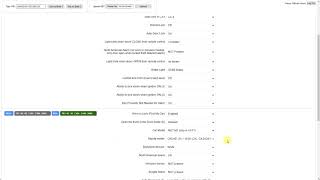
- Incorrect As-Built Data Modification: For DIY users with tools like FORScan, incorrectly modifying the As-Built data to enable or disable features can create a configuration mismatch if the vehicle lacks the required hardware, leading to a U2101 code. The fix is to restore the original, correct As-Built data. 🎬 See how to use the Mazda online As-Built editor
- Steering Rack Configuration Issues: While documented on different makes, NHTSA ODI #10694215 notes that U2101 can appear alongside steering-related codes (like C1B00) when electronic steering components are replaced or failing, necessitating a rack replacement and subsequent configuration.
Diagnosis Steps
- Question the driver: Ask if any electronic modules, especially the ABS module, have been replaced recently. This is the most important first step, particularly on rebuilt or recently repaired vehicles.
- Scan for all codes: Use a professional-grade scan tool capable of reading codes from all vehicle modules (ABS, PCM, BCM, etc.). Note all U-codes.
- Prioritize U2101: Always address the U2101 configuration code before chasing any 'Lost Communication' codes, as the configuration error is the likely cause of the communication loss.
- Attempt to communicate with the suspect module: Using the scan tool, try to access the live data and configuration information of the module you suspect was replaced (e.g., the ABS module). If it's unprogrammed, the tool may show blank fields or mismatched VINs.
- Perform Module Programming: Using a Mazda-compatible diagnostic tool (MDARS, Launch, Autel, or FORScan for advanced users), initiate the 'Programmable Module Installation' (PMI) or 'Module Configuration' function.
- Follow on-screen prompts to download the vehicle's 'As-Built' data and write it to the new module. For used modules, it may be necessary to first clear the old configuration before writing the new data.
- Clear all codes: After successful programming, clear all DTCs from all modules.
- Test drive: Perform a test drive to ensure all warning lights remain off and that systems like ABS and traction control are functioning correctly.
Parts You'll Likely Need
- No parts typically needed — This is a software and labor issue. The problem is that an existing replacement part has not been programmed. The fix is to program the part, not replace it.
OEM price range: $0
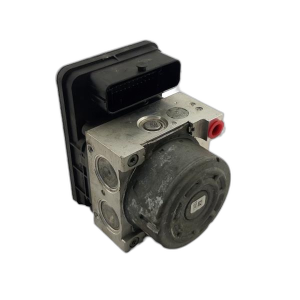
Aftermarket price range: $0 - ABS Control Unit / Modulator Assembly
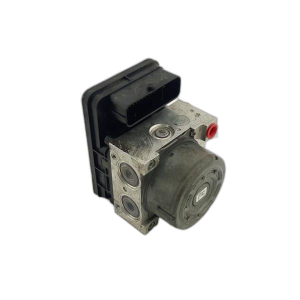
(OEM #KBY0-43-7A0, KBY1-43-7A0, KSY1-43-7A0, KBJ5-43-7A0, K1Y3-43-7A0A)— This part is only needed if the original ABS module has failed and is being replaced, which is the event that triggers the U2101 code. Part numbers vary significantly by year and features (e.g., with/without pedestrian brake). Exact part number matching is critical.
Trusted brands: Mazda (OEM)
OEM price range: $600 - $900
Aftermarket price range: $150 - $450 (Used OEM)
Related Codes That Often Appear With This One
- U2100 — U2100 means 'Initial Configuration Not Complete'. It often appears with U2101. U2100 indicates a module is 'blank,' while U2101 means it has the 'wrong' configuration. They frequently appear together after an improper module installation.
- U0415 — This code means 'Invalid Data Received From Anti-Lock Brake System Control Module'. It is logged by other modules when the ABS module is improperly configured and sending nonsensical data over the network.
- U0121 — This code means 'Lost Communication With ABS Control Module'. It will be set by other computers on the network that can no longer talk to the unprogrammed ABS module.
Technical Service Bulletins (TSBs) & Recalls
- While no TSB directly addresses the U2101 code specifically, TSB 09-003/22 for the 2017-2020 CX-5 addresses infotainment issues, which can be related to module configuration problems.
- A Mazda Service Alert for TCU (Telematics Control Unit) replacement notes that the new module must be activated and initialized using the dealer's MDARS system, illustrating the common requirement for module programming.
Platform-Specific Known Issues
- A forum user on Mazdas247.com described a scenario on a 2017 CX-5 where multiple warning lights (ABS, TCS, SCBS) appeared. The root cause was a faulty ABS module that required replacement and programming by the dealer to resolve the issue.
Documented NHTSA Reports
- NHTSA ODI #11581420 describes a vehicle displaying U2101 alongside U0121 and U0452, where the owner reported a strange warning chime or beeping noise occurring even when no dashboard lights were illuminated.
- NHTSA ODI #10694215 notes a case where U2101 was present alongside C1B00, resulting in a diagnosis that the electronic steering rack required replacement.
Mechanic-Grade Diagnostic Values
- CAN Bus Network Resistance — expected: ~60 Ohms. Failure: A reading of ~120 Ohms indicates one of the two terminating resistors is missing or the bus is open. A reading near 0 Ohms indicates a short between CAN High and CAN Low wires.
- CAN High Voltage to Ground — expected: ~2.6V (average DC). Failure: Significant deviation from 2.5V base indicates a potential short or open on the CAN High line.
- CAN Low Voltage to Ground — expected: ~2.4V (average DC). Failure: Significant deviation from 2.5V base indicates a potential short or open on the CAN Low line.
- ABS Module Operating Voltage — expected: 10V to 17V. Failure: Voltage below 10V can cause the module to malfunction and store communication codes.
Hidden / Shadow Codes Worth Checking
- U2101:55: This sub-code specifies 'Not Configured'. It indicates that the module is essentially blank or has not had the As-Built configuration data written to it yet. (see via Professional scan tools like Mazda MDARS or advanced DIY tools like FORScan.)
- U2101:00: This is a more general 'Control Module Configuration Incompatible' code without a specific subtype. It points to a configuration mismatch, often from installing a used module with another vehicle's data. (see via Professional scan tools like Mazda MDARS or advanced DIY tools like FORScan.)
Scan Tool Commands That Help
- Mazda MDARS: Programmable Module Installation (PMI) — This is the official dealer procedure used when installing a new or used module. It guides the technician through downloading the vehicle's As-Built data and writing it to the replacement module to resolve U2101.
- Mazda MDARS: Module Programming > As-Built — Used to manually access and modify the As-Built data for a specific module. This is necessary if the PMI process fails or if a used module needs to be configured.
- FORScan: Configuration and Programming > As-Built format — For advanced DIY users, this function allows you to load the vehicle's As-Built data (downloaded from Mazda's service site or saved from the old module) and write it to the replacement ABS module. An extended license is required.
- Autel/Launch: Module Programming / Coding — High-end professional scanners from brands like Autel and Launch often have a 'Programmable Module Installation' function that replicates the OEM tool's ability to configure a new module.
Wiring & Ground Locations
- ABS Module Connector — The ABS module/pump assembly is located in the engine bay, typically on the driver's side, below the brake fluid reservoir.. Damage to this connector or its wiring harness from an accident or corrosion can cause communication loss and trigger configuration codes. A visual inspection is a key step if programming fails.
- Main Body Grounds — Key ground points are located in the engine bay on the chassis rails, near the battery, and under the dashboard. Specific diagrams for the 2013-2018 models show multiple ground points in these areas.. A poor ground connection for the ABS module can cause a variety of electrical faults, including communication errors. In one documented case for a similar Mazda platform, a lack of continuity to ground on the ABS harness was the root cause of ABS failure codes.
Real Owner Repair Stories
- MHH Auto forum user (Mazda CX-5 (approx. 2014-2015, KE generation)) — Vehicle was in an accident. After replacing the ABS pump with a used unit, the car displayed fault code U2300:52-68 (a related configuration error).
❌ Tried (didn't work) Attempting to use the Mazda IDS scan tool, which showed no option for encoding the used ABS module.
✅ What actually fixed it The resolution required obtaining the vehicle's specific As-Built data file and using a tool capable of writing this data to the used ABS module. The discussion confirmed that As-Built data is necessary for ABS module replacement on this platform. - Reddit user r/CX5 (2022 Mazda CX-5) — Faulty ABS module required replacement. Owner purchased an OEM replacement part but discovered the wiring harness connector leading to the ABS pump was also damaged.
❌ Tried (didn't work) Searching for a replacement part number for the connector or harness, which was difficult to find.
✅ What actually fixed it The confirmed fix required both replacing the damaged connector/harness and then programming the new ABS module to the vehicle. Forum advice stressed that programming is not optional and requires specialized knowledge or a trip to a dealer/specialist.
Model Year Variations Within This Range
- 2017-2024 (KF Generation): The second-generation (KF) CX-5 has a more complex integration of ADAS features like Smart City Brake Support (SCBS) and Mazda Radar Cruise Control (MRCC), which are heavily dependent on the ABS module. A configuration error (U2101) on these models is more likely to be accompanied by multiple specific safety system malfunction warnings on the dashboard compared to the first generation.
- 2012-2024: ABS module part numbers are highly specific to the year and installed options. For example, a 2020-2021 model could use KBY1-43-7A0 (with auto brake, without pedestrian brake) or KBY0-43-7A0 (with auto brake, with pedestrian brake). A 2022-2023 model might use KSY1-43-7A0 (without auto brake). Installing the wrong one will cause a U2101 code that cannot be resolved by programming.
Diagnostic Flowchart
Other Known Issues on This Vehicle
Issues unrelated to this code that are worth knowing about as an owner of this generation:
- Infotainment 'Ghost Touch' and Delamination 🟠 Medium — Common on 2017-2020 models. The screen registers phantom touches, making it unusable. Mazda has a warranty extension program (CSP13) and TSB (09-003/22) for this. (Ref: TSB 09-003/22, Warranty Extension CSP13)
- LED Daytime Running Light (DRL) Failure 🔴 High — Very common on the 2016 model year. A faulty sealing gasket corrodes the LED circuit, causing the DRL to flicker and fail. The entire headlight assembly must be replaced. (Ref: Recall 4320A (NHTSA 20V063000))
- Skyactiv-G Carbon Buildup 🟠 Medium — A long-term issue inherent to all direct-injection (GDI) engines, including the Skyactiv-G. Oil vapors from the PCV system bake onto the intake valves over time, potentially causing rough idle or performance loss at high mileage (60k-100k+ miles). While Mazda's design may mitigate it better than some rivals, it is not immune.
- Cylinder Deactivation Concerns 🟡 Low — Primarily noted on 2018+ non-turbo models. Some owners report slight vibrations or concerns about long-term reliability due to the added complexity. Issues with rocker arms were more prevalent on 2018-2020 models, with Mazda reportedly making design improvements around 2021.
- Premature Brake Wear 🟡 Low — Reported across multiple model years, some owners experience faster-than-expected wear on brake pads and rotors. (Ref: TSB SA-003-23a, 04-001-23b (addressing brake noise))
- Fuel Pump Failure (2018-2019) 🔴 High — A recall was issued for certain 2018-2019 models where the fuel pump could fail, leading to engine stalling. (Ref: Recall 19V497000)
Used vs. New Parts: Buying Guide for This Vehicle
When a used part is the smart pick: A used OEM ABS module is a very sensible and cost-effective option, often saving hundreds of dollars compared to a new unit. However, this is ONLY a good choice if you have a confirmed plan for programming it. Without access to a dealer (MDARS), a capable independent shop, or the FORScan tool and knowledge, a used module is useless as it cannot be installed plug-and-play.
Donor-vehicle mileage cap: roughly under 100000 miles for the part to have meaningful remaining life.
What to inspect on the donor part:
- The OEM part number on the used module MUST exactly match the number on your original module.
- Purchase from a reputable salvage yard that offers a warranty or return policy in case the module is faulty.
- Inspect the electrical connector pins for any signs of corrosion, damage, or pushed-out pins.
- If possible, verify the donor vehicle was not involved in a fire or flood.
OEM-only on this vehicle (don't cheap out):
- ABS Control Module - While used OEM is viable, aftermarket 'new' modules are not widely available or documented for this platform. The most reliable paths are new OEM, used OEM, or a repair service for your original module.
Brands owners have reported issues with on this vehicle:
- Avoid any used module where the part number does not exactly match your original part. Even if it looks identical and is from the same year, internal differences will cause a U2101 code that programming cannot fix.
Real Owner Stories
Aggregated from forums and TSBs cited above. Mileages and costs reflect what owners reported in those sources.
2017 Mazda CX-5
Symptoms: Multiple warning lights appeared including ABS, TCS, and SCBS.
What fixed it: The root cause was a faulty ABS module that required replacement and programming by the dealer to resolve the issue.
Source hint: mazdas247.com forum user described in vehicle_specific_issues
2017-2020 Mazda CX-5
Symptoms: Infotainment screen registers phantom touches (ghost touch), making it unusable.
What fixed it: Addressed via TSB 09-003/22 and Mazda warranty extension program CSP13.
Source hint: mazdas247.com: A thread titled '2017 CX-5 Infotainment ghost touch issue' / TSB 09-003/22
2012-2024 Mazda CX-5
Symptoms: Encountered code U2101 after retrofitting a SYNC system; described as a configuration error.
What fixed it: Rewriting the As-Built data to ensure the APIM configuration was correct.
Source hint: CyanLabs Official Community user report
Related OBD-II Codes
Frequently Asked Questions
I just replaced the ABS module on my 2017 CX-5 and now I have code U2101. Did I buy a bad part?
My 2017 CX-5 has 'Ghost Touch' on the screen and multiple warning lights. Is this related to U2101?
Can I use a used ABS module from a salvage CX-5 to save money?
Does the 2016 CX-5 LED headlight recall (4320A) cause U2101?
Will my 2018 CX-5 fuel pump recall fix the U2101 code?
I'm seeing 'Smart Brake Support Malfunction' on my dashboard along with U2101. What does this mean?
Helpful Videos
We Have This Part in Stock




The information in this article is provided for general reference and educational purposes only. Vehicle specifications, procedures, and part compatibility can vary by production date, trim level, and region. Always consult your vehicle's factory service manual and verify part numbers before purchasing or performing repairs. Safety-critical components such as airbags, seat belts, and braking systems should be installed by a qualified professional.
- Mazda CX-5:
- 🎬 Helpful Videos
- 🛍️ Shop This Part
- What's Unique About the 2012-2024 Mazda CX-5
- Symptoms You May Notice
- Most Likely Causes
- Rare But Worth Checking
- Diagnosis Steps
- Parts You'll Likely Need
- Related Codes That Often Appear With This One
- Technical Service Bulletins (TSBs) & Recalls
- Platform-Specific Known Issues
- Documented NHTSA Reports
- Mechanic-Grade Diagnostic Values
- Hidden / Shadow Codes Worth Checking
- Scan Tool Commands That Help
- Wiring & Ground Locations
- Real Owner Repair Stories
- Model Year Variations Within This Range
- Diagnostic Flowchart
- Other Known Issues on This Vehicle
- Used vs. New Parts: Buying Guide for This Vehicle
- Real Owner Stories
- 2017 Mazda CX-5
- 2017-2020 Mazda CX-5
- 2012-2024 Mazda CX-5
- Related OBD-II Codes
- Frequently Asked Questions
- 🎟️ Get 5% Off