

U2101 on 2017-2024 Chrysler Pacifica: Control Module Configuration Incompatible Explained
Code U2101 on a Chrysler Pacifica means a major electronic module (like the radio or airbag controller) is not programmed correctly for the vehicle's VIN. This is a software configuration issue, not a broken part. The fix requires a dealer or specialized shop with Chrysler's wiTECH scan tool to program the module. In some cases, advanced DIYers may use tools like AlfaOBD for this purpose.
- U2101 means a module's software is wrong for your van; it's a programming error, not a broken part.
- This code almost always appears after a module has been replaced (e.g., radio, airbag module), especially with a used part.
- Do NOT replace the part again. The fix is to have the module professionally reprogrammed using Chrysler-specific tools.
- This is not a DIY-friendly repair. You will need to visit a dealership or a well-equipped independent shop.
What's Unique About the 2017-2024 Chrysler Pacifica
While specific public data for U2101 on the 2017-2024 Pacifica is scarce, the underlying cause on modern Chrysler (FCA/Stellantis) vehicles is consistent. The issue almost always arises after a control module has been replaced, particularly with a used part from another vehicle. Unlike simple sensors, these modules must be electronically married to the car using proprietary dealer tools. On the Pacifica, with its complex electronics including the Uconnect system and advanced safety features, modules like the radio head unit (APIM), Occupant Restraint Controller (ORC/airbag module), or Body Control Module (BCM) are common culprits for this type of fault.
Symptoms You May Notice
- Airbag warning light is on (if the ORC module is the cause)
- Radio or infotainment screen is inoperative, displays the wrong brand logo (e.g., Jeep, Dodge), or has missing features
- Advanced Driver Assistance Systems (ADAS) like blind-spot monitoring or parking sensors are unavailable
- Inability to clear the code with a basic scanner
- In rare cases, a no-start condition if the immobilizer system is affected
- Check Engine Light (MIL) is on
- Features controlled by the Body Control Module (BCM), such as power windows or locks, may not function
- Audible warning chimes or strange beeping noises without accompanying dashboard lights (as noted in cross-manufacturer reports like NHTSA ODI #11581420)
- Replacing the module a second time without attempting to program it.
- Replacing other modules on the network that are logging 'Lost Communication' codes as a symptom of the primary U2101 fault.
- Assuming the new (or used) module is defective when it only needs to be programmed.
Most Likely Causes
- Replaced Module Not Programmed 🔴 High Probability Many major control modules are VIN-locked. Swapping them without programming is a common error during repairs, especially after collisions or when using salvaged parts from eBay or junkyards.
How to confirm: Scan the vehicle with a professional scan tool (wiTECH, AlfaOBD) to identify which module is reporting the U2101 code. Check the vehicle's repair history for recent module replacements.
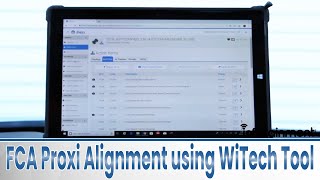
Typical fix: The module that set the code must be synchronized with the vehicle's master configuration by performing a 'Proxy Alignment' (also called 'Restore Vehicle Configuration') using the Chrysler wiTECH diagnostic tool or a capable aftermarket equivalent. This is typically a dealer or specialty shop procedure. For advanced users, AlfaOBD can perform this routine.
Est. part cost: $0 - Incorrect Module Installed 🟡 Medium Probability A module from a different model year (e.g., a 2021 Uconnect 5 radio in a 2019 van) or trim level may have been installed. Even with the correct programming, it may be physically incompatible with the vehicle's other hardware.
How to confirm: Verify the part number of the installed module against the OEM part catalog for the vehicle's specific VIN.
Typical fix: Replace the incorrect module with the correct part number for the vehicle, followed by a 'Proxy Alignment' with wiTECH.
Est. part cost: $200-$1500 - Corrupted Module Software ⚪ Low Probability A failed software update attempt, a voltage spike, or a weak battery during a key cycle could potentially corrupt the configuration data within a module.
How to confirm: Attempt to re-flash or run the 'Proxy Alignment' procedure on the module with wiTECH. If the procedure fails repeatedly, the module itself may be faulty.
Typical fix: First, attempt to reprogram the module. If that fails, the module must be replaced and the new one programmed.
Est. part cost: $200-$1500
Rare But Worth Checking
- Weak or Failing Battery: Low system voltage during startup can sometimes cause communication glitches between modules, leading to various U-codes. While less likely to be the root cause for a persistent U2101, it's a simple and important check before expensive diagnostics. Electrical gremlins are a known issue on this platform.
Diagnosis Steps
- Connect a professional, bidirectional scan tool capable of reading Chrysler-specific codes from all modules (e.g., wiTECH, Autel, AlfaOBD). A basic engine code reader is insufficient.
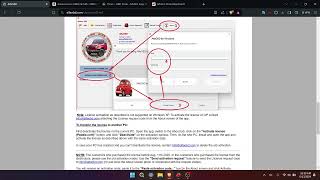
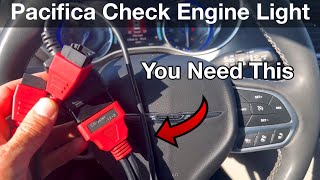
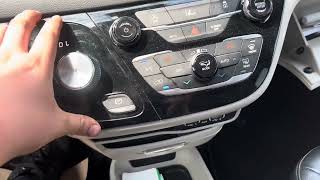
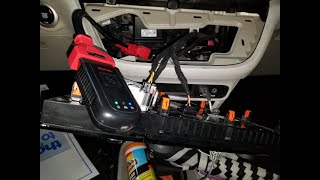
- For 2018+ models, bypass the Security Gateway Module (SGM) using a 12+8 adapter cable 🎬 See how to locate and bypass the Security Gateway Module. to allow the aftermarket scan tool full access. The SGM is located behind the climate control panel.
- Perform a full vehicle network scan to identify which specific module is setting the U2101 code (e.g., Radio Frequency Hub (RFH), Body Control Module (BCM), Occupant Restraint Controller (ORC)).
- Review the vehicle's repair history. Ask the owner if any modules have been replaced recently, particularly the radio, airbag module, or BCM, often due to collision repair or infotainment upgrades.
- If using wiTECH or a capable aftermarket tool, access the vehicle topology and select the identified module. Perform the 'Proxy Alignment' or 'Restore Vehicle Configuration' routine. This will synchronize the module with the master configuration stored in the BCM.
- If programming is successful, clear all codes and perform a key cycle. Re-scan to ensure the U2101 code does not return.
- If programming fails, verify the module's part number is correct for the vehicle's VIN and options. If the part number is wrong, replace it with the correct module and program it.
- If the part number is correct but programming repeatedly fails, investigate for a physical network fault (see Edge Case Failures) before condemning the module. If no network fault is found, the module itself may be internally faulty and require replacement.
Parts You'll Likely Need
- Module Programming Service — This is a software configuration code. The most common 'part' needed is the labor service to have a dealership or qualified shop program the existing or replacement module.
OEM price range: $150-$350 - Radio Head Unit / APIM — The radio is one of the most common modules to be replaced, either for repair or an upgrade 🎬 Watch this walkthrough for installing a factory UConnect radio upgrade. (e.g., to get navigation or a larger screen). If a used radio is installed without programming, it will set a U2101 code.
Trusted brands: Mopar
OEM price range: $800-$1500
Aftermarket price range: $300-$900 (Used/Reman) - Airbag Control Module (ORC)
(OEM #Superseded Part: 68526663AC)— Often replaced after a collision, the Occupant Restraint Controller (ORC) is VIN-specific and must be configured to the vehicle to function correctly and extinguish the airbag light. A used module from a salvage yard is a frequent cause.
Trusted brands: Mopar
OEM price range: $300-$600
Aftermarket price range: $50-$250 (Used/Reman or Reset Service)
Related Codes That Often Appear With This One
- U0100-U0299 — These are 'Lost Communication' codes. If a module is improperly configured (U2101), other modules on the network cannot talk to it, causing them to log lost communication DTCs for that specific module (e.g., U0151 for the airbag module, U0140 for the BCM).
- U2100 — U2100 means 'Control Module Configuration Not Programmed' (i.e., the module is blank). U2101 means it has the wrong configuration. They are closely related and point to a programming issue. A brand new service module will often set U2100 before it is programmed.
Technical Service Bulletins (TSBs) & Recalls
- While no TSB directly addresses U2101 on the Pacifica, related bulletins show the importance of software updates. TSB 08-111-19 involves a software update for the radio to fix GPS issues on 2017 models. TSB 18-001-19 REV. B for 2018 models corrects a wide range of PCM and network codes with a software flash, including a 'Configuration Mismatch' code C2222-68 'Improper Powerdown', which points to similar network configuration sensitivities.
Platform-Specific Known Issues
- Post-Collision Airbag Module Replacement: After an accident, the ORC (Airbag) module is often replaced. If a used module is installed or if the original module is not properly re-configured, it will cause a U2101 and the airbag light will remain on. Some services offer to 'reset' a crashed module, which can also lead to configuration issues if not done correctly for the specific VIN.
- Infotainment Upgrades: Owners upgrading from a base model 7-inch Uconnect screen to an 8.4-inch or 10.1-inch screen with navigation often use parts from other vehicles. This swap requires not only the physical parts but also careful programming of the Radio Frequency Hub (RFH) and BCM to accept the new hardware, making U2101 a common stumbling block.
- DIY with AlfaOBD: Advanced owners use AlfaOBD to make custom configuration changes. If a BCM from another vehicle is used or if the 'Restore Vehicle Configuration' process fails, it can result in a U2101 code. A forum user on MHH Auto described this exact issue when trying to write a VIN to a used BCM on a 2019 Pacifica, receiving a 'parameter(s) with value(s) outside allowable range' error.
Mechanic-Grade Diagnostic Values
- CAN Bus Network Termination Resistance — expected: Approximately 60 Ω. Failure: A reading of 120 Ω indicates a missing termination resistor or a break in the circuit. A reading significantly lower than 60 Ω (e.g., 40 Ω) suggests an extra termination resistor is present, or a module is shorted.
- CAN Bus Voltage (Multimeter) — expected: CAN-H (Pin 6) to ground: ~2.6V. CAN-L (Pin 14) to ground: ~2.4V.. Failure: These are average DC voltages with the key on. Significant deviation, or voltages that don't add up to ~5.0V, can indicate a short to power, ground, or a faulty module pulling the bus voltage down. A scope is required for true signal analysis.
Scan Tool Commands That Help
- wiTECH, AlfaOBD, Autel (high-end): Proxy Alignment / Proxy Configuration / Restore Vehicle Configuration — This is the primary fix for a U2101 code after a module has been replaced. This function copies the master vehicle configuration from the Body Control Module (BCM) to the newly installed or desynchronized module, allowing it to communicate correctly on the network.
Wiring & Ground Locations
- Security Gateway Module (SGM) — For model years 2018 and newer, the SGM is located directly behind the climate control panel in the center of the dashboard.. This module blocks write access (like clearing codes or programming) from the OBD-II port for non-dealer tools. To diagnose and fix U2101 with an aftermarket scanner, you must bypass the SGM using a 12+8 adapter cable connected directly to the SGM and its harnesses.
- CAN Bus Star Connector (Junction Block) — A primary star connector for the CAN-C bus is located under the glove box. It's a small box where multiple pairs of CAN wires converge.. Loose pin retention within this connector can cause intermittent, widespread communication failures across the entire network, mimicking a U2101 or multiple 'U' codes. Wiggling the wires at this connector while monitoring the bus can reveal a physical connection issue.
- Occupant Restraint Controller (ORC) — Typically located under the center console, bolted to the floor of the vehicle.. The ORC is a common cause of U2101 after a collision repair. Accessing it requires removing the center console assembly. Its location is critical for replacement and programming.
- Body Control Module (BCM) — Located on the vehicle's bulkhead, underneath the instrument panel to the left of the steering column.. The BCM stores the master configuration for the entire vehicle. All 'Proxy Alignment' procedures read from the BCM and write to other modules. A BCM replacement is a guaranteed cause of U2101 until it is properly programmed.
Documented NHTSA Reports
While U2101 is often a Chrysler configuration code, cross-manufacturer records provide insight into how this fault manifests. NHTSA ODI #11581420 describes a situation where U2101 appeared alongside multiple lost communication codes (U0121, U0140), resulting in a persistent warning chime or beeping noise without dashboard lights. In another instance, NHTSA ODI #10694215 notes that U2101 was present alongside a steering position fault (C1B00), where the technician determined a major electronic component—the steering rack—required replacement to resolve the configuration-related error.
Real Owner Repair Stories
- ScannerDanner Forum (2017 Chrysler Pacifica) — Intermittent drivability issues where all dash lights would go crazy, the shifter would lock in park, and around 20 'U' codes for loss of communication would appear. The CAN bus waveforms would look good, then become corrupted.
❌ Tried (didn't work) Initial scope work at the DLC showed an intermittent problem but couldn't pinpoint the source.
✅ What actually fixed it The problem was found to be a loose connection with poor pin retention at the CAN bus star connector located under the glove box. Wiggling the connector would make the problem appear and disappear. The final fix was to repair or replace the star connector and its pins.
OEM Part Supersession History
68480707AB, 68480707AC, 68480708AB, 68480708AC, 68526663AB→68526663AC— Standard part revision and consolidation by the manufacturer.
Heads up: Using an ORC from a different model year or trim without proper programming will cause a U2101 code. The part number must be correct for the vehicle's specific safety equipment configuration.
Model Year Variations Within This Range
- 2018-2024: Introduction of the Security Gateway Module (SGM). Any diagnostic procedure beyond simple code reading on an aftermarket scan tool requires a physical 12+8 bypass cable connected behind the dash. Pre-2018 models do not have this module and can be fully accessed via the OBD-II port.
- 2021-2024: Introduction of the Uconnect 5 infotainment system. The radio modules and screens are not directly backward-compatible with 2017-2020 models without special harnesses and specific BCM programming. Attempting to swap a Uconnect 5 system into an older van is a common trigger for code U2101.
Diagnostic Flowchart
Other Known Issues on This Vehicle
Issues unrelated to this code that are worth knowing about as an owner of this generation:
- ZF 9-Speed Transmission Problems 🔴 High — Very common, especially in 2017-2020 models. Complaints include harsh/jerky shifting, sudden loss of power, and premature failure. Many issues are software-related but can be mechanical. (Ref: Multiple TSBs (e.g., 21-006-21) have been issued for software updates to improve shift quality.)
- Engine Stalling (Gas and Hybrid) 🔴 High — Affects both gas and hybrid models, though for different reasons. A significant number of complaints and recalls have been issued. (Ref: Yes, multiple recalls. E.g., Recall U01 for 2017 gas models for engine control software. Recall 23V-010 for 2017-2023 Hybrids for unexpected engine shutdown due to a transmission wiring short.)
- Infotainment System Glitches (Uconnect) 🟠 Medium — Widespread complaints of screens freezing, rebooting, delaminating, or becoming unresponsive. Affects both Uconnect 4 and Uconnect 5 systems. (Ref: Multiple software update TSBs exist, but many owners report persistent issues.)
- Dual Battery System Failure (ESS Models) 🟠 Medium — Common for the smaller auxiliary battery in the Engine Stop-Start (ESS) system to fail prematurely, causing ESS system faults, warning lights, and sometimes starting issues.
- Sliding Door and Power Liftgate Problems 🟡 Low — Fairly common complaints of doors not opening/closing correctly, getting stuck, or sensors malfunctioning. Often related to wiring harnesses or control modules.
- Paint Bubbling/Peeling on Hood 🟡 Low — Primarily affects the aluminum hoods on earlier models (2017-2018), where corrosion causes paint to bubble and peel near the front edge. (Ref: No recall, but a known issue discussed widely in owner forums.)
Used vs. New Parts: Buying Guide for This Vehicle
When a used part is the smart pick: For a U2101 repair, a used module (BCM, ORC, Radio, etc.) from a salvage yard is a very smart choice. The code is a programming issue, not a hardware failure. A functional used module is just as good as a new one, provided it is programmed to your vehicle.
Donor-vehicle mileage cap: roughly under 150000 miles for the part to have meaningful remaining life.
What to inspect on the donor part:
- Verify the OEM part number on the used module is an exact match or an accepted superseded number for your vehicle's VIN.
- Inspect for any signs of water damage, corrosion on the pins, or physical damage to the casing.
- If possible, get the VIN of the donor vehicle to cross-reference its original equipment.
OEM-only on this vehicle (don't cheap out):
- Body Control Module (BCM)
- Occupant Restraint Controller (ORC)
- Radio Head Unit (APIM)
- Radio Frequency Hub (RFH)
- There are no reputable aftermarket manufacturers for these core VIN-locked computer modules. The only options are new OEM, used OEM, or remanufactured OEM.
Aftermarket brands forum-validated for this vehicle:
- For this code, you are not buying a part, but a service. Some online vendors like 'MAKS TIPM Rebuilders' or various eBay sellers offer services where you send them your VIN, and they ship you a pre-programmed used module that is 'Plug & Play'.
Brands owners have reported issues with on this vehicle:
- Avoid any used module seller who cannot or will not provide the exact part number or clear photos of the part label.
Real Owner Stories
Aggregated from forums and TSBs cited above. Mileages and costs reflect what owners reported in those sources.
2019 Chrysler Pacifica
Symptoms: Encountered a 'parameter(s) with value(s) outside allowable range' error while attempting to write a VIN to a used Body Control Module (BCM).
What fixed it: The owner was attempting to use AlfaOBD to reset the BCM and write the VIN, though the process failed due to the complexities of using non-dealer tools for module programming.
Source hint: MHH AUTO Forum: Alfa Obd- Reset BCM/VIN Write error
2017-2024 Chrysler Pacifica
Symptoms: Airbag warning light remained on after the Occupant Restraint Controller (ORC) was replaced following an accident.
What fixed it: The module required proper re-configuration or synchronization with the vehicle's master configuration to resolve the mismatch.
Source hint: Vehicle Specific Issues: Post-Collision Airbag Module Replacement
Related OBD-II Codes
Frequently Asked Questions
I just installed a used 8.4-inch Uconnect screen from another van into my 2019 Pacifica and now have code U2101. Why?
Can I use AlfaOBD to fix the U2101 code on my 2018 or newer Pacifica?
My airbag light is on after a collision repair and I see U2101. What happened?
Does TSB 08-111-19 address the U2101 configuration code?
Is there a TSB for network codes similar to U2101 on 2018 Pacificas?
Why is my radio displaying a Jeep logo instead of the Chrysler logo?
Helpful Videos
We Have This Part in Stock




The information in this article is provided for general reference and educational purposes only. Vehicle specifications, procedures, and part compatibility can vary by production date, trim level, and region. Always consult your vehicle's factory service manual and verify part numbers before purchasing or performing repairs. Safety-critical components such as airbags, seat belts, and braking systems should be installed by a qualified professional.
- Chrysler Pacifica:
- 🎬 Helpful Videos
- 🛍️ Shop This Part
- What's Unique About the 2017-2024 Chrysler Pacifica
- Symptoms You May Notice
- Most Likely Causes
- Rare But Worth Checking
- Diagnosis Steps
- Parts You'll Likely Need
- Related Codes That Often Appear With This One
- Technical Service Bulletins (TSBs) & Recalls
- Platform-Specific Known Issues
- Mechanic-Grade Diagnostic Values
- Scan Tool Commands That Help
- Wiring & Ground Locations
- Documented NHTSA Reports
- Real Owner Repair Stories
- OEM Part Supersession History
- Model Year Variations Within This Range
- Diagnostic Flowchart
- Other Known Issues on This Vehicle
- Used vs. New Parts: Buying Guide for This Vehicle
- Real Owner Stories
- 2019 Chrysler Pacifica
- 2017-2024 Chrysler Pacifica
- Related OBD-II Codes
- Frequently Asked Questions
- 🎟️ Get 5% Off