

U1500 on 2019-2024 Kia Forte: LIN Bus Communication Failure Causes and Fixes
Code U1500 on a 2019-2024 Kia Forte indicates a network communication error. This is most commonly caused by a faulty Intelligent Battery Sensor (IBS) on the negative battery terminal or a communication failure within the alternator. Diagnosis requires an advanced scan tool to isolate the failed component on the Local Interconnect Network (LIN).
- Code U1500 means a component on a communication sub-network has failed, not a specific part.
- On your Forte, the most likely culprits are the Intelligent Battery Sensor (IBS) on the negative battery terminal or the alternator.
- Do not replace parts without proper diagnosis, preferably with an oscilloscope to verify the LIN bus signal.
- A new IBS may require a 4-hour recalibration period to function correctly.
What's Unique About the 2019-2024 Kia Forte
For modern Hyundai and Kia vehicles like the third-generation (BD) Forte, the charging and power management systems are key areas that rely on LIN bus communication. Unlike older vehicles with simple alternators, the Forte uses its Engine Control Module (ECM) to actively manage the charging system based on data from components like the Intelligent Battery Sensor (IBS) and the alternator itself. The IBS, mounted on the negative battery terminal, provides the ECM with data on the battery's state of charge, health, and function. A failure in the communication chip of either the IBS or the alternator is the most common trigger for a U1500 code on this platform.
Symptoms You May Notice
- Check Engine Light is on
- Battery or charging system warning light on the dashboard
- The Auto Start/Stop system (ISG) may be disabled
- Unexplained battery drain or a battery that dies unexpectedly
- Dimming headlights or slow-operating electrical accessories
- Charging system voltage that is too high (over 15V) or too low (under 13V)
- Erratic tachometer readings or other gauge misbehavior
- Replacing the battery without diagnosing the IBS 🎬 Watch: Sorento battery sensor and alternator troubleshooting or charging system. A new battery will likely fail prematurely if the underlying communication issue isn't resolved.
- Replacing the alternator without confirming it's the source of the communication fault. The issue could be the much cheaper IBS or a simple wiring problem. A parts-swapping approach can get very expensive with LIN faults.
- Mistaking a default charging voltage (e.g., 14.2V) for a healthy system when a LIN communication code is present. The alternator may be charging in a failsafe mode, not under proper ECM control.
Most Likely Causes
- Faulty Intelligent Battery Sensor (IBS) 🔴 High Probability The IBS is a sensitive electronic component mounted directly on the battery, exposing it to vibration and potential corrosion. It's a known failure point on many modern Hyundai/Kia models that use it for advanced charging management. The sensor itself is often integrated into the negative battery terminal cable assembly.
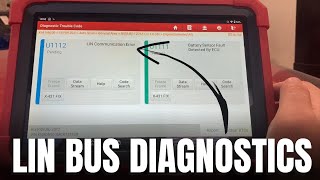
How to confirm: Visually inspect the sensor on the negative battery terminal for corrosion or damage. Use a professional scan tool to check for specific 'Lost Communication with IBS' codes (like U1111 or U1112). A definitive test involves using an oscilloscope to check for a valid LIN signal square wave from the sensor's communication wire. A flat line or a line stuck at 12V indicates a fault. Disconnecting the suspect slave module (the IBS) and seeing if the LIN bus waveform returns on the oscilloscope is a common diagnostic tactic.
Typical fix: Replace the Intelligent Battery Sensor, which is often part of the negative battery cable assembly. The new sensor may need a few hours to properly calibrate to the battery's state of charge after installation. It's crucial to tighten the new terminal clamp to the specified torque (e.g., 3.0-4.4 lb-ft) to avoid damaging the new sensor's internal circuitry.
Est. part cost: $60-$150 - Faulty Alternator (Internal LIN Communication Failure) 🟡 Medium Probability Modern alternators contain an internal voltage regulator and communication chip that talks to the ECM via the LIN bus. This chip can fail, causing a communication loss even if the alternator is still mechanically functional and producing a charge. This failure mode can be confusing because the battery light may be on, but the alternator might still be charging (often at a default, non-regulated voltage).
How to confirm: With a bi-directional scan tool, check for specific alternator or charging system communication codes (like U0120). An auto-electric specialist can test the LIN signal wire at the alternator to see if a valid signal is being sent and received. If the signal from the ECM is good going in, but the alternator doesn't respond or corrupts the signal, the alternator has failed.
Typical fix: Replace the alternator assembly. The internal communication components are generally not serviceable.
Est. part cost: $250-$500 - Damaged Wiring or Loose Connection ⚪ Low Probability
How to confirm: Visually inspect the single LIN bus wire and connector going to the IBS and the alternator. Look for any signs of corrosion, chafing, or breaks. Check for a secure connection at both components and at the main control module (ECM/BCM). A tone generator and probe can be used to trace the wire for hidden breaks.
Typical fix: Repair or replace the damaged section of the wiring harness or clean and secure the connector. This can involve soldering in a new section of wire.
Est. part cost: $5-$50
Rare But Worth Checking
- Failing Main Battery: A battery with low or unstable voltage can cause various electronic modules to malfunction and drop off the communication network. Before chasing LIN faults, ensure the battery is healthy, fully charged, and the correct type (e.g., AGM vs. standard) for the vehicle.
- Faulty Engine Control Module (ECM): While extremely rare, the 'master' module itself can fail. This should only be considered after all other possibilities (sensor, alternator, wiring) have been exhaustively ruled out by a professional using an oscilloscope to confirm the ECM is not sending a signal.
Diagnosis Steps
- Connect a professional-grade, bi-directional scan tool. A basic code reader is not sufficient.
- Perform a full vehicle network scan. Look for any other 'U' codes that specify which module has lost communication (e.g., 'Lost Communication with Battery Sensor' or 'Lost Communication with Generator Control Module').
- Check battery health. Test the battery's voltage, load capacity, and ensure it's the correct type. A reading below 12.4V at rest indicates a weak battery that should be charged and re-tested. Low system voltage can cause communication errors.
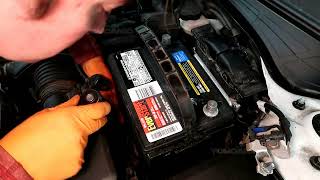
- Inspect the Intelligent Battery Sensor (IBS). The IBS is located on the negative battery terminal. Check its connector for corrosion, damage, or looseness.
- Inspect the alternator wiring. Check the electrical connector at the alternator, ensuring it is clean and secure. Trace the single LIN wire for any visible damage.
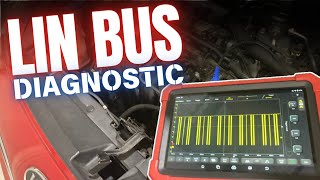
- (Advanced) Use an oscilloscope to test the LIN bus signal. Probe the LIN wire at the suspect component (IBS or alternator). You should see a distinct square wave pattern indicating communication. A flat line indicates a loss of signal, while a line stuck at 12V could indicate a short to power.
- (Advanced) Isolate the components. 🎬 Watch a video on diagnosing LIN bus communication errors If the LIN bus signal is dead, disconnect the slave modules (IBS, then alternator) one by one. If disconnecting a component causes the signal to return, that component was pulling the network down and is faulty.
- Based on the findings, isolate the faulty component. If the LIN signal from the ECM is present but the component isn't responding, the component has likely failed.
Parts You'll Likely Need
- Intelligent Battery Sensor (IBS)
(OEM #37180-K0000 (for Soul, verify for Forte), 37180-B0002)— This sensor is a common failure point on modern Hyundai/Kia vehicles and is a primary cause of LIN bus communication faults.
Trusted brands: Kia (OEM), Hella
OEM price range: $100-$150
Aftermarket price range: $60-$90 - Alternator
(OEM #37300-2B960 (1.6L Turbo, verify for 2.0L))— The internal communication circuit within the alternator can fail, causing it to stop communicating with the ECM and triggering a U1500 code.
Trusted brands: Kia (OEM), Denso, Bosch, Valeo
OEM price range: $400-$600
Aftermarket price range: $250-$450
Related Codes That Often Appear With This One
- P0562 — This code for 'System Voltage Low' can appear if the U1500 fault is related to the alternator not charging the battery correctly.
- U1111 / U1112 — These codes may specifically indicate 'Lost Communication with Battery Sensor', helping to pinpoint the IBS as the source of the U1500 fault.
- U0120 — This code for 'Lost Communication with Generator Control Module' can point directly to the alternator's internal communication chip as the failure point.
Technical Service Bulletins (TSBs) & Recalls
- TSB CHA-098: While not directly for U1500, this TSB deals with brake system issues on various Kia models and is an example of a TSB related to complex electronic control units.
- TSB ENG236 / SC336: Pertains to excessive oil consumption and the installation of a Piston Ring Noise Sensing System in the ECM for 2.0L Nu engines in related models (Soul/Seltos), highlighting the complexity of engine management software on this platform.
Platform-Specific Known Issues
- IBS Replacement Procedure: According to Kia documentation, after replacing the IBS, the vehicle should be parked for about 4 hours with the ignition off to allow the new sensor to correctly learn the battery's state of charge (SOC). Failure to do so may result in continued incorrect charging behavior even with a new part. During this time, the smart key should not be near the vehicle, as its presence can keep modules awake and prevent the IBS from initializing.
- IBS Integrated with Cable: On many Kia models, the IBS is integrated into the negative battery terminal cable assembly and is not sold as a separate component. When ordering, ensure you are getting the entire assembly.
Mechanic-Grade Diagnostic Values
- LIN Bus Signal Voltage (Oscilloscope) — expected: A square wave pattern toggling between a high 'recessive' state near battery voltage (~12V) and a low 'dominant' state below 1V.. Failure: A constant voltage near 12V indicates a short to power or open circuit. A constant voltage near 0V indicates a short to ground. An absent or malformed waveform indicates a module failure.
- LIN Bus Voltage Thresholds (Recessive/Logic 1) — expected: Voltage should be above 80% of battery voltage.. Failure: A voltage that does not reach this threshold may indicate excessive resistance or a weak pull-up resistor in the master module.
- LIN Bus Voltage Thresholds (Dominant/Logic 0) — expected: Voltage should be below 20% of battery voltage.. Failure: A voltage that does not pull down close to ground may indicate a faulty transceiver in one of the modules.
- Charging System Voltage (Engine On) — expected: Between 13.2 and 14.8 volts, actively managed by the ECM based on IBS data.. Failure: Voltage consistently above 14.8V or below 13.2V suggests a failure in the LIN-controlled charging system, even if the alternator is mechanically sound.
Scan Tool Commands That Help
- Kia GDS (Global Diagnostic System): Resetting Adaptive Values — This function, found under 'Vehicle Software Management' for the Engine Control system, can be used to reset learned values after replacing a major component like the IBS or alternator. It forces the ECM to re-learn the characteristics of the new parts.
Wiring & Ground Locations
- Instrument Panel Fuse Box — Located in the driver's side of the instrument panel, behind a cover.. This panel contains fuses for various control modules. While less common, a blown fuse for a master module (like the BCM or ECM) could cause a LIN bus to go down.
- Engine Compartment Fuse & Relay Box — Located in the engine bay, typically near the battery.. Contains main fuses and relays for the Engine Control System, including the 'ECU' and 'Alternator' fuses. A problem here, like a blown 'Alternator' fuse as reported in one case, could cause communication and charging issues.
Real Owner Repair Stories
- Reddit user 'Beginning-Bat165' (2024 Kia Forte LXS) — Car wouldn't start, got a new battery, car started and then shut off.
❌ Tried (didn't work) Replacing the battery.
✅ What actually fixed it The alternator fuse was blown. Replacing the fuse resolved the starting and shutting-off issue.
OEM Part Supersession History
37180-B0001→37180-B0002— Part revision or supplier change for the negative battery cable assembly which includes the Intelligent Battery Sensor.
Diagnostic Flowchart
Other Known Issues on This Vehicle
Issues unrelated to this code that are worth knowing about as an owner of this generation:
- Intelligent Variable Transmission (IVT) Failure 🔴 High — Most common in 2019-2021 models. Failures can occur at very low mileage (under 5,000 miles). Symptoms include hesitation, RPM surging, and sudden loss of power. (Ref: Software update campaigns (e.g., SC199 for Soul) were issued to correct control logic, but hardware failure often requires transmission replacement. A class-action lawsuit was filed over this issue for Hyundai models with the same transmission.)
- Excessive Oil Consumption (2.0L Nu Engine) 🟠 Medium — Can occur in 2019-2021 models. Owners report needing to add oil between changes, sometimes without any warning lights until the level is critically low. (Ref: Kia TSB ENG236 (and related versions) outlines a procedure for dealers to measure oil consumption and, if excessive (more than 1 quart per 1,000 miles), perform piston ring cleaning or engine replacement under warranty.)
- Engine Failure or Seizure (2.0L Nu MPI) 🔴 High — A significant number of complaints for the 2.0L Nu engine involve sudden power loss, knocking, and complete seizure, sometimes leading to engine replacement. (Ref: Recall/Service Campaign SC336 was issued for the related 2.0L Nu engine in the Soul/Seltos for piston oil ring issues that could cause engine seizure.)
- Electrical System Glitches 🟡 Low — Some owners report various electrical issues, including problems with the sound system or other interior accessories.
Used vs. New Parts: Buying Guide for This Vehicle
When a used part is the smart pick: A used alternator from a low-mileage donor vehicle can be a cost-effective option, as the failure mode is often electronic (the LIN chip) rather than mechanical wear. However, it carries the risk of having the same electronic fault.
Donor-vehicle mileage cap: roughly under 50000 miles for the part to have meaningful remaining life.
What to inspect on the donor part:
- Check the donor vehicle's history, if possible, to ensure it wasn't involved in a front-end collision that could have damaged the alternator.
- Visually inspect the alternator pulley for smooth rotation and the electrical connector for any signs of corrosion or damage.
- Ask the salvage yard if they offer any warranty or return period for electronic components.
OEM-only on this vehicle (don't cheap out):
- Intelligent Battery Sensor (IBS). Due to the sensitivity of the electronics and the critical re-learn procedure, using a new OEM sensor is highly recommended to avoid repeat failures and ensure compatibility with the ECM's software.
Aftermarket brands forum-validated for this vehicle:
- Denso (often the OEM supplier)
- Valeo
- Bosch
Brands owners have reported issues with on this vehicle:
- Unknown or unbranded 'white box' alternators from online marketplaces, as their internal voltage regulators and LIN communication chips may not meet OEM specifications, leading to persistent codes or charging issues.
Real Owner Stories
Aggregated from forums and TSBs cited above. Mileages and costs reflect what owners reported in those sources.
2019 Kia Forte
Symptoms: Intermittent charging and an extreme overcharge condition reaching 17.6V.
What fixed it: The source suggests the fault can be in the wiring or ECM rather than just the alternator, as replacing multiple alternators did not resolve the LIN bus control failure.
Source hint: Reddit r/MechanicAdvice: 'Major electrical issue on Kia Forte'
2019 Kia Forte — 16777 miles
Symptoms: Sluggish acceleration followed by a stall and Check Engine Light.
What fixed it: The dealership identified a transmission issue (noting the electronic complexity of the platform).
Source hint: Reddit r/kia: 'PSA: 2019 KIA FORTE RECALL FOR TRANSMISSION ISSUES'
Related OBD-II Codes
Frequently Asked Questions
Can I just replace the sensor on my 2019-2024 Kia Forte's negative battery terminal?
Is there a specific procedure I need to follow after installing a new IBS on my Forte?
My 2019 Forte is showing 17.6V on the charging system; is this related to U1500?
Does TSB ENG236 apply to my 2.0L Nu engine in the Forte?
Why is my Auto Start/Stop (ISG) system disabled on my Kia Forte?
Helpful Videos
We Have This Part in Stock



The information in this article is provided for general reference and educational purposes only. Vehicle specifications, procedures, and part compatibility can vary by production date, trim level, and region. Always consult your vehicle's factory service manual and verify part numbers before purchasing or performing repairs. Safety-critical components such as airbags, seat belts, and braking systems should be installed by a qualified professional.
- Kia Forte:
- 🎬 Helpful Videos
- 🛍️ Shop This Part
- What's Unique About the 2019-2024 Kia Forte
- Symptoms You May Notice
- Most Likely Causes
- Rare But Worth Checking
- Diagnosis Steps
- Parts You'll Likely Need
- Related Codes That Often Appear With This One
- Technical Service Bulletins (TSBs) & Recalls
- Platform-Specific Known Issues
- Mechanic-Grade Diagnostic Values
- Scan Tool Commands That Help
- Wiring & Ground Locations
- Real Owner Repair Stories
- OEM Part Supersession History
- Diagnostic Flowchart
- Other Known Issues on This Vehicle
- Used vs. New Parts: Buying Guide for This Vehicle
- Real Owner Stories
- 2019 Kia Forte
- 2019 Kia Forte — 16777 miles
- Related OBD-II Codes
- Frequently Asked Questions
- 🎟️ Get 5% Off