

OBD-II Code P0000: No Fault Found
What P0000 means, why it triggers, and how to fix it
- P0000 indicates 'No Faults Found,' meaning your scanner failed to read the vehicle's proprietary codes rather than confirming a problem-free engine.
- If your Check Engine Light is illuminated alongside a P0000 code, immediately re-scan the vehicle using a professional-grade, $400+ bi-directional diagnostic tool.
- Never ignore physical symptoms like a rough idle or a 15% drop in fuel economy; P0000 frequently masks severe issues like misfires that destroy catalytic converters.
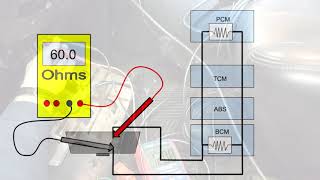
- Diagnose persistent P0000 communication failures by testing the OBD-II port's CAN bus resistance, which must measure exactly 60 Ohms with the battery disconnected.
What Does P0000 Mean?

P0000 is an informational code meaning the engine's computer has no stored active fault codes. If your Check Engine Light is on, P0000 signals a communication failure between the scan tool and the car, not a problem-free vehicle. It acts as a placeholder when a basic scanner cannot read manufacturer-specific codes or fails to communicate with the control module.
Technical definition: The official SAE/ISO definition for P0000 is an ISO/SAE reserved code, interpreted as "No Diagnostic Trouble Codes Stored. 🎬 Watch: A quick breakdown of P0000 causes and fixes." It is a placeholder indicating either a clean system or a communication failure due to protocol incompatibility between the scanner and the vehicle's network.
Can I Drive With P0000?
Yes. Yes, you can continue driving. P0000 indicates a communication error with the diagnostic scan tool, not a mechanical failure. However, if you experience performance symptoms like a rough idle or misfiring, do not ignore them. P0000 often masks real issues; driving with a hidden misfire damages the catalytic converter, a repair costing over $1,500.
Common Causes

- Incompatible or outdated OBD-II scanner (Very Common) — The most frequent cause is using a basic or outdated scan tool that cannot interpret your vehicle's specific communication protocol. It defaults to P0000 when it fails to read proprietary, manufacturer-specific codes.
- ECU in test mode or recently reset (Common) — The code appears right after the vehicle's control units are reset, such as after disconnecting the battery or clearing codes. The system requires a full 30-mile drive cycle to re-run its self-tests.
- Intermittent or hidden faults (Common) — A real issue exists in a non-OBDII-monitored system (like adaptive suspension) or is too sporadic to register as a persistent fault. Basic scanners miss these pending glitches, defaulting to P0000.
- Communication failure between scanner and vehicle (Less Common) — A software glitch or physical layer error in the communication link between the diagnostic tool and the Engine Control Module (ECM) prevents the scanner from retrieving stored trouble codes.
- Failing control module or software glitch (Rare) — A failing Powertrain Control Module (PCM) causes internal communication errors, resulting in a P0000 code. A PCM re-flash or software update is required, especially on specific Ford and VW models.
- Damaged or corroded OBD-II port wiring (Rare) — Physical damage, bent pins, or corrosion on the diagnostic port interrupts the physical connection between the scanner and the car.
- Poor vehicle ground connection (Rare) — A weak or corroded ground connection for the PCM causes voltage drops that sever the scanner's ability to establish a stable data connection.
Symptoms

- Check Engine Light is on — An illuminated Check Engine Light combined with a P0000 code confirms a communication error or a hidden code the scanner cannot read.
- No symptoms at all — If the Check Engine Light is off and the car drives normally, P0000 confirms no active faults exist in the primary engine control module.
- Actual performance issues are present — Rough idling, poor acceleration, or reduced fuel economy occur, proving a real fault exists that the scanner cannot detect.
- Intermittent dashboard lights — Warning lights for ABS or traction control flash briefly. Basic scanners miss these intermittent faults, defaulting to P0000.
- Scanner cannot read other data (scan-tool only — no driver-felt sign) — The diagnostic tool fails to display live data, freeze-frame information, or access other system modules like ABS or SRS.
Diagnostic Flowchart
Tap your situation to follow the diagnostic path that matches what you're seeing on this code.
Common Fixes & Costs
- Using a professional-grade scan tool — Parts: $0, Labor: $100-$200, ~1.0 hr book time (DIY)
- Clearing codes and restarting the system — Parts: $0, Labor: $0, ~0.1 hr book time (DIY)
- Cleaning the OBD-II port — Parts: $10, Labor: $0, ~0.2 hr book time (DIY)
- Software update or professional diagnosis — Parts: $0, Labor: $150-$250, ~1.5 hr book time (Professional)
- Performing a CAN bus network diagnostic — Parts: $10-$50, Labor: $200-$500, ~2.5 hr book time (Professional)
Used vs. New Parts: Buying Guide
When a used part is worth it: Used PCMs make sense for vehicles over 10 years old where new OEM parts are discontinued or exceed 20% of the vehicle's value.
Donor-vehicle mileage cap: roughly under 100000 miles for the part to have meaningful remaining life.
Donor quality checklist:
- Match the part number exactly.
- Inspect the used module for pin corrosion or water damage.
- Buy from sellers offering at least a 30-day warranty.
Decision logic:
- If Vehicle is under 8 years old → Buy a new OEM module to ensure compatibility and retain warranty coverage.
- If Vehicle is over 15 years old → Buy a tested, used module from a reputable salvage yard, factoring in $100-$200 for professional reprogramming.
- If Remanufactured unit available → Buy remanufactured for the best balance of cost and reliability, provided it includes a lifetime warranty.
Warranty tradeoff: Used parts offer 30-90 day warranties. Remanufactured units offer 1-year to lifetime warranties. New OEM parts carry a standard 1-year warranty.
Worst-case if a used part fails: $300-$800 for repeat labor, towing, and reprogramming if a used PCM fails post-installation.
What Happens If You Wait — Timeline
- 0-1 month: A hidden intermittent fault exists but lacks consistency to set a permanent code. The Check Engine Light illuminates, but a basic scanner shows P0000. (MPG impact: 0-5%% · Added cost: $0-$50 in wasted fuel.)
- 1-4 months: If masking a misfire, unburnt fuel enters the exhaust. The driver notices hesitation and a 5-15% drop in fuel economy. (MPG impact: 5-15%% · Added cost: $50-$200 in wasted fuel and potential damage to spark plugs or O2 sensors.)
- 4-8 months: Consistent unburnt fuel overheats and melts the catalytic converter's internal honeycomb. The vehicle feels sluggish. (MPG impact: 15-30%% · Added cost: $1,200-$2,800 as the catalytic converter requires replacement.)
- 8+ months: The catalytic converter clogs completely, causing severe exhaust backpressure. The engine stalls frequently and suffers catastrophic power loss. (MPG impact: 30-50%+% · Added cost: $2,500-$5,000+ for replacing the catalytic converter and repairing consequential engine damage.)
Cost of Not Fixing It
- Immediate: Failing a state emissions inspection due to an illuminated Check Engine Light or 'Not Ready' monitors. (Added cost: $50-$250)
- 1-6 months: If masking a misfire (P030x), unburnt fuel overheats and melts the catalytic converter. (Added cost: $1200-$2800)
- 6+ months: If masking a lean/rich condition (P0171/P0172), long-term incorrect air-fuel ratios cause internal engine damage and foul oxygen sensors. (Added cost: $500-$3000)
Diagnosis Steps
- Use a Professional-Grade Scanner
This is the most crucial step. Connect a professional-grade scan tool capable of reading CAN and KWP2000 protocols. Advanced scanners bypass the P0000 error to uncover the hidden manufacturer-specific codes causing your symptoms.
Tools: Professional OBD-II Scanner (Beginner) - Verify Connection and Inspect OBD-II Port
Ensure the scanner is firmly plugged in. Visually inspect the vehicle's diagnostic port for bent pins, debris, or corrosion. Clean any buildup with electrical contact cleaner and a small brush.
Tools: Flashlight, electrical contact cleaner, small brush (Beginner) - Clear Codes and Rescan
Use the scanner to clear the P0000 code. Restart the car, let it idle for 5 minutes, and scan again to see if a true fault code populates.
Tools: OBD-II Scanner (Beginner) - Check Battery Voltage
Measure the vehicle's battery voltage with the engine off. It must read above 12.4 volts. Low voltage severs communication between control modules and the scan tool.
Tools: Multimeter (Intermediate) - Perform a Hard Reset
Disconnect the negative battery terminal for 30 minutes to reset all control modules. This clears temporary software glitches causing communication errors.
Tools: Wrench set (Intermediate) - Test OBD-II Port Voltages
Check for correct voltages at the OBD-II port. Pin 16 requires 12V+ battery voltage, and Pins 4 and 5 require solid grounds (near 0V). For CAN bus vehicles, Pins 6 and 14 should read approximately 2.5V with the key on, engine off.
Tools: Multimeter (Advanced) - Check CAN Bus Resistance
With the battery disconnected, measure resistance between Pin 6 (CAN-H) and Pin 14 (CAN-L). A healthy network reads exactly 60 Ohms. A 120 Ohm reading indicates an open circuit; 0 Ohms indicates a short.
Tools: Multimeter (Advanced) - Live CAN Bus Voltage Analysis
With the engine running, measure live voltage. CAN High (Pin 6) oscillates between 2.5V and 3.5V. CAN Low (Pin 14) oscillates between 2.5V and 1.5V. Readings of 0V or 12V+ indicate severe wiring shorts.
Tools: Multimeter or Oscilloscope (Advanced) - K-Line Voltage Check (Older Vehicles)
For vehicles using the ISO 9141 protocol, check voltage on Pin 7. With the key on, it should read approximately 1V below battery voltage. Incorrect voltage indicates a wiring fault on this specific data line.
Tools: Multimeter (Advanced)
When This Code Triggers (Freeze-Frame Conditions)
- Note on Freeze Frame: N/A (P0000 is a status code, not a fault code. It does not generate a freeze frame. Any displayed data reflects the engine's state at the exact moment of the scan.)
- Engine Coolant Temp: 40-210°F (Occurs at any temperature depending on when the scan is initiated.)
- RPM: 0 - 3000 RPM (Logged with the key on/engine off (0 RPM), at idle, or during steady driving.)
- Engine Load: 0-100% (Reflects the load at the time of the diagnostic request, not a failure event.)
- Vehicle Speed: 0 - 70 mph (Logged while parked or driving.)
Related Codes
- Any other DTC — P0000 masks real trouble codes. If you experience performance symptoms but only see P0000, the scanner is failing to display the true fault code (e.g., a hidden P0171 causing a rough idle).
- U-codes (e.g., U0100, U0073) — Network codes indicate module communication problems. If a professional scanner reveals a U-code alongside P0000, the root cause is a CAN bus network or wiring failure.
- P-codes (e.g., P0300, P0171) — Codes like P0300 (Random Misfire) or P0171 (System Too Lean) hide behind P0000. A professional scanner bypasses the P0000 error to display the true P-code causing the physical symptoms.
- Manufacturer-Specific Codes (e.g., BMW FC 2D5A) — Generic scanners read standardized SAE codes but fail on proprietary manufacturer codes. Brand-specific tools translate these hidden codes into actionable diagnostics.
Climate & Environmental Factors
- High Humidity: Promotes corrosion on OBD-II port pins and module connections. Moisture penetrates seals, causing short circuits or increased resistance that severs scanner communication.
- Extreme Cold: Increases electrical resistance in wiring and reduces battery performance. Low system voltage (below 12.4V) is a primary cause of module communication errors.
- Extreme Heat: Overheats electronic components within control modules and melts wire insulation, increasing the risk of CAN bus network shorts.
How to Talk to a Mechanic About This Code
Say this: "My Check Engine Light is on and I have a rough idle. My basic scanner shows P0000, indicating a communication failure. I need a professional diagnostic scan to pull the true underlying fault code."
Proves you understand the issue is diagnostic, preventing shops from guessing. It forces the technician to use advanced tools to find the real code.
Avoid saying:
- 'My car has a P0000 code, can you fix it?'
- 'Just fix whatever is wrong.'
- 'My check engine light is on, can you look at it?'
Questions to ask before authorizing the repair:
- What was the actual trouble code your professional scanner found?
- Can you provide the freeze-frame data for that specific code?
- What is the diagnostic fee if I decline the repair?
- What is the warranty on the proposed repair, for both parts and labor?
Where to Take It: Dealer vs Independent vs Chain
- Dealer:
Best for: Vehicles still under powertrain or emissions warranty, Known manufacturer-specific TSBs related to communication errors, Complex electrical issues on newer European vehicles
Downsides: Labor rates are 50-100% higher than independent shops., May recommend replacing a whole module when only a software update is needed. (Typical cost: +50% vs. baseline) - Independent Shop:
Best fit for most situations. A reputable shop with professional-grade, multi-brand scan tools easily diagnoses hidden codes behind P0000 without dealer markups.
Best for: Out-of-warranty vehicles where cost is a factor, Shops with a strong reputation for electrical and diagnostic work
Downsides: Quality varies widely; vet shops by checking for ASE certifications., May not have the very latest manufacturer-specific software for brand-new models. (Typical cost: +0% vs. baseline) - Chain Shop:
Avoid for this code. Chain shops lack the advanced diagnostic expertise and specialized oscilloscopes required to trace CAN bus communication failures.
Best for: Simple, routine maintenance like oil changes or tires.
Downsides: Technician skill and diagnostic equipment can be inconsistent., Business model encourages upselling unnecessary services rather than in-depth diagnosis. (Typical cost: -10% vs. baseline)
When to Walk Away From the Repair
If the estimated repair cost for the hidden code exceeds 50% of the car's private-party value, strongly consider selling the vehicle.
- Car worth $4000, fix is $2000: Borderline. The repair equals 50% of the car's value. Get a second opinion before authorizing work.
- Car worth $12000, fix is $1800: Fix it. The repair is only 15% of the vehicle's value.
- Car worth $2500, fix is $1500: Walk away. The repair is 60% of the car's value. Sell to a salvage yard or list as a mechanic special.
What Scan Tool You Need for This Code

Minimum: A bi-directional scanner capable of reading manufacturer-specific and pending trouble codes across all modules (Engine, ABS, SRS, TCM).
A $20 code reader only sees generic OBD-II emissions codes. It completely misses proprietary manufacturer codes, defaulting to P0000 and leaving you blind to the actual failure.
Budget: BlueDriver Pro (~$100) — Connects via smartphone to read manufacturer-specific codes and live data, bypassing the P0000 error on most vehicles.
Mid-range: Innova 5610 (~$350) — A handheld tool with bi-directional control to command components and access all vehicle modules.
Professional: Autel MaxiCOM MK808Z / XTOOL D7 (~$450-600) — A professional tablet offering full bi-directional control, advanced service functions, and guaranteed communication with proprietary networks.
Rent vs buy: Visit an auto parts store like AutoZone for a free scan first. If their tool also shows P0000, pay a shop $150 for a professional diagnosis rather than buying a $500 scanner for a one-time use.
How to Clear the Code After You Fix It
- Fix the underlying cause (e.g., use a compatible scanner, repair wiring).
- Clear the P0000 code using the scan tool.
- Perform a complete OBD-II drive cycle to reset readiness monitors.
Drive cycle (~30 minutes): A standard drive cycle requires a cold start (after sitting 8+ hours), 3 minutes of idling, 15 minutes of stop-and-go city driving, and 10 minutes of steady highway driving at 55 mph.
Readiness monitors affected: Clearing codes resets all monitors to 'Not Ready'., Catalyst, EVAP, and O2 sensor monitors require specific driving conditions to complete.
Before emissions retest: drive at least 50-100 miles to fully set monitors.
Watch out for:
- Clearing the code without performing a drive cycle results in a 'Not Ready' status, causing an automatic emissions test failure.
- P0000 returns immediately if the scanner remains incompatible.
Will This Fail Emissions / State Inspection?
Yes — this code typically fails an OBD-II emissions inspection.
- California: An illuminated Check Engine Light is an automatic failure. All readiness monitors must be set to 'Ready' to pass.
- New York: An illuminated MIL causes an automatic OBD-II inspection failure. Clearing the code results in a 'Not Ready' failure.
- Texas: In emissions-testing counties, an illuminated Check Engine Light or unset readiness monitors result in an automatic failure.
Most Commonly Affected Vehicles
- Ford F-150, F-Super Duty (Diesel) (2016-2024) — TSB SSM 50549 notes that on 2016-2022 diesel trucks, P0000 stores after an on-demand self-test due to a PCM processing error and requires no repair. For 2019-2024 EcoBoost models, corroded OBD-II port pins or ECM software glitches cause the code.
- Chevrolet Silverado (2018-2024) — Frequently stems from frayed wiring to the diagnostic port or appears as a temporary reading after clearing other codes on 5.3L models.
- Subaru WRX, Forester (2004-2021) — Appears alongside intermittent misfire codes (P0300-P0304). Cheap scanners show P0000, while advanced tools reveal specific misfires caused by failing spark plugs or worn valve guides.
- Honda Civic, Accord (2000-2020) — Triggered by inexpensive Bluetooth OBD-II adapters failing to communicate, masking real codes for evaporative emissions (EVAP) or transmission systems.
- Hyundai Elantra, Sonata (2010-2022) — Appears when underlying transmission control module (TCM) codes exist. Basic scanners cannot read Hyundai TCM data, displaying P0000 despite noticeable shifting problems.
- Nissan 350Z, Maxima, Altima (2001-2015) — Appears after clearing codes like a P0300 random misfire, or when low-octane fuel causes knock sensor events that basic scanners cannot interpret.
- Toyota Camry (2020-2024) — Linked to scanner CAN bus protocol incompatibility or low 12V auxiliary battery voltage in hybrid models.
- BMW 3 Series, 5 Series, X3, X5 (2000-2020) — Caused by communication gaps between basic scanners and BMW's proprietary KWP2000 diagnostic protocols. A BMW-specific tool is mandatory to read true fault codes.
- Volkswagen Golf, Passat, Tiguan, Rabbit (1998-2020) — Generic scanners fail to communicate with VW's proprietary systems. A VAG-COM (VCDS) tool is required to diagnose actual faults causing symptoms like stalling at idle.
Manufacturer-Specific Notes
- General: A P0000 code appearing with an illuminated Check Engine Light never indicates 'no faults.' It is a definitive red flag for a diagnostic tool failure.
- Ford: TSB SSM 50549 for 2016-2022 diesel trucks states P0000 stores in the PCM after a self-test due to a processing error; no repairs are necessary. CSP 22N15 for 2021 models fixes OBD-II communication failures by reprogramming the Gateway Module (GWM).
- Volkswagen/Audi: Generic scanners default to P0000. A VAG-COM (VCDS) specific tool is required to reveal actual faults like failing transmission range sensors.
- BMW: Older models use the KWP2000 protocol. Cheap scanners cannot read this data stream, resulting in a P0000 display even during catastrophic engine failures.
- Subaru: TSB 07-228-24 for the 2023 Solterra addresses electrical noise disrupting communication. A software update to the Plug-In Control ECU resolves the resulting diagnostic errors.
How to Prevent This Code From Triggering
- Use a Quality OBD-II Scanner (Every time you scan) — Prevents false P0000 readings. Cheap scanners fail to read manufacturer-specific codes, leading to misdiagnosis.
- Maintain Battery Health (Every 6 months) — Low voltage severs module communication. Clean terminals and ensure battery voltage remains above 12.4V.
- Inspect and Clean the OBD-II Port (Annually) — Corrosion prevents solid connections. Apply dielectric grease to protect pins from moisture.
- Secure Vehicle Ground Straps (Annually) — Poor ECU/PCM grounds cause intermittent communication failures. Ensure engine and chassis ground straps are tight and rust-free.
- Address Minor Electrical Issues Promptly (As they occur) — Ignoring flickering lights or slow cranks allows underlying voltage drops to worsen, eventually severing CAN bus communication.
Frequently Asked Questions
Is code P0000 dangerous?
The code itself is a harmless communication error. However, the danger lies in what the code hides. Ignoring physical symptoms because the scanner shows 'no fault' leads to severe engine damage.
Why is my Check Engine Light on if the code means 'no fault'?
An illuminated Check Engine Light with a P0000 code confirms your scan tool is failing to communicate with the car's computer. A real trouble code is stored, but your scanner cannot read it.
What is the most common misdiagnosis with P0000?
The most common mistake is assuming P0000 means 'no problems' and replacing parts based on symptoms alone. Always use a professional scanner to reveal the hidden code before buying parts.
Can a weak battery cause a P0000 code?
Yes. Low battery voltage (below 12.4V) disrupts communication between the Engine Control Module (ECM) and the scan tool. Always verify your battery is fully charged before starting complex diagnostics.
Why does P0000 appear after clearing codes?
After clearing codes, the ECM enters a temporary 'not ready' state. It requires a full 30-mile drive cycle to re-run its self-tests. Rescan after the drive cycle to see if a real code populates.
How much does it cost to fix P0000?
Fixing P0000 itself costs nothing. The real cost is paying a shop $100 to $200 for a one-hour professional diagnostic scan to uncover the hidden code causing your symptoms.
Can P0000 hide other, more serious codes?
Yes. P0000 acts as a mask, preventing basic scanners from displaying real codes related to the engine, transmission, or ABS. You must upgrade your scanner to see the true failure.
Key Takeaways
- P0000 indicates 'No Faults Found,' meaning your scanner failed to read the vehicle's proprietary codes rather than confirming a problem-free engine.
- If your Check Engine Light is illuminated alongside a P0000 code, immediately re-scan the vehicle using a professional-grade, $400+ bi-directional diagnostic tool.
- Never ignore physical symptoms like a rough idle or a 15% drop in fuel economy; P0000 frequently masks severe issues like misfires that destroy catalytic converters.
- Diagnose persistent P0000 communication failures by testing the OBD-II port's CAN bus resistance, which must measure exactly 60 Ohms with the battery disconnected.
Helpful Videos

The information in this article is provided for general reference and educational purposes only. Vehicle specifications, procedures, and part compatibility can vary by production date, trim level, and region. Always consult your vehicle's factory service manual and verify part numbers before purchasing or performing repairs. Safety-critical components such as airbags, seat belts, and braking systems should be installed by a qualified professional.
- 🎬 Helpful Videos
- What Does P0000 Mean?
- Can I Drive With P0000?
- Common Causes
- Symptoms
- Diagnostic Flowchart
- Common Fixes & Costs
- Used vs. New Parts: Buying Guide
- What Happens If You Wait — Timeline
- Cost of Not Fixing It
- Diagnosis Steps
- When This Code Triggers (Freeze-Frame Conditions)
- Related Codes
- Climate & Environmental Factors
- How to Talk to a Mechanic About This Code
- Where to Take It: Dealer vs Independent vs Chain
- When to Walk Away From the Repair
- What Scan Tool You Need for This Code
- How to Clear the Code After You Fix It
- Will This Fail Emissions / State Inspection?
- Most Commonly Affected Vehicles
- Manufacturer-Specific Notes
- How to Prevent This Code From Triggering
- Frequently Asked Questions
- Is code P0000 dangerous?
- Why is my Check Engine Light on if the code means 'no fault'?
- What is the most common misdiagnosis with P0000?
- Can a weak battery cause a P0000 code?
- Why does P0000 appear after clearing codes?
- How much does it cost to fix P0000?
- Can P0000 hide other, more serious codes?
- Key Takeaways
- 🎟️ Get 5% Off