

U1428 on 2013-2018 Ram 2500: Inaccurate Engine Torque Causes and Fixes
On a 2013-2018 Ram 2500, U1428 means a critical module (like transmission or ABS) received an illogical engine torque signal from the main computer. This almost always triggers a dangerous 'limp mode.' The most common causes are weak batteries or a software glitch needing a dealer update. If P0335 or P0339 are also present, the crankshaft position sensor is the likely culprit and should be replaced with an OEM part.
- U1428 means there is a communication breakdown between your truck's computers, which often results in a dangerous 'limp mode'.
- Before any expensive repairs, have your battery (or BOTH batteries on diesel models) professionally load tested. Low voltage is the most common trigger.
- If the code is paired with P0335 or P0339, the crankshaft position sensor is the most likely part to have failed.
- If the battery system is healthy and no other codes are present, the problem is likely a software glitch that a Ram dealer must fix by reprogramming a control module.
What's Unique About the 2013-2018 Ram 2500
Ram Heavy Duty trucks of this era have significant electrical demands, especially models with the 6.7L Cummins diesel engine and its dual-battery setup. These trucks are notoriously sensitive to battery voltage, and a weak battery is a very common trigger for a cascade of communication codes like U1428. Furthermore, FCA (Ram's parent company) has a documented history of resolving these specific network codes via software updates (reflashes) to the vehicle's control modules, indicating the problem is often flawed factory logic rather than a failed hardware component.
Symptoms You May Notice
- Sudden loss of power and acceleration (limp mode)
- Check Engine Light is on or flashing
- "Service Electronic Stability Control" message on the dash
- "Service Electronic Braking System" message on the dash
- Vehicle may crank for a long time before starting or fail to start
- Rough or unstable idle
- Traction control light is on
- Replacing the throttle body when the issue is a communication error or a faulty crankshaft sensor.
- Replacing the PCM or TCM before verifying battery health and software versions.
- On diesel models, replacing only one of the two batteries, which can lead to a repeat failure.
Most Likely Causes
- Weak or Failing Battery/Batteries 🔴 High Probability These trucks have high electrical demands. Diesel models use a dual-battery system, and if one battery is weak, it can cause system-wide voltage drops during startup, disrupting module communication and triggering numerous, seemingly unrelated codes.
How to confirm: Professionally load test the battery (or both batteries on diesel models). A simple voltage check is not sufficient. Batteries must be disconnected from each other and the vehicle before testing for an accurate reading.
Typical fix: Replace the weak battery. On diesel models, it is critical to replace both batteries at the same time as a matched pair to prevent the new battery from being drained or damaged by the old one.
Est. part cost: $150-$500 - Outdated Control Module Software 🔴 High Probability FCA has released numerous Technical Service Bulletins (TSBs) for similar models to fix this exact code with a software update, indicating the original module logic was too sensitive.
How to confirm: A Ram dealer or a qualified shop with a wiTECH scan tool can check the current software calibration of the PCM, TCM, and ABS modules against the latest available versions.
Typical fix: Reprogram (reflash) the relevant control module (usually PCM or ABS) with the latest software. This is a service performed by a shop.
Est. part cost: $0 - Faulty Crankshaft Position Sensor (CPS) 🟡 Medium Probability The PCM uses the CPS signal to calculate engine speed and torque. An erratic or intermittent signal from a failing sensor can cause the PCM to broadcast implausible torque data over the network, triggering U1428.
How to confirm: This is the most likely cause if U1428 is accompanied by codes P0335 or P0339. A technician can monitor the CPS signal with a scan tool or oscilloscope for dropouts while the engine is cranking or running.
Typical fix: Replace the crankshaft position sensor. It is highly recommended to use an OEM Mopar part, as aftermarket sensors are known to cause repeat issues.
Est. part cost: $40-$175
Rare But Worth Checking
- CAN Bus Wiring or Ground Issue: A chafed wire in the network harness or a loose/corroded ground strap can introduce electrical noise that corrupts communication between modules. This is difficult to diagnose and usually requires checking pin-to-pin resistance and inspecting the harness for damage, particularly around the transmission and engine block.
- Failing Powertrain Control Module (PCM): In rare cases, the PCM itself may have an internal fault causing it to send bad data. This should only be considered after all other possibilities, especially software, have been exhausted.
Diagnosis Steps
- Scan for all stored Diagnostic Trouble Codes (DTCs) in all modules. Note any codes that accompany U1428, especially P0335/P0339.
- Perform a thorough battery system test. Disconnect and individually load test both batteries on diesel models. Clean and tighten all battery terminals and ground connections.
- If P0335 or P0339 are present, inspect the wiring and connector for the crankshaft position sensor. If wiring is good, replace the sensor with an OEM Mopar part.
- If no other codes are present, contact a Ram dealer or a shop with a wiTECH tool to check for any available software updates (reflashes) for the PCM, TCM, or ABS module. Reference any TSBs related to U1428 or limp mode.
- If software is up to date and batteries are good, perform advanced diagnostics on the CAN bus network, checking for proper resistance (typically 60 ohms between CAN High and CAN Low) and inspecting for wiring damage between the PCM, TCM, and ABS module.
- As a last resort, suspect a failing control module (PCM or TCM).
Parts You'll Likely Need
- Battery / Batteries — Low system voltage from a weak battery is a primary trigger for communication faults on these electrically-demanding trucks.
Trusted brands: Mopar, Interstate, Odyssey
OEM price range: $200-$250 per battery
Aftermarket price range: $150-$220 per battery - Crankshaft Position Sensor (6.7L Cummins)
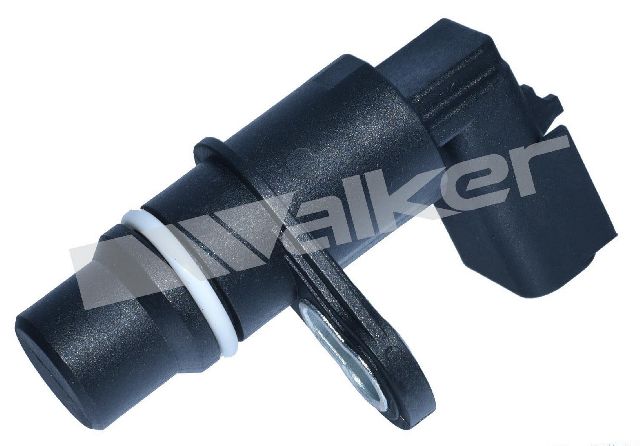
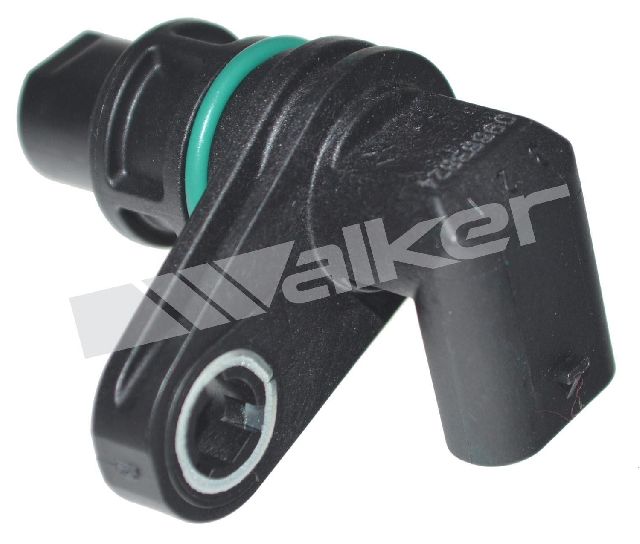
(OEM #68526830AB (replaces 5093101aa, 5179099aa, 5179099ab, 68526830aa))— This sensor's failure is a common root cause when U1428 appears with P0335/P0339, as its faulty signal leads to an incorrect torque calculation.
Trusted brands: Mopar, Cummins
OEM price range: $170-$245
Aftermarket price range: $30-$90 - Crankshaft Position Sensor (5.7L & 6.4L Hemi)
(OEM #68477925AB (replaces 68140678ab, 68140678ac))— This sensor's failure is a common root cause when U1428 appears with P0335/P0339 on Hemi-equipped trucks.
Trusted brands: Mopar, Bosch, Delphi
OEM price range: $75-$115
Aftermarket price range: $30-$70
Related Codes That Often Appear With This One
- P0335 — This code for the Crankshaft Position Sensor circuit often points directly to the root cause of the bad data that triggers U1428.
- P0339 — Similar to P0335, this code indicates an intermittent signal from the Crankshaft Position Sensor, a very common cause for the U1428 fault.
- P1DD2 — This code means 'Torque Request Signal From TCM Denied' and is often set alongside U1428, indicating the PCM and TCM are not agreeing on the torque signal. A software update often fixes both codes.
- P2173 — This code for 'Throttle Actuator Control System - High Airflow Detected' can sometimes appear with U1428, pointing to a disagreement between expected and actual engine airflow, which can corrupt the torque calculation.
- P0562 — This code for 'System Voltage Low' is a strong indicator that a weak battery or charging system issue is the true root cause of the U1428 communication fault.
Technical Service Bulletins (TSBs) & Recalls
- TSB 18-091-19: While for a Jeep Compass, it shows an FCA-wide pattern of using a PCM software update to fix U1428 and P1DD2.
- TSB 18-076-20 Rev. A: Issued for Ram 1500 models, this TSB addresses code P0339 with a PCM software update, which in turn resolves the resulting U1428.
Platform-Specific Known Issues
- Owner Fix: CPS Replacement Solves U1428, P0335, P0339: On RamForum.com, a 2019 Ram 1500 Classic owner reported a sudden rough start, limp mode, and codes U1428, P0335, and P0339. After being quoted a long diagnostic time at the dealer, the owner opted to replace the Crankshaft Position Sensor (CPS) with an aftermarket part from a local store. The replacement immediately fixed the long crank, rough idle, and limp mode. After clearing the codes and a short drive cycle, all codes remained clear, and the truck ran like new. Other forum members chimed in to strongly recommend using only OEM Mopar sensors for long-term reliability.
- Owner Experience: Weak Battery Triggers Multiple Codes: In a thread on RamForum.com, an owner of a 2020 Ram 1500 experienced limp mode with codes U1428 and P2173. A responding user noted that Ram trucks are 'friggin power magnets' and are well-known to develop problems from a weak battery, which can generate numerous codes related to low voltage. Another user confirmed that even a brand new battery should be load-tested, as a single flaky cell can cause 'endless grief' in modern trucks.
Mechanic-Grade Diagnostic Values
- CAN Bus Network Integrity Resistance — expected: Approximately 60 Ohms (53.5 to 67 Ohms is an acceptable range).. Failure: A reading of ~120 Ohms indicates a missing termination resistor or a break in one of the CAN lines. A reading below 53.5 Ohms suggests a short between the CAN high and low circuits.
- ABS Module Fused Power — expected: Battery voltage (12.6V+ with engine off).. Failure: No voltage indicates a blown fuse or wiring issue.
- Crankshaft Position Sensor Air Gap (Aftermarket Parts) — expected: No physical contact with the flexplate/flywheel.. Failure: A tapping noise, or visible grooves worn into the tip of the sensor after removal. This indicates the sensor is too long and making contact, which will lead to signal failure.
Scan Tool Commands That Help
- wiTECH / AlfaOBD: ABS Brake Bleed / ABS Initialization — This is a mandatory procedure after replacing the ABS Hydraulic Control Unit (HCU) or the ABS module itself. The scan tool command activates the ABS pump and solenoids to purge air from the internal passages, which cannot be done with a manual bleed alone.
- wiTECH: Network Test (Bus Diagnostics) — This function is used to poll all modules on the CAN bus and report their communication status. It's a primary step for any U-code diagnosis to quickly identify which module is not responding or is setting communication faults.
- wiTECH: ECU Reflash / Reprogramming — Used to install updated software on control modules like the PCM, TCM, or ABS. This is a common fix for U1428 when caused by overly sensitive factory software logic, as documented in various FCA TSBs.
- wiTECH: Mismatched VIN Reset / Module Programming — If a used ABS module is installed, it will contain the VIN from the donor vehicle, setting a 'Mismatched VIN' code (like code 84 reported in one case). The dealer tool is required to reprogram the replacement module with the correct VIN from your truck.
Wiring & Ground Locations
- ABS Module & Hydraulic Control Unit (HCU) — Located in the driver's side front wheel well, behind the fender liner.. The ABS module is a primary recipient of the engine torque signal and a common source of communication faults. Its location exposes its connector to moisture and corrosion, which can disrupt CAN bus signals and trigger U1428.
- ABS Module Fuses — In the Power Distribution Center (main fuse box) under the hood, next to the battery on the driver's side. Key fuses are F06, F26, and F76.. A loss of power to the ABS module due to a blown fuse will cause it to stop communicating, which can lead to other modules, like the PCM, setting U-codes.
- Critical Engine Ground Splice (Cummins) — A black/tan 8-gauge wire inside a 1" plastic conduit running along the front of the engine. It connects the grounds for the PCM and other critical sensors before terminating at the passenger side (auxiliary) battery negative terminal.. Corrosion or looseness at this critical splice or its final ground point can introduce electrical noise and unstable voltage, directly impacting the PCM's ability to send clear signals and causing network codes like U1428.
Real Owner Repair Stories
- RamForum.com user (2019 Ram 1500 Classic (similar platform/electronics)) — Sudden rough start, limp mode (won't exceed 35-40 mph), Check Engine Light on, Traction Control light on. Codes P0335, P0339, and U1428 present.
❌ Tried (didn't work) Visual inspection of wiring showed no damage.
✅ What actually fixed it Replaced the Crankshaft Position Sensor (CPS) with an aftermarket part from AutoZone for around $100. After clearing the codes, the truck started and ran normally, and the codes did not return. - dodgetalk.com forum user (1997 Dodge Ram 2500 5.9L) — Truck would intermittently cut off and fail to start. After replacing the CPS with an Advance Auto part, the truck ran for two weeks and then the same no-start issue returned.
❌ Tried (didn't work) Replacing the PCM., Replacing the Automatic Shutdown (ASD) relay., Replacing the Crankshaft Position Sensor with a non-OEM part from an auto parts store.
✅ What actually fixed it The consensus from other forum members was that Chrysler/Dodge electronics of this era are notoriously picky about sensors. The final fix recommended by multiple users was to replace the aftermarket CPS with a genuine OEM Mopar sensor, as aftermarket versions are a very common cause of repeat failures. - YouTube - MKS Custom Works LLC (2018 Ram 2500) — Intermittent 'Service ABS System' warning on the dash.
❌ Tried (didn't work) Testing the ABS motor with a 9V battery showed it was functional, but the problem was internal to the HCU.
✅ What actually fixed it The Hydraulic Control Unit (HCU) was replaced. The video notes that for 2017-2018 models, the original part number ending in 'AA' is often defective and should be replaced with the updated part number ending in 'AB'. After replacement and performing an ABS bleed procedure with the AlfaOBD scan tool, the issue was resolved.
OEM Part Supersession History
5093101aa, 5179099aa, 5179099ab, 68526830aa→68526830AB— Standard part revision and consolidation over model years.
Heads up: This is the correct sensor for 2003-2018 Ram trucks with the 5.9L or 6.7L Cummins engine.68143491AA (ABS/HCU Combo for 2017-2018)→Part number ending in 'AB' is the corrected version.— The 'AA' version of the Hydraulic Control Unit (HCU) is noted by owners to be a common failure point.
Heads up: When replacing the HCU on a 2017-2018 model, ensure the replacement part number ends in 'AB' or later to avoid installing another failure-prone unit.
Model Year Variations Within This Range
- 2017-2018: These model years are particularly known for failures of the ABS Hydraulic Control Unit (HCU). The original part (often ending in 'AA') is known to be defective and was superseded by an updated part (ending in 'AB'). Failure of this unit can cause a host of ABS and communication codes.
Diagnostic Flowchart
Other Known Issues on This Vehicle
Issues unrelated to this code that are worth knowing about as an owner of this generation:
- Death Wobble 🔴 High — Common on trucks with solid front axles, especially after hitting a bump at highway speeds. Worsens with worn suspension components or larger tires.
- Grid Heater Bolt Failure (6.7L Cummins) 🔴 High — A bolt on the intake grid heater can break off and fall into the engine, causing catastrophic damage. It can happen at any mileage but is a known risk from 2007.5-2024 models. (Ref: Recall Y08/Y76 for 2021-2022 models addresses a related relay issue but not the bolt failure itself.)
- Broken Exhaust Manifold Bolts (Hemi & Cummins) 🟠 Medium — Commonly reported issue causing an exhaust leak tick, especially when the engine is cold.
- Premature Turbo Actuator/Sensor Failure (6.7L Cummins) 🟠 Medium — Failures of electronic sensors and actuators on the variable geometry turbo (VGT) are common, leading to loss of power and check engine lights.
- Faulty ABS / Hydraulic Control Unit (HCU) 🔴 High — Particularly noted on 2018 models, failure can lead to loss of ABS and stability control, sometimes causing braking system issues.
Used vs. New Parts: Buying Guide for This Vehicle
When a used part is the smart pick: Used (salvage) parts can be a cost-effective option for mechanical components or body parts. For this specific code, a used ABS module/HCU assembly might be considered, but it comes with significant risks and requirements.
Donor-vehicle mileage cap: roughly under 80000 miles for the part to have meaningful remaining life.
What to inspect on the donor part:
- For an ABS module, inspect the connector pins for any signs of corrosion (green or white powder). Do not buy if corrosion is present.
- Verify the donor vehicle was not in a flood or major front-end collision.
- Ask for the donor vehicle's VIN. You will need it to verify compatibility and may need it for reprogramming.
OEM-only on this vehicle (don't cheap out):
- Crankshaft Position Sensor: Forum consensus across multiple FCA platforms is overwhelming. Aftermarket crankshaft sensors are a very common cause of repeat failures, intermittent no-starts, and incorrect signals. Use only genuine Mopar or a direct Cummins part to avoid repeat repairs.
- Control Modules (PCM, ABS): While a used module can work, it will require VIN programming with a dealer-level scan tool (like wiTECH) to function correctly and avoid setting 'Mismatched VIN' codes. The cost of this programming can negate the savings of a used part.
Aftermarket brands forum-validated for this vehicle:
- For batteries, brands like Interstate and Odyssey are well-regarded alternatives to Mopar.
- For sensors, if OEM is not an option, Delphi is sometimes cited as a more reliable aftermarket choice than store brands.
Brands owners have reported issues with on this vehicle:
- Generic 'white box' or store-brand crankshaft position sensors (e.g., from AutoZone, O'Reilly's) are frequently reported to fail quickly or be dimensionally incorrect for this application.
Real Owner Stories
Aggregated from forums and TSBs cited above. Mileages and costs reflect what owners reported in those sources.
2019 Ram 1500 Classic
Symptoms: Sudden rough start, limp mode, long crank, and rough idle with codes U1428, P0335, and P0339.
What fixed it: Replacement of the Crankshaft Position Sensor (CPS).
Source hint: RamForum.com Thread: 'P0335, P0339, U1428 Limp Mode, Power Loss, Hard Start'
2020 Ram 1500
Symptoms: Vehicle entered limp mode with codes U1428 and P2173 stored.
What fixed it: Addressing a weak battery; the discussion noted that even a new battery with a flaky cell can cause these communication codes.
Source hint: RamForum.com Thread: '2020 Ram with U1428 and P2173 codes'
Ram 2500 6.4L Hemi
Symptoms: Engine stalling and a 'Service Electronic Throttle' message on the dashboard accompanied by code P0335.
What fixed it: Replacing the crankshaft position sensor (CPS) rather than the throttle body.
Source hint: RamForum.com Thread: 'P0335 HELP'
Related OBD-II Codes
Frequently Asked Questions
My 2013-2018 Ram 2500 diesel has two batteries; do I need to test them both for a U1428 code?
Is there a specific TSB for the U1428 code on Ram trucks?
Should I use an aftermarket Crankshaft Position Sensor to fix the limp mode on my Ram 2500?
Can a bad battery really cause 'Service Electronic Stability Control' and 'Service Electronic Braking System' messages?
What tool is needed to check if my Ram's PCM needs a software flash for U1428?
We Have This Part in Stock


The information in this article is provided for general reference and educational purposes only. Vehicle specifications, procedures, and part compatibility can vary by production date, trim level, and region. Always consult your vehicle's factory service manual and verify part numbers before purchasing or performing repairs. Safety-critical components such as airbags, seat belts, and braking systems should be installed by a qualified professional.
- Ram 2500:
- 🛍️ Shop This Part
- What's Unique About the 2013-2018 Ram 2500
- Symptoms You May Notice
- Most Likely Causes
- Rare But Worth Checking
- Diagnosis Steps
- Parts You'll Likely Need
- Related Codes That Often Appear With This One
- Technical Service Bulletins (TSBs) & Recalls
- Platform-Specific Known Issues
- Mechanic-Grade Diagnostic Values
- Scan Tool Commands That Help
- Wiring & Ground Locations
- Real Owner Repair Stories
- OEM Part Supersession History
- Model Year Variations Within This Range
- Diagnostic Flowchart
- Other Known Issues on This Vehicle
- Used vs. New Parts: Buying Guide for This Vehicle
- Real Owner Stories
- 2019 Ram 1500 Classic
- 2020 Ram 1500
- Ram 2500 6.4L Hemi
- Related OBD-II Codes
- Frequently Asked Questions
- 🎟️ Get 5% Off