

U1428 on 2018-2026 Jeep Wrangler: Inaccurate Engine Torque Causes and Fixes
On a 2018-2026 Jeep Wrangler, code U1428 is almost always caused by a weak battery (main or auxiliary) or outdated control module software. The vehicle may enter a dangerous 'limp mode.' Before any major repairs, have both batteries load tested. Many owners bypass the problematic auxiliary battery as a long-term solution.
- U1428 is a serious code on a Wrangler that can cause a dangerous 'limp mode' and should be addressed immediately.
- The most likely cause is not a major mechanical part, but rather a weak main or auxiliary battery. The auxiliary battery is a particularly common failure point.
- Always have both batteries professionally load-tested before authorizing any expensive repairs.
- If the batteries are good, the next most likely cause is a software bug that requires a dealer to update the PCM or TCM.
- Many owners proactively bypass the failure-prone auxiliary battery as a preventative measure.
What's Unique About the 2018-2026 Jeep Wrangler
Like many modern Jeeps, the Wrangler JL/JLU generation (2018+) uses a dual-battery system (main and auxiliary) for its Engine Start-Stop (ESS) functionality. These control modules are highly sensitive to voltage, and a failing auxiliary battery is a very common trigger for network communication codes like U1428, even if the vehicle still starts normally. The auxiliary battery often fails within 2-4 years, draining the main battery and causing a cascade of electronic faults. This often leads to misdiagnosis where mechanics might suspect a bad module, when the root cause is simply unstable voltage from a failing battery.
Symptoms You May Notice
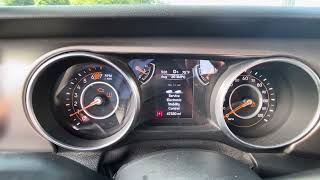
- Sudden loss of acceleration (Limp Mode) 🎬 Watch: Common causes and symptoms of limp mode explained
- Vehicle stuck in a single gear
- Check Engine Light (Malfunction Indicator Lamp) is on
- Electronic Throttle Control (lightning bolt) light may be on
- Flashing odometer (a sign of network communication loss)
- Start/Stop system may be unavailable or a 'Service Start/Stop System' message appears.
- Multiple, seemingly unrelated warning lights (ABS, Traction Control)
- Remote start may not work.
- Replacing the transmission or torque converter when the issue is electrical.
- Replacing the PCM or TCM before verifying battery health and software versions.
- Replacing only the main battery without testing or replacing the often-failing auxiliary battery.
Most Likely Causes
- Weak or Failing Battery (Main and/or Auxiliary) 🔴 High Probability The dual-battery system adds complexity. The smaller auxiliary battery often fails first (typically in 2-4 years) and can cause system-wide voltage instability, triggering communication faults between modules that are sensitive to low voltage. A failing aux battery can also drain the main battery overnight.
How to confirm: Use a professional battery tester that can load test both the main (large) and auxiliary (small) batteries independently. A simple voltage check is not sufficient. The auxiliary battery is located under the main fuse box (PDC) and can be difficult to access.
Typical fix: Replace the failing battery or batteries. Both should be replaced if they are of similar age. Many owners opt to perform an 'auxiliary battery bypass' by removing fuse F42 and disconnecting the auxiliary battery's negative terminal, which is a well-documented unofficial fix in owner forums.
Est. part cost: $100-$450 - Outdated Powertrain or Transmission Control Module Software 🟡 Medium Probability Manufacturers often release software updates to fix bugs that cause false diagnostic codes. TSB 18-091-19 was released for other Jeep models to address U1428, indicating a history of software-related fixes for this issue. TSB 18-037-21 also involves a PCM flash for 2019 JLs with the 2.0L engine for other DTCs, showing software updates are common.
How to confirm: A Jeep dealership or a qualified shop with a subscription to OEM service information (using a tool like wiTECH) can check the current software calibration level of the PCM and TCM against the latest available versions.
Typical fix: Flash the respective control module (PCM or TCM) with the latest manufacturer software. This is a dealer or specialty shop repair.
Est. part cost: $0 - Poor Electrical Connection or Ground ⚪ Low Probability Wranglers are often subjected to off-road conditions, vibrations, and aftermarket modifications, which can lead to loosened ground straps or corroded connectors over time. A bad ground can cause a cascade of communication codes.
How to confirm: Visually inspect and physically check all major ground straps between the engine, body, and frame. Check the main connectors at the PCM and TCM for corrosion or damage. Forum users often point to checking common ground points as a key step when multiple codes appear.
Typical fix: Clean, tighten, or repair the affected ground strap or connector.
Rare But Worth Checking
- Failing Powertrain Control Module (PCM) or Transmission Control Module (TCM): While possible, module failure is rare. This should only be considered after all software, battery, and wiring issues have been definitively ruled out.
Diagnosis Steps
- Scan for all diagnostic trouble codes in all modules.
- If codes P1DD2 or P0562 are present, prioritize battery testing.
- Professionally load test both the main and auxiliary batteries. Replace if either fails the test. Be aware that accessing the auxiliary battery requires removing the fuse box.
- If batteries are healthy, clear the codes and perform a test drive to see if they return.
- If codes return, check for any available Technical Service Bulletins (TSBs) related to U1428 or software updates for the PCM and TCM.
- Have a dealership or qualified shop check the software versions and update them if a newer version is available.
- Inspect all main battery cables, ground straps, and module connectors for tightness and corrosion.
- Consider the popular 'auxiliary battery bypass' mod documented on forums like jlwranglerforums.com, which involves pulling fuse F42 and disconnecting the aux battery negative lead. 🎬 See how to easily isolate and bypass your auxiliary battery
- If all other steps fail, perform advanced diagnostics on the CAN bus network wiring and consider the possibility of a failing control module.
Parts You'll Likely Need
- Auxiliary Battery
(OEM #BBAUX101AB (replaces bbaua180aa, bbaua200aa, etc.), 68647042AA (for 2024+ models), 56029759AB)— The smaller auxiliary battery for the start-stop system is a frequent failure point and a primary cause of voltage-related communication codes like U1428.
Trusted brands: Mopar, Deka, ACDelco
OEM price range: $120-$180
Aftermarket price range: $80-$150 - Main AGM Battery — The main vehicle battery can also be the cause. If it fails a load test, it must be replaced. Many owners upgrade from the stock H6 size to a larger H7 size for better capacity.
Trusted brands: Mopar, Odyssey, NorthStar, Everstart Platinum (Walmart)
OEM price range: $250-$350
Aftermarket price range: $200-$300
Related Codes That Often Appear With This One
- P1DD2 — This code means 'Torque Request Signal From TCM Denied' and is often set along with U1428, as they represent the two sides of the same communication failure between the PCM and TCM.
- P0562 — This code for 'System Voltage Low' strongly points towards a weak or failing battery being the root cause of the U1428 communication error.
Technical Service Bulletins (TSBs) & Recalls
- NHTSA TSB 18-091-19: While for the Jeep Compass, this TSB shows a history of FCA using software updates to fix DTC U1428 and P1DD2, which cause limp mode.
- NHTSA TSB 18-037-21: This TSB involves a PCM software update for the 2019 Jeep Wrangler with the 2.0L engine to address various other DTCs, demonstrating that software flashes are a common repair procedure for this platform.
- Manufacturer Service Bulletin #1808222: This cross-model bulletin notes that U1428 (Inaccurate Engine Torque Received) can be accompanied by long engine cranking and the vehicle entering limp home mode.
Platform-Specific Known Issues
- Auxiliary Battery Bypass/Delete: Due to the high failure rate of the auxiliary battery, a large community of owners has developed a simple modification to bypass it entirely. This involves pulling the F42 fuse from the Power Distribution Center and disconnecting the negative sense cable from the auxiliary battery. This prevents the system from looking for the aux battery and relies solely on the main battery, eliminating a major failure point. This is a very common topic on forums like jlwranglerforums.com.
Mechanic-Grade Diagnostic Values
- CAN C Bus Network Resistance — expected: ~60 Ω (measured between Pin 6 and Pin 14 of the OBD-II port with battery disconnected).. Failure: A reading of ~120 Ω indicates an open circuit or a faulty terminating resistor in one of the modules. A reading near 0 Ω indicates a short between the CAN high and low wires.
- CAN C Bus Voltage (Key On, Engine Off) — expected: CAN High (Pin 6) should be ~2.7V and CAN Low (Pin 14) should be ~2.3V. The two voltages should add to approximately 5V.. Failure: Voltages stuck high, low, or not mirroring each other suggest a short to power/ground or a faulty module pulling the bus down.
- Battery Voltage During Module Flashing — expected: Stable voltage between 13.2 V and 13.5 V, maintained by a high-quality battery charger.. Failure: Voltage dropping below 13.2V or spiking above 13.5V can interrupt the flash process, potentially corrupting the module.
- Battery Resting Voltage (Main & Auxiliary) — expected: Greater than 12.4V after the vehicle has been off for several hours.. Failure: A resting voltage below 12.4V indicates a discharged or failing battery. A load test is required for definitive diagnosis.
Scan Tool Commands That Help
- wiTECH 2.0: Vehicle Topology / Network Test — This is the first step after reading DTCs. The topology view color-codes all modules on the network, showing which are communicating, which have DTCs, and which are offline. It provides an instant health check of the entire CAN bus network.
- wiTECH 2.0: Reprogram PCM / Restore Vehicle Configuration — Used to flash the Powertrain Control Module with updated software to fix known bugs, as specified in TSBs. 'Restore Vehicle Configuration' is used after module replacement or if data corruption is suspected, to ensure all modules are synchronized.
- wiTECH 2.0: IBS Reset / Power Reboot — If an Intelligent Battery Sensor (IBS) fault is suspected (DTC B2193 or U113E), or after replacing batteries, an IBS reset can be performed. This often involves disconnecting the IBS connector for several minutes to force a reboot and relearn of the battery's state of charge.
Wiring & Ground Locations
- G901A / G902A — Located on the body sheet metal near the main and auxiliary batteries in the engine compartment.. These are the primary ground points for the battery system. Corrosion or looseness here can cause system-wide voltage instability, directly leading to communication codes like U1428.
- G906A / G906B — Located behind the dashboard, typically near the driver's side kick panel area.. These are major ground points for many interior modules, including potentially the Body Control Module (BCM) and Instrument Panel Cluster (IPC). A fault here can disrupt CAN bus communication.
- CAN-C Star Connector (CS-CIP) — Located behind the glove box. The glove box must be lowered or removed to access it.. This is a central hub where multiple CAN bus lines converge. A poor connection or internal fault in this star connector can cause intermittent communication loss between multiple modules, generating a storm of U-codes, including U1428.
- PCM/TCM Connectors — The PCM is located in the engine bay, typically on the driver's side firewall. The TCM is often integrated with the valve body inside the transmission or mounted externally on the transmission case.. The U1428 code is a direct communication error between these two modules. Checking the connector pins for corrosion, damage, or pushed-out pins is a critical step after ruling out batteries and software.
Real Owner Repair Stories
- jlwranglerforums.com user (2020 Jeep Wrangler JLUR 3.6L) — Vehicle threw a dozen seemingly unrelated codes at once, including U1428, P2174, C121C, and C2227, and went into limp mode.
❌ Tried (didn't work) Clearing the codes (they returned immediately).
✅ What actually fixed it The consensus from experienced forum members was that a simultaneous failure of multiple modules is nearly impossible. The root cause was identified as a core electrical system failure. The owner replaced both the main and auxiliary batteries, which resolved all the codes. Other users in the same thread confirmed they had replaced their batteries twice in two years to solve similar electrical issues. - jlwranglerforums.com user (2018 Jeep Wrangler Unlimited Sport 2.0L with 46k miles) — Loud fan, temp gauge spiking, multiple warnings including Electronic Stability Control, Start/Stop not available, and Throttle Stability control. Vehicle enters limp mode. Multiple codes including U1428, U1424, P2173.
❌ Tried (didn't work) Dealer performed a pressure test and replaced a lower radiator hose (did not fix)., Dealer performed a power steering recall software update (did not fix)., Dealer claimed to have tested both batteries and said they were fine., Dealer then diagnosed a leak in the EGR tube and said the part was backordered.
✅ What actually fixed it The forum community strongly suspected failing batteries despite the dealer's claim they were 'fine'. The combination of multiple, unrelated electronic faults is a classic symptom of a failing battery system on the JL platform. The user was advised to get a second opinion and have the batteries properly load tested, as this was the most likely root cause.
Documented NHTSA Reports
- An owner reported in NHTSA ODI #11638410 that their vehicle stalled on the highway; using a diagnostic tool, they retrieved codes U1428 and D2171 before restarting and continuing.
- According to NHTSA ODI #11617731, an owner found codes P1DD2 and U1428 displayed after warning lights appeared, leading them to research potential manufacturer recalls for these specific faults.
- In NHTSA ODI #11424210, a driver experienced the vehicle turning off on its own with codes P2172 and U1428, suspecting a throttle body issue similar to recalls on other Jeep models.
OEM Part Supersession History
bbaua180aa, bbaua200aa→56029759AB, BBAUX101AB— Standard part evolution and supplier changes for the auxiliary battery used in 2018-2023 models.56029759AB→68647042AA— The auxiliary battery system was redesigned for the 2024 model year refresh. The new part is not backward compatible.
Heads up: Part 68647042AA is for 2024+ models only and will not work on 2018-2023 Wranglers. Conversely, older part numbers will not work in 2024+ models.
Model Year Variations Within This Range
- 2018-2023: These models use the traditional dual-battery setup where a smaller 12V AGM battery is located under the Power Distribution Center (fuse box) and is a very common failure point leading to U1428.
- 2024+: Starting with the mid-cycle refresh, the auxiliary battery system was changed. While still serving the ESS, the physical battery and its integration are different (PN 68647042AA). While it can still fail, the specific part and replacement procedure differ from earlier JL models.
- All years with 2.0L eTorque: Models with the eTorque mild-hybrid system do not have the small 12V auxiliary battery. Instead, they use a 48V lithium-ion battery pack for ESS functions. While a failure in this 48V system can also cause electrical issues, the diagnosis and parts involved are completely different from the standard 3.6L V6 dual-battery setup.
Diagnostic Flowchart
Other Known Issues on This Vehicle
Issues unrelated to this code that are worth knowing about as an owner of this generation:
- Frame Weld Quality and Track Bar Bracket Failure 🔴 High — Most common on early production 2018-2019 models. A recall (NHTSA ID: 18V-636, FCA UA5) was issued for the track bar bracket weld. General weld porosity and quality concerns were also widely reported. (Ref: Recall 18V-636 (FCA UA5))
- Steering Wander / Loose Steering Feel 🟠 Medium — Widespread issue on 2018-2020 models, often attributed to a faulty aluminum steering gear box. A TSB was issued, but repairs outside of warranty can be costly. Multiple recalls also exist for related steering components on limited numbers of vehicles. (Ref: TSB S1819000004, Recall U48 (NHTSA 18V-343))
- Premature Auxiliary Battery Failure 🔴 High — Extremely common across all model years. The small auxiliary battery for the Engine Start-Stop (ESS) system often fails within 2-4 years, causing a cascade of electrical issues and no-start conditions.
- Clutch Pressure Plate Overheating (Manual Transmission) 🔴 High — Affects 2018-2023 models with manual transmissions. The clutch pressure plate can overheat and fracture, posing a fire and debris hazard. (Ref: Recall 23V-116)
- Instrument Panel Cluster Failure 🟠 Medium — A recall was issued for 2018-2024 models where an internal short circuit could cause the entire instrument cluster to fail, losing speedometer and warning light displays. (Ref: Recall 24V-652)
Used vs. New Parts: Buying Guide for This Vehicle
When a used part is the smart pick: For this specific code, using used parts is almost never a smart choice. The primary causes are batteries, software, and wiring connectors. Used batteries are a significant gamble and not recommended. Used electronic modules (PCM, TCM) can be an option to save money, but they MUST be sourced from an identical vehicle (same year, engine, transmission, and options) and will still require dealer programming (wiTECH) to sync to the vehicle, which can be expensive and negate the savings.
Donor-vehicle mileage cap: roughly under 15000 miles for the part to have meaningful remaining life.
What to inspect on the donor part:
- For a module: Verify the part number is an exact match. Inspect connectors for any signs of corrosion, bent pins, or water intrusion. Ask for the VIN of the donor vehicle to verify its configuration.
- For wiring: Do not buy a cut harness. Inspect for any signs of abrasion, melting, or improper repairs (e.g., Scotch-Loks, twisted wires with tape).
OEM-only on this vehicle (don't cheap out):
- Auxiliary Battery: Due to the high failure rate and system sensitivity, using a new, high-quality OEM (Mopar) or OEM-equivalent (Deka) battery is strongly recommended.
- CAN-C Star Connector: This is an inexpensive plastic part. Given the labor to access it, buying a new OEM part is the only logical choice to ensure a good connection.
Aftermarket brands forum-validated for this vehicle:
- Main Battery: Odyssey, NorthStar, and some Everstart Platinum (Walmart) models are often cited by owners as reliable upgrades over the stock battery.
- Auxiliary Battery: Deka is often the manufacturer for the Mopar-branded battery and is a trusted alternative.
Brands owners have reported issues with on this vehicle:
- Unknown/cheap off-brand batteries: The voltage sensitivity of the Wrangler's network makes using a low-quality battery a recipe for recurring electrical problems.
Real Owner Stories
Aggregated from forums and TSBs cited above. Mileages and costs reflect what owners reported in those sources.
2018-2026 Jeep Wrangler (JL)
Symptoms: The vehicle experienced a sudden loss of acceleration (Limp Mode) and multiple warning lights appeared on the dashboard simultaneously.
What fixed it: The owner performed a 'jumperless' auxiliary battery bypass by pulling fuse F42 and disconnecting the negative sense cable from the auxiliary battery to prevent the system from looking for the failing battery.
Source hint: jlwranglerforums.com: Jumperless Aux Battery Bypass
2018-2026 Jeep Wrangler (JL)
Symptoms: A long list of codes including U1428 appeared after the vehicle entered limp mode. The owner was concerned about multiple component failures.
What fixed it: The community identified the issue as a core electrical problem, recommending a check of the battery health and common ground points rather than replacing individual sensors.
Source hint: jlwranglerforums.com: URGENT: NEED HELP WITH CODES
2019 Jeep Wrangler 2.0L
Symptoms: The vehicle exhibited various diagnostic trouble codes (DTCs) related to the powertrain control module.
What fixed it: A PCM software update (flash) was performed as outlined in manufacturer service procedures to address software-related diagnostic bugs.
Source hint: NHTSA TSB 18-037-21
Related OBD-II Codes
Frequently Asked Questions
How can I tell if my 2018-2026 Jeep Wrangler's U1428 code is caused by the auxiliary battery?
Is there a way to bypass the auxiliary battery on my JL Wrangler to stop these communication codes?
Does TSB 18-091-19 apply to my Jeep Wrangler for code U1428?
Why is my odometer flashing along with the U1428 code?
Where is the auxiliary battery located on the 2018+ Wrangler (JL)?
Can a bad ground cause U1428 on my Wrangler?
Helpful Videos
We Have This Part in Stock



The information in this article is provided for general reference and educational purposes only. Vehicle specifications, procedures, and part compatibility can vary by production date, trim level, and region. Always consult your vehicle's factory service manual and verify part numbers before purchasing or performing repairs. Safety-critical components such as airbags, seat belts, and braking systems should be installed by a qualified professional.
- Jeep Wrangler:
- 🎬 Helpful Videos
- 🛍️ Shop This Part
- What's Unique About the 2018-2026 Jeep Wrangler
- Symptoms You May Notice
- Most Likely Causes
- Rare But Worth Checking
- Diagnosis Steps
- Parts You'll Likely Need
- Related Codes That Often Appear With This One
- Technical Service Bulletins (TSBs) & Recalls
- Platform-Specific Known Issues
- Mechanic-Grade Diagnostic Values
- Scan Tool Commands That Help
- Wiring & Ground Locations
- Real Owner Repair Stories
- Documented NHTSA Reports
- OEM Part Supersession History
- Model Year Variations Within This Range
- Diagnostic Flowchart
- Other Known Issues on This Vehicle
- Used vs. New Parts: Buying Guide for This Vehicle
- Real Owner Stories
- 2018-2026 Jeep Wrangler (JL)
- 2018-2026 Jeep Wrangler (JL)
- 2019 Jeep Wrangler 2.0L
- Related OBD-II Codes
- Frequently Asked Questions
- 🎟️ Get 5% Off