

U1000 on 2007-2017 Mitsubishi Lancer: CAN Communication Failure Causes and Fixes
Code U1000 on a 2007-2017 Mitsubishi Lancer means there's a communication breakdown on the vehicle's internal network (CAN bus). Before suspecting expensive computers, check the battery first, as a weak battery is a very common cause. If the battery is good, the next most likely culprit is a failing ETACS-ECU (body control module), a known issue on this platform that was subject to a safety recall and is vulnerable to water damage.
- Code U1000 on a Lancer is a general network communication error, not a specific part failure.
- Always test the battery first. A weak battery is the most common and cheapest fix for this code.
- The ETACS-ECU (body control module) is a known weak point on this platform. If the battery is good and multiple electrical systems are failing, the ETACS is the primary suspect.
- Replacing the ETACS-ECU is not a DIY job for most people, as it requires professional programming to the car's VIN.
- Check for water leaks in the driver's footwell, as this is a common cause of ETACS failure.
What's Unique About the 2007-2017 Mitsubishi Lancer
The 2007-2017 Lancer platform is particularly susceptible to CAN communication issues stemming from its ETACS-ECU (the main body computer). This module was subject to a safety recall (SR-15-002) for 2009-2010 models due to a manufacturing defect causing high electrical resistance and voltage instability. Furthermore, water leaks into the driver's side footwell are known to cause corrosion and failure of the ETACS-ECU, leading to a cascade of communication codes like U1000. A faulty factory Bluetooth module is also a known source of parasitic battery drain, which can weaken the battery and trigger this code.
Symptoms You May Notice
- Check Engine Light is on
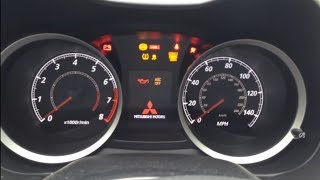
- Multiple warning lights illuminated at once (e.g., ABS, ASC, Airbag, Brake)
- Headlights, wipers, or power windows stop working or behave erratically.
- Climate control system is inoperative
- Transmission may be stuck in Park or go into limp mode
- Vehicle may have trouble starting or not start at all 🎬 Watch: Troubleshooting a Lancer that clicks but won't crank
- Aftermarket radio or head unit not functioning correctly
- Fuel pump does not prime (no sound from the rear seat when key is turned)
- Dome light flickers or does not work
- Fluctuating gauges, such as the odometer, RPM gauge, or temperature gauge, as noted in similar network failures (NHTSA ODI #11244385)
- Replacing random sensors or modules without performing a full network scan first. The U1000 code is a network-level fault; the root cause is often not the module that logged the code, but rather the module that went silent.
- Replacing the ECM/PCM. While a U0100 code might be present, the engine computer is rarely the cause of a general U1000 network failure on this platform compared to the ETACS-ECU.
Most Likely Causes
- Weak or Failing Battery 🔴 High Probability Low system voltage during startup is a primary trigger for communication codes on modern vehicles. A faulty factory Bluetooth module is a known cause of parasitic battery drain on this platform, leading to a weak battery.
How to confirm: Test the battery voltage with a multimeter. A healthy battery should read approximately 12.4-12.7 volts with the engine off, and should not drop below 10.5 volts while cranking. With the engine running, voltage should be around 14.0-14.5 volts.
Typical fix: Replace the vehicle's 12V battery. If a parasitic drain is suspected from the Bluetooth module, it can be disconnected (it is often located behind the glove box).
Est. part cost: $150-$250 - Failed ETACS-ECU (Body Control Module) 🔴 High Probability This module is a known failure point. A safety recall (SR-15-002) was issued for 2009-2010 models for internal defects causing voltage instability. It's also highly vulnerable to water damage from leaks in the driver's footwell area, leading to corrosion. Owners on forums frequently report these failures.
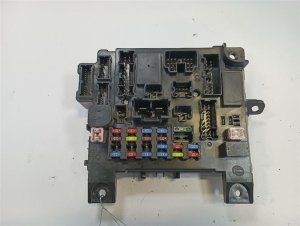
How to confirm: Use a professional scan tool to check for direct communication with the ETACS-ECU. If the module has proper power and ground at its connectors but does not respond (or sets codes like U0141), it has likely failed internally. Visually inspect the module (located behind the driver's side kick panel) for corrosion on the board or its connectors.
Typical fix: Replace the ETACS-ECU. This part is not plug-and-play; it must be programmed to the vehicle's VIN and specific options by a Mitsubishi dealer or a qualified independent shop with a M.U.T.-III or equivalent scan tool. Used units are available but risky due to potential water damage and programming needs. 🎬 Watch: Tips on diagnosing and fixing a faulty ETACS ECU
Est. part cost: $200-$500 (Used/Reman), $600+ (New) - Damaged Wiring or Poor Ground Connection 🟡 Medium Probability Vibrations, moisture, or previous repairs can lead to chafed CAN bus wires or corroded main ground points, disrupting network communication. The main ground points in the engine bay are common culprits. NHTSA ODI #10681194 notes that U1000 can specifically indicate a ground harness problem.
How to confirm: Visually inspect the main wiring harnesses for any signs of damage. Locate, clean, and tighten the main chassis and engine ground points. A multimeter can be used to check for continuity on the CAN bus wires between modules.
Typical fix: Repair the damaged section of the wiring harness. Clean corroded ground connections with a wire brush and ensure they are tight.
Est. part cost: $5-$50 (for repair materials) - Faulty Aftermarket Electronics ⚪ Low Probability Improperly installed aftermarket head units, alarms, or remote starters that tap into the CAN bus without a correct decoder can flood the network with bad data, causing communication errors.
How to confirm: If the issues started after installing an aftermarket part, temporarily disconnect it completely from the vehicle's wiring and see if the U1000 code disappears.
Typical fix: Remove the faulty component or replace it with one that uses a compatible, high-quality CAN bus adapter.
Est. part cost: $50-$200 (for a proper adapter)
Rare But Worth Checking
- Faulty ABS Module:
- Faulty Instrument Cluster: NHTSA ODI #10970695 describes a case where a failed instrument cluster caused a U1000 code and CAN system diagnosis failure because the cluster could not communicate mileage.
- Faulty Occupant Sensing System ECU (OSS-ECU):
- Transmission Control Module (TCM): As seen in NHTSA ODI #11461728, a U1000 code can be triggered by lost communication with the TCM, sometimes caused by the module overheating due to its physical location.
Diagnosis Steps
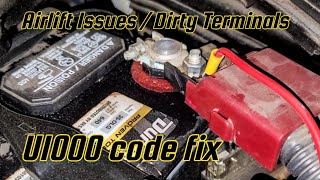
- Check Battery Health: Before any other step, verify the battery and charging system are working correctly. Ensure battery voltage is above 12.4V with the engine off and around 14V with the engine running. Clean terminals and check connections. 🎬 See how to clean battery terminals to resolve a U1000 code
- Perform a Full System Scan: Use a high-quality OBD-II scanner capable of reading manufacturer-specific codes from all modules (Engine, ABS, SRS, ETACS, etc.). Note all 'U' codes and identify which modules are not communicating. This is the most critical step.
- Check for Recalls and TSBs: Check for open recalls, especially SR-15-002 for the ETACS-ECU on 2009-2010 models. Also check for TSB-18-54-003, which involves reprogramming the ETACS for other electrical issues. NHTSA ODI #10169405 mentions that specific TSB procedures should be followed when a U1000 code is present, as it often relates to electrical and ground wire problems.
- Inspect for Water Intrusion: Carefully inspect the driver's side footwell and kick panel area for any signs of moisture, staining, or corrosion. The ETACS-ECU is located here and is highly susceptible to water damage.
- Inspect Fuses: Inspect all fuses related to the various control modules, particularly the ETACS, ECU, and IOD (Ignition Off Draw) fuses in both the interior and under-hood fuse boxes.
- Check Grounds: Locate and inspect the main engine-to-chassis and battery-to-chassis ground straps. Ensure they are clean, tight, and free of corrosion.
- Isolate the Faulty Module: If a specific module is suspected (e.g., the ETACS is offline), check for power and ground directly at the module's connector using a multimeter. If power and ground are present but the module is unresponsive, the module itself is the likely failure point.
- Test CAN Bus Integrity: This is an advanced step. Using a multimeter, check the CAN bus resistance at the OBD-II port (pins 6 and 14) with the battery disconnected. It should be approximately 60 ohms. Check for proper voltage on CAN High (pin 6, around 2.6V) and CAN Low (pin 14, around 2.4V) with the key on.
Parts You'll Likely Need
- ETACS-ECU (Body Control Module)
(OEM #8637A657, 8637A826, 8631B482 (Part number varies by year and options, must verify by VIN))— This is a known high-failure component on the 2007-2017 Lancer platform and is a primary cause of widespread communication faults.
Related Codes That Often Appear With This One
- U0141 — This code specifically means 'Lost Communication With Body Control Module (ETACS-ECU)'. If U1000 appears with U0141, it strongly points to the ETACS-ECU as the root cause of the network failure.
- U0100 — This code means 'Lost Communication with ECM/PCM'. This can appear alongside U1000 if the Engine Control Module is the source of the problem or is being affected by the network instability.
- U0121 — This code means 'Lost Communication with ABS Control Module'. If the ABS module fails or has a wiring issue, it can bring down the network and cause other modules to log a U1000 code.
- P0700 / U0073 — These codes may appear with U1000 during a loss of engine power or when Stabilitrak/traction control lights illuminate (NHTSA ODI #11244385).
Technical Service Bulletins (TSBs) & Recalls
- SR-15-002: Safety recall for ETACS-ECU on 2009-2010 Lancer and Outlander models due to manufacturing defects causing voltage instability and potential failure of lights and wipers.
- TSB-18-54-003: Instructs dealers to reprogram the ETACS-ECU with updated software to fix an issue with the dome light flickering. While not directly for U1000, it shows the ETACS is a known area for software updates.
- TSB-19-54-008: Updates service manual diagnostics for ETACS-ECU related CAN timeout code U0141, which is a companion code to U1000.
Platform-Specific Known Issues
- ETACS Water Damage Path: Water can leak past the windshield seal or through a clogged sunroof drain, running down the A-pillar and dripping directly onto the ETACS-ECU and fuse box located in the driver's side kick panel area. This is a primary cause of non-recall-related ETACS failure.
- ETACS Replacement and Coding: Replacing the ETACS is not a simple swap. The new module must be coded with the vehicle's original VIN and options data. An owner on MitsubishiForum detailed their extensive struggle with this, attempting to use tools like MMcoding writer and ETACS Decoder after a used module failed. They ultimately needed dealer-level tools (MUT-III) to properly program the unit.
Mechanic-Grade Diagnostic Values
- CAN Bus Resistance (at OBD-II Port) — expected: ~60 Ω. Failure: A reading of ~120 Ω indicates one of the two terminating resistors (usually in the ECM or ETACS-ECU) is offline. A reading near 0 Ω indicates a short between the CAN High and CAN Low wires.
- CAN High Voltage (Key On, Engine Off) — expected: ~2.5V to 3.5V (Dominant state). Failure: Voltage significantly outside this range, or stuck at a specific value, indicates a bus or module failure.
- CAN Low Voltage (Key On, Engine Off) — expected: ~1.5V to 2.5V (Dominant state). Failure: Voltage significantly outside this range, or stuck at a specific value, indicates a bus or module failure.
- ETACS-ECU Power Supply (at module connector) — expected: System Voltage (~12V). Failure: No voltage indicates a blown fuse or wiring issue upstream of the ETACS module.
- ETACS-ECU Ground (at module connector) — expected: < 2 Ω resistance to chassis ground. Failure: High resistance indicates a corroded or broken ground connection, a common cause of module malfunction.
Scan Tool Commands That Help
- Mitsubishi M.U.T.-III: CAN Bus Diagnosis — This function performs a roll-call of all modules on the network. It will display 'OK' for communicating modules and 'NC' (No Communication) for modules that are offline, quickly identifying the source of the U1000 code.
- Mitsubishi M.U.T.-III: Coding Information & Copy — Before replacing a failing but still partially communicating ETACS-ECU, this function must be used to copy the vehicle's specific coding (for options like keyless entry, auto headlights, etc.) from the old unit.
- Mitsubishi M.U.T.-III: On Vehicle Coding — After installing a new or used ETACS-ECU, this function is used to write the saved coding file (or a file obtained from the dealer via VIN) to the replacement module, making it operational for that specific vehicle.
- Mitsubishi M.U.T.-III: ECU Reprogramming (SDB) — Used to apply software updates to the ETACS-ECU, such as the one described in TSB-18-54-003, which fixes certain electrical glitches like flickering dome lights. This can sometimes resolve underlying software issues causing network instability.
Wiring & Ground Locations
- ETACS-ECU — Behind the driver's side kick panel, integrated into the interior fuse box/junction block.. This is the central hub for the CAN-B (Body) network and the gateway to other networks. Its location makes it vulnerable to water intrusion from a leaking windshield or sunroof drain, causing corrosion and failure.
- Main Engine Bay Grounds — Key ground points are located on the driver and passenger side strut towers, on the intake manifold, and from the negative battery terminal to the chassis.. Poor grounding for the ECM or other critical modules can cause voltage fluctuations that trigger communication codes. Cleaning and tightening these points is a crucial and easy first step.
- Connector C-301 — One of the main connectors for the ETACS-ECU.. This connector carries power, ground, and CAN bus signals to the ETACS. Corrosion or backed-out pins in this connector can cause a total loss of communication with the body control module.
- OBD-II Data Link Connector — Under the driver's side dashboard.. Pins 6 (CAN-H) and 14 (CAN-L) provide a direct access point for testing the resistance and voltage of the entire CAN network with a multimeter.
Real Owner Repair Stories
- YouTube user 'U1000 Code Fix | Cleaning Battery Terminals' (Modified Mitsubishi Lancer (year not specified, but within the 2007-2017 generation)) — U1000 code, aftermarket air suspension controller not powering on correctly.
❌ Tried (didn't work) Initial code scan pointed to a general CAN communication circuit failure.
✅ What actually fixed it The positive battery terminal was heavily corroded, causing a poor connection and insufficient voltage to the vehicle's modules. Thoroughly cleaning the battery terminals and posts with a wire brush and baking soda resolved the U1000 code and the related electrical issues. - NHTSA ODI #10681194 — An owner reported a U1000 code and a no-start condition. Despite attempting to jump-start the vehicle and cleaning the battery terminals on both sides, the issue persisted, leading the owner to conclude it was a ground harness problem.
Model Year Variations Within This Range
- 2009-2010: Models in these years were subject to safety recall SR-15-002 for an internal manufacturing defect in the ETACS-ECU that could cause high electrical resistance and voltage drops, directly leading to U1000 and other electrical failures.
- 2008-2017: TSB-18-54-003 was issued for a wide range of Lancers for a software issue in the ETACS-ECU causing dome light flickering. While not directly a U1000 fix, it shows that software updates for the ETACS are available and may resolve other instabilities. The procedure requires a dealer M.U.T.-III tool.
Diagnostic Flowchart
Other Known Issues on This Vehicle
Issues unrelated to this code that are worth knowing about as an owner of this generation:
- CVT Transmission Overheating, Hesitation, and Failure 🔴 High — Common across all model years with the CVT, particularly noticeable after 60,000-80,000 miles. Can be exacerbated by aggressive driving or lack of fluid changes. (Ref: Multiple TSBs (e.g., TSB-15-23-001, SC-15-003REV) and a class-action lawsuit address software updates, fluid changes, and premature wear.)
- AC Compressor Relay Failure 🟠 Medium — A very common issue where the AC blows cold intermittently or not at all. The relay, located in the under-hood fuse box, fails and prevents the AC compressor clutch from engaging. (Ref: TSB may exist for AC performance, but relay failure is a widely documented owner fix.)
- Premature Suspension Wear (Bushings and Links) 🟡 Low — Owners report clunking or knocking noises from the suspension, often caused by worn stabilizer bar links or control arm bushings, sometimes before 70,000 miles.
- Engine Noise and Timing Chain Stretch (4B11 Engine) 🟠 Medium — The 4B11 engine can be noisy, particularly on cold starts. Early model years (pre-2009/2010) were more prone to timing chain stretch, which can cause rattling and unstable operation. (Ref: An updated timing chain was made available for later models.)
- Clear Coat / Paint Chipping 🟡 Low — The factory paint, especially on the hood and front bumper, is widely reported to be soft and prone to chipping easily from road debris.
- Blower Motor Resistor/Motor Failure 🟠 Medium — Widespread problem where the HVAC fan only works on the highest setting or not at all. This is usually caused by a failed blower motor resistor, and in some cases, the blower motor itself. (Ref: A recall (SR-15-003) was issued for some model years for improperly manufactured blower motors.)
Used vs. New Parts: Buying Guide for This Vehicle
When a used part is the smart pick: A used ETACS-ECU can be a cost-effective option IF you have access to a Mitsubishi dealer or a specialized shop with a M.U.T.-III scan tool. The unit is useless without being reprogrammed to the car's VIN and options.
Donor-vehicle mileage cap: roughly under 100000 miles for the part to have meaningful remaining life.
What to inspect on the donor part:
- CRITICAL: Ask for photos of the donor vehicle's driver-side footwell. Do NOT buy a unit from a car with any signs of water leaks, staining on the carpet, or visible rust in that area.
- Verify the part number matches as closely as possible, though some are interchangeable. Cross-reference with a dealer parts department if possible.
- Ensure the seller guarantees the unit is functional and not from a flood-damaged vehicle.
OEM-only on this vehicle (don't cheap out):
- ETACS-ECU: While used OEM is an option, avoid aftermarket 'rebuilt' or 'remanufactured' ETACS units from unknown brands, as their quality and ability to be programmed are highly questionable. Stick to new or used OEM parts.
Brands owners have reported issues with on this vehicle:
- Generic, unbranded ETACS-ECU modules found on marketplaces like eBay or Amazon should be avoided. They often cannot be programmed correctly.
Real Owner Stories
Aggregated from forums and TSBs cited above. Mileages and costs reflect what owners reported in those sources.
2008-2015 Mitsubishi Lancer
Symptoms: Owner experienced a no-start condition and significant difficulty with module communication. Attempted to use MMcoding writer and ETACS Decoder to fix the issue after a used module failed to resolve the problem.
What fixed it: The vehicle required a dealer-level MUT-III scan tool to properly program the VIN and vehicle options into the ETACS-ECU.
Source hint: MitsubishiForum.com thread titled 'ETACS and ECU problems. Help is appreciated'
Documented NHTSA Reports
Network Communication Failures
Symptoms: Owners have reported a variety of symptoms when the U1000 code is present. One report (NHTSA ODI #11244385) describes a loss of engine power accompanied by the Stabilitrak and check engine lights, with gauges like the odometer and RPM behaving erratically. Another owner (NHTSA ODI #11461728) noted delayed shifting and the ATF light illuminating due to lost communication with the TCM.
Diagnostic Findings: In some instances, the U1000 code is specifically linked to ground harness problems (NHTSA ODI #10681194). Another investigation (NHTSA ODI #10970695) found that a failure in the instrument cluster could prevent the system from obtaining mileage data, triggering the U1000 code even when power and ground were present at the BCM.
Related OBD-II Codes
Frequently Asked Questions
Is there a recall for the ETACS-ECU on my 2010 Mitsubishi Lancer?
My dome light is flickering and I have a U1000 code; is there a specific fix for this?
Can I just swap in a used ETACS-ECU from a junkyard to fix the communication error?
Could my Bluetooth module be causing the battery drain that triggered my U1000 code?
Why did my Lancer's ETACS-ECU fail after a heavy rainstorm?
What should the CAN bus resistance be when testing for U1000 on a Lancer?
Helpful Videos
We Have This Part in Stock


The information in this article is provided for general reference and educational purposes only. Vehicle specifications, procedures, and part compatibility can vary by production date, trim level, and region. Always consult your vehicle's factory service manual and verify part numbers before purchasing or performing repairs. Safety-critical components such as airbags, seat belts, and braking systems should be installed by a qualified professional.
- Mitsubishi Lancer:
- 🎬 Helpful Videos
- 🛍️ Shop This Part
- What's Unique About the 2007-2017 Mitsubishi Lancer
- Symptoms You May Notice
- Most Likely Causes
- Rare But Worth Checking
- Diagnosis Steps
- Parts You'll Likely Need
- Related Codes That Often Appear With This One
- Technical Service Bulletins (TSBs) & Recalls
- Platform-Specific Known Issues
- Mechanic-Grade Diagnostic Values
- Scan Tool Commands That Help
- Wiring & Ground Locations
- Real Owner Repair Stories
- Model Year Variations Within This Range
- Diagnostic Flowchart
- Other Known Issues on This Vehicle
- Used vs. New Parts: Buying Guide for This Vehicle
- Real Owner Stories
- 2008-2015 Mitsubishi Lancer
- Documented NHTSA Reports
- Network Communication Failures
- Related OBD-II Codes
- Frequently Asked Questions
- 🎟️ Get 5% Off