

U1000 on 2011-2022 Ford Ranger: Meaning, Causes, and BCM Fixes
On a 2011-2022 Ford Ranger, U1000 means the Body Control Module (BCM) has shut down a circuit due to a short or overload. This is very often caused by a widespread internal failure of the BCM itself, especially on 2011-2019 (PX1/PX2) models and their Mazda BT-50 platform mate. The failure can be either software corruption or a hardware fault. The fix is typically to have the original BCM repaired and reset by a specialist service, which avoids costly reprogramming.
- U1000 on a Ford Ranger means the BCM has disabled a circuit (like headlights) to protect itself from a short.
- This code is very often caused by a known internal failure of the BCM itself, especially on 2011-2019 models.
- Always diagnose the companion code (e.g., a lighting circuit fault) first to check for external wiring shorts.
- If no external short is found and codes U1000/U3000 persist, the BCM needs to be repaired or replaced.
- Having the original BCM repaired by a specialist is often cheaper and easier than replacing it, as it avoids the need for reprogramming.
What's Unique About the 2011-2022 Ford Ranger

The Ford Ranger T6 platform, particularly from 2011 to 2019 (PX1 and PX2 series), is widely known for a common internal fault within the Body Control Module (BCM) that triggers the U1000 code. This fault can manifest as either software corruption or a physical component failure inside the BCM. Unlike many other vehicles where this code points to an external wiring short, on the Ranger it very frequently means the BCM itself has failed, sometimes triggered by voltage spikes from incorrectly installed aftermarket accessories like light bars. This leads to common symptoms like the complete loss of headlights ('headlight lockout') or wipers. As a result, many automotive electronics specialists like ECU Testing, The Automotive Clinic, and Injectronics offer a specific mail-in repair service 🎬 See Injectronics explain the common BCM issues and repair process. for the original Ranger BCM.
Generation note: The 2011-2022 year range covers the global T6 platform. The specific, widespread issue of internal BCM failure causing code U1000 is most heavily documented in the pre-facelift (PX1, 2011-2015) and facelift (PX2, 2015-2019) models, and the mechanically similar Mazda BT-50. The North American Ranger (2019-2022) is based on this same T6 platform, and while the code's meaning is identical, the high rate of BCM failure is less documented for these specific years, though isolated BCM issues are still reported.
Symptoms You May Notice

- Headlights (especially dipped beams) not working, sometimes on only one side.
- Windshield wipers not working.
- Turn signals or hazard lights not working.
- Loss of dashboard backlighting.
- Central locking faults.
- Battery drain.
- Vehicle will not start (in severe cases due to immobilizer disruption).
- Check Engine Light or other warning messages on the instrument cluster.
- Replacing a headlight bulb or wiper motor without checking for a short circuit first. The BCM will simply disable the new part as well if the underlying short in the wiring is not fixed.
- Replacing the BCM without confirming the external wiring is good. An external short will cause the new BCM to enter protection mode as well.
- Condemning the BCM for a U1000 code when it was triggered by a legitimate, but now repaired, external short. The BCM's protection mode may need to be actively reset with a scan tool.
Most Likely Causes

- Internal Body Control Module (BCM) Failure 🔴 High Probability A widely documented design or component flaw affects BCMs in 2011-2019 Ranger and Mazda BT-50 models. The failure can be either software corruption (often fixable with a reflash of the module's data) or a physical hardware/component failure on the BCM's circuit board. This internal fault causes the BCM to incorrectly trigger its own self-protection mode, logging U1000 and U3000 codes.
How to confirm: Scan all modules for codes. If U1000 is present with U3000-49 (Control Module Internal Electronic Failure) and a specific circuit code (like B1D00 or B1D01), and the external wiring for that circuit is confirmed to be good, the BCM is the confirmed culprit.
Typical fix: The BCM must be removed and sent to a specialist service (e.g., ECU Testing, The Automotive Clinic, Injectronics) for testing and repair. Repairing the original unit is preferred as it avoids the need for expensive reprogramming or 'cloning' of a new module.
Est. part cost: $275-$450 for a repair service, $550+ for a new BCM plus programming. - Short Circuit in External Wiring or Component 🟡 Medium Probability Standard vehicle wear and tear can cause wiring to chafe and short to ground. The incorrect installation of aftermarket accessories (e.g., light bars, alarms, trailer plugs) by splicing into factory wiring is a very common trigger for overloading the BCM's outputs. In other manufacturers, such as described in NHTSA ODI #10169405 and NHTSA ODI #10681194, U1000 is explicitly defined as an electrical and ground wire problem or a ground harness issue.
How to confirm: Identify the primary DTC that accompanies U1000. For example, if a headlight circuit code is present, inspect the wiring harness to the headlight, the connector, and the bulb itself for damage or shorts. A multimeter can be used to check for continuity to ground on the power wire.
Typical fix: Repair the damaged section of the wiring harness or replace the faulty component. After the repair, the BCM's protected output must be reset by clearing DTCs with a high-level scan tool and may require cycling the ignition.
Est. part cost: $5-$100 - Low Battery Voltage or Poor Ground Connection ⚪ Low Probability Low system voltage can cause unpredictable behavior in various control modules, sometimes leading to communication or protection codes. A corroded ground under the battery tray has been noted to cause widespread electrical issues on related Ford trucks. This is a general electrical issue, not specific to the Ranger.
How to confirm: Test the battery voltage with a multimeter; it should be above 12.4V with the engine off. Test the charging system; it should be 13.5-14.5V with the engine running. Inspect and clean the main battery terminals and chassis ground points, particularly any under the battery tray.
Typical fix: Recharge or replace the battery. Clean or tighten ground connections.
Est. part cost: $150-$300 for a new battery.
Diagnosis Steps
- Connect a Ford-compatible OBD-II scanner (like FORScan or a professional tool) and read DTCs from all modules, especially the BCM.
- Record all DTCs. Pay close attention to any B-codes, C-codes, or other U-codes that appear alongside U1000, particularly U3000 with a -49 subtype.
- The other codes will point to the specific circuit that is overloaded (e.g., 'Right Hand Low Beam Circuit Fault'). This is the primary fault that must be investigated first.
- Thoroughly inspect the wiring, connector, and component for the circuit identified in the primary DTC. Look for chafed wires, corrosion, or signs of a short to ground. Pay special attention to any aftermarket wiring spliced into the factory harness.
- If the external wiring and component are confirmed to be good, the fault is almost certainly internal to the BCM.
- If an external fault was found and repaired, clear the codes. A specific 'BCM On-Demand Self-Test' or similar reset function on a high-level scan tool may be required to restore power to the circuit.
- If codes U1000 and U3000-49 return immediately and cannot be cleared after confirming external circuits are good, the BCM is faulty and requires repair or replacement.
Parts You'll Likely Need
- Body Control Module (BCM) Repair Service — This is the most common and recommended fix for the 2011-2019 Ranger, as the original BCM is prone to internal software or hardware failure that causes the U1000 code. Repairing the original unit corrects the flaw and avoids the need for reprogramming.
Trusted brands: ECU Testing, The Automotive Clinic, Injectronics, ECU Fix, FobFix
OEM price range: $600+ (for new part)
Aftermarket price range: $275-$450 (for repair service) - Body Control Module (BCM)
(OEM #AB39-14A073-xx, DB39-14A073-xx, BV6N-14A073-xx, HU5T-15604-xx)— If the original BCM is not repairable (e.g., water damage), it must be replaced. A new or used module will require programming or 'cloning' from the original unit to work with the vehicle's immobilizer and other systems.
Trusted brands: Motorcraft
OEM price range: $600+
Aftermarket price range: $150-$500 (used, requires cloning)
Related Codes That Often Appear With This One
- U3000-49 — U3000 with subtype 49 (Control Module Internal Electronic Failure) is the primary code indicating the BCM has detected an internal, unrecoverable fault. U1000 is set as a consequence of the BCM disabling outputs due to this internal fault.
- B1D00 / B1D01 — These are circuit codes for the left and right low beam headlights. The U1000 code is set *because* the BCM has detected a fault (either real or perceived due to its own internal failure) on one of these specific circuits and has shut it down.
- B1D07 — This is a circuit fault code for a turn indicator, another common function that is lost when the BCM fails.
- U1016, U1152, B1372, U1088 — As noted in NHTSA ODI #10171770, these codes may appear alongside U1000 when a vehicle loses ignition input due to a faulty ignition switch.
Technical Service Bulletins (TSBs) & Recalls
- JLR SSM74171: While for Jaguar/Land Rover, this TSB perfectly describes the 'Solid State Driver Protection' function indicated by U1000. It explains that after repeated short circuits, the BCM disables the output to protect itself and requires a specific scan tool routine ('Enable Protected Outputs') to reset it after the extern
Platform-Specific Known Issues
- A widespread, known fault exists in the BCM of 2011-2019 Ford Ranger (T6) and Mazda BT-50 models that causes internal software corruption or hardware failure. This leads to U1000 and U3000 codes and a 'headlight lockout' or loss of other functions like wipers and indicators.
Mechanic-Grade Diagnostic Values
- BCM FET Protection Fault Counter — expected: The BCM maintains an internal cumulative counter for short circuit events on each protected output. The module has predefined tolerance levels (e.g., 200, 400, 600 events).. Failure: When the counter reaches a low threshold, it sets a DTC and temporarily disables the circuit. If the fault persists and the counter reaches its maximum lifetime limit, it sets a permanent U3000:49 code, and the output cannot be re-enabled. The BCM must then be repaired or replaced.
Hidden / Shadow Codes Worth Checking
- U3000:49: Control Module Internal Electronic Failure. This specific subtype indicates the BCM has detected a permanent internal fault and has locked out a specific function. This DTC typically cannot be cleared with a standard scan tool and confirms the BCM itself is the point of failure. (see via A professional-grade scan tool like Ford IDS or an advanced tool like FORScan that can read manufacturer-specific DTCs and their subtypes from the BCM.)
Scan Tool Commands That Help

- FORScan / Ford IDS: BCM On-Demand Self-Test — After repairing an external short circuit, running this self-test can help confirm the repair and reset the FET protection for the affected circuit, restoring its function.
- FORScan / Ford IDS: Clear DTCs — For low-level FET protection events, simply clearing the fault codes in the BCM and cycling the ignition is often sufficient to reset the protected circuit and restore its operation.
- FORScan / Ford IDS: PATS Parameter Reset — This is a mandatory security procedure when installing a new or cloned BCM. It synchronizes the immobilizer data between the new BCM, the PCM, and the vehicle keys. The process involves a mandatory 10-minute security wait and requires two programmed keys.
- OBDSTAR DC706 / IPROG+: BCM Clone (Read/Write D-Flash/EEPROM) — When replacing a faulty BCM with a used (donor) unit. This function reads all critical data (immobilizer, vehicle configuration) from the original BCM and writes it to the donor module, making the replacement plug-and-play without requiring dealer programming.
Wiring & Ground Locations

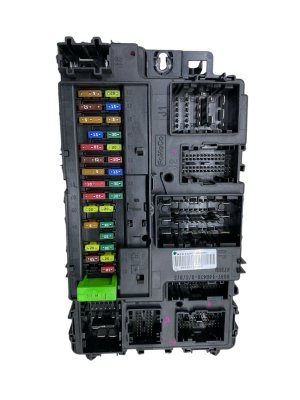
- BCM Connectors (C2280A, C2280B, C2280H, etc.) — The Body Control Module is typically integrated with the interior fuse panel, located in the passenger footwell or behind the glove box on T6 Rangers.. These connectors are the interface for all BCM-controlled circuits. Pinpoint testing for shorts or opens on specific circuits (e.g., headlight output) requires a pinout diagram for these connectors. Water ingress can also cause corrosion on these pins.
- Ground Point under Battery Tray — Located on the chassis underneath the vehicle's main battery tray.. While not directly linked to U1000 in all cases, a forum report for a related Ford truck indicates that corrosion at this ground point can cause widespread, difficult-to-diagnose electrical problems that mimic module failure. Checking major ground points is a crucial step when diagnosing any complex electrical fault.
- BCM Bench Cloning Pinout — Refers to the specific pins on the BCM's circuit board or connectors used to power it up on a workbench for data cloning.. For a repair involving cloning, technicians need to connect power, ground, and CAN lines directly to the module. For the Lear BCM in many Rangers, this involves identifying the MC9S12 microprocessor and its connections to read the flash and EEPROM data.
Real Owner Repair Stories
- The Automotive Clinic / The Vehicle Check (Repair Specialists) (2011-2019 Ford Ranger (PX1/PX2) and Mazda BT-50) — Headlights not working (lockout), wipers not functioning, U1000 and U3000 fault codes present.
❌ Tried (didn't work) Replacing headlight bulbs/fuses., Checking external wiring which was found to be okay.
✅ What actually fixed it The original BCM was sent in for repair. The specialists performed a bench test, confirmed internal software corruption or hardware failure, repaired the internal circuits, and sent the original module back. This resolved the issue without needing a new, expensive BCM or reprogramming. - YouTube video by Aki's Garage Ltd (Ford Ranger / Focus (using similar Lear BCM)) — BCM was water damaged and non-functional.
❌ Tried (didn't work) Attempting to use the water-damaged BCM.
✅ What actually fixed it A used (donor) BCM with a matching part number was acquired. Using an OBDSTAR DC706 tool, the data from the original (faulty) BCM's EEPROM and flash memory was read and then written to the donor BCM. This 'cloning' process transferred the immobilizer and vehicle configuration data, making the used module plug-and-play. - YouTube video by ECU-Repair (Ford Ranger / Mazda BT-50) — Low beam headlights not working, U3000 code present.
❌ Tried (didn't work) Replacing bulbs and checking wiring, which showed no faults.
✅ What actually fixed it The technician concluded the fault was software corruption within the BCM. The BCM was removed, the original data file was read using a bench tool (IPROG+), the corrupted file was repaired by a specialist service, and the fixed file was written back to the BCM. This restored headlight function.
Documented NHTSA Reports
- An owner reported in NHTSA ODI #10970695 that code U1000 appeared alongside a CAN system diagnosis failure where the instrument cluster could not communicate or retrieve mileage, eventually requiring a BCM failure retest.
- NHTSA ODI #11461728 describes a situation where U1000 was associated with lost communication with the TCM, leading to delayed shifting and warning lights, often caused by the module overheating due to its location under the battery box.
OEM Part Supersession History
AB39-14A073-xx (PX1)→DB39-14A073-xx (PX2)— Represents the change from the PX1 (2011-2015) to the PX2 (2015-2018) facelift, which involved updates to the electrical architecture.
Heads up: Modules from different generations (e.g., a PX2 BCM into a PX1 vehicle) are not directly plug-and-play. While they may be physically similar, the internal hardware and software calibrations differ. Replacement requires cloning the original module's data onto a donor module of the correct hardware family.
Model Year Variations Within This Range
- 2011-2019: The widespread BCM failure causing U1000 is primarily documented in the PX1 (2011-2015) and PX2 (2015-2019) generations. Part numbers typically begin with 'AB39' for PX1 and 'DB39' for PX2.
- 2011-2020: The Mazda BT-50 (UP/UR series) was a mechanical and electrical twin to the Ford Ranger and suffers from the exact same BCM failure modes, including U1000 and U3000 codes leading to headlight/wiper loss.
- 2019-2022: The North American Ford Ranger is based on the same T6 platform, but the BCM part numbers and documented failure rates differ from the international models. While the meaning of U1000 is the same, the specific widespread internal failure is less commonly reported for these models. BCM connectors and pinouts may also vary.
Diagnostic Flowchart
Used vs. New Parts: Buying Guide for This Vehicle
When a used part is the smart pick: A used BCM from a donor vehicle is a very smart and cost-effective choice, but ONLY under the condition that you can 'clone' the software from your original BCM to the used unit. A used BCM is not a plug-and-play part due to immobilizer and vehicle-specific configuration data.
Donor-vehicle mileage cap: roughly under 150000 miles for the part to have meaningful remaining life.
What to inspect on the donor part:
- Part number MUST match your original BCM exactly, or be a confirmed compatible hardware version from the same manufacturer (e.g., Lear).
- Inspect the donor module's connectors for any signs of corrosion, bent pins, or water damage.
- Ask about the donor vehicle's history if possible; avoid parts from flood-damaged vehicles.
- Ensure your original BCM is still able to communicate on the bench, as its data needs to be read for the cloning process.
OEM-only on this vehicle (don't cheap out):
- Body Control Module. There are no new aftermarket BCMs available. The only options are a new OEM part from Ford, repairing your original OEM part, or cloning your data to a used OEM part.
Aftermarket brands forum-validated for this vehicle:
- For BCM Repair: ECU Testing, The Automotive Clinic, Injectronics, ECU Fix.
- For BCM Cloning Tools: OBDSTAR, IPROG+, Autel, VVDI.
Brands owners have reported issues with on this vehicle:
- N/A - No aftermarket BCMs are manufactured for this application.
Real Owner Stories
Aggregated from forums and TSBs cited above. Mileages and costs reflect what owners reported in those sources.
2019+ Ford Ranger
Symptoms: Intermittent electrical issues, including door ajar warnings and the vehicle alarm going off randomly.
What fixed it: The problem was not an internal BCM fault, but rather a damaged BCM wiring harness connection that required repair.
Source hint: 2019+ Ford Ranger and Raptor Forum (5th Generation) - 'Bad BCM (or so I'm told) and a nightmarish customer experience'
Ford Ranger / Mazda BT-50
Symptoms: Low beam headlights were inoperative, with codes U1000 and U3000 present.
What fixed it: A BCM software reset initially fixed the low beam failure, but other intermittent issues appeared later, highlighting the difficulty in distinguishing between a pure software fault and an underlying hardware failure.
Source hint: MHH AUTO - 'Mazda BT50/Ford Ranger BCM software fault - u3000, u1000, low beam inop'
Ford Ranger
Symptoms: A headlight fault accompanied by code U1000.
What fixed it: A technical, software-level repair was performed by directly editing specific memory addresses in the BCM's dflash file to reset the fault.
Source hint: MHH AUTO - 'Ford Ranger BCM U1000 Fault'
Ford Ranger (Cross-Manufacturer Reference)
Symptoms: Vehicle would not start and displayed code U1000.
What fixed it: As reported in NHTSA ODI #10681194, an owner found that cleaning battery terminals did not work, as U1000 indicated a ground harness problem. Similarly, NHTSA ODI #10171770 notes that when a vehicle stalled and lost ignition input, replacing the ignition switch resolved the issue when U1000 was present among other codes.
Related OBD-II Codes
Frequently Asked Questions
My 2016 Ranger's headlights and wipers suddenly stopped working. Is this the common BCM failure I've read about?
Does the U1000 code on my Ford Ranger mean I have to buy a new, expensive BCM from the dealer?
I installed an aftermarket light bar and now my low beams don't work. Is the U1000 code related?
My 2014 Mazda BT-50 has a U1000 code and no headlights. Does the information for the Ford Ranger apply to my truck?
I found and fixed a short in my headlight wiring, but the light still won't turn on. What do I do now?
Can I just buy a used BCM from a junkyard and install it myself to fix the U1000 code?
Helpful Videos


We Have This Part in Stock



The information in this article is provided for general reference and educational purposes only. Vehicle specifications, procedures, and part compatibility can vary by production date, trim level, and region. Always consult your vehicle's factory service manual and verify part numbers before purchasing or performing repairs. Safety-critical components such as airbags, seat belts, and braking systems should be installed by a qualified professional.
- Ford Ranger:
- 🎬 Helpful Videos
- 🛍️ Shop This Part
- What's Unique About the 2011-2022 Ford Ranger
- Symptoms You May Notice
- Most Likely Causes
- Diagnosis Steps
- Parts You'll Likely Need
- Related Codes That Often Appear With This One
- Technical Service Bulletins (TSBs) & Recalls
- Platform-Specific Known Issues
- Mechanic-Grade Diagnostic Values
- Hidden / Shadow Codes Worth Checking
- Scan Tool Commands That Help
- Wiring & Ground Locations
- Real Owner Repair Stories
- Documented NHTSA Reports
- OEM Part Supersession History
- Model Year Variations Within This Range
- Diagnostic Flowchart
- Used vs. New Parts: Buying Guide for This Vehicle
- Real Owner Stories
- 2019+ Ford Ranger
- Ford Ranger / Mazda BT-50
- Ford Ranger
- Ford Ranger (Cross-Manufacturer Reference)
- Related OBD-II Codes
- Frequently Asked Questions
- 🎟️ Get 5% Off