

OBD-II Code U3000: Control Module Failure
The Ultimate Guide to Meaning, Diagnosis, and Repair
- Code U3000 indicates a control module failure, requiring an advanced OBD-II scanner to identify the exact module and read the critical 2-digit suffix code.
- Test your battery and charging system immediately, as a voltage drop below 9.5V during engine cranking is the leading trigger for false U3000 codes.
- Search for Technical Service Bulletins (TSBs) before buying parts; many U3000 codes are software bugs fixed by a 1-hour dealer reflash.
- Stop driving if the U3000 code is accompanied by ABS or power steering warning lights, as this indicates a disabled safety system that increases crash risk.
What Does U3000 Mean?

Code U3000 means one of your vehicle's electronic control units (ECUs) detected an internal failure. These modules are small computers managing everything from the engine to the radio. This code triggers when a module fails its internal self-test or loses communication with the vehicle's CAN bus network.
Technical definition: The SAE/OBD-II definition for U3000 is "Control Module." It indicates an internal malfunction or network communication failure. Because this is a generic network code, you must use an advanced scanner to identify the specific failing module (e.g., ABS, BCM, PSCM) and read the 2-digit suffix code for exact diagnostic context.
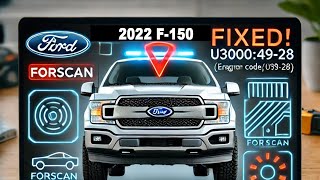
🎬 Watch: How to diagnose U3000:49 on a Ford using Forscan.Can I Drive With U3000?
Yes, But With Caution. Driving is possible but highly risky. The danger depends entirely on the failed module. A fault in the Power Steering Control Module (PSCM) causes a sudden, total loss of power steering at speed. An affected ABS or airbag module disables critical safety systems during an emergency. A failed camera module (IPMA) disables pre-collision assist and adaptive cruise control. Ignoring these warnings risks a collision, adding thousands in damages to the initial repair.
Common Causes

- Low Battery Voltage or Poor Connections (Very Common) — A weak battery is the leading cause of this code. Control modules are highly sensitive to voltage and set erroneous internal failure codes if voltage drops below 9.5V during engine start-up.
- Software Glitches or Corrupted Firmware (Very Common) — The module's internal software contains a bug or corrupted firmware. Manufacturers frequently release Technical Service Bulletins (TSBs) with software updates to fix these known issues without replacing parts.
- Internal Module Hardware Failure and Water Intrusion (Common) — Electronic components inside a module fail from heat, vibration, age, or water intrusion. A compromised housing allows moisture to corrode the circuit board, causing a definitive hardware failure.
- Corroded or Loose Wiring/Connectors (Common) — Wiring harnesses connecting the modules suffer damage. Corrosion on connector pins, chafed wires, or unseated connectors interrupt power, ground, or data signals.
- Failing Wheel Bearing (for ABS modules) (Less Common) — On some vehicles (especially Fords), a worn wheel bearing causes the wheel to wobble. This creates an erratic wheel speed sensor signal that the ABS module cannot interpret, causing it to flag itself with a U3000 code.
- Improper Aftermarket Modifications or Repairs (Rare) — Incorrectly installed aftermarket electronics (remote starters, alarms) disrupt CAN bus communication. Improper instrument cluster reprogramming also causes persistent data mismatches.
- Blown Fuses or Faulty Relays (Rare) — A blown fuse cuts power to the module, making it appear dead and setting a U3000 code in other modules attempting to communicate with it.
Symptoms

- Check Engine Light or Specific Warning Lights — The Check Engine Light illuminates, often accompanied by specific system lights like ABS, airbag, traction control, or brake warnings.
- Loss of Safety System Function — Critical systems like Anti-lock Brakes (ABS), Traction Control, Power Steering, or Pre-Collision Assist are completely disabled.
- Malfunctioning Electronic Features — Functions controlled by the failed module stop working, including power windows, locks, mirrors, automatic wipers, or climate control.
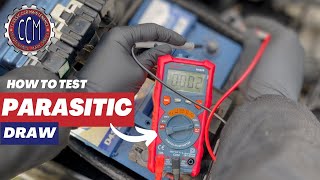
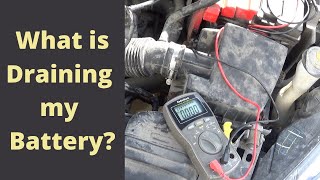
- No-Crank or Dead Battery Condition — A faulty module fails to 'sleep' when the vehicle is off, creating a parasitic electrical draw that drains the battery overnight. 🎬 Watch: The easiest way to test for a parasitic draw.
- Engine Performance Problems (also visible on scanner) — If the Powertrain Control Module (PCM) is the source, the vehicle experiences a no-start condition, stalling, rough idle, or poor acceleration.
Diagnostic Flowchart

Tap your situation to follow the diagnostic path that matches what you're seeing on this code.
Common Fixes & Costs
- Reprogramming/Updating Module Software — Parts: $0, Labor: $125-$250, ~1.0 hr book time (Professional)
- Replacing the Vehicle's 12V Battery — Parts: $150-$400, Labor: $50-$100, ~0.5 hr book time (DIY)
- Replacing the Faulty Control Module — Parts: $250-$2500+, Labor: $150-$500, ~1.5 hr book time (Professional)
- Repairing Damaged Wiring or Connectors — Parts: $10-$100, Labor: $100-$500+, ~2.5 hr book time (Intermediate)
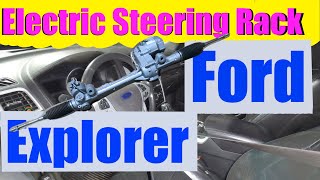
- Replacing Electronic Power Steering Rack — Parts: $800-$1800, Labor: $400-$800, ~4.5 hr book time (Professional)
- Replacing a Failing Wheel Bearing Assembly — Parts: $100-$300 per wheel, Labor: $150-$300 per wheel, ~2.0 hr book time (Intermediate)
Used vs. New Parts: Buying Guide
When a used part is worth it: A used module makes sense only for older, high-mileage vehicles where budget is the primary concern and the part is 'plug-and-play' without complex programming.
Donor-vehicle mileage cap: roughly under 100000 miles for the part to have meaningful remaining life.
Donor quality checklist:
- Match the part number EXACTLY. Even a single digit difference means incompatibility.
- Ask the seller if the module has been tested.
- Inquire about the donor vehicle's history. Avoid parts from flood-damaged cars.
- Check the seller's return policy and warranty (often 30-90 days at most).
Decision logic:
- If The fix is a known software bug (TSB exists) → Do not buy any part. Pay for the dealer software update.
- If The part requires VIN programming and security relearning (most modern modules) → Favor a new OEM or quality remanufactured part. A used module is often 'VIN-locked' and impossible to reprogram.
- If Vehicle is less than 10 years old and the part is safety-critical (ABS, PSCM, Airbag) → Buy new OEM or a lifetime-warranty remanufactured part. The risk of used part failure is too high.
- If The part is a simple, non-programmed module on an older vehicle → A tested used part from a reputable salvage yard is a reasonable budget option.
Warranty tradeoff: Used parts typically have a 30-90 day warranty. Remanufactured parts come with a 1-year to lifetime warranty. New OEM parts carry a 1-2 year warranty.
Worst-case if a used part fails: $500-$1500 if a used module fails. This includes the cost of the failed used part plus paying for labor a second time to diagnose and replace it again.
What Happens If You Wait — Timeline
- 0-1 Month (Intermittent/Glitch Phase): A U3000 code sets, often after a cold start or jump-start, and clears on its own. A single warning light appears but disappears on the next drive. Symptoms are intermittent. (MPG impact: 0%% · Added cost: $0)
- 1-6 Months (Persistent Fault Phase): The root cause is constant. The warning light stays on permanently. If the fault is a parasitic draw, the battery dies overnight, eventually destroying the battery. If it's a safety module, the system is fully disabled. (MPG impact: 0-5% (if PCM/engine related)% · Added cost: $200-$500 (Cost of a new battery and tow/service call if stranded due to parasitic draw))
- 6-12 Months (Cascading Failure Phase): Driving with a disabled safety system like ABS or power steering dramatically increases the risk of an accident. A persistent voltage issue stresses and damages other electronic modules on the network. (MPG impact: 0%% · Added cost: $2000-$20000+ (Potential cost of an accident due to loss of steering assist or ABS functionality))
- 12+ Months (Total Module Failure): An intermittent module that was previously glitching fails completely. What started as an intermittent loss of power windows or steering assist becomes a permanent failure. Diagnostic costs increase. (MPG impact: 0-10% (if PCM/engine related)% · Added cost: $1000-$3000+ (Cost of replacing the primary failed module plus potential secondary modules damaged by prolonged voltage issues))
Cost of Not Fixing It
- Immediate: Loss of a critical safety system. If the ABS or PSCM module fails, anti-lock brakes, stability control, or power steering assist are disabled, dramatically increasing the risk of a crash. (Added cost: $2000-$20000+ (Potential cost of an accident, vehicle damage, and insurance increases))
- 0-3 Months: Battery failure due to parasitic draw. A faulty module that doesn't 'sleep' drains the battery overnight, requiring frequent jump starts and eventually destroying the battery. (Added cost: $200-$500 (Cost of a new battery and potential tow/service call))
- 3+ Months: Progressive electrical failures or strandings. An intermittent wiring issue or failing module worsens over time, leading to widespread electronic glitches and strandings. (Added cost: $100-$1000+ (Increased diagnostic time, potential damage to other components from voltage issues))
Diagnosis Steps
- Perform a Full System Scan with an Advanced Scanner
Use an advanced OBD-II scanner to read manufacturer-specific codes from ALL modules. Identify which module set the U3000 code and capture the critical 2-digit suffix code (e.g., :49, :96) specifying the failure type.
Tools: Advanced OBD-II Scanner (e.g., Ford FDRS, FORScan, GM GDS2) (Beginner) - Check the Battery and Charging System
A weak battery is the most common cause. Verify battery voltage is above 12.4V with the engine off. During cranking, voltage must not drop below 9.5V. Alternator output should be 13.5V-14.5V.
Tools: Multimeter, Electronic Battery Tester (Beginner) - Check for Technical Service Bulletins (TSBs)
Search online for TSBs for your vehicle's make, model, year, and the specific U3000 code with its suffix. Manufacturers release bulletins for known software glitches that a dealer fixes with a reflash, saving hundreds.
Tools: Internet access (Intermediate) - Inspect Fuses and Relays
Using the owner's manual, locate the fuse(s) and relay(s) for the specific module that set the code. Visually inspect for blown fuses. Test relays by checking coil resistance, typically between 70-120 Ω.
Tools: Fuse puller, Multimeter (Beginner) - Visually Inspect Wiring and Connectors
Locate the faulty module. Unplug its connectors and meticulously inspect for corrosion, bent pins, or signs of water intrusion. Inspect the harness for chafing or breaks, especially where it passes through the firewall.
Tools: Flashlight, Inspection mirror, Dielectric grease (Intermediate) - Test Module Power and Ground (Pro Tip)
Identify power and ground pins on the module's connector. Verify battery voltage (12V ± 0.5V) at the power pin. Measure resistance to the chassis at the ground pin; it must be under 0.2 ohms.
Tools: Multimeter, Vehicle-specific wiring diagram (Advanced) - Perform CAN Bus Network Test (Pro Tip)
Test the CAN bus at the DLC or a module connector. With the battery disconnected, measure resistance between CAN High and CAN Low pins; it should be ~60 Ω. A reading of 120 Ω indicates a missing terminating resistor. With the battery reconnected and key on, voltage on CAN High should be ~2.5-3.5V and CAN Low ~1.5-2.5V.
Tools: Multimeter, Vehicle-specific wiring diagram (Advanced) - Check for Parasitic Draw
If the battery is frequently dead, disconnect the negative battery terminal and connect a multimeter in series set to measure Amps. With the vehicle off and all modules asleep (takes up to 45 minutes), the draw must be under 50 milliamps (0.05A). If higher, pull fuses one by one to identify the faulty circuit.
Tools: Multimeter with Amp setting (Advanced)
When This Code Triggers (Freeze-Frame Conditions)
- Battery Voltage: 9.0V - 11.5V (During engine crank/startup. A voltage drop below 9.5V is the primary trigger for false failure codes in sensitive modules.)
- Module Status: No Communication / Internal Fault (At key-on or during initial system self-check. The module fails to report its status to the network.)
- Vehicle State: Stationary or Driving (A startup failure points to low voltage, while a failure while driving indicates a wiring or internal hardware issue.)
- Ignition Cycles Since Fault: 0 or 1 (The fault is detected on the same drive cycle it occurs, indicating a hard or persistent failure.)
Related Codes
- U0100 — Lost Communication With ECM/PCM. You see this code in other modules when they can't hear from the main engine computer. U3000 is what the ECM/PCM sets for itself to report its own internal failure.
- U0121 — Lost Communication With ABS. This code is set in the ECM or BCM when the ABS module stops communicating. U3000 is what the ABS module says about itself.
- P0606 — Control Module Processor. This powertrain-specific code indicates a fatal processor fault inside the ECM/PCM. U3000 is set by any module on the network, whereas P0606 is exclusive to the powertrain controller.
- U3003:16 — Battery Voltage Below Threshold. Found stored alongside a U3000, this strongly indicates the root cause is a weak battery or charging system problem.
Climate & Environmental Factors
- Cold Weather: Extremely cold temperatures reduce cranking power, causing voltage drops that trigger U3000 codes in sensitive modules during startup.
- High Humidity / Water Intrusion: Moisture enters compromised housings, corroding circuit boards and causing permanent hardware failure.
- Road Salt: Corrosive salt spray accelerates corrosion on wiring, connectors, and ground points under the vehicle.
How to Talk to a Mechanic About This Code
Say this: "I have a U3000 code in the [MODULE NAME] module with a suffix of [:XX]. Before we discuss replacing the module, please check for related TSBs or software updates and verify the battery's health under load."
This signals you are an informed customer. It directs the technician to follow a logical diagnostic path (check software and voltage first) before jumping to the most expensive conclusion (module replacement). It establishes a collaborative tone and sets clear expectations.
Avoid saying:
- 'My check engine light is on, can you fix it?'
- 'The car is acting weird, just do whatever it takes.'
- 'I think I need a new [module name], can you give me a price?'
Questions to ask before authorizing the repair:
- Did you find a TSB for this issue? If so, what does it say?
- What were the results of the battery and charging system tests? Can I see the printout?
- If you are recommending module replacement, how did you rule out a wiring or ground issue?
- Does the new module require programming, and is that included in the quote?
- What is the warranty on both the part and the labor for this repair?
Where to Take It: Dealer vs Independent vs Chain
- Dealer:
Best for: Vehicles under warranty or with an open recall/service campaign., Known software-related issues where a dealer-only reflash is the specified fix (common with Ford, Mazda, GM)., Complex, first-year model issues where independent shops lack data.
Downsides: Highest labor rates, often 40-50% more than independent shops., May be quicker to replace an entire assembly rather than diagnose a smaller component fault. (Typical cost: +40% vs. baseline) - Independent Shop:
Excellent choice, IF the shop has manufacturer-level diagnostic tools and software subscriptions. Ask if they can program modules for your brand before committing.
Best for: Out-of-warranty vehicles where cost is a major factor., Diagnosing common pattern failures that experienced technicians recognize quickly., Situations where a thorough diagnosis is valued over a quick part swap.
Downsides: Shop quality and equipment vary widely; may not have manufacturer-specific tools (FDRS, GDS2) required for programming., May not have access to the very latest TSBs or software updates. (Typical cost: +0% vs. baseline) - Chain Shop:
AVOID for diagnosis. A free code scan from a parts store only provides the generic U3000 code without the critical module and suffix information, which is useless.
Best for: Simple, related tasks like battery replacement.
Downsides: Technicians are generally not equipped or trained for complex network diagnostics., High pressure to sell parts leads to misdiagnosis (e.g., selling a module when the battery is weak)., Cannot perform required software updates or programming. (Typical cost: -10% vs. baseline)
When to Walk Away From the Repair
If the estimated repair cost exceeds 40-50% of your car's private-party value, consider selling or trading it in.
- Car worth $5000, fix is $2500: Walk away. A repair costing 50% of the car's value is a poor investment, especially as other age-related failures are likely.
- Car worth $15000, fix is $1700: Fix it. The repair is only about 11% of the vehicle's value and likely restores a critical safety or functional feature.
- Car worth $3000, fix is $250: Fix it. A low-cost repair like a software update or battery is well worth it to keep the car functional, even on an older vehicle.
What Scan Tool You Need for This Code

Minimum: A scanner that performs a full system scan of ALL vehicle modules (ABS, BCM, PSCM, etc.) and reads manufacturer-specific Diagnostic Trouble Codes (DTCs), including the critical suffix codes (e.g., :49, :96).
A basic $20 code reader only checks the engine module and shows a generic U3000 with no context. This is useless for diagnosis, as the fault is almost always in a different module.
Budget: FORScan with compatible OBDLink Adapter (for Ford/Mazda) (~$90) — The gold standard for DIY Ford/Mazda diagnosis. It reads all modules and suffix codes, allows you to run module self-tests, and performs some calibrations.
Mid-range: Autel MaxiCOM MK808 / Foxwell NT510 Elite (~$350) — These are true all-system scan tools. They identify the faulting module and read specific codes for most major brands.
Professional: Launch X431 CRP919XBT / Autel MK808BT Pro (~$450-700) — Adds wireless Bluetooth connectivity and bidirectional controls. This allows you to command a module to perform a function, confirming if the module or the component it controls has failed.
Rent vs buy: Auto parts stores do NOT rent the type of advanced scanner needed for this code. For a one-time U3000 diagnosis, pay a professional for one hour of diagnostic time rather than buying a tool.
How to Clear the Code After You Fix It
- Reconnect the negative battery terminal if it was disconnected.
- Use a professional-grade OBD-II scan tool to clear the U3000 code from the specific module that stored it.
- Perform any required programming or initialization sequences for the new part (e.g., BMS reset, steering angle sensor calibration, ABS module initialization).
- Perform a complete drive cycle to allow the system's readiness monitors to run.
Drive cycle (~20 minutes): A general drive cycle includes: 1) Cold start and idle for 2-3 minutes. 2) Drive in mixed city/highway conditions for 15-20 minutes, including some steady-state cruising. 3) Allow the vehicle to cool down completely. The goal is to let the onboard diagnostics run their self-tests.
Readiness monitors affected: Comprehensive Component Monitor (CCM), Depends on the failed module (e.g., ABS fault may not affect emissions monitors)
Before emissions retest: drive at least 50 miles to fully set monitors.
Watch out for:
- Simply disconnecting the battery does not clear the fault code from the module's permanent memory.
- The code returns immediately if the root cause remains.
- Failing to perform post-repair programming or calibration for a new module leaves it non-functional.
Will This Fail Emissions / State Inspection?
Yes — this code typically fails an OBD-II emissions inspection.
- California: An illuminated Check Engine Light results in an automatic smog check failure. If the code is present without a CEL, the test fails if it prevents OBD-II readiness monitors from setting.
- New York: NYS vehicle inspection includes an OBD-II scan. An illuminated 'check engine' light is an automatic failure of the emissions portion of the test.
- Texas: In the 17 counties requiring emissions testing, an illuminated Check Engine Light causes the vehicle to fail the OBD-II portion of the annual inspection.
Most Commonly Affected Vehicles
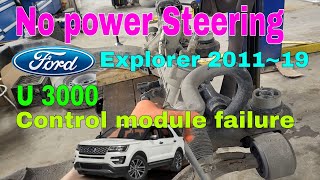
- Ford Explorer (2013-2019) — Extremely prone to U3000 in the Power Steering Control Module (PSCM), indicating a failing electronic power steering rack. On 2013-2015 models, U3000 in the ABS module is caused by a failing wheel bearing.
- Ford Edge (2015-2024) — Frequently sees U3000:49 in the ABS module. For 2022-2024 models, this is a software glitch fixed by reprogramming per TSB SSM 52729.
- Honda Odyssey, Pilot, CR-V (2018-2022) — A U3000-49 code indicates an internal hardware failure of the Multipurpose Camera Unit for the Honda Sensing system, requiring replacement and calibration.
- Mazda CX-5, CX-30, CX-50, Mazda3 (2019-2024) — Commonly experiences U3000:04 in the Telematics Control Unit (TCU). This is a software bug triggered when connected services expire, fixed by a dealer update.
- Chevrolet / GMC Suburban, Tahoe, Yukon, Silverado 1500 (2021-2025) — On the GM VIP platform, U3000 is often a software issue in the Instrument Panel Cluster (IPC) per TSB 22-NA-130 or the Automated Map Module (HDLM) per TSB 24-NA-027.
- Ford F-150 (2015-2025) — TSB 23-2146 addresses U3000:49 in the IPMA due to a poor coaxial cable connection. Low battery voltage causes U3000:96 in the PSCM. Canadian imports have IPC mismatches.
- Hyundai Tucson, Sonata (2016-2020) — Triggered by an internal failure in the Motor Driven Power Steering (MDPS) column module, requiring replacement.
- Subaru Outback, Forester, Crosstrek, WRX (2023-2025) — An internal failure of the Body Integrated Unit (BIU) sets a U3000 code and causes widespread electrical issues. BIU replacement requires dealer programming.
Manufacturer-Specific Notes
- Ford: Ford uses 2-digit suffix codes (like U3000:49 or U3000:96). U3000:49 points to an internal electronic failure but is frequently a software bug fixed by a TSB.
- Mazda: On 2019+ Mazdas, a U3000 code in the Telematics Control Unit (TCU) is a software bug triggered when the complimentary connected services plan expires. The fix is a dealer software update.
- General Motors (GM): On 2021+ GM vehicles using the VIP platform, modules are highly sensitive to low voltage and software glitches. A false U3000 in a gateway module is sometimes fixed with a simple battery reset.
- Honda: On 2018+ models with Honda Sensing, a U3000-49 code indicates an internal hardware failure of the Multipurpose Camera Unit. Honda extended the warranty for this specific failure on some models.
- Ford (Canadian Imports): F-150s imported from Canada to the U.S. have a persistent U3000 code in the Instrument Panel Cluster (IPC) caused by improper KPH to MPH reprogramming, creating a checksum error.
Real Owner Stories
2020 Honda Odyssey with 50K miles
Multiple warning lights appeared on the dash (ACC, Lane Departure, Collision Mitigation) but the van drove normally.
What they tried:
- Owner drove for over 1,000 miles with the lights on before taking it to the dealer.
- Dealer scanned the vehicle and found code U3000-49, identifying an internal failure of the multipurpose camera unit.
Outcome: Dealer quoted $1,700 for camera replacement and aiming. This is a very common failure on 2018+ Hondas with Honda Sensing, requiring hardware replacement.
Lesson: On modern Hondas, a sudden cascade of driver-assist warning lights with a U3000-49 code points directly to a failed front camera, which is a known hardware fault.
2021 Mazda CX-5
An "In-Vehicle Network Malfunction" message appeared on the display, and a scan revealed a U3000:04 code in the Telematics Control Unit (TCU).
What they tried:
- The owner took the vehicle to a Mazda dealership.
- The dealership identified that the complimentary Mazda Connected Services plan had recently expired, triggering a software bug.
Outcome: The dealer performed a software update on the TCU per Mazda TSB 09-001-23a. The repair was covered under warranty and resolved the issue without replacing parts.
Lesson: On 2019+ Mazdas, a U3000 code in the TCU is a known software glitch fixed by a free dealer update, especially if it appears after connected services expire.
2010 Land Rover Range Rover Sport
The vehicle's battery died repeatedly overnight. A scan showed a U3000 code, and a parasitic draw test measured a high 0.47A draw.
What they tried:
- The owner suspected a major control module was failing to go into 'sleep mode'.
- Pulling fuses for major systems did not isolate the source of the high current draw.
Outcome: The cause was a corroded rear glass release switch sending a constant signal, preventing modules from sleeping. Replacing the switch fixed the 0.47A parasitic draw and cleared the code.
Lesson: A parasitic battery drain is a common cause of U3000. A simple component, like a stuck switch, keeps the network awake, drains the battery, and triggers module fault codes.
2016 Ford Explorer
Sudden loss of power steering while driving, with a "Steering Assist Fault" message on the dash. A scan showed code U3000 in the Power Steering Control Module (PSCM).
What they tried:
- Restarting the vehicle temporarily restored steering, but the fault always returned.
- Checked battery voltage, which was good, ruling out a simple voltage issue.
Outcome: This is a widely documented failure of the electronic power steering rack. The internal PSCM fails, requiring replacement of the entire steering rack assembly for $2,000 to $2,500.
Lesson: On 2013-2019 Ford Explorers, a U3000 code related to steering is a critical safety failure indicating a known pattern of failure in the electronic steering rack.
How to Prevent This Code From Triggering
- Maintain Battery Health and Connections (Every 6 months) — Low voltage is a top cause of U3000. Clean battery terminals with a wire brush to prevent corrosion, which impedes current flow. Ensure terminals are tight. Use a battery tender for infrequently driven cars.
- Keep Vehicle Drains and Seals Clean (Annually (especially in fall)) — Clogged sunroof or cowl drains allow water to leak into the vehicle's interior, where many control modules are located. Water intrusion is a primary cause of direct hardware failure and corrosion.
- Apply Dielectric Grease to Connectors (When performing other repairs or as needed) — Dielectric grease seals electrical connectors from moisture and dirt. Applying a small amount to the seals of module connectors prevents corrosion on the pins that leads to communication failures.
- Avoid Short Trips and Ensure Full Charging Cycles (Weekly habit) — Frequent short trips prevent the alternator from fully recharging the battery. This weakens the battery over time and increases the likelihood of voltage drops during startup that trigger module glitches.
- Use a Regulated Power Supply During Updates (When programming) — A stable power supply is mandatory during software updates. A voltage drop mid-flash corrupts the module's firmware, turning a software fix into a hardware replacement.
Frequently Asked Questions
Can I fix a U3000 code myself?
Simple fixes like replacing a battery are DIY-friendly. Diagnosing specific modules or CAN bus resistance requires advanced tools. Leave software updates and module programming to professionals.
How much does it cost to fix a U3000 code?
Costs vary dramatically based on the root cause. A dealer software update runs $125-$250, while a new battery costs $200-$500. Replacing major modules like a power steering rack or forward-facing camera costs $800 to $2,500+.
Will clearing the code make it go away?
Clearing the code works if it was a one-time glitch from a temporary voltage drop. However, if an underlying hardware, wiring, or software problem exists, the code returns immediately.
What does the ':49' after U3000 mean on my Ford?
The ':49' suffix means 'Internal Electronic Failure'. It indicates the module detected a problem with its internal circuitry or processor. Always check for TSBs, as this is frequently triggered by a software bug rather than true hardware failure.
What's the most common misdiagnosis for a U3000 code?
The most expensive mistake is replacing a control module without testing the battery first. Low voltage during engine cranking is the primary trigger for false module failure codes. Another common error is replacing a Ford ABS module when a failing wheel bearing is the actual culprit.
Can a jump start or new battery cause a U3000 code?
Yes, a voltage spike or drop during a jump start causes temporary module glitches. On modern vehicles, failing to perform a Battery Management System (BMS) reset after installing a new battery also triggers persistent electrical codes.
Why are there so many TSBs for the U3000 code?
Modern vehicles contain dozens of modules running millions of lines of code, making software bugs inevitable. A TSB is the manufacturer's method for distributing software patches to dealers. The high volume of U3000 TSBs proves many 'internal failures' are just software glitches.
Key Takeaways
- Code U3000 indicates a control module failure, requiring an advanced OBD-II scanner to identify the exact module and read the critical 2-digit suffix code.
- Test your battery and charging system immediately, as a voltage drop below 9.5V during engine cranking is the leading trigger for false U3000 codes.
- Search for Technical Service Bulletins (TSBs) before buying parts; many U3000 codes are software bugs fixed by a 1-hour dealer reflash.
- Stop driving if the U3000 code is accompanied by ABS or power steering warning lights, as this indicates a disabled safety system that increases crash risk.
Helpful Videos


The information in this article is provided for general reference and educational purposes only. Vehicle specifications, procedures, and part compatibility can vary by production date, trim level, and region. Always consult your vehicle's factory service manual and verify part numbers before purchasing or performing repairs. Safety-critical components such as airbags, seat belts, and braking systems should be installed by a qualified professional.
- 🎬 Helpful Videos
- What Does U3000 Mean?
- Can I Drive With U3000?
- Common Causes
- Symptoms
- Diagnostic Flowchart
- Common Fixes & Costs
- Used vs. New Parts: Buying Guide
- What Happens If You Wait — Timeline
- Cost of Not Fixing It
- Diagnosis Steps
- When This Code Triggers (Freeze-Frame Conditions)
- Related Codes
- Climate & Environmental Factors
- How to Talk to a Mechanic About This Code
- Where to Take It: Dealer vs Independent vs Chain
- When to Walk Away From the Repair
- What Scan Tool You Need for This Code
- How to Clear the Code After You Fix It
- Will This Fail Emissions / State Inspection?
- Most Commonly Affected Vehicles
- Manufacturer-Specific Notes
- Real Owner Stories
- 2020 Honda Odyssey with 50K miles
- 2021 Mazda CX-5
- 2010 Land Rover Range Rover Sport
- 2016 Ford Explorer
- How to Prevent This Code From Triggering
- Frequently Asked Questions
- Can I fix a U3000 code myself?
- How much does it cost to fix a U3000 code?
- Will clearing the code make it go away?
- What does the ':49' after U3000 mean on my Ford?
- What's the most common misdiagnosis for a U3000 code?
- Can a jump start or new battery cause a U3000 code?
- Why are there so many TSBs for the U3000 code?
- Key Takeaways
- 🎟️ Get 5% Off