

U1000 on 2011-2019 BMW 1 Series: Network Communication Fault Causes and Fixes
Code U1000 on a BMW 1 Series indicates a network communication (CAN bus) failure. This is a generic code, often read by non-BMW specific scanners, pointing to an underlying issue. The most common causes are a weak battery, a faulty alternator, or a failing control module like the Footwell Module (FRM) on E-series cars. Start by testing the battery and charging system before looking for more complex wiring or module faults.
- U1000 means there is a communication problem on the car's network; it is not a code for a single bad part.
- Always start diagnosis by testing the battery and charging system. Low or unstable voltage is the most common trigger for this code on a BMW.
- On coupe/convertible (E82/E88) models, check the trunk for water leaks, as this is a known issue that shorts out control modules.
- Do not replace any computer modules until you have ruled out problems with power, grounds, and wiring.
- Due to the complexity, professional diagnosis with BMW-specific software (like ISTA) is highly recommended to avoid expensive guesswork.
What's Unique About the 2011-2019 BMW 1 Series
The 2011-2019 BMW 1 Series, spanning the E82/E88 and F20/F21 generations, relies on multiple complex CAN networks (like PT-CAN for powertrain, K-CAN for body, and F-CAN for chassis). A fault on any of these can trigger a cascade of errors. On the E82/E88, the Footwell Module (FRM) is a common failure point; a voltage drop during a battery change or jump-start can corrupt its memory, causing a loss of communication and control over lights and windows. On both generations, issues like water ingress in the trunk (E82) or footwells (F20) can damage modules, while the complex battery management system makes the entire network highly sensitive to voltage drops.
Generation note: This range covers two generations: the first-generation E82/E88 (2008-2013) and the second-generation F20/F21 (2011-2019). Both heavily use CAN bus systems. The E82 is known for potential water leaks in the trunk area that can corrode wiring or destroy control modules located there, a common cause of network faults. It is also highly susceptible to Footwell Module (FRM3) failure, where a voltage spike or drop can corrupt the module, leading to a loss of lighting and window functions and widespread communication errors. The F20/F21 has more advanced electronics (FEM/BDC) but both generations are highly sensitive to battery voltage.
Symptoms You May Notice
- Multiple warning lights on the instrument cluster (Check Engine, ABS, DSC, TPMS), often described as a "Christmas tree" effect
- Instrument cluster intermittently shutting off or resetting
- Engine stalling, running poorly, or not starting
- Transmission stuck in one gear or showing a fault message
- Loss of power to accessories like windows, mirrors, or radio
- Car failing to shut off with the start/stop button
- Headlights stuck on or not working at all
- Turn signals and hazard lights inoperative
- Replacing a single control module that is reporting errors without first checking the battery and network integrity. The module is often just a victim of the communication loss, not the cause.
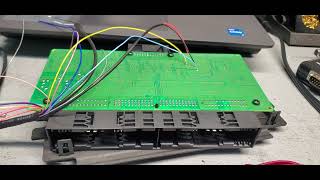
- Replacing the FRM module when it only needs a data reset. A new FRM from a dealer can cost over $1000, while a mail-in repair service to fix a corrupted EEPROM is often under $250.
Most Likely Causes
- Weak or Failing Battery 🔴 High Probability BMWs have sophisticated power management systems (IBS - Intelligent Battery Sensor) and are very sensitive to voltage. A drop below the required threshold during startup can prevent modules from initializing correctly, causing communication faults. This is the most common cause of sporadic electronic issues.
How to confirm: Test the battery voltage with a multimeter. A healthy AGM battery should read approximately 12.6V when off and 13.7V-14.7V when the engine is running. A professional load test is the most definitive way to confirm battery health.
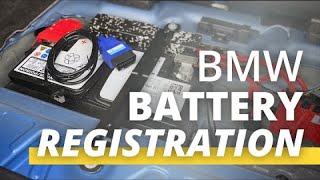
Typical fix: Replace the battery. On these BMWs, the new battery must be registered to the vehicle's computer system using a diagnostic tool like ISTA. This resets the charging logic and ensures the longevity of the new battery.
Est. part cost: $200-$450 - Faulty Alternator or Voltage Regulator 🟡 Medium Probability A failing alternator can produce incorrect voltage (either too low or too high). Over-voltage can scramble communications between modules and even permanently damage sensitive electronics.
How to confirm: With the engine running, check the voltage at the battery terminals. A reading consistently above 15.0V or below 13.2V suggests a faulty alternator or voltage regulator.
Typical fix: Replace the alternator or, in some cases, just the voltage regulator attached to it.
Est. part cost: $400-$900 - Corroded or Loose Ground Straps 🟡 Medium Probability Corrosion on main ground points (engine-to-chassis, battery-to-chassis) is common and creates high resistance and unstable voltage across the electrical system, disrupting module communication.
How to confirm: Visually inspect all major ground straps for corrosion, fraying, or looseness. The main engine-to-chassis strap is a frequent culprit. Perform a voltage drop test on the ground circuit to confirm a bad connection.
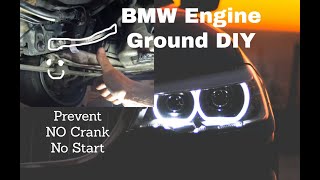
Typical fix: Clean the contact points with a wire brush and re-secure the connection. If the strap is badly corroded or broken, it must be replaced. The OEM part is relatively inexpensive. 🎬 Watch this guide explaining why BMW battery registration is necessary
Est. part cost: $20-$60 - Damaged Wiring or Water Ingress ⚪ Low Probability On E82 models, blocked sunroof drains or failed taillight seals can cause water to pool in the trunk, submerging and shorting out control modules like the PDC (Park Distance Control) or RDC (Tire Pressure Control). On F20 models, the front footwells are more susceptible, potentially damaging the Front Electronic Module (FEM).
How to confirm: Check the trunk floor under the carpet for any signs of moisture or corrosion, especially around control modules. On F20/F21 models, check the passenger and driver footwell carpets for dampness.
Typical fix: Dry out the affected area, identify and fix the source of the leak, and repair or replace the damaged wiring and any shorted modules.
Est. part cost: $100-$1500+
Rare But Worth Checking
- Faulty Footwell Module (FRM) - E8x Generation: On the E82/E88 1 Series, the FRM3 module is notoriously prone to data corruption (bricking) from low voltage events like a dead battery or jump-starting. This causes a total loss of communication with the module, resulting in headlights staying on, and inoperative windows, mirrors, and turn signals. The module can often be repaired by specialist services who re-flash the memory, which is much cheaper than replacement.
- Faulty Control Module: A single module (e.g., DSC, JBE, FEM/BDC) can fail internally and broadcast junk data or go silent, disrupting the entire network. This is often a diagnosis of last resort after ruling out power, ground, and wiring issues.
- Improperly Installed Aftermarket Electronics: Aftermarket stereos, alarms, or remote starters tapped incorrectly into the CAN bus are a common source of network interference and communication faults.
Diagnosis Steps
- Read All Fault Codes: Use a BMW-capable scanner (like ISTA, Foxwell, or a high-end Autel) to pull codes from ALL modules, not just the engine computer. Note which modules are not responding and look for specific BMW codes (e.g., CDA-series).
- Check Battery and Charging System: Verify battery voltage is at least 12.4V with the car off. Start the engine and confirm the alternator output is stable and between 13.7V and 14.7V. A weak or improperly registered battery is the #1 cause of BMW communication faults.
- Inspect Grounds: Check the main engine-to-chassis 🎬 See how to inspect and replace a bad BMW ground strap and battery ground straps for tightness and corrosion. These are known weak points. Clean or replace as needed.
- Check for Water Ingress: Inspect the trunk (especially on E82 models) and passenger/driver footwells for any signs of dampness, which could indicate a shorted module or wiring.
- Disconnect Aftermarket Devices: If any aftermarket electronics are installed, disconnect them completely to see if communication is restored.
- Check CAN Bus Integrity (Professional): With the battery disconnected, measure the resistance between CAN High and CAN Low pins at the OBD-II port. It should be approximately 60 Ohms. If it's 120 Ohms, one of the two terminating resistors (often in the DSC and DME/KOMBI) is offline. If it's near 0 Ohms, the wires are shorted.
- Isolate the Faulty Module (Professional): This involves using an oscilloscope or advanced scanner to monitor CAN bus traffic while disconnecting modules one by one until communication on the network returns to normal. This identifies the module that is causing
Parts You'll Likely Need
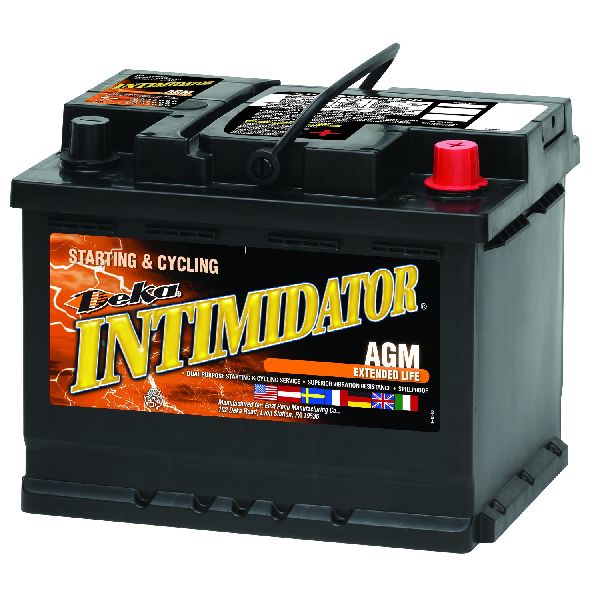
- AGM Battery — A weak battery is the most frequent cause of communication faults on modern BMWs due to their high electrical demands and sensitive electronics.
Trusted brands: Varta, Bosch, Exide, East Penn (Deka)
OEM price range: $300-$450
Aftermarket price range: $200-$350 - Footwell Module (FRM3) Repair Service
(OEM #N/A (Service))— For E82/E88 models, the FRM often fails due to voltage drops, causing lighting/window issues and communication codes. A mail-in repair service can fix the corrupted data for a fraction of the cost of a new module.
Trusted brands: The ECU Pro, DUDMD Tuning, Check Engine Chuck LLC
OEM price range: $900-$1500 (New Module)
Aftermarket price range: $100-$250 (Repair Service) - Engine Ground Strap
(OEM #e.g., 12427553041 (example for N55))— This strap is exposed to the elements and commonly corrodes, causing unstable grounds and widespread electrical gremlins.
Trusted brands: BMW (OEM)
OEM price range: $30-$60
Aftermarket price range: $20-$40 - Alternator — A failing alternator providing unstable voltage can disrupt the entire CAN network.
Trusted brands: Bosch, Valeo
OEM price range: $600-$900
Aftermarket price range: $400-$700
Related Codes That Often Appear With This One
- Multiple U-codes or BMW 'CDxx'/'Exx' codes — Since U1000 indicates a network-wide problem, it's common to see other communication loss codes from various modules that can't talk to each other. A BMW-specific scanner will show these as codes starting with 'CD' or 'E'.
- DSC/ABS faults (e.g., 5D90, 5D93) — The Dynamic Stability Control (DSC) module is a critical, central node on the powertrain CAN bus (PT-CAN). If it loses communication or power, it will set its own faults and often cause a U1000-type error in other modules.
- FRM-related lighting and window faults — If the Footwell Module (FRM) has failed on an E8x chassis, you will see specific faults for short circuits or no communication related to lighting and windows, in addition to the general network codes.
Platform-Specific Known Issues
- On E82/E88 models, water leaking into the trunk via taillight seals or clogged drains is a known issue that can destroy the PDC, RDC, or other modules located in the trunk floor, causing a CAN bus failure.
Mechanic-Grade Diagnostic Values
- CAN Bus Resistance — expected: Approximately 60 Ohms. Failure: A reading of ~120 Ohms indicates a missing terminating resistor or a break in one of the CAN lines. A reading near 0 Ohms indicates a short between CAN High and CAN Low wires.
- Alternator Charging Voltage — expected: 13.7V - 14.7V with the engine running.. Failure: Voltage consistently above 15.0V suggests a faulty voltage regulator, which can cause over-voltage and disrupt module communication. Voltage below 13.2V indicates a failing alternator, leading to under-voltage issues.
- Intelligent Battery Sensor (IBS) Communication — expected: The IBS communicates with the DME via the Binary Serial Data Interface (BSD). A faulty IBS can disrupt this communication.. Failure: A fault code for the IBS stored in the DME. Unplugging the small blue connector on the IBS may allow the car to start if the sensor itself has failed and is disrupting the network.
Hidden / Shadow Codes Worth Checking
- CD87: PT-CAN Communication Fault. This is a common BMW-specific code that indicates a communication problem on the powertrain CAN bus, which a generic scanner might display as U1000. (see via BMW-specific diagnostic software like ISTA or INPA.)
- CD8E10: LIN bus: Communication fault. This points to an issue on a sub-network (LIN bus) that communicates with a main control module, often related to components like the alternator, water pump, or Intelligent Battery Sensor (IBS). (see via BMW-specific diagnostic software like ISTA or advanced scan tools like Bootmod3's diagnostic function.)
- S 0270: No Communication Possible With: [Module Name]. ISTA uses this format to explicitly state which control unit is offline. For example, "No Communication Possible With: Transfer Box Control Unit". (see via BMW ISTA diagnostic software during a vehicle test.)
Scan Tool Commands That Help
- Tool32 (part of BMW Standard Tools): STEUERN_RESET_KURZSCHLUSSABSCHALTUNG — For E-series vehicles (E8x) with a faulty FRM2/FRM3 module that has locked out a lighting circuit due to a short circuit. This command resets the short-circuit counter for a specific lamp, restoring its function after the underlying short is fixed.
- ISTA: Call up ECU functions -> Reset ECU — For F-series vehicles (F2x), ISTA can be used to reset short circuit counters in the FEM/BDC module. This is used after repairing a wiring short to re-enable a disabled output (e.g., for a light or other component).
- ISTA/INPA: Battery Registration — This is a mandatory step after replacing the vehicle's battery. It informs the power management system (which relies on the IBS) of the new battery's capacity and age, ensuring correct charging strategy and preventing premature battery failure or electrical faults.
Wiring & Ground Locations
- Engine Ground Strap (E82/E88) — Connects the driver's side engine mount bracket to the chassis. It is located on the left side of the engine bay, often near the steering shaft.. This is the primary ground path for the engine and alternator. Corrosion or looseness here creates high resistance, leading to unstable voltage, charging problems, and communication errors between modules.
- Footwell Module (FRM) (E82/E88) — Located in the driver's side footwell, near the A-pillar, behind the hood release lever and kick panel.. The FRM is a major communication hub. Its location makes it susceptible to damage if water leaks into the cabin. A low voltage event can also corrupt its software, making it a common point of failure that takes down multiple systems.
- Front Electronic Module (FEM) (F20/F21) — Located in the passenger side footwell (on RHD cars, driver's side on LHD), behind the dashboard/kick panel.. The FEM is the F-series equivalent of the FRM and BDC combined. Its location makes it highly vulnerable to water damage from blocked sunroof drains or leaking windscreen seals, which can cause total network failure.
- Battery Bay (F20/F21) — In the trunk, under the floor panel.. Water ingress into the trunk from failed taillight seals or rear vents can submerge the battery and related electronics, including the Intelligent Battery Sensor (IBS) and power distribution blocks, causing shorts and communication failures.
Real Owner Repair Stories
- CarTechnoloGY Forum User (BMW 1 Series F20) — No communication with the VTG (Transfer Case Control Unit), showing as missing in scans (Read ECU). Car had a new battery and checked ground straps.
❌ Tried (didn't work) Replacing the battery, Basic check of ground straps, Attempting to recode the module
✅ What actually fixed it A loose ground connection on the wire that runs from the transfer case up to under the bonnet was found. The user confirmed this by testing continuity from the ground pin at the transfer case connector to the chassis (which failed initially). Tightening the loose ground connection restored continuity and resolved the communication issue. - Bimmerpost Forum User (2011 BMW 135i (E82) N55 DCT) — Multiple warnings on iDrive (DSC, DBC, servotronic), wipers activating randomly, sluggish throttle response. Scans showed code CD87 (PT CAN Communication Fault) and no communication with the JBE module.
❌ Tried (didn't work) Replacing the JBE (Junction Box Electronics) module provided a temporary fix for a few days before symptoms returned.
✅ What actually fixed it The user noted the issue started after a smog check which involves the OBD-II port. The final diagnosis pointed towards a bus fault, with a strong suspicion of either over-voltage from a failing alternator voltage regulator or physical damage/a short in the OBD-II socket wiring from the smog test equipment. The recommended fix was to check for over-voltage (>16.0V) and inspect the OBD port wiring. - Bimmerpost Forum User (2011 BMW 135i (E82) N55) — Intermittent slow start, delayed crank, or no crank.
❌ Tried (didn't work) Replacing the battery had no effect.
✅ What actually fixed it The user sprayed the connection points of the main engine ground strap (located on the driver's side) with De-Oxit contact cleaner. This immediately resolved the starting issue. The final plan was to replace the corroded ground strap entirely as a permanent fix.
Model Year Variations Within This Range
- 2011-2013 (E82/E88): These models use the Footwell Module (FRM3). This module is highly susceptible to data corruption (bricking) from low voltage events like jump-starting or a dying battery. The repair often involves a software re-flash by a specialist service rather than a full replacement.
- 2011-2019 (F20/F21): These models use a Front Electronic Module (FEM) or Body Domain Controller (BDC). This module is less prone to the specific low-voltage software corruption of the FRM3 but is physically located in the footwell, making it extremely vulnerable to water damage from blocked sunroof drains or leaking windscreen seals, which can destroy the module.
Diagnostic Flowchart
Other Known Issues on This Vehicle
Issues unrelated to this code that are worth knowing about as an owner of this generation:
- N20 Engine Timing Chain Guide Failure 🔴 High — Common on models produced before 2015. Can occur from 70,000 miles onward. A distinct engine whine is the primary symptom. (Ref: BMW extended the warranty to 7 years/70,000 miles under SIB 11 03 17, but many failures occur after this period.)
- N55/N54 Electric Water Pump Failure 🔴 High — A very common failure item, often occurring with little warning between 50,000 and 80,000 miles. Symptoms include the cooling fan running at maximum speed or sudden overheating warnings.
- Oil Filter Housing Gasket (OFHG) Leak 🟠 Medium — Extremely common on N55 and N20 engines. The gasket hardens and leaks oil, typically after 60,000 miles. If left unfixed, the leaking oil can drip onto the serpentine belt, causing it to slip off and potentially get ingested by the main crank seal, leading to catastrophic engine damage.
- Valve Cover / Valve Cover Gasket Leak 🟠 Medium — Common on both N20 and N55 engines around 60,000-80,000 miles. The plastic cover can warp, or the integrated PCV valve can fail. Symptoms include a burning oil smell and oil in the spark plug wells.
- Turbocharged Engine Charge Pipe Failure 🟠 Medium — The factory plastic charge pipe on N55 and N20 engines becomes brittle with heat and age and can crack or break under boost, causing a sudden loss of power. It is a common preventative upgrade for owners.
Used vs. New Parts: Buying Guide for This Vehicle
When a used part is the smart pick: For control modules like the FRM (E-series) or FEM/BDC (F-series), a used part can be a cost-effective option ONLY if you have access to advanced coding tools (like ISTA) and a specialist who can virginize the module, flash it with the correct firmware for your car, and code it to your vehicle's specific VIN and options. A simple swap will not work. For mechanical parts like the alternator, a used part from a low-mileage donor is a viable option.
Donor-vehicle mileage cap: roughly under 70000 miles for the part to have meaningful remaining life.
What to inspect on the donor part:
- For control modules, verify the part number is compatible and check for any signs of water damage or corrosion on the casing and pins.
- For alternators, check for smooth bearing rotation with no grinding noises and inspect the pulley for damage.
- Always check the donor vehicle's history if possible, avoiding parts from flood-damaged or high-impact collision vehicles.
OEM-only on this vehicle (don't cheap out):
- Intelligent Battery Sensor (IBS): Aftermarket versions are known to be unreliable and can cause more electrical issues. Stick with the genuine BMW part.
- Ground Straps: The OEM braided strap is inexpensive and designed for the correct flexibility and resistance. Aftermarket alternatives may not hold up as well to engine vibration and heat.
Aftermarket brands forum-validated for this vehicle:
- Suspension/Steering: Lemforder, TRW, Meyle HD are often OEM suppliers or provide high-quality alternatives.
- Gaskets: Victor Reinz, Elring are typically OEM suppliers.
- General Parts Retailers: FCP Euro, Bimmerworld, and Turner Motorsport are highly regarded in the BMW community for stocking OEM and quality aftermarket parts.
Brands owners have reported issues with on this vehicle:
- URO Parts: Often cited in forums for having a higher failure rate, especially for rubber and electronic components.
- Unbranded eBay/Amazon electronics: Be very cautious with non-branded sensors and modules, as they often lack the correct calibration and durability, leading to repeat failures.
Real Owner Stories
Aggregated from forums and TSBs cited above. Mileages and costs reflect what owners reported in those sources.
2012 BMW 135i (N55)
Symptoms: Water pump failure that took down the BSD communication line, causing multiple errors.
What fixed it: Replacement of the electric water pump to restore communication on the BSD line.
Source hint: 1addicts.com thread titled 'A 2012 135i owner details a water pump failure'
Related OBD-II Codes
Frequently Asked Questions
My 2012 135i is showing multiple errors and won't communicate; could this be related to the water pump?
I have an E82 1 Series and found water in my trunk. Could this cause the U1000 code?
Does my N20-equipped 1 Series have a known issue that might trigger electrical warnings?
Can I just swap the battery in my F20 1 Series to fix these communication errors?
Why are my headlights stuck on and my turn signals not working on my 1 Series?
Helpful Videos



Used OEM Parts in Stock


New Aftermarket Parts Available

The information in this article is provided for general reference and educational purposes only. Vehicle specifications, procedures, and part compatibility can vary by production date, trim level, and region. Always consult your vehicle's factory service manual and verify part numbers before purchasing or performing repairs. Safety-critical components such as airbags, seat belts, and braking systems should be installed by a qualified professional.
- BMW 1 Series:
- 🎬 Helpful Videos
- 🛍️ Shop This Part
- What's Unique About the 2011-2019 BMW 1 Series
- Symptoms You May Notice
- Most Likely Causes
- Rare But Worth Checking
- Diagnosis Steps
- Parts You'll Likely Need
- Related Codes That Often Appear With This One
- Platform-Specific Known Issues
- Mechanic-Grade Diagnostic Values
- Hidden / Shadow Codes Worth Checking
- Scan Tool Commands That Help
- Wiring & Ground Locations
- Real Owner Repair Stories
- Model Year Variations Within This Range
- Diagnostic Flowchart
- Other Known Issues on This Vehicle
- Used vs. New Parts: Buying Guide for This Vehicle
- Real Owner Stories
- 2012 BMW 135i (N55)
- Related OBD-II Codes
- Frequently Asked Questions
- 🎟️ Get 5% Off