

OBD-II Code B1234: A Manufacturer-Dependent Fault (Mirror Switch, HVAC, or Sensor)
What B1234 means, why it triggers, and how to fix it on your specific vehicle
- Code B1234 is a manufacturer-specific fault, meaning you must verify your brand's exact definition before buying parts to avoid costly misdiagnoses.
- On Ford, Lincoln, and Mercury vehicles, B1234 indicates a shorted driver's power mirror switch, requiring a $30-$90 replacement panel.
- On Honda and Acura models, B1234 points to a shorted driver's air mix control motor, causing the climate control to blow the wrong temperature.
- On Hyundai and Kia vehicles, B1234 flags an open in-car temperature sensor, forcing the climate control into a 77°F (25°C) failsafe mode.
What Does B1234 Mean?
B1234 is a manufacturer-specific Body Control Module (BCM) or climate control module code. Its meaning varies entirely between car brands. For Ford, Lincoln, and Jaguar, it indicates the power mirror switch has an internal short. For Honda and Acura, it points to a short circuit in the driver's side air mix control motor. For Hyundai and Kia, it signifies an open circuit in the in-car temperature sensor.
Technical definition: The technical definition of B1234 is not universal. For Ford, Lincoln, and Jaguar, it is 'Mirror Switch Invalid Code,' meaning the BCM detects simultaneous, impossible inputs from the switch. For Honda and Acura, it is 'A Short in the Driver's Air Mix Control Motor Circuit.' For Hyundai and Kia, it is 'In-Car Temperature Sensor Open (High),' triggered when the sensor signal voltage is at or above 4.9V for more than 0.3 seconds. For Mercedes-Benz, it means 'Sun sensor fault.'
Can I Drive With B1234?
Yes, But With Caution. For most vehicles, this code does not affect engine performance or primary safety systems, making the car safe to drive. However, on makes like Honda, Hyundai, and Kia, this code points to an HVAC system failure. This becomes a safety issue in cold or humid weather if you cannot clear frost or condensation from the windshield, severely impairing visibility.
Common Causes

- Failed Power Mirror Switch (Ford-Family) (Very Common) — The primary cause for Ford vehicles. Internal contacts wear out or short circuit from moisture (rain or spilled liquids), causing the BCM to receive conflicting signals.
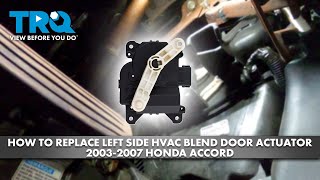
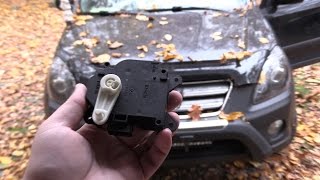
- Failed Air Mix Control Motor (Honda/Acura) (Very Common) — The small electric motor controlling the temperature blend door fails internally, preventing hot or cold air adjustment. 🎬 See this walkthrough for replacing a Honda blend door actuator.
- Failed In-Car Temperature Sensor (Hyundai/Kia) (Very Common) — The cabin temperature thermistor fails, sending an open or high-voltage signal to the climate control module.
- Damaged Wiring or Connectors (Less Common) — Wires fray in high-motion areas like door jambs, or connector pins corrode from moisture, breaking the circuit.
- Blown Fuse (Less Common) — A short circuit in the mirror or HVAC system blows the corresponding fuse. This is a symptom of an underlying short that must be located.
- Failed Control Module (BCM/HVAC) (Very Rare) — The control module itself fails and misinterprets signals from a perfectly good switch or sensor. Stop DIY testing and consult a professional if you suspect this.
Symptoms

- Power mirrors do not work or move erratically (Ford, Lincoln) — The driver cannot adjust one or both mirrors, or the mirror moves in the wrong direction. This is the classic symptom for Ford-family vehicles.
- Incorrect HVAC temperature output (Honda, Hyundai, Kia) — The vents blow hot air when set to cold, or cold air when set to hot. The temperature is stuck at one extreme or fails to adjust at all.
- Inability to defrost the windshield — A critical symptom on HVAC-related faults. The system is unable to direct hot air to the windshield, creating a safety hazard in cold or foggy conditions.
- Climate control defaults to 77°F (25°C) — On many Hyundai and Kia models, a failed in-car sensor causes the system to enter a failsafe mode, fixing the target temperature at 77°F.
- Illuminated Warning Light — A body fault light, check engine light, or a specific HVAC service light illuminates on the dashboard.
Diagnostic Flowchart

Tap your situation to follow the diagnostic path that matches what you're seeing on this code.
Common Fixes & Costs
- Replace Power Mirror Switch (Ford-family)
— Parts: $30-$90, Labor: $50-$75, ~0.8 hr book time
(DIY)
: OEM
: OEM - Replace Air Mix Control Motor (Honda/Acura)
— Parts: $45-$80, Labor: $120-$280, ~1.5 hr book time
(Intermediate)
: OEM
: OEM - Replace In-Car Temperature Sensor (Hyundai/Kia)
— Parts: $25-$60, Labor: $70-$150, ~0.7 hr book time
(Intermediate)
: OEM
: OEM - Clean Switch/Connector — Parts: $5-$15, Labor: $0, ~0.1 hr book time (DIY)
- Repair Damaged Wiring — Parts: $10-$50, Labor: $100-$300, ~1.5 hr book time (Intermediate)
- Replace Body/Climate Control Module — Parts: $200-$800, Labor: $150-$300, ~2 hr book time (Professional)
DIY vs Professional
- Replace Power Mirror Switch — Beginner: Yes
- Replace Air Mix Control Motor — Beginner: No
- Replace In-Car Temperature Sensor — Beginner: Yes
- Repair Damaged Wiring — Beginner: No
- Replace Body/Climate Control Module — Beginner: No
Used vs. New Parts: Buying Guide
When a used part is worth it: For purely cosmetic parts of the assembly (e.g., a switch bezel), used is acceptable. For the electronic components themselves (switch, motor, sensor), new is strongly recommended due to the low cost of new parts and the risk of used parts having the same wear-related failure.
Donor-vehicle mileage cap: roughly under 50000 miles for the part to have meaningful remaining life.
Donor quality checklist:
- Match the part number exactly, including any suffixes.
- For switches, ensure there is no sign of liquid damage or corrosion on the pins.
- For actuators, avoid parts that show signs of being forced or have damaged gears.
Decision logic:
- If The new part (OEM or reputable aftermarket) costs less than $100 → Buy new. The risk and potential for repeat labor costs outweigh the small savings from a used part.
- If The repair requires significant labor to access (e.g., Honda air mix motor) → Always buy new. You do not want to repeat a multi-hour job because a used part failed.
- If The vehicle is very old and budget is the absolute top priority → A used part from a low-mileage, accident-damaged vehicle is a viable risk.
Warranty tradeoff: Used parts typically have a 30-90 day warranty at best. New aftermarket parts often carry a 1-year to limited lifetime warranty. OEM parts have a 1-2 year warranty.
Worst-case if a used part fails: $200-$400 if a used part fails soon after installation, primarily due to the cost of repeated labor.
What Happens If You Wait — Timeline
- 0-1 month: Code is set. The associated component (mirror switch, HVAC temp control) stops working or works erratically. For HVAC faults, this is a safety issue if the defroster is affected. (MPG impact: 0%% · Added cost: $0)
- 1-6 months: If the fault is a short circuit, a parasitic battery drain develops. The vehicle is slow to start or has a dead battery after sitting for a day or two. This puts extra strain on the battery and alternator. (MPG impact: 0%% · Added cost: $150-$300 (for a new battery if completely drained multiple times))
- 6-12 months: Continued electrical stress from a persistent short affects wiring and connectors. In high-motion areas like a door harness, a frayed wire causing the short worsens, potentially affecting other systems in the same bundle. (MPG impact: 0%% · Added cost: $100-$300 (for potential wiring repair if the fault propagates))
- 12+ months: In a worst-case scenario, a constant short circuit sending incorrect voltage eventually damages the input/output driver within the Body Control Module (BCM) or HVAC module itself. This is a rare but possible outcome of ignoring the initial fault. (MPG impact: 0%% · Added cost: $500-$1500 (for BCM/HVAC module replacement and programming))
Cost of Not Fixing It
- Immediate: Loss of function for the specific component: power mirrors won't adjust, or HVAC temperature control fails. This is a safety issue if you cannot defrost the windshield. (Added cost: 0)
- 1-3 months: If the fault includes a short circuit, it creates a parasitic battery drain, leading to a dead battery and the need for jump starts. (Added cost: $150-$300 (for a new battery and potential towing/service call))
- 3+ months: A persistent short circuit or electrical fault potentially stresses and damages the Body Control Module (BCM) or Climate Control Module, which is a much more expensive repair. (Added cost: $500-$1500 (for module replacement and programming))
Diagnosis Steps

- Verify the Code's Meaning for Your Vehicle
Confirm what B1234 means for your specific make and model. A misdiagnosis (e.g., inspecting mirrors on a Honda) is the most common and costly mistake. Check the 'Manufacturer Quirks' section below.
Tools: None (Beginner) - Perform HVAC Self-Diagnostic Test (Honda/Acura)
Many Honda and Acura vehicles have a built-in self-diagnostic function for the climate control system. Press and hold specific buttons (e.g., 'Auto' and 'Off') while turning the ignition on. This flashes the trouble code directly on the climate control display, confirming the fault without a scan tool.
Tools: Owner's manual or vehicle-specific instructions (Beginner) - Inspect the Component and Connector
Visually inspect the relevant part (mirror switch, air mix motor, or in-car sensor) and its electrical connector. Look for signs of liquid damage, corrosion on the pins, melted plastic, or broken wires.
Tools: Flashlight, Trim removal tools (Intermediate) - Test the Switch with a Multimeter (Ford)
Set a multimeter to continuity. Using a wiring diagram, identify the ground pin and the various input pins on the switch. There should be no continuity between the ground pin and any input pin when no buttons are pressed. If you find continuity on multiple inputs at once without pressing anything, the switch is internally shorted.
Tools: Multimeter, Vehicle-specific wiring diagram (Advanced) - Test the Air Mix Motor Circuit (Honda)
Disconnect the air mix motor. With the ignition on, use a multimeter to check for a 5V reference voltage at the connector's S5V line. If voltage is missing, the problem is in the wiring or the climate control unit. If 5V is present, the motor itself is the culprit.
Tools: Multimeter, Vehicle-specific wiring diagram (Advanced) - Test the In-Car Temperature Sensor (Hyundai/Kia)
Back-probe the sensor's signal wire with a multimeter set to DC volts. An 'Open (High)' fault code is set when the voltage is at or above 4.9V. Alternatively, disconnect the sensor and measure its resistance. An infinite resistance reading confirms a failed, open sensor.
Tools: Multimeter, Vehicle-specific wiring diagram, Temperature/resistance chart (Advanced) - Inspect the Fuses
Using the owner's manual, locate and inspect the fuse for the power mirrors or HVAC control unit. A blown fuse indicates a short circuit that must be found before simply replacing the fuse.
Tools: Fuse puller, Owner's manual (Beginner) - Test Mirror Motor Resistance (Ford)
If the switch tests good, check the mirror motors themselves from the switch connector. Set a multimeter to Ohms. Check the resistance between the common wire and each directional wire. A healthy motor shows resistance between 15 and 30 ohms. An open circuit (infinite resistance) or a short (near zero ohms) indicates a problem in the mirror's wiring or motor.
Tools: Multimeter, Vehicle-specific wiring diagram (Advanced) - Analyze Scan Tool Live Data
Use a professional scan tool that reads BCM or HVAC module live data. For Ford, monitor the PIDs for each mirror switch input; they should change from 'Inactive' to 'Active' only when pressed. For Honda, watch the 'Air Mix Control Motor' position feedback. For Hyundai/Kia, view the 'In-Car Temperature Sensor' reading; a value of -40°C/F indicates a failed sensor.
Tools: OBD-II Scan Tool with BCM/HVAC live data capability (Advanced)
When This Code Triggers (Freeze-Frame Conditions)
- Ignition Status: ON (Fault is detected during initial power-up or when the component is activated.)
- Battery Voltage: 11.5-14.5V (Normal operating voltage; the BCM logs the fault when it detects an invalid electrical signal from the component.)
- Ambient Temperature: -10°F to 110°F (Fault is not typically temperature-dependent, but symptoms of HVAC faults are more noticeable at temperature extremes.)
- Vehicle Speed: 0-75 mph (The electrical fault is detected at any speed, including when stationary with the key on.)
Related Codes
- B1235 — On Ford vehicles, B1234 indicates a fault with the mirror's directional inputs, while B1235 indicates a fault with the mirror selector switch (left/right). Seeing both together confirms the entire master switch assembly is faulty. On Honda vehicles, B1235 points to a general problem in the air mix control motor circuit, linkage, or door.
- B1233 — On Honda vehicles, this code is a direct partner to B1234. B1234 signifies a short in the driver's air mix motor circuit, while B1233 signifies an open in the same circuit. Symptoms are identical.
- U0140 — This is a 'Lost Communication With Body Control Module' code. If it appears with B1234, it increases the likelihood that the BCM is the root cause, failing to communicate properly on the vehicle's network.
- B1342 — A generic code for a defective ECU/BCM. If B1234 (an external input fault) appears alongside B1342 (an internal module fault), the BCM itself becomes the primary suspect.
Climate & Environmental Factors
- Moisture Intrusion (Rain & Humidity): The leading environmental factor, especially for the Ford mirror switch failure. Moisture from rain (through an open window) or high ambient humidity penetrates switch housings and connectors, causing corrosion and short circuits.
- Extreme Cold/Heat: Extreme temperatures put more demand on the HVAC system, making failures of components like the air mix motor (Honda) or in-car sensor (Hyundai) immediately noticeable. Temperature extremes expose the pre-existing electrical problem.
- Coastal/Salty Air: Vehicles in coastal regions experience accelerated corrosion on all electrical components, including switch contacts, connector pins, and circuit boards.
How to Talk to a Mechanic About This Code
Say this: "I have a [Your Car's Make, e.g., Honda Accord] with a B1234 fault code and the symptom is [Your Symptom, e.g., 'the vents blow the wrong temperature' or 'the power mirrors do not work']. I believe this points to the [Known Part, e.g., 'air mix control motor' or 'master mirror switch']. Can you give me an estimate to confirm this diagnosis and replace that specific part?"
This language immediately tells the shop you understand the manufacturer-specific nature of this code. It directs them to the most likely cause, saving diagnostic time and preventing them from chasing the wrong problem (e.g., inspecting mirrors on a Honda). It frames the job as a confirmation and replacement, controlling your costs.
Avoid saying:
- 'My car has a B1234 code, please fix it.' (Too vague; invites misdiagnosis if they do not know the brand-specific meaning.)
- 'My check engine light is on.' (This is a Body code and rarely triggers the check engine light, causing confusion.)
- 'Just fix whatever you think is wrong.'
Questions to ask before authorizing the repair:
- For Ford: Did you test for a short in the switch, or are you recommending replacement based only on the code?
- For Honda/Hyundai/Kia: Is the replacement part you are quoting an OEM part or a reputable aftermarket brand like Dorman?
- What is your warranty on both the part and the labor for this repair?
- Can you confirm the repair will be less than [X dollars] before proceeding?
Where to Take It: Dealer vs Independent vs Chain
- Dealer:
Not recommended unless the vehicle is under warranty or a BCM replacement is confirmed by an independent shop. Common B1234 fixes are too simple to justify dealer prices.
Best for: Vehicles still under the bumper-to-bumper warranty., The rare case where the Body Control Module (BCM) itself has failed and requires VIN-specific programming.
Downsides: Highest labor rate., Often recommends replacing an entire assembly when only a small component is needed. (Typical cost: +50% vs. baseline) - Independent Shop:
Best fit. Any competent independent shop is familiar with these common, brand-specific failures and performs the repair for a reasonable price.
Best for: Out-of-warranty vehicles., All common B1234 repairs (mirror switch, HVAC motor, temp sensor)., Cost-effective diagnosis and repair.
Downsides: Quality varies; always check reviews and look for ASE certifications., Sometimes lacks the specific tools to program a new BCM if that is the issue. (Typical cost: +0% vs. baseline) - Chain Shop:
Acceptable with caution. Best used if you have already diagnosed the problem yourself and are simply paying them to install a specific part (e.g., 'Please replace the driver's power mirror switch'). Avoid for initial diagnosis.
Best for: Simple parts replacement where you know exactly what needs to be done.
Downsides: Technician skill and experience with electrical diagnosis is inconsistent., High risk of misdiagnosis if they are unaware of the manufacturer-specific meaning of B1234., High pressure to upsell other services. (Typical cost: -10% vs. baseline)
When to Walk Away From the Repair
If repair costs exceed 50% of the car's private-party value, seriously consider selling or trading it in rather than fixing it. For B1234, this is highly unlikely unless it is a symptom of a catastrophic BCM failure.
- Car worth $4000, fix is $350: Fix it. The repair cost is less than 10% of the vehicle's value and restores important functionality.
- Car worth $12000, fix is $450: Fix it. This is a routine repair cost for a vehicle of this value.
- Car worth $2500, fix is $1200: Walk away. This high cost suggests a rare BCM failure, not a simple switch or motor. The repair is nearly 50% of the car's value.
What Scan Tool You Need for This Code
Minimum: A scanner that reads manufacturer-specific Body ('B') codes. Basic OBD-II readers that only handle Powertrain ('P') codes cannot see B1234.
A basic engine-only code reader shows 'No Codes Found,' masking the issue. To diagnose this fault, the tool MUST communicate with the Body Control Module (BCM) or HVAC module.
Budget: BlueDriver Pro or Foxwell NT301 (~$70) — Reads codes from systems beyond the engine, including the BCM. Confirms the B1234 code exists and allows you to clear it after a repair.
Mid-range: Autel MaxiCOM MK808S or Foxwell NT510 Elite (~$370) — Offers full-system scanning, including BCM and HVAC modules. Displays live data, which is crucial for proper diagnosis (e.g., watching the mirror switch position change or the air mix motor's reported position). Offers bidirectional controls to command the component to move, confirming if the part or the wiring is at fault.
Professional: Autel MaxiSys MS906 or Launch X431 Series (~$600-1200) — Provides full OEM-level diagnostics, including bidirectional control, module programming (for rare BCM replacement scenarios), and detailed live data graphing. Overkill for a simple B1234 fix, but necessary for a professional shop.
Rent vs buy: Auto parts stores like AutoZone offer a loaner tool program where you 'buy' a scanner and get a full refund upon return. Confirm their loaner tool reads 'B' (Body) codes, as free in-store checks often only cover engine codes. For a one-time fix, renting is ideal. If you do your own maintenance, buying a mid-range scanner is a worthwhile investment.
How to Clear the Code After You Fix It
- Use an OBD-II scan tool capable of reading BCM codes to clear the fault.
- Disconnecting the negative battery terminal for 15 minutes is an alternative, but erases other vehicle memory (radio presets, etc.).
- Perform a function test (e.g., operate the mirror switch or HVAC controls) to confirm the repair.
- Complete a drive cycle to ensure all systems function correctly and no new codes appear.
Drive cycle (~20 minutes): Cold start the vehicle and let it idle for 2-3 minutes. Drive for 15 minutes in a mix of city and highway conditions. Ensure all accessories (mirrors, HVAC) are operated during the drive. The goal is to confirm the fix, not necessarily to set all emissions monitors.
Readiness monitors affected: Not applicable for B-codes. Drive cycle is for fix verification, not emissions readiness.
Before emissions retest: drive at least 50 miles to fully set monitors.
Watch out for:
- The code reappears instantly if the underlying electrical short or open circuit is not fixed.
- Using a basic code reader that only clears 'P' (Powertrain) codes does not clear a 'B' (Body) code.
- Disconnecting the battery resets emissions readiness monitors, requiring a much longer drive cycle to complete before an emissions test.
Will This Fail Emissions / State Inspection?
No — by itself this code doesn't fail OBD inspection (but it can keep readiness monitors from setting, which causes a separate fail).
- California: A B-code by itself does not fail a Smog Check. However, if the fault causes the 'Check Engine' light (MIL) to illuminate, it is an automatic failure.
- New York: The NYS inspection checks for an illuminated MIL. A B-code that does not trigger the MIL does not cause a failure. If the MIL is on for any reason, the vehicle fails.
- Texas: In the 17 counties requiring emissions testing, the inspection looks for active emissions-related codes ('P' codes) and MIL status. A 'B' code alone is not grounds for failure, but an illuminated MIL is.
Most Commonly Affected Vehicles
- Ford F-150 (2004-2014) — Extremely common due to the master window/mirror switch assembly's vulnerability to rain. The replacement part is the entire switch panel.
- Ford Explorer (2002-2010) — The driver's door module, which integrates the mirror switch, is a frequent failure point from moisture intrusion.
- Lincoln Town Car (2003-2011) — Shares the same failure-prone switch design as other Ford models, leading to the 'Invalid Code' fault.
- Honda Accord, Civic, CR-V (2008-2022) — B1234 points to a short in the driver's Air Mix Control Motor circuit. It is sometimes displayed as DTC 41 on the self-diagnostic.
- Acura MDX, RDX, TL (2007-2015) — Shares the same HVAC system design as Honda. B1234 indicates a short in the driver's air mix control motor.
- Hyundai Sonata, Elantra, Santa Fe (2006-2015) — Indicates an 'In-Car Temperature Sensor Open (High)' fault. The system defaults to a fixed 77°F (25°C) output.
- Kia Sorento, Optima, Sportage (2009-2016) — Shares platforms with Hyundai; the code points to an 'In-Car Temperature Sensor Open (High)' fault with identical symptoms.
- Mercedes-Benz E-Class, C-Class (1996-2009) — B1234 typically indicates a fault with the climate control's sun sensor on the dashboard, used to adjust fan speed in 'Auto' mode.
Manufacturer-Specific Notes
- Ford / Lincoln / Mercury: The code is almost always caused by the driver's master switch panel failing due to moisture from an open window or cleaning. The fix is replacing the entire panel, not just a single button.
- Honda / Acura: B1234 is never about the mirrors. It is exclusively for a short in the driver's air mix control motor circuit. Do not confuse the Diagnostic Trouble Code (DTC) B1234 with the 'Maintenance Minder' code B1234, which is a reminder for scheduled service.
- Hyundai / Kia: This code points to an 'In-Car Temperature Sensor Open (High)' fault. When it fails, the climate control enters a failsafe mode, targeting a constant 77°F (25°C). The sensor is a small, inexpensive part often behind a tiny grille near the driver's knees.
- Mercedes-Benz: B1234 points to the sun sensor on the dash used by the automatic climate control. If the A/C works fine otherwise, many technicians advise ignoring this specific code as it has little practical effect.
- General Motors (GM): On some older GM vehicles, B1234 is unrelated to mirrors or HVAC and indicates an issue with the entertainment system, such as a 'CD player ON signal circuit open' fault.
Real Owner Stories
2011 Ford F-150 at 110K miles
Power mirrors stopped working entirely. The driver could not adjust either mirror using the control pad. The B1234 code was present.
What they tried:
- Checked the fuse for the power mirrors, which was fine.
- Assumed it was the mirror motors and prepared for a complex repair.
Outcome: After reading a forum, the owner realized the master window/mirror switch assembly on the driver's door is a common failure point due to rain. They replaced the entire switch unit (Dorman 901-319) for $60. The repair took 20 minutes using a trim tool, and the mirrors worked perfectly.
Lesson: On Ford trucks, always suspect the master switch first for code B1234. It is a cheap, easy DIY fix that is the cause over 90% of the time, especially if the window was left open in the rain.
2010 Honda CR-V with 125K miles
The heater stopped blowing hot air; it only blew cool or ambient air regardless of the temperature setting. The A/C worked fine. The code B1234 was stored in the HVAC module.
What they tried:
- The owner first suspected a bad thermostat or low coolant.
- They confirmed both heater hoses going through the firewall were hot, indicating the heater core was getting hot coolant.
Outcome: Correctly diagnosing a blend door issue, the owner located the driver's air mix control motor under the dash. They replaced the motor (Honda P/N 79160-TA5-A21). The repair was difficult due to tight access but successful, restoring full temperature control for $50 in parts.
Lesson: If your Honda has no heat but the engine is warm and heater hoses are hot, the problem is almost certainly the air mix control motor. B1234 confirms this is a short in that motor's circuit.
2012 Kia Sorento at 85K miles
The automatic climate control seemed stuck. No matter the setting, the air temperature felt the same, and the system defaulted to 77°F (25°C) on the scan tool. The code B1234 was present.
What they tried:
- The owner initially thought the main climate control unit had failed, a potentially expensive repair.
- They tried clearing the code, but it returned immediately.
Outcome: A search revealed that B1234 on Hyundai/Kia vehicles points to an open circuit in the in-car temperature sensor. The owner located the small sensor behind a grille on the dash near the driver's knee. They tested the old sensor with a multimeter and found infinite resistance. A new sensor (Hyundai/Kia P/N 97280-3K000) cost $35 and was replaced in 10 minutes, completely fixing the problem.
Lesson: For Hyundai/Kia, B1234 is a very specific and easy-to-fix problem. The 'failsafe' temperature of 77°F is a key symptom. Do not assume the entire HVAC head unit is bad; check the inexpensive in-car sensor first.
How to Prevent This Code From Triggering
- Apply Dielectric Grease to Connectors (During any related repair) — When replacing a switch or motor, apply a small amount of dielectric grease to the electrical connector pins. This seals out moisture and oxygen, preventing the corrosion that causes many short/open circuits.
- Avoid Leaving Windows Open in Rain (Daily habit) — Specifically for Ford owners, the number one cause of B1234 is water dripping directly onto the master switch assembly on the door panel, causing internal shorts. Keeping the window closed in wet weather is the best prevention.
- Cycle HVAC Controls Regularly (Monthly) — For Honda/Acura, periodically run the temperature control from full hot to full cold. This moves the air mix door and motor through its full range of motion, helping to prevent the linkage from seizing and the motor from failing due to disuse.
- Keep Dash Vents and Sensor Grilles Clean (Quarterly) — For Hyundai/Kia, the in-car temperature sensor pulls in cabin air through a small grille. If this grille gets clogged with dust, the sensor cannot read the temperature correctly, and the aspirator motor burns out, leading to faults. A quick vacuum or wipe-down prevents this.
Frequently Asked Questions
What is the difference between Honda's DTC B1234 and Maintenance Minder B1234?
DTC B1234 is a fault code indicating a short in the air mix motor. Maintenance Minder B1234 is a service reminder for routine maintenance like oil changes and inspections. They are completely unrelated.
Can code B1234 drain my car battery?
Yes. A component with an internal short, such as a faulty mirror switch, fails to enter its low-power 'sleep' mode when the car is off. This creates a parasitic draw that drains the battery overnight.
Where is the in-car temperature sensor on a Hyundai or Kia?
It is typically a small sensor located on the lower dashboard on the driver's side, near the ignition or your right knee. Look for a small, circular grille in the plastic trim. The sensor sits directly behind it.
Can I just clear the B1234 code?
No. Clearing the code only erases the log; it does not fix the underlying electrical problem. The code returns as soon as the control module runs its self-test and detects the fault.
My mirrors and A/C work fine, but I still have the code. Why?
This indicates an intermittent fault or refers to a system you aren't actively using. For example, a faulty Mercedes sun sensor produces no obvious symptom if you avoid the 'Auto' climate setting. It is also sometimes a stored 'history' code from a resolved past issue.
Can I replace the power mirror switch or HVAC motor myself?
Yes. For most Ford models, replacing the mirror switch is a simple 10-minute DIY job requiring only a trim tool. For Honda models, the air mix motor is accessible under the dash and is considered an intermediate-level repair.
My car is a Honda and the A/C blows hot. Is this related to B1234?
Yes. On a Honda, B1234 specifically points to a failure in the air mix motor circuit, which blends hot and cold air. Your lack of A/C or heat is a direct result of this fault.
Key Takeaways
- Code B1234 is a manufacturer-specific fault, meaning you must verify your brand's exact definition before buying parts to avoid costly misdiagnoses.
- On Ford, Lincoln, and Mercury vehicles, B1234 indicates a shorted driver's power mirror switch, requiring a $30-$90 replacement panel.
- On Honda and Acura models, B1234 points to a shorted driver's air mix control motor, causing the climate control to blow the wrong temperature.
- On Hyundai and Kia vehicles, B1234 flags an open in-car temperature sensor, forcing the climate control into a 77°F (25°C) failsafe mode.
Helpful Videos


The information in this article is provided for general reference and educational purposes only. Vehicle specifications, procedures, and part compatibility can vary by production date, trim level, and region. Always consult your vehicle's factory service manual and verify part numbers before purchasing or performing repairs. Safety-critical components such as airbags, seat belts, and braking systems should be installed by a qualified professional.
- 🎬 Helpful Videos
- What Does B1234 Mean?
- Can I Drive With B1234?
- Common Causes
- Symptoms
- Diagnostic Flowchart
- Common Fixes & Costs
- DIY vs Professional
- Used vs. New Parts: Buying Guide
- What Happens If You Wait — Timeline
- Cost of Not Fixing It
- Diagnosis Steps
- When This Code Triggers (Freeze-Frame Conditions)
- Related Codes
- Climate & Environmental Factors
- How to Talk to a Mechanic About This Code
- Where to Take It: Dealer vs Independent vs Chain
- When to Walk Away From the Repair
- What Scan Tool You Need for This Code
- How to Clear the Code After You Fix It
- Will This Fail Emissions / State Inspection?
- Most Commonly Affected Vehicles
- Manufacturer-Specific Notes
- Real Owner Stories
- 2011 Ford F-150 at 110K miles
- 2010 Honda CR-V with 125K miles
- 2012 Kia Sorento at 85K miles
- How to Prevent This Code From Triggering
- Frequently Asked Questions
- What is the difference between Honda's DTC B1234 and Maintenance Minder B1234?
- Can code B1234 drain my car battery?
- Where is the in-car temperature sensor on a Hyundai or Kia?
- Can I just clear the B1234 code?
- My mirrors and A/C work fine, but I still have the code. Why?
- Can I replace the power mirror switch or HVAC motor myself?
- My car is a Honda and the A/C blows hot. Is this related to B1234?
- Key Takeaways
- 🎟️ Get 5% Off