

U0442 on 2016-2021 Mazda CX-3: Invalid Data from PCM Explained
This code means the Transmission Control Module (TCM) received invalid data from the main engine computer (PCM). It's often triggered by a simple event like releasing the brake pedal during engine cranking and may not indicate a failed part. A PCM software update often resolves this sensitivity.
- U0442 on your CX-3 most often means the engine computer (PCM) sent bad data to the transmission computer (TCM).
- The most common cause is not a broken part, but a software sensitivity triggered by releasing the brake pedal too soon when starting the car. A software update from Mazda usually fixes this.
- Before suspecting expensive module failures, check for the simple things: get your battery tested and ensure the air filter box is securely latched.
- This code will likely put your car in a 'limp mode,' preventing it from shifting into higher gears. It's best to get it diagnosed rather than continue driving at high speeds.
What's Unique About the 2016-2021 Mazda CX-3
On this generation of Mazda CX-3 and other Skyactiv models, U0442 is frequently not a sign of a hardware failure. Instead, it's often a symptom of an overly sensitive PCM logic. Mazda has issued Technical Service Bulletins (TSBs) explaining that the code can be set simply by interrupting the engine cranking process, for example, by letting go of the brake pedal too soon. This event can cause a cascade of communication codes, including U0442, P061B, and U0401, leading to limp mode even though no parts have actually failed. 🎬 Watch: Understanding Mazda limp mode and power drop issues The official TSB states the PCM's torque calculation error detection is too sensitive, leading to a false detection of failure.
Symptoms You May Notice
- Check Engine Light is on
- AT (Automatic Transmission) warning light is on
- Transmission will not shift past 4th gear (limp mode)
- Surging or hesitation during acceleration
- Erratic or delayed gear shifts
- Smart City Brake Support (SCBS) warning message may appear
- Cruise control may be disabled
- Replacing the Transmission
- Replacing the Throttle Body
- Replacing the Mass Airflow (MAF) Sensor (without confirming it's faulty)
- Replacing the PCM or TCM without performing the software update first
Most Likely Causes
- Interrupted Engine Cranking 🔴 High Probability A specific TSB (01-015-18) identifies that releasing the brake pedal during engine cranking can cause the PCM to generate calculation errors, triggering this code on 2019 CX-3 models among others. The PCM's error detection logic is overly sensitive on some software versions, leading to a false failure detection.
How to confirm: Review the freeze-frame data with a scan tool to see if the code was set during engine start-up. If codes P061B ('Internal Control Module Torque Calculation Performance') and U0401 are also present, this is the most likely cause. The TSB specifically instructs technicians to check if these codes were stored during cranking.
Typical fix: A PCM software update (reprogramming) performed by a Mazda dealership or qualified shop corrects the sensitive logic. In the short term, clearing the codes (e.g., by disconnecting the battery) may restore normal function until the next interrupted crank.
Est. part cost: $0 - Weak or Failing Battery 🟡 Medium Probability Modern vehicles with complex electronic modules are highly sensitive to voltage. A weak battery can cause voltage to drop below the required threshold (the TCM requires 10V or more) during cranking, leading to data corruption and communication errors between modules.
How to confirm: Test the battery voltage with a multimeter. A healthy battery should read approximately 12.6V when off and should not drop below 10V during cranking. Check for corrosion on the battery terminals. Many auto parts stores will test your battery for free.
Typical fix: Replace the battery and clean the terminals and ground connections.
Est. part cost: $150-$300 - Loose Air Cleaner Assembly ⚪ Low Probability A specific Service Alert (SA-011-19) for the related CX-5 notes that if the air cleaner assembly is not properly seated (often after an air filter change), it can cause symptoms like surging, limp mode, and set U0442 along with P061B. This happens because the unseated assembly allows unmetered air past the Mass Airflow (MAF) sensor, causing incorrect engine torque calculations that the PCM then sends to the TCM.
How to confirm: Physically inspect the air cleaner box. Gently pull on it to see if it moves. Ensure all lower tabs are securely locked into place by grasping and attempting to move the assembly.
Typical fix: Properly reseat the air cleaner assembly until it is secure.
Est. part cost: $0
Rare But Worth Checking
- PCM or TCM Internal Fault: While rare, the PCM or TCM itself can fail. This should only be considered after all other possibilities, especially software updates and wiring checks, have been exhausted. A cluster of communication codes is more often a sign of a bad signal than a bad module.
- Wiring Harness or Connector Issue: Corrosion or damage to the CAN bus wiring between the PCM and TCM can corrupt the signal. This is less common than software or battery issues but can happen due to moisture, physical damage, or rodent activity. A visual inspection of the harness and connectors is the first step.
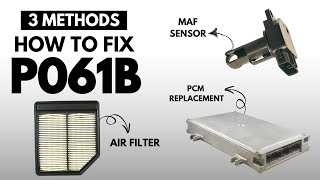
- Faulty Mass Airflow (MAF) Sensor: A failing or dirty MAF sensor can provide incorrect data to the PCM, which then calculates torque incorrectly. This can lead to code P061B, which in turn causes the PCM to send invalid data to the TCM, triggering U0442. 🎬 Watch: 3 ways to fix error code P061B
Diagnosis Steps
- Scan for all codes: Use a professional scan tool to check for codes in all modules, not just the powertrain. Note if P061B and U0401 are present with U0442, as this strongly points to the TSB issue.
- Check for TSBs: Verify if the vehicle's VIN is covered by TSB 01-015/18. If so, a PCM reprogram is the most likely fix.
- Inspect Battery and Terminals: Test the battery's health, ensuring voltage is above 12.6V at rest and doesn't drop below 10V during cranking. Clean any corrosion from terminals and check ground connections.
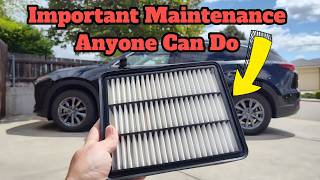
- Inspect Air Cleaner Assembly: Physically check that the air cleaner housing is securely latched, 🎬 Watch: How to replace and properly seat a Mazda air filter as an air leak can trigger the related P061B code.
- Clear Codes and Test Drive: Clear all diagnostic trouble codes and perform a test drive. See if the symptoms and codes return. Attempt to replicate the interrupted cranking scenario to confirm the TSB condition.
- Perform PCM Reprogram: If the issue persists and the TSB applies, have a Mazda dealer or qualified independent shop reprogram the PCM to the latest software version using the Mazda Diagnostic and Repair Software (MDARS). The TSB explicitly states this is the repair for the overly sensitive logic.
- Inspect Wiring: If codes return after the software update, inspect the wiring harness and connectors between the PCM and TCM for any signs of corrosion, damage, or loose pins. Check for good ground connections for all modules.
Parts You'll Likely Need
- Powertrain Control Module (PCM) Reprogramming — This is not a physical part, but a software update. It's the most common fix specified by Mazda TSBs to correct the overly sensitive logic that triggers U0442 during interrupted engine starts.
OEM price range: $150-$250
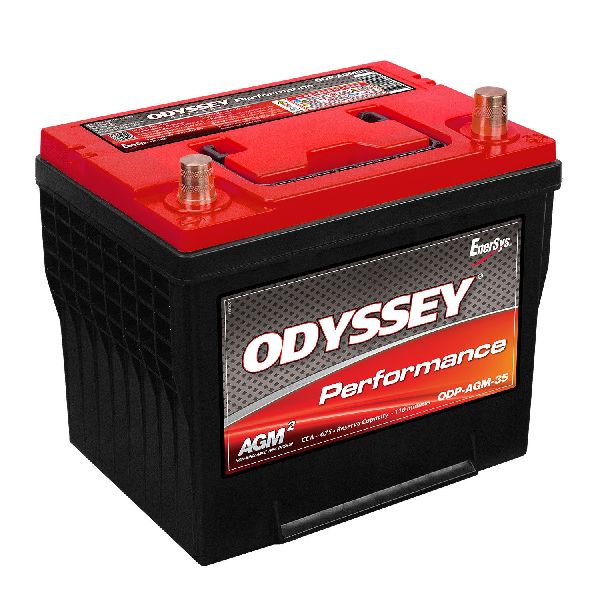
Aftermarket price range: N/A - Car Battery — A weak battery can cause low voltage during cranking, leading to data corruption and setting communication codes like U0442.
Trusted brands: Interstate, DieHard, Duralast
OEM price range: $200-$350
Aftermarket price range: $150-$300
Related Codes That Often Appear With This One
- P061B — This code, 'Internal Control Module Torque Calculation Performance', is often the root cause. The PCM detects a torque calculation error (sometimes falsely) and sends invalid data, which the TCM then flags with U0442.
- U0401 — This code means 'Invalid Data Received From ECM/PCM'. It's a more general version of U0442 and is often set by other modules (like the ABS or Forward Sensing Camera) for the same reason: the PCM is sending out bad data.
Technical Service Bulletins (TSBs) & Recalls
- 01-015-18: Notes that U0442 can be stored with P061B and U0401 when engine cranking is interrupted. Recommends a PCM software update to fix the overly sensitive control logic.
- SA-011-19 / SA-011-19a: Mention that U0442 (TCM) can be set along with P061B and other U-codes, with symptoms including surging and the transmission not shifting past 4th gear. One cause identified is a loose air cleaner assembly.
Platform-Specific Known Issues
- TSB 01-015-18-3513a specifically calls out 2019 CX-3 models (among other Mazdas) for setting U0442, P061B, and U0401 due to an overly sensitive PCM logic when engine cranking is interrupted. The fix is a software update.
- Service Alert SA-011-19 (for the related CX-5, but relevant) points to a loose air cleaner assembly as a potential cause for a cluster of codes including U0442 and drivability symptoms like surging and being stuck in gear.
Mechanic-Grade Diagnostic Values
- CAN Bus Network Resistance — expected: Approximately 60 Ohms. Failure: A reading of 120 Ohms indicates an open circuit or a missing termination resistor. A reading significantly less than 60 Ohms could indicate a short in the wiring.
- CAN High Voltage to Ground — expected: 2.5V to 3.0V DC (recessive state, key on). Failure: Voltages outside this range indicate a potential short or open on the CAN High line.
- CAN Low Voltage to Ground — expected: 2.0V to 2.5V DC (recessive state, key on). Failure: Voltages outside this range indicate a potential short or open on the CAN Low line.
- TCM Operating Voltage — expected: 10V or more. Failure: If battery voltage drops below 10V, the TCM may detect invalid signals and set U0442.
Scan Tool Commands That Help
- Mazda Diagnostic and Repair Software (MDARS): Software Update (PCM Reprogramming) — This is the specific function required to perform the TSB repair for the overly sensitive PCM logic that falsely triggers P061B and U0442. MDARS is required for 2016-2021 CX-3 models.
- Mazda Diagnostic and Repair Software (MDARS): Self-Test — After a repair or software update, running a full network self-test is necessary to confirm that no new DTCs are present and that communication between all modules is restored.
Wiring & Ground Locations
- Transmission Control Module (TCM) — On many Mazda models of this era, the TCM is located under the battery and battery tray, mounted on top of the transmission case.. This is the module that receives the invalid data and sets code U0442. Its location makes it susceptible to heat from the transmission, and its connectors and grounds must be secure for proper communication.
- Main Ground Point — A critical ground point for jump-starting is specified on the vehicle body, away from the battery itself. While not a direct diagnostic point for this code, ensuring all main chassis and engine grounds are clean and tight is a fundamental step in resolving communication errors. A wiring diagram for the specific model year is the best source for all ground locations.. Poor grounding can cause voltage discrepancies between modules, leading to data corruption on the CAN bus and triggering communication codes like U0442.
Real Owner Repair Stories
- Reddit r/CX5 (2018 Mazda 6 (similar platform/electronics)) — Limp mode, U0442:00-28 'invalid data received from ECM/PCM-B'.
❌ Tried (didn't work) Initial diagnosis pointed to a weak battery and a bad ignition coil.
✅ What actually fixed it The final fix for a lingering misfire and related codes was cleaning a clogged fuel injector and replacing the spark plugs.
Model Year Variations Within This Range
- 2019: TSB 01-015/18 specifically lists 2019 CX-3 vehicles with VINs lower than JM1DK**421607 (produced before September 4, 2018) as being affected by the sensitive PCM logic requiring a software update. While other years may experience the issue, this TSB provides a definite cutoff for early 2019 models.
- 2018-2021: For 2018 and later models, including the CX-3, PCM reprogramming must be done with the newer Mazda Diagnostic and Repair Software (MDARS). Earlier software (MMP) will not work.
Diagnostic Flowchart
Other Known Issues on This Vehicle
Issues unrelated to this code that are worth knowing about as an owner of this generation:
- Infotainment System Glitches (Ghost Touch/Freezing) 🟠 Medium — Common across many Mazda models of this era. Can occur at any mileage. Often manifests as unresponsive screens, random inputs ('ghost touch'), or freezing. (Ref: No specific TSB for CX-3, but a well-known issue. A common DIY fix involves replacing the touchscreen digitizer for $35-$60. A system reset (holding NAV+BACK+MUTE) can provide a temporary fix.)
- Premature Rear Brake Wear / Seized Calipers 🟠 Medium — Reported by owners, sometimes at very low mileage (e.g., under 20,000 miles). Often caused by seized caliper slide pins, especially in regions with road salt. Leads to brake drag, noise, and shudder. (Ref: TSB SA-003-23a and SA-016-24c address brake noise, judder, and dragging for various models, recommending inspection and lubrication of caliper components.)
- Leaking A/C Condenser 🟡 Low — A common failure point causing the A/C to stop blowing cold. An oily spot may be visible on the condenser through the front grille. (Ref: Mazda issued a warranty extension (SSPB8) for the A/C condenser on 2016-2017 models.)
- Skyactiv-G Carbon Buildup Potential 🟡 Low — As a direct-injection (GDI) engine, the Skyactiv-G is theoretically prone to carbon buildup on intake valves over high mileage, as fuel doesn't wash over them. However, Mazda's design aims to run valves hotter to burn off deposits, and widespread severe issues are not commonly reported by owners, with many exceeding 150k miles without problems. (Ref: Mazda has procedures for chemical top-engine cleaning to address buildup if it occurs.)
- Noisy or Failing Wheel Bearings 🟡 Low — A humming or grinding noise that increases with speed and changes pitch when turning is a sign of a failing wheel bearing, which has been reported by some owners.
Used vs. New Parts: Buying Guide for This Vehicle
When a used part is the smart pick: A used PCM or TCM is generally not recommended for this repair. The most common fix is a software update to the existing module, not a hardware replacement. If a module has failed internally, a used one could be a cost-effective alternative to a new OEM part, but only if you have access to the proper tools for reprogramming.
Donor-vehicle mileage cap: roughly under 80000 miles for the part to have meaningful remaining life.
What to inspect on the donor part:
- Ensure the part number matches your original module exactly.
- Source the part from a vehicle with a known, clean history (no flood or major electrical damage).
- Verify the donor vehicle did not have a similar cluster of communication codes.
OEM-only on this vehicle (don't cheap out):
- PCM/TCM Reprogramming: This service can only be performed by a Mazda dealer or an independent shop with a subscription to Mazda's MDARS software.
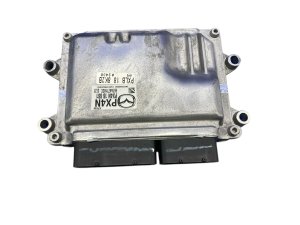
- PCM/TCM Modules: While used modules can be physically installed, they are 'plug and pray,' not 'plug and play.' They must be reprogrammed with the vehicle's VIN and configuration data using dealer-level tools to function correctly and communicate with the immobilizer system.
Aftermarket brands forum-validated for this vehicle:
- For module repair, services like Circuit Board Medics offer repair-and-return for failed PCMs, which can be a reliable alternative to replacement.
Brands owners have reported issues with on this vehicle:
- Pre-programmed modules from online vendors can be a gamble. Forum discussions show mixed results, with some users experiencing programming errors or damage to other modules.
Real Owner Stories
Aggregated from forums and TSBs cited above. Mileages and costs reflect what owners reported in those sources.
2018 Mazda CX-5 (Platform Mate)
Symptoms: Vehicle entered limp mode with code U0442. The owner was also dealing with a weak battery and a misfire.
What fixed it: The initial advice centered on the TSB for releasing the brake pedal during cranking, though the owner's specific case required replacing a clogged fuel injector and an incorrect ignition coil to resolve the underlying misfire that contributed to the issues.
Source hint: Reddit r/CX5 (2024) thread
2019 Mazda CX-3
Symptoms: Check engine light and AT light on; codes U0442, P061B, and U0401 stored after the driver accidentally released the brake pedal while the engine was still cranking.
What fixed it: PCM software update (reprogramming) as per TSB 01-015-18 to correct overly sensitive torque calculation logic.
Source hint: TSB 01-015-18
2019 Mazda CX-5 (Platform Mate)
Symptoms: Surging, limp mode (stuck in gear), and U0442 code appearing shortly after an air filter replacement.
What fixed it: Properly reseating the air cleaner assembly and ensuring all lower tabs were securely locked into place.
Source hint: Service Alert SA-011-19 / SA-011-19a
Related OBD-II Codes
Frequently Asked Questions
Does TSB 01-015-18 apply to my 2019 Mazda CX-3?
Why is my CX-3 stuck in 4th gear and showing an AT warning light?
Can a weak battery cause the U0442 communication code on my Mazda?
Is there a physical component I should check before paying for a software flash?
Will clearing the codes fix the 'Smart City Brake Support' and cruise control errors?
My CX-3 has 'ghost touch' on the screen; is this related to the U0442 code?
Helpful Videos

Used OEM Parts in Stock


New Aftermarket Parts Available


The information in this article is provided for general reference and educational purposes only. Vehicle specifications, procedures, and part compatibility can vary by production date, trim level, and region. Always consult your vehicle's factory service manual and verify part numbers before purchasing or performing repairs. Safety-critical components such as airbags, seat belts, and braking systems should be installed by a qualified professional.
- Mazda CX-3:
- 🎬 Helpful Videos
- 🛍️ Shop This Part
- What's Unique About the 2016-2021 Mazda CX-3
- Symptoms You May Notice
- Most Likely Causes
- Rare But Worth Checking
- Diagnosis Steps
- Parts You'll Likely Need
- Related Codes That Often Appear With This One
- Technical Service Bulletins (TSBs) & Recalls
- Platform-Specific Known Issues
- Mechanic-Grade Diagnostic Values
- Scan Tool Commands That Help
- Wiring & Ground Locations
- Real Owner Repair Stories
- Model Year Variations Within This Range
- Diagnostic Flowchart
- Other Known Issues on This Vehicle
- Used vs. New Parts: Buying Guide for This Vehicle
- Real Owner Stories
- 2018 Mazda CX-5 (Platform Mate)
- 2019 Mazda CX-3
- 2019 Mazda CX-5 (Platform Mate)
- Related OBD-II Codes
- Frequently Asked Questions
- 🎟️ Get 5% Off