

U0401 on 2017 Chevrolet Silverado: Causes and Fixes for Invalid ECM Data
On a 2017 Silverado, code U0401 almost always points to a damaged wiring harness under the driver and passenger side sill plates, a known issue documented in GM TSB #PIT5457D. The primary culprit is the 'Communication Enable' circuit 5986, which gets compromised by water intrusion. The fix involves repairing corroded or broken wires, not replacing expensive modules.
- For a 2017 Silverado, U0401 is most frequently caused by wiring damage under the driver and passenger sill plates, as per GM TSB #PIT5457D.
- Before suspecting an expensive ECM failure, a thorough inspection of the sill plate wiring is the first and most important diagnostic step.
- Do not replace the power steering rack or other modules just because they have stored the U0401 code; they are usually just reporting the communication error.
- Check for other codes, especially P0128, as a fault in another system can cause the ECM to send invalid data, triggering U0401 elsewhere.
- This is a complex electrical issue; professional diagnosis is recommended if you are not comfortable with tracing wires and using a multimeter.
What's Unique About the 2017-2017 Chevrolet SILVERADO

The 2014-2019 generation of Chevrolet Silverado (K2XX platform) is highly susceptible to a specific wiring failure that triggers the U0401 code. General Motors identified a common problem where the wiring harness running under the driver and passenger side floor sill plates gets damaged by water intrusion or chafing. This often leads to corrosion and open circuits, particularly affecting the 'Communication Enable' circuit (a tan wire, circuit 5986), which disrupts the network and is a primary cause of this code. This circuit is used by the Body Control Module (BCM) to 'wake up' other modules for communication.
Diagnostic Flowchart

Tap your situation to follow the diagnostic path that matches what you're seeing on this vehicle.
Symptoms You May Notice

- "Service StabiliTrak" message on the driver information center (DIC)
- "Service Power Steering" or "Steering Assist is Reduced" message on the DIC
- "Service Trailer Brake System" message
- Check Engine Light is on
- ABS and Traction Control warning lights are on
- Harsh or erratic transmission shifting
- Vehicle enters a reduced power "limp mode"
- In some cases, the vehicle may refuse to start or stall intermittently
- Backup camera inoperative
- Replacing the Engine Control Module (ECM) without first inspecting the sill plate wiring harness.
- Replacing the Power Steering Control Module (PSCM) or Electronic Brake Control Module (EBCM) just because it stored the U0401 code. These modules are usually just reporting the communication problem.
- Replacing the power steering gear/rack. TSB #17-NA-158 specifically warns against this, as the problem is almost always related to data input, not the steering hardware itself.
Most Likely Causes

- Damaged Wiring Harness in Sill Plates 🔴 High Probability As documented in GM TSB #PIT5457D, the wiring harness channel under the driver and passenger door sill plates is a known weak point for water intrusion and damage. This causes corrosion (often seen as green powder) and breaks in critical communication wires, especially the Communication Enable circuit 5986. Splice J365 under the passenger front sill plate is also a known failure point.
How to confirm: Remove the plastic sill plates and peel back the carpet to physically inspect the wiring loom in the channel. Look for signs of moisture, green or white corrosion on wires and splice packs (especially Splice J365 on the passenger side), and any chafed or broken wires. The Communication Enable circuit (5986) is often a tan wire and is the primary suspect.
Typical fix: The damaged section of wire(s), often circuit 5986, must be cut out and replaced with a new section of wire using weatherproof butt connectors or solder and heat-shrink tubing. The entire harness rarely needs replacement. GM specifies repair procedures in bulletin 10-00-89-005.
Est. part cost: $10-$50 - Poor Power Supply or Ground Connection 🟡 Medium Probability GM trucks can suffer from poor grounds, especially the main Body Control Module (BCM) ground (G218) located under the dash to the left of the steering column. TSB #PIT5405C directly links a poor G218 ground to a wide range of communication codes. TSB #18-NA-161 also points to loose connections at the battery fuse block and poor G218 grounds. A weak battery or failing alternator can also cause unstable voltage, leading to data corruption on the network.
How to confirm: Test the battery voltage (should be above 12.4V with engine off). Check that the alternator is charging correctly (typically 13.7-14.7V with engine running). Inspect and clean the main battery terminals and chassis grounds. For G218, remove the driver's side lower dash panel and locate the ground stud on the A-pillar; check for tightness and ensure the dash insulator mat is not trapped under the ground eyelet. 🎬 See this walkthrough for locating and fixing the G218 ground issue.
Typical fix: Clean and tighten all ground connections. Replace corroded ground straps or battery cable ends. If the battery or alternator is failing, it must be replaced. For the G218 ground, remove the nut, clean the contact surfaces, and re-tighten securely.
Est. part cost: $20-$400 - Faulty Control Module Software ⚪ Low Probability GM has issued TSBs (#20-NA-113, #17-NA-390, PIE0563) for calibration errors in the Power Steering Control Module (PSCM) and Engine Control Module (ECM) that can cause U0401 to be set incorrectly or remain as a current code even after the initial fault is gone. This can happen especially at startup.
How to confirm: This can only be confirmed by a GM dealer or a qualified shop with access to GM's TIS2WEB programming software. They can check if the module's current calibration is outdated against the latest available software versions.
Typical fix: The affected module (often the PSCM or ECM) must be reprogrammed with the latest software calibration. This is not a part replacement.
Est. part cost: $0
Rare But Worth Checking
- Faulty Engine Control Module (ECM): This should be considered a last resort after all wiring, ground, and software possibilities have been exhaustively ruled out. It is rarely the cause despite the code's definition.
- Failure of an Unrelated Sensor: As per TSB #17-NA-158, an invalid signal from the Engine Coolant Temperature (ECT) sensor can cause the ECM to send out implausible data, triggering a U0401 in the Power Steering Control Module. This is often accompanied by code P0128.
- Aftermarket Electronics: Poorly installed remote starters, alarms, performance tuners, or even plug-in Bluetooth OBD-II devices can interfere with the CAN bus network and cause communication errors.
Diagnosis Steps
- Perform a full vehicle scan with a high-quality OBD-II scanner to see which module(s) are setting the U0401 code and to check for any other related DTCs. Note if the code has a -71 suffix.
- Check for relevant Technical Service Bulletins (TSBs). For this vehicle, #PIT5457D is the most critical.
- Test the vehicle's battery and charging system to ensure stable voltage (above 12.4V at rest, 13.7-14.7V running). Low or unstable voltage is a common cause of communication faults.
- Following TSB #PIT5457D, remove the driver and passenger side sill plates and door threshold trim.
- Carefully peel back the carpet and inspect the entire wiring harness and any splice connectors (especially J365 on passenger side) for signs of water damage, corrosion (green/white powder), chafing, or broken wires. Pay close attention to the Communication Enable circuit (often a tan wire, circuit 5986).
- If damage is found, perform a wire repair using solder and heat shrink or weatherproof butt connectors per GM bulletin 10-00-89-005.
- If no wiring damage is found, inspect major ground connections, particularly the BCM ground G218 (under driver's dash) and chassis grounds from the battery, for tightness and corrosion.
- If all wiring and grounds are confirmed to be good, the next step is to check for available software updates for the ECM and PSCM, as per TSBs #20-NA-113 and #17-NA-390. This requires a dealer or specialized shop. 🎬 Watch a professional demonstrate the power steering control module programming process.
- As a final step, if all other possibilities are exhausted, diagnose the ECM for internal failure. This is rare.
Parts You'll Likely Need
- Wiring Repair Supplies — The most common cause is a broken or corroded wire in the sill plate harness, which requires repair rather than part replacement.
Trusted brands: 3M
OEM price range: $10-$50
Aftermarket price range: $5-$25 - Engine Control Module (ECM)
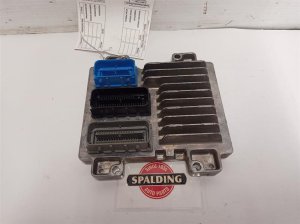
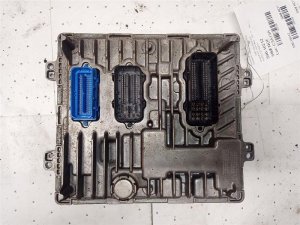
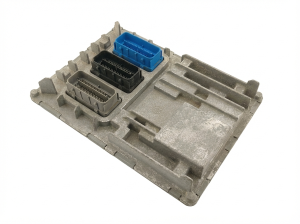
(OEM #ACDelco 12677671 (For 6.0L, example part number))— This is a rare cause, only to be replaced after all wiring, ground, and software issues have been completely ruled out by a professional.
Trusted brands: ACDelco
OEM price range: $400-$700
Aftermarket price range: $250-$500
Related Codes That Often Appear With This One
- U0077 — Indicates a general communication bus failure, often caused by the same wiring issues as U0401. [Bulletin #PIT5457D]
- U0121 — Lost Communication With Anti-Lock Brake System (ABS) Control Module. [Bulletin #PIT5457D]
- U0131 — Lost Communication With Power Steering Control Module (PSCM). [Bulletin #PIT5457D]
- P0128 — Engine Coolant Temperature Below Thermostat Regulating Temperature. A fault with the ECT sensor can cause the ECM to send invalid data, triggering U0401 in other modules.
Technical Service Bulletins (TSBs) & Recalls
- PIT5457D: Service ABS/TCS/Power Steering Message, lists U0401 caused by open/damaged Communication Enable circuit 5986 under sill plates.
- PIT5405C: Various electrical issues caused by poor BCM ground at G218.
- 20-NA-113: PSCM calibration error causing U0401 to remain as a current code.
- 17-NA-390: ECM software calibration issue that can cause U0401.
- 17-NA-158: U0401 set in PSCM as a result of an ECT sensor fault (P0128).
Platform-Specific Known Issues
- TSB #PIT5457D: This is the most critical document for this issue. It details how the Communication Enable circuit (5986) gets damaged under the sill plates, causing U0401 and a host of other communication codes.
- TSB #PIT5405C: Details how a poor BCM ground at G218 can cause a wide range of electrical issues, including numerous communication codes like U0401.
- TSB #20-NA-113 & #17-NA-390: These bulletins address software calibration issues in the PSCM and ECM that can cause U0401 to be set erroneously, requiring a reprogram.
Mechanic-Grade Diagnostic Values
- High-Speed CAN Bus Network Resistance — expected: 60 Ohms (with vehicle power OFF, measured between Pin 6 and Pin 14 of the OBD-II port). Failure: A reading of 120 Ohms indicates an open circuit on the bus, often a break in the wiring or a faulty terminating resistor in the ECM or TCM. A reading near 0 Ohms indicates a short between the CAN High and CAN Low wires.
- CAN Bus Voltage — expected: With key ON, CAN High (Pin 6) should be 2.5V-3.5V and CAN Low (Pin 14) should be 2.5V-1.5V, relative to ground. In the idle (recessive) state, both should be ~2.5V.. Failure: Voltages below 2.0V or above 4.0V suggest a network fault, short to power/ground, or a faulty module transceiver.
- Communication Enable Circuit 5986 Voltage — expected: ~12V (Battery Voltage) with the key in ACC, ON, or START.. Failure: Low or no voltage indicates an open or high resistance in the circuit, typically in the sill plate area. The circuit should be load-tested with a small bulb (e.g., 194); voltage should remain above 11V under this small load.
Hidden / Shadow Codes Worth Checking
- U0401-71: Symptom byte meaning 'Invalid Serial Data Received'. This confirms the module is flagging the data itself as corrupt, often due to a physical layer problem like wiring, grounds, or voltage instability. (see via A professional-grade scan tool like the GM GDS2/Tech2 is required to view symptom bytes.)
Scan Tool Commands That Help
- GM GDS2 / Tech2: Module Status / Network DTC Check — To see a list of all modules on the network and which ones are communicating. If multiple modules are offline, a technician can physically disconnect one module at a time to see if communication is restored to the others, helping to isolate the source of the network disruption.
- GM GDS2 / Tech2: Clear All DTCs — After a physical repair (like fixing a wire), all codes in all modules must be cleared. Some communication codes will not clear on their own and can prevent systems from returning to normal operation until a global clear is performed.
Wiring & Ground Locations
- Circuit 5986 — A tan wire running within the main harness under the driver and passenger side door sill plates.. This is the 'Communication Enable' circuit from the BCM. It gets damaged by water/corrosion in the sill plate channels, preventing modules like the PSCM and EBCM from 'waking up' and communicating, which directly causes a cascade of U-codes.
- Splice J365 — Located within the wiring harness under the passenger front sill plate.. This is a known failure point where multiple branches of Circuit 5986 are joined. Corrosion at this single splice can knock out communication to several modules at once.
- G218 — Main Body Control Module (BCM) ground, located on the driver's side A-pillar, behind the lower dash/kick panel area.. A poor BCM ground can cause the BCM to malfunction, leading to unstable voltage on the Communication Enable circuit it controls, or causing it to send corrupt data itself.
- Underhood Fuse Block Connector — The large electrical connectors on the fuse block/power distribution center located on top of the battery.. The main power feeds for the BCM and other interior modules run through these connectors. Loose or corroded female pins in these connectors can cause intermittent power loss to the BCM, resulting in widespread communication faults and random symptoms.
Real Owner Repair Stories
- YouTube Channel 'Rainman Ray's Repairs' (2017 Chevrolet Silverado) — Intermittent no-start, gauges dropping out, loss of power steering, no communication with ECM and TCM.
❌ Tried (didn't work) Initial inspection was confusing due to multiple communication codes.
✅ What actually fixed it The CAN bus resistance measured 120 Ohms, indicating an open circuit. The fault was traced to a previous, poor repair using butt connectors on the CAN wires at the Transmission Control Module (TCM) connector. Temporarily twisting the wires together restored communication. The final fix required a proper repair of the TCM connector wiring. - YouTube Channel 'Auto-hio' (2017 Chevrolet Silverado) — Intermittent loss of power to radio, HVAC controls, BCM, random exterior lights, and turn signal chime.
❌ Tried (didn't work) Checking individual component fuses was inconclusive due to the random nature of the faults.
✅ What actually fixed it The problem was a loose connection at the main power feed connector on the underhood fuse block (on top of the battery). The female pins for the main power wires (red w/ gray stripe, red w/ green stripe) were not making good contact. The technician removed the pins, tightened them, applied dielectric grease, and reinstalled, which solved the intermittent power loss to the BCM and other modules. - YouTube Channel 'The Infamous Project' (2018 Chevrolet Silverado LTZ) — Constant 'Service StabiliTrak' message, cruise control kicking off.
❌ Tried (didn't work) The owner was unable to diagnose the issue for months.
✅ What actually fixed it The problem was caused by a cheap Bluetooth OBD-II adapter that was left plugged in for use with the Torque app. The device was interfering with the CAN bus network. Unplugging the adapter permanently resolved the issue.
OEM Part Supersession History
e.g., 12668986 (6.0L ECM)→Varies by hardware and calibration— Software updates and minor hardware revisions.
Heads up: A replacement ECM must be programmed with the vehicle's VIN and flashed with the latest compatible software using GM's TIS2WEB service. Installing a used module from another vehicle without programming will result in a no-start condition and a flood of communication codes.
Helpful Videos


Used OEM Parts in Stock


New Aftermarket Parts Available

The information in this article is provided for general reference and educational purposes only. Vehicle specifications, procedures, and part compatibility can vary by production date, trim level, and region. Always consult your vehicle's factory service manual and verify part numbers before purchasing or performing repairs. Safety-critical components such as airbags, seat belts, and braking systems should be installed by a qualified professional.
- Chevrolet SILVERADO:
- 🎬 Helpful Videos
- 🛍️ Shop This Part
- What's Unique About the 2017-2017 Chevrolet SILVERADO
- Diagnostic Flowchart
- Symptoms You May Notice
- Most Likely Causes
- Rare But Worth Checking
- Diagnosis Steps
- Parts You'll Likely Need
- Related Codes That Often Appear With This One
- Technical Service Bulletins (TSBs) & Recalls
- Platform-Specific Known Issues
- Mechanic-Grade Diagnostic Values
- Hidden / Shadow Codes Worth Checking
- Scan Tool Commands That Help
- Wiring & Ground Locations
- Real Owner Repair Stories
- OEM Part Supersession History
- 🎟️ Get 5% Off