

U0141 on 2015-2020 Ford F-150: Lost Communication With Body Control Module Fixes
U0141 on a 2015-2020 F-150 means the Body Control Module (BCM) has stopped communicating with other vehicle computers. This often causes widespread electrical issues. The most common causes are a corroded frame ground connection under the driver's door (G401), water damage to the BCM in the passenger kick panel, or a failed BCM. A simple ground cleaning can often fix it, but a BCM replacement can cost over $1200 at a dealership.
- U0141 means your F-150's Body Control Module (BCM) is offline, causing various electrical systems to fail.
- Before suspecting an expensive BCM failure, ALWAYS check the simple things first: BCM-related fuses and, most importantly, the G401 ground connection on the frame under the driver's door for corrosion.
- Water leaks are a known enemy of the BCM and its wiring. Check for dampness in the passenger footwell and kick panel area.
- If the BCM needs to be replaced, it is not a plug-and-play part. It must be professionally programmed to your truck's specific features and keys.
- This is a complex electrical issue. If you are not comfortable testing wiring with a multimeter, professional diagnosis is strongly recommended to avoid costly misdiagnosis.
What's Unique About the 2015-2020 Ford F-150
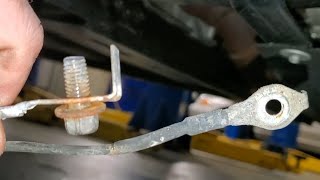
On the 13th generation F-150 (2015-2020), the BCM is deeply integrated into nearly every feature. Unlike older vehicles where systems were more independent, a BCM communication failure on this truck can cause a cascade of seemingly unrelated and bizarre electrical problems. A particularly well-documented issue on this platform is corrosion at a specific frame ground point (G401) 🎬 Watch a video on diagnosing Ford ground cable problems under the driver's door, which is a common culprit for this and other network codes, sometimes even causing a no-start condition. Additionally, this generation is known for water leaks into the passenger cabin from sources like faulty windshield seals or clogged A/C drains, which can directly damage the BCM located in the passenger-side kick panel.
Symptoms You May Notice
- Multiple, random warning lights on the instrument cluster (e.g., check engine, ABS, airbag).
- Interior lights, dome lights, or courtesy lights not working.
- Power windows, door locks, or power mirrors are inoperative.
- Remote keyless entry or remote start fails to work.
- Instrument cluster gauges may freeze, flicker, or go blank.
- Turn signals or hazard lights malfunction.
- Radio, climate controls, or center stack buttons stop working.
- "Hood Ajar", "Hill Start Assist Not Available", or other false warnings on the dash.
- Engine cranks but will not start (if the BCM is part of the security handshake).
- Horn stops working.
- Panic alarm goes off randomly.
- Replacing individual components that have stopped working (e.g., a window switch or light bulb) without realizing the root cause is the BCM or its network connection.
- Replacing the Powertrain Control Module (PCM) when network codes are present. While related, U0141 specifically points to the BCM, not the PCM.
- Assuming the BCM is bad without first thoroughly checking for water intrusion, corroded connectors, and especially the G401 ground.
Most Likely Causes
- Corroded or Loose BCM Ground Connection (G401) 🔴 High Probability The primary ground stud for the MS-CAN bus, G401, is located on the frame rail under the driver's door, where it is highly exposed to road salt and moisture, leading to corrosion. The aluminum body on a steel frame can also promote galvanic corrosion at grounding points if not perfectly sealed.
How to confirm: Disconnect the battery. Locate the G401 ground stud on the frame under the driver's door, near the body mount. Disassemble the connection (typically a 10mm or 13mm nut) and inspect for rust or corrosion. A high resistance reading on the ground circuit with a multimeter also points to this issue.
Typical fix: Thoroughly clean the wire terminals, the bolt, and the frame contact point with a wire brush until bare metal is visible. Reassemble securely and apply dielectric grease or a corrosion inhibitor to prevent future corrosion.
Est. part cost: $0-$10 - Damaged or Corroded Wiring Harness / Connectors 🟡 Medium Probability Water intrusion into the passenger footwell is a known issue, often from a leaking windshield seal, clogged A/C evaporator drain, or sunroof drains. This water pools around the BCM and its connectors, causing corrosion. Wires can also chafe under the driver's side scuff plate or near the parking brake mechanism.
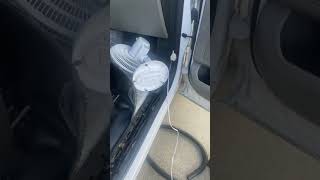
How to confirm: Pull back the carpet and trim in the passenger footwell to visually inspect the BCM and its connectors (especially connector C2280F) for blue or green corrosion, 🎬 See how to inspect a damaged F-150 BCM or signs of moisture. Check for chafing on harnesses routed along the floor and firewall.
Typical fix: Repair the damaged section of wire or replace the corroded connector pigtail. If a connector is corroded, it often requires replacing individual pins (e.g., TE-Connectivity 144969-1) or the entire connector housing. Dry out any wet areas and fix the source of the water leak (e.g., reseal windshield, clear A/C drain).
Est. part cost: $10-$150 - Failed Body Control Module (BCM) 🟡 Medium Probability Internal electronic failure due to water intrusion is the most common reason for BCM failure on this platform. Voltage spikes from a failing alternator or jump-starting incorrectly can also damage the module.
How to confirm: After confirming power, ground, and CAN bus wiring are all good, the BCM itself is the likely culprit. A professional scan tool will be unable to establish communication with the module.
Typical fix: Replace the Body Control Module. The new module must be programmed to the vehicle's VIN and specific configuration using dealer-level software (like Ford's IDS/FJDS) or a high-end aftermarket tool with programming capabilities (like FORScan). Two keys are typically required for the PATS (Passive Anti-Theft System) relearn process.
Est. part cost: $400-$950 - Blown Fuse ⚪ Low Probability
How to confirm: Check the vehicle's fuse boxes (both in the engine bay and the passenger compartment fuse panel, located behind the passenger kick panel) for any fuses related to the Body Control Module. Consult the owner's manual for specific fuse numbers (e.g., F23, F24, F27, F28, F29, F32 in the BCM). A visual inspection or continuity test with a multimeter will confirm if a fuse is blown.
Typical fix: Replace the blown fuse with a new one of the exact same amperage rating. If the fuse blows again, it indicates a short circuit in the BCM or its wiring that needs to be diagnosed.
Est. part cost: $1-$5
Rare But Worth Checking
- Low Battery Voltage or Failing Alternator: A weak or failing battery can cause unpredictable behavior in various electronic modules, including communication dropouts that can trigger a U0141 code. Always test the battery and charging system before diving into complex diagnostics.
- Another Faulty Module on the CAN Bus: A different module on the same network (e.g., a BLIS module in the taillight, or the ABS module) can short out and disrupt communication for all other modules, including the BCM. This often requires unplugging modules one by one while monitoring CAN bus resistance to isolate the source of the network interference.
Diagnosis Steps
- Read all codes from all modules using an OBD-II scanner capable of accessing the BCM and other network modules.
- Check the battery and charging system. Ensure battery voltage is stable and above 12.4V with the engine off.
- Inspect the fuses related to the Body Control Module in the passenger compartment fuse box.
- Locate and inspect the G401 ground connection on the frame rail under the driver's door. Disassemble, clean, and secure the connection regardless of its appearance.
- Pull the passenger side kick panel and scuff plate. Pull back the carpet and inspect the BCM, its connectors, and the surrounding area for any signs of water intrusion, staining, or corrosion.
- Using a multimeter with the battery disconnected, check for CAN bus resistance at the OBD-II port. For the MS-CAN bus (where the BCM communicates), test between pins 3 and 11. A healthy network should read approximately 60 ohms. A reading of 120 ohms indicates a break in the wiring or a failed terminating resistor, while a reading near 0 ohms indicates a short circuit.
- If wiring, grounds, and power are confirmed to be good, but the BCM does not communicate with a scan tool, the BCM itself has likely failed and requires replacement and programming.
Parts You'll Likely Need
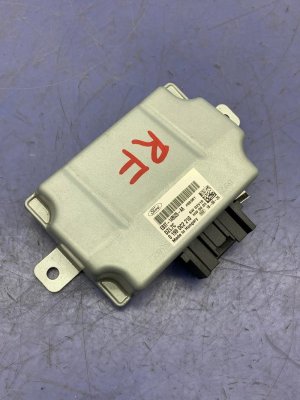
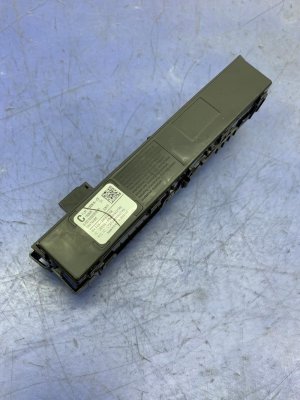
- Body Control Module (BCM)
(OEM #JU5Z-15604-BX (example, part numbers are VIN-specific))— This is the module that has lost communication. If power, ground, and wiring are intact, the module itself is the point of failure. Often damaged by water.
Trusted brands: Motorcraft
OEM price range: $600-$950
Aftermarket price range: $400-$700 - Dielectric Grease — Essential for protecting cleaned ground connections and electrical connectors from future moisture and corrosion, a primary cause of this code.
- Wire Brush / Sandpaper — Needed to clean corrosion from the G401 ground point and any other corroded electrical connections.
Related Codes That Often Appear With This One
- U0140 — This code is 'Lost Communication with BCM'. It is functionally identical to U0141 and often appears alongside it, indicating the same core problem.
- U0100 — 'Lost Communication with ECM/PCM'. This can appear if the BCM communication failure is part of a wider network problem affecting multiple modules.
- P161A — This is an immobilizer error code indicating an incorrect response from the immobilizer control module. It commonly appears after a BCM has been replaced but not correctly programmed, causing a no-start condition.
- U-codes for other modules (e.g., U0155, U0253, U0232) — If a wiring issue, bad ground, or faulty terminating resistor is affecting the entire CAN bus, many modules may lose communication simultaneously, generating a flood of U-codes.
Platform-Specific Known Issues
- The ground point G401 on the frame under the driver's door is a known weak point for corrosion on 2015-2020 F-150s, directly causing MS-CAN bus communication failures that log U0141 and other related codes.
- Water leaks from clogged sunroof drains can run down the A-pillars and saturate connectors or the BCM itself in the passenger kick panel area, causing shorts and communication loss.
- An owner of a 2005 Ford Freestyle reported code U0141 was found during a diagnosis for a separate throttle body issue, though the direct relationship is unclear. [ODI #10426749]
Mechanic-Grade Diagnostic Values
- MS-CAN Bus Resistance (at OBD-II Port Pins 3 & 11) — expected: ~60 Ω. Failure: 120 Ω indicates an open circuit or missing termination resistor. ~0 Ω indicates a short between CAN High and CAN Low wires.
- CAN High (CAN-H) Voltage (Key On) — expected: ~2.5V to ~3.5V. Failure: Voltage outside this range, or matching CAN-L voltage, indicates a bus fault.
- CAN Low (CAN-L) Voltage (Key On) — expected: ~1.5V to ~2.5V. Failure: Voltage outside this range, or matching CAN-H voltage, indicates a bus fault.
- BCM Ground Circuit Resistance — expected: < 5.0 mΩ. Failure: Higher resistance indicates a poor ground connection, which can cause module communication issues.
Hidden / Shadow Codes Worth Checking
- P161A - Incorrect Response from Immobilizer Control Module: This code often appears after a BCM replacement has been attempted. It signifies that the security handshake (PATS) between the new BCM, the PCM, and the keys has failed, resulting in a no-start condition. (see via A capable OBD-II scanner like FORScan or a dealer-level tool (IDS/FJDS) will see this code in the PCM after a failed BCM programming attempt.)
Scan Tool Commands That Help
- Ford IDS / FJDS: Programmable Module Installation (PMI) — This is the dealer-level function used to replace a module. It reads the configuration data from the old module (if possible) and writes it, along with the correct VIN and security information, to the new module.
- FORScan / FDRS / IDS: PATS Parameter Reset — This security procedure is mandatory after installing a new BCM to synchronize it with the vehicle's keys and immobilizer system. It involves a mandatory 10-minute security wait and requires two programmed keys to complete.
- FORScan / IDS: BCM Module Reset / BMS Reset — After a successful BCM installation and programming, a Battery Management System (BMS) reset should be performed. This calibrates the new BCM to the existing battery's age and state of health, ensuring proper charging strategy.
Wiring & Ground Locations
- G401 — On the frame rail under the driver's door, near the body mount.. This is a primary ground point for the BCM and MS-CAN bus. Corrosion here is a very common cause of U0141 and other network codes.
- Connector C2280F — The largest connector on the Body Control Module, located in the passenger side kick panel.. This is the main data and power connector for the BCM. It is highly susceptible to corrosion from water leaks originating from the windshield, A-pillar, or sunroof drains.
- MS-CAN Bus at OBD-II Port — Pins 3 (CAN-H) and 11 (CAN-L) of the OBD-II diagnostic port under the driver's side dashboard.. This is the most accessible point to measure the resistance of the Medium Speed CAN bus, which the BCM uses to communicate. A 60-ohm reading here quickly validates the integrity of the main network wiring.
- Sunroof Drain Tubes — Flexible tubes running from the corners of the sunroof assembly down through the A-pillars.. These tubes can become disconnected or clogged, causing water to leak inside the A-pillar and run directly onto the BCM and its connectors, leading to corrosion and failure.
Real Owner Repair Stories
- Ford F150 Forum (2015-2020 F-150) — After a major rainstorm, horn honked randomly, hazards came on, headlights strobed. Water was found on the BCM.
❌ Tried (didn't work) Replacing the BCM and attempting to program it with FORScan resulted in a no-start condition.
✅ What actually fixed it The no-start was caused by a P161A immobilizer error. The fix required using the official Ford dealer software (FJDS) with a NASTF license to properly perform the security parameter reset. The forum post concluded that a used BCM will not work on a 2015+ model unless the EEPROM is cloned by a specialist. - Reddit user in r/f150 (2017 F-150 Lariat) — Horn stopped working. Owner recalled a previous water leak on the passenger floor mat.
❌ Tried (didn't work) Fuse and relay checks were fine.
✅ What actually fixed it Dealer diagnosed a fully corroded BCM and quoted $3,400+ to replace the BCM and the entire 14401 wiring harness. The recommended, cost-effective fix was to replace the BCM and repair the corroded C2280F connector by cutting off the damaged pins and crimping on new terminals (TE-Connectivity 144969-1 was identified as a possible replacement pin). - Ford F150 Forum (2018 F-150 XLT FX4 SuperCrew) — Vehicle broke down after an undiagnosed water leak on the passenger side.
❌ Tried (didn't work) Owner sealed rear cab vents and replaced a leaking rear slider window after the fact.
✅ What actually fixed it The dealer replaced the Battery Junction Box and the Body Control Module (BCM) to get the truck running again, confirming both were damaged by the water intrusion.
OEM Part Supersession History
VIN and Trim Specific (e.g., DL3Z-15604-A for a 2013)→Later Revisions (e.g., -AB, -AC, etc.)— Firmware updates and hardware revisions.
Heads up: For 2015+ models, a used BCM is not plug-and-play and will cause a no-start (P161A) due to PATS security. The VIN and all vehicle options must be programmed using dealer-level tools (IDS/FJDS) with a security license, or the EEPROM from the original module must be cloned to the donor module. Part numbers on the sticker are not always reliable; compatibility should be verified by VIN.
Model Year Variations Within This Range
- 2018-2020: The 2018 model year refresh introduced significant powertrain changes (updated 5.0L and 3.5L engines, 10-speed transmission) and potential changes to how dealer diagnostic tools handle module data. On 2018+ models, modified FORScan data may be uploaded to Ford's OASIS system, overwriting the original As-Built file.
- 2016-2020: The infotainment system was upgraded from Sync 2 to Sync 3 in 2016, representing a change in the vehicle's electrical architecture.
Diagnostic Flowchart
Other Known Issues on This Vehicle
Issues unrelated to this code that are worth knowing about as an owner of this generation:
- Warped Dashboard 🟡 Low — Very common on XL and XLT trims, especially in hot climates. The dash material lifts and separates around the defrost vents. (Ref: TSB 19-2041, SSM 47573)
- Frozen Door Latches 🟠 Medium — Widespread issue where door latches may not open or close properly in freezing temperatures due to water intrusion. (Ref: Recall 17S33 / NHTSA 17V652)
- 10R80 10-Speed Transmission Harsh Shifting 🟠 Medium — Common on 2017-2020 models. Symptoms include harsh/erratic shifts, clunking, and delayed engagement. Often related to software or internal valve body/clutch pack issues. (Ref: Multiple TSBs exist, including TSB 21-2315 and TSB 23-2350.)
- 5.0L V8 Excessive Oil Consumption 🔴 High — Affects some 2018-2020 models with the 5.0L Coyote engine. Caused by high engine vacuum pulling oil past piston rings during deceleration. (Ref: TSB 19-2365)
- Water Leaks into Cabin 🟠 Medium — Common issue from multiple sources including clogged sunroof drains, faulty rear cab vents, poor windshield seals, and the A/C evaporator drain, often leading to electrical problems.
Used vs. New Parts: Buying Guide for This Vehicle
When a used part is the smart pick: For a 2015-2020 F-150, a used BCM is almost never a practical choice for DIY or standard shop repair. It should only be considered if you have access to a specialist service that can physically clone the EEPROM chip from your old BCM to the used one. Otherwise, it will not work due to the integrated PATS security system.
What to inspect on the donor part:
- Verify the part number is an exact match or a valid superseded number for the vehicle's VIN.
- Physically inspect the used module for any signs of corrosion on the pins or case, water marks, or physical damage.
- Obtain the VIN of the donor vehicle to help a dealer verify compatibility, as sticker numbers can be misleading.
OEM-only on this vehicle (don't cheap out):
- Body Control Module (BCM): Due to the complex, VIN-specific programming and PATS security integration, a new OEM (Motorcraft) module is the only reliable option for most repairs.
Brands owners have reported issues with on this vehicle:
- Any brand claiming to offer a 'plug-and-play' or non-programmable BCM for this vehicle should be avoided, as it will fail the vehicle's security checks and result in a no-start condition.
Real Owner Stories
Aggregated from forums and TSBs cited above. Mileages and costs reflect what owners reported in those sources.
2018 Ford F-150 Lariat — 59000 miles
Symptoms: BCM failure caused by a water leak from the windshield seal.
What fixed it: Replacement of the Body Control Module (part JU5Z-15604-BX).
Cost: $1300-$1300
Source hint: f150forum.com: 2018 Lariat - BCM Failure at 59xxx Miles. Absolute Nightmare
2017 Ford F-150
Symptoms: Horn failure and discovery of a corroded BCM and wiring harness due to a past water leak.
What fixed it: Replacement of the BCM and the affected wiring harness.
Cost: $3400-$3400
Source hint: Reddit r/f150: corroded body control module :(
2013 Ford F-150
Symptoms: BCM communication issues requiring replacement and programming.
What fixed it: BCM replacement and dealer programming.
Cost: $1475-$1475
Source hint: Reddit r/AskMechanics: $1475 for a BCM replacement in a 13 F-150?
Related OBD-II Codes
Frequently Asked Questions
Where is the G401 ground stud located on my 2015-2020 F-150?
Why are my power windows and door locks failing along with a U0141 code?
Can a water leak cause the U0141 communication error?
Do I need special tools to replace the BCM on my F-150?
Which fuses should I check for BCM communication issues?
Is the aluminum body of my truck related to these grounding issues?
Helpful Videos

We Have This Part in Stock



The information in this article is provided for general reference and educational purposes only. Vehicle specifications, procedures, and part compatibility can vary by production date, trim level, and region. Always consult your vehicle's factory service manual and verify part numbers before purchasing or performing repairs. Safety-critical components such as airbags, seat belts, and braking systems should be installed by a qualified professional.
- Ford F-150:
- 🎬 Helpful Videos
- 🛍️ Shop This Part
- What's Unique About the 2015-2020 Ford F-150
- Symptoms You May Notice
- Most Likely Causes
- Rare But Worth Checking
- Diagnosis Steps
- Parts You'll Likely Need
- Related Codes That Often Appear With This One
- Platform-Specific Known Issues
- Mechanic-Grade Diagnostic Values
- Hidden / Shadow Codes Worth Checking
- Scan Tool Commands That Help
- Wiring & Ground Locations
- Real Owner Repair Stories
- OEM Part Supersession History
- Model Year Variations Within This Range
- Diagnostic Flowchart
- Other Known Issues on This Vehicle
- Used vs. New Parts: Buying Guide for This Vehicle
- Real Owner Stories
- 2018 Ford F-150 Lariat — 59000 miles
- 2017 Ford F-150
- 2013 Ford F-150
- Related OBD-II Codes
- Frequently Asked Questions
- 🎟️ Get 5% Off