

U0140 on 2014-2020 Mitsubishi Outlander: Lost Communication With Body Control Module Causes and Fixes
This code means a loss of communication with the Body Control Module (BCM), which Mitsubishi calls the ETACS-ECU. This causes widespread electrical issues. Before suspecting the expensive ETACS-ECU, check for a weak battery or a poorly seated IOD fuse in the engine bay, as these are common and simple fixes reported by owners.
- U0140 on a 2014-2020 Outlander means the Body Control Module (ETACS-ECU) has stopped communicating on the vehicle's network.
- Before any expensive repairs, always check the simplest solutions first: ensure the 12V battery is fully charged and check that the IOD fuse in the engine bay is properly seated.
- Symptoms are typically widespread and electrical, including non-functional lights, wipers, and locks, and can include a no-start condition.
- Due to the complexity of network diagnostics and the need for programming, replacing the ETACS-ECU is a job for a professional with Mitsubishi-specific tools.
What's Unique About the 2014-2020 Mitsubishi Outlander
For the third-generation Outlander, this code is frequently triggered by simple power supply issues rather than a catastrophic module failure. A weak 12V battery or, most notably, a poorly seated IOD (Ignition Off Draw) fuse in the engine compartment fuse box is a known culprit that can disrupt network communication and set a U0140 code. Owners often experience a wide array of strange electrical symptoms that appear to be unrelated, but all stem from the ETACS-ECU going offline. The ETACS also acts as a communications gateway, so its failure can cause many other modules to report communication faults.
Symptoms You May Notice
- Multiple dashboard warning lights illuminating at once (ABS, traction control, etc.)
- Interior or exterior lights flickering, staying on, or not working at all
- Power windows and door locks becoming inoperative
- Windshield wipers acting erratically or not working
- Key fob or keyless entry system failing
- A/C controls not responding
- Vehicle may not start or may be stuck in Park
- Parasitic battery drain leading to a dead battery overnight
- Replacing individual components like wiper motors or light switches when the root cause is the central ETACS-ECU or its network connection.
- Replacing the ETACS-ECU without first thoroughly checking the battery, fuses, and wiring, which are more common and cheaper to fix.
Most Likely Causes
- Weak or Failing 12V Battery 🔴 High Probability Modern vehicles are highly sensitive to system voltage. A battery with low voltage (below 10.0V) can cause modules to drop off the communication network intermittently, a condition noted in Mitsubishi's own diagnostic procedures.
How to confirm: Test the battery with a digital multimeter or a battery tester. A healthy, resting battery should be above 12.4V. Check that it maintains voltage under load. A professional load test is recommended.
Typical fix: Recharge or replace the 12V battery.
Est. part cost: $150-$300 - Poorly Seated or Blown IOD Fuse 🔴 High Probability A poorly seated IOD (Ignition Off Draw) fuse is a known issue on the Outlander platform that can cause this specific communication code. This fuse provides constant power to the ETACS-ECU, and a bad connection starves the module.
How to confirm: Locate the IOD fuse in the engine compartment fuse box. It's often a special fuse with a pull-tab. Remove it, inspect the fuse and terminals for corrosion or damage, and re-seat it firmly. Check for continuity with a multimeter if it appears blown.
Typical fix: Firmly re-seat the fuse. If blown, replace the fuse with one of the same amperage.
Est. part cost: $1-$5 - CAN Bus Wiring or Connector Issues 🟡 Medium Probability Wiring can become damaged, corroded, or connectors can loosen over time due to vibration, moisture, or physical damage. Water intrusion into connectors or splices is a common cause of network faults.
How to confirm: Visually inspect wiring harnesses for damage, especially around the ETACS-ECU behind the driver's side kick panel and at the OBD-II port. A professional would use a multimeter to check for continuity and resistance on the CAN bus lines (typically pins 6 and 14 at the OBD-II port). Resistance should be approximately 60 ohms with the battery disconnected.
Typical fix: Repair the damaged section of wiring or clean/replace the faulty connector.
Est. part cost: $10-$100 - Faulty ETACS-ECU (Body Control Module) ⚪ Low Probability While less common than wiring or power issues, the module itself can fail internally due to electrical faults, component failure, or water damage.
How to confirm: This is a process of elimination. If all power, ground, and network wiring to the module test good, but a scan tool cannot communicate with it, the module is likely faulty. This requires professional diagnosis.
Typical fix: Replace the ETACS-ECU. The new module must be programmed ('variant coding') to the vehicle's VIN and options by a dealer or specialist with a Mitsubishi M.U.T.-III tool.
Est. part cost: $400-$800
Rare But Worth Checking
- Interference from Aftermarket Devices:
Diagnosis Steps
- Check Battery Health: Start with the simplest cause. Ensure the 12V battery is fully charged (above 12.4V) and that the terminals are clean and tight. A low battery is a primary suspect for network codes.
- Inspect Fuses: Locate the fuse boxes in the engine bay and driver's side kick panel. Specifically check the IOD fuse in the engine compartment; remove and re-seat it firmly. Check all other fuses related to the ECU and BCM (often labeled ETACS).
- Perform a Full Vehicle Scan: Use a high-quality OBD-II scanner capable of reading manufacturer-specific codes from all modules. Note which modules are reporting the U0140 code and which modules are not communicating at all.
- Attempt to Communicate with ETACS-ECU: Using an advanced scan tool, try to communicate directly with the Body Control Module. If it's offline, the problem is with the module's power, ground, or the module itself.
- Inspect ETACS-ECU Connectors: The ETACS-ECU is located behind the interior fuse panel in the driver's footwell, under the dashboard. Visually inspect its connectors for looseness, corrosion, pin damage, or signs of water intrusion.
- Check CAN Bus Network Integrity: This is an advanced step. With the battery disconnected, measure the resistance between Pin 6 (CAN-H) and Pin 14 (CAN-L) at the OBD-II port. A reading of approximately 60 ohms indicates the main network wiring and termination resistors are likely intact. Readings of 120 ohms or 0 ohms suggest a wiring problem.
- Check for Aftermarket Interference: Visually inspect for any non-OEM wiring spliced into the vehicle's harnesses, particularly near the OBD-II port or BCM. Disconnect these devices if found and re-test.
- Diagnose ETACS-ECU: If all wiring, power, and grounds are confirmed to be good, but the module remains offline, the ETACS-ECU itself is the likely culprit and requires replacement and programming.
Parts You'll Likely Need
- ETACS-ECU (Body Control Module)
(OEM #8637B414, 8637A883, 8637B241)— This is the module that has lost communication. It is only replaced after all other power, ground, and wiring faults have been ruled out. Part number varies by year and options (e.g., with/without FAST key).
Trusted brands: Mitsubishi (OEM)
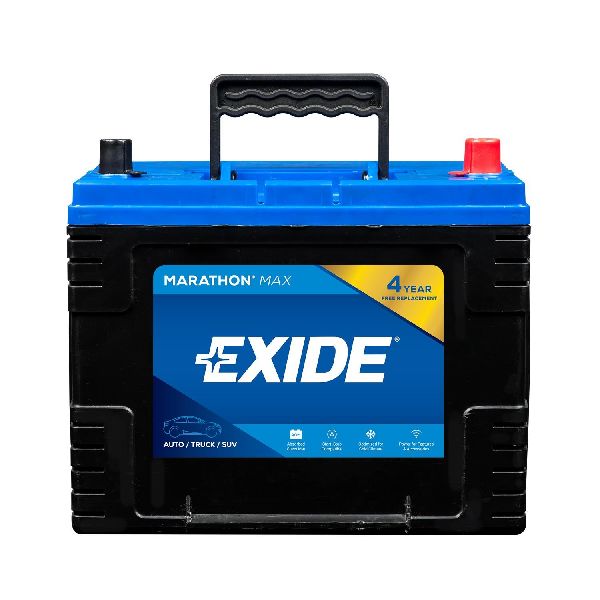
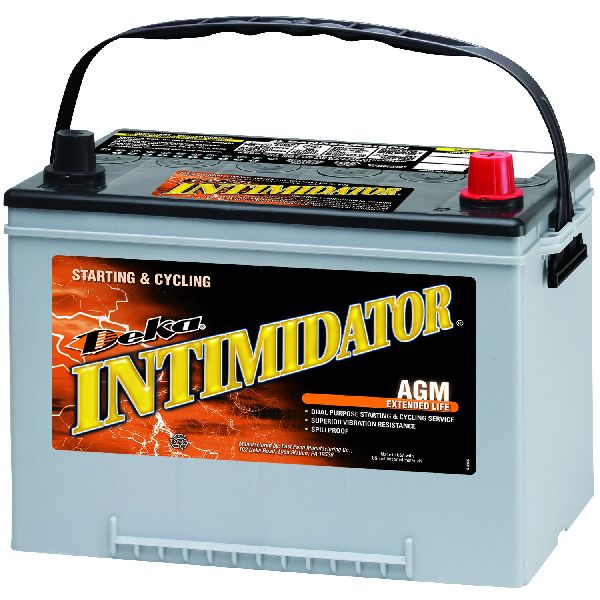
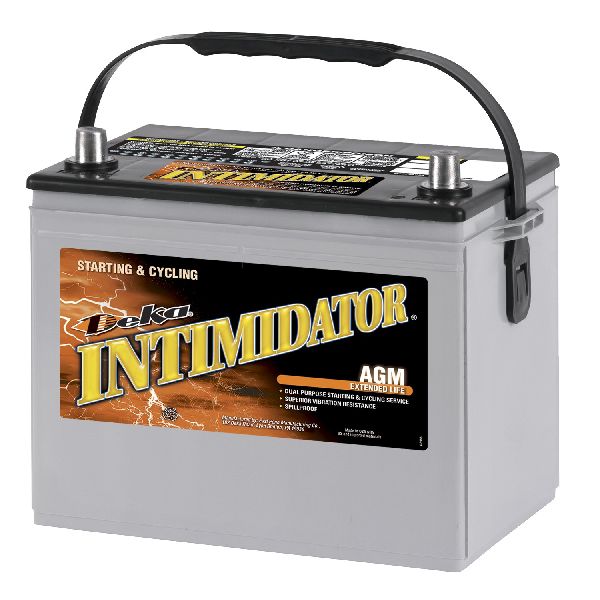
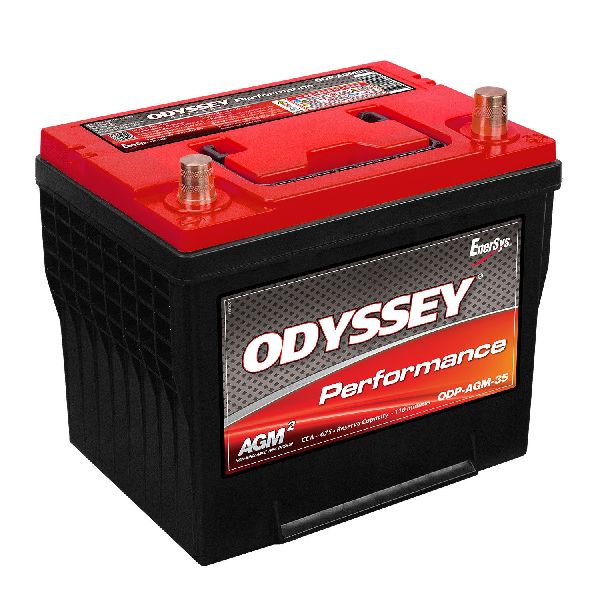
OEM price range: $400-$800 - 12V Automotive Battery — A weak or failing battery is a very common cause of network communication errors in modern vehicles.
Trusted brands: Interstate, DieHard, Duracell
OEM price range: $200-$350
Aftermarket price range: $150-$250
Related Codes That Often Appear With This One
- U0073 — This is a general 'Control Module Communication Bus Off' code that often appears with more specific U-codes when a major network disruption occurs.
- U0100 — Lost Communication with ECM/PCM. If the ETACS-ECU is acting as a gateway, its failure can prevent other modules from talking to the engine computer.
- U0141 — Lost Communication with Body Control Module 'A'. This is a related code, and Mitsubishi has issued a TSB (TSB-19-54-008) to update diagnostic procedures for it, indicating it's a known area of concern.
Technical Service Bulletins (TSBs) & Recalls
- TSB-19-54-008: While not for U0140 specifically, this TSB updates the diagnostic procedures for a related ETACS CAN timeout code (U0141) on 2007-2019 Outlanders, showing that ETACS communication issues are a known area of concern for Mitsubishi.
Platform-Specific Known Issues
- A user on a French car forum with a different vehicle but the same U0140 code traced a similar issue to rodent damage to the wiring harness, a plausible scenario for any vehicle.
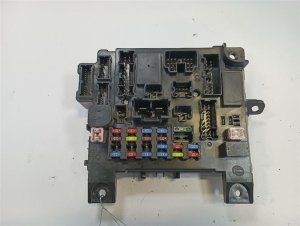
- The ETACS-ECU is often integrated with the interior fuse box, making visual inspection of the module itself and its connectors straightforward once the lower dash panel is removed.
Mechanic-Grade Diagnostic Values
- Voltage at ETACS-ECU power supply pins (e.g., C-406 Pin 2, C-408 Pin 1, C-307 Pin 2, C-309 Pin 1) — expected: Approximately 12V (Battery Positive Voltage). Failure: Significantly lower voltage or 0V indicates an open or short in the power supply circuit from the fuse.
- Resistance at ETACS-ECU ground pins (e.g., C-415 Pin 17, C-315 Pin 17, C-317 Pin 15) — expected: 2 ohms or less. Failure: High or infinite resistance (OL) indicates a poor or broken ground connection.
Scan Tool Commands That Help
- Mitsubishi M.U.T.-III: Variant Coding & Customization Copy/Write — This is a mandatory procedure when replacing the ETACS-ECU. The function allows a technician to copy the vehicle-specific configuration file (options, VIN, key data) from the old module and write it to the new one. If the old module is unreadable, the file must be obtained from the dealer based on the VIN.
- Mitsubishi M.U.T.-III: On Vehicle Coding — Used to write the VIN and select the correct configuration for a new ETACS-ECU when the original cannot be read. This function ensures all vehicle options (e.g., keyless entry, auto lights) are correctly configured in the new module.
Wiring & Ground Locations
- ETACS-ECU Power Pins — On the various multi-pin connectors plugging into the ETACS-ECU, located behind the driver's side lower dash/fuse box area.. Specific pins like C-406 (Pin 2) and C-408 (Pin 1) are constant battery power feeds. Loss of voltage here will cause the module to go offline and trigger U0140. These must be tested with a multimeter.
- ETACS-ECU Ground Pins — On the ETACS-ECU connectors. Specific pins like C-415 (Pin 17) and C-317 (Pin 15) provide the ground path for the module.. A high-resistance or open ground is a common cause of intermittent module operation and communication faults. Resistance to chassis ground should be checked and must be under 2 ohms.
- Intermediate Connectors (e.g., D-241, C-17) — Located in the wiring harness path between the main fuse box and the ETACS-ECU.. Service manuals note that these intermediate connectors should be checked for corrosion or damage if a power or ground fault is suspected at the ETACS-ECU, as they are potential failure points in the circuit.
Real Owner Repair Stories
- Mitsubishi Outlander PHEV Forum (Mitsubishi Outlander (PHEV, but ETACS principles apply)) — Front wipers stopped working. After replacing the ETACS/fuse box with a used unit, wipers worked but other features like parking sensors, reverse camera, and cruise control failed.
❌ Tried (didn't work) A local electrician swapped the ETACS and programmed the VIN to get the car to start, but could not restore all functions.
✅ What actually fixed it The issue is unresolved in the thread, but the consensus from experienced members is that the used ETACS module requires the original vehicle's specific configuration file to be written to it using a dealer M.U.T.-III tool. Simply writing the VIN is not enough. The owner was advised to have a dealer copy the configuration from the original faulty ETACS to the used replacement, or obtain the configuration file from Mitsubishi's network. - MHH Auto Forum (2018 Mitsubishi Outlander) — Original ETACS was damaged. After installing a used (donor) ETACS, the vehicle had a no-start condition with immobilizer codes. After extensive programming attempts, the car would start but was stuck in Park with multiple other system DTCs (ABS, 4WD).
❌ Tried (didn't work) Programming the donor ETACS with the original VIN using M.U.T.-III. Flashing the donor ETACS with a file for the donor VIN, which allowed the car to start but created other major issues (stuck in park).
✅ What actually fixed it The thread highlights the extreme difficulty of working with used ETACS modules. The final solution is not a simple fix, but a warning: the ETACS is deeply tied to the immobilizer and other vehicle systems. A failed attempt to program a used module can leave the donor module 'locked' or mismatched, making it very difficult to revert to the original VIN and configuration. The thread suggests that cloning the microprocessor (e.g., a 9S12 MCU) from the original board to the donor board using tools like XPROG is a more reliable, albeit advanced, method than attempting to reprogram with scan tools.
OEM Part Supersession History
8637Axxx→8637Bxxx, 8637Cxxx— Part revisions for bug fixes, feature additions (like TPMS integration), or component changes over the model years.
Heads up: While ETACS modules from other Mitsubishi models (like Mirage or L200) may share the 8637 prefix, they are not interchangeable. The Outlander PHEV uses a physically different ETACS with different connectors and cannot be used in a non-hybrid Outlander.
Model Year Variations Within This Range
- 2014-2020: The specific ETACS-ECU part number changes based on model year and vehicle options (e.g., Keyless Operation System (KOS) vs. standard key, presence of Rockford Fosgate amplifier). It is critical to match the part number exactly when sourcing a replacement. Later models may use newer hardware revisions (e.g., 8637B series vs 8637A).
Diagnostic Flowchart
Other Known Issues on This Vehicle
Issues unrelated to this code that are worth knowing about as an owner of this generation:
- CVT Transmission Shudder, Surge, or Failure 🔴 High — A widely reported issue, particularly in 2014-2019 models using the Jatco CVT8 (F1CJC/W1CJC). Problems can manifest as shuddering, hesitation, whining, or complete failure. (Ref: TSB-20-23-001REV addresses shudder/surge conditions and provides diagnostic/repair procedures. Recall SR-16-006 involved reprogramming the CVT ECU on some 2016 models.)
- Corroding Rear Liftgate Gas Springs 🟠 Medium — Sufficiently common to trigger a recall. Saltwater can penetrate the gas spring cylinder, causing corrosion that leads to failure and the liftgate suddenly falling. (Ref: A recall was issued for 2014-2020 Outlander and 2018-2022 Outlander PHEV models to replace the liftgate gas stay assemblies.)
- Excessive Oil Consumption 🟠 Medium — Some owners of Outlanders with the 4-cylinder engines (4B11, 4B12, 4J12) report higher than expected oil consumption between changes, requiring frequent monitoring of the oil level.
- Paint Stains/Clouding Under Transport Film 🟡 Low — An issue that would be present from the time of new vehicle delivery. Moisture trapped under the protective transport film can cause cloudy stains on the clear coat. (Ref: TSB-20-42A-005 describes a repair procedure using a heat lamp or blow dryer to remove the stain, advising against repainting.)
- Prematurely Worn Front Lower Control Arm Bushings 🟠 Medium — A common wear item that can fail prematurely, leading to clunking noises over bumps, poor alignment, and imprecise steering feel.
Used vs. New Parts: Buying Guide for This Vehicle
When a used part is the smart pick: A used ETACS-ECU is a cost-effective option only if you have a definitive plan for programming. It makes sense if: 1) Your original module is physically damaged but still electronically readable, allowing a specialist to copy its configuration. 2) You have confirmed access to a Mitsubishi dealer or an independent shop with a M.U.T.-III tool and the expertise to perform 'variant coding'. 3) You are using a specialized service that can physically clone the memory chip from your old board to the used one.
Donor-vehicle mileage cap: roughly under 150000 miles for the part to have meaningful remaining life.
What to inspect on the donor part:
- Part number must be an EXACT match to the original module.
- Inspect all connector pins for any signs of corrosion, moisture, or physical damage. Bent pins can be a deal-breaker.
- Source the part from a vehicle with a similar option package if possible, although programming will still be required.
- Avoid modules from vehicles with flood or fire damage.
OEM-only on this vehicle (don't cheap out):
- ETACS-ECU (Body Control Module). While used OEM modules are an option, there are no reliable aftermarket 'new' manufacturers for this complex, vehicle-specific part. A new part must be sourced from a Mitsubishi dealer.
Brands owners have reported issues with on this vehicle:
- Any 'new' ETACS-ECU from a non-OEM source should be considered highly suspect and is unlikely to be programmable or function correctly.
Real Owner Stories
Aggregated from forums and TSBs cited above. Mileages and costs reflect what owners reported in those sources.
2014-2020 Mitsubishi Outlander
Symptoms: A user reported a U0140 code and traced the communication failure to physical damage in the wiring harness caused by rodents.
What fixed it: Repairing the damaged section of the wiring harness.
Source hint: vehicle_specific_issues
Related OBD-II Codes
Frequently Asked Questions
Does TSB-19-54-008 apply to my Outlander if I have a communication code?
Could a problem with my Outlander's liftgate be related to the U0140 code?
I'm seeing U0140 and my CVT is shuddering; are they connected?
Where is the ETACS-ECU located in my 2014-2020 Outlander?
Can a fuse cause the U0140 code on a Mitsubishi?
What is the 'variant coding' mentioned for the ETACS-ECU fix?
Helpful Videos
Used OEM Parts in Stock


New Aftermarket Parts Available


The information in this article is provided for general reference and educational purposes only. Vehicle specifications, procedures, and part compatibility can vary by production date, trim level, and region. Always consult your vehicle's factory service manual and verify part numbers before purchasing or performing repairs. Safety-critical components such as airbags, seat belts, and braking systems should be installed by a qualified professional.
- Mitsubishi Outlander:
- 🎬 Helpful Videos
- 🛍️ Shop This Part
- What's Unique About the 2014-2020 Mitsubishi Outlander
- Symptoms You May Notice
- Most Likely Causes
- Rare But Worth Checking
- Diagnosis Steps
- Parts You'll Likely Need
- Related Codes That Often Appear With This One
- Technical Service Bulletins (TSBs) & Recalls
- Platform-Specific Known Issues
- Mechanic-Grade Diagnostic Values
- Scan Tool Commands That Help
- Wiring & Ground Locations
- Real Owner Repair Stories
- OEM Part Supersession History
- Model Year Variations Within This Range
- Diagnostic Flowchart
- Other Known Issues on This Vehicle
- Used vs. New Parts: Buying Guide for This Vehicle
- Real Owner Stories
- 2014-2020 Mitsubishi Outlander
- Related OBD-II Codes
- Frequently Asked Questions
- 🎟️ Get 5% Off