

U0131 on 2011-2015 Honda Civic: Power Steering Failure Causes and Fixes
This code means your Power Steering Control Module (PSCM) has lost communication, causing the power steering to fail. The most common causes are a blown fuse, bad ground connection, or a wiring issue. Before replacing the expensive steering rack, thoroughly check all related fuses and wiring, as the fix is often simple and electrical.
- U0131 means a loss of power steering due to a communication failure.
- Before suspecting an expensive part, always check the simple things first: battery health, all related fuses (including those at the battery terminal), and ground connections.
- Driving is not recommended due to the heavy steering effort required, which is a safety risk.
- If the steering rack (EPS module) does need to be replaced, it must be programmed by a dealer or a qualified shop to work with your car.
What's Unique About the 2011-2015 Honda Civic

For the ninth-generation Honda Civic (2012-2015), the Electric Power Steering (EPS) system is entirely electronic, with no hydraulic fluid. While generally reliable, this code often points to electrical issues rather than a mechanical failure of the steering rack itself. The communication loss can be between the EPS module and the main engine computer (ECM) or the instrument cluster (Gauge Control Module). 🎬 Watch: Diagnosing communication loss between the gauge and EPS unit. The EPS control unit is located behind the right kick panel on coupe models and behind the glove box on sedans. The 2012–2013 models are noted by some owners to be particularly prone to EPS problems.
Symptoms You May Notice

- EPS (Electric Power Steering) warning light is illuminated on the dashboard.
- Complete loss of power steering assist, making the steering wheel very heavy to turn.
- Steering may feel normal one moment and then suddenly become heavy, indicating an intermittent fault.
- In some cases, other warning lights (like ABS, VSA, or a general communication error lamp) may also illuminate.
- Potential for inaccurate readings on the instrument cluster gauges, as the gauge module is part of the communication network.
- Steering wheel vibration may accompany the loss of assist.
- Replacing the entire electric steering rack without first checking fuses, power, and ground connections. The rack is the most expensive part, while the fix is often a simple electrical issue like a $5 fuse or a corroded ground wire.
Most Likely Causes

- Blown Fuse for EPS System 🔴 High Probability Electrical faults or voltage spikes can cause a fuse to blow as a protective measure. A weak or failing battery can also contribute to intermittent power loss to modules.
How to confirm: Locate the fuse boxes, one in the engine bay near the battery and one inside the cabin under the driver's dashboard. Check the 70A EPS fuse (A1-1) in the under-hood fuse box and the 7.5A fuse in the interior box that powers the module. A visual inspection may show a break, but using a multimeter for a continuity test is more reliable.
Typical fix: Replace the blown fuse with a new one of the exact same amperage. If the fuse blows again, a short circuit exists that must be diagnosed.
Est. part cost: $1-$15 - Poor Power or Ground Connection 🔴 High Probability Ground connections on the chassis can corrode or become loose over time, leading to high resistance and intermittent electrical problems. Some service documents for similar codes note that manufacturing issues like weld spatter or excess glue on ground studs can cause a poor connection from the factory.
How to confirm: Test the battery voltage; it should be above 12.4V with the engine off. Locate the main ground for the EPS system, often designated as G503 or similar, typically found under the dash or in the kick panel area. Disconnect the ground, and thoroughly clean the contact surfaces of the terminal eyelet and the chassis with a wire brush or emery paper.
Typical fix: Clean and repair the ground connection to ensure a solid, low-resistance path. Apply dielectric grease to prevent future corrosion. Replace a weak or failing battery.
Est. part cost: $5-$250 - Damaged Wiring or Corroded Connectors 🟡 Medium Probability The wiring harness to the steering rack is low on the vehicle and can be exposed to moisture, road salt, and physical damage, leading to corrosion or broken wires. Rodent damage is also a possible cause for chewed wires in this area.
How to confirm: Visually inspect the wiring harness and connectors going to the EPS control unit (behind right kick panel/glove box) and the steering rack itself. Look for chafed wires, green or white corrosion on the pins, or backed-out terminals. Pay close attention to the CAN bus wires (often a twisted pair) for any signs of damage.
Typical fix: Repair the damaged section of wire. Clean the connectors with an electrical contact cleaner and apply dielectric grease to prevent future corrosion. Repin connectors if terminals are damaged.
Est. part cost: $10-$100 - Failed EPS Control Module ⚪ Low Probability
How to confirm: This is a diagnosis of exclusion. If all fuses, power, grounds, and CAN bus wiring have been tested and are confirmed to be good, the module itself is the likely culprit. A professional scan tool that can communicate with individual modules is needed to confirm the EPS module is offline and not responding.
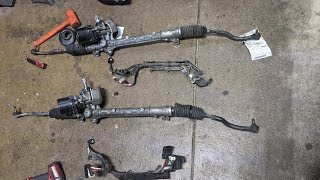
Typical fix: The EPS control module is typically integrated with the steering rack assembly. The entire electric steering rack must be replaced. 🎬 Watch: Step-by-step walkthrough for removing the electronic steering rack. The new unit must be initialized by a Honda dealer or a shop with equivalent diagnostic tools.
Est. part cost: $800-$2000
Rare But Worth Checking
- Failed Gauge Control Module (Instrument Cluster): The instrument cluster acts as a gateway module on the CAN network. If it fails internally, it can disrupt communication and trigger a U-code in another module like the EPS. If you have other strange gauge behavior or multiple communication codes, this could be the cause.
- Aftermarket Device Interference: Poorly designed aftermarket devices plugged into the OBD-II port (like insurance trackers or cheap Bluetooth scanners) can interfere with the CAN bus network, causing communication errors. If you have such a device, remove it and re-test.
- Multi-Purpose Camera Failure: In some Honda vehicles, a failure in the multi-purpose camera can trigger a cascade of communication errors across the network. NHTSA ODI #11589674 notes a case where a dealership identified a multi-purpose camera failure as the cause for a string of codes including U0131-00 and U0131-f1.
Diagnosis Steps
- Read All Trouble Codes: Use a high-quality OBD-II scanner capable of reading 'U' codes from all vehicle modules. Note all active and pending codes to see if other modules are also offline.
- Check Battery and Fuses: Ensure the battery voltage is stable and above 12.4 volts with the engine off. Locate and test the main 70A EPS fuse in the under-hood fuse box and the related 7.5A fuse in the interior fuse box.
- Inspect Grounds: Locate the primary ground connection for the EPS system (often G403 or G503). Disconnect it, clean the terminal eyelet and chassis mounting point with a wire brush until shiny, then re-secure it tightly.
- Inspect Wiring and Connectors: Visually inspect the wiring harness leading to the EPS rack and the EPS control unit. Unplug the main connector to the EPS module and check for corrosion, moisture, or bent/backed-out pins.
- CAN Bus Check (Professional): A technician will measure the resistance between the CAN High and CAN Low wires at the OBD-II port (pins 6 and 14). It should be approximately 60 ohms with the key off. A reading of 120 ohms suggests an open circuit or a missing termination resistor, while a reading below 60 suggests a shorted wire.
- Isolate the Module (Professional): If the network wiring is good, the final step is to determine if the EPS module or another module is at fault. This requires a high-level scan tool to see which modules are not responding on the network and may involve disconnecting modules one by one to see if communication is restored.
- Module Replacement and Initialization: If the EPS module is confirmed to be faulty, replace the steering rack assembly. The new module must be initialized using Honda's diagnostic software (HDS) to learn the steering angle sensor position and communicate with the vehicle.
Parts You'll Likely Need
- Fuses — A blown fuse is a common and simple cause for the EPS module losing power and communication. Specifically check the 70A multi-fuse and 7.5A EPS fuse.
Trusted brands: Bussmann, Littlefuse, Honda Genuine
OEM price range: $2-$15
Aftermarket price range: $1-$5 - Electric Power Steering Rack Assembly
(OEM #53601-TR0-A04 (for 2012 Sedan EX, LX, Hybrid), 53601-TS8-A04 (for 2012 Coupe))— If the internal EPS control module fails, the entire rack assembly must be replaced as the module is integrated. This is the fix only after all other electrical causes are ruled out.
Trusted brands: Honda Genuine, AAE, Cardone
OEM price range: $1600-$1800
Aftermarket price range: $500-$900
Related Codes That Often Appear With This One
- U0100 — Lost Communication With ECM/PCM. If this code is present, it may indicate a more widespread network problem rather than an issue isolated to the power steering system.
- U0122 — Lost Communication With Vehicle Dynamics Control Module. This module (which controls VSA/ABS) also communicates on the F-CAN bus, and its failure can be related.
- U0155 — Lost Communication With Instrument Panel Cluster (IPC) Control Module. Since the Gauge Control Module is a key player in the network, this code often appears alongside U0131.
Technical Service Bulletins (TSBs) & Recalls
- Honda TSB 12-041: While not directly for U0131, this TSB addresses issues with the battery management system not charging correctly, which can lead to low voltage conditions that cause modules to drop off the network and set communication codes. A software update to the Powertrain Control Module (PCM) may be required.
Platform-Specific Known Issues
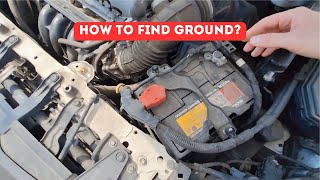
- Owner Experience: Intermittent Failure Solved by Ground Cleaning: A user on a Honda forum described experiencing intermittent power steering loss with code U0131. After checking fuses, they located the main EPS ground behind the passenger kick panel, found it slightly corroded, cleaned it thoroughly with sandpaper, and re-tightened it. The problem was resolved without replacing any parts, highlighting the importance of checking grounds first.
- Real-World Repair: Blown Main Fuse: A YouTube video for a similar Honda model with U0131 showed the cause to be a blown 60A main fuse located on the positive battery terminal itself. This fuse powered the EPS system, and replacing it restored function. This is a critical and often overlooked first check.
Mechanic-Grade Diagnostic Values
- CAN Bus Resistance — expected: Approximately 60 Ω. Failure: A reading of 120 Ω indicates an open circuit in the CAN bus or one of the terminating resistors is missing. A reading near 0 Ω indicates a short between CAN High and CAN Low lines.
- CAN Bus Voltage (Average) — expected: CAN High (Pin 6): ~2.6V. CAN Low (Pin 14): ~2.4V.. Failure: Significant deviation from these voltages, or voltages that don't mirror each other (one high, one low), can indicate a short to power or ground on one of the lines. A reading of 0V on both lines when the ignition is on points to a major network failure or a module pulling the bus down.
- EPS Control Unit Power Supply — expected: Battery Voltage (approx. 12.6V). Failure: No voltage or low voltage indicates an open or high resistance in the power feed wire or a blown fuse.
Hidden / Shadow Codes Worth Checking
- 33-01: This is a Honda-specific DTC related to the EPS system, often for an internal circuit malfunction or power supply issue within the EPS control unit. While U0131 is a communication code, 33-01 is an internal fault code for the module itself. (see via This code is typically only visible using the Honda Diagnostic System (HDS) or a high-end professional scan tool capable of reading manufacturer-specific codes from the EPS module.)
Scan Tool Commands That Help
- Honda Diagnostic System (HDS): Torque Sensor Learn — This procedure must be performed whenever the EPS steering rack (gearbox), motor, or control unit is replaced. It memorizes the neutral position of the torque sensor. Failure to do this can result in uneven steering assist.
- Honda Diagnostic System (HDS): Steering Angle Sensor Value Clear — Used to clear the stored neutral position of the steering angle sensor. This is often followed by the VSA Sensor Neutral Position Memorization procedure.
- Honda Diagnostic System (HDS): VSA Sensor Neutral Position Memorization — This is required after disconnecting the battery, replacing the EPS unit, or performing a wheel alignment. It calibrates the steering angle sensor with the Vehicle Stability Assist system. The VSA/ABS lights may stay on until this is completed.
- Honda Diagnostic System (HDS): ECU Registration — When a new EPS control unit (or the entire rack assembly) is installed, it must be registered to the vehicle's main computer (ECM/PCM). This is the first and most critical step to establish communication before other calibrations can be done.
Wiring & Ground Locations

- G503 — Under the left side of the dashboard.. This is a primary ground point for several components under the dash, including potentially the EPS control unit or related systems. A poor connection here can cause intermittent communication loss.
- G401 — Behind the left kick panel.. This ground is located in the vicinity of several control modules. Corrosion or looseness at this point is a common cause of various electrical and communication faults.
- EPS Control Unit Connector A (11-Pin or 32-Pin) — On the EPS control unit, located behind the right kick panel (coupe) or behind the glove box (sedan).. This is the main connector for the EPS module. Technicians test for power at Pin 9 (Gray wire) and check for continuity on the F-CAN lines between this connector and the Gauge Control Module's 32-pin connector.
- OBD-II Port (Data Link Connector) — Under the driver's side dashboard.. Pins 6 (CAN-H) and 14 (CAN-L) are used to test the resistance and voltage of the entire CAN bus network, providing a quick health check without accessing individual modules.
Real Owner Repair Stories
- YouTube user comment section, various forums (2012 Honda Civic LX) — EPS light on, no power steering. Code U0131 present.
❌ Tried (didn't work) Replacing the 70A EPS fuse., Checking battery voltage (was good)., Clearing codes (code returned immediately).
✅ What actually fixed it The final fix was cleaning a corroded ground wire. Specifically, the ground strap from the battery negative terminal to the chassis and the main engine-to-chassis ground strap were removed, cleaned to bare metal with a wire brush, and re-secured. The corrosion was causing intermittent voltage drops to the EPS module, triggering the communication loss.
OEM Part Supersession History
53601-TR0-A04→This part number appears to be current for the specified 2012 Civic models (Sedan EX, LX, Hybrid).— N/A
Heads up: This part is specific to Japan-built sedans. It is critical to verify the VIN to ensure the correct rack is ordered, as coupe models (53601-TS8-A04) and models built in other plants may use a different part.
Model Year Variations Within This Range
- 2012-2013: Owner forums and complaint databases indicate that the 2012 and 2013 model years are more frequently reported for EPS failures and the U0131 code compared to the refreshed 2014-2015 models. While the core system is the same, there may have been minor revisions or software updates in later years to improve reliability.
Diagnostic Flowchart

Other Known Issues on This Vehicle
Issues unrelated to this code that are worth knowing about as an owner of this generation:
- Excessive Oil Consumption 🟠 Medium — More common on early 2012 models (both 1.8L and 2.4L Si). Can be caused by piston rings that allow oil to pass. Honda's official stance is that consumption up to 1 litre per 1000 miles is 'acceptable'. (Ref: Honda TSB 15-015 (for Insight, but describes similar issue) and a TSB for 2012 Civic Si address replacing pistons/rings.)
- Prematurely Failing Batteries / Charging System Issues 🟡 Low — Widespread across many Honda models of this era. The small factory battery combined with software that may not select the correct charging mode can lead to dead batteries and electrical issues. (Ref: Honda TSB 12-041 and 14-071 involve a software update for the battery management system.)
- Worn Engine Mounts 🟡 Low — The lower and side engine mounts can wear out, causing excessive engine vibration felt in the cabin and through the steering wheel, especially at idle or under load.
- CVT Transmission Software Fault 🔴 High — A recall was issued for 2014-2015 models with the CVT. A software issue could cause high hydraulic pressure on the drive pulley shaft, potentially causing it to break and result in a loss of motive power. (Ref: NHTSA Campaign Number: 15V574000)
- Easily Chipping/Soft Paint 🟡 Low — A common complaint across many Honda models of this era. The paint, particularly on darker colors, is reported to be thin and prone to chipping and scratching easily.
Used vs. New Parts: Buying Guide for This Vehicle
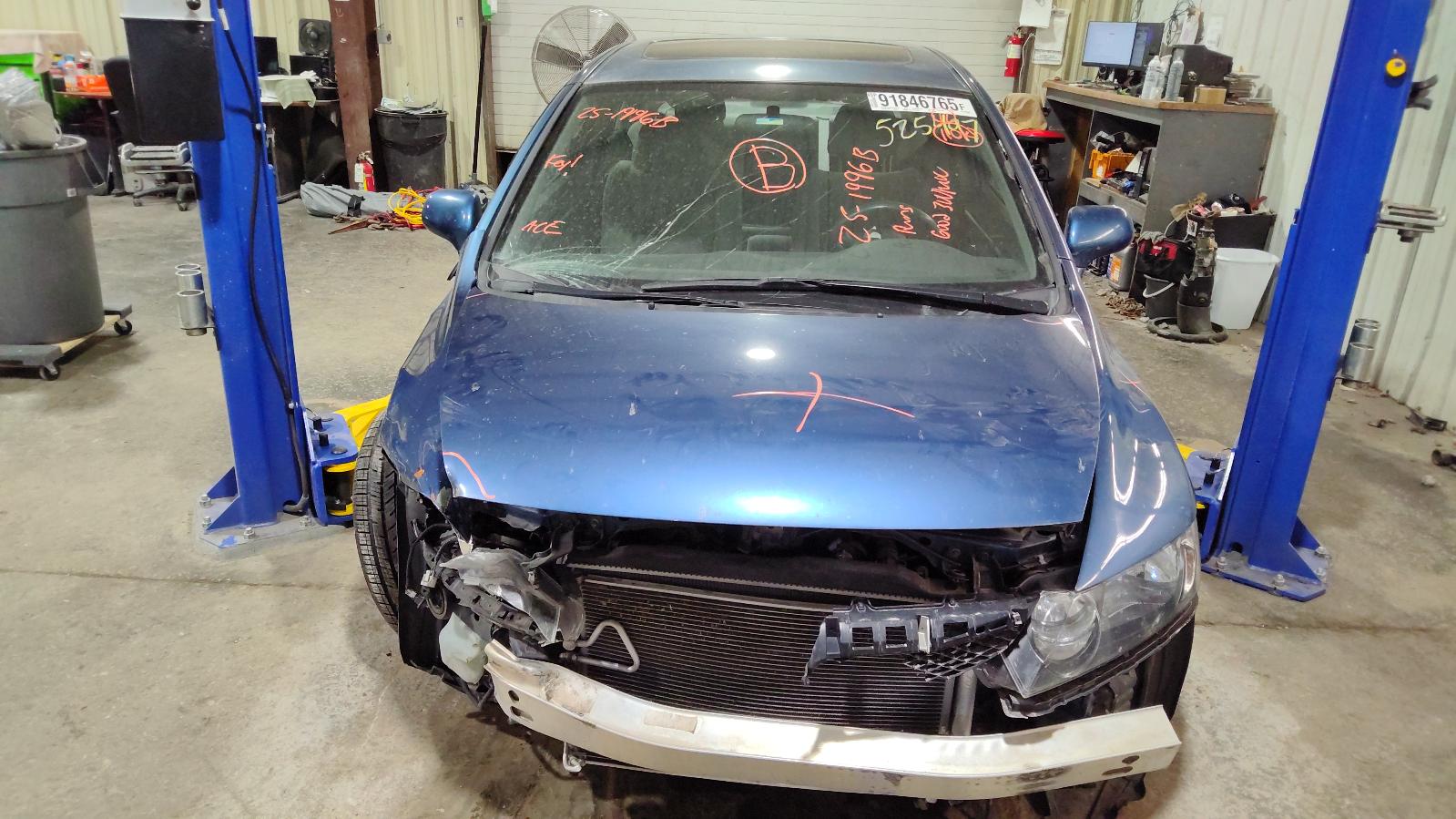
When a used part is the smart pick: A used steering rack assembly from a reputable salvage yard can be a cost-effective option, given the high price of a new OEM unit. This makes sense if the failure on the original vehicle is confirmed to be the internal EPS module and not a wiring issue that could be repaired.
Donor-vehicle mileage cap: roughly under 80000 miles for the part to have meaningful remaining life.
What to inspect on the donor part:
- Verify the donor vehicle was not in a major front-end collision, which could have damaged the rack.
- Check the donor vehicle's VIN to ensure it's a match for the model, year, and trim (e.g., sedan vs. coupe).
- Inspect the electrical connectors on the used rack for any signs of corrosion, bent pins, or cut wires.
- If possible, get the mileage from the donor vehicle. Lower mileage is always preferable.
OEM-only on this vehicle (don't cheap out):
- Fuses: Always use high-quality fuses with the correct amperage; the cost difference is negligible.
Aftermarket brands forum-validated for this vehicle:
- AAE (Atlantic Automotive Engineering)
- Cardone (Remanufactured)
Brands owners have reported issues with on this vehicle:
- No-name or unbranded units from online marketplaces have a high rate of being incompatible or failing prematurely.
Real Owner Stories
Aggregated from forums and TSBs cited above. Mileages and costs reflect what owners reported in those sources.
2012 Honda Civic
Symptoms: Intermittent power steering loss with code U0131.
What fixed it: Located the main EPS ground behind the passenger kick panel, found it slightly corroded, cleaned it thoroughly with sandpaper, and re-tightened it. The problem was resolved without replacing any parts.
Source hint: Owner Experience: Intermittent Failure Solved by Ground Cleaning
2013 Honda Civic
Symptoms: Loss of power steering and a U0131 code.
What fixed it: The cause was a blown 60A main fuse located on the positive battery terminal itself. Replacing this fuse restored power steering function.
Source hint: Real-World Repair: Blown Main Fuse
2014 Honda Civic
Symptoms: EPS warning light illuminated and complete loss of power steering assist.
What fixed it: After all electrical checks for fuses, power, and grounds were exhausted, the entire steering rack assembly was replaced, as the internal EPS control module had failed.
Source hint: 9thgencivic.com
2011 Honda Civic
Symptoms: Multiple electrical issues, including the EPS warning light and a U0131 communication code.
What fixed it: A load test revealed the battery was weak, even though it showed over 12.4 volts at rest. Replacing the failing battery resolved the communication code.
Source hint: Reddit r/Honda
Documented NHTSA Reports
Honda Network Communication Fault
Symptoms: A dealership identified multiple communication errors logged, including U0131-00 and U0131-f1, alongside codes for the ECM, VSA, and instrument cluster.
What fixed it: According to NHTSA ODI #11589674, the dealership determined the root cause of these network errors was an intermittent multi-purpose camera failure.
Related OBD-II Codes
Frequently Asked Questions
Where are the fuses for the Electric Power Steering (EPS) on my 2011-2015 Civic?
I have a U0131 code and intermittent power steering loss. Where is the main ground wire I should check on my Civic?
Could a weak battery in my 2012 Civic cause the U0131 code and make the steering heavy?
The mechanic says my 2014 Civic needs a new steering rack to fix the U0131 code. Does the new part require special programming?
Does Honda TSB 12-041 directly address the U0131 code?
My 2013 Acura ILX has a U0131 code. Is the diagnosis the same as for the Civic?
Helpful Videos


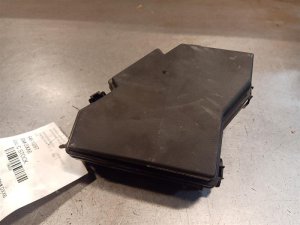
We Have This Part in Stock





The information in this article is provided for general reference and educational purposes only. Vehicle specifications, procedures, and part compatibility can vary by production date, trim level, and region. Always consult your vehicle's factory service manual and verify part numbers before purchasing or performing repairs. Safety-critical components such as airbags, seat belts, and braking systems should be installed by a qualified professional.
- Honda Civic:
- 🎬 Helpful Videos
- 🛍️ Shop This Part
- What's Unique About the 2011-2015 Honda Civic
- Symptoms You May Notice
- Most Likely Causes
- Rare But Worth Checking
- Diagnosis Steps
- Parts You'll Likely Need
- Related Codes That Often Appear With This One
- Technical Service Bulletins (TSBs) & Recalls
- Platform-Specific Known Issues
- Mechanic-Grade Diagnostic Values
- Hidden / Shadow Codes Worth Checking
- Scan Tool Commands That Help
- Wiring & Ground Locations
- Real Owner Repair Stories
- OEM Part Supersession History
- Model Year Variations Within This Range
- Diagnostic Flowchart
- Other Known Issues on This Vehicle
- Used vs. New Parts: Buying Guide for This Vehicle
- Real Owner Stories
- 2012 Honda Civic
- 2013 Honda Civic
- 2014 Honda Civic
- 2011 Honda Civic
- Documented NHTSA Reports
- Honda Network Communication Fault
- Related OBD-II Codes
- Frequently Asked Questions
- 🎟️ Get 5% Off