

U0121 on 2008-2013 Toyota Highlander: Lost Communication With ABS Module Causes and Fixes
This code means the Anti-Lock Brake System (ABS) module has stopped communicating. On the 2008-2013 Highlander, this is most often caused by an internal failure of the ABS module/actuator assembly. Expect a repair cost of $1,500-$3,000+ at a dealer, with cheaper options using remanufactured or used parts. The failure is a known issue, but warranty extensions have expired.
- U0121 on a 2008-2013 Highlander means the ABS module is offline, disabling ABS, VSC, and TRAC.
- Before condemning the expensive ABS module, always check the battery, fuses, and the module's main wiring connector for simple fixes.
- The most common cause, after ruling out simple issues, is a failed ABS actuator assembly.
- Replacement is not a simple DIY job. The new module must be professionally programmed and the brake system requires a software-assisted bleeding procedure.
- To save significant money, consider sourcing a warrantied used or remanufactured ABS module, but be aware that the programming requirement still applies.
What's Unique About the 2008-2013 Toyota Highlander
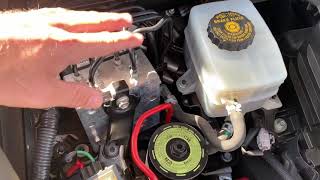
For the second-generation Highlander, the U0121 code is frequently a sign of a complete internal failure of the ABS actuator assembly, which contains both the electronic control module and the hydraulic pump. While wiring or power issues can be the cause, this specific component is a known failure point. Owners report very high replacement costs from dealerships, leading many to seek out used or remanufactured units to make the repair affordable. Note that the part for Hybrid models is different and often more expensive than the one for non-hybrid models. 🎬 Watch: DIY replacement guide for the Highlander Hybrid ABS actuator Toyota issued a Warranty Enhancement Program (ZG1) for the ABS actuator on the 2006-2007 Highlander Hybrid, but not for the 2008-2013 generation, despite similar owner complaints.
Symptoms You May Notice
- ABS, VSC, and TRAC warning lights illuminated on the dashboard.
- Brake pedal feels hard, spongy, or unresponsive.
- Cruise control is disabled.
- Wheels may lock up and skid during hard braking.
- A professional scan tool cannot establish communication with the ABS module. 🎬 Watch: 4 signs of a bad ABS control module
- A buzzing or pump-running noise from the ABS actuator in the engine bay, even with the car off, which can drain the battery.
- Replacing a wheel speed sensor. A bad wheel speed sensor will typically set a 'C' code (e.g., C0035) and will not cause a total loss of communication with the entire ABS module.
Most Likely Causes
- Internal Failure of the ABS Actuator Assembly 🔴 High Probability This component, which houses the electronic module and hydraulic pump, is a widely reported failure point on this generation of Highlander, likely due to age and electronic component degradation inside the sealed unit.
How to confirm: After confirming that all power, ground, and CAN bus network wiring to the module are intact and functioning correctly, the module itself is condemned. A professional scan tool will be unable to communicate with it, often showing 'no response'.
Typical fix: Replace the entire ABS actuator assembly. The new or used module must be programmed to the vehicle's VIN and the brake system must be bled using specialized diagnostic software like Toyota Techstream. A Zero Point Calibration is also required.
Est. part cost: $1200-$2200 for a new OEM part; $250-$600 for a used part from a salvage yard or online. - Wiring Harness or Connector Fault 🟡 Medium Probability The wiring harness leading to the ABS module is located in the engine bay and can be exposed to moisture, heat, and vibration, leading to corrosion on connector pins or breaks in the wires over time.
How to confirm: Visually inspect the main connector at the ABS module for green or white corrosion, bent pins, or physical damage. Use a multimeter to test for continuity and proper resistance on the CAN bus wires (CAN High and CAN Low) between the ABS module and the ECM.
Typical fix: Clean the connector terminals with an electronic contact cleaner and a small brush. Repair any damaged sections of the wiring harness. Apply dielectric grease to the connector pins before reassembly to prevent future moisture intrusion.
Est. part cost: $5-$50 for cleaning supplies or wiring repair materials. - Loss of Power or Ground to the ABS Module ⚪ Low Probability
How to confirm: Check the fuses labeled for ABS or VSC in the vehicle's fuse boxes. Use a multimeter to verify that the ABS module connector is receiving a steady 12V power supply and has a solid connection to chassis ground (less than 0.1 volts resistance). A weak or failing 12V battery can also cause communication codes and should be tested.
Typical fix: Replace any blown fuses. Clean and tighten any corroded or loose ground connections. A weak or failing 12V battery should be tested and replaced if necessary.
Est. part cost: $1-$20 for fuses or up to $250 for a new battery.
Diagnosis Steps
- Scan for All Codes: Use an advanced OBD-II scanner (not a basic code reader) to check for any other trouble codes. If multiple 'U' codes are present for different modules, it may indicate a broader CAN bus network problem. A solitary U0121 points more specifically to the ABS system.
- Check Battery and Fuses: Ensure the vehicle's 12V battery is fully charged (at least 12.6V with the engine off) and the charging system is working correctly (13.8-14.5V with the engine on). Inspect all fuses related to the ABS, VSC, and TRAC systems in both the engine bay and interior fuse panels.
- Inspect the ABS Module Connector: Locate the ABS actuator assembly in the engine bay. Disconnect its main electrical connector and carefully inspect for any signs of corrosion, moisture, or damaged/bent pins.
- Verify Power and Ground: Using a multimeter and the vehicle's wiring diagram, confirm that the ABS module is receiving constant 12V power on the appropriate pins and has a clean, solid ground connection with minimal resistance.
- Test the CAN Bus Network: With the battery disconnected, measure the resistance between the CAN High and CAN Low pins at the ABS connector. A healthy network should read approximately 60 ohms. A reading of 120 ohms indicates a break in the wiring or a missing terminating resistor, while 0 ohms indicates a short between the two lines.
- Isolate the Module: If all wiring, power, and grounds are confirmed to be good, and the CAN bus resistance is correct when measured from another point on the network (like the OBD-II port), the ABS module/actuator assembly is almost certainly the source of the fault.
Parts You'll Likely Need
- ABS Actuator and Pump Assembly
(OEM #44050-48320 (Hybrid), 44050-48191 (Non-Hybrid, supersedes 44050-48190))— This is the most common failure point for a U0121 code on this vehicle after wiring and power issues have been ruled out. The electronic control unit is integrated into this assembly.
Trusted brands: Toyota (OEM), Aisin
OEM price range: $1200-$2200
Aftermarket price range: $300-$800 (Remanufactured or Used)
Related Codes That Often Appear With This One
- C1241 — This code often means 'Low or High Power Supply Voltage' to the ABS module. It can appear alongside U0121 if a weak battery or bad connection is the root cause.
- C1223 — This indicates a 'Malfunction in ABS Control System'. It's a general fault that can be logged when the module itself has an internal error that leads to the communication loss.
- C0265 — Indicates an 'ABS Module Relay Circuit Malfunction', pointing towards a power supply issue or an internal failure of the module's power relay.
Technical Service Bulletins (TSBs) & Recalls
- ZG1 - Warranty Enhancement Program for Brake Actuator Assembly on certain 2006-2007 Highlander Hybrid models. While not for the 2008-2013 generation, it shows a history of this component failing.
Platform-Specific Known Issues
- Some owners have reported that Toyota had a warranty enhancement program (ZG1) for this part on the 2006-2007 Highlander Hybrid, which has since expired. This indicates a recognized failure pattern, though the 2008-2013 models were not officially included.
Mechanic-Grade Diagnostic Values
- CAN Bus Resistance — expected: ~60 Ω (Ohms). Failure: A reading of ~120 Ω indicates an open circuit or a missing terminating resistor. A reading of 0 Ω indicates a short between the CAN High and CAN Low wires.
- CAN Bus Voltage (High-Speed CAN) — expected: CAN High: ~2.6V, CAN Low: ~2.4V. Failure: Significant deviation from these voltages with the key on indicates a bus fault.
- ABS Module Ground Resistance — expected: < 0.1 Ω (Ohms). Failure: Higher resistance indicates a poor ground connection, which can cause communication failures.
- ABS Actuator Solenoid Coil Resistance — expected: 4 to 8 Ω (Ohms). Failure: A reading outside this range on any of the solenoid terminals can indicate an internal failure of the actuator.
Hidden / Shadow Codes Worth Checking
- INF Codes (Detail Codes): When a primary code like U0121 is set, the Skid Control ECU often stores more specific sub-codes (INF codes) in the freeze frame data. These can pinpoint the exact nature of the communication loss (e.g., timeout, bus-off error) but are only visible with advanced scanners. (see via Toyota Techstream software. Navigate to the ABS/VSC/TRAC system, select the DTC, and view the associated Freeze Frame or Detail Data.)
Scan Tool Commands That Help
- Toyota Techstream: ABS/VSC/TRAC -> Utility -> ECB Utility (Brake Bleed) — This is a mandatory, electronically-assisted brake bleeding procedure required after replacing the ABS actuator. It activates the pump and solenoids in a specific sequence to purge all air from the new unit. A manual bleed is insufficient.
- Toyota Techstream: ABS/VSC/TRAC -> Utility -> Zero Point Calibration of Yaw Rate and Acceleration Sensor — This procedure must be performed after replacing the ABS module. It resets the learned values for the vehicle's stability sensors. Failing to do this will leave the VSC/TRAC warning lights on and the systems non-functional.
- Toyota Techstream: Data List -> ABS/VSC System — Before condemning the module, a technician can use the data list to check for live communication from other related sensors (like wheel speed sensors). If all other sensors report data but the module itself is unresponsive, it points towards an internal module failure.
Wiring & Ground Locations
- EA, EB — Right front fender apron in the engine compartment.. These are primary ground points for components in the engine bay. A corroded or loose connection here can affect the power supply or grounding of the ABS module.
- EG, EH — Under the left headlight area in the engine compartment.. Another key engine bay grounding location. Given the ABS module's location, checking all nearby grounds is critical.
- Driver's Side Kick Panel Ground — Behind the plastic kick panel to the left of the driver's footwell.. This is a major interior grounding point for many ECUs. While less likely to be the cause for a U0121, a problem here could cause widespread communication issues. A known ground cluster is located here on Highlanders.
- Skid Control ECU Connector — The large electrical connector on the ABS actuator assembly in the engine bay.. This is the single point of failure for all power, ground, and CAN bus signals to the module. Pin-out testing for 12V power, ground continuity, and CAN bus resistance (60Ω) is performed here.
Real Owner Repair Stories
- r/ToyotaHighlander on Reddit (2008 Toyota Highlander Hybrid Limited, 160k miles) — 'Brake failure' warning on the dash.
❌ Tried (didn't work) Calling Toyota Corporate about the expired warranty enhancement program (ZG1).
✅ What actually fixed it The owner was quoted ~$1300 for a replacement ABS module. The final fix was implied to be the replacement of the module, as this is the standard procedure for the diagnosed internal failure. The user was exploring DIY options to reduce the high cost. - CarComplaints.com (2006 Toyota Highlander Hybrid, 108k miles) — ABS warning lights, diagnosed brake actuator failure.
❌ Tried (didn't work) Contacting the dealer for assistance under the warranty enhancement program, which had expired.
✅ What actually fixed it The owner was faced with a dealer quote for replacement. The story highlights the common pattern of failure occurring just outside the extended warranty period, forcing owners to choose between a very expensive repair or using a used part.
OEM Part Supersession History
44050-48190→44050-48191— Standard part revision by the manufacturer, likely for reliability improvements or minor design changes.
Heads up: The number printed on the actuator itself may be a manufacturing number and not match the part number on the box. It is critical to order by the official part number (44050-48191).Multiple→Multiple— Model year updates and drivetrain differences.
Heads up: The ABS module part numbers changed for the 2011 model year refresh. There are different part numbers for FWD vs. AWD and for models built before or after August 2011. You must match the part number from the original unit.
Model Year Variations Within This Range
- 2011-2013: The 2011 model year received a facelift, which included changes to some electronic components. For the ABS actuator, there are different part numbers for models built up to July 2011 and those built from August 2011 onward. This is in addition to the existing differences between FWD, AWD, and Hybrid models.
- All (Hybrid vs. Non-Hybrid): The ABS actuator for the Highlander Hybrid (Part No. 44050-48320) is a different, more complex, and typically more expensive component than the one used in non-hybrid models (Part No. 44050-48191). They are not interchangeable.
Diagnostic Flowchart
Other Known Issues on This Vehicle
Issues unrelated to this code that are worth knowing about as an owner of this generation:
- Ruptured VVT-i Oil Line (2GR-FE V6) 🔴 High — Common on earlier 2GR-FE engines (approx. 2007-2010). An original rubber hose section fails, causing rapid and catastrophic oil loss, leading to engine seizure if not stopped immediately. (Ref: Toyota addressed this by replacing the rubber/metal line with an all-metal line. The updated part number is 15772-31030.)
- Ruptured Engine Oil Cooler Pipe (2GR-FE V6 with Tow Package) 🔴 High — Similar to the VVT-i line, rubber hoses on the engine oil cooler can degrade and burst, causing rapid oil loss. Primarily affects vehicles with the factory tow package. (Ref: T-SB-0201-11 Rev1 details the issue and the fix, which involves replacing the rubber hoses with an updated all-metal pipe kit (04004-29131).)
- Melting / Sticky Dashboard 🟡 Low — Widespread in regions with high heat and humidity. The dashboard material degrades, becoming shiny, sticky, and soft. While primarily cosmetic, it can cause dangerous glare. (Ref: Toyota issued Warranty Enhancement Program ZE6 to replace affected dashboards, but this program has expired.)
- Steering Intermediate Shaft Clunk 🟠 Medium — A common issue where a clunking or knocking noise is heard and felt through the steering wheel when turning. Caused by premature wear in the intermediate steering shaft. (Ref: T-SB-0034-13 was issued to replace the original shaft with an improved part (45220-48170).)
- Water Pump Leak 🟠 Medium — The water pump is a common failure point, leading to coolant leaks. Symptoms include visible pink/red coolant residue near the front of the engine and coolant drips on the ground.
Used vs. New Parts: Buying Guide for This Vehicle
When a used part is the smart pick: For the ABS Actuator Assembly, a used part is a very common and sensible choice due to the extremely high cost of a new OEM unit (often $1500+). A used part from a reputable salvage yard can often be found for $250-$600, making the repair economically feasible on an older vehicle.
Donor-vehicle mileage cap: roughly under 120000 miles for the part to have meaningful remaining life.
What to inspect on the donor part:
- Verify the exact part number matches your original unit. FWD, AWD, and Hybrid models are different.
- Inspect the electrical connector pins for any signs of corrosion (green or white powder) or physical damage.
- Check the aluminum hydraulic block for signs of heavy external corrosion or physical cracks.
- If possible, get the VIN of the donor vehicle to check its history and confirm compatibility.
- Purchase from a seller that offers a warranty (even 30-90 days) to protect against receiving a dead-on-arrival part.
Aftermarket brands forum-validated for this vehicle:
- Toyota (Used OEM)
- Aisin (Used OEM - Aisin is the original equipment manufacturer for Toyota)
Brands owners have reported issues with on this vehicle:
- No-name, unbranded units from online marketplaces with no warranty or seller history. The complexity of this part makes quality control crucial.
Real Owner Stories
Aggregated from forums and TSBs cited above. Mileages and costs reflect what owners reported in those sources.
2008 Highlander Hybrid
Symptoms: Brake failure warning illuminated on the dashboard; diagnosed as a bad ABS module.
What fixed it: Replacement of the ABS module/actuator assembly.
Source hint: r/ToyotaHighlander on Reddit
2nd Generation Highlander
Symptoms: Sudden failure of the ABS actuator.
What fixed it: Obtaining used parts from salvage yards to avoid high OEM costs.
Source hint: Toyotanation.com & other forums
Related OBD-II Codes
Frequently Asked Questions
Does the Toyota warranty enhancement program ZG1 cover the ABS actuator on my 2008-2013 Highlander?
Why is my Highlander's battery draining even when the car is turned off?
Can I just replace the ABS module with a used part to save money?
My Highlander has a clunking noise when turning the steering wheel; is this related to the U0121 code?
What should I check before assuming the expensive ABS actuator has failed?
Is there a specific part number for the oil leak issue mentioned in the known issues section?
Helpful Videos

We Have This Part in Stock



The information in this article is provided for general reference and educational purposes only. Vehicle specifications, procedures, and part compatibility can vary by production date, trim level, and region. Always consult your vehicle's factory service manual and verify part numbers before purchasing or performing repairs. Safety-critical components such as airbags, seat belts, and braking systems should be installed by a qualified professional.
- Toyota Highlander:
- 🎬 Helpful Videos
- 🛍️ Shop This Part
- What's Unique About the 2008-2013 Toyota Highlander
- Symptoms You May Notice
- Most Likely Causes
- Diagnosis Steps
- Parts You'll Likely Need
- Related Codes That Often Appear With This One
- Technical Service Bulletins (TSBs) & Recalls
- Platform-Specific Known Issues
- Mechanic-Grade Diagnostic Values
- Hidden / Shadow Codes Worth Checking
- Scan Tool Commands That Help
- Wiring & Ground Locations
- Real Owner Repair Stories
- OEM Part Supersession History
- Model Year Variations Within This Range
- Diagnostic Flowchart
- Other Known Issues on This Vehicle
- Used vs. New Parts: Buying Guide for This Vehicle
- Real Owner Stories
- 2008 Highlander Hybrid
- 2nd Generation Highlander
- Related OBD-II Codes
- Frequently Asked Questions
- 🎟️ Get 5% Off