

U0101 on 2013-2020 Chevrolet Trax: Lost Communication with TCM Causes and Fixes
Code U0101 on a 2013-2020 Chevy Trax indicates a loss of communication with the Transmission Control Module (TCM). Before considering a costly TCM replacement, it is critical to inspect the wiring and terminal pin connections at the transmission and under-hood fuse block, as these are the most common failure points noted in GM Technical Service Bulletins (TSBs) like #PIP4990D. Other common issues include chafed wiring harnesses on top of the transmission and poor ground connections, particularly
- U0101 on a Chevy Trax means the Transmission Control Module (TCM) is offline.
- Before replacing the expensive TCM, always inspect the wiring and connectors at the transmission and the under-hood fuse block, as per GM's own service bulletins.
- Symptoms are serious and include harsh shifting, getting stuck in gear (limp mode), and a check engine light. The vehicle should not be driven.
- This is a complex electrical diagnosis; professional help is recommended if you are not comfortable with automotive wiring diagrams and multimeters.
- Other communication codes like U0073 or U0121 often accompany U0101, indicating a broader network issue.
What's Unique About the 2013-2020 Chevrolet TRAX

For the 2013-2020 Chevrolet Trax and its platform mates (Buick Encore, Chevy Sonic), this code is frequently caused by specific, documented wiring and connection issues rather than an outright failure of the Transmission Control Module (TCM). General Motors has issued multiple Technical Service Bulletins (TSBs) specifically pointing technicians to inspect for poor terminal pin fit at the transmission connector and the under-hood fuse block as primary culprits. TSB #PIP4990D also highlights a common issue where the wiring harness rubs through on sharp edges on top of the transmission case. TSB #19-NA-068 points to a poor ground connection at G103 on the left front frame rail as another potential cause for this and other communication codes.
Diagnostic Flowchart

Tap your situation to follow the diagnostic path that matches what you're seeing on this vehicle.
Symptoms You May Notice
- Check Engine Light (Malfunction Indicator Lamp) is on.
- Transmission warning light is on.
- Vehicle enters "limp mode," staying in a single gear (often 2nd or 3rd), limiting speed.
- Harsh, erratic, or delayed shifting; may feel like the transmission is bucking or slamming into gear.
- Inability to shift out of Park or Neutral.
- Gear indicator (PRNDL) on the dashboard may be blank or incorrect.
- Intermittent "Service Stabilitrak" or "Service Traction Control" messages on the driver information center.
- Erratic gauge behavior.
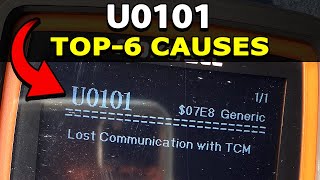
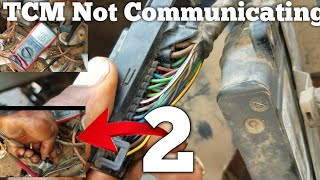
- Inability for a scan tool to communicate with the TCM. 🎬 See this guide on troubleshooting TCM to ECU communication issues.
- Replacing the Transmission Control Module (TCM) without first thoroughly inspecting all related wiring, connectors, and grounds. TSBs for the Trax specifically highlight these areas as the most common cause of the fault. This leads to an expensive and unnecessary repair when the root cause was a simple wiring or connection issue.
Most Likely Causes

- Poor Terminal Pin Fit at Transmission Connector 🔴 High Probability This is a well-documented issue in GM TSBs #PIP4990C and #PIP4990D for this specific vehicle platform. The main transmission connector's pins can spread, corrode, or get contaminated with fluid, causing an intermittent connection. This is often the first place a technician is directed to look.
How to confirm: Visually inspect the pins and terminals within the main electrical connector at the transmission for looseness, corrosion, moisture, or damage. Gently tug on wires to ensure they are secure. A load test on the power and ground pins using a headlight bulb can confirm the circuit's integrity under load.
Typical fix: Clean the connector terminals with electronic contact cleaner and use small interdental brushes to clean female pins. Apply dielectric grease before reconnecting. If terminals are bent, damaged, or spread too far, they may need to be replaced, or the connector pigtail may need to be spliced in.
Est. part cost: $10-$95 - Damaged or Corroded Wiring Harness 🔴 High Probability TSB #PIP4990D specifically notes that the harness can rub through on sharp objects, particularly on top of the transmission where it can contact the engine block. This chafing can expose wires, leading to shorts or open circuits in the CAN bus lines.
How to confirm: Visually inspect the entire length of the wiring harness between the TCM, fuse block, and ECM. Pay close attention to the area on top of and around the transmission case for any signs of chafing, breaks, or corrosion.
Typical fix: Repair the damaged section of wire with a solder joint and heat shrink tubing. Secure the harness away from sharp edges using zip ties or loom to prevent future damage.
Est. part cost: $5-$25 - Poor Connection at Under-hood Fuse Block 🟡 Medium Probability Also cited directly in TSB #PIP4990C/D as a frequent cause. Terminals for the TCM-related fuses/relays can lose tension or corrode, leading to intermittent power or communication loss.
How to confirm: Inspect the fuses and relays related to the TCM (check owner's manual for location). Remove them and check for poor terminal fit (looseness) and inspect the fuse block connectors for corrosion or damage.
Typical fix: Reseat fuses and relays. Clean any corrosion found. In severe cases, a fuse block terminal or the entire fuse block may need replacement.
Est. part cost: $1-$200 - Poor Ground Connection (G103) 🟡 Medium Probability TSB #19-NA-068 identifies a poor ground connection at G103 as a cause for various communication DTCs, including U0101. This ground is located on the left front frame rail, in front of the battery. Corrosion or looseness at this point can disrupt module communication.
How to confirm: Locate ground G103 on the driver's side frame rail. Disconnect the battery, then remove the ground nut. Inspect the stud, eyelet, and mounting surface for paint, rust, or corrosion. Check resistance between the ground eyelet and the chassis.
Typical fix: Clean the ground stud, eyelet, and frame surface with a wire brush or sandpaper to ensure bare metal contact. Re-secure the ground nut to the specified torque. No parts are typically required for this repair.
Est. part cost: $0-$5 - Low Battery Voltage or Faulty Ground ⚪ Low Probability All modern control modules require stable voltage to communicate properly. A weak battery or poor ground connection can cause modules to drop off the network, especially under high electrical load (like when the radiator fan kicks on).
How to confirm: Test the battery voltage with the engine off (should be >12.4V) and running (should be 13.7V-14.7V). Load test the battery. Inspect the main TCM ground connection for tightness and corrosion, as outlined in TSB #PIP4990D.
Typical fix: Replace a failing battery or alternator. Clean and tighten the ground connection.
Est. part cost: $20-$300 - Faulty Transmission Control Module (TCM) ⚪ Low Probability While the module can fail internally, GM TSBs strongly suggest it is far less common than wiring or connection issues. The TCM is integrated with the valve body inside the transmission, making replacement a more involved job.
How to confirm: This is a process of elimination. If all wiring, connectors, power, and grounds are confirmed to be good using a multimeter and load testing, the TCM is the likely culprit. A professional scan tool that can't communicate with the TCM after verifying the network is intact points to a bad module.
Typical fix: Replace the TCM, which is typically part of the valve body assembly. The new module will require programming to the vehicle's VIN using specialized dealer tools.
Est. part cost: $250-$800
Rare But Worth Checking
- Faulty Engine Control Module (ECM): The ECM is the primary module communicating with the TCM. While it's rare for the ECM to be the sole cause of a U0101, it is a possibility if it has an internal network fault that prevents it from talking to other modules.
Diagnosis Steps
- Check and record any and all Diagnostic Trouble Codes (DTCs) from all vehicle modules using a professional scan tool. Note which modules are reporting a loss of communication with the TCM.
- Check the battery's state of charge and the alternator's output. Ensure voltage is stable and within specification (12.4V+ engine off, 13.7-14.7V engine on). A weak battery can cause intermittent communication faults.
- Following TSB #19-NA-068, inspect ground G103 on the left front frame rail for corrosion and tightness. Clean the connection point to bare metal and re-secure.
- Following TSB #PIP4990D, perform a thorough visual inspection of the wiring harness leading to the transmission. Look for any signs of chafing, melting, or corrosion, especially where the harness runs over the top of the transmission.
Parts You'll Likely Need
- Transmission Control Module (TCM)
(OEM #24041962 (Supersedes: 24267724, 24275865, 24287426, 24291306))— This is the part that needs to be replaced if all wiring and connection checks pass. It is integrated into the valve body inside the transmission. Must be programmed to the vehicle.
Trusted brands: ACDelco (GM Genuine)
OEM price range: $400-$800
Aftermarket price range: $250-$500 - Transmission Connector Pigtail
(OEM #88988938)— If the main transmission connector housing or terminals are damaged beyond repair from corrosion or heat, a new pigtail must be spliced into the harness.
Trusted brands: ACDelco, Dorman
OEM price range: $70-$100
Aftermarket price range: $30-$60 - Contact Cleaner and Dielectric Grease — Essential for cleaning corroded or contaminated connector pins and preventing future moisture intrusion, which is a very common fix for this issue.
Trusted brands: CRC, Permatex
OEM price range: $10-$20
Aftermarket price range: $10-$20
Related Codes That Often Appear With This One
- U0073 — This code means 'Control Module Communication Bus A Off,' indicating a general network shutdown, which often occurs alongside the loss of a specific module like the TCM. It is mentioned in TSB #19-NA-068 as a related code.
- U0100 — This code means 'Lost Communication with ECM/PCM.' It can appear with U0101 if the network disruption is severe enough to affect communication with the engine computer as well. It is also mentioned in TSB #19-NA-068.
- U0121 — This code means 'Lost Communication With Anti-Lock Brake System (ABS) Control Module.' Its presence suggests a wider network problem beyond just the TCM, potentially pointing towards a shared wiring or ground issue. It is mentioned in TSB #19-NA-068.
- U2106 — This code, often found in the ABS module, also indicates 'Lost Communication with Transmission Control Module.' Its presence alongside U0101 in the ECM helps confirm the TCM is the module that has dropped off the network.
Technical Service Bulletins (TSBs) & Recalls
- PIP4990D: Emphasizes checking terminal pin fit at the transmission connector and under-hood fuse block, and inspecting for a chafed harness on top of the transmission before replacing the TCM.
- 19-NA-068: Points to a poor ground connection at G103 on the left front frame rail as a potential cause for U0101 and other communication codes.
- PIP4990C: The predecessor to PIP4990D, also highlighting terminal fit issues as a primary cause.
Platform-Specific Known Issues
- Per GM TSB #PIP4990D, a primary cause for U0101 on the Trax is a poor terminal pin fit at the transmission connector or the under-hood fuse block. The bulletin explicitly advises checking these connections before replacing any parts.
- TSB #PIP4990D also calls out a common chafe point for the wiring harness on top of the transmission where it can rub against the engine block, causing shorts.
- TSB #19-NA-068 points to a poor ground at G103 (left front frame rail) as a cause for intermittent communication codes, including U0101, on the Trax and related vehicles.
Mechanic-Grade Diagnostic Values
- CAN Bus Network Resistance — expected: Approximately 60 Ω when measured across the CAN High and CAN Low pins at the DLC with the battery disconnected. (Two 120 Ω terminating resistors in parallel).. Failure: A reading of 120 Ω suggests one of the terminating resistors (or a module) is offline. A reading significantly different from 60 Ω or 120 Ω indicates a wiring issue.
- CAN Bus Voltage (Key On, Engine Off) — expected: CAN High: 2.5V to 3.5V. CAN Low: 1.5V to 2.5V.. Failure: Voltages outside these ranges, or a short to ground (0V) or power (~12V) on either line, indicates a wiring fault.
- TCM Power Supply Pin Voltage (Key On) — expected: 12.0 - 12.6V (should be close to battery voltage).. Failure: Low or no voltage indicates a problem with the power supply wire, fuse, or relay. A significant voltage drop when the TCM is connected (e.g., from 12V to under 1V) points to an internal short in the TCM.
- TCM Ground Pin Resistance — expected: Less than 0.5 Ω (ideally less than 0.1 Ω) between the ground pin on the TCM connector and a clean chassis ground.. Failure: High resistance indicates a corroded or loose ground connection, which is a common cause of communication issues.
Scan Tool Commands That Help
- GDS2 (GM Dealer Tool): Transmission Adaptive Values Learn — This function should be used after a TCM replacement or major transmission repair to reset and relearn transmission shift adapts. It is performed in the service stall without driving. The path is: Module diagnostics > Transmission Control Module > Configuration / Reset Function > Transmission Adaptive Values Learn.
- Professional Bidirectional Scanner: Communication Test / Ping Module — To actively check if the TCM is responsive on the network. The tool sends a request signal and waits for a reply. If there's no response, it confirms the TCM is offline and the fault is currently active, helping to distinguish from intermittent issues.
Wiring & Ground Locations

- G103 — On the left front (driver's side) frame rail, in front of the battery.. This is a primary ground point. TSB #19-NA-068 specifically identifies corrosion or looseness here as a cause for U0101 and other communication codes.
- X50A — The Underhood Fuse Block.. This is a major junction for power and communication circuits. TSB #PIP4990C mentions checking terminal pin fit here. Technical documents refer to connectors X1 and X2 at this block for TCM-related circuits.
- K20 (X1 & X2) — The Engine Control Module (ECM) connectors.. The CAN bus wires from the TCM terminate at the ECM. Verifying pin fit and checking for corrosion or damage at these connectors is a key diagnostic step if the fault is not at the TCM connector itself.
- TCM Connector — On the transmission itself, typically a 14-pin connector on the 6T40/6T45 family transmission.. This is the most common point of failure due to loose pins, corrosion, or fluid contamination as cited in multiple TSBs.
Real Owner Repair Stories
- YouTube Channel 'Garrys repair and auto electrical diagnostics' (Chevrolet Malibu (with related 6T40/6T45 transmission)) — U0101, limp mode, erratic door lock cycling.
❌ Tried (didn't work) Initial scan showed codes in multiple modules.
✅ What actually fixed it The technician identified the small white transmission connector as a common failure point. He noted a previous, similar repair where the connector was full of transmission fluid and the fix was to clean the connector and tighten the communication line terminal pins. - YouTube Channel 'Fix it Angel' (Chevrolet with U0101 (specific model not stated, but diagnostic process is universal)) — U0101, no communication with TCM, PRNDL display blank, stuck in park.
❌ Tried (didn't work) Checking fuses, which were all good.
✅ What actually fixed it The diagnostic process revealed a critical clue: The wiring harness connector showed 12V power when disconnected from the TCM. However, when plugged into the TCM, the voltage dropped to almost zero (millivolts). This confirmed the wiring and power supply were good up to the connector, and the fault was an internal short within the TCM, which was drawing down the entire circuit. The fix was to replace the faulty TCM.
"I Checked Everything" — The Actual Cause
- A common diagnostic pattern for U0101 is not a smoke test, but an electrical test that passes initially. A technician may test the TCM connector with a multimeter and confirm 12V power and a good ground. However, this test is done with the connector unplugged (no load). The actual cause can be an internal short in the TCM that only manifests when it's connected. The voltage reading will drop from 12V to near 0V the moment the connector is plugged in, proving the TCM itself is the problem.
When the Usual Fixes Don't Work
- While TSBs and common wisdom heavily point towards wiring and connector issues as the primary cause for U0101, there are confirmed cases where the Transmission Control Module (TCM) itself is the root cause. A key diagnostic indicator of a faulty TCM is when the power and ground circuits test perfectly at the harness connector while disconnected, but the circuit voltage collapses to near zero volts immediately upon plugging the connector into the TCM. This indicates an internal short within the module is pulling down the power supply, a fault that can be missed if the circuit is only tested under no-load conditions.
OEM Part Supersession History
24268164→24287425 (and others)— Part revision and consolidation.
Heads up: Multiple part numbers are often interchangeable for remanufactured units, including 24268169, 24267723, 24275864, and 24285009. Always confirm compatibility with the vehicle's VIN, as programming is required.
Model Year Variations Within This Range
- c. 2015 and later: GM introduced a 'GEN 2' version of the 6T40/6T45 TCM. Service information for a 2015 model notes it uses a 'DUAL BOARD TCU AND REDUCED RETENTION PLATE'. While functionally similar, internal hardware and specific part numbers may differ from the earliest 2013-2014 models.
Helpful Videos
Used OEM Parts in Stock


New Aftermarket Parts Available

The information in this article is provided for general reference and educational purposes only. Vehicle specifications, procedures, and part compatibility can vary by production date, trim level, and region. Always consult your vehicle's factory service manual and verify part numbers before purchasing or performing repairs. Safety-critical components such as airbags, seat belts, and braking systems should be installed by a qualified professional.
- Chevrolet TRAX:
- 🎬 Helpful Videos
- 🛍️ Shop This Part
- What's Unique About the 2013-2020 Chevrolet TRAX
- Diagnostic Flowchart
- Symptoms You May Notice
- Most Likely Causes
- Rare But Worth Checking
- Diagnosis Steps
- Parts You'll Likely Need
- Related Codes That Often Appear With This One
- Technical Service Bulletins (TSBs) & Recalls
- Platform-Specific Known Issues
- Mechanic-Grade Diagnostic Values
- Scan Tool Commands That Help
- Wiring & Ground Locations
- Real Owner Repair Stories
- "I Checked Everything" — The Actual Cause
- When the Usual Fixes Don't Work
- OEM Part Supersession History
- Model Year Variations Within This Range
- 🎟️ Get 5% Off