

U0100 on 2007-2012 Nissan Altima: Lost Communication with ECM Causes and Fixes
Code U0100 on a 2007-2012 Nissan Altima means the Engine Control Module (ECM) has stopped communicating. The most common causes are a weak battery, bad ground connections, or corroded wiring. Before replacing expensive parts, fully charge the battery and inspect all visible wiring and grounds.
- U0100 is a serious code that will likely prevent the vehicle from starting or cause it to stall. Do not drive it.
- Always start diagnosis with the simplest and most common causes: test the battery and check all relevant fuses.
- Visually inspect wiring harnesses and ground straps for corrosion or damage before considering expensive module replacement.
- Given the 2007-2012 Altima's history, if transmission symptoms are also present, the TCM could be involved in the network failure.
- This code is difficult to diagnose at home and usually requires professional tools and expertise to avoid costly misdiagnosis.
What's Unique About the 2007-2012 Nissan Altima

The 2007-2012 Altima belongs to the fourth generation (L32), which is known for issues with its Continuously Variable Transmission (CVT). While U0100 points to the ECM, a fault in another major module, like the Transmission Control Module (TCM), can disrupt the entire network and cause this code. Given this model's history of CVT and TCM-related problems, a transmission-related fault should be considered a strong possibility if simple power and wiring checks don't solve the issue, especially if code U0101 (Lost Communication with TCM) is also present.
Symptoms You May Notice

- Engine will not start (no-crank or cranks but won't fire)
- Engine stalls intermittently while driving
- Check Engine Light is on (or flashing)
- Multiple warning lights on the dashboard may illuminate at once (e.g., ABS, VDC, Slip)
- Vehicle enters 'limp mode,' with severely reduced power and locked gear ratio
- Transmission may shift erratically or not at all
- Cooling fans run constantly at high speed, even with a cold engine (a common fail-safe mode)
- Scan tool cannot communicate with the ECM/engine module
- Replacing the ECM without first checking the battery, fuses, and wiring. The ECM is expensive and often not the root cause.
- Replacing the battery but failing to clean corroded terminal connectors, leaving the poor connection unresolved.
Most Likely Causes

- Weak or Faulty Battery 🔴 High Probability Modern vehicles are highly sensitive to voltage. If battery voltage drops below a certain threshold (e.g., 12.0V), control modules can shut down randomly and fail to communicate. This is the most common and easiest-to-fix cause.
How to confirm: Test the battery voltage with a multimeter. A healthy, fully charged battery should read at least 12.4-12.6 volts with the engine off. Have the battery load-tested at an auto parts store, as a battery can show good voltage but still fail under load. A voltage drop below 10V during cranking is a key indicator of a supply problem.
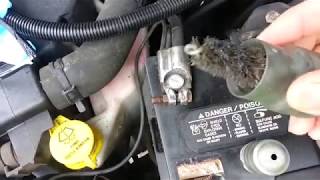
Typical fix: Recharge or replace the battery. Clean any corrosion from the battery terminals and cable ends with a wire brush.
Est. part cost: $150-$250 - Poor Ground Connections or Damaged Wiring 🟡 Medium Probability Engine and chassis grounds can corrode or loosen over time, interrupting power or reference signals to the ECM. The main ECM wiring harness can also be damaged by rubbing against other components, engine heat, or rodents. Corrosion on fuse panel ignition feeds or high resistance on the Data Link Connector (DLC) ground wire are known issues on this platform.
How to confirm: Visually inspect all major ground straps from the battery to the chassis and from the chassis to the engine block and transmission. Look for green/white corrosion, looseness, or breaks. Inspect the wiring harness going to the ECM and TCM for any signs of chafing, melting, or rodent damage. The main battery ground cable for this model is P/N 24080-JA10A.
Typical fix: Clean ground connection points with a wire brush until they are shiny, apply dielectric grease, and re-secure them tightly. 🎬 See how to properly clean and repair vehicle ground connections. Repair or replace damaged sections of the wiring harness.
Est. part cost: $5-$500 - Blown Fuses or Faulty ECM Relay 🟡 Medium Probability A simple blown fuse can cut power to the ECM, preventing it from communicating. This can be caused by a momentary short circuit or another failing component. The ECM relay, housed within the IPDM E/R (Intelligent Power Distribution Module Engine Room), can fail from age and heat cycles.
How to confirm: Consult the owner's manual or the fuse box cover to locate fuses labeled 'ECM,' 'IGN,' or 'Engine Control.' These are typically in the under-hood fuse box (IPDM E/R). Pull each fuse and visually inspect it. Test the ECM power relay, often by swapping it with an identical relay (like the horn relay) to see if the problem resolves.
Typical fix: Replace the blown fuse with a new one of the *exact same amperage*. If the fuse blows again, a deeper electrical diagnosis is needed to find the short. Replace a faulty relay.
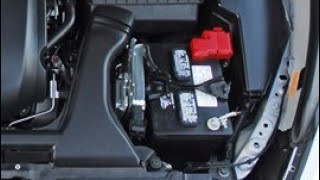
Est. part cost: $1-$30 - Failed Engine Control Module (ECM) ⚪ Low Probability While less common, internal failure of the ECM due to age, heat, or voltage spikes can cause it to stop communicating entirely. The ECM is located by the battery tray in the engine bay.
How to confirm: This is typically a last resort after all other possibilities (power, ground, wiring, other modules) have been exhaustively ruled out by a professional. The ECM's power and ground pins must be tested directly at the connector using a wiring diagram. Sometimes tapping on the ECM can make it temporarily reconnect, indicating an internal fault.
Typical fix: Replace the ECM. This requires programming the new module to the vehicle's VIN and security system (NATS - Nissan Anti-Theft System).
Est. part cost: $200-$900
Rare But Worth Checking
- Failed Transmission Control Module (TCM): The 2007-2012 Altima is known for CVT issues. A failing TCM can disrupt the entire CAN network, causing other modules to report communication loss with the ECM. If you have transmission-related symptoms like harsh shifting, hesitation, or a U0101 code along with the U0100, the TCM is a strong suspect.
- Faulty CAN Bus Terminating Resistor: The CAN bus has a 120-ohm resistor at each end (often inside the ECM and another module). If one of the modules containing a resistor fails or there's a break in the wiring, the total network resistance will be incorrect (reading 120 ohms instead of the correct 60 ohms), causing communication to fail. This requires advanced diagnostics to pinpoint.
- Failed Electronic Steering Column Lock (ESCL) Module: On 2009-2010 models, a known faulty ESCL module can prevent the car from starting and may disrupt network communication, causing various codes. Nissan issued a voluntary service campaign (PC516) to replace the ESCL. A symptom is the key fob not being recognized and the car entering 'lock mode'.
- Failed Intelligent Power Distribution Module (IPDM E/R): The IPDM is more than a fuse box; it's a control module. Internal failures can cause a wide range of electrical issues, including cutting power to the ECM or disrupting CAN communication. Symptoms can include multiple unrelated electrical components failing at once (wipers, lights, etc.). Nissan issued an updated IPDM for some models that is black, while the original failure-prone units were white. 🎬 Watch: How to perform an automated IPDM self-test.
Diagnosis Steps

- Check Battery Health: Connect a multimeter to the battery. Ensure voltage is above 12.4V with the engine off. If it's low, charge the battery fully and re-test. A weak battery is a very common cause.
- Scan for All Codes: Use an OBD-II scanner capable of a full network scan to check for codes in all available modules (Engine, Transmission, ABS, BCM, etc.). Note any other 'U' codes, especially U0101 or U1000.
- Inspect Fuses and Relays: Check all fuses related to the ECM, PCM, and ignition systems in the under-hood fuse box (IPDM). Visually inspect fuses and test the ECM relay, possibly by swapping it with an identical one.
- Visual Wiring and Ground Inspection: Thoroughly inspect the wiring harnesses connected to the ECM (located near the battery) and TCM. Look for any signs of damage, such as chafing, melting, or corrosion. Locate the main engine and chassis ground straps. Unscrew them, clean the contact points to bare metal with a wire brush, and re-tighten them securely.
- (Advanced) Check CAN Bus Resistance: Disconnect the negative battery terminal. At the OBD-II port (DLC), use a multimeter to measure the resistance between Pin 6 (CAN High) and Pin 14 (CAN Low). A healthy network should read approximately 60 ohms. A reading of 120 ohms indicates an open circuit or a problem with a terminating resistor/module. A reading near 0 ohms indicates a short between the CAN lines.
- (Advanced) Check CAN Bus Voltages: With the battery reconnected and ignition ON, measure DC voltage at the DLC. Pin 6 (CAN High) should be approximately 2.7V and Pin 14 (CAN Low) should be approximately 2.3V. Deviations suggest a short to power or ground.
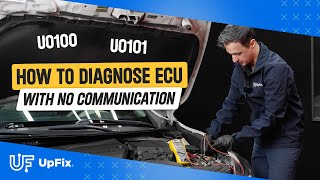
- (Professional) Verify Power and Ground at the ECM: If the above steps don't reveal the issue, a technician will need to use a wiring diagram to test for proper power and ground signals directly at the ECM's connector pins. If power and ground are present but the module won't communicate, the ECM itself is likely faulty.
Parts You'll Likely Need
- Battery — The most common and simplest cause of network communication codes is low system voltage from a weak or failing battery.
Trusted brands: Interstate, DieHard, Duralast
Related Codes That Often Appear With This One
- U0101 — Lost Communication with TCM. If this code is present with U0100, it strongly suggests the problem lies in the CAN network wiring that is common to both modules, or a fault with the TCM is bringing the network down.
- P07xx — Any P07xx code is transmission-related. Its presence alongside U0100 would further point towards a fault in the transmission control system that may be affecting the whole network.
- U1000 — A common Nissan-specific code for a CAN Communication Circuit fault. It often appears with other U-codes and points to a general network problem rather than a single module.
Technical Service Bulletins (TSBs) & Recalls
- source — A Nissan technical bulletin that provides a detailed flowchart for diagnosing CAN network issues, including a table of expected resistance and voltage values for various fault conditions.
- source — This service campaign addresses a faulty Electronic Steering Column Lock on 2009-2010 Altima and Maxima models, which can cause a no-start condition and network faults. The fix involves replacing the lock unit.
- Bulletin #NTB13047 — A manufacturer service bulletin notes that when in "Extended Storage Mode," vehicles can set DTC U0100 if the ignition switch is left in the accessory position for longer than 2 seconds.
Platform-Specific Known Issues
- The 2007-2012 Altima generation (L32) ECM is located in the engine bay near the battery tray, making it susceptible to heat and vibration over time.
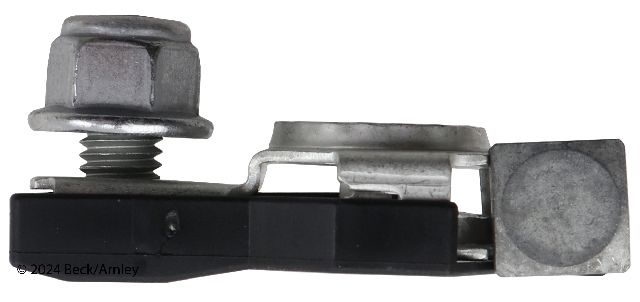
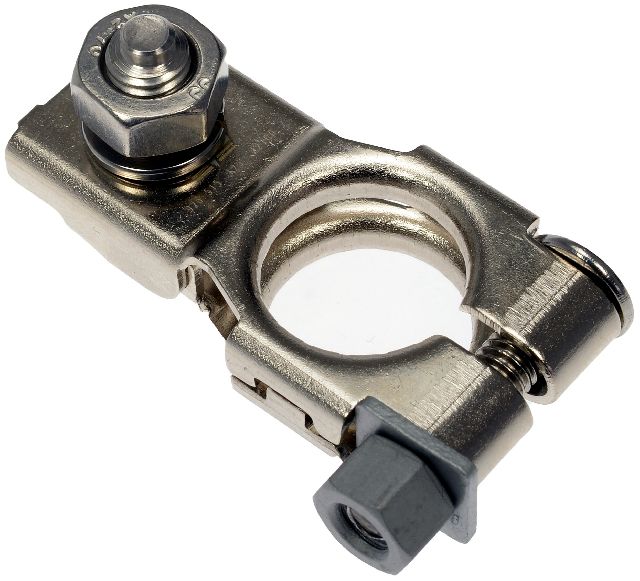
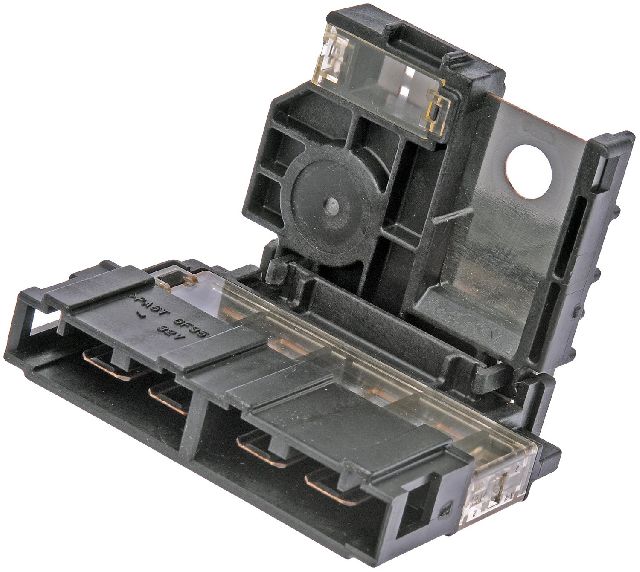
- Corrosion on the fuse links located on the positive battery terminal clamp can also cause power loss to the ECM and other modules.
- The Intelligent Power Distribution Module (IPDM), which is the main fuse/relay box in the engine bay, can fail internally and cause a loss of power to the ECM. A cross-manufacturer reference in NHTSA ODI #11450973 describes a similar case where a technician diagnosed an electrical issue, possibly a harness, but the dealer ultimately replaced the IPDM to resolve a no-power condition and code U0100.
Mechanic-Grade Diagnostic Values
- CAN Bus Resistance (Key Off) — expected: ~60 Ω. Failure: 120 Ω indicates an open circuit or missing termination. ~0 Ω indicates a short between CAN High and Low lines.
- CAN High Voltage (Key On) — expected: ~2.7 V. Failure: Significant deviation suggests a short to power or ground on the CAN High line.
- CAN Low Voltage (Key On) — expected: ~2.3 V. Failure: Significant deviation suggests a short to power or ground on the CAN Low line.
- ECM Ground Pin Voltage Drop — expected: < 0.1 V. Failure: A higher reading indicates excessive resistance in the ground circuit, which can cause the module to malfunction.
Scan Tool Commands That Help
- Nissan CONSULT: CAN Diag Support Monitor — This function within the dealer-level tool can check CAN voltages and see which modules are actively communicating on the network, helping to isolate the one that has dropped off.
- Nissan CONSULT: IPDM E/R Auto Active Test — This self-test forces the IPDM to cycle its outputs (wipers, lights, fans, A/C compressor clutch). If components don't activate, it points to a faulty IPDM, which could be the root cause of the U0100 if it's failing to power the ECM correctly.
- J2534 Pass-Thru Device with Nissan Software: Reprogramming / Configuration — Required after installing a new or used ECM or TCM. The module must be programmed with the vehicle's VIN and configuration data to function.
Wiring & Ground Locations

- E15 — Lower left side of the engine compartment.. This is a primary grounding point for multiple critical components, including the ECM, TCM, and IPDM E/R. Corrosion or looseness here can cause widespread communication failures.
- E204 — Left side of the engine compartment.. Another key engine bay ground point. The factory ground cable often connects the battery negative terminal to the chassis and then to a bolt on the transmission case.
- IPDM E/R — Under the hood, typically near the battery and firewall on the passenger side.. The Intelligent Power Distribution Module Engine Room houses the fuses and relays for the ECM. It is a common source of failure due to internal corrosion or relay failure, directly cutting power to the ECM.
- ECM Connector — Located by the battery tray in the engine bay.. This is the main connection point for the ECM. All power, ground, and CAN signals must be verified here with a multimeter and pinout diagram if the module is suspected to be faulty.
Real Owner Repair Stories
- UpFix technical case study (2016 Nissan Altima (L33, but demonstrates a common L32 issue)) — U0100, occasional dash warnings, long cranking time.
❌ Tried (didn't work) Initial suspicion was a bad ECU.
✅ What actually fixed it A technician found corrosion at a fuse panel ignition feed and slightly high resistance on the DLC ground. Cleaning and restoring these connections resolved the U0100 code without replacing any modules. - NHTSA ODI #11537805 — An owner reported an incident involving an accident where the vehicle was found with code U0100 (ECM/PCM 'A' DTC) after stopping in opposing lanes of traffic.
OEM Part Supersession History
23710-JA04A→MEC110-010 F1, MEC110-011 A1, MEC110-012 A1, MEC110-012 A3— Internal revisions and updates.
Heads up: Applies to 2007 Altima 2.5L models. Any replacement ECM must be programmed to the vehicle.23710-JA07A→23710-JA07B, 23710-JA07C— Internal revisions and updates.
Heads up: For 2.5L with Manual Transmission and ABS (California emissions). Programming is required.31036-JA02D→31036-JA02B, 31036-JA02C, 31036-JA02E— Internal revisions for the Transmission Control Module (TCM).
Heads up: Used TCMs may be available but programming to the vehicle is often required.
Model Year Variations Within This Range
- 2010-2012: The 2010 model year received a mid-cycle refresh with a new front fascia, grille, and standard Vehicle Dynamic Control (VDC). While the core electronics are similar, option packages and some interior tech (like navigation systems) were updated, which can introduce variations in module communication.
- 2009-2010: These model years were particularly susceptible to failures of the Electronic Steering Column Lock (ESCL) module, which could cause a no-start and network communication codes like U0100. Nissan issued a service campaign for this issue.
Diagnostic Flowchart
Other Known Issues on This Vehicle
Issues unrelated to this code that are worth knowing about as an owner of this generation:
- Continuously Variable Transmission (CVT) Failure 🔴 High — Widespread across this generation, particularly in 2007-2010 models. Symptoms like shuddering, hesitation, and whining can appear at various mileages. (Ref: Multiple TSBs exist, such as NTB16-110P and NTB19-076A, for judder and specific DTCs. Nissan also extended the warranty for some early models.)
- Electronic Steering Column Lock (ESCL) Failure 🔴 High — Common on 2009-2010 models, causing a sudden no-start condition where the key is not recognized. (Ref: Nissan Voluntary Service Campaign PC516 was issued to replace the faulty ESCL module.)
- Oil Cooler Gasket Leak 🟠 Medium — Frequently reported on both 4-cylinder and V6 engines, causing oil to leak at the back of the engine, often noticeable after 60,000 miles.
- Premature Catalytic Converter Failure 🔴 High — Can fail at higher mileage, leading to a P0420 code, poor performance, and an expensive repair.
- Melting or Sticky Dashboard 🟡 Low — Common complaint where the dashboard material becomes sticky or shiny in hot climates, particularly on earlier models of this generation.
- Faulty Fuel Pump 🟠 Medium — Can lead to stalling or a crank-no-start condition due to fuel starvation. (Ref: Recalls were issued for some model years, though not all within this generation may be covered.)
Used vs. New Parts: Buying Guide for This Vehicle
When a used part is the smart pick: A used ECM or TCM from a reputable salvage yard can be a cost-effective option, BUT only if you have a confirmed plan for programming. It is not a plug-and-play part. It makes sense if the cost of the used module plus the programming fee is significantly less than a new or remanufactured unit.
Donor-vehicle mileage cap: roughly under 120000 miles for the part to have meaningful remaining life.
What to inspect on the donor part:
- Match the part number EXACTLY. Use supersession history to confirm compatibility.
- Source the part from a vehicle that was not involved in a flood or major front-end collision.
- Inspect the connector pins on the used module for any signs of corrosion, bending, or water intrusion before purchase.
- Ask for the VIN of the donor vehicle to help with potential programming needs.
OEM-only on this vehicle (don't cheap out):
- Engine Control Module (ECM)
- Transmission Control Module (TCM)
Aftermarket brands forum-validated for this vehicle:
- CARDONE (Remanufactured)
- Flagship One (Pre-programmed)
- UpFix (Repair Service)
Brands owners have reported issues with on this vehicle:
- Unbranded, 'no-name' modules from online marketplaces without a warranty or a clear programming requirement statement. These often have compatibility issues or are locked to a different vehicle's VIN.
Real Owner Stories
Aggregated from forums and TSBs cited above. Mileages and costs reflect what owners reported in those sources.
2007-2012 Nissan Altima
Symptoms: The vehicle experienced a no-crank situation. Diagnostics involved checking for a 5V reference and testing CAN bus resistance and voltage at the DLC.
What fixed it: Advanced diagnostics of the CAN bus and power/ground circuits as guided by technical forum experts.
Source hint: ScannerDanner Forum thread titled 'u0100 help with troubleshooting'
2009-2010 Nissan Altima
Symptoms: No-start condition and network faults.
What fixed it: Replacement of the Electronic Steering Column Lock (ESCL) unit as part of a voluntary service campaign.
Source hint: PC516: Voluntary Service Campaign - Electronic Steering Column Lock (ESCL)
2007-2012 Nissan Altima
Symptoms: Vehicle enters 'limp mode' with severely reduced power and locked gear ratio; scan tool cannot communicate with the ECM.
What fixed it: Following a step-by-step diagnostic guide emphasizing the verification of power and grounds first before replacing the ECM.
Source hint: Reddit r/UpFix post 'How to Diagnose ECU/ECM “No Communication” (U0100) on Infiniti & Nissan'
Related OBD-II Codes
Frequently Asked Questions
My 2009 Altima won't start and has network faults; could this be related to the steering lock issue mentioned in PC516?
Where is the Engine Control Module located on my 2007-2012 Altima?
Why are my cooling fans running at high speed even though the engine is cold?
Is there a specific ground cable I should check for my Altima's U0100 code?
Can a bad battery really cause a U0100 code on a Nissan Altima?
What should the CAN bus resistance be when testing the OBD-II port?
What is the IPDM E/R and how does it affect code U0100?
Helpful Videos


We Have This Part in Stock


The information in this article is provided for general reference and educational purposes only. Vehicle specifications, procedures, and part compatibility can vary by production date, trim level, and region. Always consult your vehicle's factory service manual and verify part numbers before purchasing or performing repairs. Safety-critical components such as airbags, seat belts, and braking systems should be installed by a qualified professional.
- Nissan Altima:
- 🎬 Helpful Videos
- 🛍️ Shop This Part
- What's Unique About the 2007-2012 Nissan Altima
- Symptoms You May Notice
- Most Likely Causes
- Rare But Worth Checking
- Diagnosis Steps
- Parts You'll Likely Need
- Related Codes That Often Appear With This One
- Technical Service Bulletins (TSBs) & Recalls
- Platform-Specific Known Issues
- Mechanic-Grade Diagnostic Values
- Scan Tool Commands That Help
- Wiring & Ground Locations
- Real Owner Repair Stories
- OEM Part Supersession History
- Model Year Variations Within This Range
- Diagnostic Flowchart
- Other Known Issues on This Vehicle
- Used vs. New Parts: Buying Guide for This Vehicle
- Real Owner Stories
- 2007-2012 Nissan Altima
- 2009-2010 Nissan Altima
- 2007-2012 Nissan Altima
- Related OBD-II Codes
- Frequently Asked Questions
- 🎟️ Get 5% Off