

U0100 on 2007-2021 Mitsubishi Outlander: Lost Communication with ECM Fixes
The U0100 code on a Mitsubishi Outlander means the Engine Control Module (ECM) has lost communication with other vehicle modules. The most common causes are a weak battery, corroded ground connections, or damaged CAN bus wiring. A simple battery test and ground inspection can often solve the problem. On platform-mates like the Dodge Caliber, a known chafe point in the wiring harness is a frequent culprit.
- U0100 means a communication failure with the Engine Control Module (ECM).
- Before suspecting an expensive ECM failure, always test the 12V battery and inspect all major power and ground connections.
- The vehicle should not be driven, as it can stall or fail to start at any time.
- Diagnosing the CAN bus wiring requires specific tools and knowledge; professional help is recommended if a bad battery or ground is not the clear cause.
- Check for any available ECU software updates with a dealer, as some communication bugs are fixed with new software.
What's Unique About the 2007-2021 Mitsubishi Outlander

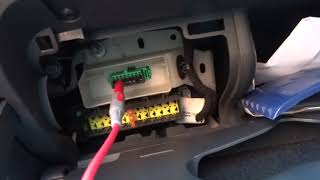
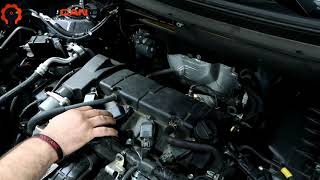
On the Mitsubishi Outlander, the U0100 code is frequently logged by the ETACS-ECU or the combination meter when they can't hear from the engine computer. Diagnosis often requires checking the CAN bus lines specifically between the ECM and the module that logged the code. Unlike some vehicles where a U-code points directly to a single failed part, on the Outlander it often initiates a broader network diagnostic procedure, starting with a full CAN bus check using a Mitsubishi-specific scan tool (M.U.T.-III). A low 12V battery is a very common trigger for this code on Mitsubishis 🎬 Watch: DIY solutions for the U0100 code on an Outlander, causing communication dropouts during engine cranking. For the Outlander PHEV, the PHEV-ECU will set this code if communication with the ECM is lost for 0.5 seconds or more while the vehicle is on.
Generation note: This guide covers the second generation (2007-2012) and third generation (2013-2021) Outlander, including PHEV models. While the fundamental causes of a U0100 code are the same (wiring, power, modules), specific module locations and wiring harness routing differ. The third-generation models, especially the PHEV, have a more complex network architecture with multiple CAN buses (e.g., EV-CAN), but the diagnostic principles remain consistent.
Symptoms You May Notice
- Check Engine Light is on
- Vehicle will not start or has a crank-no-start condition
- Engine stalls while driving
- Multiple warning lights on the dashboard (e.g., ABS, 4WD, traction control).
- '4WD System Service Required' message or flashing 4WD/LOCK indicators.
- Reduced engine power or 'limp mode'
- Gauges on the instrument cluster behave erratically or drop to zero
- Transmission may not shift correctly
- Replacing the ECM without first verifying power, grounds, and CAN bus wiring integrity. The ECM is expensive and often not the root cause.
Most Likely Causes


- Weak or Faulty 12V Battery 🔴 High Probability Modern ECUs are sensitive to voltage. A drop during engine cranking is a very common reason for communication modules to time out and set a U0100 code. This is often the first and simplest thing to check.
How to confirm: Test the battery voltage with a multimeter. A healthy, fully charged battery should read at least 12.6 volts with the engine off. Perform a load test to check its ability to hold a charge under load.
Typical fix: Recharge or replace the 12V battery.
Est. part cost: $150-$300 - Corroded or Loose Battery Terminals / Ground Straps 🟡 Medium Probability Engine and chassis grounds are critical for stable communication between modules. Over time, these connections can corrode or loosen, creating intermittent communication failures. Forum users have reported fixing U0100 issues simply by finding and tightening a loose ground wire terminal.
How to confirm: Visually inspect the battery terminals for corrosion (white or greenish buildup). Locate and inspect the main ground straps from the battery to the chassis and from the engine/transmission to the chassis. Check for tightness and signs of corrosion.
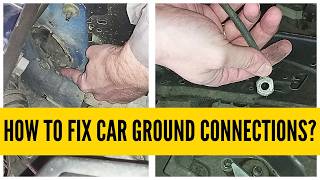
Typical fix: Clean the battery terminals and posts with a wire brush. Remove, clean, and securely re-attach any corroded or loose ground straps.
Est. part cost: $5-$20 - Damaged CAN Bus Wiring Harness 🟡 Medium Probability The CAN bus is a pair of twisted wires that can be susceptible to chafing, rodent damage, or corrosion from water intrusion, leading to an open or short circuit. On the related Dodge Caliber, a known chafe point is where the harness rubs against the body behind the driver's side fender, shorting out the PCM power feed.
How to confirm: Visually inspect the wiring harness leading to the ECM and other major modules for any signs of physical damage. A multimeter can be used to check for ~60 ohms of resistance across pins 6 (CAN High) and 14 (CAN Low) on the OBD-II port (with the battery disconnected) to verify the integrity of the termination resistors.
Typical fix: Repair the damaged section of the wiring harness. This may involve soldering, heat-shrinking, or replacing a connector.
Est. part cost: $20-$200 - Failed Engine Control Module (ECM) ⚪ Low Probability
How to confirm: This is typically a last resort after all other possibilities (power, ground, wiring) have been exhaustively ruled out. An advanced scan tool will show the ECM as being offline. In one diagnostic case on an Outlander Sport, disconnecting the ECM restored a clean CAN signal on the network, proving the ECM was the source of the fault.
Typical fix: Replace the ECM. This often requires programming the new module to the vehicle's VIN and security system, which usually must be done by a dealer or specialized shop.
Est. part cost: $500-$1200
Rare But Worth Checking
- Failed ETACS-ECU or Other Module: While the code points to the ECM, a different faulty module on the network (like the 4WD-ECU or the ETACS-ECU itself) can sometimes disrupt communication for all other modules. The ETACS-ECU acts as a central gateway, and its failure can cause widespread issues.
- Aftermarket Device Interference: Improperly installed remote starters, alarms, or stereo systems tapped into the CAN bus wiring can introduce electrical noise and disrupt communication, triggering a U0100 code. This is a common cause of difficult-to-diagnose network faults.
- Blown Fuse: A blown fuse for the ECM, ETACS, or even the OBD-II port can cut its power and take it offline, resulting in a loss of communication. Always check fuses early in the diagnostic process.
Diagnosis Steps
- Check Battery Health: Ensure the battery has a full charge (12.6V+) and clean, tight terminals. A weak battery is a top cause of communication codes. Perform a load test.
- Scan for All Codes: Use an OBD-II scanner to read codes from all available modules (Engine, ABS, ETACS, 4WD, etc.). Note which modules are reporting the U0100 code, as this points to where the communication break is seen.
- Inspect Fuses: Check all fuses related to the ECM, PCM, and ETACS in the under-hood and interior fuse panels.
- Inspect Grounds: Visually inspect and verify the main battery-to-chassis and engine-to-chassis ground connections are clean and tight. A poor ground can cause floating voltages that disrupt CAN signals.
- Inspect Wiring: Visually inspect the wiring harness for obvious signs of damage, especially around the ECM and where the harness may rub against the chassis or engine components. Pay attention to areas mentioned for platform mates, like behind the driver's side fender.
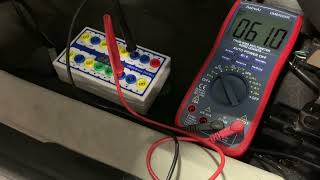
- Check CAN Bus Resistance: With the battery disconnected, use a multimeter to measure the resistance between Pin 6 (CAN High) and Pin 14 (CAN Low) of the OBD-II port. A reading of approximately 60 ohms indicates the main CAN bus circuit and its two 120-ohm terminating resistors are likely intact. 🎬 See how to test CAN bus resistance with a multimeter A reading of 120 ohms suggests one terminating resistor (often in the ECM) is disconnected or has failed.
- Advanced Diagnostics: If the steps above do not reveal the issue, use an advanced scan tool to see which modules are online. An oscilloscope can be used to check the signal waveform on the CAN High and CAN Low lines to identify signal degradation, shorts, or interference. A good CAN signal will show CAN High switching between 2.5-3.5V and CAN Low switching between 2.5-1.5V.
Parts You'll Likely Need
- 12V AGM Battery — A weak battery is the most frequent trigger for communication fault codes on modern vehicles.
Trusted brands: Bosch, Interstate, DieHard
OEM price range: $250-$400
Aftermarket price range: $150-$300 - Engine Control Module (ECM/PCM)
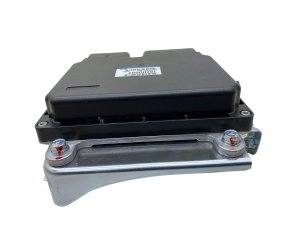
(OEM #1860A578, 1860B333 (Examples for 2008-2010 Outlander 3.0L V6))— In rare cases, the module itself fails internally and must be replaced. This is a last resort after checking all wiring and power/ground issues.
Trusted brands: Mitsubishi (OEM)
OEM price range: $800-$1200
Aftermarket price range: $400-$700 (Remanufactured)
Related Codes That Often Appear With This One
- U0001 — This code for 'High Speed CAN Communication Bus' often appears with U0100, indicating a general network problem rather than just a single module timeout.
- U0141 — 'Lost Communication With Body Control Module (ETACS)'. If the ETACS module is the source of the problem or is also offline, you may see this code alongside U0100.
- U1100 — A similar code for 'Engine CAN timeout' that can be set by various ECUs, like the combination meter, when communication is lost.
Technical Service Bulletins (TSBs) & Recalls
- TSB-18-54-001: Addresses communication malfunctions with the Telematics Control Unit (TCU) on 2018 models, requiring a software re-flash. While not directly for U0100, it shows a history of communication module software updates.
- TSB-18-54-004: A software update for the Smartphone Link Display Audio system to fix rebooting and other issues. This is another example of correcting electronic module behavior via software.
- Note on TSB-18-54-003: The TSB cited in Pass 1 is for a 'Dome Light Flicker' on certain models and is not relevant to a U0100 CAN bus fault.
Platform-Specific Known Issues
- Potential for False Code Set: According to Mitsubishi's own diagnostic information, if the ignition switch is left in the 'ON' position for more than three minutes without starting the engine, the 4WD-ECU may log a U0100 code as a 'past trouble' or history code. This should be cleared to see if it returns as an active fault.
- PHEV Model Specifics: On the Outlander PHEV, the PHEV-ECU monitors communication with the ECM. If the signal is lost for 0.5 seconds or more while the vehicle is ON, it will trigger the U0100 code. Diagnosis on the PHEV should focus on the EV-CAN bus line integrity.
Mechanic-Grade Diagnostic Values
- CAN Bus Network Resistance — expected: ~60 Ω (Ohms). Failure: A reading of ~120 Ω indicates an open circuit at one of the two terminating resistors (often in the ECM or ETACS-ECU). A reading significantly different from 60 Ω suggests a wiring short or other fault.
- CAN High (CAN-H) Voltage to Ground — expected: Switches between ~2.5V (recessive) and ~3.5V (dominant) during communication.. Failure: Voltage stuck high, low, or at battery voltage indicates a short to power, ground, or another wire.
- CAN Low (CAN-L) Voltage to Ground — expected: Switches between ~2.5V (recessive) and ~1.5V (dominant) during communication.. Failure: Voltage stuck high, low, or at 0V indicates a short to power, ground, or another wire.
- ETACS-ECU System Voltage — expected: 10-16 Volts. Failure: If system voltage is outside this range, the ETACS-ECU may not function correctly and could set false communication codes.
Hidden / Shadow Codes Worth Checking
- B222C: 'Coding incomplete'. This code can be set by the ETACS-ECU if it has been replaced but not correctly programmed (variant coded). An uncoded ETACS-ECU can cause widespread communication failures on the network. (see via Mitsubishi M.U.T.-III or equivalent advanced scan tool capable of reading ETACS-ECU specific codes.)
Scan Tool Commands That Help
- Mitsubishi M.U.T.-III: CAN bus line diagnosis — This is the first step in the official diagnostic procedure when a U-code is present. It performs an automated check of the entire network to identify which modules are communicating and reports the overall bus status.
- Mitsubishi M.U.T.-III: SAVING DATA FOR REPLC CPU — Used before replacing the original ECM. This function is found in the 'WORK SUPPORT' mode and copies critical data from the old ECM to the M.U.T.-III tool, which is then written to the new module.
- Mitsubishi M.U.T.-III: On Vehicle Coding / Coding Information & Copy — Required when replacing the ETACS-ECU. This function copies the vehicle's specific configuration (variant coding) from the old module and writes it to the new one to ensure all features work correctly.
Wiring & Ground Locations

- CAN Bus Terminating Resistors — There are two 120-ohm resistors. One is typically located inside the Engine Control Module (ECM). The other is in another primary module, often the ETACS-ECU or Combination Meter, at the opposite end of the main CAN bus.. The integrity of these resistors is what provides the expected 60-ohm reading across the bus. If one fails or its module is disconnected, the resistance will jump to 120 ohms, causing signal reflections and communication errors.
- ETACS-ECU — Generally located in the cabin, often integrated with or near the interior fuse box on the driver's side.. The ETACS-ECU functions as the central gateway for multiple CAN networks in the vehicle. A failure or wiring issue at this central point can prevent the ECM from communicating with many other modules.
- CAN Junction Block/Connector — PHEV models have a secondary CAN bus that can be accessed at connector D211 near the rear motor ECU in the boot/cargo area. Main CAN bus junction points are often located behind the dash panel.. These junction points are where multiple CAN bus wires splice together. Corrosion or a loose pin in one of these connectors can take down multiple modules at once.
- Ground Points — Service manuals provide diagrams showing the locations of numerous chassis and engine ground points. For example, on a 2012 Outlander Sport, ground points are located on the front deck crossmember, near the front seats, and on the engine itself.. A corroded or loose ground can create a floating reference voltage for a module, corrupting the sensitive 1.5V-3.5V CAN signals and causing communication loss.
Real Owner Repair Stories
- EvolutionM forum user (Mitsubishi Lancer Evolution (related platform with similar electronics)) — Crank-no-start condition with U0100 code present.
❌ Tried (didn't work) Attempting to start the car.
✅ What actually fixed it The owner had attempted to flash the ECU with the ignition on for too long in cold weather, causing the battery voltage to drop. The flash failed, resulting in the U0100 code. The fix was to fully charge the battery and then successfully re-flash the ECU ROM. - NHTSA ODI #11587366 — An owner reported that the "transmission service required" light illuminated, and the vehicle stored several codes including U0100, U0114, C1560, and P0776.
OEM Part Supersession History
Varies by model year→1860D893 (Example for 2024+ Outlander Sport 2.0L)— Model year updates and hardware revisions.
Heads up: Part numbers for control modules are extremely specific. For 2024+ models, Mitsubishi began using a different ECM. Always verify the part number on the original module before ordering a replacement.
Model Year Variations Within This Range
- 2013-2021 (Third Generation, especially PHEV): These models feature a more complex network with multiple CAN buses (e.g., a primary high-speed CAN-C and a secondary EV-CAN or mid-speed CAN-B). A fault could be isolated to one bus. For example, the PHEV's secondary CAN bus can be accessed at a specific connector near the rear motor ECU.
- 2014-2021: Module replacement requires mandatory programming with the M.U.T.-III tool. Mitsubishi service bulletins for later models explicitly state that a *new* ECM must be used, and that a used ECM from another vehicle will not operate correctly due to immobilizer and VIN mismatches. This makes DIY replacement with a junkyard part nearly impossible.
Diagnostic Flowchart
Used vs. New Parts: Buying Guide for This Vehicle
When a used part is the smart pick: For this specific fault, using a used part is strongly discouraged for the primary suspect components (ECM, ETACS-ECU). The immobilizer integration and vehicle-specific coding make it a high-risk, low-reward option that will likely result in a no-start condition.
What to inspect on the donor part:
- Not applicable, as used modules are not recommended. If forced to attempt, inspect for any signs of water damage, corrosion on pins, or a broken case.
OEM-only on this vehicle (don't cheap out):
- Engine Control Module (ECM)
- Electronic Total Automobile Control System (ETACS-ECU)
Aftermarket brands forum-validated for this vehicle:
- For control modules, only OEM (Mitsubishi) is recommended. Some vendors may offer remanufactured OEM units that are pre-programmed to your VIN, which can be a viable alternative to a new part from the dealer.
Brands owners have reported issues with on this vehicle:
- Avoid any used ECM or ETACS-ECU from a junkyard or private seller unless you have confirmed access to a specialized shop that can clone or re-flash it, and a dealer who is willing to attempt programming a used part.
Real Owner Stories
Aggregated from forums and TSBs cited above. Mileages and costs reflect what owners reported in those sources.
Mitsubishi Outlander PHEV
Symptoms: Various CAN bus errors, including those leading to U0100, occurred even with a fully charged main drive battery.
What fixed it: The problem was traced back to a low or failing 12V auxiliary battery, which was then replaced.
Source hint: Mitsubishi Outlander PHEV Forum
Mitsubishi Outlander Sport
Symptoms: A no-start condition accompanied by multiple communication codes, including U0100.
What fixed it: After extensive diagnosis, an internal failure of the ECM was identified. Disconnecting the ECM from the CAN bus restored communication between all other modules, confirming it was the faulty component. The ECM was replaced.
Source hint: Gears Magazine
Mitsubishi Outlander
Symptoms: A U0100 code with a no-crank, no-start condition appeared after the exhaust system was damaged and fell off.
What fixed it: The issue was caused by wiring harness damage near the exhaust path, which was subsequently repaired.
Source hint: Reddit r/mitsubishi
Mitsubishi Outlander
Symptoms: U0100 appeared along with other CAN codes and multiple dashboard warning lights.
What fixed it: The owner fixed the issue by finding, cleaning, and tightening a loose or corroded ground wire terminal.
Source hint: mitsubishiforum.com
Mitsubishi Outlander
Symptoms: An owner reported a "transmission service required" warning light and multiple diagnostic codes including U0100, U0114, C1560, and P0776.
What fixed it: Documented in NHTSA ODI #11587366, the owner noted these symptoms occurred in relation to an active recall situation.
Source hint: NHTSA ODI #11587366
Related OBD-II Codes
Frequently Asked Questions
I have an Outlander PHEV and got a U0100 code. Is the cause different from the gas model?
I left the key on in my Outlander without starting it, and now I have a U0100 code. Is this a serious problem?
My mechanic suspects a chafed wiring harness. Is there a known problem area on the Outlander?
My battery tests fine, but I still have a U0100 code. What's the next most likely cause?
Could a software update fix the U0100 code on my 2018 Outlander?
How can I check the CAN bus myself before taking it to a shop?
Helpful Videos


We Have This Part in Stock



The information in this article is provided for general reference and educational purposes only. Vehicle specifications, procedures, and part compatibility can vary by production date, trim level, and region. Always consult your vehicle's factory service manual and verify part numbers before purchasing or performing repairs. Safety-critical components such as airbags, seat belts, and braking systems should be installed by a qualified professional.
- Mitsubishi Outlander:
- 🎬 Helpful Videos
- 🛍️ Shop This Part
- What's Unique About the 2007-2021 Mitsubishi Outlander
- Symptoms You May Notice
- Most Likely Causes
- Rare But Worth Checking
- Diagnosis Steps
- Parts You'll Likely Need
- Related Codes That Often Appear With This One
- Technical Service Bulletins (TSBs) & Recalls
- Platform-Specific Known Issues
- Mechanic-Grade Diagnostic Values
- Hidden / Shadow Codes Worth Checking
- Scan Tool Commands That Help
- Wiring & Ground Locations
- Real Owner Repair Stories
- OEM Part Supersession History
- Model Year Variations Within This Range
- Diagnostic Flowchart
- Used vs. New Parts: Buying Guide for This Vehicle
- Real Owner Stories
- Mitsubishi Outlander PHEV
- Mitsubishi Outlander Sport
- Mitsubishi Outlander
- Mitsubishi Outlander
- Mitsubishi Outlander
- Related OBD-II Codes
- Frequently Asked Questions
- 🎟️ Get 5% Off