

U0100 on 2006-2011 Mercury Milan: Lost Communication With PCM Causes and Fixes
On a 2006-2011 Mercury Milan, code U0100 means the Powertrain Control Module (PCM) has stopped communicating on the vehicle's network. This is often caused by a weak battery, corroded grounds, or a faulty PCM. A failing PCM is a known issue on this platform, especially on 3.0L V6 models where a failing ignition coil can short and destroy the PCM, requiring replacement of both the module and all six coils.
- U0100 on a Mercury Milan indicates a serious communication failure with the engine computer (PCM).
- Always check the battery and ground connections first, as low voltage is a very common and simple-to-fix cause.
- On 3.0L V6 models, this code is frequently caused by failed ignition coils that damage the PCM. If you replace the PCM, you must also replace all ignition coils and spark plugs to prevent repeat failure.
- PCM replacement is a likely fix but requires professional programming to sync with your car's security system.
What's Unique About the 2006-2011 Mercury Milan
The Mercury Milan and its platform-mates, the Ford Fusion and Lincoln MKZ/Zephyr, are known for a specific failure pattern leading to U0100, particularly on 3.0L V6 models. Failing ignition coils can short out and back-feed voltage to the PCM, damaging the internal coil driver circuits. This cascade failure is a very common cause for U0100 on this platform and will almost always be accompanied by ignition coil-specific codes (P0351-P0356). Additionally, like many vehicles from this period, the complex network of modules is sensitive to low voltage, making a weak battery or poor ground connection a common trigger for this code.
Symptoms You May Notice
- Check Engine Light is on (may be flashing or intermittent)
- Vehicle will not start or is hard to start (crank-no-start or no-crank)
- Engine stalls intermittently while driving
- Erratic or harsh transmission shifting, or getting stuck in one gear
- Multiple warning lights on the dashboard (ABS, traction control, airbag, etc.)
- Scan tool cannot communicate with the PCM
- Reduced engine performance and poor fuel economy
- Burning smell from a failed ignition coil pack
- Replacing the PCM without first checking the battery, fuses, and ground connections. A simple voltage or ground issue can mimic a complete module failure.
- Replacing the PCM due to ignition coil failure but not replacing the faulty coils and all spark plugs, leading to immediate failure of the new PCM.
- Replacing other modules (like the TCM or ABS) that are reporting the U0100 code. These modules are usually just reporting the lack of signal from the PCM and are not the cause of the problem.
Most Likely Causes
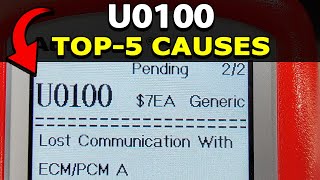
- Weak or Failing Battery 🔴 High Probability Modern vehicle networks are highly sensitive to voltage. A battery providing less than 12.4 volts at rest can cause modules to drop off the network, triggering communication codes. 🎬 Watch: A breakdown of the top 5 causes for U0100 codes. This is the most common and easiest-to-fix cause.
How to confirm: Test the battery voltage with a multimeter when the car is off. It should be at least 12.4V, ideally 12.6V. Have the battery load-tested at an auto parts store to confirm its health under load.
Typical fix: Recharge or replace the battery. Clean any corrosion from the battery terminals and cable ends with a wire brush.
Est. part cost: $100-$250 - Failed Powertrain Control Module (PCM) 🔴 High Probability PCMs on this platform, especially the 3.0L V6, are known to fail due to internal damage caused by shorted ignition coils. The coil back-feeds voltage and destroys the driver circuit within the PCM. This is a well-documented failure pattern for the Ford CD3 platform.
How to confirm: After ruling out all power, ground, and wiring issues, the PCM is the likely culprit. This is confirmed when a scan tool cannot communicate with the PCM, but power and ground at the PCM connector are verified. Often diagnosed alongside P035x codes.
Typical fix: Replace the PCM. The new module must be programmed to the vehicle's VIN and security system (PATS). It is critical to replace all six ignition coils and spark plugs at the same time to prevent immediate failure of the new PCM.
Est. part cost: $300-$800 (Remanufactured), $800-$1200+ (New OEM) - Corroded or Loose Ground Wires 🟡 Medium Probability Ground straps from the engine to the chassis and the main battery ground can corrode or break over time, creating a poor connection that disrupts module communication. Wires can break inside the insulation near the terminal, appearing intact but failing electrically.
How to confirm: Visually inspect the main ground straps from the battery to the chassis, and from the engine block to the firewall/chassis. Check for fraying, looseness, or corrosion. Use a multimeter to perform a voltage drop test from the negative battery post to the engine block and PCM case; it should be less than 0.2V.
Typical fix: Clean the contact points to bare metal with a wire brush and re-secure the ground connections. Replace corroded ground straps or broken terminal ends.
Est. part cost: $10-$50 - Damaged CAN Bus Wiring ⚪ Low Probability Wiring harnesses can be damaged by chafing against engine components, rodent activity, or previous improper repairs, causing a short or open in the CAN bus circuit.
How to confirm: Visually inspect the wiring harness leading to the PCM for any signs of damage. A technician can use a multimeter to check for the correct resistance (approximately 60 ohms) across Pin 6 (CAN High) and Pin 14 (CAN Low) at the OBD-II port with the battery disconnected. A reading of 120 ohms indicates an open in the circuit or a failed terminating resistor, while 0 ohms indicates a short.
Typical fix: Repair the damaged section of the wiring harness. This can be complex and may require a professional.
Est. part cost: $5-$100
Rare But Worth Checking
- Aftermarket Device Interference:
Diagnosis Steps
- Check Battery Health: Ensure the battery is fully charged (12.4V-12.6V with engine off) and the terminals are clean and tight. A weak battery is the most common cause of communication codes.
- Scan for All Codes: Use a high-quality OBD-II scanner capable of reading codes from all vehicle modules (ABS, TCM, BCM, etc.), not just the engine. Note all 'U' codes and which modules are offline.
- Inspect Fuses and Relays: Check all fuses related to the PCM, engine controls, and ignition system in both the under-hood and interior fuse panels. Pay special attention to the PCM power relay.
- Inspect Grounds: Visually inspect and physically check the main battery-to-chassis and engine-to-chassis ground straps for corrosion or looseness. Perform a voltage drop test on the main grounds to confirm their integrity.
- Inspect PCM Wiring: Carefully inspect the wiring harness and connectors at the PCM for any visible damage, corrosion, pushed-out pins, or rodent damage.
- Test CAN Bus Network: This is an advanced step. Using a multimeter with the battery disconnected, measure the resistance between Pin 6 (CAN High) and Pin 14 (CAN Low) at the OBD-II port. A healthy network should read approximately 60 ohms. A reading of 120 ohms indicates an open circuit or a problem with one of the two terminating resistors (one is in the PCM). A reading near 0 ohms indicates a short between the two wires.
- Verify Power and Ground at PCM: Using a wiring diagram for the specific model and year, confirm that the PCM connector is receiving proper battery voltage on all specified pins and has a good ground connection on all ground pins. If power or ground is missing, trace that circuit back to find the fault.
- Diagnose PCM: If all wiring, power, and ground connections are good, the CAN bus resistance is 60 ohms, and communication is still lost, the PCM itself is the most likely point of failure. This is especially true if P035x codes are also present.
Parts You'll Likely Need
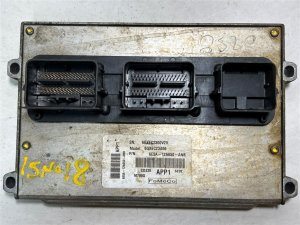
- Powertrain Control Module (PCM)
(OEM #AE5Z-12A650-EVE (2011 3.0L example), 8E5Z-12A650-MB (2008 3.0L example))— Internal failure is a common cause for this code on this platform, often triggered by a shorted ignition coil. - Ignition Coil (Set of 6 for V6)
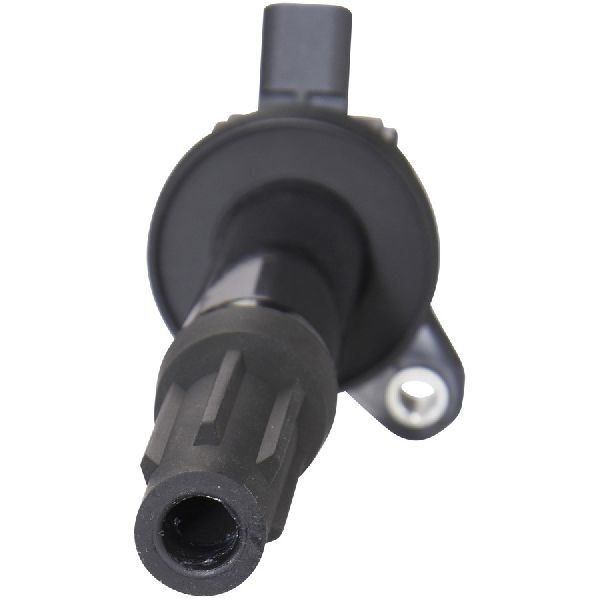
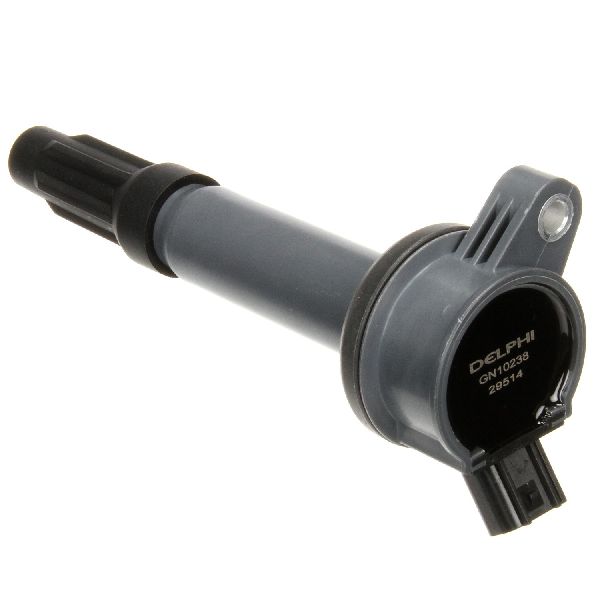
(OEM #2M2Z-12029-AC / DG513)— On the 3.0L V6, a failing ignition coil is the root cause of PCM failure. All six must be replaced with the PCM to prevent a repeat failure. - Battery — Low system voltage from a weak or old battery is a very common trigger for network communication codes.
- Ground Straps — Corrosion or breakage of main ground straps can cause intermittent communication issues between modules.
Related Codes That Often Appear With This One
- U0101 — Indicates 'Lost Communication with TCM'. Since the TCM (Transmission Control Module) is on the same High-Speed CAN network, a network-wide problem or a failing PCM will often set both codes.
- P0351-P0356 — These codes indicate an ignition coil circuit malfunction for a specific cylinder (1-6). On the 3.0L V6, a failing coil is the primary cause of PCM failure, which then leads to the U0100 code. Seeing these together is a strong indicator that both the PCM and all coils need replacement.
- U0073 — Indicates 'Control Module Communication Bus 'A' Off'. While U0100 means a specific module (the PCM) is lost, U0073 can indicate the entire network is down, pointing more strongly to a wiring or termination resistor problem rather than a single failed module.
Technical Service Bulletins (TSBs) & Recalls
- While no specific TSB for the Milan and U0100 was found, GM TSB #08-07-30-021H for similar platforms provides extensive diagnostic procedures for network communication loss, emphasizing checking specific ground points and harness chafing, which are relevant troubleshooting steps for any vehicle with this code.
Platform-Specific Known Issues
- 3.0L V6 Ignition Coil Cascade Failure: On 3.0L V6 models, a common failure pattern involves one or more ignition coils shorting out, which in turn damages the ignition coil driver circuit inside the PCM. This will often present with both a P035x code (e.g., P0351) and a U0100 code. A repair requires replacing the PCM, all six ignition coils, and all six spark plugs simultaneously to be effective.
Mechanic-Grade Diagnostic Values
- HS-CAN Bus Resistance — expected: ~60 Ohms. Failure: 120 Ohms indicates an open circuit or one failed terminating resistor. ~0 Ohms indicates a short between CAN High and CAN Low wires.
- HS-CAN Bus Voltage (Key On, Engine Off) — expected: CAN High (Pin 6) and CAN Low (Pin 14) should both read approximately 2.5V to ground.. Failure: Significant deviation from 2.5V, or one line being stuck high (at battery voltage) or low (at 0V), indicates a short or module fault.
- PCM Ground Voltage Drop — expected: < 0.2 Volts (200 mV). Failure: A reading higher than 0.2V indicates a poor ground connection, which can cause modules to malfunction.
- Ignition Coil Power Supply — expected: Battery Voltage. Failure: No voltage indicates a blown fuse or wiring issue before the coil.
Scan Tool Commands That Help
- Ford IDS (Integrated Diagnostic System): Network Test / Self-Test — This is a primary step to automatically poll all modules on the CAN bus. It will quickly identify which modules are responding and which are offline, helping to isolate the source of the U0100 code.
- Ford IDS (Integrated Diagnostic System): Module Programming / PMI (Programmable Module Installation) — This function is required after installing a new or used PCM. It downloads the correct software and vehicle-specific parameters (including PATS security information) into the replacement module.
- Ford IDS (Integrated Diagnostic System): Parameter Reset — For some model years and replacements, a full programming may not be needed, but a 'Parameter Reset' is required to sync the replacement PCM with the other modules in the vehicle, particularly the security system.
Wiring & Ground Locations
- PCM Location — In the engine compartment, on the firewall, behind the battery and battery tray.. This is the location of the module that has lost communication. Physical access is required for testing power/ground pins and inspecting connectors for corrosion or damage.
- G102 / G103 — G102 is on the left rear of the engine compartment. G103 is on the left front/side of the engine compartment.. These are primary engine and PCM ground points. Corrosion or looseness at these locations can interrupt power to the PCM and cause communication loss.
- G202 — Located on the left side of the dash, likely behind the kick panel.. This is an interior ground point. While less likely to be the primary cause, issues here can affect modules inside the cabin that communicate with the PCM.
- CAN Bus Wires (at OBD-II Port) — Pin 6 (CAN High, often Gray/Orange) and Pin 14 (CAN Low, often Gray/Blue) in the OBD-II diagnostic connector under the driver's side dash.. These pins provide a central point to test the electrical health (resistance, voltage) of the entire High-Speed CAN network without accessing individual modules.
Real Owner Repair Stories
- YouTube video by 'John the transmission man and son' (2008 Ford Fusion SE 3.0L V6) — Engine misfire with codes P0351 through P0356. The car ran very rough.
❌ Tried (didn't work) Replacing only the ignition coils and spark plugs did not fix the issue because the PCM was already damaged.
✅ What actually fixed it The owner sent the original PCM to a repair service (Circuit Board Medics) to have the internal ignition coil driver circuits repaired. After reinstalling the repaired PCM and replacing all six ignition coils and spark plugs, the car ran perfectly with no codes. - Reddit user Corst_D_Luffy (2008 Ford Fusion 2.3L I4 with 143,973 miles) — Check Engine Light with code U0100 after the car sat unused for 5 months and required a jump start.
❌ Tried (didn't work) Checked fuses, found no issues.
✅ What actually fixed it The consensus from other users was that the U0100 code was triggered by the low voltage condition from the dead battery and subsequent jump start. The recommendation was to clear the code and monitor, as it was likely a temporary glitch and not a hard fault.
OEM Part Supersession History
8E5A-12A650-MA, 8E5A-12A650-MB→8E5Z-12A650-MB— Standard part revision and consolidation by Ford.
Heads up: These part numbers are specific to the 2008-2009 3.0L V6 models. They are not compatible with 2.3L I4 engines or 2010-2011 models.AE5A-12A650-CRA, AE5A-12A650-BTB, AE5A-12A650-BEB→AE5Z-12A650-xxx (various final letters)— Standard part revision for the updated platform.
Heads up: These part numbers are for the 2010-2011 facelift models and are not backward compatible with 2006-2009 vehicles due to significant electronic changes.
Model Year Variations Within This Range
- 2010-2011: The 2010 model year marked a significant refresh for the Milan/Fusion platform. This included new 2.5L I4 and updated 3.0L V6 engines, new 6-speed transmissions, and a completely revised interior with a new instrument panel and electronics. PCM part numbers are not interchangeable between 2006-2009 and 2010-2011 models.
- 2006-2009: These earlier models used a 2.3L I4 or 3.0L V6 with 5-speed or 6-speed automatic transmissions. The PCM and associated electronics are specific to this pre-facelift generation.
Diagnostic Flowchart
Used vs. New Parts: Buying Guide for This Vehicle
When a used part is the smart pick: A used PCM from a junkyard can be a cost-effective option IF you have access to the Ford IDS scan tool or a professional who can perform the necessary 'Programmable Module Installation' (PMI) and PATS security relearn. Without programming, the car will not start.
Donor-vehicle mileage cap: roughly under 120000 miles for the part to have meaningful remaining life.
What to inspect on the donor part:
- Match the OEM part number EXACTLY. Even a single letter difference can indicate an incompatible calibration.
- Source the PCM from a vehicle with the same engine, transmission, and drivetrain (FWD/AWD).
- Inspect the connectors on the used PCM for any bent, corroded, or pushed-out pins.
- Ask for the VIN of the donor car if possible, as it can help a programmer ensure the correct software is flashed.
OEM-only on this vehicle (don't cheap out):
- Powertrain Control Module (PCM): While remanufactured units from reputable sources like Circuit Board Medics are a good option, cheap, unverified aftermarket PCMs should be avoided due to programming and quality issues.
- Ignition Coils: Given their role in causing PCM failure on this platform, using high-quality OEM (Motorcraft) or top-tier OEM-equivalent brands is critical. Cheap aftermarket coil sets are known to fail quickly and can destroy the new PCM.
Aftermarket brands forum-validated for this vehicle:
- Ignition Coils: Motorcraft (OEM), NGK, Denso.
- PCM Repair/Remanufacturing: Circuit Board Medics (validated by multiple forum/video sources for repairing the specific coil driver failure).
Brands owners have reported issues with on this vehicle:
- Unbranded or 'white box' ignition coil sets from online marketplaces. While cheap, their failure rate is high and can lead to the destruction of a newly replaced PCM.
Real Owner Stories
Aggregated from forums and TSBs cited above. Mileages and costs reflect what owners reported in those sources.
2008 Ford Fusion (3.0L V6)
Symptoms: A burning smell and poor running, which led to a diagnosis of a bad coil pack that destroyed the PCM.
What fixed it: The repair involved replacing the PCM, all 6 coils, and the spark plugs.
Source hint: Google Groups - 'PCM Computer burned out a plug pack.. 2008 Fusion'
Related OBD-II Codes
Frequently Asked Questions
My 2009 Milan has the 3.0L V6 and is showing a U0100 code. What is the most likely problem?
I'm replacing the failed PCM on my Mercury Milan. Is there anything else I must replace at the same time?
What is the very first thing I should check for a U0100 code before spending any money?
How can I test the CAN Bus network on my Milan myself?
My scanner can't connect to the engine computer at all. Is this related to the U0100 code?
Besides the Check Engine Light, what other symptoms are common with a U0100 code on this car?
Helpful Videos

Used OEM Parts in Stock


New Aftermarket Parts Available


The information in this article is provided for general reference and educational purposes only. Vehicle specifications, procedures, and part compatibility can vary by production date, trim level, and region. Always consult your vehicle's factory service manual and verify part numbers before purchasing or performing repairs. Safety-critical components such as airbags, seat belts, and braking systems should be installed by a qualified professional.
- Mercury Milan:
- 🎬 Helpful Videos
- 🛍️ Shop This Part
- What's Unique About the 2006-2011 Mercury Milan
- Symptoms You May Notice
- Most Likely Causes
- Rare But Worth Checking
- Diagnosis Steps
- Parts You'll Likely Need
- Related Codes That Often Appear With This One
- Technical Service Bulletins (TSBs) & Recalls
- Platform-Specific Known Issues
- Mechanic-Grade Diagnostic Values
- Scan Tool Commands That Help
- Wiring & Ground Locations
- Real Owner Repair Stories
- OEM Part Supersession History
- Model Year Variations Within This Range
- Diagnostic Flowchart
- Used vs. New Parts: Buying Guide for This Vehicle
- Real Owner Stories
- 2008 Ford Fusion (3.0L V6)
- Related OBD-II Codes
- Frequently Asked Questions
- 🎟️ Get 5% Off